
Note: This article contains affiliate links. If you click on these links and make a purchase, we may earn a small commission at no extra cost to you. This helps support our research and content. Read our full affiliate disclosure here.
A garage faces different fire risks than living spaces: flammable liquids, vehicle batteries, and dusty workshops all change how quickly smoke develops and how detectors respond. Picking the right smoke detector for garages means balancing loud, attention-getting alarms with sensors and housings that tolerate dust, fumes, and temperature swings. This guide highlights the top shortlisted options that work well in garage environments and explains the evaluation criteria used to judge them. Below we cover detectors suited to garages, outline what matters most when installing one, and summarize the practical tradeoffs so you can pick the right unit for your layout and use patterns.
Top Picks at a Glance
| Best Overall The best all-around choice for most situations | HEIMAN Smoke Detector HM-636PHS |  |
| Best Quality Built to a higher standard if you want something more solid | X-Sense SC01 Combination Detector |  |
| Best Value The sweet spot between price and what you get | SITERWELL GS509A Smoke Detector |  |
| Best Budget The cheapest option that still gets the job done reliably | Kidde 10SDR Smoke Detector | 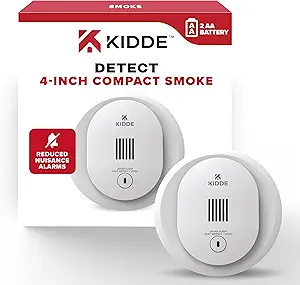 |
| Top Rated A top-rated pick with lots of positive feedback | First Alert BRK SC9120B |  |
| Most Popular A crowd favorite that many people choose with confidence | X-Sense SC07 Combination Detector |  |
| Best Seller A high-volume bestseller chosen again and again | First Alert SMI100 Smoke Alarm |  |
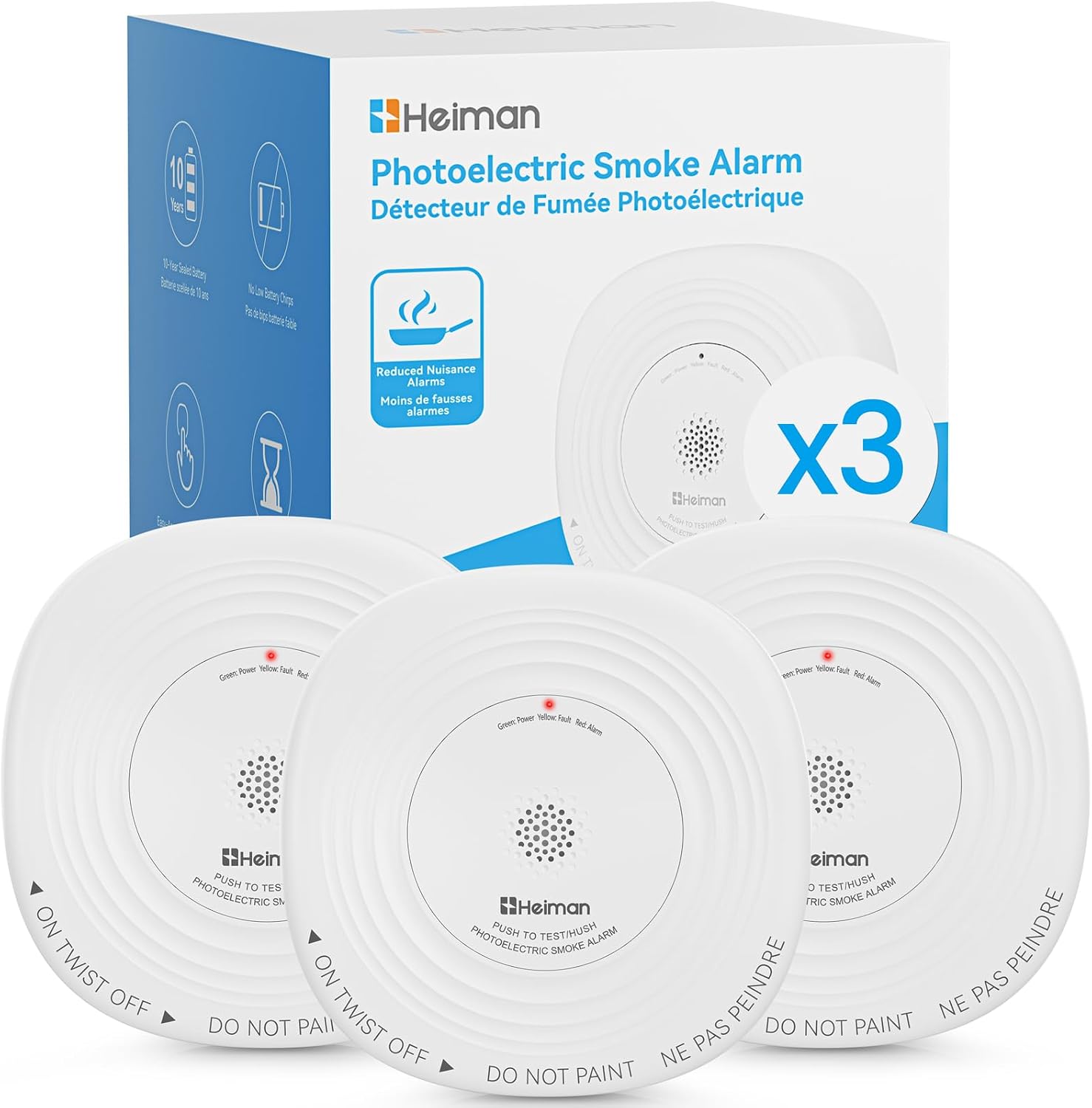
HEIMAN Smoke Detector HM-636PHS
| Power Source | 10-Year Sealed Battery Powered |
|---|---|
| Alarm | Audible |
| Battery Average Life | 10 years |
| Operating Humidity | ≤95% RH (non-condensing) |
| Upper Temperature Rating | 100 °F |
This HEIMAN three-pack uses a dual-beam photoelectric sensor and a sealed 10-year lithium battery to provide long-term, low-maintenance smoke detection suited to detached areas like garages. Installation is DIY-friendly with a slim ABS+PC housing that mounts to ceilings or walls, and the unit includes a test/silence button and a flashing LED alarm memory that blinks every 20 seconds after an event. The photoelectric design reduces nuisance triggers from cooking and dust compared with ionization sensors, making it practical near garage-adjacent kitchens or workshop areas with occasional smoke but not heavy particulates. It meets UL 217 10th edition and CSFM requirements and emits an 85 dB audible alert that is loud enough to wake sleepers in nearby rooms. The main limitations are that it is battery-only and not hardwired or interconnected with other detectors, so larger homes will need multiple separate units rather than a single integrated alarm system. For a garage-focused pick, its long-life battery and false-alarm resistance are the most useful real-world benefits.
Best for: Buyers who want a low-maintenance, code-compliant smoke detector for garages or nearby living areas and prefer a long-life sealed battery and nuisance-resistant detection.
Less Ideal for: People seeking a hardwired, interconnected alarm system or centralized monitoring for large multi-zone homes should consider other solutions.
- 10-year sealed lithium battery eliminates annual battery changes
- Dual-beam photoelectric sensor reduces cooking and workshop false alarms
- UL 217 10th edition and CSFM certified for compliant protection
- Loud 85 dB audible alarm plus visible LED memory for event notification
- Slim ABS+PC housing supports easy DIY ceiling or wall mounting
- Not hardwired or wirelessly interconnected with other alarms
- May be less effective in environments with heavy dust or fast flaming fires where other sensor types can respond faster
Verdict: A low-maintenance, nuisance-resistant smoke detector ideal for garage installations thanks to its 10-year sealed battery and photoelectric sensing.
X-Sense SC01 Combination Detector

| Power Source | 10-Year Sealed Battery |
|---|---|
| Alarm | 85 dB |
| Sensor Type | electrochemical, photoelectric |
| Battery Type | Lithium metal |
The X-Sense SC01 is a basic, performance-focused combination alarm that gives long-term protection without hardwiring or app integration. It uses a photoelectric smoke sensor and an electrochemical CO sensor to detect both hazards and reports warnings through an 85 dB alarm and an LCD that displays CO levels and battery status in real time. Installation is simple: the unit mounts to a included bracket and runs on a sealed 10-year lithium battery so you can set it and forget it for the life of the device. For garage use the photoelectric sensor helps reduce nuisance triggers from vehicle exhaust compared with ionization-only units, and the loud alarm is adequate for most attached garages. The trade-offs are that SC01 is a standalone model with no wireless interconnect or Wi-Fi and cannot be tied into a multi-unit alert system, so you will need one per zone for full coverage. If you want a durable, maintenance-light detector for a garage that prioritizes reliable smoke and CO sensing, the SC01 covers the essentials well.
Best for: Buyers who want a low-maintenance, reliable two-in-one detector for a garage and prefer strong local detection and long battery life over smart features.
Less Ideal for: People who need a networked system that links multiple alarms or remote monitoring should choose an interconnected or Wi‑Fi model instead.
- Sealed 10-year lithium battery that eliminates regular battery changes
- Combination photoelectric smoke and electrochemical CO sensors for two-hazard protection
- Front LCD that shows real-time CO readings and battery status
- Simple, no-wiring installation with included mounting hardware
- Loud 85 dB alarm suitable for garage environments
- No wireless interconnect or Wi-Fi, so units do not alarm together
- Basic standalone feature set without app monitoring or remote alerts
Verdict: Choose the SC01 when you need a durable, maintenance-free smoke and CO detector for a garage that emphasizes reliable sensing and a decade of battery life.
SITERWELL GS509A Smoke Detector

| Power Source | Battery Powered |
|---|---|
| Alarm | Audible |
| Operating Humidity | 10-95% RH non-condensing |
| Upper Temperature Rating | 37.8 °C |
The SITERWELL GS509A is a photoelectric smoke detector meant for everyday home use, offering sensitivity to slow, smoldering fires common in garages. It runs on a replaceable 9V battery and includes a magnetic fastening kit and standard mounting hardware to make ceiling or wall installation straightforward. The unit emphasizes a long product life with continuous battery replacement rather than a sealed 10-year battery, and it provides loud >85 dB audible alerts plus a low-battery chirp. A single test/mute button lets you verify operation and silence nuisance alarms temporarily. Built from polycarbonate and listed to UL217, the alarm is practical for garages where dust, fumes, and intermittent vehicle activity can create challenging conditions for detection; the photoelectric sensor reduces false alarms from brief, intense bursts of flame while catching smoldering sources earlier. Limitations to consider are the need to replace the 9V battery regularly and the lack of networked or hardwired interconnect features that some garage setups use for whole-house notification.
Best for: Buyers who want a simple, reliable smoke alarm for a garage space and prioritize early detection of smoldering fires and easy installation without wiring work.
Less Ideal for: Not a good fit for users who need hardwired or wirelessly interconnected alarms across multiple rooms or for those who prefer a sealed 10-year battery for maintenance-free operation.
- Photoelectric sensor tuned for smoldering fires common in garages
- Magnetic fastening kit and included mounting hardware for fast installation
- Loud >85 dB alarm ensures audible warning in noisy garage environments
- UL217 listed construction with polycarbonate enclosure for durability
- Uses a replaceable 9V battery so it requires routine battery changes
- No hardwired or wireless interconnect capability for whole-house alerts
Verdict: A straightforward, photoelectric garage smoke alarm that prioritizes smoldering-fire detection and quick, tool-free installation.
Kidde 10SDR Smoke Detector

| Power Source | Battery Powered |
|---|---|
| Sensor Type | Photoelectric |
| Alarm | 85 dB Smoke Detector |
| Operating Humidity | Up to 95% RH, non-condensing |
| Upper Temperature Rating | 100 °F |
The Kidde 10SDR is a compact, AA battery-powered photoelectric smoke detector intended for basic home protection and easy installation in spaces like garages. It detects smoldering smoke quickly, flashes a red LED and sounds an 85 dB alarm, and includes a Test & Hush button to temporarily silence nuisance alerts without disabling the unit. The sensor is tuned to reduce false alarms from cooking or steam while keeping sensitivity to genuine smoke, and two included AA batteries let it run through power outages. It is UL 217 10th Edition tested and comes with a 10-year limited warranty, which can simplify compliance needs for basic installations. The main compromises are the lack of hardwiring or interconnect capability and no smart features for remote alerts, so it works best as an independent alarm rather than part of an integrated system.
Best for: Buyers who need an affordable, standalone smoke alarm for detached or single-zone areas like garages and value simple, no-wiring installation and reliable detection.
Less Ideal for: Users who want a networked alarm system, hardwired installation, or smartphone alerts should choose a different model with interconnect or smart features.
- Photoelectric sensor reduces nuisance alarms from cooking or exhaust
- Battery powered with included AA batteries for installation without wiring
- 85 dB alarm and red LED provide clear audible and visual alerts
- Test & Hush button makes silencing temporary false alarms easy
- Meets UL 217 10th Edition testing and includes a 10-year limited warranty
- Not hardwired or interconnectable with other alarms
- No smart or remote notification features
Verdict: A straightforward, budget-friendly photoelectric smoke alarm that provides fast, reliable standalone protection for garages and other single-zone spaces.
First Alert BRK SC9120B

| Power Source | Battery Powered,Hardwired |
|---|---|
| Alarm | Audible |
| Sensor Type | electrochemical,ionization |
| Operating Humidity | 10-95% RH |
The First Alert BRK SC9120B is a hardwired combination smoke and carbon monoxide alarm designed for continuous home monitoring with a 9V battery backup for outages. It uses an ionization smoke sensor alongside an electrochemical CO sensor to detect fast-flaming fires and carbon monoxide hazards, and it has an 85 dB audible alarm plus indicator lights to show which hazard is present. Installation is simplified with a quick plug-in power connector, universal mounting bracket, and tamper-resistant locks, and it can interconnect with up to 18 devices so a single trigger will sound all linked units. The single test/silence button and automatic internal self-tests make routine checks straightforward. For garage use, the combination sensing reduces the need for separate devices while the battery backup preserves functionality during power interruptions. Limitations to note are the lack of wireless or smart notifications and the ionization sensor can be more sensitive to very small particles compared with photoelectric sensors, which may affect nuisance alarms in dusty or smoky garage environments.
Best for: Buyers who prioritize a dependable, always-on alarm system for safety-focused spaces like garages and want a factory-quality combination smoke and CO unit that keeps working during power loss.
Less Ideal for: People who need smart home integration or remote notifications should consider networked or Wi-Fi models instead.
- Combines ionization smoke sensing and electrochemical CO sensing in one unit
- Hardwired power with 9V battery backup ensures monitoring during outages
- Interconnectable system lets one triggered unit sound all linked alarms
- Quick plug-in connector and universal mounting bracket speed installation
- Tamper-resistant locks and automatic internal self-tests simplify maintenance
- No smart/wireless alerts or app connectivity
- Ionization smoke sensor can be more prone to nuisance alarms in dusty garage conditions
Verdict: Choose this hardwired combination alarm if you want a rugged, factory-quality smoke and CO unit that stays powered and can interconnect with other alarms for reliable garage protection.
X-Sense SC07 Combination Detector

| Power Source | 10-Year Sealed Battery |
|---|---|
| Alarm | 85 dB |
| Sensor Type | Photoelectric, Electrochemical |
| Battery Type | Lithium metal |
The X-Sense SC07 combines a photoelectric smoke sensor and an electrochemical CO sensor into a single standalone alarm designed for long, maintenance-free operation. It mounts to a wall or ceiling with the included bracket and is powered by a built-in sealed lithium battery rated for 10 years, eliminating battery changes and chirping. The photoelectric sensor is better at detecting slow, smoldering fires and reduces cooking-related false alarms, while the CO sensor provides continuous monitoring of carbon monoxide levels. The unit meets UL 217 and UL 2034 standards and puts basic status on an LCD, which helps with quick checks. For garage use the sealed battery and durable heat-resistant plastic enclosure are practical since the unit can tolerate intermittent access and temperature swings. Limitations: it is a basic standalone model with no wireless interconnect, Wi-Fi, or app features, so it will not notify other alarms or remote devices during an event, and the alarm is the standard 85 dB which may be less effective in very loud workshop environments.
Best for: Buyers who want a reliable, low-maintenance garage detector that provides long-term smoke and CO protection without needing network setup or frequent battery changes.
Less Ideal for: People who need alarms that interconnect across multiple rooms or who require remote notifications and smart home integration should choose a networked model instead.
- 10-year sealed lithium battery eliminates battery replacements and low-battery chirps.
- Combination of photoelectric smoke and electrochemical CO sensors covers both smoldering fires and carbon monoxide detection.
- UL 217 and UL 2034 certification supports code-compliant safety and reliable performance.
- Included mounting bracket, screws, and anchors make installation straightforward.
- No wireless interconnection or Wi-Fi, so it will not link with other alarms or send remote alerts.
- Alarm volume is 85 dB which may be hard to hear in noisy garage or workshop settings.
Verdict: Choose the X-Sense SC07 for hassle-free, decade-long smoke and CO protection in a garage when you want a simple, certified, maintenance-free alarm.
First Alert SMI100 Smoke Alarm

| Power Source | Battery Powered |
|---|---|
| Sensor Type | Ionization |
| Built-In Media | 9V Alkaline Battery |
| Unit Count | 2 Count |
The First Alert SMI100 is a basic, battery-operated ionization smoke alarm that uses the brand's Precision Detection sensing to meet current industry standards and cut down on nuisance alarms from cooking. It is intended for straightforward installation where hardwiring is not available, with a front-access 9V battery compartment that makes replacement easy. The unit includes a test/silence button and an end-of-life warning to prompt replacement when the sensor ages. For garage use the ionization sensor is responsive to fast-flaming fires and the battery power avoids needing an electrician, but like most single-sensor alarms it may be less sensitive to slow, smoldering fires than photoelectric models. The compact, low-profile housing fits on ceilings or walls and is useful as a quick add-on for risk-averse homeowners who want a reliable standalone detector in an outbuilding or detached garage.
Best for: Homeowners who prioritize a simple, no-wiring smoke alarm for garages or outbuildings and want a reliable, low-maintenance detector that reduces nuisance alerts.
Less Ideal for: People who want the best possible detection of smoldering fires or prefer multi-sensor/combination alarms should consider photoelectric or dual-sensor options instead.
- Precision Detection tech reduces common cooking nuisance alarms
- Battery powered for easy installation without wiring
- Front-access 9V battery compartment simplifies battery changes
- Test/silence button and end-of-life warning improve maintenance and safety
- Ionization sensor is generally less sensitive to slow, smoldering fires than photoelectric alternatives
Verdict: A straightforward, battery-operated ionization alarm that delivers easy installation and reduced nuisance alerts for risk-averse homeowners seeking a dependable garage detector.
Choosing the Right Smoke Detector for Garages: Key Factors to Consider
Alarm Volume and Sound Pattern
A high and clear alarm is essential in garages where doors may be closed and background noise from tools or vehicles is common. Look for units with a specified decibel rating at a standard distance and an alarm tone designed to cut through noise. Distinctive patterns or voice alerts can help occupants recognize the type of hazard quickly.
If the garage is detached or far from sleeping areas, consider interconnected systems or units that support wireless linking so alarms trigger throughout the property. Alarm placement also matters: mounting near likely occupancy areas or doors often improves response time.
Sensor Type and False-Alarm Resistance
Different sensor technologies respond to different kinds of combustion. Ionization sensors detect fast-flaming fires more quickly, while photoelectric sensors tend to be better for smoldering fires and resist nuisance alarms from small particulates. For garages, false alarms from dust, welding, or engine exhaust are common, so pick sensors designed or tuned to reduce triggers from non-fire particles.
Some detectors include multi-sensor designs or advanced algorithms that cross-check sensor inputs to reduce false alarms. These features help ensure the alarm sounds only for genuine hazards, lowering the chances of removed batteries or disabled alarms after repeated nuisances.
Environmental Tolerance and Ingress Protection
Garages experience wider temperature swings, higher dust, and occasional moisture compared with living areas. Units with higher operating temperature ranges and some dust resistance will maintain reliability. Check for ratings or design notes that indicate resistance to dust and mild humidity; though many smoke detectors are not fully weatherproof, those with better seals and removable grills for cleaning are preferable.
For detached or unconditioned garages, avoid detectors rated only for typical indoor climates. Better environmental tolerance reduces sensor drift and the need for premature replacement.
Power Options and Backup
Power flexibility is important when garage wiring is limited or when you prefer minimal maintenance. Hardwired detectors with battery backup offer continuous readiness but require compatible wiring and installation. Battery-only units with long-life sealed batteries eliminate frequent replacement and reduce tampering but require eventual unit replacement when the battery depletes.
Consider whether you want wireless interconnect capability. Interconnected alarms provide whole-property warning if a garage fire starts, which is especially useful for detached garages or garages with living spaces above. Evaluate how easy battery replacement is and whether the unit has low-battery alerts you can hear in typical garage conditions.
Mounting, Placement, and Installation Practicalities
Garage ceilings vary in height and accessibility, and many garages have exposed rafters or unfinished ceilings. Choose detectors with flexible mounting options that work on flat ceilings, sloped roofs, or beam surfaces. Low-profile designs can reduce nicking from stored items or vehicle doors.
Installation considerations also include cable routing for hardwired models, wireless range for interconnects, and whether surface-mount brackets are supplied. Ease of installation affects long-term upkeep because a unit that is difficult to access will likely be neglected.
Maintenance, Self-Test, and Service Life
Regular testing and occasional cleaning extend service life and ensure reliable alarms. Look for detectors that provide an easy-to-access test button, automatic self-test features, and clear indicators for end-of-life and fault conditions. Replaceable batteries make mid-life upkeep simple, while sealed long-life batteries reduce maintenance but require full unit replacement at end of battery life.
Also check whether the design allows safe cleaning of sensor chambers without disassembly. Simple maintenance procedures increase the chance the detector will remain functional over its rated lifetime.
Where to Mount a Garage Smoke Detector
Mount detectors on the ceiling if possible because smoke rises and ceiling placement provides the fastest detection. If ceiling mounting is not feasible because of high rafters, place the detector on a high wall within 12 inches of the ceiling to approximate optimal sensing height.
Avoid mounting directly over windows, doors, or vents where drafts can delay smoke reaching the sensor. Place additional units near vehicle parking areas, flammable-material storage, and any workspace where sparks or heat are used.
- Ceiling center is best when achievable
- High wall placement within 12 inches of ceiling when necessary
- Keep at least 3 feet from cooking or vehicle exhaust paths to reduce false alarms
Interconnectivity and Whole-Property Alerting
For detached garages or properties with sleeping areas on different floors, interconnectivity is an important safety feature. Interconnected alarms ensure that a garage-originating fire triggers alerts throughout the property, increasing the chance occupants wake and evacuate promptly.
Wireless interconnect systems simplify installation because they do not require additional wiring. Confirm the wireless range and compatibility with the installation environment, particularly if there are thick walls or metal doors that can reduce signal strength.
- Wireless interconnect avoids running cables
- Test interconnected alarms after installation to verify reliable triggering
- Consider backup options in case the primary interconnect signal is disrupted
Reducing False Alarms in Workshop Environments
Hobbyists and DIYers often produce dust, fumes, and small particulates that can trip sensitive detectors. To reduce false alarms, place detectors away from workbenches, sanding stations, or paint booths and use localized ventilation to direct dust and fumes away from sensor locations.
If false alarms remain an issue, look for detectors with adjustable sensitivity settings or multi-sensor logic to better discriminate between benign particulates and combustion products.
- Use ventilation to move dust and fumes away from detectors
- Position detectors away from frequent exhaust sources
- Select sensors designed to ignore common workshop particulates
Battery Maintenance and End-of-Life Planning
Decide whether you prefer replaceable batteries or sealed long-life units. Replaceable batteries let you refresh power without replacing the whole detector, while sealed long-life batteries minimize routine maintenance but require full replacement when battery life ends.
Create a maintenance schedule for testing alarms monthly and replacing batteries or units according to manufacturer service-life guidelines. Clear end-of-life indicators and easy access to the test button reduce the chance of neglected alarms.
- Test monthly and inspect for dust buildup
- Replace batteries promptly when low-battery chirps begin
- Track unit end-of-life dates and plan replacements
Installing in Unfinished Versus Finished Garages
Unfinished garages with exposed joists and no climate control pose different challenges than finished garages. In unfinished spaces, dust and temperature swings call for detectors with better ingress resistance and tolerance for wider operating ranges. Place detectors to avoid high-dust zones or direct engine exhaust paths.
Finished garages behave more like interior rooms, and standard detectors may perform acceptably. However, you should still consider false-alarm resistance and placement relative to vehicle doors and storage areas.
- Choose higher-durability units for unfinished garages
- Finished garages can often use standard indoor-rated detectors with attention to placement
- Consider environmental conditions before finalizing installation
How We Chose the Best Smoke Detector for Garages
We selected garage-appropriate smoke detectors based on criteria that matter for this specific environment rather than typical indoor living rooms. First, alarm volume and clarity earned strong weight because garages are often detached, noisy, or far from sleeping areas. Second, sensor resilience and false-alarm rejection were prioritized to avoid constant nuisance triggers from vehicle exhaust, steam, or hobby dust. Third, environmental tolerance—ability to operate across wider temperature and humidity ranges and resist dust ingress—was required for reliable service in garages. Fourth, mounting flexibility and power options (hardwired with battery backup, battery-only, or long-life sealed battery) were considered because garage wiring and access differ from interior ceilings. Fifth, ease of maintenance covering simple testing, battery replacement, and cleaning access helped determine long-term practicality. We excluded units intended only for conditioned indoor rooms or those with known poor performance in dusty or cold environments. We also filtered out detectors that lack clear alarm-volume specifications or fail basic self-test and battery-fault reporting. The final shortlist reflects devices that meet environmental resilience, alerting, and maintenance expectations for garage use.
Our full evaluation process is outlined in our review methodology.
FAQ
Can I use a standard indoor smoke detector in an unheated garage?
Often you can, but standard indoor units may not tolerate wide temperature swings or high dust levels as well as garage-rated options. If your garage is unheated or exposed to extreme cold or heat, choose a detector specified to operate across those temperatures or one designed for dusty environments.
Where should smoke detectors be placed relative to garage doors and vents?
Avoid mounting directly above doors or vents where drafts can disperse smoke before sensors detect it. Instead, place detectors near likely ignition sources, high on walls or ceilings, and away from direct airflow paths to reduce delayed detection and false alarms.
Do garage detectors need to be interconnected with house alarms?
Interconnection is strongly recommended if the garage is attached or if sleeping areas are on different floors. Interconnected alarms alert occupants everywhere on the property, improving early warning and evacuation chances, especially when the garage is detached.
How often should I test and maintain a garage smoke detector?
Test detectors monthly using the built-in test button and inspect for dust or debris at least every few months. Replace batteries according to the power type and follow end-of-life guidance to ensure sensors remain reliable over time.
Will vehicle exhaust trigger a garage smoke detector?
Exhaust can trigger sensitive detectors if the sensor is placed too close to idling vehicles or exhaust paths. Proper placement, ventilation, and choosing sensors with better false-alarm rejection reduce the likelihood of false triggers from normal vehicle activity.
Final Verdict
When choosing a smoke detector for garages, prioritize alarm audibility, false-alarm resistance, and environmental durability over features suited only for conditioned indoor rooms. Weight power and interconnect options based on whether your garage is attached, detached, finished, or unfinished. Regular testing, sensible placement, and a plan for battery and end-of-life replacement are the best ways to keep the detector reliable. Focus on detectors that balance clear alerts with robustness to dust and temperature swings, and you will reduce nuisance alarms while maximizing safety in the garage environment.