
Note: This article contains affiliate links. If you click on these links and make a purchase, we may earn a small commission at no extra cost to you. This helps support our research and content. Read our full affiliate disclosure here.
If you live in a two-story home, a single thermostat on one floor often leaves the other level too hot or too cold. Choosing the right thermostat for a 2 story house matters because it can improve temperature balance, lower energy waste, and simplify scheduling for different occupancy patterns on each floor. This guide shortlists seven top-rated thermostats that are well-suited to multi-level homes and explains the features that matter most for two-story layouts. We evaluate options based on zoning and sensing capabilities, installation complexity, and everyday usability so you can pick a thermostat that keeps both floors comfortable without unnecessary fuss.
Top Picks at a Glance
| Best Overall The best all-around choice for most situations | ecobee Smart Thermostat Essential |  |
| Best Quality Built to a higher standard if you want something more solid | ecobee Smart Thermostat Premium |  |
| Best Value The sweet spot between price and what you get | Sensi Lite ST25 Smart Thermostat | 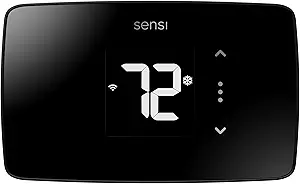 |
| Best Budget The cheapest option that still gets the job done reliably | Aowel Non-Programmable Thermostat AW701 |  |
| Top Rated A top-rated pick with lots of positive feedback | Honeywell Pro 1000 TH1100DV1000 |  |
| Most Popular A crowd favorite that many people choose with confidence | Amazon Smart Thermostat |  |
| Best Seller A high-volume bestseller chosen again and again | Google Nest Thermostat |  |
ecobee Smart Thermostat Essential

| Connectivity Technology | Wi-Fi |
|---|---|
| Power Source | Battery Powered |
| Display Type | LCD |
| Control Type | Touchpad Control |
| Specification Met | Energy Star |
The ecobee Smart Thermostat Essential is a pared-down smart thermostat that gives you touchscreen control, app-based scheduling, and integrations with Siri, Alexa, Google Assistant, and HomeKit. It is typically wall-mounted and used to manage heating and cooling across a home by following schedules or manual adjustments through the ecobee app. Notable features include Wi‑Fi connectivity for remote control, auto-scheduling and auto-away modes that reduce wasted runtime, and eco+ energy features like time-of-use preheating and humidity detection. It supports common 24 VAC HVAC setups and can work with a Power Extender Kit when a C wire is unavailable, making DIY installs easier for many homes. The unit is Energy Star certified and designed for simple day-to-day use rather than advanced multi-zone management, so it pairs well with optional SmartSensors if you need room-level temperature balancing. Expect dependable smart integration and real energy-saving potential, though homes requiring complex zoning or line-voltage systems will need a different solution.
Best for: Buyers who want a reliable, easy-to-install smart thermostat that saves energy and integrates with major voice assistants for everyday temperature control in a multi-level home.
Less Ideal for: Homes needing built-in multi-zone or advanced commercial HVAC controls or properties using line-voltage or unusual control protocols should look elsewhere.
- Wi‑Fi and app control let you adjust temperature from anywhere
- Works with Alexa, Google Assistant, Siri and HomeKit for voice control
- Auto-scheduling and eco+ features help reduce heating and cooling costs
- Energy Star certified and compatible with most 24 VAC HVAC systems
- Includes mounting hardware and wire labels for straightforward DIY install
- Not intended for line-voltage, millivolt, or 0-10VDC systems
Verdict: A straightforward, Energy Star certified smart thermostat that delivers app and voice control plus energy-saving schedules for most 24 VAC home HVAC systems.
ecobee Smart Thermostat Premium

| Connectivity Protocol | Wi-Fi |
|---|---|
| Controller Type | Amazon Alexa, Android, Apple HomeKit, Google Assistant, iOS |
| Power Source | Battery Powered |
| Voltage | 24 volts |
| Number of Batteries | 1 Lithium Ion batteries required. (included) |
The ecobee Smart Thermostat Premium is a full-featured smart thermostat aimed at improving comfort and cutting HVAC energy use. It mounts to the wall and pairs with included SmartSensor units to detect occupancy and reduce hot or cold spots, while built-in radar occupancy sensing and geofencing refine when and where the system runs. The thermostat includes an air quality monitor with alerts and filter reminders, dual-band Wi‑Fi connectivity, and a speaker with either Alexa or Siri voice control built in for hands-free operation. Installation is simplified by the included Power Extender Kit for systems without a C-wire and the unit supports most 24VAC HVAC configurations. Practical benefits for a two-story home include room-level sensing to balance upper and lower floor temperatures and remote app control for schedules and away modes. Limitations to note are that compatibility should be checked before purchase for uncommon high-voltage or millivolt systems and some advanced security features require an additional subscription for full functionality.
Best for: Homeowners who prioritize precise, multi-room comfort and energy savings for a multi-level house and want a smart thermostat that combines room sensors, occupancy detection, and built-in voice control.
Less Ideal for: People with legacy high-voltage or millivolt heating systems or buyers who prefer a basic programmable thermostat without smart features or subscription services.
- Includes SmartSensor to manage hot and cold spots and improve room-by-room comfort
- Built-in air quality monitor with alerts and filter reminders
- Integrated voice assistants and speaker for hands-free control and audio playback
- Dual-band Wi‑Fi and app control for remote scheduling and geofencing automation
- Power Extender Kit and trim kit included to simplify DIY installation on many systems
- Not compatible with high-voltage, millivolt, or certain 0-10V systems
- Some advanced home protection features require a paid smart security plan
Verdict: Choose the ecobee Smart Thermostat Premium when you want room-level sensing, occupancy detection, and built-in voice assistants to deliver balanced comfort and lower HVAC energy use in a two-story home.
Sensi Lite ST25 Smart Thermostat
| Connectivity Technology | Wi‑Fi |
|---|---|
| Control Method | App, Touch, Voice |
| Power Source | Battery or C‑wire |
| Display Type | LCD |
| Number of Batteries | 2 AAA (included) |
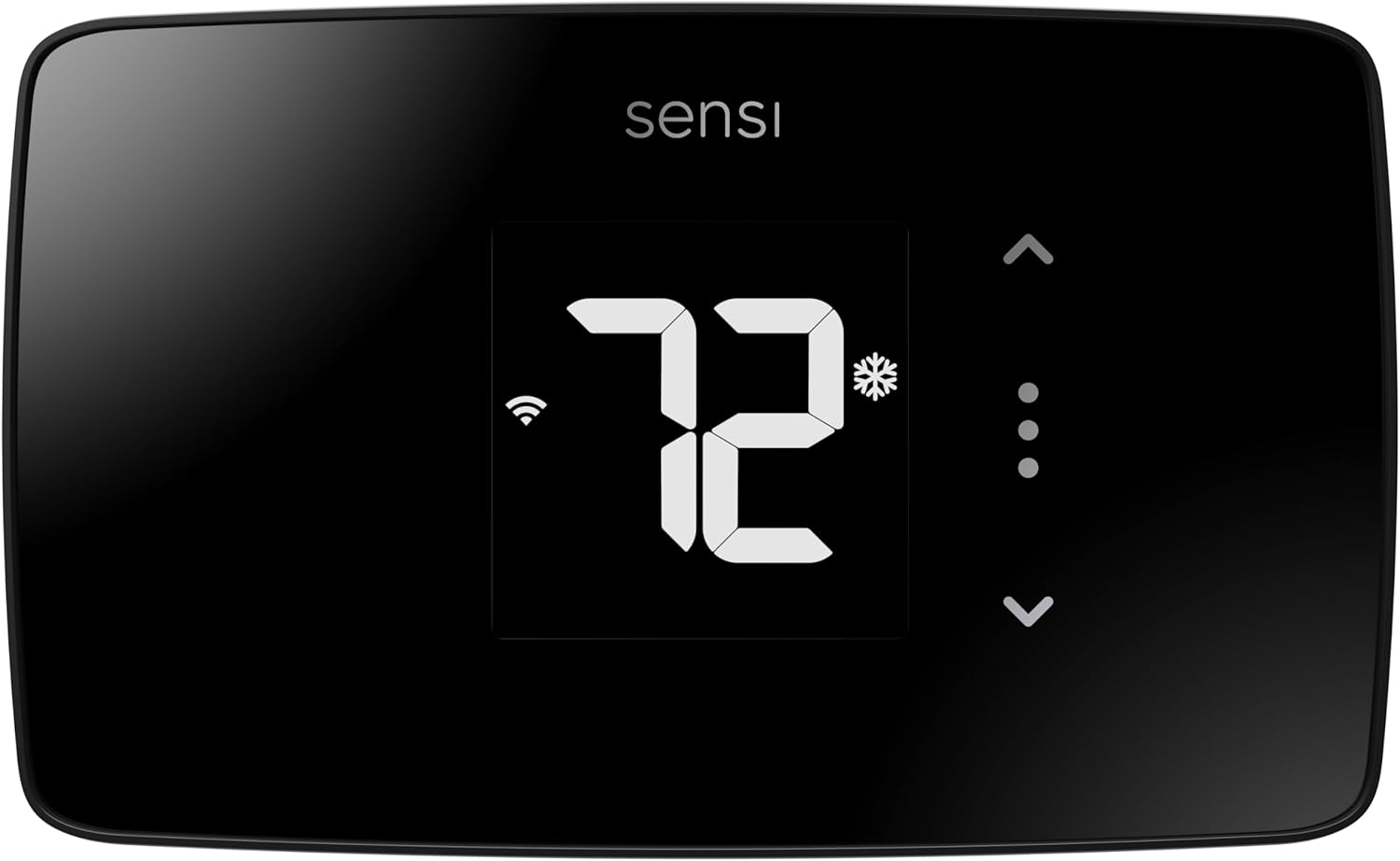
The Sensi Lite ST25 is a no‑frills smart thermostat designed to give reliable remote control of home HVAC without complicated setup. It pairs to 2.4 GHz Wi‑Fi and works with Alexa, Google Assistant and SmartThings so you can change setpoints from the app, voice or the touchscreen. Installation is aimed at DIYers with a built‑in level and step‑by‑step guide, and most systems do not need a common wire though some heat‑only or cool‑only setups will. The thermostat reports usage and supports scheduling and geofencing to reduce run time and help lower energy bills, and it carries Energy Star certification. The small LCD is straightforward but lacks the advanced sensors and learning algorithms of higher‑end models, and the basic interface means fewer advanced automation options for multi‑zone or multi‑stage systems. For a straightforward, privacy‑minded thermostat that replaces a conventional stat and gives solid remote control and scheduling, Sensi Lite delivers practical performance at a modest feature level.
Best for: Buyers who want a straightforward, privacy‑minded smart thermostat that is easy to install themselves and delivers reliable remote control and simple scheduling for a multilevel home.
Less Ideal for: Homes needing sophisticated multi‑stage, multi‑zone automation or advanced learning thermostats should consider higher‑end models with more sensors and features.
- Easy DIY installation with built‑in level and step‑by‑step guide
- Works with Alexa, Google Assistant and SmartThings for voice and smart‑home control
- Top‑rated mobile app gives remote control, scheduling and geofencing
- ENERGY STAR certified and includes features to reduce HVAC runtime
- Includes batteries, mounting hardware and wire labels for a complete install kit
- Basic LCD and interface without advanced learning or multi‑stage control features
- Requires 2.4 GHz Wi‑Fi and some systems may still need a C‑wire
Verdict: A practical, easy‑to‑install smart thermostat that provides dependable remote control and energy‑saving scheduling for homeowners who prioritize simplicity and privacy.
Aowel Non-Programmable Thermostat AW701

| Compatibility | Conventional single-stage systems (1H/1C) |
|---|---|
| Power Source | 24VAC or AAA batteries |
| Display | Backlit LCD with temperature and humidity |
| Terminals | RH/RC, G, Y, W, C, O, B |
| Adjustable Settings | Temperature calibration, heating/cooling swing, 3-minute compressor delay |
The Aowel AW701 is a simple, battery-or-24VAC powered thermostat designed for conventional single-stage systems (1 heat/1 cool). It provides a large white backlit LCD that shows temperature and humidity and uses push-button controls for straightforward setpoint changes rather than scheduling. Technician-accessible settings let you adjust heating and cooling swing, temperature calibration, Fahrenheit/Celsius display and a selectable 3-minute compressor delay for basic protection. Installation is typical wall-mount with labeled terminals (RH/RC, W, Y, G, C, O, B) and a universal sub-base to fit standard junction boxes. Practical benefits include easy readability for older users, low-battery indication, and separate fan ON/AUTO control. Limitations are clear: it does not support multistage or heat-pump systems, has no programming or Wi-Fi features, and the humidity readout is display-only with no dehumidification control. For buyers wanting a no-frills, low-cost replacement for a single-stage central furnace or AC, the AW701 delivers reliable manual temperature control without extra complexity.
Best for: Buyers who need a low-cost, easy-to-use replacement thermostat for a conventional single-stage furnace or central AC and prefer simple manual controls over programming or smart features.
Less Ideal for: Homes that use multistage systems, heat pumps, or owners who want scheduling, remote access, or advanced smart-home integration.
- Large backlit LCD and big buttons make setpoint changes easy to read and use
- Works on 24VAC or battery power with low-battery indicator
- Selectable compressor delay and adjustable heat/cool swing for basic system protection and tuning
- Universal sub-base and clearly labeled terminals simplify installation on standard wall or junction box
- Non-programmable with no Wi-Fi or smart features for remote control or scheduling
- Not compatible with multistage, heat pump, line-voltage, or specialized HVAC systems
Verdict: Aowel AW701 is a straightforward, budget-friendly manual thermostat that gives reliable single-stage temperature control without programming or smart features.
Honeywell Pro 1000 TH1100DV1000

| Temperature Control Type | Heating |
|---|---|
| Connectivity Technology | Wi-Fi |
| Power Source | Corded Electric |
| Display Type | LCD |
| Voltage | 24 volts |
The Honeywell Pro 1000 is a straightforward heat-only wall thermostat intended for users who want reliable temperature control without programming features. It mounts on the wall and uses 24-volt hardwired power with two AAA batteries for backup, offering a clear LCD temperature display and tactile push-button controls. Its single-stage heating control and touch/button interface make it easy to set and adjust the temperature, and the unit's plastic glossy finish and compact rectangular shape keep installation visually unobtrusive. Because it lacks scheduling or advanced connectivity features beyond basic Wi-Fi listing in spec data, it is best used where consistent manual control is acceptable, such as a central hall on a two-story house where simple set-and-forget heating is preferred. The thermostat's limitations are its non-programmable design and minimal feature set, so it will not provide energy-saving schedules or fine-grained multi-zone control, but it delivers dependable, no-frills temperature management for conventional heating systems.
Best for: Buyers who prioritize a dependable, no-frills thermostat for straightforward heat control and want something that is easy to set up and operate without programming.
Less Ideal for: Homeowners seeking programmable schedules, multi-zone control, or advanced energy management should consider thermostats with built-in scheduling and smart features instead.
- Simple, easy-to-use push-button and touch controls for quick temperature changes
- Clear LCD temperature display for readable feedback
- Factory-style single-stage heating control compatible with standard 24-volt systems
- Compact, unobtrusive wall-mounted design that fits common interiors
- Non-programmable so it cannot run schedules for automatic setback
- Limited feature set without advanced zoning or energy-saving automation
Verdict: Choose this thermostat when you want a reliable, fuss-free wall unit that provides straightforward heat control without programming complexity.
Amazon Smart Thermostat
| Works with | Alexa and Ring |
|---|---|
| C-wire | Required |
| Technology | Honeywell Home |
| ENERGY STAR | Referenced |
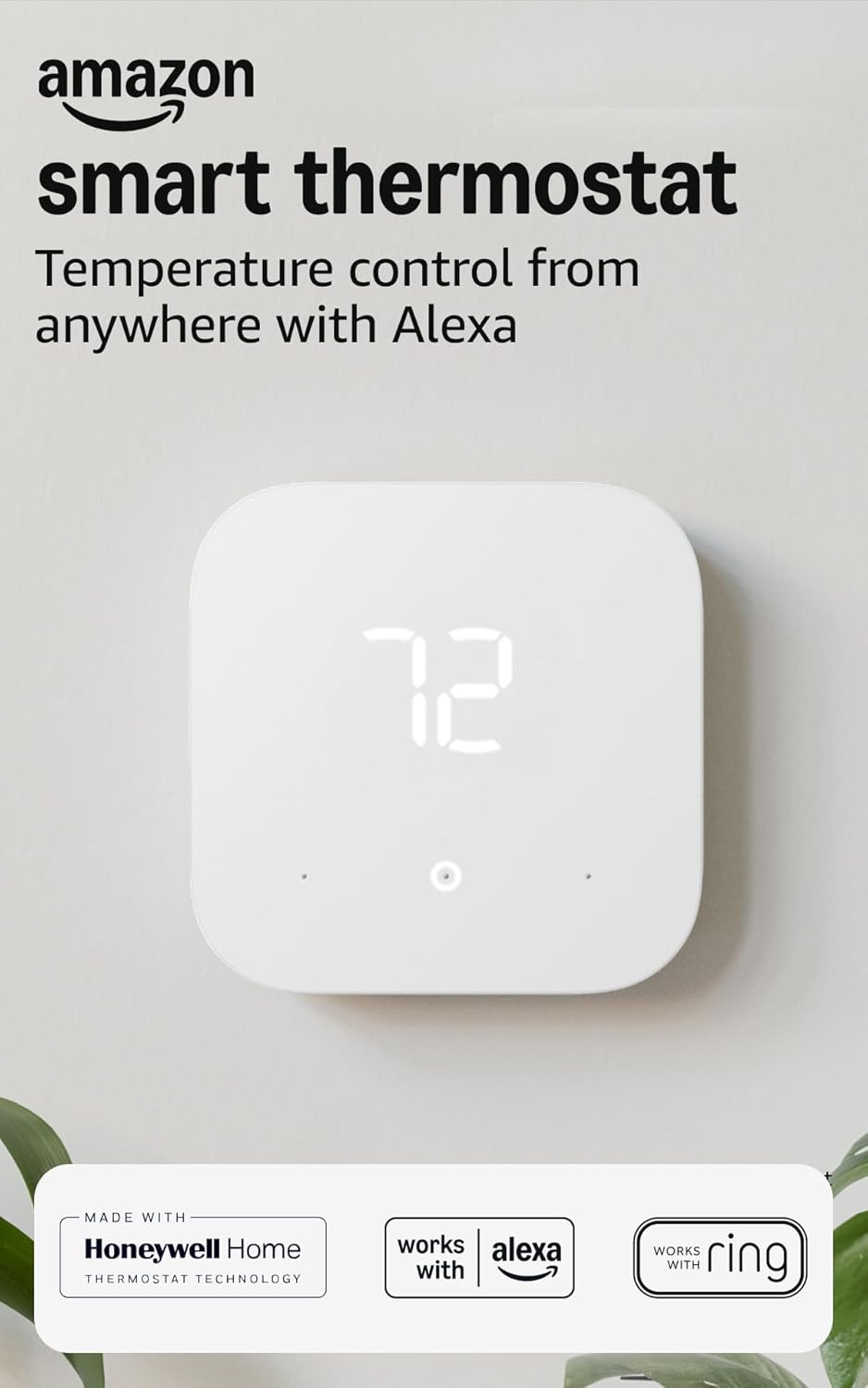
The Amazon Smart Thermostat is a straightforward, Alexa-first programmable thermostat meant to replace a traditional wall unit and reduce energy use. It installs DIY with C-wire required and uses Honeywell Home thermostat technology for basic temperature sensing and control. In typical use you set home, away, and sleep schedules in the Alexa app, let Alexa routines or presence detection adjust setpoints automatically, or control the system remotely from the app. The unit supports integration with Alexa and Ring devices for voice control and presence-based adjustments and Amazon highlights potential energy rebates and ENERGY STAR savings. Practical benefits include easy app-guided installation, familiar Alexa voice control, and automatic schedule and presence options that can reduce bills. Limitations are that it is tightly tied to the Alexa ecosystem and requires a C-wire, so users who prefer a platform-agnostic or completely offline thermostat will find it less suitable.
Best for: Buyers who want an easy-to-install, voice-first thermostat for homes that already use Alexa devices and who value simple app scheduling and presence-based comfort adjustments.
Less Ideal for: People who need a platform-agnostic thermostat, prefer non-cloud or local-only control, or cannot provide a C-wire at the installation location.
- Alexa integration for voice control and routines
- App-based scheduling with home, away, and sleep modes
- Remote temperature control via the Alexa app
- Built on Honeywell Home thermostat technology
- Requires a C-wire for installation
- Strong reliance on the Alexa ecosystem limits platform flexibility
Verdict: A simple, Alexa-first smart thermostat that makes schedule-driven and voice-controlled temperature management easy for Alexa-focused homes.
Google Nest Thermostat
| Connectivity Technology | Bluetooth, Wi-Fi |
|---|---|
| Control Type | Remote Control, Voice Control |
| Power Source | Battery Powered |
| Display Type | LCD |
| Number of Batteries | 2 A batteries required. (included) |
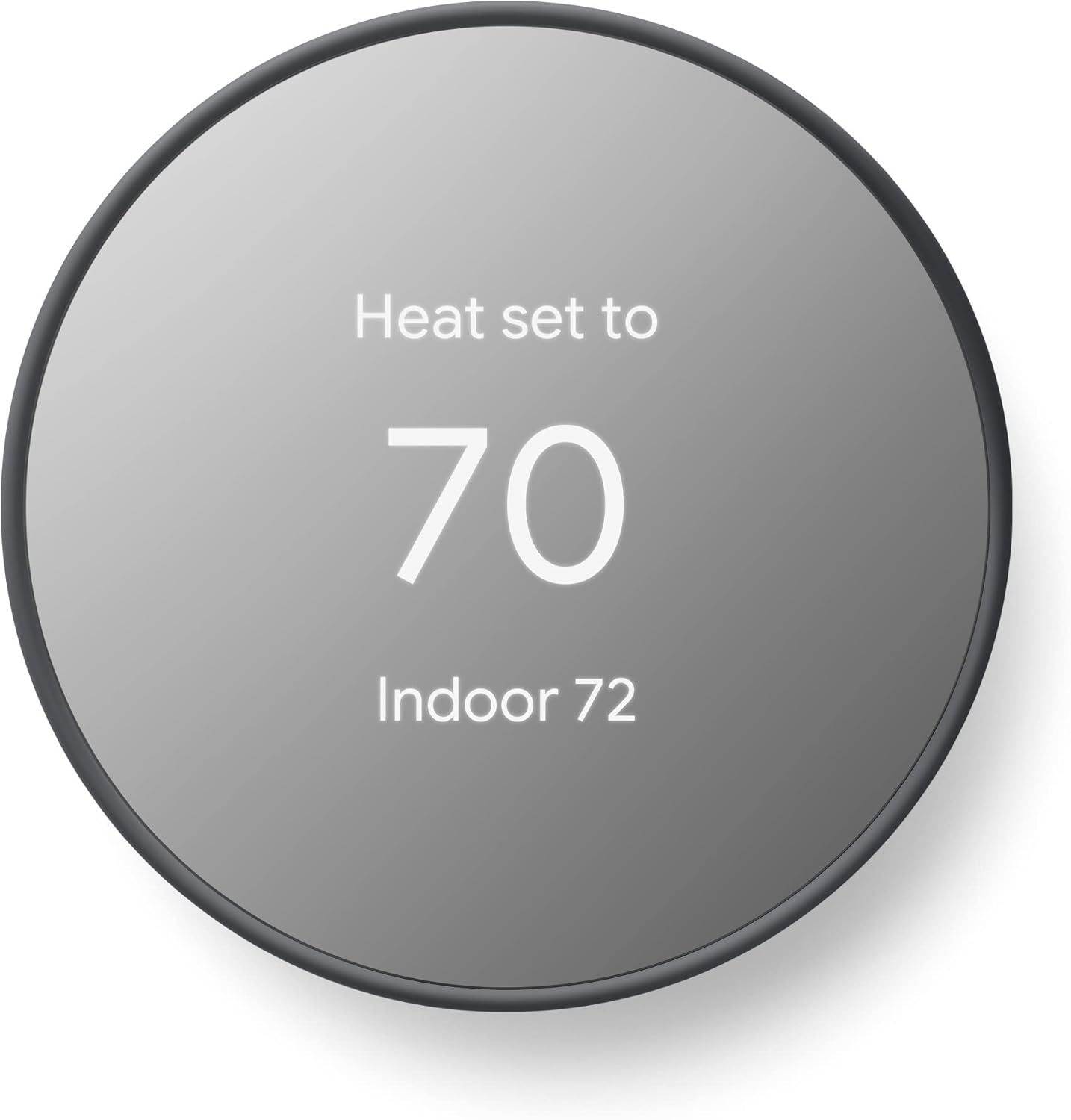
The Google Nest Thermostat is an entry-level smart thermostat that replaces a traditional wall thermostat and lets you control home temperature from the Google Home app or with voice assistants. It supports remote control over Wi‑Fi, basic scheduling through the app, and features Savings Finder and Eco Temperatures that lower energy use when you are away. Installation is designed for DIY in about 30 minutes and the unit runs on two included A batteries so many homes can use it without a common wire, though some systems may still need a C wire or power accessory. The thermostat also provides simple HVAC monitoring and sends alerts if it detects possible issues. Practical limits are its simplified feature set compared with higher-end smart models and reliance on app/online services for advanced features and voice control; installers or users with complex HVAC setups should verify compatibility before buying. For a straightforward, energy-saving smart thermostat designed for typical homes, it is an easy-to-use option.
Best for: Buyers who want a simple, dependable smart thermostat that is easy to install and focuses on energy savings and remote control rather than advanced pro-level features.
Less Ideal for: Homes with complex, nonstandard HVAC setups or buyers who need the fullest set of advanced scheduling and professional-grade monitoring features.
- Easy DIY installation with included mounting screws and guided setup in the Google Home app
- Remote control via Wi‑Fi and app plus voice control with compatible assistants
- Energy-saving features like Eco Temperature and Savings Finder that suggest schedule tweaks
- Battery-powered operation with two included A batteries, enabling use without a C wire in many homes
- Basic HVAC monitoring that can send alerts for potential system issues
- Not as feature-rich as higher-end Nest models, so advanced scheduling and automation are more limited
- Some HVAC systems require a C wire or power accessory for reliable operation
Verdict: A straightforward, energy-conscious smart thermostat that is easy to install and control remotely, ideal for mainstream homeowners seeking low-friction smart heating and cooling.
Choosing the Right Thermostat for 2 Story House: Key Factors to Consider
Zoning and Remote Sensor Compatibility
In a two-story house, temperature differences between floors are common. Thermostats that support zoning hardware or multiple remote sensors let you measure and control conditions in each area rather than relying on a single ambient reading. When sensors are placed strategically—for example, one on each floor or in frequently used rooms—the thermostat can average or prioritize readings to reduce hot or cold spots.
Compatibility with wired or wireless remote sensors matters because it determines installation complexity and placement flexibility. Some systems support dedicated zone controllers that work with dampers and separate thermostats for each zone, while others rely on sensor inputs to adjust a single HVAC system. Consider which approach your ducting and HVAC configuration can support before selecting a unit.
Control Logic and Temperature Balancing
Not all thermostats handle multi-sensor inputs the same way. Look for control logic options such as averaging sensors, sensor-priority modes, or floor-specific schedules. These features determine whether the system targets a single setpoint, balances to the warmest or coolest sensor, or follows a programmable priority schedule. Good control logic reduces short-cycling and prevents one floor from dominating the system's behavior.
Adaptive algorithms and learning modes can further improve comfort by anticipating daily patterns, but these should be configurable so you can tailor behavior to a two-story layout. If you have radiant floors, heat pumps, or multi-stage HVAC, confirm the thermostat supports the control complexity those systems require to avoid undershoot or overshoot on either floor.
Installation Requirements and Wiring
Installation complexity is a practical consideration for two-story homes where routing sensor wiring or adding zone dampers may be necessary. Check if the thermostat requires a common C wire, supports battery-only operation, or needs additional modules to interface with zoning equipment. Wireless remote sensors reduce wiring runs but may add battery maintenance and potential connectivity issues.
If you plan to add zone control hardware, verify the thermostat's compatibility with the type of dampers and zone controllers your HVAC contractor recommends. Simpler retrofit-friendly thermostats can save time and cost, while more advanced controllers may demand professional installation but provide better long-term comfort and energy savings.
App Connectivity and Remote Controls
Remote access and mobile app controls make it easier to monitor conditions on each floor and adjust settings when schedules change. Look for reliable Wi-Fi or bridge-based connectivity and clear mapping of sensor locations in the app so you can see upstairs and downstairs temperatures at a glance. Some systems support geofencing, advanced scheduling per zone, and push alerts for extreme temperature or system faults.
Consider the maturity of the companion app and cloud service. A stable, well-designed interface reduces setup friction and helps with ongoing tuning of multi-sensor strategies. If local control or privacy is a priority, check whether the thermostat supports local-only control or limited cloud reliance.
User Interface and On-Device Controls
An intuitive on-device interface matters because occupants will interact with the thermostat directly. Clear temperature indicators for each monitored zone, accessible temporary overrides, and simple schedule adjustments lower the chance of accidental changes that can disrupt comfort balance between floors. Visual cues such as separate sensor icons or floor labels help occupants understand which area is being controlled.
Physical control options, like a tactile dial or responsive buttons, can be preferable for guests or less tech-savvy household members. Consider how easily someone can change the setpoint for a single floor without affecting the whole-house schedule.
How Multi-Sensor Modes Affect Daily Comfort
Thermostats that support multiple sensors typically offer a few operational modes. Averaging mode computes a mean temperature across sensors to aim for a compromise setpoint. Priority mode follows a single sensor, usually in a frequently used area, and can prevent one unoccupied room from dictating comfort.
Each approach has tradeoffs. Averaging reduces extremes but may feel like neither floor is quite right. Priority modes keep the main living area comfortable but may allow the secondary floor to drift. Understanding these tradeoffs helps you choose a thermostat and sensor placement strategy that matches your daily use patterns.
- Averaging Mode: balances across sensors for moderate compromise.
- Priority Mode: keeps a selected zone at setpoint, useful for main living areas.
- Sensor Scheduling: some systems let different sensors drive settings at different times.
Placement Tips for Sensors in a Two-Story Home
Sensor placement affects how well a thermostat represents actual living conditions. Place sensors away from direct sunlight, windows, or HVAC vents to avoid skewed readings. For two-story homes, one sensor per floor near the main living or sleeping area gives a practical balance between cost and accuracy.
If you use sensor priority modes, pick the priority sensor location carefully. For example, set the downstairs living area as the daytime priority and an upstairs bedroom as the nighttime priority. This gives the thermostat context to maintain the right comfort where you spend time most.
- Avoid placing sensors above heat sources or near drafty windows.
- Mount sensors at typical breathing height in rooms that represent overall floor conditions.
- Use more sensors in homes with irregular layouts or large open-plan areas.
When to Consider Adding Zone Dampers
If temperature imbalances persist despite sensor use, mechanical zoning with dampers may be the next step. Dampers enable the HVAC system to direct conditioned air to specific areas independently, which solves structural causes of imbalance like duct layout or single-return systems.
Adding dampers typically requires a zone controller and coordination with your HVAC system. It is a more invasive solution than adding sensors but can deliver the most consistent floor-by-floor control in a two-story house.
- Dampers are best when one floor consistently needs a different load from the other.
- Expect professional evaluation for ductwork compatibility and system sizing.
- Combine dampers with multi-zone thermostatic control for best results.
Energy Savings Strategies for Multi-Level Homes
A thermostat that properly controls multiple areas can reduce energy waste by avoiding over-conditioning. Use schedules to lower conditioning in unoccupied zones and leverage setback strategies at night. Smart schedules and sensor-driven logic limit runtime while keeping occupied areas comfortable.
Supplement thermostat strategies with basic home improvements such as sealing duct leaks, adding insulation, and using programmable setback for upstairs bedrooms. These measures reduce the workload on any thermostat and make temperature balancing easier and more efficient.
- Use zoned schedules to reduce conditioning in unused areas.
- Combine sensor-driven control with basic building-envelope improvements.
- Monitor runtime in the app to identify inefficient patterns.
Integration with HVAC Types Common in Two-Story Houses
Different HVAC systems interact with multi-sensor thermostats differently. Single-stage furnaces and air conditioners respond to simple on/off commands and benefit from sensor averaging or priority modes to avoid frequent cycling. Heat pumps and multi-stage systems require thermostats that can manage staging to prevent undershoot or overshoot when balancing floors.
Confirm that the thermostat supports the control signatures your system needs, such as heat pump reversing valve control, multi-stage cooling, or compatibility with auxiliary heat. Proper matching avoids stress on the system and improves comfort consistency across floors.
- Single-stage systems: look for robust sensor logic to prevent short cycles.
- Heat pumps: ensure the thermostat handles staging and auxiliary heat correctly.
- Multi-stage systems: confirm support for multi-stage control and sensor inputs.
How We Chose the Best Thermostat for 2 Story House
We focused on capabilities and features that materially affect comfort and efficiency in two-story houses. Our evaluation prioritized zoning and sensor options, because the ability to use multiple temperature sensors or support for separate zones directly reduces upstairs-downstairs temperature imbalances. We also considered control logic and scheduling flexibility so the thermostat can adapt to differing occupancy and temperature patterns on each floor. Installation footprint and compatibility with common HVAC wiring and control systems were assessed to reflect real-world retrofit and new-install scenarios. Connectivity and app controls were included to judge remote monitoring and multi-sensor setup convenience. Finally, build quality and user interface clarity were examined because an intuitive display and durable hardware reduce long-term friction. We excluded models that lack multi-sensor support or cannot be integrated into multi-zone systems, since those limitations undermine performance in two-story homes. The resulting shortlist emphasizes thermostats that either support remote or dedicated sensors, enable zone control, or provide advanced algorithms tuned for multi-level temperature management.
Our full evaluation process is outlined in our review methodology.
FAQ
Can one thermostat really control temperatures on two floors effectively?
Often, but it depends on the thermostat's sensor strategy. Models that accept remote sensors or support zoning logic can balance floors better than a single sensor in one location. Mechanical zoning is sometimes required for persistent imbalances.
Do remote temperature sensors need wiring?
It depends on the system. Some sensors are wireless and battery-powered while others use low-voltage wiring. Wireless sensors reduce installation work but may require periodic battery changes and careful placement for reliable signal.
Will adding sensors save energy in a two-story house?
Sensors themselves do not save energy, but better control and reduced over-conditioning can. When a thermostat uses sensor input to avoid running the system unnecessarily, runtime drops and efficiency improves.
Is professional installation required for zoning?
Professional installation is recommended for mechanical zoning because it involves ductwork modifications and integration with zone controllers. For sensor-only setups, many homeowners can handle installation if wiring and mounting are straightforward.
How should I place sensors for best results upstairs and downstairs?
Place one sensor on each floor in representative living areas away from direct sunlight, vents, and exterior walls. If you use priority modes, assign the daytime priority to the main living area and nighttime priority to bedrooms.
Final Verdict
In two-story houses the core decision is whether to rely on multi-sensor strategies or invest in mechanical zoning. Thermostats that support multiple sensors and flexible control logic provide the most practical, low-impact improvement in comfort for most homes. If building layout or ducting causes chronic imbalance, consider zone dampers and a compatible controller for true floor-by-floor control. Prioritize sensor compatibility, clear control modes, and straightforward installation when choosing a thermostat for a two-story house. That approach helps you balance comfort and efficiency without unnecessary complexity, giving you predictable performance across both floors.