
Note: This article contains affiliate links. If you click on these links and make a purchase, we may earn a small commission at no extra cost to you. This helps support our research and content. Read our full affiliate disclosure here.
Picking the right thermostat for a boiler system affects comfort, efficiency, and how the heating system performs in daily use. A good match ensures steady temperatures, prevents short cycling, and integrates cleanly with your existing controls and wiring. This guide spotlights seven shortlisted thermostats selected for typical boiler setups, from simple on/off room controllers to thermostats that support multiple heating zones or basic schedules. We evaluated practical factors such as wiring and compatibility, control options, and ease of setup to help you find a thermostat that suits your boiler and lifestyle. Read on for the criteria we used and quick guidance to narrow choices for your installation.
Top Picks at a Glance
| Best Overall The best all-around choice for most situations | Honeywell Home Smart Color Thermostat RTH9585WF |  |
| Best Quality Built to a higher standard if you want something more solid | ecobee Smart Thermostat Premium |  |
| Best Value The sweet spot between price and what you get | Honeywell TH1100DV1000 Thermostat |  |
| Best Budget The cheapest option that still gets the job done reliably | Generic Mechanical Room Thermostat |  |
| Top Rated A top-rated pick with lots of positive feedback | ELECTECK Digital Thermostat 2-Pack |  |
| Most Popular A crowd favorite that many people choose with confidence | Google Nest Thermostat |  |
| Best Seller A high-volume bestseller chosen again and again | Riseem S3001 Nonprogrammable Thermostat |  |
Honeywell Home Smart Color Thermostat RTH9585WF

| Connectivity Technology | Wi-Fi |
|---|---|
| Power Source | AC Power Supply |
| Temperature Control Type | Heating and Cooling |
| Display Type | LED |
| Controller Type | Touch Screen, Voice |
The Honeywell Home Smart Color Thermostat is a wall‑mounted, Wi‑Fi enabled programmable thermostat that adds a customizable color touchscreen and smart scheduling to home climate control. It is typically used to replace a standard low‑voltage thermostat on forced‑air, hot water, steam, or heat‑pump systems (not compatible with electric baseboard heat) and requires a C‑wire. Setup is aimed at DIY installation with step‑by‑step instructions and an app for remote control and scheduling. Notable features include Smart Response Technology that learns preferences, weather and humidity readouts on the display, energy reports tied to Energy Star certification, and voice control via compatible assistants. Practically, the bright, changeable display makes the unit easy to read and lets you match décor, while Wi‑Fi and app access allow temperature adjustments and alerts from anywhere. Limitations include the C‑wire requirement and incompatibility with high‑voltage line or baseboard systems, so homeowners with those systems will need an adapter or a different model. Battery backup for settings is minimal and advanced integrations may need some initial configuration in the app.
Best for: Homeowners who want a smart, user‑friendly programmable thermostat that provides remote control, energy reports, and a customizable display while fitting standard low‑voltage heating systems.
Less Ideal for: Homes with line‑voltage heating or electric baseboard systems or buyers who cannot or will not provide a C‑wire should choose a different thermostat solution.
- Full‑color customizable touchscreen for easy at‑a‑glance status and décor matching
- Wi‑Fi and app control with voice assistant compatibility for remote adjustments
- Smart Response Technology that learns schedules to maintain comfort
- Energy Star certification with energy reports and utility rebate eligibility
- Alerts for filter and humidifier pad changes plus extreme temperature/humidity notifications
- Requires a C‑wire and does not support line‑voltage or electric baseboard systems
- Some advanced features and integrations require time in the app to configure
Verdict: Choose this smart color thermostat if you want a customizable touchscreen and reliable Wi‑Fi remote control for a standard low‑voltage boiler or furnace setup.
ecobee Smart Thermostat Premium

| Controller Type | Amazon Alexa, Android, Apple HomeKit, Google Assistant, iOS |
|---|---|
| Connectivity Protocol | Wi-Fi |
| Power Source | Battery Powered |
| Voltage | 24 volts |
| Included Components | Smart Thermostat Premium, SmartSensor, Backplate, Wire labels, Screws, Power Extender Kit, Trim plate, Quick start guide |
The ecobee Smart Thermostat Premium is a full-featured smart thermostat aimed at improving comfort and reducing HVAC run time through intelligent controls and sensors. It installs on compatible 24VAC systems and ships with a SmartSensor and a Power Extender Kit for homes without a C-wire, which helps manage hot or cold spots by prioritizing rooms that matter. The unit includes built-in Alexa or Siri voice control, a speaker for audio, and a large LCD touchscreen for local control, while Wi‑Fi and app control let you adjust schedules and use geofencing. Notable capabilities include an integrated air quality monitor that issues alerts and filter reminders, radar-based occupancy sensing for presence detection, and compatibility with boiler and heat pump setups listed for many 24VAC systems. Practical benefits are energy‑saving scheduling, targeted room comfort via the SmartSensor, and tighter home integration with HomeKit and Google Assistant. Expect a slightly higher upfront cost and a learning curve to configure advanced features, and be sure to run the compatibility checker for some older or line-voltage systems that are unsupported.
Best for: Buyers focused on performance and precise zone comfort who want advanced sensing, built-in voice control, and energy-saving automation on compatible 24VAC heating systems such as boilers.
Less Ideal for: Homes with line-voltage heating or uncommon control voltages, or buyers who only need a simple manual or basic programmable thermostat.
- Built-in voice assistant and speaker for hands-free control and audio playback
- Includes SmartSensor and Power Extender Kit to manage room-level comfort and support homes without a C‑wire
- Integrated air quality monitor with alerts and filter reminders
- Dual-band Wi‑Fi and broad smart home compatibility with HomeKit, Alexa, Google Assistant, and SmartThings
- Requires verification of system compatibility for some older or line-voltage setups
- Premium design and feature set increase upfront cost compared with basic thermostats
Verdict: Choose the ecobee Smart Thermostat Premium when you want high-performance, sensor-driven comfort control and built-in voice features for a compatible boiler or 24VAC heating system.
Honeywell TH1100DV1000 Thermostat

| Power Source | Battery Powered |
|---|---|
| Voltage | 230 volts |
| Display Type | Digital |
| Connectivity Protocol | BACnet MS/TP |
The Honeywell TH1100DV1000 is a straightforward nonprogrammable thermostat built for heat-only electric baseboard applications and wall mounting. It displays ambient temperature continuously on a backlit 1.5-inch digital screen and offers one-touch access to setpoint temperature with push-button controls, making it simple to operate. The unit runs on two AAA batteries and includes basic compressor protection logic and BACnet MS/TP connectivity for integration into building control networks where supported. Practical benefits are clear: easy reading in low light, uncomplicated controls for users who do not want scheduling, and compatibility with standard 230 V baseboard wiring. Limitations are its lack of programming or scheduling features and a small screen that shows limited information compared with programmable or smart thermostats, so it is best when you need a reliable manual controller rather than advanced energy-saving automation.
Best for: Buyers who want a reliable, no-frills manual thermostat for a heat-only boiler or electric baseboard setup and prioritize simple operation and clear temperature readout over automation.
Less Ideal for: Homeowners seeking programmable schedules, remote app control, or advanced energy-optimization features should consider a programmable or smart thermostat instead.
- Simple push-button interface with one-touch setpoint adjustment for easy day-to-day use
- Backlit digital display that shows ambient temperature at all times for clear readout
- Battery powered operation avoids the need for a C-wire
- Wall-mount design made specifically for electric baseboard heating systems
- Nonprogrammable design offers no scheduling or automated temperature setbacks
- Small display limits on-screen information compared with full-featured smart thermostats
Verdict: Choose this thermostat if you need a simple, dependable manual controller with a clear backlit display for a heat-only heating system.
Generic Mechanical Room Thermostat

| Power supply | 220V AC, 50-60Hz |
|---|---|
| Temperature range | 10 °C to 30 °C |
| Current rating | 10 Amp |
| Terminal differential | approx. 4°C |
This mechanical room thermostat provides straightforward on/off control for boiler-based heating using a two-wire, potential-free contact arrangement. It mounts to the wall and uses a mechanical rotary knob to set temperature within a 10°C to 30°C range, producing an audible click when the setpoint is crossed so you know when the boiler will engage or stop. Rated for 220V AC and 10A, it is intended for basic heating circuits and combination or conventional boilers and is advertised as easy to install for someone comfortable with simple wiring. Practical benefits include durability from an ABS housing, clear tactile control without menus or programming, and reliable automatic on/off switching for maintaining room temperature. Limitations are its lack of programmable schedules, no digital display or precise readout, and a terminal differential of about 4°C which means temperature swings are larger than with electronic thermostats.
Best for: Buyers seeking a low-cost, no-frills thermostat to provide basic automatic on/off control for a boiler who prioritize simplicity and easy installation.
Less Ideal for: Users who want precise temperature control, programmable schedules, remote access, or modern digital interfaces should consider an electronic or smart thermostat instead.
- Very simple rotary control that is intuitive to use
- Potential-free 2-wire contacts compatible with standard boiler controls
- Audible click feedback so you can tell when the unit switches
- Surface-mounted ABS enclosure that is easy to install
- No programmable schedules or digital temperature display
- Relatively wide temperature differential (~4°C) means less precise temperature control
Verdict: A very affordable, easy-to-install mechanical thermostat that delivers reliable basic on/off boiler control for buyers who want simplicity over features.
ELECTECK Digital Thermostat 2-Pack

| Temperature Display Range | 41°F to 95°F |
|---|---|
| Temperature Control Range | 44°F to 90°F |
| Power Source | 24 volts or 2 AAA batteries |
| Display Type | 4.5 inch LCD with backlight |
| Temperature Control Type | Single stage 1 Heat / 1 Cool |
The ELECTECK two-pack provides straightforward temperature control for single-stage heating and cooling systems, making installation and daily use simple. Each unit offers a large 4.5 inch backlit LCD and big push buttons so setpoints and mode are visible from across the room and easy to change. The thermostat is dual powered—24VAC or two AAA batteries—so it will keep working during short power interruptions, and the universal sub-base and labeled terminals speed wiring for conventional gas, oil, or electric systems and heat pumps without auxiliary stages. Useful features include adjustable heating and cooling swing, room temperature calibration, fan ON/AUTO, selectable 5-minute compressor delay, and low-battery indication. Because it is nonprogrammable, it does not support scheduling or multi-stage systems and has modest load ratings per terminal, so it is best for single-zone boiler or furnace setups where simple, reliable control is the priority. The clear display, durable plastic construction, and basic protective features make it a practical, no-frills replacement for a factory-style thermostat in homes that need dependable manual control.
Best for: Buyers who want a simple, dependable wall thermostat for a single-zone boiler or conventional furnace and prioritize straightforward installation and clear controls over advanced scheduling features.
Less Ideal for: Anyone who needs programmable schedules, multi-stage system support, smart home integration, or control of high-voltage baseboard heating should look at programmable or model-specific smart thermostats instead.
- Large 4.5 inch backlit LCD for easy readability from a distance
- Dual power option (24VAC or 2 AAA batteries) for reliability during power loss
- Universal sub-base and labeled terminals simplify wiring on single-stage systems
- Selective features like compressor delay and calibration let you tune performance
- Sold as a two-pack for consistent control in multiple rooms
- Nonprogrammable so it cannot automate schedules or energy-saving setbacks
- Not compatible with multi-stage systems or 120/240V baseboard heating
Verdict: A reliable, easy-to-install nonprogrammable thermostat two-pack that gives clear, manual control for single-zone boiler or furnace systems.
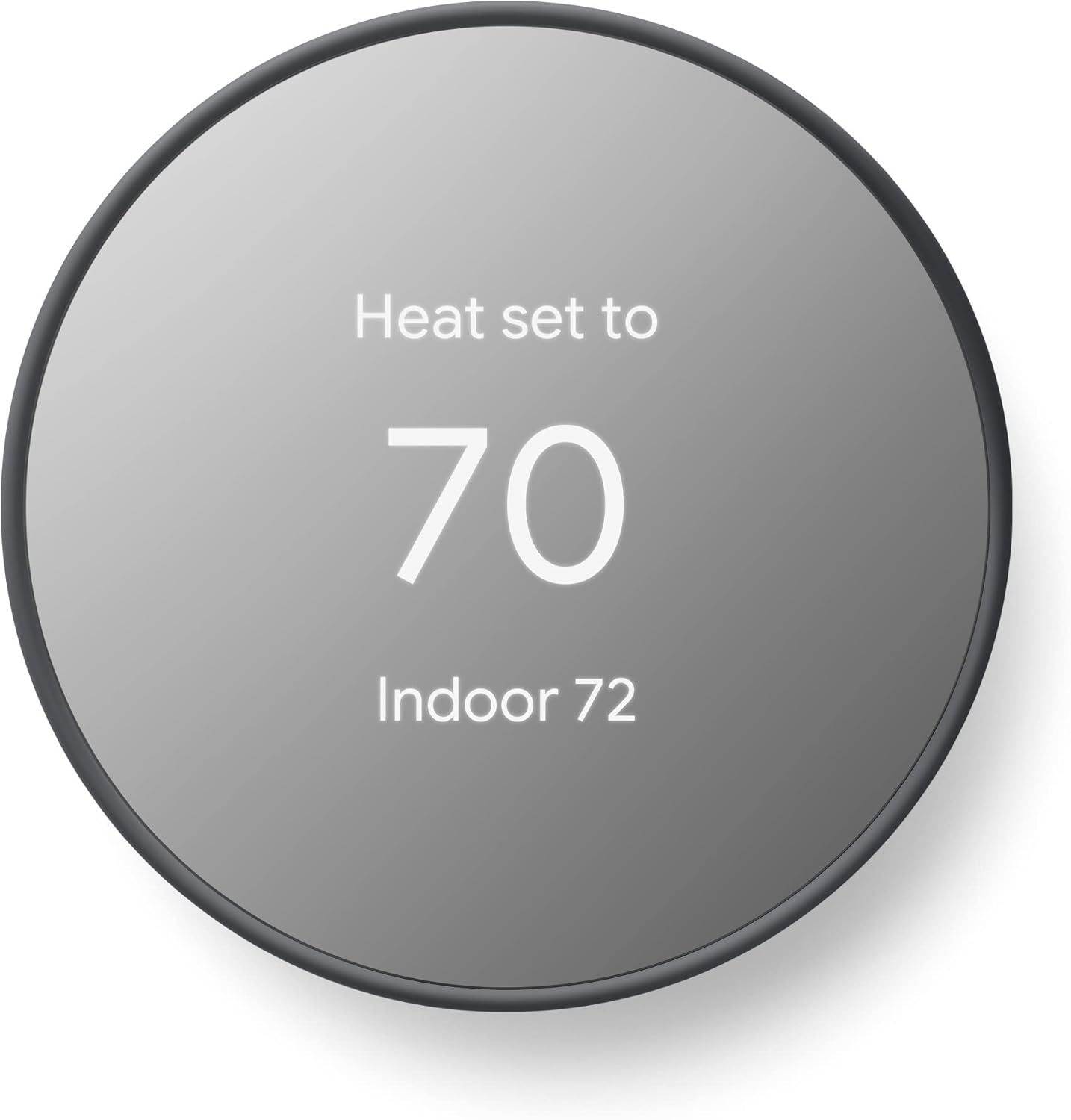
Google Nest Thermostat
| Connectivity Technology | Bluetooth, Wi-Fi |
|---|---|
| Power Source | Battery Powered |
| Control Type | Remote Control, Voice Control |
| Display Type | LCD |
| Number of Batteries | 2 A batteries required. (included) |
The Google Nest Thermostat is a compact smart thermostat intended to replace a basic wall unit and add app and voice control. It connects over 2.4/5 GHz Wi‑Fi and Bluetooth, uses a 2‑inch LCD and side touch bar for local control, and runs on two included A batteries so many homes do not need a C wire. Setup is aimed at DIY installation and the Google Home app guides you through wiring and a quick schedule. In practice it automates setbacks with Eco temperatures, offers Savings Finder suggestions in the app, and can send alerts if your HVAC shows irregular behavior. For boiler systems specifically, Nest lists broad compatibility but notes some heating-only, zone, and certain heat pump setups may require a C wire or power accessory and to check the compatibility checker before buying. The thermostat relies on internet and compatible voice devices for remote and voice features, and advanced grid features like Nest Renew are only available in supported regions. If you want simple remote control, app scheduling, and basic HVAC monitoring for a conventional boiler, this unit provides those conveniences in a compact, energy‑focused package.
Best for: Buyers who prioritize simple smart control, energy savings, and DIY installation for a conventional boiler system and want app and voice control backed by many user reviews.
Less Ideal for: Homes with complex zone controls, nonstandard 110/120V systems, or installations where adding a C wire or a power accessory is impractical should consider a more suitable professional thermostat or consult an HVAC pro.
- Easy DIY installation with app guidance and included mounting hardware
- Works without a C wire in most homes, running on included A batteries
- Wi‑Fi and Bluetooth connectivity for remote control and mobile scheduling
- Energy features like Eco Temperature and Savings Finder to reduce runtime
- Alerts and basic HVAC monitoring to flag potential system issues
- May require a C wire or power accessory for some boiler, zone, or specialized heating systems
- Advanced grid features and some integrations are region‑restricted and need online account setup
Verdict: If you want an affordable, app‑driven smart thermostat that adds remote control and energy features to a typical boiler setup, the Nest Thermostat is a practical, easy‑to‑install choice.
Riseem S3001 Nonprogrammable Thermostat

| Controller Type | Push Button |
|---|---|
| Temperature Control Type | Conventional Single Stage Systems |
| Connectivity Technology | Wired |
| Power Source | 24 volts AC or 2 AA batteries |
| Display Type | LCD |
The Riseem S3001 is a basic wall-mounted thermostat made for single-stage heating and cooling systems and straightforward temperature control. Installation uses a universal sub-base with large terminal blocks so a typical homeowner or installer can complete wiring in about 30 minutes, and the unit runs on 24VAC or two AA batteries when a C-wire is not available for most systems. The LCD with white backlight and push-button controls keep operation simple, and a separate heat/cool swing setting helps reduce short-cycling to improve comfort and efficiency. It lists compatibility with boilers for heat-only radiant systems, but it is explicitly limited to conventional single-stage setups and excludes multistage or heat-pump configurations. Practical strengths are clear readout, easy DIY install, and dual power; limitations include lack of programming, no smart connectivity, and restricted compatibility with complex HVAC or multi-stage boiler controls.
Best for: Homeowners with a single-stage boiler or simple forced-air system who want a reliable, no-frills thermostat that is easy to wire and operate and who prefer proven basic controls over smart features.
Less Ideal for: Buyers who need programmable schedules, smart connectivity, or support for multistage boilers, heat pumps, or other advanced HVAC systems should look elsewhere.
- Designed for conventional single-stage systems including heat-only boiler radiant setups
- Universal sub-base and large terminal blocks aim to simplify DIY installation
- Dual power: works on 24VAC or two AA batteries so no C-wire is required for most installs
- Backlit LCD and straightforward push-button controls make daily use intuitive
- Separate heating and cooling swing setting helps limit short-cycling and stabilize room temperature
- Nonprogrammable with no scheduling or remote control features
- No Wi-Fi or smart-home integration for remote monitoring or automation
- Incompatible with multistage systems, heat pumps, mini-splits, and several specialized heating types
Verdict: Choose the Riseem S3001 when you need a simple, battery-capable, single-stage thermostat that is easy to install and reliable for basic boiler or heat-only systems.
Choosing the Right Thermostat for Boiler System: Key Factors to Consider
Wiring and Relay Compatibility
Boiler systems often use different control circuits than forced-air furnaces, so confirming wiring compatibility is essential. Check whether the thermostat provides the correct relay outputs, supports dry contact or dedicated heat-only terminals, and matches the number of zones or presents separate calls for heat.
Incorrect wiring or relying on a thermostat without the proper relay type can prevent the boiler from firing correctly or cause persistent faults. For retrofit jobs, prefer thermostats that document wiring diagrams for common boiler controls and that do not require additional interface modules unless you are prepared to install them.
Control Logic and Anti-Short-Cycling
Boilers are sensitive to frequent on-off cycles, which increase wear and reduce efficiency. Look for thermostats with anti-short-cycling protection, configurable minimum on/off times, or built-in compressor/boiler protection delays.
Clear control logic ensures the boiler completes full firing cycles and avoids unnecessary starts. For systems with a circulator pump or multiple zones, choose a thermostat that coordinates call-for-heat behavior to prevent rapid cycling when zone valves open and close.
Programmability and Scheduling
The right scheduling features can reduce fuel consumption and improve comfort by lowering temperatures when rooms are unused and restoring them before occupancy. Evaluate whether the thermostat offers simple daily schedules, multiple setback periods, or adaptive learning features that suit your routine.
Consider how intuitive the programming interface is and whether schedules can be adjusted without accessing internal menus. For homes with varying occupancy patterns, thermostats that support multiple program profiles or vacation holds are useful to maintain efficiency without manual intervention.
Installation Complexity and Documentation
Boiler-system installations can range from straightforward to moderately complex depending on zone valves, relay panels, and existing wiring. Prioritize thermostats with clear, boiler-specific installation guides, labelled terminals, and color-coded wiring instructions.
Availability of wiring diagrams and diagnostic LEDs makes troubleshooting easier for installers and DIYers. If your system uses low-voltage or line-voltage controls, verify whether the thermostat requires a common wire, an external transformer, or an isolation relay to operate safely.
User Interface and Remote Access
How you interact with the thermostat affects daily convenience and how easily you make adjustments. A clear local display with straightforward menus makes on-site changes faster, while remote access via Wi-Fi or app can let you adjust schedules or temperature when away from home.
When choosing remote-capable units, check that mobile controls are responsive and that the thermostat retains basic scheduling if connectivity is lost. Also consider whether remote features are simple extras or integral to scheduling and energy-management functions.
Durability and Serviceability
Boiler systems are long-lived, so choose thermostats built with durable components and accessible service points. Look for models with replaceable batteries, removable covers for wiring access, and robust connectors that resist corrosion in humid boiler rooms.
Good diagnostics and straightforward firmware or software updates help maintain reliable operation. Thermostats that expose common fault codes or LED indicators can shorten troubleshooting time for technicians and reduce downtime.
Common Boiler Control Types Explained
Boiler controls typically fall into a few common categories such as simple on/off room thermostats, thermostats that operate relays or zone valves, and controllers that manage circulator pumps or multiple zones. Knowing which control type your boiler expects helps avoid mismatched components and ensures reliable operation.
Simple thermostats provide a single call for heat and are common on single-zone systems. More complex systems use thermostats that send signals to zone valves or a dedicated control panel. Identify whether your existing system uses dry contacts, 24V AC relays, or line-voltage switching before selecting a replacement thermostat.
- Single-call thermostats trigger the boiler to fire until the setpoint is reached.
- Zone thermostats coordinate with valve or pump logic to serve multiple areas.
- Some boilers require a common wire or external transformer for powered thermostats.
Retrofit Tips for Older Boilers
Older boiler systems may lack a dedicated 24V transformer or may use proprietary relay wiring. When retrofitting, first document the existing wiring and take photos of the control panel. Measure whether the existing thermostat connections provide power or merely close a circuit.
If the new thermostat needs a common wire or powered connection that the old wiring does not provide, plan for adding an isolated transformer or using an adapter relay. Keep in mind that adding wiring or an isolation device can affect installation time and may require a qualified technician for safe completion.
- Label all wires before disconnecting a legacy thermostat.
- Check for a transformer and note voltage and terminal labeling.
- Consider using an isolation relay when matching modern thermostats to older boiler controls.
Zoning Considerations and Multiple Thermostats
Homes with more than one heating zone rely on either multiple thermostats or a centralized zone control panel. If your boiler serves multiple zones, ensure each thermostat can call for heat without causing conflicts in pump or valve sequencing. Compatibility with zone controllers is a must for coordinated operation.
When using several thermostats, consistent programming and anti-short-cycling settings across devices help the boiler run efficiently. Also consider whether each thermostat needs local control only or if centralized monitoring and scheduling will simplify management.
- Confirm whether zone valves or a central control module handles pump activation.
- Keep consistent minimum run times across thermostats to protect the boiler.
- Plan wiring to avoid cross-calls that might confuse zone logic.
Energy Savings Strategies with Boiler Thermostats
Thermostats can contribute to fuel savings through programmed setbacks, smart scheduling, and gradual temperature ramps that match daily occupancy patterns. Using lower overnight setpoints and timed setbacks for unoccupied periods reduces boiler firing hours and improves efficiency.
Combining sensible thermostat schedules with proper boiler maintenance and insulated piping yields better savings than relying on thermostat changes alone. Avoid aggressive temperature swings that force long, inefficient boiler cycles; instead, aim for modest setbacks and progressive recovery.
- Use setback periods for predictable absences to reduce run time.
- Avoid large, sudden temperature changes that cause long recovery cycles.
- Coordinate thermostat schedules with zone operation for balanced comfort and efficiency.
Maintaining Your Thermostat and Boiler Controls
Regular checks prevent simple thermostat issues from becoming system problems. Inspect wiring connections annually, replace batteries on battery-powered models, and verify schedules and time settings after power outages.
Clean the thermostat housing and ensure the device is mounted away from drafts, direct sunlight, or heat sources that can skew readings. If your thermostat shows error codes or inconsistent control behavior, consult wiring diagrams and diagnostic LEDs before replacing the unit.
- Inspect terminal screws and wire insulation for corrosion or wear.
- Replace batteries yearly on battery-backed devices.
- Keep the thermostat away from localized heat sources to maintain accurate sensing.
How We Chose the Best Thermostat for Boiler System
We selected thermostats by focusing on the features that matter for controlling boiler-based hydronic and steam systems. Key evaluation criteria included wiring and compatibility with common boiler control circuits, control interface and programmability for daily comfort, and the thermostat's ability to avoid short cycling and support boiler-specific functions such as call-for-heat logic. We also reviewed build quality and reliability indicators like user-serviceable components and clear diagnostics, plus the ease of installation and the clarity of the wiring instructions. Energy-related capabilities such as setback schedules and integration with existing zoning systems were weighed because they affect operating cost and occupant comfort. We excluded thermostats designed exclusively for forced-air HVAC systems when they lacked boiler-compatible relay outputs. Units requiring proprietary control modules that greatly complicate retrofit installs were also deprioritized. The resulting list favors devices that balance straightforward boiler compatibility, sensible control features, and practical installation for typical residential boiler systems.
Our full evaluation process is outlined in our review methodology.
FAQ
Can I use a standard thermostat on a boiler system?
Often, but not always. Some standard thermostats are designed for forced-air systems and lack the correct relay outputs for boilers. Confirm that the thermostat supports the boiler's control circuit type or provides dry contact outputs compatible with your boiler.
Do boiler thermostats need a common wire?
It depends on the thermostat. Simpler mechanical or battery-powered models do not need a common wire, while many modern electronic or Wi-Fi thermostats require a common for steady power. If your wiring lacks a common, you can sometimes add an isolated transformer or use a thermostat that runs on batteries.
How do thermostats prevent short cycling on boilers?
Thermostats designed for boiler systems often include minimum on/off timers, anti-short-cycling delays, or configurable deadbands that prevent rapid restarts. These settings allow the boiler to complete efficient firing cycles and protect mechanical components from excessive wear.
Will a smart thermostat work with zone valves?
Many smart thermostats can work with zone valve systems if they provide the appropriate call-for-heat outputs and the zone control logic is compatible. Verify that the thermostat can communicate properly with the zone controller or that the zone wiring uses standard dry contacts.
What should I do if the thermostat and boiler disagree on temperature?
First check thermostat placement to ensure it is not affected by drafts or localized heat. Then inspect wiring and terminal connections for secure contacts. If the issue persists, review the thermostat's calibration settings and any differential or cycle-delay settings that might affect how it calls for heat.
Final Verdict
When choosing a thermostat for a boiler system, prioritize wiring compatibility and control logic that protects the boiler from short cycling. Installation simplicity, clear documentation, and the right scheduling features should guide your selection based on whether you need single-zone control, zoning coordination, or remote access. Balance programmability with robust boiler-specific behaviors: a thermostat that is easy to install and provides anti-short-cycling protections will serve most residential boiler systems well. Use the evaluation factors above to narrow choices and focus on models that match your system wiring and desired level of control.