
Note: This article contains affiliate links. If you click on these links and make a purchase, we may earn a small commission at no extra cost to you. This helps support our research and content. Read our full affiliate disclosure here.
Picking the right thermostat for central heating and air affects comfort, energy use, and how easily the system responds to daily changes. The wrong choice can lead to uneven temperatures, wasted energy, or incompatibility with existing wiring and equipment. This guide shortlists seven leading thermostats that suit typical central HVAC setups and highlights the practical tradeoffs you should expect. Below we review the top options for steady temperature control, ease of installation, and features that matter to homeowners and installers. Read on to see the evaluation criteria used and which capabilities to prioritize for reliable year-round comfort.
Top Picks at a Glance
| Best Overall The best all-around choice for most situations | Amazon Smart Thermostat |  |
| Best Quality Built to a higher standard if you want something more solid | Sensi Touch ST75 Thermostat |  |
| Best Value The sweet spot between price and what you get | Suuwer Non-Programmable Thermostat S701 |  |
| Best Budget The cheapest option that still gets the job done reliably | Honeywell Home CT30A1005 Thermostat |  |
| Top Rated A top-rated pick with lots of positive feedback | Riseem STN621 Thermostat |  |
| Most Popular A crowd favorite that many people choose with confidence | Google Nest Thermostat |  |
| Best Seller A high-volume bestseller chosen again and again | Riseem S3001 Nonprogrammable Thermostat |  |
Amazon Smart Thermostat
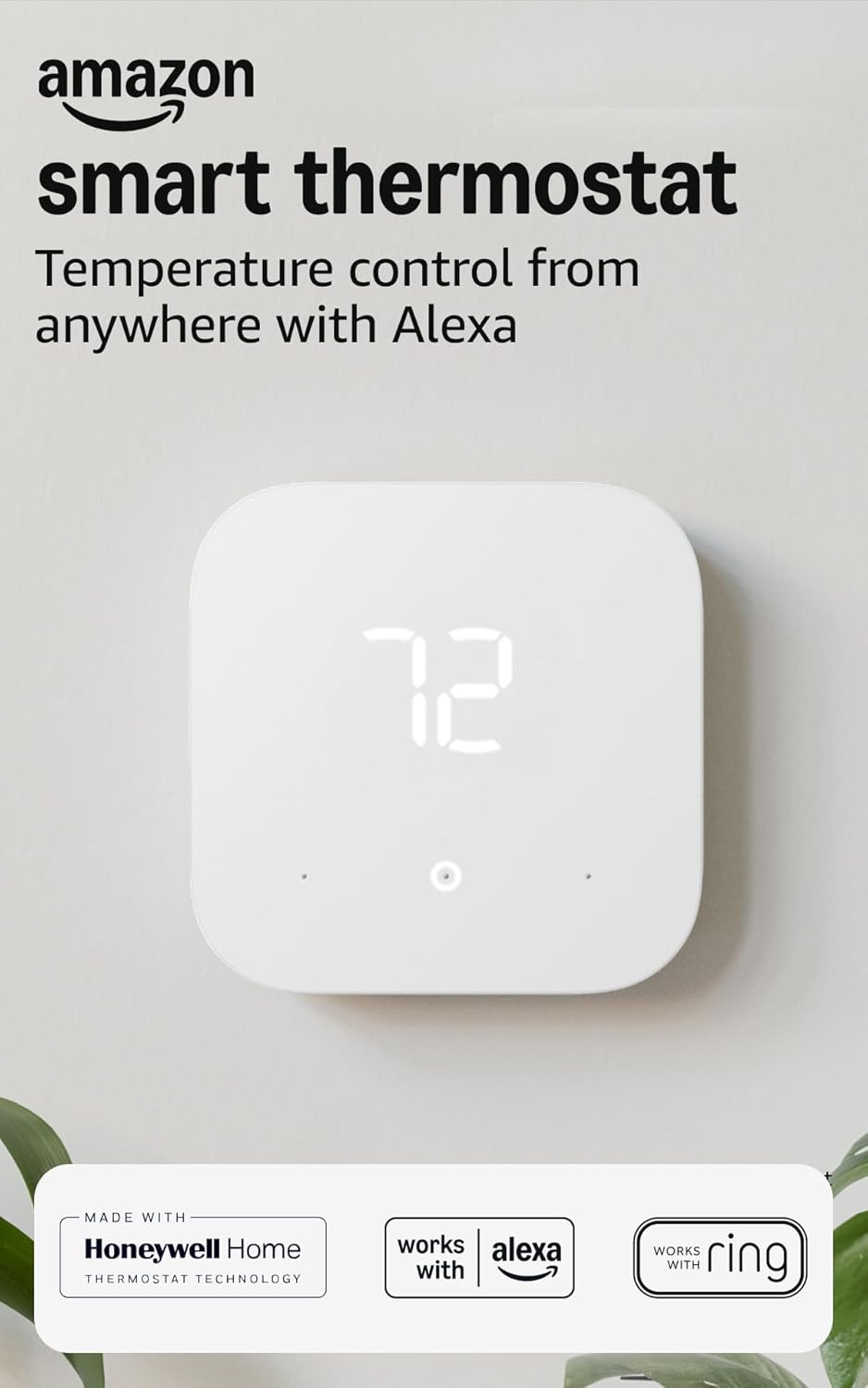
| Requires C-wire | Yes |
|---|---|
| Works with | Alexa and Ring |
| Energy guidance | ENERGY STAR estimates referenced |
| Installation | Do-it-yourself with Alexa app |
The Amazon Smart Thermostat is a straightforward, Alexa-focused thermostat designed to replace a conventional wall unit and help reduce energy use. It installs DIY-style with the Alexa app and requires a C-wire, then connects to your Amazon account to enable scheduling, remote temperature control, and Alexa voice adjustments. Notable features include presence-based adjustments when paired with select Alexa devices, ENERGY STAR–aligned energy savings guidance, and integration with Alexa+ routines for coordinating multiple smart home devices. The interface and setup lean on Amazon and Honeywell Home thermostat technology, so users get familiar thermostat controls without a steep learning curve. Limitations include dependence on Alexa infrastructure for advanced automations and the need for a C-wire during installation, which may complicate fitment in older homes without one. The unit is best for homeowners who want simple voice and app control plus energy-focused scheduling rather than a highly configurable professional-grade HVAC controller.
Best for: Homeowners who want an easy-to-install, voice-enabled thermostat that prioritizes energy savings and simple app-based scheduling.
Less Ideal for: People who need a C-wire-free solution or who want deep HVAC diagnostics and professional-level control should consider other options.
- Simple Alexa voice and app control for everyday temperature adjustments
- Supports programmable schedules and Alexa+ routines for basic automation
- Designed to help reduce energy use and eligible for thermostat rebate information
- Backed by Honeywell Home thermostat technology for familiar reliability
- Requires a C-wire for installation
- Advanced automations rely on Alexa ecosystem and compatible devices
Verdict: Buy this if you want a simple, Alexa-integrated thermostat that makes scheduling and basic energy savings easy.
Sensi Touch ST75 Thermostat

| Connectivity Technology | Wi-Fi |
|---|---|
| Screen Size | 4.3 inches |
| Control Method | App, Touch, Voice |
| Specific Uses For Product | Air Conditioner, Boiler, Furnace, Heat Pump |
| Power Source | AC/DC |
The Sensi Touch ST75 is a wall‑mounted smart thermostat for central heating and cooling systems that brings touchscreen and app control together for everyday comfort management. It connects over 2.4 GHz Wi‑Fi to the Sensi mobile app so you can set schedules, change temperatures remotely, and view usage reports and smart alerts. The color touchscreen and touch controls make local adjustments simple, and the installer‑friendly terminals and built‑in level speed up DIY mounting when a common C‑wire is present. Energy Star certification and features like geofencing, programmable schedules, and maintenance reminders aim to reduce HVAC runtime and keep equipment healthy. The unit requires a C‑wire and runs on AC/DC power, so homes without a common wire will need adapter solutions or professional wiring. Also, advanced integrations depend on your chosen smart home platform and setup experience. For buyers who prioritize reliable remote control and clearer feedback on system performance, the Sensi Touch balances smart features with practical installation and everyday use.
Best for: Buyers who want clear remote control and energy‑focused features for their central heating and cooling system and who plan to install or have a C‑wire available.
Less Ideal for: Homes without a common wire and buyers seeking a completely battery‑powered or ultra‑simple non‑smart thermostat should look elsewhere.
- Color touchscreen for easy local control and readable feedback
- Wi‑Fi remote access with scheduling, usage reports, and smart alerts
- Energy Star certification and features aimed at reducing HVAC energy use
- App‑guided DIY installation with illuminated easy‑click terminals and built‑in level
- Works with major voice and smart home platforms for voice and automation control
- Requires a common C‑wire or adapter for reliable power
- Some advanced integrations and setup can be limited by platform configuration
Verdict: Choose the Sensi Touch ST75 if you want an Energy Star certified smart thermostat that delivers reliable app control, clear touchscreen interaction, and practical energy‑saving features for central HVAC systems.
Suuwer Non-Programmable Thermostat S701

| System type | Single-stage 1 Heat/1 Cool |
|---|---|
| Power | 24VAC or 2 AAA batteries |
| Display | 4.5 inch blue backlit LCD |
| Compressor delay | 5 minute selectable protection |
The Suuwer S701 is a straightforward wall-mounted thermostat built for conventional single-stage systems (1 heat/1 cool). It provides basic temperature control via push-button input and a large blue-backlit LCD that is easy to read, which makes daily setpoint adjustments quick for households that prefer manual control over scheduling. The unit runs on 24VAC or two AAA batteries so it can be used where a common wire is absent, and it includes selectable 5-minute compressor delay protection, separate heat/cool cycle swing adjustment, ambient temperature correction, and a low-battery indicator. Installation is typical for a nonprogrammable stat but buyers should check wiring compatibility because it is not suitable for multistage equipment, heat pumps, line-voltage baseboard systems, or many mini-splits. The S701 delivers reliable, no-frills temperature regulation and clear feedback on screen, but it lacks programmable schedules, smart connectivity, and advanced system diagnostics that more feature-rich thermostats provide.
Best for: Buyers who want a reliable, easy-to-use thermostat for a single-stage central heating and cooling system and prefer manual setpoint control over programming or smart features.
Less Ideal for: Users who want schedule programming, remote control or smart-home integration, or who have multistage or heat-pump HVAC systems should choose a different model.
- Large, easy-to-read blue backlit LCD for clear temperature display
- Dual power options (24VAC or 2 AAA batteries) so no common wire is required in many installs
- Selectable 5-minute compressor delay protection to protect HVAC equipment
- Ambient temperature correction and adjustable heat/cool swing for finer control
- Simple push-button controls make it easy to operate for users who do not want programming
- Not compatible with multistage systems, heat pumps, line-voltage baseboard heat, or many mini-splits
- No programmable schedules, Wi-Fi, or smart-home integration
Verdict: Choose the Suuwer S701 when you need a reliable, easy-to-read manual thermostat for a single-stage central HVAC system without smart features.
Honeywell Home CT30A1005 Thermostat

| Controller Type | Hand Control |
|---|---|
| Additional Features | Heat Only |
| Power Source | Low Voltage Control |
| Control Type | Dial Control |
The Honeywell Home CT30A1005 is a basic, heat-only manual thermostat that uses a bimetal sensor and a snap-action switch for straightforward temperature control. It mounts on the wall with the included decorative backplate and mounting hardware, and its dial/manual interface makes it easy to set a desired temperature without navigating menus. This wired, low-voltage unit is intended for single-stage heating systems such as furnaces and is mercury free. Practical benefits include quick DIY installation, reliable mechanical operation without batteries or digital displays, and a compact unobtrusive design that fits traditional homes. Limitations are clear: it does not support cooling, heat pumps, multi-stage systems, programming schedules, or remote connectivity, so it is not suitable where automated scheduling or smart-home integration is desired. For homeowners who want a low-cost, no-frills way to control central heating, the CT30A1005 delivers dependable basic function with minimal setup.
Best for: Buyers seeking a low-cost, no-frills thermostat to control a single-stage home furnace and who prefer simple manual operation over programmable or smart models.
Less Ideal for: People who want programmable schedules, smartphone control, or support for cooling, heat pumps, or multi-stage HVAC systems should choose a more advanced thermostat.
- Simple manual dial control that is easy to use
- Reliable mechanical bimetal sensor with snap-action switch
- Includes decorative backplate and mounting hardware for quick DIY install
- Low-voltage wired power with no batteries or digital maintenance
- Only supports heat-only systems and is incompatible with cooling or heat pumps
- Non-programmable with no remote access or smart features
Verdict: A budget-friendly, reliable manual thermostat for homeowners who only need straightforward temperature control of a single-stage heating system.
Riseem STN621 Thermostat

| Power Source | Corded Electric |
|---|---|
| Voltage | 24 volts_of_alternating_current |
| Display Type | LCD |
| Number of Batteries | 2 AAA batteries required. |
This Riseem STN621 is a straightforward, reliability-minded wall thermostat for single-stage and many heat pump systems. It provides basic temperature control via push-button and touch controls on a clear backlit LCD, and can be powered by 24VAC or two AAA batteries so it will keep working even if a common wire is not available. Installation is intended for DIYers, with a universal sub-base and large terminal blocks that can shorten wiring time, and the unit supports common system types including forced air, heat pumps with auxiliary heat, electric furnaces, and millivolt systems. Notable practical features include an adjustable temperature differential to reduce cycling and a front-load battery compartment for easy maintenance. Limitations are that it is nonprogrammable and lacks smart features like scheduling, remote control, or Wi-Fi, and it is not compatible with multi-transformer, multi-stage, line-voltage, or mini-split systems, so confirm system compatibility before buying.
Best for: Buyers who prioritize a simple, dependable thermostat for basic heating and cooling control and want a unit that is easy to install and maintain without smart features.
Less Ideal for: Users who want scheduling, Wi-Fi/remote access, or support for multi-stage or line-voltage HVAC systems should look at programmable or smart thermostat alternatives.
- Works with 24V heat pump and many conventional single-stage systems
- Can run on 24VAC or two AAA batteries so no C-wire is required in most installs
- Large terminal blocks and universal sub-base simplify DIY installation
- Backlit LCD and simple button controls make daily use straightforward
- Adjustable temperature differential helps reduce short cycling
- Nonprogrammable with no Wi-Fi or remote control features
- Not compatible with multi-transformer, multi-stage, line-voltage, or mini-split systems
Verdict: Choose this unit when you need a no-frills, easy-to-install thermostat that reliably controls 24V single-stage and heat pump systems without smart bells and whistles.
Google Nest Thermostat
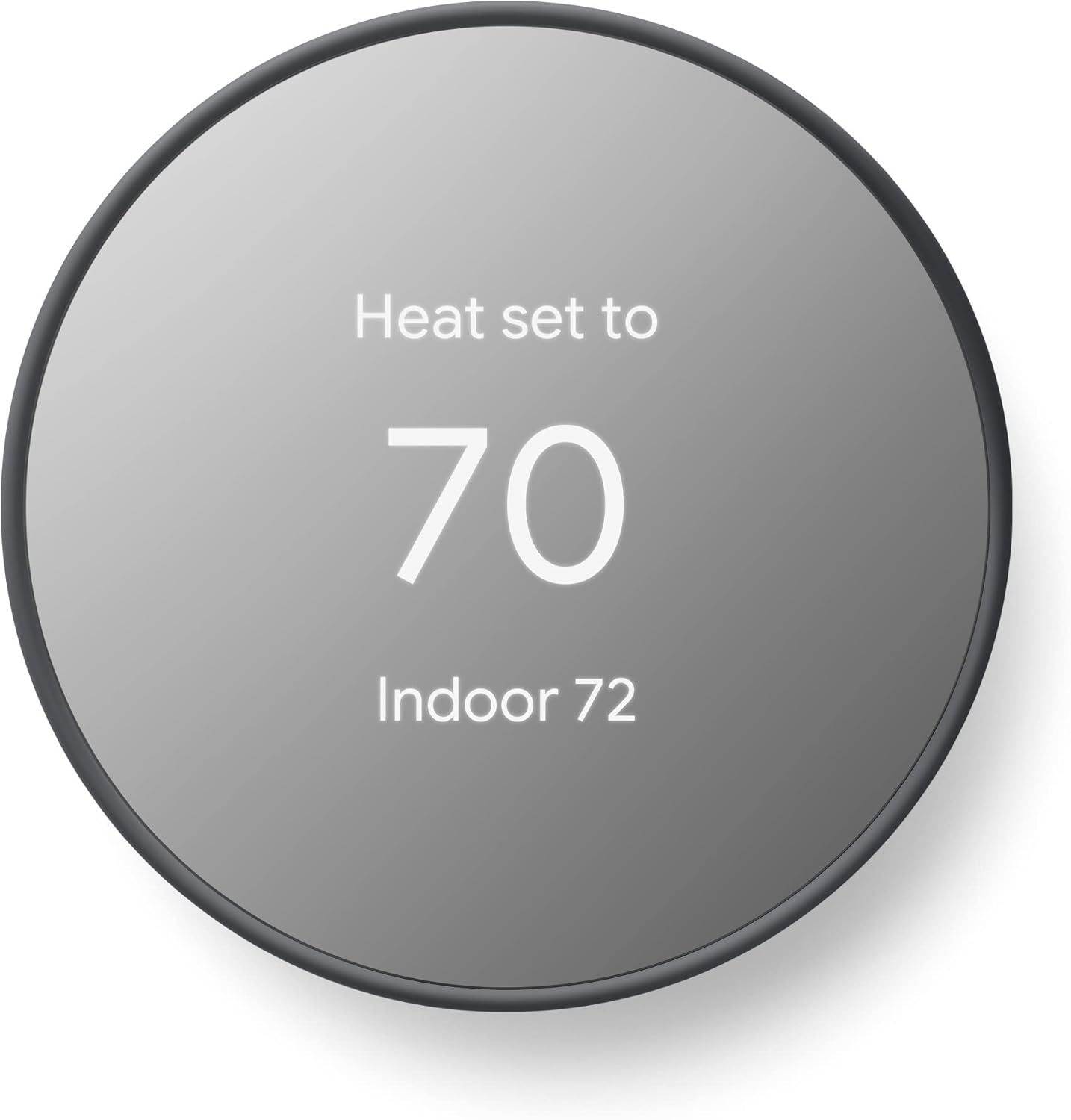
| Connectivity Technology | Bluetooth, Wi-Fi |
|---|---|
| Power Source | Battery Powered |
| Display Type | LCD |
| Control Type | Remote Control, Voice Control |
| Number of Batteries | 2 A batteries required. (included) |
The Google Nest Thermostat is an entry-level smart thermostat that connects to your home Wi‑Fi and lets you control heating and cooling from the Google Home app or compatible voice assistants. It is typically wall-mounted to replace a standard thermostat and is designed for DIY installation in about 30 minutes for most homes. Key features include scheduled programming, automatic Eco Temperatures when the house is empty, Savings Finder suggestions, and HVAC monitoring that can send alerts if something seems off. It runs on two included A batteries and supports both Bluetooth and dual‑band Wi‑Fi for remote control. Practical benefits are easier remote temperature control, simple schedule setup in the app, and some built-in energy-saving features that can reduce wasted heating or cooling. Limitations to consider are compatibility with certain systems that may require a C wire or a power accessory, and some advanced energy features require linking to Google services and working internet. The display and controls are basic compared with higher-end Nest models, but it covers core smart thermostat needs at a lower price point.
Best for: Buyers who want a budget-friendly smart thermostat that provides remote control, simple scheduling, and basic energy-saving features while relying on broad compatibility with common central heating and cooling systems.
Less Ideal for: Homeowners who need advanced thermostat features like multi‑stage HVAC control, a color touchscreen, or professional HVAC diagnostics should consider higher-end models or professional installation.
- Supports remote control via Google Home app and voice assistants
- Energy-saving features like Eco Temperatures and Savings Finder
- Dual-band Wi‑Fi and Bluetooth connectivity for reliable pairing
- Straightforward DIY installation with included mounting hardware
- Includes batteries so it powers up without extra purchases
- May need a C wire or power accessory for some HVAC systems
- Basic display and controls compared with higher-end Nest models
Verdict: Pick the Nest Thermostat if you want an affordable, easy-to-install smart thermostat that delivers app and voice control plus simple energy-saving features for central heating and air.
Riseem S3001 Nonprogrammable Thermostat

| Temperature control type | Conventional Single Stage Systems |
|---|---|
| Power source | 24VAC or 2 AA batteries |
| Display type | LCD backlight |
| Connectivity technology | Wired |
The Riseem S3001 is a straightforward nonprogrammable wall thermostat built for conventional single-stage heating and cooling systems. It mounts on a universal sub-base and uses large terminal blocks to simplify DIY wiring, and it can run from 24VAC or two AA batteries so a common wire is not required in most installs. The clear backlit LCD and simple button controls make setpoint changes and temperature checks easy, and its separate heating and cooling swing helps stabilize cycle behavior for steadier comfort. The unit supports basic system types like gas, oil and electric furnaces, boilers, and cooling-only setups, but it is not compatible with multistage systems, heat pumps, mini-splits, or high-voltage electric baseboards. Expect accurate temperature control within about one degree F, and basic indicators such as low battery. This model is a low-friction option if you need a reliable replacement or an uncomplicated thermostat for a single-zone, single-stage HVAC setup, but it lacks programmability, smart/home integration, and support for more complex systems.
Best for: Buyers who want a risk-averse, no-frills replacement thermostat for a single-zone, single-stage central heating and cooling system and prefer a simple, easy-to-install unit over smart features.
Less Ideal for: Users who need programmable schedules, remote/smart control, or who have multistage, heat pump, mini-split, or high-voltage HVAC systems.
- Simple, easy-to-read backlit LCD and intuitive button controls for quick adjustments
- Dual power options (24VAC or 2 AA batteries) so most installs do not require a C-wire
- Large terminal blocks and universal sub-base designed for straightforward DIY installation
- Separate heating and cooling swing to help stabilize cycle timing and comfort
- Not compatible with multistage systems, heat pumps, mini-splits, or high-voltage electric baseboard heating
- No programmability or smart connectivity for schedules or remote control
Verdict: A dependable, easy-to-install nonprogrammable thermostat for risk-averse buyers with a simple single-stage central HVAC system.
Choosing the Right Thermostat for Central Heating and Air: Key Factors to Consider
System Compatibility and Wiring
Central heating and air systems vary in control requirements, from simple single-stage furnaces to multi-stage heat pumps with auxiliary heat. Confirming compatibility with the thermostat's supported control types prevents miswiring and malfunction.
Wiring matters because some thermostats require a common 24V C wire for continuous power, while others operate on batteries or use power stealing. If your home lacks the expected wires, you may need an adapter or a model that supports battery operation. Additionally, check for compatibility with equipment features such as two-stage compressors, dual-fuel setups, or zone control interfaces, because ignoring these details can limit control or risk system cycling issues.
Temperature Sensing and Accuracy
Accurate sensing determines how close interior temperatures track your settings and how frequently the HVAC cycles. Thermostats with better sensors and faster sampling reduce overshoot and maintain even comfort.
Consider placement too. A precise thermostat poorly located near sunlight, drafts, or external walls will deliver misleading readings. Some models offer remote or integrated sensors to account for varying temperatures across the home, which helps eliminate hot or cold spots and reduces wasted runtime from repeated short cycles.
Control Features and User Interface
How you interact with the thermostat affects daily convenience and long-term satisfaction. Easy-to-read displays, intuitive menus, and clear feedback for current mode and fan status make routine adjustments painless.
Advanced control features such as multi-program scheduling, adaptive recovery, geofencing, and simple scene creation let you tailor comfort around occupancy patterns. Also evaluate how straightforward manual override is, because you will occasionally need temporary changes without losing the programmed schedule.
Connectivity and Remote Access
Remote access through Wi-Fi or a connected hub enables temperature adjustments from anywhere and provides useful alerts about system operation. This matters for troubleshooting, energy tracking, and for households where multiple people may manage comfort.
Check whether the thermostat connects natively to the home network or requires a separate bridge. Consider the reliability and security of the connection method and whether cloud features are optional. Integrations with smart-home platforms and voice assistants can add convenience, but they are secondary to solid remote-temperature control and local operation when the network is unavailable.
Energy Management and Reporting
Thermostats that support intelligent scheduling, setback controls, and usage reporting can reduce runtime and fuel consumption. Look for models that provide clear, actionable energy reports and that support adaptive recovery so your home reaches target temperatures efficiently.
Features like vacation modes, quick setpoint changes, and learning algorithms can help reduce waste when occupancy varies. However, learning features require time and oversight; verify that manual controls remain readily accessible and transparent so you can override or adjust behavior as needed.
Installation, Maintenance, and Support
A thermostat that is easier to install lowers the chance of wiring errors and reduces the need for professional service calls. Clear labeling on terminals, robust documentation, and accessible customer support are all practical considerations.
Maintenance factors include battery access if the unit uses them, filter or system reminders, and firmware update processes. Look for thermostats with straightforward firmware update paths, because firmware maintenance can improve reliability and patch connectivity issues without requiring hardware changes.
Wiring Checklist Before You Buy
Before selecting a thermostat, run a wiring audit at your current control board. Label each conductor and verify terminal designations such as R, C, W, Y, G, and O/B so you can match them to the new device. If any wires are missing or the colors do not match expected functions, test with a multimeter or consult documentation for your HVAC control board.
- Confirm presence of a 24V common C wire if the thermostat requires continuous power
- Identify whether you have a single-stage or multi-stage compressor and whether a heat pump is present
- Note any zone control or third-party control systems connected to the HVAC
Placement Tips for Accurate Readings
Thermostat accuracy depends on placement. Mount the device on an interior wall at eye height, away from direct sunlight, drafts, kitchens, and vents. Avoid hallways that may not represent main living area temperatures. If you have an open-plan layout, consider remote temperature sensors to average readings from multiple rooms.
- Install on a north or east-facing interior wall when possible
- Keep at least 12 inches clearance from doors and windows
- Use remote or multi-sensor setups for large or multi-level homes
Balancing Smart Features with Reliability
Smart features add convenience but can introduce complexity. Wi-Fi connectivity, geofencing, and cloud-based schedules are useful, but choose a thermostat that preserves basic local control and maintains scheduled behavior when the network drops. Prioritize models with straightforward fallback modes and clear manual overrides.
- Verify local control works without cloud access
- Prefer models with predictable reboot and reconnection behavior
- Ensure firmware updates can be performed without losing custom schedules
Scheduling Strategies That Save Energy
Effective scheduling targets occupied periods and reduces setpoints during predictable absences. Use setback periods for nights and daytime absences, and enable adaptive recovery if available so the system ramps to the target temperature efficiently. Avoid overly aggressive setpoint swings that force long runtimes or frequent cycling, which can negate efficiency gains.
- Use modest setbacks to avoid long recovery times
- Combine occupancy-based schedules with occasional manual checks
- Enable alerts for unusually long runtimes that may indicate system problems
Service and Troubleshooting Basics
When a thermostat behaves unexpectedly, start with a wiring and power check. Confirm the device has proper 24V power or fresh batteries, review error codes or status lights, and check for recent firmware updates. If the thermostat reports equipment faults, shut down the HVAC at the breaker and inspect control wiring and terminal connections before powering back on.
- Keep manufacturer documentation and wiring diagrams accessible
- Record any error codes and the sequence of events leading up to a fault
- Contact a qualified technician if you identify electrical issues or suspect control board faults
How We Chose the Best Thermostat for Central Heating and Air
Our selection process focused on practical, measurable attributes that matter for central heating and air systems. We prioritized thermostats that offer proven temperature accuracy, broad wiring and equipment compatibility, and a clear installation path for conventional single-stage, multi-stage, and heat pump configurations. We also considered user interface clarity and remote-control features, since ease of programming and remote access materially affect everyday convenience. Energy management was another key filter. We evaluated how each thermostat supports scheduling, setback strategies, and integration with whole-home energy monitoring when available. Durability and build quality were judged by construction and component design rather than brand reputation. We excluded devices that require extensive system upgrades or nonstandard wiring for basic functionality. Overall, products were kept on the list only if they delivered tangible control accuracy, straightforward compatibility, reliable connectivity, and a user experience that reduces daily friction for homeowners and technicians.
Our full evaluation process is outlined in our review methodology.
FAQ
Will any thermostat work with my central heating and air system?
It depends. Many thermostats support standard 24V control signals used by most central HVAC systems, but you must match the thermostat to your system type and wiring. Confirm terminal functions and control types before installing to avoid compatibility problems.
Do I always need a C wire for a smart thermostat?
Not always. Some smart thermostats can run on batteries or use power-stealing techniques, but a dedicated C wire offers the most reliable continuous power for Wi-Fi, displays, and background functions. If you lack a C wire, consider models that explicitly support battery operation or plan for a wiring upgrade.
How do remote sensors help with temperature control?
Remote sensors allow the thermostat to average temperature readings from multiple rooms or prioritize specific locations. This reduces hot or cold spots and prevents the HVAC from overworking to reach a reading that does not reflect main living areas.
Will smart thermostat features save me money on energy bills?
They often can, especially when combined with sensible scheduling and setback strategies. Features like adaptive recovery and usage reporting help reduce wasted runtime. Actual savings depend on local climate, thermostat settings, and occupant behavior.
Can I install a thermostat myself?
Many homeowners can install a thermostat if they are comfortable with low-voltage wiring and follow the instructions carefully. Turn off power before working on the control board, label wires, and verify connections. If you are unsure about wiring or system configuration, hire a qualified technician.
Final Verdict
Choosing the right thermostat for central heating and air comes down to matching system compatibility, reliable temperature sensing, and a user interface you will use consistently. Prioritize models that support your wiring and equipment, offer accurate sensing or remote sensors for large homes, and retain basic local controls independent of cloud services. Balance smart features against reliability and installation effort. Focus on the handful of capabilities that improve daily comfort and reduce runtime rather than chasing every advanced feature. With those priorities, you can select a thermostat that provides steady comfort, dependable operation, and sensible energy management.