
Note: This article contains affiliate links. If you click on these links and make a purchase, we may earn a small commission at no extra cost to you. This helps support our research and content. Read our full affiliate disclosure here.
If you rely on electric baseboard heaters for winter warmth, the thermostat you pair with them determines comfort, efficiency, and monthly energy use. The right thermostat maintains stable room temperature, avoids short-cycling, and fits your wiring and heater control method. This guide presents seven shortlisted thermostats selected for suitability with electric baseboard systems, focusing on compatibility, control accuracy, and installation ease. Below are the top picks for different needs and setups, followed by detailed buying factors and practical guidance to help you pick the best thermostat for your baseboard heaters.
Top Picks at a Glance
| Best Overall The best all-around choice for most situations | meross Matter Smart Thermostat MTS215 |  |
| Best Quality Built to a higher standard if you want something more solid | Mysa Smart Thermostat V2 |  |
| Best Value The sweet spot between price and what you get | Honeywell Home 5-2 Programmable Thermostat |  |
| Best Budget The cheapest option that still gets the job done reliably | YeloDeer Baseboard Thermostat EA19 |  |
| Top Rated A top-rated pick with lots of positive feedback | Cadet F Series Built-In Thermostat |  |
| Most Popular A crowd favorite that many people choose with confidence | Honeywell TH1100DV1000 Thermostat |  |
| Best Seller A high-volume bestseller chosen again and again | Mysa Smart Thermostat LITE |  |
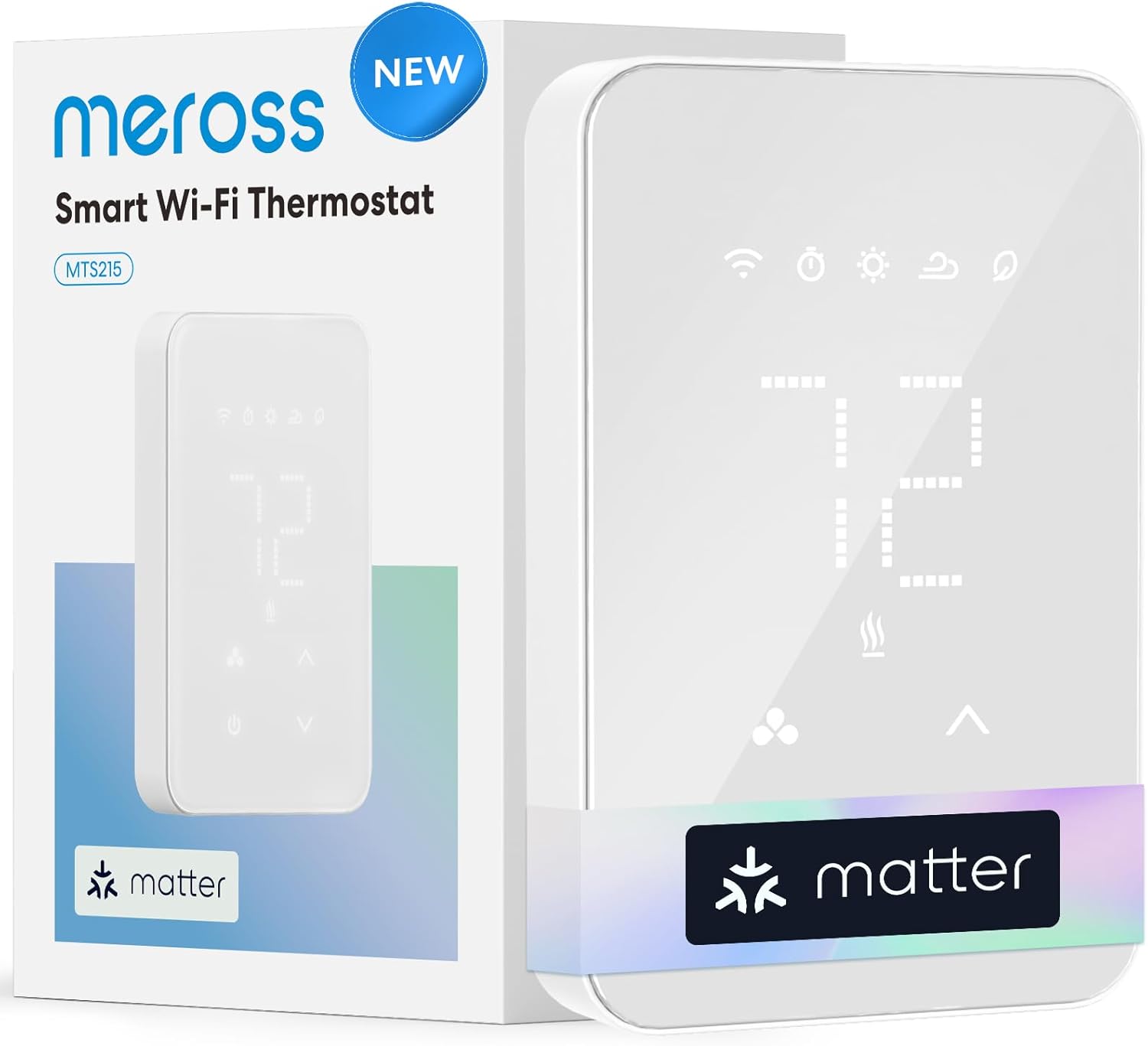
meross Matter Smart Thermostat MTS215
| Controller Type | Amazon Alexa, Apple HomeKit, Google Assistant, Matter, SmartThings |
|---|---|
| Voltage | 120 volts |
| Connectivity Technology | Matter, Wi‑Fi |
| Display Type | LCD |
The meross MTS215 is a wall‑mounted smart thermostat built for 120–240V electric heating systems like baseboard and convector heaters. It pairs with Wi‑Fi and Matter to work across HomeKit, Alexa, Google Home and SmartThings, letting you control temperature by voice or the Meross app and set 24/7 schedules for automated comfort. The unit includes energy monitoring so you can track real‑time electricity use and a power‑saving open‑window detection feature that pauses heating when a sudden drop in temperature is detected. Installation is straightforward for typical high‑voltage heater wiring and it ships with wire nuts and mounting screws. Limitations include incompatibility with 24V HVAC systems and electric underfloor heating, and the built‑in sensor sits under the casing so placement or app calibration may be needed for the most accurate room temperature readings. For anyone using electric baseboard heat who wants cross‑platform smart control and energy visibility, this is a practical, modern choice.
Best for: Buyers with electric baseboard or convector heaters who want a single smart thermostat that integrates across voice ecosystems and gives easy scheduling plus energy usage insight.
Less Ideal for: Homeowners using 24V HVAC systems, heat pumps, or electric underfloor heating should look for a thermostat designed for those systems instead.
- Matter and Wi‑Fi connectivity lets it work with HomeKit, Alexa, Google Home and SmartThings
- Energy monitoring provides real‑time and historical electricity usage data in the app
- Open window detection automatically pauses heating to avoid wasted energy
- Includes basic installation hardware and supports 120–240V electric heating systems
- Not compatible with 24V HVAC systems or electric underfloor heating
- Temperature sensor is inside the casing and can need repositioning or calibration for accurate readings
Verdict: A practical Matter and Wi‑Fi smart thermostat that brings cross‑platform voice control, scheduling, and energy monitoring to 120–240V electric baseboard heaters.
Mysa Smart Thermostat V2

| Voltage | 240 volts |
|---|---|
| Wattage | 3800 watts |
| Connectivity Technology | WiFi, NFC |
| Display Type | LED |
| Control Type | App Control, Button Control and Voice Control |
The Mysa Smart Thermostat V2 replaces standard high‑voltage baseboard controls with a modern, Wi‑Fi connected thermostat that supports 120–240V systems and up to 3800W at 240V. It is installed as a wall‑mounted replacement and is typically used to add scheduling, geofencing, and remote temperature control to electric baseboard or fan‑forced heaters. Notable features include Apple HomeKit, Alexa and Google Assistant integration, a 3.5‑inch LED display with adaptive brightness, touch controls, and a mobile app that provides energy insights and monthly reports. In practice the Mysa makes it easy to set weekly schedules, lock controls, and monitor energy usage from anywhere, which helps owners optimize comfort and reduce wasted heating time. Important limitations are that it requires a compatible high‑voltage wiring setup (not for low‑voltage or two‑wire systems) and needs a neutral or second live wire for full functionality, so older installations may need rewiring. The unit is compact and offers clear remote control, but buyers should confirm load and wiring compatibility before purchase.
Best for: Buyers who prioritize reliable, high‑performance control of electric baseboard or fan‑forced heaters and want app and voice integrations to optimize comfort and energy use.
Less Ideal for: Homeowners with older two‑wire baseboard wiring or low‑voltage HVAC systems should look elsewhere or plan for wiring changes before buying.
- Designed specifically for high‑voltage electric baseboard and fan‑forced heaters
- Full Wi‑Fi connectivity with Apple HomeKit, Alexa, and Google Assistant support
- Adaptive LED display and touch controls for easy local use
- App scheduling, geofencing, and energy insights for remote control and savings
- Requires at least four‑wire connection including neutral or second live so older two‑wire systems may be incompatible
- Not suitable for low‑voltage HVAC systems
Verdict: Choose the Mysa V2 if you want a high‑performance smart thermostat that adds app control, voice assistants, and energy insights to electric baseboard heating.
Honeywell Home 5-2 Programmable Thermostat

| Voltage | 240 volts |
|---|---|
| Wattage | 3500 watts |
| Controller Type | Push Button |
| Display Type | Digital |
The Honeywell Home RLV4305A programmable thermostat controls line-voltage electric heating such as baseboards, convectors, radiant ceilings and fan-forced heaters up to 3,500 watts at 240 volts. It offers 5-2 day programming with four periods per day so you can set separate weekday and weekend schedules, and a backlit digital display with instructions behind the front panel for straightforward setup. TRIAC switching provides silent operation and tight temperature regulation that reduces swings, which helps maintain comfort at lower setpoints for energy savings. Installation is simplified by a 2-wire non-polarized connection and battery-free backup so your schedule stays after brief outages. Limitations are that it only supports line-voltage electric heat and has specific load requirements, so it is not suitable for low-resistance loads, inductive systems driven by contactors or central HVAC. The thermostat is a practical, accurate choice if you need a programmable, silent controller for standalone electric heating circuits.
Best for: Buyers who want a reliable, programmable thermostat to optimize comfort and energy use on standalone electric heating circuits and who value quiet, accurate temperature control.
Less Ideal for: Homeowners who need a thermostat for central forced-air systems, low-voltage HVAC, or heaters controlled by contactors or relays should look elsewhere.
- 5-2 day programming with four periods per day for separate weekday and weekend schedules
- TRIAC switching gives 100% silent operation and precise temperature control (±0.27°F)
- 2-wire non-polarized connection and battery-free backup simplify installation and prevent reprogramming after outages
- Backlit digital display and front-panel instructions make programming and reading easy
- Only compatible with line-voltage electric heating and specific resistive load range, so it cannot be used with central HVAC or inductive loads
Verdict: Choose this thermostat if you want a quiet, accurate programmable controller to optimize comfort and energy use for standalone electric baseboard heating.
YeloDeer Baseboard Thermostat EA19

| Voltage | 110V-265V |
|---|---|
| Wattage | 4800 watts |
| Controller Type | Hand Control |
| Temperature Range | 40°F to 80°F |
| Mounting Type | Wall Mount |
This YeloDeer EA19 is a straightforward 4-wire line-voltage thermostat designed for electric baseboard and fan-forced heaters. It provides manual temperature control with a large rotary dial and an LCD plus indicator lights so you can see when the unit is calling for heat. The thermostat supports dual voltage (110–265V) and handles up to 20 amps, making it suitable for typical 120V or 240V baseboard circuits up to the specified wattage. Installation is conventional hardwired wall-mount style and the unit is meant as a simple nonprogrammable replacement or upgrade from older mechanical controls. The benefits are precise electronic sensing compared with mechanical thermostats and a wide usable temperature range from about 40 to 80 degrees F for basic comfort tuning. Key limitations are no scheduling or smart features and the need for proper line-voltage wiring and installation expertise, so it is not a plug-and-play smart thermostat replacement for low-voltage systems.
Best for: Buyers who need a budget-friendly, accurate replacement for an electric baseboard thermostat and prioritize simple manual control over smart features.
Less Ideal for: People who want programmable schedules, remote control, or integration with smart-home systems should look for a digital or Wi‑Fi enabled thermostat instead.
- Works with 110–265V line-voltage systems and both 120V and 240V baseboard heaters
- Electronic control offers finer temperature accuracy than most mechanical thermostats
- Supports up to 20A for up to 4800W output on compatible circuits
- Simple rotary dial and indicator lights make everyday adjustments quick and intuitive
- Nonprogrammable with no Wi‑Fi or scheduling capabilities
- Requires hardwired line-voltage installation and is not compatible with low-voltage HVAC thermostats
Verdict: A no-frills, cost-conscious electronic thermostat that delivers accurate manual control for 120V or 240V electric baseboard heaters.
Cadet F Series Built-In Thermostat

| Temperature range | 45°F to 80°F |
|---|---|
| Voltage | 240 volts of alternating current |
| Controller type | Mechanical knob |
| Mounting type | Baseboard |
| Control type | Dial Control |
The Cadet F Series Built-In Thermostat is a straightforward replacement thermostat made specifically for Cadet F-series electric baseboard heaters. It installs in place of the detachable end plate, so no extra wiring is required, and its large mechanical dial adjusts temperature between 45 and 80°F for simple room-level control. The unit is a double-pole, corded-electric design with a manual dial and mechanical knob that make it durable and easy to operate without programming. Its tamperproof built-in mounting and factory-matching white finish help it blend into the heater while keeping controls secure. Because it is a basic mechanical thermostat, there are no scheduling, remote or smart features, but that simplicity also means fewer electronic failure points and easy long-term serviceability. If you need a no-frills, reliable controller that fits Cadet F-series baseboards and is quick to install, this performs that role well.
Best for: Buyers who prioritize a reliable, low-maintenance thermostat for Cadet F-series baseboards and want a direct, easy-to-install replacement with manual control.
Less Ideal for: Users who want programmable schedules, Wi-Fi integration, or app-based remote control should consider a digital or smart alternative instead.
- Direct fit for Cadet F-series baseboard heaters so no additional wiring is required
- Simple mechanical dial and knob are easy to operate and less prone to electronic failure
- Double-pole design offers reliable control suitable for high-voltage baseboard circuits
- Tamperproof built-in mounting keeps the control secure and integrated with the heater
- No programmable, remote, or smart features for scheduled or remote temperature control
- Limited temperature range compared with some digital thermostats
Verdict: A simple, factory-fit mechanical thermostat built for dependable, low-maintenance control of Cadet F-series electric baseboard heaters.
Honeywell TH1100DV1000 Thermostat

| Power Source | Battery Powered |
|---|---|
| Voltage | 230 volts |
| Display Type | Digital |
| Controller Type | Push Button |
| Number of Batteries | 2 AAA batteries required. |
The Honeywell TH1100DV1000 is a simple, nonprogrammable thermostat made for electric baseboard heating that shows the ambient temperature on a backlit digital display and uses two AAA batteries. It provides one-touch access to setpoint temperature and basic push-button control, which makes daily use straightforward for homeowners who want an easy manual control without scheduling. The unit includes built-in compressor protection logic and supports BACnet MS/TP connectivity for integration in systems that use that protocol, though typical residential use will rely solely on the wall-mounted, battery-powered operation. Practical benefits are clear: readable display, obvious setpoint control, and compatibility with 230V baseboard circuits. Limitations are that it lacks programmable schedules, advanced comfort/energy-saving automation, and smart-home app control despite a Wi-Fi field in the spec list that is not reflected in typical nonprogrammable operation, so buyers should not expect remote scheduling or learning features.
Best for: Buyers who prioritize a straightforward, reliable wall thermostat for electric baseboard heat and want a readable, manual control without programming complexity or setup.
Less Ideal for: People who want programmable schedules, remote smartphone control, or advanced energy-saving automation should look at programmable or smart thermostat options instead.
- Backlit digital display that shows ambient temperature continuously
- Simple push-button, one-touch setpoint control for easy manual adjustments
- Designed for electric baseboard heaters and compatible with 230V circuits
- Battery powered so it works during power interruptions and is easy to install
- Nonprogrammable so it cannot run schedules or automatic temperature setbacks
- No built-in Wi-Fi smartphone control or advanced energy-management features
Verdict: A straightforward, readable nonprogrammable thermostat made for electric baseboard systems when you want simple manual control and reliable operation.
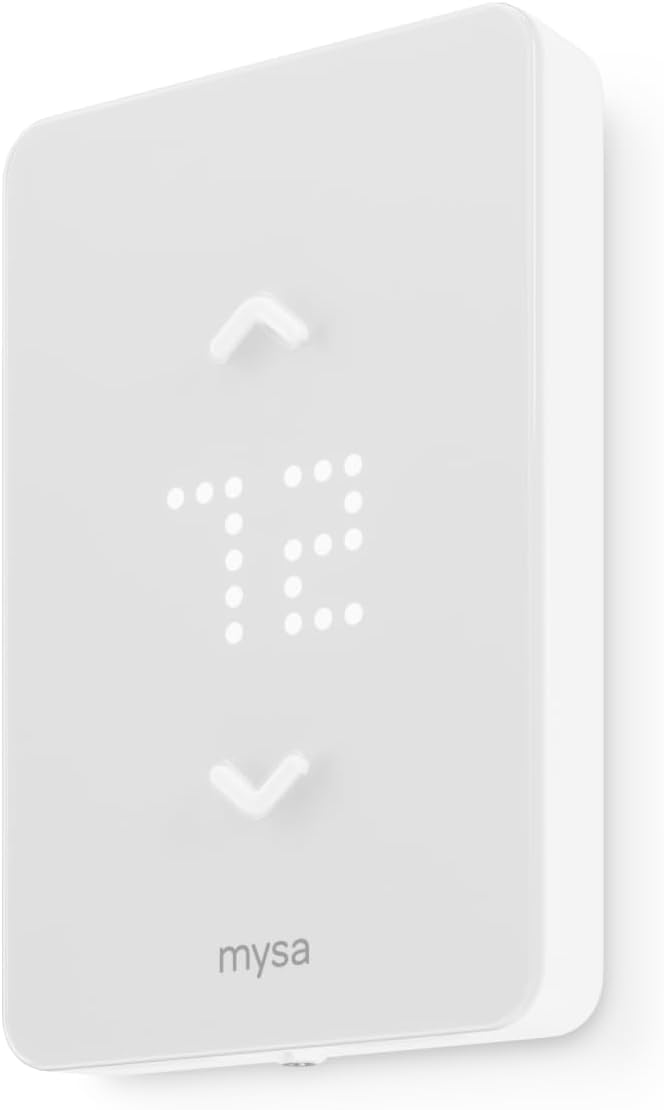
Mysa Smart Thermostat LITE
| Connectivity Technology | Bluetooth, Wi‑Fi |
|---|---|
| Controller Type | Apple HomeKit, Alexa, Google Assistant, Android, iOS |
| Voltage | 120V/240V |
| Wattage | 3800 watts |
| Display Type | LCD |
The Mysa Smart Thermostat LITE replaces basic line‑voltage heater controls with a connected touchscreen and smartphone app for per‑room control of electric baseboard, fan‑forced, and convector heaters. It pairs over Wi‑Fi and Bluetooth and integrates with HomeKit, Alexa, and Google Assistant so you can set schedules, use voice commands, and adjust temperatures remotely. The Mysa app offers seven‑day scheduling, geofencing, runtime reports and monthly energy summaries to help cut electric heat bills. Installation is designed for DIY in about 15 minutes when you have the required wiring (neutral or a second live), and the unit supports 120V–240V single‑ or double‑pole setups. Practical strengths are the focused compatibility with high‑voltage heaters, clear LCD touch control, and built‑in scheduling that delivers measurable savings without subscription fees. Limitations include the need to confirm your existing wiring before buying and the fact that it is specifically for electric heat types, so it will not replace low‑voltage HVAC thermostats or controls for non‑electric systems.
Best for: Buyers who want a reliable, easy‑to‑use smart thermostat to modernize electric baseboard or wall heaters and who prefer a backed brand with straightforward app scheduling and remote control.
Less Ideal for: Homeowners planning to control central low‑voltage HVAC systems or those without the required high‑voltage wiring should look for a thermostat made for their system type.
- Designed specifically for electric baseboard and fan‑forced heaters, ensuring appropriate line‑voltage control
- Wi‑Fi and Bluetooth connectivity with HomeKit, Alexa, and Google Assistant support for remote and voice control
- 7‑day scheduling, geofencing, and monthly runtime reports to help reduce heating costs
- No subscription fees — app features and energy reports are included
- Supports 120V–240V and single‑ or double‑pole wiring for broad electric heater compatibility
- Requires confirming you have the correct wiring (neutral or second live) before installation
- Not compatible with low‑voltage central HVAC systems
Verdict: If you need a factory‑quality smart thermostat built specifically for electric baseboard and fan‑forced heaters, Mysa LITE gives modern app control, voice integration, and scheduling that reliably cuts electric heating costs.
Choosing the Right Thermostat for Electric Baseboard Heaters: Key Factors to Consider
Electrical Compatibility
Electric baseboard heaters typically run on line-voltage circuits such as 120V or 240V and draw significant current. Ensuring the thermostat is rated for the correct voltage and amperage is essential to safe operation. Check whether the thermostat is designed for direct line-voltage control versus low-voltage control with a relay. Using an incompatible thermostat can overload the switch or produce unreliable temperature control.
Also verify whether the thermostat supports single-pole or double-pole switching as required by your wiring and local electrical codes. Double-pole thermostats switch both hot conductors on multi-wire 240V systems and are often required for safety. Finally, confirm the thermostat's wiring configuration and terminal labeling to match your existing heater conductors and wallbox space.
Control Accuracy and Sensor Placement
Accurate temperature sensing depends on the thermostat's sensor type and where it measures air temperature. Some thermostats use internal sensors that sit in the wallbox, while others offer remote sensors or floor/air sensors for better placement. For rooms with drafts, tall ceilings, or rooms where heaters are on an exterior wall, sensor placement can significantly change comfort and energy use.
Think about whether you need a thermostat that measures room air near typical occupancy zones or one that references floor temperature. Higher control precision reduces temperature swings and can prevent overshooting setpoints, which improves comfort and can slightly reduce energy consumption.
Programmability and Control Features
Programmable thermostats let you set schedules to lower heat when spaces are unoccupied and raise it before occupancy. For baseboard heaters, scheduling can yield noticeable energy savings because the heating source has direct resistive output. Look for easy-to-program interfaces and features like multiple daily schedules, vacation hold, or adaptive recovery that learns how long the heater takes to reach setpoints.
Consider whether you want simple setback capability or more advanced options like Wi-Fi control and remote scheduling. Remote access can add convenience but also requires a reliable network and may involve additional setup steps.
Installation Complexity and Wallbox Requirements
Installing a line-voltage thermostat for baseboard heaters is often more involved than replacing a low-voltage thermostat. You will need to match the thermostat's terminal configuration to the existing heater wiring and ensure the wallbox has adequate space and correct grounding. Some thermostats are bulkier and require a larger box or surface-mount adapter.
If you are not comfortable working with 120/240V circuits, factor in the need for professional installation. Also check whether the thermostat requires a neutral connection, a specific mounting orientation, or room for conduit entries. Clear installation instructions and labeled terminals reduce the risk of wiring errors.
Durability and Switching Mechanism
Baseboard heaters draw significant current for extended periods, so the thermostat's internal switch and components must withstand sustained loads. Mechanical relays and heavy-duty snap-action switches can tolerate more inrush and continuous current than lighter designs. Electronic switching can offer smoother control but should still be rated for line-voltage endurance.
Evaluate whether the thermostat specifies cycle life or switch ratings and whether it includes protection against arcing or overheating. Robust construction and heat-resistant materials help ensure long service life in systems where the thermostat is exposed to high ambient temperatures from the heater.
User Interface and Accessibility
How you interact with the thermostat affects daily comfort and how often you tweak settings. Simple rotary or digital interfaces are easier for quick adjustments, while touchscreen or app-based controls enable fine scheduling. Consider readability of the display, availability of large tactile controls, and whether the layout suits users of different ages or abilities.
Accessibility also includes how the thermostat communicates status, such as clear indicators for heating on, error states, or wiring issues. A thermostat that is intuitive to use reduces user error and unnecessary adjustments that can increase energy consumption.
Line-Voltage Vs Low-Voltage Control Options
Electric baseboard heaters are most commonly controlled by line-voltage thermostats designed to switch 120V or 240V directly. These thermostats contain switching elements sized for resistive loads and are wired into the heater circuit. Low-voltage thermostats exist but typically require an external relay or contactor to handle the heater's current.
If you are considering upgrading to a more feature-rich low-voltage thermostat, plan for the additional relay and check that the relay's specifications match the heater load. This hybrid approach can let you use modern interfaces while keeping the heavy switching safely isolated.
- Line-voltage thermostats: direct switching, simpler wiring, must match amperage.
- Low-voltage thermostats with relay: advanced controls possible, requires correct relay sizing.
- Installation tradeoffs include wallbox space, wiring changes, and potential need for an electrician.
Wiring and Safety Checks Before You Buy
Before selecting any thermostat, inspect your heater wiring to confirm voltage, conductor count, and whether a neutral is available. Turn off power at the breaker before examining terminals and take clear photos or notes of the existing connections.
Verify local electrical codes regarding required switching methods. Some jurisdictions require double-pole switching for 240V baseboard heaters. If you are unsure, consult a licensed electrician to avoid unsafe installations or code violations.
- Identify voltage and number of hot conductors.
- Note whether a neutral or ground is present in the box.
- Confirm breaker rating and whether the thermostat's amp rating meets or exceeds it.
Scheduling Strategies for Baseboard Heat
Baseboard heaters have thermal inertia and can be slow to change room temperature, so scheduling should account for warm-up time. Instead of short setbacks, program longer preheat periods to reach comfortable temperatures by occupancy times. Many users find a simple weekday/weekend schedule with one or two setpoints is sufficient.
Adaptive recovery features can calculate the right start time to reach a target temperature by a given time and can be helpful in homes with varying insulation levels. If your thermostat lacks adaptive recovery, set earlier start times or use manual overrides to avoid cold mornings.
- Use gradual setbacks rather than large, abrupt temperature drops.
- Program preheat periods before occupancy to avoid cold spikes.
- Use vacation or hold modes for extended absences.
Remote Sensors and Zoning Considerations
Rooms with uneven heat distribution benefit from remote sensors that measure temperature where people actually spend time. Some thermostats support auxiliary sensors to better represent living areas rather than wall-mounted locations exposed to drafts or direct sunlight.
If you have multiple baseboard circuits, consider a zoning approach with a thermostat per zone to avoid overheating some rooms while others stay cold. Zoning requires proper wiring and, in some cases, additional relays or transformers depending on the control architecture.
- Remote sensors improve comfort in irregular spaces.
- Zoning increases control but adds wiring complexity.
- Ensure each zone's thermostat is rated for its circuit load.
Maintenance and Troubleshooting Tips
Periodic checks of thermostat operation and wiring can prevent failures. Look for signs of overheating at terminals, unusual chatter from relays, or inconsistent temperature control. Replace or service thermostats that show arcing or erratic behavior.
If a thermostat stops controlling the heater reliably, verify line-voltage at the input terminals and confirm continuity through the thermostat when it is calling for heat. Many issues stem from loose connections or worn mechanical switches rather than the heater itself.
- Inspect terminals for discoloration or looseness.
- Listen for relay chatter or rapid cycling.
- Test thermostat continuity with power off using a multimeter.
How We Chose the Best Thermostat for Electric Baseboard Heaters
We prioritized thermostats that are specifically suited to electric baseboard heater control and that address common installation and performance concerns for wired line-voltage systems. Key evaluation criteria included electrical compatibility, control accuracy, user interface and programmability, installation complexity, and durability under continuous load. We verified each option against typical baseboard wiring setups and whether they support the control method required by resistive baseboard elements. We excluded low-voltage consumer thermostats and devices that require additional relays or transformers unless they were explicitly recommended for direct use with baseboard heaters. Also excluded were products that lack clear wiring diagrams or fail to specify maximum amperage and voltage limits. Our process favored thermostats with clear documentation, robust mechanical or electronic switching for line-voltage loads, and features that measurably affect daily use such as scheduling or adaptive temperature control.
Our full evaluation process is outlined in our review methodology.
FAQ
Can I use a standard low-voltage thermostat with a baseboard heater?
Not directly. Most baseboard heaters require line-voltage thermostats or a low-voltage thermostat paired with a correctly rated relay or contactor. Using a low-voltage thermostat alone can overload its output and create a safety hazard.
Do I need a double-pole thermostat for a 240V baseboard circuit?
Often yes. Many 240V baseboard installations require a double-pole thermostat that switches both hot conductors for safety and code compliance. Check local electrical codes and the heater wiring to determine the correct switching type.
Will a programmable thermostat save energy with electric baseboards?
Programmable thermostats can reduce energy use by allowing temperature setbacks during unoccupied periods and scheduling preheat times. The actual savings depend on insulation, setback strategy, and how long the heater runs, since resistive heat responds differently than central systems.
Are Wi-Fi thermostats suitable for baseboard heaters?
Wi-Fi thermostats can be suitable if they are designed for line-voltage systems or are used with an appropriate relay rated for the heater circuit. Ensure the Wi-Fi model specifies compatibility with direct line-voltage or follow installation guidance for using an external switching device.
What should I check if my thermostat is cycling too frequently?
Frequent cycling can indicate a thermostat with too narrow a differential, a misplaced sensor near a draft or heat source, or an oversized thermostat switch. Check sensor location, programming for cycle rate if available, and consult installation guidelines to adjust settings or sensor placement.
Final Verdict
Choosing the right thermostat for electric baseboard heaters comes down to matching electrical specifications, ensuring accurate sensing, and picking control features that fit how you use each space. Prioritize thermostats rated for your circuit voltage and amperage, and consider sensor placement and scheduling capabilities to reduce temperature swings. Balance installation complexity against the benefits of advanced features. For most homes, a correctly rated line-voltage thermostat with straightforward scheduling and robust switching delivers the best mix of comfort, safety, and reliability.