
Note: This article contains affiliate links. If you click on these links and make a purchase, we may earn a small commission at no extra cost to you. This helps support our research and content. Read our full affiliate disclosure here.
Picking a thermostat on a budget matters because the right control device can cut wasteful heating and cooling cycles without costing a fortune. If you want dependable temperature control, lower monthly energy use, and simple setup, this guide focuses on cost-conscious options that still deliver the key features homeowners need. We shortlisted six thermostats on a budget and evaluated them for installation friendliness, thermostatic accuracy, and real-world energy impact. Read on to see which affordable models match your priorities and why each dimension matters when you install a new thermostat.
Top Picks at a Glance
| Best Quality Built to a higher standard if you want something more solid | Sensi Smart Thermostat ST55 |  |
| Best Value The sweet spot between price and what you get | Sensi Lite Smart Thermostat ST25 | 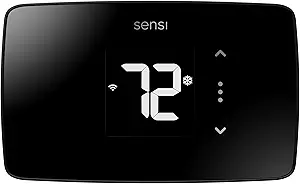 |
| Best Budget The cheapest option that still gets the job done reliably | Honeywell Home CT30A1005 Thermostat |  |
| Top Rated A top-rated pick with lots of positive feedback | Heagstat H701W Thermostat |  |
| Most Popular A crowd favorite that many people choose with confidence | Amazon Smart Thermostat |  |
| Best Seller A high-volume bestseller chosen again and again | Riseem S3001 Nonprogrammable Thermostat |  |
Sensi Smart Thermostat ST55

| Connectivity Technology | Wi-Fi |
|---|---|
| Controller Type | Amazon Alexa, Apple HomeKit, Google Assistant, SmartThings, Vera |
| Temperature Control Type | Programmable, Smart/Remote |
| Energy Certification | ENERGY STAR Certified |
| Power Source | Corded Electric |
The Sensi ST55 is a budget-friendly smart thermostat that replaces a traditional wall thermostat to give you remote control and scheduling via a dedicated app and voice assistants. It connects over 2.4 GHz Wi‑Fi, supports common HVAC systems including furnaces, heat pumps, boilers and air conditioners, and is ENERGY STAR certified to help reduce HVAC energy use. Installation is designed for DIY with guided app steps, included mounting hardware and wire stickers, and it can work without a common wire in many homes. The unit offers a clear LED display, button controls, simple touch and app control, usage reports, smart alerts and filter reminders that help with maintenance and performance monitoring. On the downside, the interface is basic compared with higher-end touchscreens and advanced zoning integrations, and it requires 24 VAC power or batteries when a C-wire is not present in some setups. For buyers wanting straightforward smart features and energy savings without a high price, the Sensi ST55 delivers reliable performance and easy setup.
Best for: Buyers who want a dependable, performance-focused smart thermostat that prioritizes reliable Wi‑Fi control, energy savings, and straightforward DIY installation on a budget.
Less Ideal for: Homeowners seeking a high-end touchscreen interface, advanced zoning or multi‑stage HVAC integrations should consider more feature-rich models.
- Wi‑Fi remote access and app control with voice assistant support
- ENERGY STAR certified with usage reports and smart alerts for energy savings
- Designed for DIY installation with included hardware and guided app setup
- Works with common HVAC systems including furnace, heat pump, boiler and AC
- Basic LED/button interface lacks the advanced touchscreen features of premium models
- May require a C‑wire or batteries depending on home wiring
Verdict: A cost-conscious smart thermostat that delivers reliable remote control, energy-saving reports, and easy DIY installation for performance-minded buyers on a budget.
Sensi Lite Smart Thermostat ST25
| Connectivity Technology | Wi‑Fi |
|---|---|
| Control Method | App, Touch, Voice |
| Power Source | Battery or C‑wire |
| Display Type | LCD |
| Number of Batteries | 2 AAA batteries required (included) |
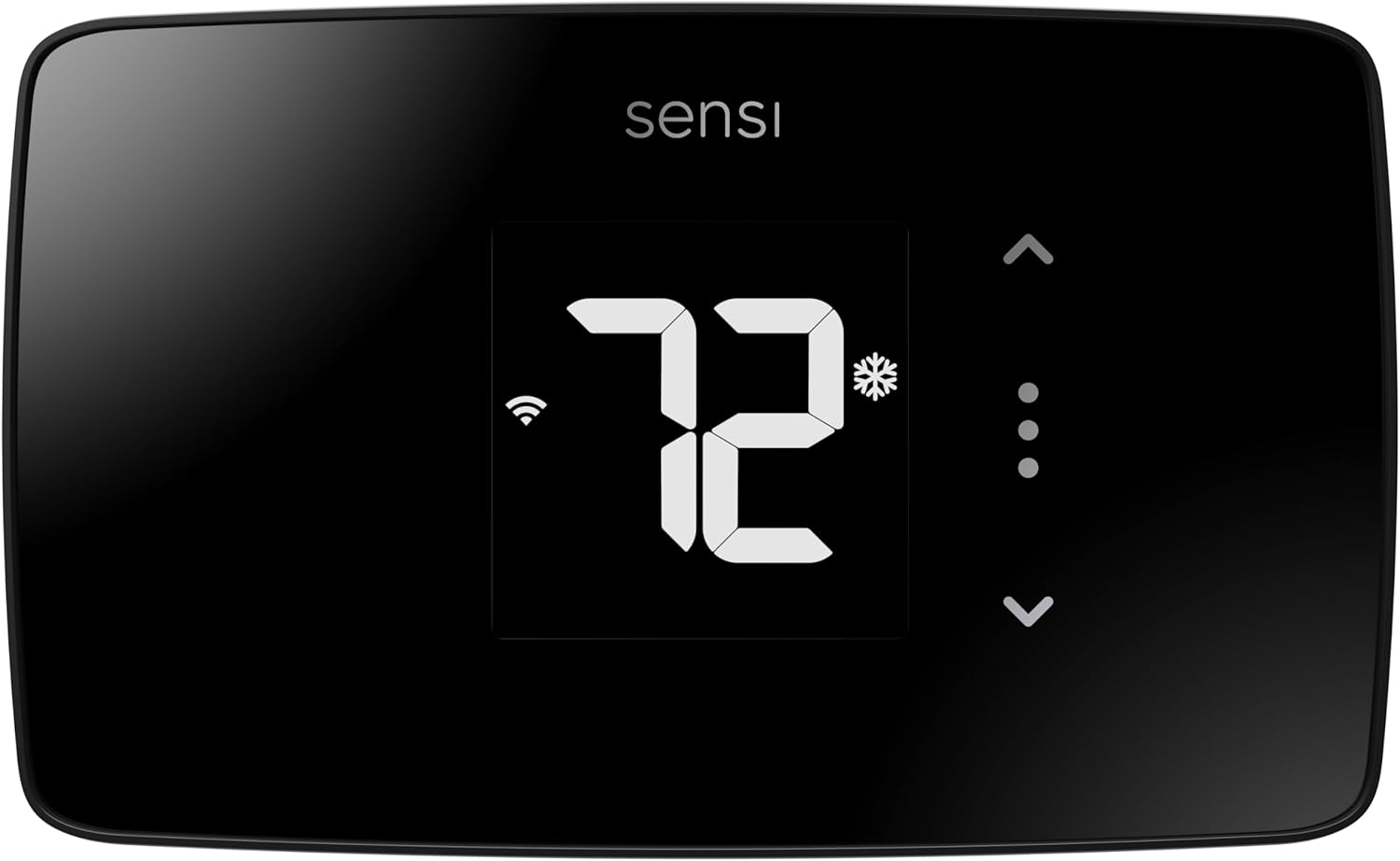
The Sensi Lite Smart Thermostat is a pared‑down smart thermostat that gives basic remote control and scheduling without extra complexity. It connects to 2.4 GHz Wi‑Fi and pairs with Alexa, Google Assistant, and SmartThings so you can change temperature from the app, by touch, or with voice. Installation is aimed at DIYers: the unit includes wire labels, a built‑in level, and step‑by‑step instructions, and it works without a common wire on most systems though some heat‑only or cool‑only setups do require a C‑wire. The LCD is simple and the thermostat runs on two AAA batteries or a C‑wire for power. Energy‑saving features include flexible scheduling, geofencing, and usage reports, and the product is Energy Star certified. It is designed for straightforward heating and cooling control rather than advanced learning or multi‑zone management, so buyers who want minimal fuss and solid remote control will appreciate it while power users may miss adaptive learning and deeper integrations.
Best for: Buyers who want a straightforward, budget‑minded smart thermostat that is easy to install and gives reliable remote control and scheduling without extra bells and whistles.
Less Ideal for: People seeking adaptive learning, multi‑zone management, or extensive third‑party integrations should consider more feature‑rich models.
- Easy DIY installation with included mounting hardware and built‑in level
- Works with Alexa, Google Assistant, and SmartThings for voice and smart home control
- Top‑rated mobile app for remote control, scheduling, geofencing, and usage reports
- Energy Star certified and designed to reduce HVAC energy use
- Lacks advanced learning algorithms and multi‑zone features found in higher‑end models
- Requires a C‑wire for some system types like heat‑only or cool‑only setups
Verdict: A budget smart thermostat that delivers straightforward remote control, simple DIY installation, and Energy Star energy savings for buyers prioritizing practicality.
Honeywell Home CT30A1005 Thermostat

| Controller Type | Hand Control |
|---|---|
| Additional Features | Heat Only |
| Connectivity Technology | Wired |
| Power Source | Low Voltage Control |
| Display Type | Manual |
The Honeywell Home CT30A1005 is a basic manual thermostat for single-stage heating systems that uses a bimetal sensor and a snap-action switch to regulate temperature. Installation is straightforward with the included decorative backplate and mounting hardware, and the dial control provides direct, tactile temperature adjustment without a display or programming. Because it is heating-only and wired for low-voltage control, it is suited to furnaces and similar systems where precise scheduling or cooling control is not needed. The unit is mercury-free and compact, so it stays unobtrusive on the wall and performs reliably as a simple thermostat replacement or for rental properties. Limitations include no digital readout, no programmable schedules, and incompatibility with heat pumps, electric baseboard heat, or multi-stage HVAC setups, so buyers should confirm system compatibility before purchase.
Best for: Buyers who want a low-cost, no-frills replacement thermostat for a single-stage heating system and value simplicity and reliability over smart features.
Less Ideal for: Anyone who needs cooling control, programmable schedules, smart home integration, or compatibility with heat pumps and multi-stage systems should look elsewhere.
- Very simple, easy-to-use dial control for direct temperature adjustment
- Includes mounting hardware and decorative backplate for quick DIY installation
- Mercury-free bimetal sensor with snap-action switch offers reliable mechanical control
- Compact, unobtrusive design suited for basic heating systems
- Limited to heating-only systems and not compatible with heat pumps or electric baseboard heat
- No digital display or programmable scheduling features
Verdict: Pick this if you need an inexpensive, dependable manual thermostat to control a heating-only system without bells or whistles.
Heagstat H701W Thermostat
| Controller Type | Non-Programmable |
|---|---|
| Power Source | AC, Battery Powered |
| Display Type | LCD |
| Connectivity Technology | Wired |
| Screen Size | 4.5 inches |
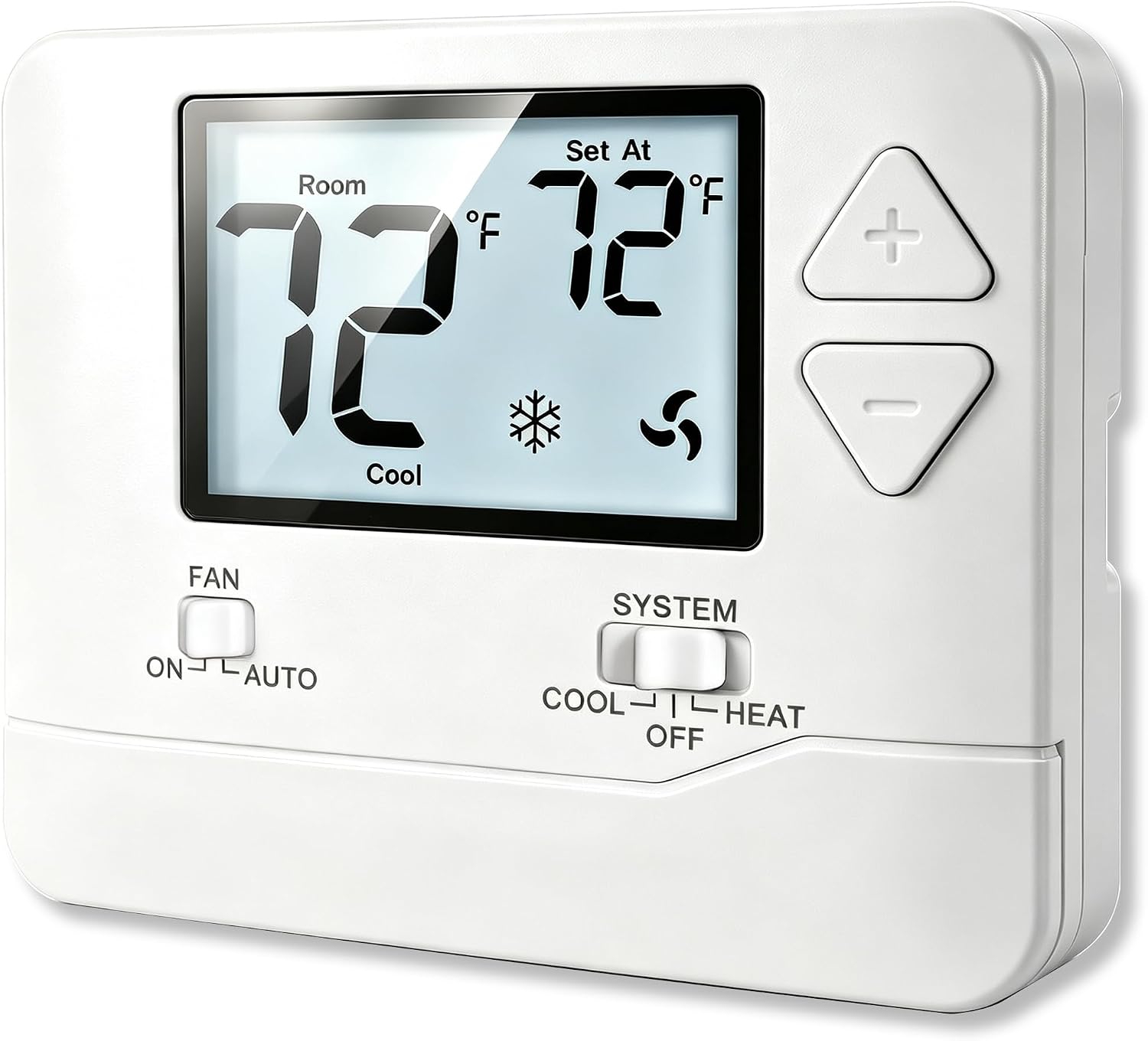
The Heagstat H701W is a straightforward manual thermostat for single-stage forced-air systems that emphasizes simple operation and reliable core features. It offers Heat/Off/Cool modes, a large 4.5-inch backlit LCD for easy reading, and support for standard RH/RC, W, Y, G and C terminals so most conventional setups can be wired directly. The unit accepts 24VAC power or two AAA batteries for C-wire-free installs and includes selectable 5-minute compressor delay protection and low-battery reminders that protect equipment and prevent short-cycling. Temperature correction and adjustable swing let you fine-tune how often the system cycles, which can help stability and comfort without programming complexity. Limitations include no scheduling, no smart/wifi connectivity, and incompatibility with multi-stage or heat-pump systems, so it only fits simple single-stage HVAC setups. For a buyer who wants a low-cost, dependable replacement that is easy to install and operate, this model delivers the essentials without extra bells and whistles.
Best for: Buyers seeking a reliable, no-frills thermostat for a single-stage gas, oil, or electric forced-air system who prioritize straightforward manual control and dependable core protections.
Less Ideal for: Users who want programmable schedules, Wi-Fi/smart home integration, or need support for multi-stage or heat pump HVAC systems should look elsewhere.
- Large backlit 4.5-inch LCD for clear readability in any lighting
- Supports both 24VAC wiring and 2 AAA batteries for flexible installation
- Selectable 5-minute compressor delay protection to prevent short-cycling
- Adjustable temperature swing and manual calibration for stable control
- No programmable schedules or smart connectivity for automated control
- Not compatible with multi-stage systems, heat pumps, or line-voltage setups
Verdict: A low-cost, dependable manual thermostat that delivers clear display, simple operation, and essential equipment protections for single-stage HVAC systems.
Amazon Smart Thermostat
| Requires | C-wire |
|---|---|
| Works with | Alexa and Ring |
| Manufacturer tech | Honeywell Home |
| Price | $79.99 |
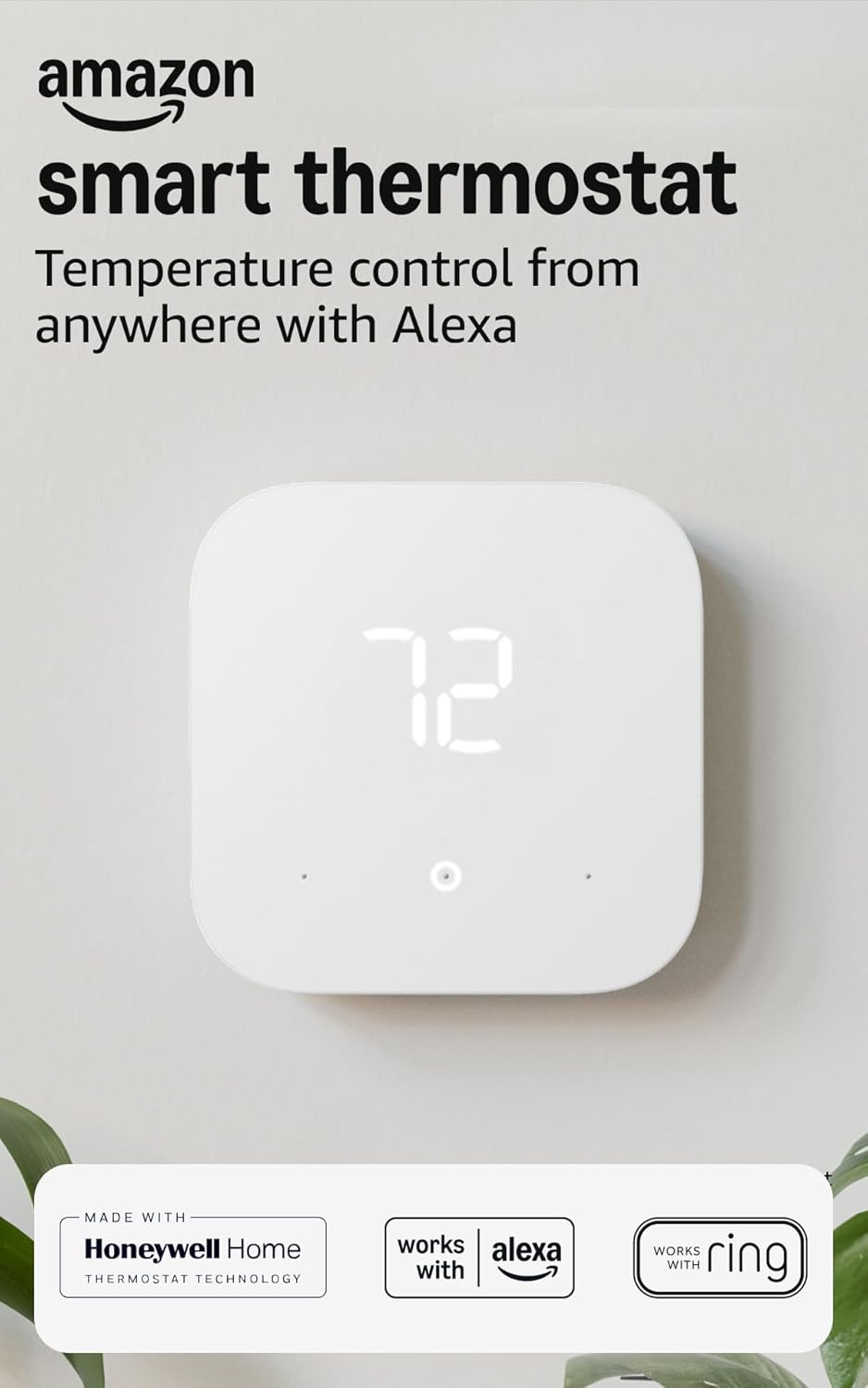
The Amazon Smart Thermostat is a straightforward, no-frills smart thermostat built for easy Alexa integration and simple energy savings. It replaces a standard thermostat and is set up using the Alexa app, which walks you through wiring and configuration; a C-wire is required. Once installed you can create schedules, control temperature remotely, and use Alexa voice control and presence-based automations with compatible Echo devices. The unit leverages Honeywell Home thermostat technology for reliable temperature sensing and supports basic programmable modes like home, away, and sleep. Its practical strengths are easy app-driven setup, tight Alexa ecosystem integration, and explicit guidance about utility rebates to help offset cost. The trade-offs are minimal smart-home frills: it focuses on core thermostat functions rather than advanced learning algorithms, multi-zone management, or broad third-party smart home platform support. For buyers who want a budget smart thermostat that works well with Alexa and reduces energy use without a steep learning curve, this is a solid choice.
Best for: Buyers who prioritize a low-cost, reliable smart thermostat that plugs into the Alexa ecosystem and offers simple scheduling and remote control without complex setup.
Less Ideal for: People who want a fully autonomous learning thermostat, extensive multi-zone controls, or deep integration with non-Alexa smart home platforms.
- Easy setup and configuration through the Alexa app with guided wiring steps
- Deep Alexa integration for voice control and presence-based automations
- Backed by Honeywell Home thermostat technology for reliable temperature sensing
- Supports remote control and scheduling to help reduce energy use
- Requires a C-wire for installation
- Lacks advanced learning features and broader third-party platform support
Verdict: A budget-friendly, Alexa-focused smart thermostat that delivers dependable remote control and basic energy-saving schedules for buyers who want easy setup and social-proof confidence.
Riseem S3001 Nonprogrammable Thermostat

| Controller Type | Push Button |
|---|---|
| Temperature Control Type | Conventional Single Stage Systems |
| Power Source | 24VAC (with 2 AA battery backup) |
| Display Type | LCD |
| Connectivity Technology | Wired |
The Riseem S3001 is a straightforward nonprogrammable thermostat designed for conventional single-stage heating and cooling systems. It mounts to a wall using a universal sub-base and is intended for quick DIY installs, with large terminal blocks and a clear backlit LCD that make wiring and daily use easier. The unit runs on 24VAC or two AA batteries so it does not require a common wire on most systems, and it offers separate heating and cooling swing control to help stabilize cycle timing and maintain consistent comfort. Practical benefits include simple temperature control, an accurate +/-1°F tolerance, and a low battery indicator for dependable operation. Limitations are its single-stage-only compatibility and lack of scheduling, Wi-Fi, or smart-home integration, so it is not suited to homes that need multi-stage, heat-pump, or remote control features. For buyers who want a low-cost, reliable replacement thermostat that keeps installation and operation minimal, this model covers the basics well.
Best for: Buyers who want a low-risk, no-frills replacement thermostat that is easy to install and operate and who prioritize straightforward temperature control over advanced features.
Less Ideal for: Users seeking programmable schedules, remote control, smart-home integration, or compatibility with heat pumps and multistage HVAC systems should look elsewhere.
- Easy DIY install with large terminal blocks and universal sub-base
- Dual power options (24VAC or 2 AA batteries) so a C-wire is often not required
- Clear backlit LCD and simple button controls for straightforward daily use
- Accurate temperature control rated to +/-1°F and low battery indicator
- Nonprogrammable with no Wi‑Fi or smart-home features
- Only compatible with single-stage systems and incompatible with heat pumps and many multistage setups
Verdict: A budget-friendly, easy-to-install nonprogrammable thermostat that reliably handles basic single-stage heating and cooling without smart features.
Choosing the Right Thermostat on a Budget: Key Factors to Consider
Installation and Wiring Compatibility
A thermostat that is truly budget friendly should not force expensive professional installation. Check whether the unit supports your home's HVAC wiring, especially the presence or absence of a C wire. Some low-cost thermostats include workarounds for no C wire situations or supply a power adapter; others require a common wire for consistent operation.
Understanding wiring compatibility reduces the risk of added costs after purchase. If you plan to install yourself, look for clear wiring diagrams, labeled terminals, and color-coded connectors. For multi-stage HVAC or heat-pump systems, confirm the thermostat supports the correct terminal layout before buying.
Programmability and Schedule Flexibility
Programmability determines how much automated energy-saving you can get without manual intervention. On a budget, you will often get basic daily or weekday/weekend schedules rather than complex machine-learning algorithms. Still, the ability to set at least a few timed setbacks for heating and cooling hours can yield noticeable savings.
Flexible schedule presets, temporary hold options, and easy-to-use interfaces matter more than having every advanced feature. If multiple occupants have different comfort patterns, choose a unit with several program periods per day to avoid frequent manual adjustments.
Temperature Sensing and Accuracy
A thermostat that reports an inaccurate temperature or reacts slowly can cause overshoot, short cycling, and wasted runtime. Budget devices vary in sensor quality and placement, especially between wall-mounted units and remote-sensor systems.
Look for thermostats with fine-degree setpoint adjustments and stable readout behavior. If the thermostat will be placed in a location affected by drafts, sunlight, or appliance heat, consider models that offer remote sensor support or allow calibration to offset local bias.
Energy Savings Features
Not every inexpensive thermostat has advanced energy optimization, but the right set of control features will directly affect operating costs. Useful budget-oriented features include programmable setbacks, adaptive recovery or smart preheat/cool, and simple occupancy or hold functions.
Evaluate how a unit implements setbacks and whether it supports temperature differentials to avoid short cycling. Even without machine learning, a thermostat that enforces reasonable minimum cycle times and learns basic recovery timing can save more than an identical unit that only provides manual control.
User Interface and Daily Use
A thermostat you can actually live with day to day should have an intuitive interface for setting schedules and making adjustments. On-budget options sometimes skimp on displays or tactile controls, which makes frequent interaction frustrating.
Prioritize readable screens, responsive buttons or touchscreen, and straightforward menu structures. If a household member has accessibility needs, check for larger fonts or voice-assist integration as relevant. Ease of daily use helps ensure energy-saving schedules are followed instead of being overridden.
Durability and Maintenance
Long-term value from a budget thermostat depends on build quality and low maintenance. Seek units with replaceable batteries, corrosion-resistant terminals, and a solid mounting plate that resists loosening over time.
Consider serviceability: can you access battery compartments without removing the whole unit, and does the product offer firmware updates or simple reset procedures? A modestly built thermostat that lasts several heating seasons yields better ROI than a cheaper unit that needs replacement quickly.
Wiring Basics for Budget Installs
Most budget thermostats are designed for standard single-stage furnaces and central air systems, but wiring expectations vary. Before you buy, turn off power to your HVAC and inspect the existing thermostat wiring. Label each conductor and note whether a common rail wire is present. If there is no C wire, look for models that either operate on batteries alone or provide a no-C-wire wiring adapter.
- Turn off HVAC power at the breaker before touching wiring.
- Label existing wires with their terminal letters (R, G, Y, W, C, etc.).
- Consider a no-C-wire adapter or battery-powered model for simpler installs.
Placement Tips to Improve Accuracy
Where you install the thermostat affects how accurately it reflects whole-house temperature. Avoid exterior walls, direct sunlight, kitchens, and locations above vents or near doorways where drafts or appliances will skew readings. Mount the unit at eye level in a central, interior location for the best balance of comfort and control.
- Avoid direct sunlight and appliance heat sources.
- Mount on an interior wall about 52 to 60 inches from the floor if practical.
- Keep at least a few feet clear of doors and high-traffic zones to prevent false triggers.
Schedule Strategies for Maximum Savings
Even simple setback schedules reduce runtime. For many households, setting lower heat setpoints during regular sleep hours and modestly higher cooling setpoints during daytime absence offers the best energy-to-comfort compromise. Use gradual recovery when available to avoid running the system at maximum output to hit setpoints quickly, which can reduce efficiency over time.
- Use weekday/weekend schedules to match occupancy patterns.
- Program at least two setback periods per day for heating and cooling.
- Enable adaptive or recovery modes if the thermostat provides them.
When to Consider Remote Sensors
Remote sensors can improve comfort in homes with uneven heating or cooled zones. If bedrooms are consistently colder than living areas or sunlight warms one room significantly, adding a remote sensor helps the thermostat average readings or prioritize a specific location. Budget systems may offer basic sensor support, but pay attention to how many sensors are supported and whether they are wired or wireless. Wireless sensors add convenience but verify battery life and range before relying on them.
- Use sensors to avoid overheating one room to satisfy another.
- Confirm the thermostat supports the number and type of remote sensors you plan to use.
- Place sensors in representative locations away from drafts and direct sun.
Battery Maintenance and Power Options
Many budget thermostats rely on batteries to avoid C-wire dependence. Regular battery replacement is a small but recurring maintenance task. Choose units with clear low-battery alerts and easy-access compartments. If your home has a common wire, favor units that can use system power to avoid battery cycles. Where battery operation is unavoidable, pick models with long-life battery recommendations and consider setting reminders for replacement to prevent unexpected downtime.
- Check for visible battery compartments and low-battery indicators.
- Prefer thermostats that accept the C wire when available for continuous power.
- Keep spare batteries on hand if you choose a battery-powered unit.
How We Chose the Best Thermostat on a Budget
Our shortlist focused on thermostats that target cost-conscious buyers while still delivering reliable control and tangible energy savings. We prioritized devices that are widely compatible with standard HVAC setups and that offer at least basic programmable schedules or adaptive hold features. Easy installation and clear wiring or wiring alternative options were required for inclusion, because many buyers on a budget plan to install the unit themselves or want minimal technician time. We evaluated devices against measurable, user-focused criteria: installation complexity, temperature accuracy and responsiveness, programmability and scheduling, and expected energy savings based on control features. We also considered build quality and durability signals such as materials, user-replaceable batteries, and ingress resistance for long-term reliability. Excluded from consideration were high-end smart thermostats with premium platform ecosystems, models that require proprietary system subscriptions, and any units lacking basic scheduling or that needed uncommon HVAC interfaces. The result is a collection of six practical, budget-focused thermostats that balance upfront cost and ongoing performance.
Our full evaluation process is outlined in our review methodology.
FAQ
Can I install a budget thermostat myself?
Often you can, provided your HVAC wiring is standard and the thermostat includes clear instructions. Turn off power, label wires, and follow the included wiring map. If your system uses uncommon terminals or multi-stage controls, professional help may be safer.
Will a cheap thermostat actually save energy?
Yes, basic programmable schedules and setbacks reduce runtime compared with manual control. The size of savings depends on your climate and how disciplined you are with setpoints, but even simple schedules commonly cut seasonal costs.
Do I need a C wire for a thermostat on a budget?
Not always. Some budget thermostats run on batteries or include no-C-wire adapters. A C wire provides more reliable continuous power and is preferable when available to avoid battery maintenance.
Are wireless remote sensors worth it for an affordable thermostat?
They can be, particularly in homes with uneven temperatures. Remote sensors help the thermostat average conditions or prioritize occupied rooms, improving comfort without major ductwork changes. Check compatibility and battery life before buying.
How long do budget thermostats typically last?
Lifespan varies with build quality and usage, but many last several heating and cooling seasons. Units with replaceable batteries and solid terminals generally demonstrate longer service life than poorly built alternatives.
Final Verdict
For buyers seeking a thermostat on a budget, prioritize compatibility, simple programmable schedules, and reliable temperature sensing. These dimensions deliver the greatest day-to-day benefit while minimizing hidden costs like professional install fees or frequent replacements. Balance ease of installation and user interface against energy-saving controls. If you have no C wire, choose a battery-friendly model or one that offers a compatible adapter. Focus on the factors discussed here to select a low-cost thermostat that keeps home comfort steady and operating costs down.