
Note: This article contains affiliate links. If you click on these links and make a purchase, we may earn a small commission at no extra cost to you. This helps support our research and content. Read our full affiliate disclosure here.
A Portable Carbon Monoxide Detector is the simplest way to add life-saving CO protection wherever you go. Whether you need temporary monitoring in a hotel room, a vacation rental, a garage workspace, or a campsite, the right portable unit gives quick, audible alerts and reliable battery operation so you can act fast. This guide shortlists the top portable carbon monoxide detectors that stood out for alarm speed, sensor reliability, and ease of use. We evaluated each pick for responsiveness, power choices, and real-world placement to help you pick a compact monitor that fits how you move and live. Read on for practical criteria and setup tips to keep transient spaces safer.
Top Picks at a Glance
| Best Overall The best all-around choice for most situations | TOPTES CT-580 Carbon Monoxide Detector |  |
| Best Quality Built to a higher standard if you want something more solid | Klein Tools ET110 CO Meter |  |
| Best Value The sweet spot between price and what you get | HEIMAN C1-S CO Detector |  |
| Best Budget The cheapest option that still gets the job done reliably | LiebeWH Portable CO Detector |  |
| Top Rated A top-rated pick with lots of positive feedback | Kidde Carbon Monoxide Detector KN-COB-LP2 | 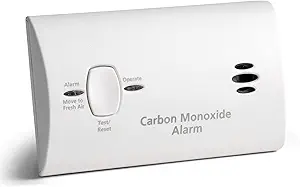 |
| Most Popular A crowd favorite that many people choose with confidence | First Alert CO400 Carbon Monoxide Alarm 2-Pack |  |
| Best Seller A high-volume bestseller chosen again and again | Kidde CO Detector COB |  |
TOPTES CT-580 Carbon Monoxide Detector

| Power Source | Battery Powered |
|---|---|
| Alarm | Audible |
| Sensor Type | Electrochemical |
The TOPTES CT-580 is a portable CO detector built for quick, on-the-go checks and light professional use. It uses a high-sensitivity electrochemical sensor to measure 0 to 1000 ppm with a claimed 0.3 second response and shows readings on a TFT color display with adjustable brightness. Controls and a simple menu make it useful for solo users and small businesses, and features such as alarm history, zero and standard gas calibration, and a protective case give it a more advanced feel than basic home units. Alerts come through simultaneous audible, visual, and vibration modes, which helps in noisy or dark environments, and the unit charges over USB-C so you can top it up easily before travel or inspections. The device is made from ABS plastic, includes a built-in flashlight, and ships with a charging cable and manual. It is not a permanently wired wall alarm and lacks listing of battery runtime and formal installation accessories, so it is best used as a portable inspection tool rather than a fixed household alarm replacement.
Best for: Buyers who want a portable, accurate CO meter for spot checks, travel, or occasional professional inspections and value a clear display and rechargeable convenience.
Less Ideal for: People seeking a permanently mounted, always-on household CO alarm or those who need documented battery runtime and long-duration continuous operation.
- Electrochemical sensor with 0–1000 ppm range for high-sensitivity CO readings
- Three simultaneous alarm modes: audible, visual, and vibration for reliable alerts
- Rechargeable via USB-C and includes protective case and charging cable
- TFT color display with adjustable brightness and alarm history for easy interpretation
- Not designed as a permanently mounted home alarm or substitute for wired detectors
- Manufacturer does not list battery life per charge in the product details
Verdict: Choose the CT-580 if you need a portable, rechargeable CO detector with a fast electrochemical sensor and clear color display for reliable spot checks and inspections.
Klein Tools ET110 CO Meter

| Power Source | Battery Powered |
|---|---|
| Alarm | Visual |
| Built-In Media | Batteries, Pouch |
The Klein Tools ET110 is a portable CO meter designed for quick spot-checks and jobsite troubleshooting rather than continuous home monitoring. It displays CO levels from 0 to 1000 ppm alongside temperature on a backlit LCD, and alerts you with both audible and visual alarms when concentrations exceed the meter's low (35 ppm) and high (200 ppm) thresholds. The unit runs on four AAA batteries, includes a carrying pouch, and conserves power with an auto-off after 20 minutes of inactivity. Its compact, meter-style housing and included pouch make it easy to carry between work sites or HVAC inspections, and the clear numeric readout is helpful when checking vents, appliances, or confined spaces. Keep in mind this is a professional test instrument and not a substitute for a permanently installed home CO alarm intended for continuous occupant protection.
Best for: Technicians, HVAC professionals, and anyone who needs a portable, accurate meter for spot-checking CO levels during inspections or troubleshooting.
Less Ideal for: People who want a permanently installed or continuously monitored residential CO alarm for occupant safety should choose a certified home CO detector instead.
- Numeric CO readout up to 1000 ppm for precise spot measurements
- Dual alarm thresholds (35 ppm and 200 ppm) with audible and visual alerts
- Backlit LCD and temperature display for clear readings in low light
- Includes batteries and a carrying pouch for immediate portable use
- Not intended for continuous home monitoring or personal protective use
- Auto-power off after 20 minutes may interrupt longer tests without manual override
Verdict: Buy this if you need a rugged, handheld CO meter for accurate spot measurements and on-the-go inspections.
HEIMAN C1-S CO Detector

| Power Source | Battery Powered |
|---|---|
| Sensor Type | Electrochemical |
| Alarm | Audible/Visual |
| Battery Average Life | 10 years |
| Enclosure Material | ABS+PC |
The HEIMAN C1-S is a compact, battery-operated carbon monoxide detector built for long-term, low-maintenance monitoring. It uses a Japan-made FIGARO electrochemical sensor to detect CO and signals danger with an 85 dB alarm plus an LED for visual notification. Installation is simple: mount on a wall or ceiling with the included hardware or set on a surface, then use the one-touch Test/Silence button for occasional checks. The sealed long-life lithium battery is rated for 10 years, which eliminates frequent battery swaps and chirping for busy households or rental properties. The unit meets UL 2034 5th Edition and CSFM approvals and has a flame-retardant ABS+PC housing, making it appropriate for kitchens, garages, basements, bedrooms, and similar spaces. Limitations are its single-function design—there is no smoke detection, Wi-Fi, or hardwired interconnect capability—so you will need separate alarms for multi-hazard coverage or smart home integration. For straightforward CO protection where durability and low upkeep matter, this is a practical choice.
Best for: Buyers who prioritize dependable, low-maintenance CO protection for homes or rental units and want a compact, regulation-compliant device they can install and forget for years.
Less Ideal for: People seeking a multi-function alarm, smart-connected monitoring, or an integrated system that links smoke and CO detection should consider combination or networked units instead.
- Electrochemical FIGARO sensor for accurate CO detection
- Long sealed lithium battery rated for 10 years reduces maintenance
- Meets UL 2034 5th Edition and CSFM approvals for regulatory compliance
- Loud 85 dB alarm plus LED provides clear audible and visual alerts
- Simple DIY mounting and one-touch Test/Silence button for easy use
- No smoke detection or multi-hazard combo functionality
- No Wi-Fi, app control, or hardwired interconnect capability
Verdict: Choose the HEIMAN C1-S if you want a compact, regulation-certified CO detector with a 10-year sealed battery for long-term, low-maintenance protection.
LiebeWH Portable CO Detector

| Sensor Type | Electrochemical Sensor |
|---|---|
| Detection Range | 0-1000 ppm ±10% |
| Resolution | 1 ppm |
| Battery | Built-in 800mAh li-ion |
| Charging | Type C, ~1 hour |
The LiebeWH Portable CO Detector is a small 3-in-1 monitor that reports carbon monoxide concentration, temperature, and humidity on a 0.96-inch screen. It uses an electrochemical sensor with a claimed detection range from 0 to 1000 ppm and a 1 second response, which makes it suitable for quick spot checks around the house, in an RV, or while camping. The unit is powered by an internal 800 mAh rechargeable battery and recharges via Type-C in about an hour; battery life is listed as roughly 18 hours with the screen on or up to 40 hours with the screen off. Practical benefits include a compact, lightweight design for portability, straightforward real-time readouts, and the combined environmental data that helps you assess indoor air quality beyond CO alone. Limitations to note are the small display that can be hard to read at a distance and the manufacturer-stated accuracy tolerances, which suggest this is best for personal monitoring rather than professional safety verification. There are no network features or mounting hardware described, so expect a basic handheld detector rather than an installed alarm.
Best for: Buyers who want an inexpensive, portable CO monitor for spot-checking air quality at home, in vehicles, or while camping and who prioritize portability and rechargeable convenience.
Less Ideal for: People who need a permanently installed, code-compliant CO alarm or professional-grade measurement for safety certification should choose a certified household alarm or lab-grade meter instead.
- Electrochemical sensor for more reliable CO detection than semiconductor sensors
- Compact, lightweight design for easy portability and field checks
- Rechargeable 800 mAh battery with fast Type-C charging
- Displays CO, temperature, and humidity together for broader environmental context
- Very small 0.96-inch display can be difficult to read from a distance
- Accuracy tolerances indicate it is intended for spot checks, not certified workplace monitoring
Verdict: A budget-friendly, rechargeable handheld CO monitor that provides fast, portable spot checks with temperature and humidity readouts.
Kidde Carbon Monoxide Detector KN-COB-LP2
| Power Source | 2 AA batteries |
|---|---|
| Alarm | 85 dB audible |
| Operating Humidity | 10 to 95% RH, non-condensing |
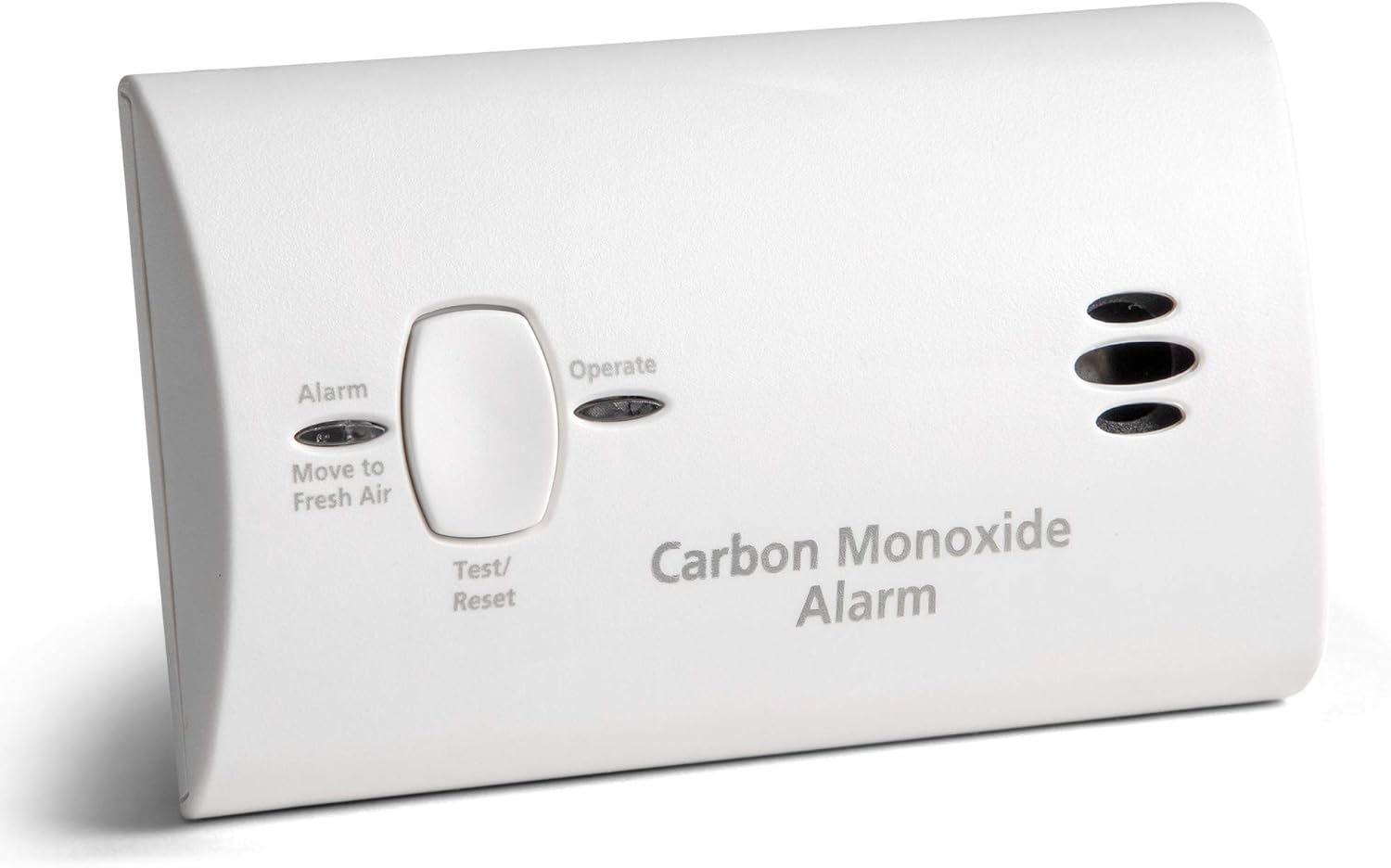
The Kidde KN-COB-LP2 is a simple, portable carbon monoxide detector designed for wall mounting or tabletop use and powered by two AA batteries so it works during power outages. It uses an electrochemical sensor for CO detection, provides clear LED status feedback (green for power, red for alarm), and sounds an 85 dB alarm when CO is present. The unit includes a test-reset/hush button to verify operation and temporarily silence nuisance alerts, and it records the last event so you can see when CO was detected or when the unit was tested. Its battery operation and compact design make it easy to move between rooms or take on trips. Trade-offs are minimal for a basic portable unit: it lacks a digital CO concentration display and long-life sealed battery options, so you will need to replace AA batteries periodically and you do not get peak ppm readouts for troubleshooting.
Best for: Buyers who prioritize a dependable, easy-to-install portable CO alarm that continues to protect during power loss and is simple to test and move between rooms or travel with.
Less Ideal for: Users who want real-time CO concentration readouts, long-life sealed batteries, or advanced connectivity features should consider more feature-rich models.
- Electrochemical sensor technology for accurate CO detection
- Battery powered with 2 AA batteries so it operates during power outages and is fully portable
- 85 dB alarm plus red/green LED indicators for clear audible and visual alerts
- Test-reset/hush button and event memory for simple testing and incident tracking
- No digital display to show CO concentration levels
- Requires periodic AA battery replacement rather than a sealed long-life battery option
Verdict: Choose this Kidde unit if you want a reliable, battery-powered portable CO detector that is easy to install, test, and move wherever you need dependable protection.
First Alert CO400 Carbon Monoxide Alarm 2-Pack

| Power Source | Battery Powered |
|---|---|
| Alarm | Audible, Visual |
| Sensor Type | Electrochemical |
| Operating Humidity | 10-95% RH |
| Unit Count | 2 Count |
The First Alert CO400 comes as a two-pack of simple, battery-operated carbon monoxide alarms intended for household use. Each unit uses an electrochemical CO sensor and runs on a single 9V battery so the detectors continue protecting during power outages and require no wiring. Installation is straightforward—units sit or mount on a wall and a single test/silence button makes monthly checks and alarm silencing quick. When elevated CO is detected the alarm emits a loud 85-decibel horn and provides visual indicators along with low-battery and end-of-life alerts to prompt replacement. The manufacturer notes a five-year sensor lifespan and UL listing, which supports reliability and compliance with modern CO laws in several states. The design is basic with no smart connectivity or networked interlinking, so you will rely on one detector per sleeping area or level for full coverage. For buyers who want simple, proven CO detection without wiring or apps, this pack covers the essentials well.
Best for: Buyers who prioritize dependable, proven CO detection and want a straightforward, no-fuss alarm they can install without an electrician will appreciate this two-pack.
Less Ideal for: If you need smart home integration, networked interlinked alarms, or long-term sensor replacement avoidance, choose a connected or hardwired solution instead.
- Electrochemical sensor technology for accurate CO detection
- Battery-powered operation with included 9V battery keeps units working during outages
- Loud 85-decibel alarm plus visual indicators for clear, immediate alerts
- Simple test/silence button and optional wall mount for easy use and placement
- End-of-life and low-battery signals remind you when to replace the unit or battery
- No wireless connectivity or interlinking between units
- Sensor life is finite (manufacturer states up to five years) so replacements are required over time
Verdict: Choose this First Alert two-pack when you want reliable, UL-listed CO detection in a simple battery-operated alarm set you can place anywhere without wiring.
Kidde CO Detector COB

| Power Source | Battery Powered |
|---|---|
| Alarm | Audible, Visual |
| Sensor Type | Electrochemical |
| Operating Humidity | 10 to 95% Relative Humidity, Non-Condensing |
| Upper Temperature Rating | 100 °F |
The Kidde COB carbon monoxide detector is a small, portable CO alarm intended for everyday residential use and travel. It uses an electrochemical sensor to monitor CO levels and emits a loud 85 dB audible alarm plus colored LED lights that indicate status, and a Test/Hush button for quick checks or temporary silence. The unit runs on two AA batteries (included), so it installs without wiring and continues to operate during power outages; it can sit on a table or be wall mounted for flexible placement. It is UL 2034 5th Edition tested and ETL listed, and Kidde backs it with a 10-year limited warranty. Practical benefits include easy installation, portability for taking to hotels or rentals, clear visual and audible alerts, and simple maintenance with commonly available batteries. Limitations are that it is not approved for RV or boat use, it relies on replaceable AA batteries rather than a sealed 10-year power source, and it is intended for conditioned indoor spaces rather than outdoor or unconditioned environments.
Best for: Buyers who prioritize dependable, easy-to-use CO detection for homes, rentals, or travel and want a simple battery-powered unit they can place or carry as needed.
Less Ideal for: People seeking a hardwired or sealed 10-year powered alarm for permanent installation or those needing equipment certified for RVs or marine use should look elsewhere.
- Electrochemical sensor for reliable CO detection
- Loud 85 dB alarm with colored LED status lights for clear alerts
- Runs on two AA batteries so it works during power outages and is easy to replace
- Portable, lightweight design that can be wall mounted or placed on a tabletop
- Meets UL 2034 5th Edition and is ETL listed with a 10-year limited warranty
- Uses replaceable AA batteries instead of a sealed 10-year power source
- Not approved for RV or boat use
Verdict: A compact, tested, and travel-ready CO detector that gives risk-averse buyers simple, reliable battery-powered protection at home or on the road.
Choosing the Right Portable Carbon Monoxide Detector: Key Factors to Consider
Alarm Response Time
How quickly a detector recognizes and signals rising carbon monoxide concentrations is critical because CO poisoning risk increases with exposure time. Faster response time gives you more opportunity to ventilate, evacuate, or shut off a CO source, especially in small or poorly ventilated spaces. Portable units should report changes rapidly and use loud, attention-grabbing tones that can be heard in the environment where you plan to use them.
When assessing response time, consider both the sensor technology and the stated alarm thresholds. Some units are tuned to alert at lower concentrations sooner, while others require higher sustained levels. For transient or short-term monitoring, favor devices that provide prompt alerts at commonly accepted action thresholds.
Sensor Type and Long-Term Stability
Different sensors detect CO with varying speed and drift characteristics. A stable sensor maintains accuracy over months and years without frequent recalibration, which is important for portable devices that may not receive regular maintenance. Sensor stability affects both false alarm rates and the reliability of warnings when CO is actually present.
Look for units that specify sensor longevity and have straightforward replacement or end-of-life indicators. For portable monitors used intermittently, a sensor that tolerates temperature swings and occasional bumps is preferable to delicate designs that degrade quickly in real-world use.
Battery Life and Power Flexibility
Battery performance determines how long a portable detector can protect a space between charges or replacements. Long battery life reduces the chance of the unit being unpowered when you need it. Consider whether the device uses replaceable batteries, rechargeable cells, or supports both options. Replaceable batteries are convenient when traveling, while rechargeables are useful for frequent users.
Also check for low-battery alerts and whether the unit will continue to sound an alarm when battery levels are low. A practical portable detector should balance long standby life with clear indicators so you are not left with a nonfunctional device during travel or extended use.
Portability, Size, and Mounting
Portability covers weight, physical footprint, and mounting options. A compact, lightweight detector fits easily into luggage, a glovebox, or a tool bag. Mounting flexibility matters because different temporary locations need different attachment methods. Look for options such as belt clips, magnetic backs, keyring loops, tabletop stands, or bracket-mounted choices for temporary wall placement.
Ease of placing and orienting the detector affects how well it samples the ambient air. A design that sits upright and can be angled or clipped near sleeping areas will be more effective than a device that is awkward to position.
Audible and Visual Alert Clarity
In an emergency, clear alerts ensure occupants notice the danger immediately. Loudness is one part of clarity, but distinct alert patterns and visible indicators are equally important. Visual cues such as bright LED flashes or color-coded indicators help in noisy environments or for users with hearing impairment.
Consider whether the unit provides multiple alert modalities, a test button to verify alarm operation, and a simple, unmistakable alarm tone that differs from other devices. A well-designed alert system reduces response time and confusion during an alarm event.
Durability and Environmental Suitability
Portable detectors face more rough handling and varied environments than fixed home units. Durability against drops, humidity changes, and temperature swings extends useful life. Materials and ingress protection determine whether a unit can withstand occasional exposure to moisture or dust when used outdoors or in garages.
Consider the expected environments for your detector and choose a model with appropriate build quality and any stated environmental ratings. A heavier-duty portable unit may trade some size for resilience, which is worth it when you plan to carry the device often.
Where to Use a Portable CO Detector
Portable carbon monoxide detectors are designed for temporary monitoring situations where a fixed alarm is impractical. Common uses include travel accommodations, short-term rentals, RVs, boats, garages, workshops, and job sites. They are also useful as a temporary supplement during home renovations when ventilation and appliance placement change.
Place the detector near sleeping areas, entry points to the space, or near potential CO sources. Because carbon monoxide mixes with air, position it at roughly the height of occupants breathing zones, typically between knee and chest height for sleeping adults, and avoid placing units directly next to windows or vents where drafts could dilute readings.
- Use in hotel rooms or vacation rentals without reliable installed detectors
- Bring to workshops and garages where gasoline-powered equipment runs intermittently
- Carry in RVs and boats during overnight stays or while operating heaters
Installation and Placement Tips
A portable detector is only effective if placed correctly. Start by reading the quick-start guidance that came with the unit, especially regarding recommended heights and clearances from walls or ceilings. For sleeping areas, set the detector within a few feet of where people sleep but not tucked under bedding or behind heavy curtains.
Avoid placing the detector where combustion appliances exhaust directly, as brief exhaust plumes can cause false alarms. Instead, use it in the adjacent living or sleeping space so the unit monitors the general room air for rising CO levels.
- Test the alarm after placing to confirm volume and visibility
- Keep the sensor free of heavy dust and direct sprays of cleaning chemicals
- Replace or recharge batteries before travel and verify the low-battery indicator
Maintaining and Testing Your Detector
Regular testing and basic maintenance keep a portable CO detector reliable. Use the test button weekly or before each trip to confirm both audible and visual alerts are working. Clean the sensor housing periodically with a soft brush or compressed air to remove dust without opening the unit.
Pay attention to end-of-life warnings and sensor expiration notices. Even if the unit powers on, an expired sensor may not provide accurate detection. Keep spare batteries on hand when relying on replaceable cells and schedule charging cycles for rechargeable models before extended use.
- Test alarm function using the unit's built-in test control
- Do not use solvents or immerse the detector in water
- Record installation date to track expected sensor lifespan
Common Limitations of Portable Units
Portable detectors are valuable for temporary monitoring but have limitations compared with permanently installed systems. They often have smaller sensors and shorter expected service life. Users should not rely on a single portable unit to protect an entire household long-term.
Battery dependency is another limitation. If batteries are not maintained, the device may fail when needed. Finally, low-cost portable units may trade sensor longevity or alarm sophistication for size and price, so evaluate durability and documented sensor life when choosing.
- Not a substitute for permanent home-installed CO protection
- Shorter sensor lifespans may require more frequent replacement
- Battery failure can reduce protection if not monitored
Features That Improve Usability
Certain features make portable detectors easier to live with. A clear low-battery indicator and an audible chirp for battery warnings prevent surprises. A test button and a simple status LED let you confirm readiness quickly.
Adjustable mounting options such as clips or magnets increase placement versatility. Backlit displays or numeric readouts provide more context about current CO levels, which is helpful when making ventilation decisions during an alarm.
- Numeric CO readouts for situational awareness
- Multiple mounting options for different temporary environments
- Rechargeable options with USB power for convenient recharging
How We Chose the Best Portable Carbon Monoxide Detector
We focused on the characteristics that matter most for portable carbon monoxide monitoring. Primary evaluation criteria included alarm response time to rising CO levels, sensor type and accuracy stability, battery life and power options, physical size and mounting flexibility, and user interface clarity for quick comprehension in an urgent situation. We prioritized devices with clear audible and visual alerts and simple, intuitive controls that work under stress. Portability considerations such as weight, form factor, and whether the unit supports common battery types or rechargeable power were also important. Units that required complex installation, were designed only for permanent household installation, or lacked independent CO sensing were excluded. We also screened for basic durability and straightforward certification claims while avoiding products that relied solely on combo multi-gas sensors without dedicated CO detection. The final list reflects devices that balance fast detection, dependable power, and practical portability.
Our full evaluation process is outlined in our review methodology.
FAQ
How often should I test a portable carbon monoxide detector?
Test the detector at least weekly or before each trip to ensure audible and visual alerts are functioning. Regular testing verifies batteries, tone clarity, and indicator lights so you can rely on the unit when needed.
Can I use a portable detector instead of a fixed home unit?
Portable detectors are useful for temporary monitoring but are not a full substitute for permanently installed alarms in a home. For continuous household protection, fixed alarms designed for permanent installation are the better choice.
How long do portable CO sensors last?
Sensor life varies by design and usage but typically ranges from a few years to longer service life in higher-quality units. Check the manufacturer-stated sensor lifespan and end-of-life indicators to plan for timely replacement.
Will a portable detector give false alarms from cigarette smoke or cooking?
Portable CO detectors are tuned to detect carbon monoxide specifically and are less likely to be triggered by smoke particles from cooking. However, close exposure to combustion exhaust or heavy fumes can cause transient readings, so place the unit away from direct exhaust paths.
What should I do if the portable detector alarms?
Immediately move to fresh air and ventilate the area if it is safe to do so. Turn off potential combustion sources and seek medical attention if anyone shows symptoms of carbon monoxide exposure. Treat any alarm seriously until you confirm safe air quality.
Final Verdict
When choosing a portable carbon monoxide detector, prioritize quick alarm response, reliable sensor stability, and dependable power options. Balance compactness and mounting flexibility with sensor lifespan and clear alerting so the device performs well in the temporary environments where you intend to use it. For travel and intermittent use, favor units with long battery life or convenient rechargeability and obvious status indicators. Ultimately, use portable detectors as a supplement to permanent protection where appropriate and keep them maintained so they are ready when the situation demands.