
Note: This article contains affiliate links. If you click on these links and make a purchase, we may earn a small commission at no extra cost to you. This helps support our research and content. Read our full affiliate disclosure here.
If you get treated municipal water, an under-sink water filter can improve taste, remove common disinfectant byproducts, and reduce sediment at the point of use. Choosing the right under-sink system matters because city supplies vary in chlorine levels, trace contaminants, and particulate load, and your household drinking habits determine whether you need basic carbon filtration or a multi-stage system. This guide covers seven shortlisted under-sink water filters selected for use with municipal supplies. We evaluated filtration performance, installation and maintenance demands, and long-term operating costs so you can pick a system that fits your kitchen layout and water quality needs. Read on to see the strengths and tradeoffs of each approach before the product list below.
Top Picks at a Glance
| Best Overall The best all-around choice for most situations | iSpring US31 Under-Sink Filter |  |
| Best Quality Built to a higher standard if you want something more solid | iSpring RCC7-BN 5-Stage RO |  |
| Best Value The sweet spot between price and what you get | PUREPLUS Under Sink Filter WFS5300A |  |
| Best Budget The cheapest option that still gets the job done reliably | AQUA CREST 5KDC Under Sink Filter |  |
| Top Rated A top-rated pick with lots of positive feedback | Waterdrop WD-10UA Under-Sink Filter | 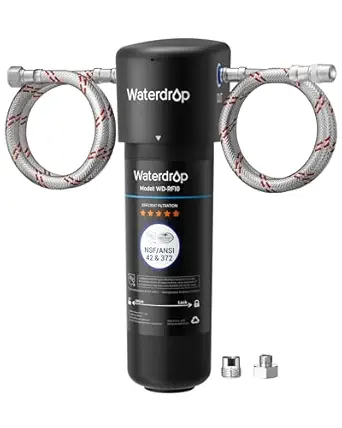 |
| Most Popular A crowd favorite that many people choose with confidence | Waterdrop WD-15UA Under-Sink Filter |  |
| Best Seller A high-volume bestseller chosen again and again | Amazon Basics Under-Sink Water Filter |  |
iSpring US31 Under-Sink Filter

| Purification Method | 3 Stage (PP+GAC+CTO) |
|---|---|
| Maximum Flow Rate | 1 gpm |
| Filter Life Cycle | 6–12 months |
| Capacity | 10000 gallons |
| Upper Temperature Rating | 100 °F |
The iSpring US31 is a three-stage under-sink filter meant for straightforward city-water improvement. It uses a sediment prefilter, granular activated carbon, and a CTO carbon block to cut chlorine, odors, and particulate material while preserving dissolved minerals, and it runs on household water pressure without electricity. Installation is designed to be user-friendly thanks to a patented above-counter faucet mounting, and the transparent first-stage housing makes it easy to check the sediment filter visually. With a rated flow of 1 gallon per minute and a claimed service life of 6 to 12 months depending on usage, it supplies steady filtered water for drinking, cooking, and rinsing without the slow output of reverse osmosis. Limitations to note are that it does not lower total dissolved solids and it is not intended for desalination or heavy-duty industrial contaminants; if you need TDS reduction or RO-level purity, an RO system is required. Replacement filters are available in matching SKUs to maintain performance over time.
Best for: Buyers who want a balanced, easy-to-install under-sink filter to improve taste and remove chlorine and sediment from municipal water without sacrificing flow or needing electricity.
Less Ideal for: Homes that require reverse osmosis-level purification, significant TDS reduction, or specialized contaminant removal should consider dedicated RO or advanced treatment systems instead.
- Three-stage filtration (sediment, GAC, CTO) that targets chlorine, odors, and particulates
- 1 gallon-per-minute flow suitable for filling pitchers and everyday kitchen tasks
- Transparent first-stage housing for quick visual inspection of the sediment filter
- Patented above-counter faucet installation simplifies mounting without working deep under the sink
- Included faucet and mounting hardware mean fewer separate purchases to get started
- Does not reduce total dissolved solids (TDS) so it will not remove dissolved salts or minerals
- Filter replacements are periodic (6–12 months) and add ongoing maintenance cost
Verdict: A practical, no-electricity under-sink system that balances strong chlorine and sediment removal with good flow for everyday city-water use.
iSpring RCC7-BN 5-Stage RO

| Purification Method | Reverse Osmosis, Activated Carbon, Carbon block |
|---|---|
| Power Source | No Power Needed |
| Maximum Flow Rate | 3.4 liters per minute |
| Supported Water TDS Level Maximum (PPM) | 750 |
| Capacity | 75 gallons |
The iSpring RCC7-BN is a five-stage under-sink reverse osmosis system designed for municipal tap water that produces high-quality drinking water by removing up to 99% of contaminants. It uses three pre-filters (sediment, GAC, carbon block), a precision RO membrane, and a final polishing carbon filter to reduce TDS, chlorine, lead, PFAS and other impurities and improve taste. The system stores water in a tank and feeds a 100% lead-free designer faucet, so it works like a dedicated drinking-water supply for cooking, beverages, and ice. Installation is aimed at DIYers with push-to-connect fittings and a transparent first-stage housing for quick filter checks, and it requires no electricity. Practical strengths are its high 75 GPD capacity, NSF/ANSI 58 certification, and clear maintenance path with labeled replacement filters; downsides include being intended for municipal rather than untreated well water and the need for periodic filter and membrane changes that add long-term upkeep. The leak-resistant fittings and compact under-sink layout keep the unit unobtrusive in a kitchen.
Best for: Buyers prioritizing performance and water purity who want an under-sink system that reliably reduces a broad range of contaminants and delivers bottled-quality water for daily household use.
Less Ideal for: Homes using untreated well water without additional whole-house pre-filtration or buyers who want a zero-maintenance filtration option.
- Five-stage filtration including a precision RO membrane removes over 1,000 contaminants
- NSF/ANSI 58 certified for verified contaminant reduction
- High-capacity 75 GPD output suitable for household drinking and cooking needs
- Transparent first-stage housing and push-to-connect fittings simplify inspection and installation
- Includes lead-free faucet and all housings, filters, tubing, and mounting bracket
- Not designed for untreated well water without pre-treatment
- Requires regular replacement of multiple filters and the RO membrane
Verdict: Choose the iSpring RCC7-BN when you want a high-capacity, certified under-sink RO system that prioritizes contaminant removal and bottled-quality taste for city water.
PUREPLUS Under Sink Filter WFS5300A

| Installation Type | Under Sink |
|---|---|
| Purification Method | Activated Carbon |
| Maximum Flow Rate | 2.5 gpm |
| Capacity | 22000 gallons |
| Filter Life Cycle | 5 years |
The PUREPLUS WFS5300A is an under-sink activated carbon cartridge system designed to deliver long-lasting, point-of-use filtration for drinking and cooking water. It uses a composite coconut-shell activated carbon block rated to 0.5 micron and is NSF/ANSI 42 and 372 certified for chlorine reduction and lead-free materials, so it noticeably improves taste and removes chlorine, sediment, and some heavy metals. The system supports up to 2.5 gpm flow and claims a 22,000-gallon life span (about five years), which keeps replacement frequency and operating cost low for city water profiles. Installation is intended for cold water only and the quick-connect fittings simplify hookup under most sinks, though you should confirm faucet thread compatibility beforehand. The filter does not lower TDS so beneficial minerals remain in the water, and it is not a replacement for RO systems when dissolved solids reduction is required. For everyday city tap water where chlorine and taste are the main concerns, this unit offers high capacity and straightforward performance at modest cost.
Best for: Buyers who want a low-maintenance, high-capacity under-sink filter to improve taste and remove chlorine from municipal tap water without frequent cartridge changes.
Less Ideal for: Households that need reduction of dissolved solids, minerals, or comprehensive contaminant removal should consider an RO system or whole-house solutions instead.
- NSF/ANSI 42 and 372 certified for chlorine reduction and lead-free materials
- High claimed capacity of 22,000 gallons (about five years) reduces replacement frequency
- Activated carbon block with 0.5 micron rating improves taste and removes chlorine and sediment
- Supports up to 2.5 gallons per minute flow for good faucet-level water pressure
- Quick-connect fittings simplify under-sink installation
- Does not reduce TDS or replace reverse osmosis for dissolved solids
- Designed for cold water only, so not suitable for hot supply lines
Verdict: Choose this PUREPLUS under-sink filter if you want a certified, high-capacity carbon system that reliably removes chlorine and improves taste with minimal maintenance.
AQUA CREST 5KDC Under Sink Filter

| Purification Method | Activated Carbon |
|---|---|
| Maximum Flow Rate | 1.5 gpm |
| Filter Life Cycle | 12 months |
| Capacity | 5000 gallons |
| Supported Water TDS Level Maximum (PPM) | 300 |
This under-sink direct-connect filter is a simple, budget-friendly option for improving tap water taste and odor on city water supplies. It uses a coconut shell activated carbon block with 0.5 micron nominal filtration plus KDF media to cut chlorine, VOCs, fluoride, and certain heavy metals while intercepting rust and suspended solids. Installation is straightforward with the included 3/8" push-to-connect hoses and fittings so you can hook it to the cold water line without drilling or cutting, and the 1.5 gpm flow rate is fast enough to fill a glass in a few seconds. The filter is sized for roughly 5,000 gallons or 12 months of typical household use, which keeps annual maintenance low. It is NSF/ANSI tested components but does not claim TDS reduction and will not remove dissolved salts. Overall it is a practical, low-cost under-sink system for users who want better tasting water and basic contaminant reduction without complicated plumbing or frequent cartridge changes.
Best for: Buyers looking for an inexpensive under-sink option to improve taste and cut common city-water contaminants who prefer an easy install and low annual maintenance.
Less Ideal for: Users who need mineral/TDS reduction, water softening, or certified removal of specialized contaminants should choose a different, higher-capability system.
- High nominal capacity: rated for 5,000 gallons or about 12 months between replacements
- Includes push-to-connect hoses and fittings for tool-free under-sink installation
- Fast flow rate up to 1.5 gpm suitable for regular kitchen use
- Uses coconut shell carbon and KDF media to reduce chlorine, taste, odor, VOCs, and some heavy metals
- Does not reduce total dissolved solids so it will not soften water or remove all minerals
- Filtration claims use component-level NSF/ANSI wording rather than full system certification
Verdict: AQUA CREST 5KDC is a cost-effective, easy-to-install under-sink filter that delivers better tasting city water and a full year of service between replacements.
Waterdrop WD-10UA Under-Sink Filter

| Purification Method | Activated Carbon |
|---|---|
| Maximum Flow Rate | 2.5 gpm |
| Filter Life Cycle | 1 years |
| Supported Water TDS Level Maximum (PPM) | 700 |
| Other Special Features of the Product | NSF/ANSI 42&372, PFAS, PFOA/PFOS reduction |
The Waterdrop WD-10UA is an under-sink activated carbon filter built for city tap water where you want dependable reduction of chlorine, lead, PFAS and common taste and odor issues. It installs directly to standard 3/8" or 1/2" cold water feeds using push-to-connect fittings and a twist-and-lock cartridge for tool-free swaps, and the manufacturer rates the cartridge for roughly 12 months of use on municipal supplies. The system claims a fast, stable flow (tested up to 1.33 gpm from the 3/8" outlet) so it can supply drinking and cooking taps without a perceptible slowdown. Certified to NSF/ANSI 42, the filter keeps beneficial dissolved minerals while targeting the listed contaminants, and the larger filtration area is intended to reduce clogging. Important limits: it is intended only for cold municipal water, not well water or hot lines, and performance depends on your source water quality and pressure. For someone prioritizing straightforward installation and reliable year-long service on city water, this is a practical, low-maintenance choice.
Best for: Buyers who need a no-fuss under-sink filter that reliably improves city tap water taste and reduces common contaminants with easy annual cartridge swaps.
Less Ideal for: Households using well water, hot-water feed applications, or buyers who need ultrafine filtration for bacteria or dissolved solids reduction.
- NSF/ANSI 42 certified for reduction of chlorine, taste, and odor
- Twist-and-lock cartridge plus push-to-connect fittings enable quick tool-free installation and replacement
- Designed for municipal cold water with a one-year filter life for predictable maintenance
- Higher filtration area claimed to reduce clogging while maintaining steady flow
- Not suitable for well water or hot water use
- Does not reduce TDS and retains dissolved minerals, so it will not lower mineral content
Verdict: A reliable, easy-to-install under-sink carbon filter engineered to give city-water households a year of effective chlorine, lead and PFAS reduction with minimal maintenance.
Waterdrop WD-15UA Under-Sink Filter
| Purification Method | Activated Carbon |
|---|---|
| Capacity | 19000 gallons |
| Filter Life Cycle | 2 years |
| Maximum Flow Rate | 0.75 gpm |
| Installation Type | Under Sink |
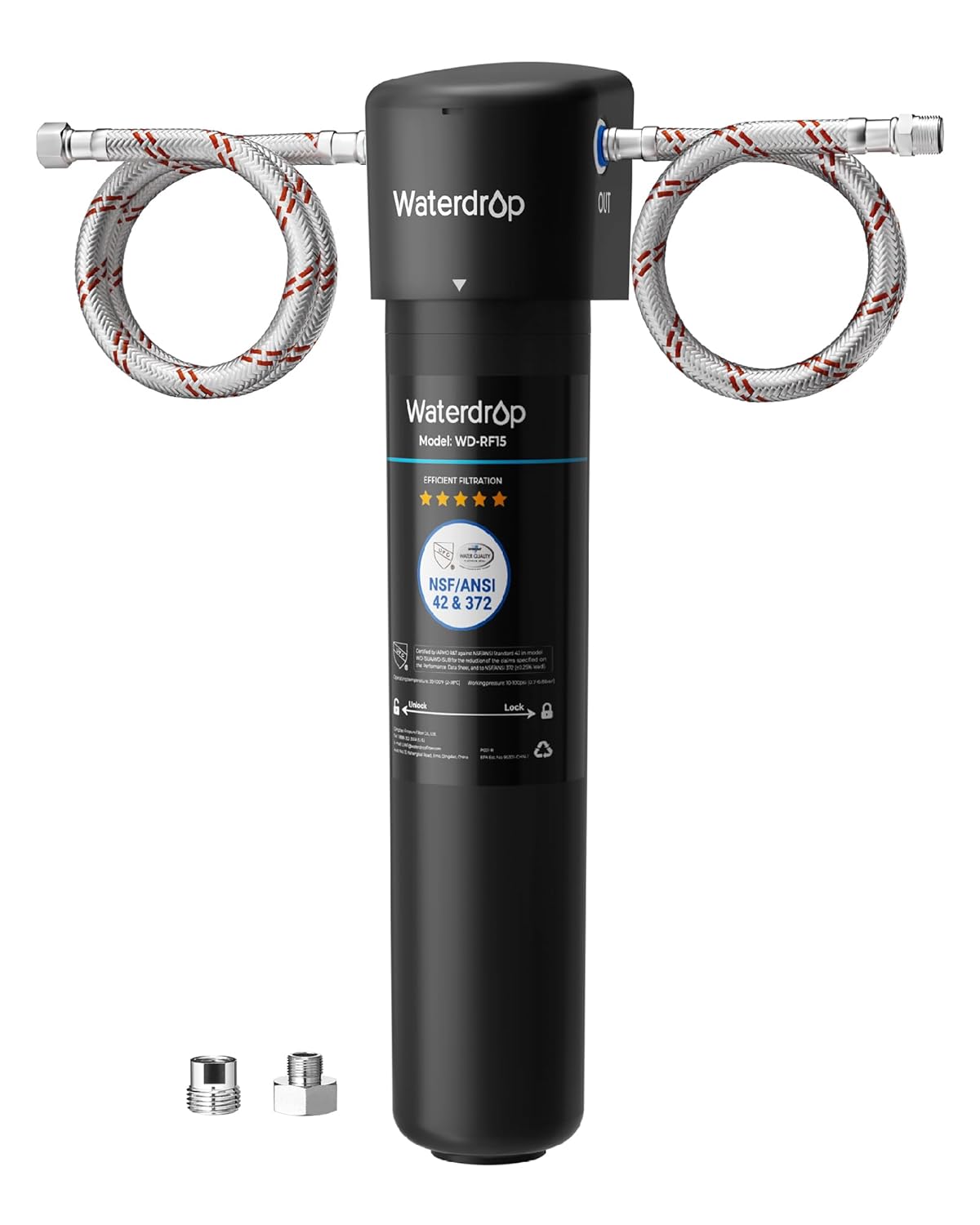
The Waterdrop WD-15UA is a compact under-sink filter that connects directly to a cold water line and delivers filtered water at a measured flow of up to 0.75 gpm. It uses multistage activated carbon media to target chlorine, bad taste and odor, lead, PFAS/PFOA/PFOS and larger particles, and is certified to NSF/ANSI 42 and 372 with third-party testing against lead reduction. Installation is straightforward with push-to-connect fittings and a 3/8" direct-connect hose plus a 3/8"–1/2" converter, so no plumber is typically required. The cartridge is designed for long life — Waterdrop rates it for roughly 19,000 gallons or about 24 months on municipal cold water — which reduces the frequency and cost of replacements. Practical limits: it is for cold municipal water only (not for well or hot water), and the extended life design makes the cartridge physically larger so you should check under-sink clearance. If you want a simple, certified under-sink option that keeps beneficial minerals while reducing common city-water contaminants, this unit is a sensible pick.
Best for: Buyers who want a verified, low-maintenance under-sink filter for city water that reduces chlorine, lead and PFAS while minimizing replacement frequency and installation hassle.
Less Ideal for: People who need filtration for well water, hot-water sources, or who have very cramped under-sink cabinets that cannot accommodate a larger cartridge.
- NSF/ANSI 42 and 372 certified with third-party testing for lead reduction
- Long service life rated at about 19,000 gallons or 24 months on municipal cold water
- Quick push-to-connect installation with included fittings and no plumbing required
- Keeps a steady flow (tested up to 0.75 gpm) suitable for drinking and cooking uses
- Only for cold municipal water and not suitable for well water or hot water
- Larger filter cartridge may not fit in very tight under-sink spaces
Verdict: A certified, long-life under-sink filter that delivers tested contaminant reduction for city water with simple, no-plumber installation.
Amazon Basics Under-Sink Water Filter

| Installation Type | Under Sink |
|---|---|
| Purification Method | Activated Carbon |
| Certification | NSF/ANSI 42 & 372 |
| Capacity | 11,000 gallons |
| Power Source | Manual |
This Amazon Basics under-sink water filter is a simple, low-profile activated carbon system designed to mount under a kitchen sink and connect directly to the cold-water feed. Installation is tool-light thanks to a twist-and-lock cartridge, push-to-connect fittings, and included 3/8" line and 3/8"–1/2" converter, so it can be up and running in minutes. The filter is NSF/ANSI 42 and 372 certified for reduction of chlorine, taste, and odor, and Amazon rates the cartridge life at 11,000 gallons or 12 months with municipal water. In everyday use it delivers clearer tasting cold water for cooking and drinking without a separate countertop pitcher or faucet-mounted unit. The manual, non-powered design keeps maintenance straightforward, but you will need to swap the cartridge annually and ensure you only use cold water. The system does not claim to remove heavy metals or microbiological contaminants, so it is best paired with city-supplied water rather than well water that may need broader treatment. Overall it is a practical, easy-to-install option for households seeking basic chlorine and taste reduction from their under-sink setup.
Best for: Buyers who prioritize a straightforward, certified solution to reduce chlorine taste and odor from municipal city water and want a quick, low-skill under-sink installation.
Less Ideal for: Homes on well water or users seeking comprehensive removal of heavy metals, lead, or microbiological contaminants should look for multi-stage or specialized treatment systems instead.
- NSF/ANSI 42 and 372 certified for chlorine, taste, and odor reduction
- Easy twist-and-lock cartridge and push-to-connect fittings for fast installation
- High advertised capacity of 11,000 gallons or 12 months per cartridge
- Includes necessary hoses and a 3/8"–1/2" converter for common sink connections
- Only designed for cold-water inline use and not intended for hot water
- Does not list reduction of heavy metals, lead, or microbiological contaminants
Verdict: A simple, NSF-certified under-sink carbon filter that delivers reliable chlorine, taste, and odor reduction with fast installation for city water users.
Choosing the Right Under-Sink Water Filter for City Water: Key Factors to Consider
Filtration Media and Contaminant Targets
Different filter media remove different contaminants. Granular activated carbon and carbon block are effective at reducing chlorine taste and many organic compounds, while catalytic carbon is better for chloramine. Sediment prefilters protect downstream media and preserve flow rate by capturing sand and rust particles.
Consider which contaminants are present in your municipal supply. If your water utility uses chloramine, choose a media that lists chloramine reduction or a multi-stage system designed for that purpose. For trace metals or nitrates, look for systems with targeted reduction stages or consider laboratory water testing before selecting a filter.
Flow Rate and Household Demand
Under-sink filters are rated for specific flow rates at typical household water pressures. A filter with too low a flow rate will frustrate you at the kitchen sink, especially if you run the tap for filling pitchers or cooking. Flow rate also interacts with filter capacity; higher flow can reduce contact time and lower removal efficiency for some contaminants.
Match the filter's flow specifications to your household habits. If you have a large family or frequently fill large containers, prioritize systems with higher rated flow and larger capacity filters to avoid slowdowns during peak use.
Installation Requirements and Plumbing Fit
Some under-sink systems are designed for straightforward do-it-yourself installation using common compression fittings and a dedicated faucet hole. Others require drilling, adapting to nonstandard plumbing, or cutting into the cold-water line. Space under the sink also matters; multi-stage housings and reverse osmosis tanks need sufficient clearance.
Assess your under-sink space and whether you are comfortable performing basic plumbing tasks. If not, choose a unit labeled for tool-free or simple installation and verify faucet compatibility before buying.
Filter Life, Replacement Availability, and Ongoing Cost
Filters have rated capacities measured in gallons or months. Short-life filters can be inexpensive up front but cost more over time due to frequent replacements. Consider how easy it is to obtain replacement cartridges and whether they are standardized or proprietary.
Long-term cost planning should include typical household consumption and local water quality. Higher sediment loads shorten filter life, so if your municipal supply has occasional turbidity spikes, expect more frequent changes. Factor in both per-cartridge price and expected replacement intervals when comparing options.
Certification, Test Data, and Manufacturer Support
Third-party certification or detailed test data provides confidence in a system's contaminant reduction claims. Look for certifications that align with your concerns, such as those covering chlorine taste and odor, lead reduction, or specific chemical classes.
Also evaluate warranty terms and customer support channels. Clear documentation for maintenance and parts replacement reduces the chance of installation errors and helps you keep the system functioning over time.
Footprint, Access, and Aesthetics
Under-sink systems vary in size and configuration. Some mount vertically on the cabinet wall, others sit on the floor of the cabinet, and multi-stage reverse osmosis units include a separate storage tank. Consider how much space you can spare and whether the filter arrangement will block access to other plumbing or trash bins.
A compact design can be advantageous in small kitchens, while larger systems often provide higher capacity. Think about the location of the dedicated faucet and whether you prefer a discreet spout or one that visually complements your sink area.
City Water Characteristics That Affect Filter Choice
Municipal water is typically treated and disinfected before distribution. Treatment commonly includes chlorine or chloramine for disinfection, and the supply is usually tested for regulated contaminants. However, taste and odor issues from residual disinfectants and occasional particulate intrusion in older distribution systems can be common.
Because city water is generally microbiologically safe, most homeowners focus on reducing disinfectant byproducts, improving taste and odor, and removing sediment and trace metals. Identify which of these issues matter in your home to narrow down the type of under-sink filtration you need.
- Chlorine control is a top priority for many municipal systems.
- Chloramine requires different media than chlorine for effective reduction.
- Sediment from aging pipes can foul filters faster than expected.
Single-Stage Vs Multi-Stage Under-Sink Filters
Single-stage carbon filters are compact and simple, typically addressing chlorine taste and some organic chemicals. They are a good fit when your main concern is improving taste and removing basic VOCs and particulates.
Multi-stage systems combine sediment prefilters, carbon block or catalytic carbon, and sometimes additional targeted media for lead or specific contaminants. These are better when you face multiple issues such as visible particles plus taste and trace metal concerns, but they require more space and potentially higher maintenance.
- Single-stage: easier installation, lower upfront cost, simpler maintenance.
- Multi-stage: broader contaminant coverage, larger footprint, more parts to replace.
Installation Tips and Common Pitfalls
Before you start, shut off the cold-water supply and relieve pressure at the faucet. Measure cabinet space and verify the clearance for filter housings and any storage tank if applicable. Keep a bucket and towel handy to catch residual water when disconnecting lines.
Watch for adapter and fitting compatibility. Many complaints stem from using the wrong sized fittings or not tightening compression fittings correctly. If the system requires a separate faucet, check whether your sink has a spare hole or whether you are comfortable drilling a hole for faucet installation.
- Confirm inlet/outlet line sizes before disconnecting existing plumbing.
- Label lines and parts during disassembly to avoid reassembly mistakes.
- Test for leaks with the cabinet door open for the first 24 hours after installation.
Maintenance Routine and When to Replace Filters
Most under-sink cartridges specify replacement intervals in months or gallons. Write down the installation date and set calendar reminders for changes. If your water has high sediment, you may need to replace prefilters more frequently than the carbon stages.
Signs that a filter needs replacement include reduced flow, return of taste or odor issues, or visible discoloration in the filter housing. Regularly inspect O-rings and housing threads for wear and lubricate seals if the manufacturer recommends it.
- Keep replacement cartridges on hand if supply chains are a concern.
- Consider keeping a simple pressure gauge if you want to monitor system restriction over time.
When to Consider Reverse Osmosis Under-Sink Systems
Reverse osmosis systems provide more thorough removal of dissolved solids, heavy metals, and many inorganic contaminants. They are worth considering if your municipal water report indicates elevated levels of dissolved minerals or specific contaminants that carbon alone does not address.
RO systems require a storage tank and produce a waste stream during membrane flushing, so they take more space and have ongoing water-efficiency considerations. For general chlorine and taste issues, a simpler carbon-based under-sink filter is often sufficient and more water-efficient.
- RO is best for dissolved solids and specific inorganic contaminants.
- Expect lower flow without the storage tank and additional maintenance for the membrane.
How We Chose the Best Under-Sink Water Filter for City Water
We prioritized systems that are appropriate for treated municipal water rather than untreated well water. Our selection focused on verified contaminant reduction for chlorine, chloramine when applicable, common VOCs, lead where relevant, and particle/sediment capture. We emphasized units with clear third-party test data or standardized filter media descriptions, reliable flow rate performance at household pressures, and serviceable filter-change procedures that an average homeowner can perform. Evaluation criteria included the types and stages of filtration (carbon block, catalytic carbon, sediment prefilter, or reverse osmosis where useful), certified contaminant reductions, typical flow rate under common household pressure, ease of installation and faucet compatibility, filter life and replacement cost, and build quality for leak resistance. We excluded point-of-entry systems and products designed only for untreated well water. Systems with proprietary, opaque media claims or unverifiable reduction data were not considered. The final list reflects a balance between practical installation, measurable contaminant removal for municipal supplies, and predictable operating costs.
Our full evaluation process is outlined in our review methodology.
FAQ
Do I need a filter specifically designed for chloramine if my city uses it?
Often yes. Chloramine is more stable than chlorine and is harder for standard carbon alone to remove. Look for media that specifies chloramine reduction or a multi-stage system that includes catalytic carbon designed for that purpose.
How do I know which contaminants are in my municipal water?
Municipalities publish annual water quality reports that list regulated contaminants and levels. Those reports are a good starting point. If you have specific concerns, a third-party laboratory test of your tap water will give a detailed contaminant profile.
Will an under-sink filter reduce my water pressure?
Some restriction is possible, especially on systems with fine-pore media or clogged cartridges. Choosing a filter with an appropriate flow rating and replacing cartridges on schedule minimizes pressure loss.
Can I install an under-sink filter myself?
Many under-sink filters are designed for DIY installation using common tools and fittings. Assess your comfort with basic plumbing tasks and space constraints. If the system requires drilling or complex adapters, professional help may be advisable.
How often should I replace under-sink filter cartridges?
Replacement intervals vary by cartridge and local water quality, typically from 3 to 12 months. Check the manufacturer's rated capacity and monitor flow and taste; heavier sediment or high chlorine loads will shorten cartridge life.
Final Verdict
For municipal water supplies, prioritize filters that target disinfectant byproducts, chloramine if present, and sediment protection for longer media life. Match the system to your kitchen layout and daily water use so you do not sacrifice flow rate for marginal gains in contaminant removal. Decide whether a simple carbon-based single-stage unit meets your needs or if a multi-stage or reverse osmosis system is warranted based on your water report and specific contaminant concerns. Focus on proven reduction claims, installation compatibility, and predictable replacement costs to choose confidently.