
Note: This article contains affiliate links. If you click on these links and make a purchase, we may earn a small commission at no extra cost to you. This helps support our research and content. Read our full affiliate disclosure here.
If you want better-tasting, lower-contaminant tap water but prefer to keep your current kitchen faucet, an under-sink water filter for existing faucet is a practical solution. These systems sit under the sink and connect to the cold-water line or the faucet supply, so you avoid drilling new holes or replacing fixtures. This guide shortlists the top options for homeowners who need compact, effective filtration that works with an existing faucet. We evaluated each pick for real-world factors like contaminant reduction, installation complexity, maintenance frequency, and long-term reliability. Read on to find systems that match your priorities and skill level, then check the product blocks below for detailed specs and fitment notes.
Top Picks at a Glance
| Best Overall The best all-around choice for most situations | Brondell Coral UC300 |  |
| Best Quality Built to a higher standard if you want something more solid | Philips AUT9340 Reverse Osmosis |  |
| Best Value The sweet spot between price and what you get | Waterdrop WD-15UA Under Sink Filter |  |
| Best Budget The cheapest option that still gets the job done reliably | AQUA CREST 5KDC Under Sink Filter |  |
| Top Rated A top-rated pick with lots of positive feedback | CuZn UC-200 Under Sink Filter |  |
| Most Popular A crowd favorite that many people choose with confidence | Waterdrop WD-10UA Under Sink Filter | 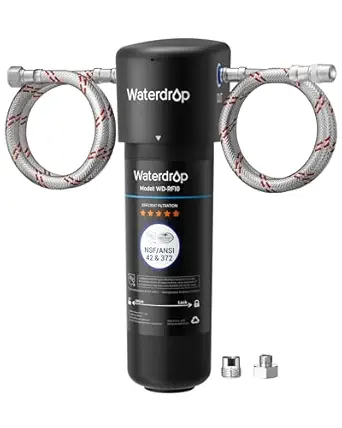 |
| Best Seller A high-volume bestseller chosen again and again | iSpring RCC7AK-BN RO System |  |
Brondell Coral UC300

| Installation Type | Under Sink |
|---|---|
| Purification Method | Activated Carbon |
| Capacity | 600 gallons |
| Power Source | Manual (Water Pressure) |
The Brondell Coral UC300 is an under-counter three-stage carbon filtration system designed to deliver fresher tasting drinking water without a storage tank. It uses sediment, pre-carbon, and carbon block stages to reduce particulates, chlorine, VOCs, lead, PFAS and other listed contaminants, and the system is WQA/NSF certified for multiple standards. Installation is typical for an under-sink purifier: the compact canisters mount out of sight and quick-connect hoses plus a twist-and-seal filter make DIY setup and annual filter swaps straightforward. The included chrome drinking faucet looks tidy on the sink and the LED indicator helps you time the filter change; replacement filters are rated for roughly 12 months or 600 gallons. Because it is a carbon-based under-sink filter rather than an RO system, it preserves beneficial minerals and avoids a separate drain line or tank, but it will not provide the extremely low dissolved solids of reverse osmosis units. For someone seeking strong contaminant reduction in a compact, easy-to-maintain package, the Coral UC300 is a sensible all-around choice.
Best for: Buyers who want a certified, tankless under-sink filter that balances strong contaminant reduction with simple DIY installation and low day-to-day maintenance.
Less Ideal for: People who need ultra-low TDS water for aquariums or specialty uses or those who prefer countertop plug-in solutions should look elsewhere.
- Certified WQA/NSF reductions for many contaminants including lead and PFAS
- Three-stage carbon filtration removes chlorine, VOCs, odors, and particulates while retaining minerals
- Compact under-sink design with no storage tank saves cabinet space
- Twist-and-seal filter cartridges and quick-connect hoses simplify annual filter changes
- Included chrome faucet with LED filter-change indicator provides a finished countertop look
- Not a reverse osmosis system so it does not substantially reduce dissolved solids or TDS
- Filter life limited to about 600 gallons or 12 months requiring yearly replacements
Verdict: A compact, certified under-sink carbon filtration system that delivers broad contaminant reduction and easy annual maintenance for everyday drinking water.
Philips AUT9340 Reverse Osmosis

| Purification Method | Carbon Block, Reverse Osmosis, Post Carbon Block (Coconut Shell) |
|---|---|
| Capacity | 400 gallons |
| Other Special Features of the Product | 2.3:1 low drain ratio, 400GPD, 5-stage Filtration, Self Cleaning, Tankless |
| Operating Pressure Range | 14.5-58 psi |
| Supported Water TDS Level Maximum (PPM) | 500 |
The Philips AUT9340 is a tankless under-sink RO system designed to produce large volumes of purified water while minimizing waste. It uses a 5-stage filtration stack including carbon block and a 0.0001-micron Aquaporin RO membrane to reduce TDS, lead, chlorine and other common tap-water contaminants, and the unit is rated at 400 GPD with a 2.3:1 drain ratio. The slim, mountable housing fits under standard cabinets and includes a faucet, tubing and quick-connect fittings for straightforward installation. Philips' self-flush and four smart flushing modes keep the membrane clean, prevent standing water, and reduce noise by stabilizing pressure without a large motor. Filters have long lifespans (4-in-1 annual, RO up to two years) and tool-free twist replacement keeps maintenance simple and inexpensive. Expect quiet operation and steady flow but plan for professional-style installation if your plumbing is nonstandard, and note the maximum supported TDS and operating pressure ranges when matching to very hard or high-TDS sources.
Best for: Buyers who prioritize high-purity output and consistent, high-volume performance from an under-sink RO paired with an existing faucet and who want low ongoing maintenance.
Less Ideal for: Those with very low household water pressure, unusually high TDS source water, or buyers who need a simple plug-and-play countertop unit instead of an under-sink installation.
- Tankless, space-saving design that mounts vertically or horizontally under a cabinet
- High production capacity (400 GPD) with a low 2.3:1 drain ratio for water efficiency
- 0.0001-micron Aquaporin RO membrane and 5-stage filtration reduce TDS, lead, chlorine and odors
- Automatic self-flush and four intelligent flushing modes keep membrane performance stable and eliminate stagnant water
- Tool-free twist filter replacement and long filter life lower ongoing maintenance effort and cost
- Maximum supported TDS and required operating pressure limit use on very high-TDS or low-pressure supplies
- Installation may require adapting fittings or a plumber for nonstandard under-sink plumbing
Verdict: Choose the Philips AUT9340 when you need a high-capacity, tankless under-sink RO that delivers consistent, low-waste purified water with minimal maintenance.
Waterdrop WD-15UA Under Sink Filter
| Purification Method | Activated Carbon |
|---|---|
| Capacity | 19000 gallons |
| Maximum Flow Rate | 0.75 gpm |
| Filter Life Cycle | 2 years |
| Installation Type | Under Sink |
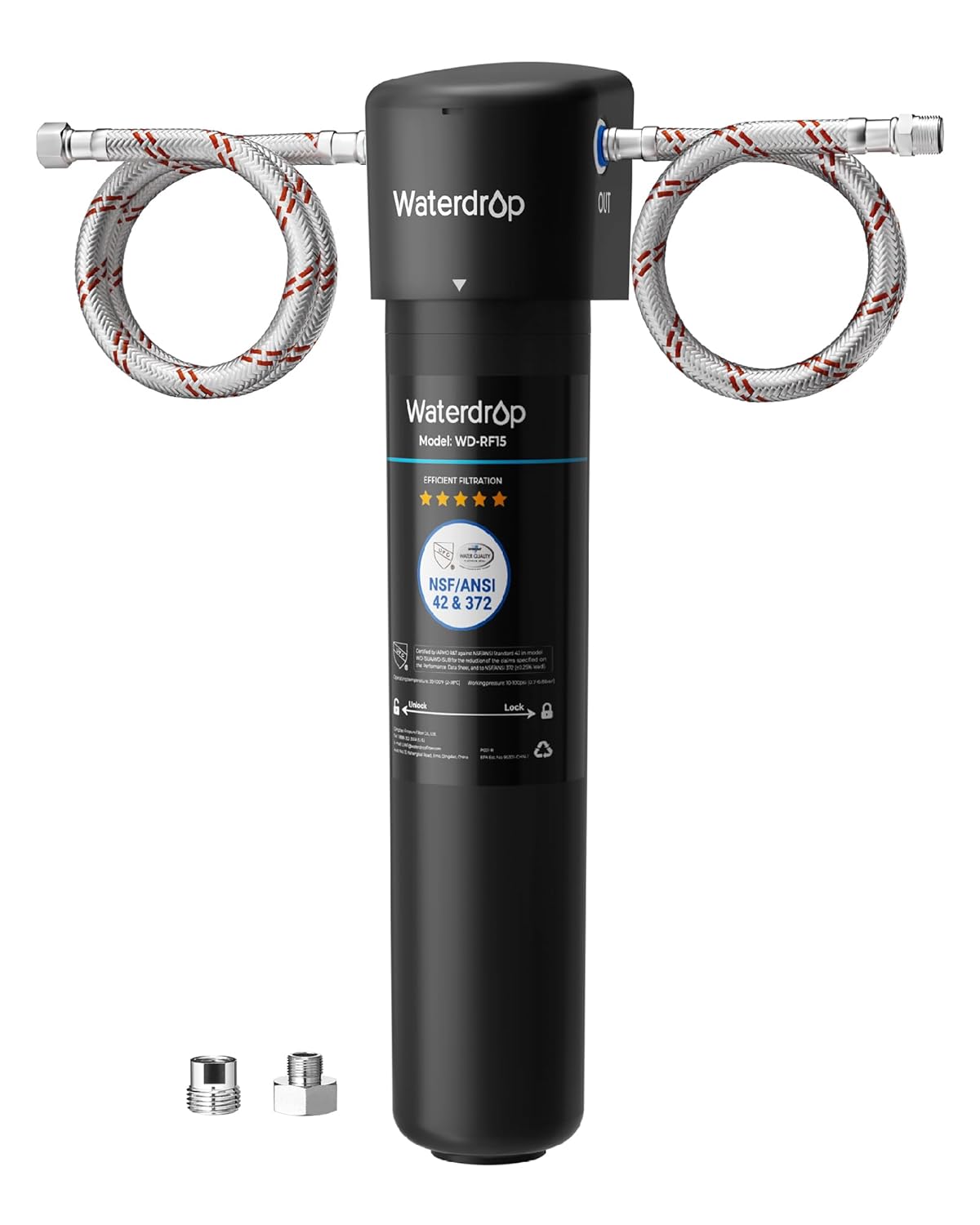
The Waterdrop WD-15UA is a straightforward under-sink filter that connects directly to an existing faucet cold-water line using push-to-connect fittings and a 3/8"–1/2" converter. It uses multistage activated carbon to target chlorine, lead, PFAS/PFOA/PFOS, sediment and common chemical tastes and odors while retaining beneficial minerals. The system is built for long service life—Waterdrop rates it for about 19,000 gallons or roughly 24 months on municipal water—so it is a low-maintenance option for kitchens, bathrooms, RVs or offices. Installation is tool-light and fast, and filter replacement is quick with the three-second swap design. Practical limits include a 0.75 gpm tested flow rate at 60 psi, so it is tuned for steady drinking and cooking supply rather than high-flow whole-sink use, and it is specified for cold municipal water only, not well water or hot lines. Certifications include NSF/ANSI 42 and 372 and third-party testing for lead reduction, which supports its contaminant claims for point-of-use needs.
Best for: Buyers who want a low-maintenance, long-life under-sink filter that hooks to an existing faucet line quickly and prioritizes contaminant reduction and easy yearly or biennial upkeep.
Less Ideal for: People who need filtration for well water, require hot-water filtration, or want high-flow whole-sink performance should consider other systems.
- Long rated service life (about 19,000 gallons or 24 months) reduces replacement frequency
- Push-to-connect direct installation with included converter fits common 3/8" and 1/2" cold-water lines
- IAPMO/NSF-related certifications for chlorine and material safety and third-party lead reduction testing
- Multistage activated carbon reduces chlorine, taste, odor, PFAS and heavy metals while retaining beneficial minerals
- Designed for cold municipal water only and not suitable for well water or hot lines
- Maximum tested flow rate of 0.75 gpm may feel slow for high-demand faucets
Verdict: If you want a simple, long-life under-sink filter that installs to your existing faucet cold line and cuts chlorine, lead and PFAS without frequent swaps, this WD-15UA is a practical choice.
AQUA CREST 5KDC Under Sink Filter

| Purification Method | Activated Carbon |
|---|---|
| Capacity | 5000 gallons |
| Maximum Flow Rate | 1.5 gpm |
| Filter Life Cycle | 12 months |
| Supported Water TDS Level Maximum (PPM) | 300 |
The AQUA CREST 5KDC is a simple under-sink direct-connect filtration system designed to deliver better-tasting water without changing your faucet. It installs to the cold water line using the included push-to-connect hoses and fittings and fits under kitchen or bathroom sinks for drinking, cooking, and pet water. The filter uses coconut shell activated carbon with a 0.5 μm rating plus KDF media to cut chlorine, VOCs, some heavy metals and large particles while maintaining a quick 1.5 gpm flow so filling a glass is fast. The cartridge is rated for about 5,000 gallons or roughly 12 months of use, so annual replacement is easy to plan. Practical benefits include NSF/ANSI tested components, lead-free materials, and an all-inclusive accessory kit that avoids extra plumbing trips. Limitations are that it is focused on chemical and particulate reduction and will not lower total dissolved solids, and the in-line design requires enough under-sink clearance and a compatible 3/8-inch shutoff valve for the supplied hoses.
Best for: Buyers who want a low-cost, easy-to-install under-sink filter to improve tap taste and reduce common chemical contaminants without changing their existing faucet.
Less Ideal for: People looking to lower TDS, perform advanced contaminant removal like nitrate or microbiological filtration, or those who lack sufficient under-sink clearance or a compatible cold-water shutoff.
- High capacity cartridge rated for 5,000 gallons or about 12 months
- Coconut shell activated carbon plus KDF reduces chlorine, VOCs and improves taste
- Fast flow rate up to 1.5 gpm so water dispense is quick
- Includes all hoses, fittings and mounting hardware for direct connect installation
- NSF/ANSI tested components and lead-free construction
- Does not reduce total dissolved solids (TDS)
- Requires compatible under-sink shutoff and space for inline installation
Verdict: AQUA CREST 5KDC is the practical budget pick for anyone who wants fast, year-long under-sink filtration that improves taste and cuts common chemical contaminants without replacing the faucet.
CuZn UC-200 Under Sink Filter

| Model Number | UC-200 |
|---|---|
| Included Components | Stainless Steel Connection Hose |
| Material Type | NSF Approved Material Components |
| Filter Life | Up to 5 years / 50,000 gallons |
| Certifications | NSF/ANSI 42 & 372 |
The CuZn UC-200 is a single under-sink inline filter built for extended, low-maintenance filtration. It uses a three-stage combination of micro sediment membrane, KDF-55 media, and coconut shell carbon to remove chlorine, lead, PFAS/PFOS and other common contaminants while retaining beneficial minerals, and it connects directly to a cold water line for a straightforward DIY install. Its standout benefit is longevity: the manufacturer rates it for up to five years or 50,000 gallons depending on water quality, which reduces the frequency of cartridge swaps compared with typical 6‑month filters. The unit ships with a stainless steel connection hose and is NSF/ANSI 42 and 372 related in-material certified, so you get verified reduction of aesthetic contaminants and lead. Limitations include no TDS reduction since it is not a reverse osmosis system, and performance depends on incoming water quality so very hard or heavily contaminated sources may require pre-treatment or an RO system. For anyone wanting a durable, low-touch under-sink filter to improve everyday tap water taste and reduce specific contaminants, the UC-200 is a strong choice.
Best for: Buyers who prioritize a reliable, low-maintenance under-sink filter that delivers years of service and steady contaminant reduction without frequent cartridge changes.
Less Ideal for: Homes that need complete desalting or very high contaminant removal where a reverse osmosis system or multi-stage treatment is required.
- Long rated filter life up to 5 years or 50,000 gallons reduces replacement frequency
- Three-stage media (micro sediment, KDF-55, coconut shell carbon) targets chlorine, lead, PFAS/PFOS and improves taste
- Designed for simple direct-connect installation with included stainless steel connection hose
- Retains beneficial minerals by not removing total dissolved solids
- Does not reduce TDS or provide reverse osmosis-level purification
- Effectiveness depends on incoming water quality, so very contaminated water may need additional treatment
Verdict: Choose the UC-200 if you want a durable, low-maintenance under-sink filter that reliably improves tap water taste and reduces lead and other common contaminants for years without frequent replacements.
Waterdrop WD-10UA Under Sink Filter

| Purification Method | Activated Carbon |
|---|---|
| Maximum Flow Rate | 2.5 gpm |
| Filter Life Cycle | 1 years |
| Supported Water TDS Level Maximum (PPM) | 700 |
| Material Type | NSF/ANSI Approved Components |
The Waterdrop WD-10UA is an under-sink activated carbon filter system made for direct connection to an existing faucet feed line and intended for municipal cold water only. It uses a twist-and-lock cartridge with push-to-connect fittings and a 3/8" outlet that connects to standard 3/8" or 1/2" feed valves, so installation is fast and usually does not require drilling. The system is NSF/ANSI 42 certified and targets chlorine, bad taste and odor, lead, and PFAS family contaminants while retaining beneficial minerals. Waterdrop rates the cartridge life at up to 12 months and claims a tested flow of about 0.75 gpm at 60 psi with a 3/8" outlet boosting flow to 1.33 gpm, which is adequate for drinking and cooking without a separate faucet. Practical benefits include compact size for tight under-sink spaces and inexpensive replacement filters compared with multi-stage systems. Limitations are that it is only for cold, municipally treated water and not designed for well water or hot supply, and it is a single-stage carbon filter so it will not reduce hardness or some dissolved solids that multi-media or reverse osmosis systems address.
Best for: Buyers who want an easy-to-install under-sink filter that connects to an existing faucet feed and prioritizes proven contaminant reduction with strong user feedback.
Less Ideal for: Homes with well water, users needing heavy-duty particulate or mineral removal, or anyone who requires hot-water filtration should look at more advanced multi-stage or RO systems.
- NSF/ANSI 42 certified for chlorine, taste and odor reduction
- Quick twist-and-lock installation with push-to-connect fittings for most existing 3/8" or 1/2" feed valves
- Compact single-cartridge design fits tight under-sink spaces
- Up to 12 months filter life and claimed high dirt adhesion area to reduce clogging
- Approved for cold municipal water only and not suitable for well or hot water
- Single-stage activated carbon does not remove hardness or all dissolved solids
Verdict: A compact, NSF-certified under-sink carbon filter that connects to an existing faucet feed and delivers reliable taste and contaminant improvement with easy DIY installation.
iSpring RCC7AK-BN RO System

| Purification Method | Reverse Osmosis, Alkaline, Activated Carbon, Carbon block |
|---|---|
| Power Source | No Power Needed |
| Maximum Flow Rate | 284 liters_per_day |
| Supported Water TDS Level Maximum (PPM) | 750 |
| Filter Life Cycle | 6 months |
The iSpring RCC7AK-BN is a six‑stage under‑sink reverse osmosis system that produces mineralized, low‑TDS drinking water without using electricity. It connects to cold water and routes filtered water to a dedicated brushed‑nickel faucet, and its top‑mounted fastener simplifies tightening the faucet from above during installation. Notable features include an NSF/ANSI 58 certified full system, a clear first‑stage sediment housing for quick visual checks, and a patent‑pending alkaline stage that raises pH and adds minerals back into RO water. The unit supports up to 75 gallons per day and handles typical household TDS up to 750 ppm, while push‑to‑connect fittings and color‑coded tubing make DIY installation straightforward for someone handy. Expect periodic filter changes (primary cartridges on a roughly 6‑month cycle) and an inline storage tank that limits immediate flow rate compared with a direct pumped system. For buyers who prioritize certified contaminant reduction and mineralized taste, this delivers reliable, long‑term performance, though it still requires routine filter replacements and under‑sink space for the assembly and tank.
Best for: Buyers who want a factory‑certified RO system that delivers consistently low‑TDS, mineralized drinking water and who prefer a proven, do‑it‑yourself friendly under‑sink solution.
Less Ideal for: Those who need instant high flow or hot‑water dispensing at the faucet, or who cannot spare under‑sink cabinet space for a storage tank.
- NSF/ANSI 58 full system certification for verified contaminant reduction
- Alkaline remineralization stage restores minerals and raises pH for better taste
- Transparent first‑stage housing lets you inspect sediment buildup visually
- Electricity‑free operation works with any kitchen plumbing
- Push‑to‑connect fittings and color‑coded tubing ease DIY installation
- Requires regular filter replacements on a defined schedule
- Storage tank reduces on‑demand flow compared with boosted systems
Verdict: Choose the iSpring RCC7AK-BN when you want an NSF‑certified, electricity‑free under‑sink RO system that returns minerals to produce better‑tasting, reliably pure drinking water.
Choosing the Right Under-Sink Water Filter for Existing Faucet: Key Factors to Consider
Filtration Capabilities
Different under-sink filters target different contaminants. Some emphasize sediment and chlorine taste and odor reduction with carbon-based media, while others include specialized stages for lead, VOCs, or cysts. Knowing which contaminants are of concern in your water—for example from a municipal report or private well testing—lets you pick a system with the right filter media.
Choose filters with documented reduction claims or third-party test data for the contaminants you care about. Multi-stage cartridges can address a broad range of issues but may raise replacement cost and reduce flow rate. Balance scope of removal against your actual needs to avoid paying for unnecessary stages.
Installation Requirements
Under-sink systems marketed for existing faucets vary in how they connect to your plumbing. Some attach directly to the cold-water supply line with simple push-fit adapters, while others require T-valves, saddle valves, or small-diameter tubing and compression fittings. The physical clearances under your sink—space to route tubing and mount the filter—also matter.
If you are DIY-inclined, look for kits with clear instructions and included fittings. If your faucet has unusual supply lines or limited space, plan for potential extra adapters or a professional install. Consider whether you have shutoff access and basic tools like an adjustable wrench and basin light before choosing.
Filter Life and Ongoing Cost
Replacement frequency varies by cartridge capacity and your household water use. Some cartridges are rated for several thousand gallons and last many months, while others need replacing more often. Longer-life cartridges can reduce labor and long-term expense, but initial filter cost and replacement availability are important.
Check both stated lifespan in gallons and realistic timeframes based on your usage. Also verify how straightforward cartridge changes are—twist-off housings and quick-disconnects speed service, while sealed or complex assemblies increase the time and likelihood of mistakes.
Flow Rate and Daily Use
Some under-sink filters reduce faucet flow, which affects tasks like filling a kettle or washing produce. Flow rate specifications matter especially for larger households or frequent kitchen use. Systems with larger filter media or parallel flow paths preserve flow better, while fine-pored cartridges may slow output.
Assess expected peak demand and whether a modest flow reduction is acceptable. If you routinely fill large pots, look for systems that advertise higher flow rates or maintain near-original cold-water delivery to avoid daily frustration.
Compatibility With Existing Faucet Hardware
Because the focus is preserving your current faucet, ensure the under-sink kit supports the supply line size and shutoff configuration you have. Many kits work with standard 1/2-inch hot and cold lines, but variations exist, especially on older homes or certain designer fixtures.
Confirm the included adapters and whether additional fittings are required. Also check that the system's tubing routing will not interfere with disposal, water heater connections, or cabinet storage. Choosing a system with flexible tubing and modular fittings improves the chances of a smooth, no-modification installation.
How Under-Sink Systems Hook Up to an Existing Faucet
Most under-sink filters for existing faucets tap into the cold-water supply line beneath the sink. Common methods include using a T-fitting at the shutoff valve, a push-fit connector on the supply line, or a small inline adapter that connects between the valve and supply hose. The goal is to route cold water through the filter cartridge before it reaches your faucet.
Some installations use quick-disconnect fittings that make future service easier, while others use compression fittings that are common in household plumbing. Understanding which connection style your home requires reduces surprises at install time and limits the need for additional adapters.
- T-fittings allow permanent diversion of cold water through the filter without replacing the faucet.
- Push-fit connectors are tool-free and ideal for DIYers, but check for compatible tubing sizes.
- Inline adapters sit between the shutoff and supply hose and are often reversible if you remove the system later.
Common Filter Media and What They Remove
Carbon block and granular activated carbon are the most common media for improving taste and reducing chlorine and organic compounds. Carbon is effective for odor and taste issues and often forms the backbone of multi-stage under-sink systems.
Specialized media or additional stages target heavy metals, nitrates, or microbial cysts. Reverse osmosis is less common in simple faucet-compatible under-sink units because it requires drain access and a storage tank. Choose media based on your water quality priorities and whether you need certified reductions for specific contaminants.
- Carbon stages: reduce chlorine, VOCs, taste and odor.
- Sediment prefilters: protect downstream media and prolong life.
- Specialty stages: ion exchange or catalytic carbon for select heavy metals or chloramine.
Maintenance and Troubleshooting Tips
Regularly changing cartridges at the recommended interval preserves filtration performance and prevents flow restriction. Mark calendar reminders based on the stated lifespan and your usage to avoid late changes that could reduce water quality.
If you encounter leaks, first shut off the cold-water supply and check fittings for tightness. Replace worn washers or O-rings and confirm the tubing is fully inserted into push-fit connectors. For persistent issues, consult the installation manual or a licensed plumber to avoid water damage.
- Flush new cartridges per instructions before using filtered water.
- Keep a spare cartridge on hand if your unit has a short replacement interval.
- Inspect under-sink fittings periodically for moisture or corrosion.
Space Planning Under the Sink
Measure the available under-sink area and map out where the filter body, tubing, and shutoff valve live before buying. Some filters mount to the cabinet wall or the sink's kickboard, while others sit loose on the base. Consider whether you need room for garbage disposal components, P-trap clearances, and cleaning supplies.
A slim canister or horizontally mounted housing can fit behind pipes more easily than a bulky vertical unit. Planning where replacement cartridges will be removed and reinstalled reduces frustration during service and ensures the filter does not block access to other plumbing.
- Allow clearance for cartridge removal and hand access.
- Avoid mounting where cabinets store heavy items that could bump tubing.
- Label valves and fittings for quick shutoff during maintenance.
Water Quality Testing: Before and After
Testing your source water before installing a filter establishes a baseline and helps focus on the contaminants to remove. Municipal water reports provide a starting point; for private wells, independent lab testing identifies specific issues. Post-install testing verifies that the chosen system addresses those targets.
Consider simple at-home test kits for common parameters or use a certified lab for precise heavy-metal or microbial analysis. Retest after cartridge changes to confirm ongoing performance and to detect unexpected degradation.
- Test for chlorine, lead, and other locally relevant contaminants.
- Keep test records to track filter effectiveness over time.
- Retest if you notice taste or odor changes or after major plumbing work.
How We Chose the Best Under-Sink Water Filter for Existing Faucet
We focused on filters designed specifically to work with an existing faucet and evaluated candidates across real-world use criteria that matter to homeowners. Selection began by excluding systems that require faucet replacement or countertop placement. We prioritized units with clear third-party contaminant reduction data or standardized test results, then considered the plumbing compatibility and the range of supported connection types for typical residential faucets. Important evaluation dimensions were filtration effectiveness for common tap contaminants, installation complexity including required tools and fittings, filter lifespan and replacement cost, build quality and leak protection, and flow rate performance under normal household demand. We also considered space footprint under typical sinks and the ease of routine maintenance. Units lacking published reduction claims, with unclear installation instructions, or with known frequent service issues were excluded. The result is a shortlist of systems that balance measurable contaminant reduction with practical installation and upkeep for people who want to keep their existing faucet.
Our full evaluation process is outlined in our review methodology.
FAQ
Will an under-sink filter affect my faucet's flow rate?
Often it will reduce flow somewhat, depending on cartridge pore size and system design. Many units maintain usable flow for daily tasks, but high-demand kitchens may notice slower filling. Check manufacturer flow specs and choose higher-flow designs if this is a concern.
Can I install an under-sink filter myself without a plumber?
Many models are DIY-friendly with push-fit or compression fittings and clear instructions. If your shutoff valves are corroded, supply lines are nonstandard, or you are uncomfortable working with plumbing, hiring a professional is advisable.
How often do I need to replace cartridges?
Replacement intervals vary by cartridge capacity and your household water use, typically from several months to a year. Filter life is often stated in gallons; estimate your usage to convert that into a calendar interval and set reminders accordingly.
Will an under-sink filter remove lead and other heavy metals?
Some under-sink cartridges are designed to reduce lead and heavy metals, but not all do. Look for documented reduction claims or third-party test results for specific contaminants when lead removal is important.
Do under-sink filters require electricity?
No. These passive systems use water pressure to move water through the filter media and do not need power. Exceptions include systems with electronic monitoring or UV stages, which are less common for faucet-compatible under-sink units.
Final Verdict
Choosing an under-sink water filter for an existing faucet is about matching filtration performance to the contaminants you want removed while minimizing installation hassle and ongoing maintenance. Prioritize systems with documented reduction claims for your key concerns, a connection method that fits your plumbing, and a cartridge life that suits your usage. Balance flow rate expectations against filtration thoroughness and plan the under-sink layout before you buy. With the right fit and straightforward maintenance, an under-sink filter preserves your current faucet while delivering noticeably better water at the tap.