
Note: This article contains affiliate links. If you click on these links and make a purchase, we may earn a small commission at no extra cost to you. This helps support our research and content. Read our full affiliate disclosure here.
If hard water or sediment is affecting fixtures, laundry, and appliances, choosing a combined whole-house water filter with a water softener can simplify treatment and protect your plumbing. These systems filter out particulates, chlorine, and other contaminants while also reducing hardness to cut scale buildup. Picking the right setup matters because installation footprint, maintenance cadence, and the balance between filtration and softening capacity determine long-term performance and operating cost. This guide shortlists six top-rated whole-house water filters paired with water softeners and explains the practical considerations that matter for homes. We evaluate systems on filtration effectiveness, softening capability, flow rate, and upkeep needs. Read on for the criteria we used and the tradeoffs to expect when choosing a combined system.
Top Picks at a Glance
| Best Overall The best all-around choice for most situations | PRO+AQUA PRO-E-S80E Combo |  |
| Best Quality Built to a higher standard if you want something more solid | AFWFilters Iron Pro 2 |  |
| Best Value The sweet spot between price and what you get | Aquasure AS-WHF48D 48,000-Grain System |  |
| Best Budget The cheapest option that still gets the job done reliably | H&G Lifestyles 2-Stage Water Filter & Softener |  |
| Top Rated A top-rated pick with lots of positive feedback | NU Aqua 4-Stage Whole House System | 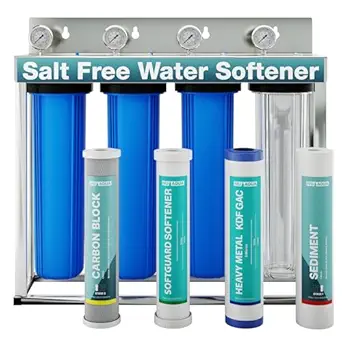 |
| Most Popular A crowd favorite that many people choose with confidence | Aquasure AS-PR75HS48D Bundle | 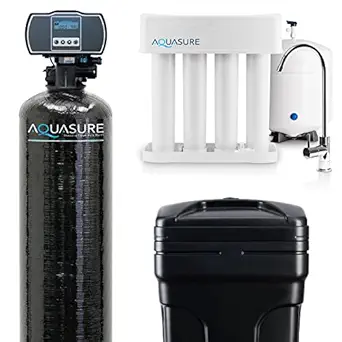 |
PRO+AQUA PRO-E-S80E Combo

| Purification Method | Activated Carbon |
|---|---|
| Maximum Flow Rate | 20 gpm |
| Power Source | Corded Electric |
| Capacity | 1.09 cubic feet |
The PRO+AQUA PRO-E-S80E Combo pairs a three-stage whole-house filter with a high-capacity 80,000-grain water softener to deliver softened, filtered water to an entire home. It is installed at the main supply line and used to remove hardness minerals, chlorine, iron, rust, VOCs, and sediment while protecting plumbing and appliances. Notable features include a built-in TDS meter, activated carbon filtration stages, commercial-grade resin and tanks, and a digital metered valve intended to optimize salt and water use. The system supports high flow rates up to 20 GPM, so it can serve very large homes with many bathrooms without noticeable pressure loss. Expected benefits are improved water taste, reduced scale buildup, and lower maintenance for water-using appliances. Trade-offs are its large footprint and weight that require planned installation space and likely professional hookup, and the system carries routine salt and filter maintenance like any softener/filter combo. For buyers needing whole-house performance and high flow capacity this unit delivers robust, integrated treatment.
Best for: Buyers who want a single integrated system that handles both filtration and heavy-duty softening for large homes or well water setups and prioritize whole-house performance over compactness.
Less Ideal for: Those living in small apartments, buyers unwilling to accommodate regular salt and filter upkeep, or anyone seeking a compact, low-maintenance point-of-use solution.
- Combined 3-stage filtration plus 80,000-grain softener treats hardness and common contaminants in one package
- Built-in TDS meter for quick water quality checks
- Digital metered valve to reduce salt and water waste during regeneration
- Commercial-grade resin and tanks designed for high flow and durability
- Supports up to 20 GPM so it can serve very large homes without major pressure drop
- Large, heavy system that requires significant installation space and likely professional installation
- Ongoing maintenance required including salt replenishment and periodic filter changes
- Higher upfront cost and footprint compared with point-of-use or smaller systems
Verdict: Choose this combo if you need a single, high-flow whole-house solution that combines heavyweight softening with multi-stage filtration for large households.
AFWFilters Iron Pro 2

| Grain capacity | 64,000 |
|---|---|
| Control valve | Fleck 5600SXT digital metered |
| Iron removal | Up to 6 ppm |
| Connection size | 1" main connection |
The AFWFilters Iron Pro 2 is a high-capacity combination water softener and iron filter intended for whole-house use. It pairs fine-mesh resin with a Fleck 5600SXT digital metered valve to deliver metered regeneration based on actual water use, which helps conserve salt and water compared with time-clock systems. Typical installation places the tank and round brine tank near the main water line so treated water feeds the entire home; the kit includes resin preloaded in the tank and a bypass valve and 1" main connection for a straightforward DIY or pro install. In practice this unit handles hard water and iron issues up to about 6 ppm and also captures sediment, manganese, and rust, improving appliance longevity and reducing staining. The system is designed for high flow so it will not noticeably restrict household water pressure. Expect low maintenance thanks to the metered control and a 5-year manufacturer warranty, but note the unit is large and requires space and basic plumbing skills for installation.
Best for: Buyers who prioritize performance and high-flow whole-house treatment and want a single system to handle both hard water and moderate iron levels while minimizing regeneration frequency.
Less Ideal for: Homes with very limited installation space or water supplies with iron levels significantly above 6 ppm that require specialized pretreatment.
- Combination softener and iron filter removes hardness plus iron, manganese, sediment, and rust
- Fleck 5600SXT digital metered valve provides demand-based regeneration to save salt and water
- 64,000 grain capacity supports larger households and high flow whole-house use
- Comes resin-loaded with bypass valve and 1" main connection for simpler installation
- Large, heavy unit that requires dedicated space and basic plumbing installation
- Effective iron removal rated to about 6 ppm, so higher iron levels may need pretreatment or a different system
Verdict: Choose the Iron Pro 2 when you need a high-capacity, high-flow factory-quality combo softener and iron filter that favors performance and efficient, demand-based regeneration.
Aquasure AS-WHF48D 48,000-Grain System

| Grain capacity | 48,000 grains |
|---|---|
| RO flow rate | 75 GPD |
| Supported TDS max | 2000 PPM |
| Filter life cycle | 6 months |
This Aquasure bundle pairs a 48,000-grain metered water softener with multi-stage pre-filters and a 75 GPD reverse osmosis unit to deliver softened, filtered water throughout a 3–4 bathroom home while providing purified drinking water at a dedicated tap. The digital metered control head is programmable and automates regeneration and backwash based on usage, which reduces manual maintenance and helps the system run efficiently. Triple-purpose sediment/GAC/zinc pre-filters remove chlorine, sediment, and many chemical contaminants before water reaches the softener and RO stages, protecting resin life and improving taste. The RO unit is a four-stage design with recommended filter changes (sediment/carbon every 6–12 months, membrane and post-carbon every 18–24 months) to maintain flow and contaminant rejection. Practical limits include the 75 GPD RO flow rate for drinking water only and the need to replace several filters on schedule; installation requires plumbing access and some setup. For a homeowner who wants whole-house softening plus under-sink RO water, this bundle combines automation and broad contaminant reduction in one package.
Best for: Homeowners who prioritize reducing scale and improving tap water quality across the whole house while also wanting a reliable under-sink RO for drinking water and low-maintenance automatic control.
Less Ideal for: Large households needing whole-house potable water at high flow rates or buyers seeking a plug-and-play unit with professional installation included should consider other solutions.
- Combined whole-house softening and dedicated reverse osmosis drinking water in one bundle
- Programmable digital metered control automates regeneration and backwash
- Triple-purpose pre-filters reduce chlorine, sediment, and many contaminants to protect downstream components
- 75 GPD RO provides multi-stage contaminant removal for drinking water
- RO output limited to about 75 gallons per day, so it is for drinking/food prep rather than whole-house potable supply
- Requires periodic filter and membrane replacements to maintain performance
Verdict: Choose this bundle if you want an automated whole-house softener plus a dedicated 75 GPD RO to deliver softened water everywhere and purified drinking water at the tap.
H&G Lifestyles 2-Stage Water Filter & Softener

| Purification Method | Granular Activated Carbon & KDF 58 |
|---|---|
| Power Source | Passive (Water Pressure) |
| Maximum Flow Rate | 12 gpm |
| Operating Pressure Range | 20-100 psi |
| Capacity | 70000 gallons |
This compact two-stage unit combines a cation ion-exchange resin cartridge to reduce hardness with a second cartridge loaded with KDF and granular activated carbon to remove chlorine, heavy metals and odors. It installs as a whole-house inline system and is driven by water pressure, so there is no electricity required. Typical use is point-of-entry protection for bathing, laundry and plumbing where you want softer water and improved taste without a full tank-style softener. Notable features include the 10% crosslink resin for better chlorine resistance, a claimed 70,000-gallon capacity (dependent on water quality), and a 7–12 gpm flow range suitable for most households. Practical benefits are easier scale prevention for appliances and reduced chlorine smell at taps while keeping installation relatively simple. Important limitations are that it is a compact cartridge system rather than a large-capacity salt-based softener so hardness reduction will be more modest and cartridge life will vary with your water; replacement cartridges must be sourced separately. The system is best when you need combined filtration and some softening on a budget and want a low-maintenance, passive solution.
Best for: Buyers who need an affordable, space-saving whole-house solution that reduces hardness and improves taste without installing a full tank softener and who prioritize low upfront complexity.
Less Ideal for: Homes with very hard water or large families that need complete hardness removal and long-term high-capacity softening should consider a dedicated salt-based softener instead.
- Combines softening resin and KDF+GAC filtration in one compact unit
- Passive operation uses household water pressure, no power required
- High claimed capacity up to 70,000 gallons under typical conditions
- Supports healthy whole-house flow with a 7–12 gpm range
- 10% crosslink resin improves chlorine resistance and durability
- Not a salt-based tank softener so it will not match scale removal of full-size systems
- Actual capacity and performance depend heavily on local water quality and may require frequent cartridge changes
Verdict: A budget-friendly, no-electricity two-stage whole-house unit that delivers modest softening and filtration for buyers who want simpler scale control and chlorine reduction without a full tank softener.
NU Aqua 4-Stage Whole House System

| Purification Method | Activated Carbon, Carbon Block |
|---|---|
| Installation Type | Whole House Water Tank |
| Supported Water TDS Level Maximum (PPM) | 300 |
| Other Special Features of the Product | Clean Water From Every Tap, Easy to Install, Extend Lifespan of Appliances, Protect House Plumbing, Softer Laundry |
The NU Aqua 4-Stage is a point-of-entry filtration system that combines salt-free scale prevention with multi-stage carbon-based filtration to deliver treated water to every tap in the house. It is typically installed at the main supply line and is intended to protect plumbing and appliances while improving water taste and odor. Key elements include a sediment stage, KDF and granular activated carbon (GAC) media, and a carbon block filter that work together to reduce chlorine, VOCs, and heavy metal particles while inhibiting scale formation without salt, electricity, or backflushing. The salt-free approach preserves beneficial minerals and requires less routine maintenance than a traditional ion-exchange softener, but it will not remove hardness ions the same way a conventional salt-based softener does. The system is built for whole-home coverage and appears aimed at homeowners who want lower upkeep and eco-friendly operation rather than complete hardness removal, and it should extend appliance life and reduce scale buildup in many real-world installations.
Best for: Homeowners seeking a reliable, low-maintenance whole-house treatment that prevents scale and improves taste and odor without the complexity of salt-based systems.
Less Ideal for: Households that need full ion-exchange softening to remove hardness completely or properties with very high TDS/hardness that require specialized treatment.
- Salt-free scale prevention protects plumbing and appliances without salt, electricity, or brine discharge
- Multi-stage filtration (sediment, KDF, GAC, carbon block) reduces chlorine, VOCs, odors, and heavy metals
- Designed for whole-house point-of-entry installation to treat water at every tap
- Lower routine maintenance compared with traditional softeners due to no backflushing or regeneration
- Does not perform ion-exchange softening and therefore will not remove hardness minerals to the same extent as salt-based softeners
- Effectiveness depends on inlet water conditions and TDS up to 300 ppm, so very hard water or high TDS sources may need additional treatment
Verdict: Choose this system if you want dependable whole-house scale control and multi-stage filtration with minimal maintenance and no salt or electrical components.
Aquasure AS-PR75HS48D Bundle

| Grain capacity | 48,000 grains |
|---|---|
| RO output | 75 GPD |
| Maximum flow rate | 15 gpm |
| Supported TDS max | 2000 ppm |
This Aquasure bundle pairs a 48,000-grain whole-house water softener with a 75 GPD reverse osmosis under-sink drinking system to deliver both softened water to the home and purified water for drinking. The softener uses a digital metered control head to regenerate based on actual water use, which helps conserve salt and water compared with time-clock systems, and the included pre-filtration and RO membrane aim to remove a wide range of contaminants for better-tasting tap water. Typical use is continuous whole-house softening for plumbing and appliance protection while the RO unit supplies a dedicated faucet for drinking and cooking. Practical benefits include reduced scale buildup, longer appliance life, and a separate source of low-TDS drinking water; the RO advises regular filter and membrane changes (sediment/carbon every 6–12 months, membrane and post-carbon every 18–24 months) so you should plan ongoing maintenance. The system supports high TDS source water up to 2000 ppm and a maximum whole-house flow rate of 15 gpm, but installation and periodic service are required to keep performance optimal.
Best for: Buyers who prioritize proven, measurable performance and want both whole-house soft water plus a separate RO drinking supply for a household of about 3–4 bathrooms.
Less Ideal for: People seeking a maintenance-free or purely point-of-use filter, or those with very small apartments or single-person households that do not need whole-house treatment.
- Combines whole-house softening and a dedicated 75 GPD RO drinking system for both scale reduction and purified drinking water
- Digital metered control head regenerates based on usage to reduce salt and water waste
- Rated to treat 48,000 grains, suitable for medium to larger households
- Handles source water TDS up to 2000 ppm and supports up to 15 gpm whole-house flow
- Requires regular filter and membrane replacements and periodic maintenance
- Bundle installation can be complex and may need professional plumbing/electrical work
Verdict: This bundle is a practical choice if you want a factory-quality whole-house softener plus a dedicated RO drinking system to reduce scale and deliver purified tap water for a typical family home.
Choosing the Right Whole-House Water Filter with a Water Softener: Key Factors to Consider
Filtration Media and Contaminant Targets
The type and quality of filtration media determine which contaminants the whole-house system removes. Activated carbon reduces chlorine, taste, and odor, while sediment filters trap particles that can abrade plumbing. Specialist media target iron, manganese, or specific chemical contaminants. Understand the certified or rated removal levels and whether the system lists contaminants tested under established standards.
Selecting appropriate media matters because it dictates how clear and safe water will be at every tap. A system with inadequate media for your water profile will leave behind problem contaminants or require frequent cartridge changes, increasing operating cost and maintenance time.
Softening Method and Capacity
Whole-house softeners either use ion-exchange resin regenerated with salt, salt-free conditioners that reduce scale formation, or alternative chemistries. Ion-exchange systems specify grains of hardness removal and the tank resin volume; these numbers determine how long a unit can treat water before regeneration. Salt-free systems avoid regeneration but have varying effectiveness depending on water chemistry and hardness levels.
Capacity and regeneration frequency affect convenience and operating cost. A higher-capacity system regenerates less often but may be larger. If you have very hard water, ensure the resin volume and grain rating match household water usage to prevent frequent regenerations that waste salt and water.
Flow Rate, Pressure, and Household Demand
Whole-house systems must maintain adequate flow for simultaneous household use. Check the rated peak and continuous flow rates and the recommended household size. Undersized systems can cause low pressure when multiple taps run, while oversized systems cost more and can be harder to fit into mechanical rooms.
Consider peak usage patterns such as showers plus laundry running at the same time. Also confirm the system's pressure drop at common flow rates because a high pressure drop will be felt as reduced water pressure at fixtures.
Maintenance Requirements and Consumables
Maintenance for combined systems includes filter cartridge swaps, resin bed management, salt replenishment for ion-exchange models, and periodic sanitizing. The availability and cost of replacement media and the simplicity of replacing cartridges affect long-term satisfaction. Systems with user-friendly access, clear indicators, or service reminders reduce the chance of neglected upkeep.
Factor in how often pre-filters need replacement and whether the softener control valve requires programming. Hard-to-reach installations or complex maintenance routines can add service expenses or shorten equipment life if tasks are skipped.
Installation, Footprint, and Plumbing Compatibility
Whole-house units vary in size and inlet/outlet configuration. Check required installation clearances, pipe connection sizes, and whether bypass valves or additional pre/post treatment are necessary. Some units require a dedicated drain for regeneration cycles or a floor drain for overflow protection.
Correct installation affects performance and maintenance access. If your mechanical space is compact, choose a system with a smaller footprint or modular design to ensure proper fit and future servicing.
Operating Costs and Environmental Considerations
Operating costs include electricity for control heads, salt for ion-exchange softeners, replacement filters, and periodic professional service. Salt-based systems use water and salt during regeneration cycles, which impacts both utility consumption and local wastewater. Salt-free options reduce that footprint but may not deliver the same hardness reduction in all water chemistries.
Estimate annual consumable costs and any water waste from regenerations to compare lifecycle expenses. Also consider local regulations on salt discharge and whether drain access or pre-treatment will be needed to meet them.
Sizing Your Combined System
Sizing a combined whole-house filter and softener requires matching the system capacity to your household flow and daily water use. Start with an estimate of your average daily gallons used and peak simultaneous flow needs. Use the softener grain capacity and the rated flow of the filter stage to confirm the unit can handle typical peak demand without excessive pressure loss.
If your home has high hardness or multiple bathrooms, choose a higher-capacity softener resin and a filter with a higher continuous flow rating. Also factor in future changes such as additions or increased occupancy.
- Estimate daily water use per person and multiply by household size
- Check peak flow rates during showers and laundry cycles
- Match softener grain capacity to hardness and water usage
Placement and Plumbing Considerations
Place the system where incoming water enters the home to protect all plumbing and appliances. Ensure the location has adequate clearance for servicing, access to a drain for regeneration, and a power outlet if the controller requires electricity. Install a bypass valve so you can isolate the system for maintenance or service without interrupting water to the house.
Consider pre-filtration upstream if the source water has heavy sediment, since coarse particles can shorten filter life and affect resin performance. Post-treatment options such as a dedicated point-of-use carbon filter under the kitchen sink can polish drinking water if the whole-house system focuses on scale reduction.
- Install near the main water line entry
- Provide a bypass valve and service access
- Plan for drain and electrical connections if needed
Salt-Based Vs Salt-Free Softening
Salt-based ion-exchange softeners physically remove hardness ions and replace them with sodium or potassium. They are proven to reduce scale and are sized by grain capacity and resin volume. They require periodic salt replenishment and a drain for regeneration cycles.
Salt-free conditioners reduce scale through template-assisted crystallization or other technologies and do not require regeneration. They may be preferable where salt discharge is restricted or homeowners want lower maintenance, but effectiveness depends on water chemistry and hardness level and may not match ion-exchange performance in very hard water.
- Salt-based: strong hardness reduction, needs salt and drain
- Salt-free: low maintenance, variable effectiveness depending on water chemistry
Monitoring Performance and When To Service
Track signs that the system needs attention: reduced flow, salty taste, persistent scale on fixtures, or unusual odors. For softeners, check for scheduled regenerations and inspect the salt tank level. For filters, follow recommended cartridge replacement intervals based on water quality and usage.
Many modern controllers include diagnostic displays or smartphone connectivity. Even without advanced diagnostics, simple monthly visual checks and an annual service inspection will catch most issues before they affect water quality or plumbing.
- Watch for pressure drop and reduced flow
- Inspect salt tanks and pre-filter cartridges regularly
- Schedule annual checks for resin condition and seals
Choosing Additional Treatment Stages
Depending on your water quality report, you may need more than a filter and softener. Iron or manganese removal, chloramine reduction, or UV disinfection are common add-ons. Decide which contaminants you need addressed and whether those treatments should be upstream or downstream of the softener.
Adding targeted stages can protect resin life and improve overall water quality at taps used for drinking and cooking. Prioritize treatments that address measured contaminants in your water source rather than theoretical issues.
- Use water test results to guide extra stages
- Place sediment pre-filters before softeners to reduce resin fouling
- Consider point-of-use polishing for drinking water
How We Chose the Best Whole-House Water Filter with a Water Softener
We prioritized systems that combine robust filtration with reliable softening to address both contaminants and hard-water scale. Key evaluation dimensions included filtration media and rated contaminant removal, measured softening capacity and hardness reduction method, system flow rate and plumbing compatibility, maintenance frequency and filter/ resin replacement ease, and build quality and warranty support. We also looked at operational considerations such as salt usage or the need for regenerant alternatives, control valve features including regeneration scheduling, and whether a system design maintains adequate household water pressure under typical demand. We excluded single-point filters that do not include a dedicated softening stage and point-of-use devices that treat only one tap. We also ruled out systems with unclear performance specifications or lacking basic installation documentation. The shortlist favors solutions that provide clear specification data and achievable maintenance routines for most homeowners.
Our full evaluation process is outlined in our review methodology.
FAQ
Do combined filter-and-softener systems require professional installation?
Often they do, especially when a drain, electrical connection, or bypass valve is involved. Professional installers can ensure correct plumbing, proper brining setup for salt-based systems, and correct control head programming.
How often will I need to add salt to an ion-exchange softener?
Salt addition frequency depends on household water hardness and system capacity. Typical households refill the salt tank every one to three months, but higher usage or very hard water increases that cadence.
Will a salt-free conditioner eliminate all scale in my plumbing?
Salt-free conditioners reduce scale formation by altering how minerals crystallize, but their effectiveness varies with water chemistry and hardness. In very hard water, they may reduce but not completely prevent scale compared with ion-exchange systems.
Can a whole-house filter with a softener handle well water?
Yes, but well water often has additional issues like iron, sulfur, or sediment that require targeted media or pre-filtration. Test your well water first to identify which contaminants need specific treatment stages.
How do I know when filter cartridges need replacing?
Follow the manufacturer's recommended intervals and watch for signs like pressure drop, discoloration, or taste and odor changes. Heavily sedimented water will shorten cartridge life and may require more frequent replacement.
Are there environmental concerns with salt-based softeners?
Salt-based systems discharge brine during regeneration, which increases salinity in wastewater. Some local areas restrict or regulate salt discharge, so factor in local rules and potential need for a brine disposal solution.
Final Verdict
Choosing a whole-house water filter with a water softener is about balancing contaminant removal, scale control, and ongoing maintenance. Prioritize systems sized for your household flow and hardness level, and pick filtration media that target the contaminants revealed by a water test. Expect tradeoffs between salt-based softeners that deliver strong hardness reduction and salt-free options that lower maintenance and environmental impact. Decide which operating costs, service intervals, and installation needs you can accommodate, then select a system that matches those constraints. With correct sizing and routine upkeep, a combined unit will protect pipes, improve appliance longevity, and deliver clearer water throughout your home.