
Note: This article contains affiliate links. If you click on these links and make a purchase, we may earn a small commission at no extra cost to you. This helps support our research and content. Read our full affiliate disclosure here.
Choosing the right under-sink water filter for home use matters because the unit needs to balance contaminant reduction, water flow, and long-term upkeep without taking over your cabinet space. The right system delivers cleaner, better-tasting water at a steady pressure while minimizing maintenance and replacement hassles. This guide highlights seven shortlisted under-sink water filters that meet common home-use needs. We focus on practical decision points like filtration performance, installation and serviceability, and ongoing operating costs so you can pick a system that fits your household habits and plumbing constraints. Read on for the factors we used to evaluate these picks and what to consider before you buy.
Top Picks at a Glance
| Best Overall The best all-around choice for most situations | Express Water ROALK5D 50 GPD |  |
| Best Quality Built to a higher standard if you want something more solid | APEC Water ROES-50 |  |
| Best Value The sweet spot between price and what you get | ICEPURE WFS5300A Under-Sink Filter |  |
| Best Budget The cheapest option that still gets the job done reliably | AQUA CREST 5KDC Under Sink Filter |  |
| Top Rated A top-rated pick with lots of positive feedback | Waterdrop WD-10UB Under Sink Filter |  |
| Most Popular A crowd favorite that many people choose with confidence | Waterdrop WD-10UA Under-Sink Filter | 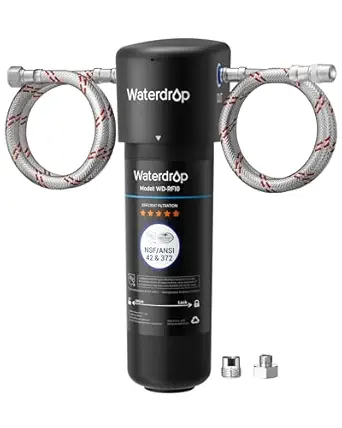 |
| Best Seller A high-volume bestseller chosen again and again | iSpring RCC7AK-BN Reverse Osmosis |  |
Express Water ROALK5D 50 GPD

| Purification Method | Alkaline, Reverse Osmosis |
|---|---|
| Capacity | 50 gallons_per_day |
| Maximum Flow Rate | 0.8 gpm |
| Operating Pressure Range | 40-80 psi |
| Supported Water TDS Level Maximum (PPM) | 2000 |
The Express Water ROALK5D is a 10-stage under-sink reverse osmosis system designed to deliver highly filtered, alkaline mineral water for everyday kitchen use. It installs under a sink or in a nearby cabinet and uses quick-connect tubing and included fittings to speed setup, with a 4 gallon (3.2 gallon usable) storage tank and a chrome faucet for dedicated drinking water. The system removes a wide range of contaminants and adds minerals back with an alkaline stage, and its 0.8 GPM faucet flow and 50 GPD production are practical for households that want reliable filtered water for drinking, cooking, and beverages. Notable conveniences include NSF 58 lab certification, compatibility with common 3/8" and 1/2" connections, and a filter wrench and starter filters for the first six months. Trade-offs to expect are the typical RO drain ratio of roughly 1:1 to 1:3 depending on feed pressure and water quality, and the system needs 40 to 80 PSI to operate without a booster; some installations may require extra tubing or a booster pump for nonstandard layouts.
Best for: Homeowners who want a full-featured under-sink RO system that delivers mineralized, high-quality drinking water without relying on pitchers or countertop units.
Less Ideal for: People with very low household water pressure, tight under-sink space that cannot fit the tank, or those who prefer zero-waste filtration methods.
- 10-stage filtration with alkaline remineralization for cleaner tasting water
- NSF 58 lab certification for verified RO performance
- Includes 4 gallon storage tank, chrome faucet, filter wrench, and initial filters
- Quick connect tubing and 3/8" or 1/2" compatibility simplify installation
- Produces wastewater at roughly a 1:1 to 1:3 ratio depending on pressure
- Requires 40–80 PSI to operate optimally, may need a booster pump in low-pressure homes
Verdict: Choose this system if you want an NSF-certified under-sink RO that adds minerals back for consistently clean, great-tasting drinking water.
APEC Water ROES-50

| Purification Method | Reverse Osmosis |
|---|---|
| Filtration Stages | 5-Stage |
| Capacity | 50 gallons |
| Operating Pressure Range | 40-85 psi |
| Filter Life Cycle | 6 months |
The APEC ROES-50 is a 5-stage under-sink reverse osmosis system designed to deliver high-purity drinking water at up to 50 gallons per day. It installs beneath the sink and uses prefilters, an RO membrane, and a post-filter to cut chlorine, lead, arsenic, fluoride, heavy metals, PFAs, microplastics, and many other impurities, routing purified water to the included brushed nickel faucet and storage tank for steady flow. The system is built for DIY installation with quick-connect fittings and color-coded tubing, and filter change intervals range from about 6 to 24 months depending on water quality. Practical benefits include strong contaminant reduction, WQA/NSF-grade design and long filter life for its class, plus a compact footprint that fits most cabinets. Limitations are the low maximum flow rate to the membrane and the need for a storage tank and drain connection, which is typical for RO systems and means some water is sent to drain during production. Expect routine filter replacements and occasional tank maintenance to keep performance at peak levels.
Best for: Buyers who prioritize contaminant removal and consistent, near-pure drinking water from a high-performing under-sink RO system and who want a proven, serviceable setup they can install themselves.
Less Ideal for: Those who need ultra-high flow from the tap, want a zero-waste filter solution, or prefer a no-plumbing countertop unit for rental or temporary setups.
- 5-stage filtration that removes a broad range of contaminants including heavy metals, fluoride, and PFAs
- Rated 50 gallons per day, sufficient for typical household drinking and cooking needs
- Includes faucet, storage tank, and installation kit for a complete under-sink setup
- DIY-friendly quick-connect fittings and color-coded tubing simplify installation and service
- RO membrane has a relatively low maximum flow rate and requires a storage tank for steady supply
- Produces wastewater during filtration, so it is less water-efficient than non-RO filters
Verdict: Choose the ROES-50 when you want a robust, high-removal under-sink RO system that reliably delivers near-pure drinking water for everyday household use.
ICEPURE WFS5300A Under-Sink Filter

| Purification Method | Activated Carbon |
|---|---|
| Maximum Flow Rate | 2.5 gpm |
| Filter Life Cycle | 3 years |
| Capacity | 22000 gallons |
| Installation Type | Under Sink |
The ICEPURE WFS5300A is an under-sink activated carbon cartridge system designed to plug into a cold water line and deliver filtered drinking water without a dedicated faucet hole. Installation is intended to be tool-light and quick using the included head, adapter, and inlet/outlet housings, and cartridge replacement is a simple push-change meant to take seconds. The filter is NSF/ANSI 42 and 372 certified, so it targets chlorine, taste, odor, large sediment and supports lead-free materials, while the coconut-shell carbon block and 0.5 micron outer layer provide stronger contaminant capture than loose carbon. It is sized for high endurance — the manufacturer rates it at 22,000 gallons or about three years of use under typical municipal supply conditions — and maintains a high flow rate (tested up to 2.5 gpm) so daily kitchen tasks are not slowed. Limitations: it is for cold water only and fits 1/2" or 3/8" female NPT faucet connections, so existing plumbing or specialty faucets may need adapters; it also focuses on chlorine/particulate reduction and is not marketed as a multi-stage system for VOCs or microbiological contaminants.
Best for: Buyers who want a low-maintenance, high-capacity under-sink filter that keeps faucet flow high and minimizes frequent cartridge swaps, with straightforward installation and certification-backed chlorine and lead-free performance.
Less Ideal for: Homes needing whole-house treatment, dedicated countertop or faucet-mounted filtration, or removal of microbiological contaminants and a wide range of VOCs should consider other systems.
- NSF/ANSI 42 and 372 certifications for chlorine reduction and lead-free materials
- High service life rated at 22,000 gallons (about 3 years) reducing replacement frequency
- High tested flow rate (2.5 gpm) that preserves normal faucet performance
- Simple plug-and-play under-sink installation and quick cartridge changes
- Cold-water only and requires matching 1/2" or 3/8" female NPT connections
- Not a multi-stage system for broad contaminant removal like VOCs or microbes
Verdict: Choose this unit if you want a certified, high-capacity under-sink carbon filter that delivers near-stock faucet flow and low maintenance for everyday home drinking water.
AQUA CREST 5KDC Under Sink Filter

| Purification Method | Activated Carbon |
|---|---|
| Maximum Flow Rate | 1.5 gpm |
| Filter Life Cycle | 12 months |
| Capacity | 5000 gallons |
| Supported Water TDS Level Maximum (PPM) | 300 |
This AQUA CREST under-sink filter installs directly on the cold water line and is designed for everyday kitchen use like drinking, cooking, and filling pitchers. It relies on a coconut shell activated carbon block with KDF media and a 0.5 micron rating to cut chlorine, taste and odor, VOCs, and certain heavy metals while intercepting rust and suspended solids. The unit includes push-to-connect hoses and fittings for tool-free install without drilling, and it is sized for a 12-month or 5,000-gallon replacement interval with a 1.5 gpm flow that fills a cup rapidly. Practical advantages are simple annual maintenance and low operating cost, but it will not reduce total dissolved solids and is not a full reverse-osmosis style purifier. Also compatibility is limited to standard 3/8-inch under-sink valves unless you add adapters. For buyers focused on affordable, faster-flow filtration for everyday water, this is a sensible option; if you need desalination or very fine contaminant removal, look to more advanced systems.
Best for: Buyers on a tight budget who want reliable, better-tasting tap water for daily kitchen use without frequent filter changes or complicated installs.
Less Ideal for: People who need removal of dissolved solids, very fine contaminants, or laboratory-grade water should choose reverse osmosis or dedicated specialised purifiers instead.
- High-capacity carbon block plus KDF media reduces chlorine, taste and odor, VOCs, and some heavy metals
- 5,000-gallon / 12-month service life keeps annual maintenance simple
- Includes hoses and push-to-connect fittings for tool-free installation under a standard sink
- Fast flow rate (1.5 gpm) suitable for filling pitchers and general kitchen use
- Does not reduce total dissolved solids (TDS) or replace reverse osmosis-level filtration
- Compatibility requires standard 3/8-inch valves or additional adapters
Verdict: If you want an inexpensive, easy-to-install under-sink filter that delivers fast flow and a year of improved-tasting water, this AQUA CREST 5KDC is a practical pick.
Waterdrop WD-10UB Under Sink Filter

| Installation Type | Under Sink |
|---|---|
| Purification Method | Activated Carbon |
| Maximum Flow Rate | 0.75 gpm |
| Filter Life Cycle | 1 years |
| Supported Water TDS Level Maximum (PPM) | 700 |
The Waterdrop WD-10UB is an under-sink filtration system designed to deliver cleaner drinking water through a dedicated stainless steel faucet. It uses multistage activated carbon block filtration to cut PFAS, PFOA/PFOS, lead, chlorine, sediment, and common chemical tastes and odors, and it is certified to NSF/ANSI 42 and 372 standards with third-party testing for lead reduction. Installation is straightforward with push-to-connect fittings and a 3/8"–1/2" adaptor so you can hook it to a cold-water line without special tools, and the twist-and-lock cartridge makes replacements quick. The unit supports a tested flow of 0.75 gpm at 60 psi (and an upgraded 3/8" outlet rated for higher flow), so it supplies steady water for drinking and cooking without noticeable slowdowns. The filter is intended for municipal cold water only and has a one-year filter life, so you should plan regular cartridge changes; it is not suitable for well water or hot-water lines. For home kitchens that need dependable contaminant reduction and a dedicated faucet, this system provides a practical, easy-to-maintain solution.
Best for: Buyers who prioritize a reliable, certified under-sink solution that consistently reduces common tap contaminants and want a dedicated faucet with easy maintenance.
Less Ideal for: Homes using well water or those needing filtration for hot water or heavy sediment loads should choose a system designed specifically for those conditions.
- Reduces PFAS, PFOA/PFOS, lead, chlorine, taste and odor with NSF/ANSI-validated media
- Includes a dedicated lead-free stainless steel faucet for separate drinking water
- Tool-free push-to-connect fittings and twist-and-lock cartridge allow fast installation and filter changes
- Designed for steady household flow (tested 0.75 gpm at 60 psi) to support drinking and cooking needs
- Rated for municipal cold water only, not suitable for well water or hot-water lines
- Filter life is one year, requiring annual replacement to maintain performance
Verdict: A straightforward, certified under-sink filter that delivers reliable contaminant reduction and an included faucet for dependable everyday drinking water.
Waterdrop WD-10UA Under-Sink Filter

| Purification Method | Activated Carbon |
|---|---|
| Maximum Flow Rate | 2.5 gpm |
| Filter Life Cycle | 1 years |
| Supported Water TDS Level Maximum (PPM) | 700 |
| Power Source | Mechanical Water Pressure |
The Waterdrop WD-10UA is an under-sink activated carbon filter system built for straightforward household use. It connects to standard 3/8" or 1/2" cold water lines with push-to-connect fittings and a twist-and-lock cartridge that the brand says installs in minutes and swaps in seconds. The WD-10UA is NSF/ANSI 42 certified for chlorine, taste, and odor reduction and is advertised to cut PFAS, PFOA/PFOS, and lead while retaining beneficial minerals. It supports a fast flow for this class of filter and lists a 12-month service life under municipal water conditions, making it suitable for daily drinking and cooking water. Practical benefits include compact under-sink packaging, included hardware, and a replacement filter (WD-RF10) that is inexpensive compared with many competitors. Limitations are its explicit restriction to cold, municipal water only and the need to confirm faucet threading before purchase; it is not intended for well water or hot-line applications. Overall this is a pragmatic, easy-to-install option for renters or homeowners looking for certified basic contaminant reduction with minimal fuss.
Best for: Buyers who want a compact, certified under-sink system that is simple to install and backed by many user reviews for reliable everyday drinking and cooking water improvement.
Less Ideal for: Homes relying on well water, hot-line filtration, or users who need multi-stage filtration for broad contaminant removal beyond what an activated carbon cartridge targets.
- NSF/ANSI 42 certification for chlorine and taste reduction
- Twist-and-lock cartridge with push-to-connect fittings for quick installation and filter changes
- Targets PFAS, PFOA/PFOS and lead in addition to chlorine and odor
- Compact design that fits under most sinks and includes necessary hoses and fittings
- Advertised 12-month filter life for typical municipal tap water use
- Not suitable for well water or hot water applications
- Requires confirming faucet connector compatibility for some faucets
Verdict: A user-friendly, NSF-certified under-sink activated carbon filter that delivers certified taste and chlorine reduction plus PFAS and lead mitigation for municipal cold water with minimal installation hassle.
iSpring RCC7AK-BN Reverse Osmosis

| Purification Method | Reverse Osmosis, Alkaline, Activated Carbon, Carbon block |
|---|---|
| Power Source | No Power Needed |
| Maximum Flow Rate | 284 liters_per_day |
| Supported Water TDS Level Maximum (PPM) | 750 |
| Filter Life Cycle | 6 months |
The iSpring RCC7AK-BN is an under-sink reverse osmosis system that delivers highly purified, remineralized drinking water without using electricity. It uses a transparent first-stage housing and five additional stages including activated carbon, carbon block, an RO membrane, and an alkaline mineral stage to reduce TDS and a long list of contaminants while restoring healthy minerals and pH. The unit is designed for DIY installation with push-to-connect fittings, color-coded tubing, and a patented top-mounted faucet fastener that lets you tighten the faucet from above. A storage tank and brushed-nickel faucet are included, and NSF/ANSI 58 certification covers the full system for buyers who prioritize verified performance. Filter change intervals are specified and replacement filter kits are available in multiple service lifetimes. The main compromises are the need for under-sink space to mount the system and periodic filter and membrane replacements, but the system's clear housings, certification, and comprehensive instructions make it a low-risk choice for reliable home filtration.
Best for: Homeowners who want a proven, certified under-sink RO system and value verified contaminant removal, clear maintenance cues, and straightforward DIY installation with support available.
Less Ideal for: People who lack under-sink space, want a no-maintenance countertop pitcher solution, or prefer a system that requires no periodic filter changes at all.
- NSF/ANSI 58 full-system certification for verified contaminant reduction
- Six-stage filtration with an alkaline remineralization stage for improved taste and balanced pH
- Transparent first-stage housing for easy visual monitoring of sediment buildup
- Top-mounted patented faucet design simplifies countertop installation from above
- Includes storage tank and brushed-nickel faucet plus DIY-friendly push-to-connect fittings
- Requires sufficient under-sink space and some plumbing work for installation
- Regular filter and RO membrane replacements are necessary to maintain performance
Verdict: Choose this NSF-certified six-stage RO system if you want reliably tested, remineralized drinking water with clear maintenance indicators and DIY-friendly installation.
Choosing the Right Under-Sink Water Filter for Home Use: Key Factors to Consider
Filtration Capability
Different under-sink filters target different contaminants. Knowing which contaminants are a priority for your household affects filter media selection and certification needs. For example, activated carbon excels at chlorine and taste issues, while reverse osmosis or specialized media are necessary for dissolved solids or heavy metals.
Understanding the contaminants you want to reduce helps narrow choices to systems with the appropriate media and certified reduction claims. This also determines how often you will need replacements and whether a multi-stage setup is worth the extra space and maintenance.
Flow Rate and Water Pressure
Under-sink filters can reduce flow rate depending on media density and membrane type. Consider the typical uses at the faucet—drinking, cooking, or filling pots—and choose a system with a rated flow that meets those needs without long pauses or slow filling.
Also evaluate the filter's stated pressure drop and whether your home supply pressure is compatible. Some systems include built-in pressure regulators or require a dedicated faucet to maintain acceptable flow, which affects installation complexity.
Installation and Plumbing Compatibility
Installation can range from a simple cartridge drop-in to a multi-component setup requiring a dedicated faucet and extra fittings. Check whether the system uses standard quick-connect fittings, requires drilling for an additional faucet, or can tie into an existing dispenser line.
Ease of access inside the cabinet and the physical footprint are important. Tight spaces, garbage disposals, and unconventional plumbing layouts can complicate installation, so measure before buying and factor in whether you will DIY or hire a pro.
Filter Life and Ongoing Costs
Cartridge longevity and replacement cost have a major effect on lifetime ownership expense. Filters rated for longer service intervals reduce maintenance frequency but may cost more up front. Consider how simple cartridge swaps are and whether the system provides clear change indicators.
Also factor in the availability and price of replacement cartridges. Systems with proprietary or hard-to-find cartridges can become more expensive to maintain over time.
Build Quality and Leak Safety
Because the filter lives under the sink, materials and fitting quality matter to avoid leaks and water damage. Look for durable housings, reliable seals, and well-made fittings. Metal components in brackets and faucets are preferable to brittle plastics in critical areas.
Evaluate whether the system includes overflow or leak-detection features and whether it ships with clear mounting hardware. A secure installation reduces the risk of water damage and the need for emergency repairs.
Footprint and Cabinet Access
Under-sink space is often constrained by plumbing traps and other installed items. The system footprint affects whether the unit can be mounted on the cabinet wall, stand on the base, or require a dedicated shelf. Smaller compact systems fit where larger multi-stage assemblies do not.
Also think about access for routine maintenance. Systems that require removing multiple fittings to change cartridges are more time-consuming. A design that allows quick cartridge swaps without disconnecting water lines simplifies upkeep and reduces the chance of installation errors.
Types of Under-Sink Systems
Under-sink options range from single-stage carbon filters to multi-stage assemblies and membrane-based systems. Single-stage carbon units are compact and address taste and chlorine. Multi-stage setups combine sediment prefilters with carbon and specialized media to broaden contaminant coverage.
Membrane systems such as reverse osmosis provide the highest dissolved-solids reduction but require a storage tank and often a dedicated faucet. Choose the system type that aligns with the contaminants you want to reduce and the space you have available.
- Single-stage carbon: compact, good for taste and chlorine
- Multi-stage: broader contaminant removal, larger footprint
- Membrane systems: high dissolved-solids reduction, need for tank
Placement and Cabinet Prep
Before buying, clear and measure the under-sink cabinet area. Note the location of traps, supply lines, garbage disposals, and the presence of shelves or electrical wiring. A clear layout prevents surprises during installation.
Plan for mounting brackets and ensure there is a reachable shutoff valve. If the system includes a separate faucet, verify clearance and whether you will mount it on the countertop or an existing sink hole.
- Measure height, width, and depth inside cabinet
- Locate shutoff valves and supply line access
- Confirm faucet clearance and mounting holes
Maintenance Best Practices
Set a maintenance schedule based on cartridge life. Label replacement dates and keep spare filters on hand to avoid gaps in protection. Regularly inspect fittings for signs of seepage and tighten connections as needed.
Flush new cartridges per manufacturer directions to remove trapped dust and activate media. If you install a membrane system, sanitize the feed lines occasionally and follow tank maintenance steps to prevent bacterial growth in low-use scenarios.
- Record installation date and cartridge change intervals
- Keep spare cartridges accessible
- Perform periodic visual inspections for leaks
When You Need a Professional
Hire a professional if your plumbing layout is complex, if you lack a shutoff valve, or if the installation requires modifying supply lines or drilling stainless steel sinks. A pro can ensure proper fittings and pressure compatibility.
Also consider professional help for systems requiring a drain saddle or if local codes demand certified installers. Professional installation reduces the risk of leaks and preserves warranties in some cases.
- Complex plumbing or no shutoff valve
- Drilling new faucet holes or altering supply lines
- Local code or warranty installation requirements
Certifications and Test Claims
Look for third-party certification for specific contaminant claims. Certifications from independent test labs verify reduction performance for contaminants like lead, cysts, or VOCs. Certification scope matters because a filter certified for taste reduction may not address heavy metals.
Read the performance data sheets that accompany certified claims to understand flow rates and capacity at which reductions are measured. This helps set realistic expectations for real-world performance.
- Check certification scope for targeted contaminants
- Review performance data sheets for flow and capacity
- Avoid relying solely on marketing language
How We Chose the Best Under-Sink Water Filter for Home Use
We prioritized real-world performance, installation practicality, and ongoing ownership costs when selecting the seven under-sink water filters featured in this guide. Our evaluation emphasized measurable filtration capability across common contaminants such as chlorine, sediment, lead, and volatile organic compounds. We also weighed flow rate and pressure impact to ensure systems deliver usable water volume for typical kitchen needs. Ease of installation and compatibility with standard home plumbing fittings were key filters, as many homeowners install these systems themselves or work with a single service visit. We assessed cartridge change frequency and accessibility to estimate maintenance time and recurring cost. Build quality and materials were considered for leak resistance and long-term reliability. A final editorial filter excluded specialty or commercial-only systems that are impractical for typical residential under-sink applications. The result is a set of options suited for most home settings and maintenance comfort levels.
Our full evaluation process is outlined in our review methodology.
FAQ
How often should I change under-sink filter cartridges?
Filter life depends on usage and water quality but usually ranges from three to twelve months. Higher sediment or heavy use shortens life. Follow manufacturer guidelines and monitor flow and taste for early signs it is time to replace.
Will an under-sink filter reduce my water pressure?
Some systems cause a modest pressure drop, especially denser media or membrane-based units. Look at rated flow and pressure drop values and choose a system sized for your household demand to avoid noticeable slowdowns.
Do I need a separate faucet for an under-sink filter?
Not always. Some systems tie into the existing faucet or use a diverter valve, while others require a dedicated faucet, particularly reverse osmosis systems with storage tanks. The decision depends on the system type and your sink configuration.
Can I install an under-sink system myself?
Many homeowners can install under-sink filters using basic tools if the plumbing is standard and the unit uses quick-connect fittings. Complex layouts, tool limitations, or code requirements are good reasons to hire a professional.
How do I know which contaminants my home's water has?
Start with your municipal water quality report or use a home testing kit for common concerns. Testing for specific contaminants like lead, nitrates, or VOCs may require a certified lab if you need accurate, actionable results for filter selection.
Final Verdict
Prioritize the contaminants you want reduced, then match system type to space and flow requirements. For simple taste and chlorine reduction, a compact carbon unit is often sufficient. If dissolved solids or specific heavy metals are a concern, choose a membrane or multi-stage system and be prepared for additional footprint and maintenance. Balance upfront convenience against ongoing cartridge cost and serviceability. Focus on certification scope, realistic flow ratings, and installation compatibility to select an under-sink water filter for home use that performs reliably over years of daily use.