
Note: This article contains affiliate links. If you click on these links and make a purchase, we may earn a small commission at no extra cost to you. This helps support our research and content. Read our full affiliate disclosure here.
If you are worried about PFAS in your tap water, choosing the right under-sink water filter can make a big difference in everyday drinking and cooking. Under-sink filters sit out of sight yet treat water at the point of use, delivering higher flow and longer filter life than many pitcher or faucet-mounted options. This guide covers our shortlisted top under-sink water filters for PFAS removal and highlights the most important performance and installation considerations. Below we summarize the key tradeoffs buyers face, explain how we evaluated contenders, and walk through features that matter most when you need reliable PFAS reduction. Continue to the product list to see the best options selected for common home setups.
Top Picks at a Glance
| Best Overall The best all-around choice for most situations | CuZn UC-200 Under Sink Filter |  |
| Best Quality Built to a higher standard if you want something more solid | Clearly Filtered 3-Stage Under Sink System |  |
| Best Value The sweet spot between price and what you get | PUREPLUS Under Sink Filter WFS5300A |  |
| Best Budget The cheapest option that still gets the job done reliably | Amazon Basics Under-Sink Water Filter |  |
| Top Rated A top-rated pick with lots of positive feedback | iSpring RCC7AK-BN 75 GPD RO System |  |
| Most Popular A crowd favorite that many people choose with confidence | Waterdrop WD-10UA Under Sink Filter | 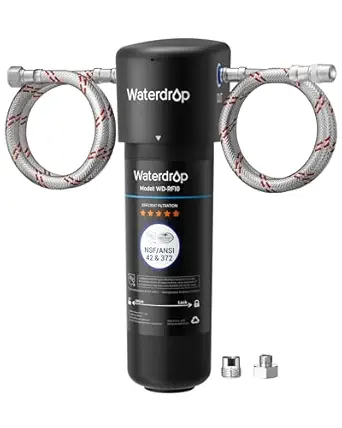 |
| Best Seller A high-volume bestseller chosen again and again | Waterdrop WD-10UB Under-Sink Filter |  |
CuZn UC-200 Under Sink Filter

| Model Number | UC-200 |
|---|---|
| Included Components | Stainless Steel Connection Hose |
| Material Type | NSF Approved Material Components |
The CuZn UC-200 is an inline under-sink filter that uses a three-stage blend of micro sediment membrane, KDF-55 media and coconut shell carbon to improve tap water taste and reduce contaminants like chlorine, lead and PFAS/PFOS. It installs directly on the cold water line without drilling and ships with a stainless steel connection hose, making it a straightforward DIY fit for kitchen or bathroom faucets. The filter is bacteriostatic and designed to preserve beneficial dissolved minerals because it does not lower TDS, so water retains its natural mineral profile while removing unwanted chemicals and particulates. Its standout practical benefit is longevity: the manufacturer rates the cartridge for up to five years or 50,000 gallons depending on incoming water quality, which lowers ongoing replacement frequency and plastic waste. Limitations to consider are that it is not a reverse osmosis system so it will not remove dissolved solids and some contaminants that require RO, and actual lifespan will vary with local water conditions.
Best for: Buyers who want a low-maintenance under-sink filter that reduces PFAS, lead and chlorine while keeping mineral content and minimizing replacement frequency.
Less Ideal for: Households seeking full dissolved-solids removal or water with very high contaminant loads that require reverse osmosis or multi-stage treatment should look elsewhere.
- 3-stage filtration (micro sediment membrane, KDF-55, coconut shell carbon) targets chlorine, lead, PFAS/PFOS and improves taste
- Long rated service life of up to 5 years or 50,000 gallons reduces replacement frequency
- Designed for direct inline connection with included stainless steel hose for simple DIY installation
- Bacteriostatic design preserves beneficial minerals by not lowering total dissolved solids
- Does not reduce TDS or replace the contaminant-removal breadth of a reverse osmosis system
- Actual filter life depends on local water quality and may be shorter than the rated maximum
Verdict: Choose the UC-200 if you want a long-lasting, straightforward under-sink filter that reduces PFAS, lead and chlorine while preserving healthy minerals and cutting replacement frequency.
Clearly Filtered 3-Stage Under Sink System

| Purification Method | Activated Carbon, Carbon Block, Ion Exchange, Deionization |
|---|---|
| Filter Life Cycle | 12 months |
| Supported Water TDS Level Maximum (PPM) | 500 |
| Other Special Features | Independently Tested to comply with NSF/ANSI 42, 53, 401, 473 |
| Installation Type | DIY |
The Clearly Filtered 3-Stage Under Sink System uses proprietary Affinity Filtration media across three stages to remove a broad range of contaminants from your cold tap water, with third-party test results claiming reductions for fluoride, lead, PFAS, and dozens of other chemicals. It installs inline to the cold-water feed with 3/8-inch fittings and can be mounted under most sinks without adding a separate faucet, making setup straightforward for someone comfortable with basic plumbing. Expect noticeably cleaner tasting water and strong contaminant removal while accepting a modest reduction in cold-water flow rate of roughly 25 to 35 percent. Filters are designed to be replaced annually under average household use, and the system avoids the wastewater loss associated with reverse osmosis systems. Important practical points are the manual operation, the need to change all three cartridges together, and that heavy or highly contaminated water can shorten filter life. For buyers prioritizing high contaminant removal—including PFAS—this system provides a compact, tested solution with reasonably long service life.
Best for: Buyers who prioritize high-performance contaminant removal—including PFAS—and want a compact, tested under-sink system they can install themselves without adding a dedicated faucet.
Less Ideal for: People who need full hot-and-cold filtered output, require the highest possible flow rates, or prefer a system with staggered cartridge replacements for lower per-change cost.
- Targets a wide range of contaminants including fluoride, lead, PFAS, and other industrial chemicals
- Third-party tested to NSF/ANSI standards 42, 53, 401, and 473
- Compact under-sink design that mounts to existing cold-water line with no extra faucet required
- Zero wastewater production compared with reverse osmosis, making it more water-efficient
- Cold-water flow can be reduced by about 25–35% due to thorough filtration
- All three filters must be replaced at once, which increases the single-service cost when compared with modular cartridge systems
Verdict: Choose this system if you want a compact, independently tested under-sink filter that focuses on high-performance removal of PFAS and other hazardous contaminants without producing wastewater.
PUREPLUS Under Sink Filter WFS5300A

| Purification Method | Activated Carbon |
|---|---|
| Maximum Flow Rate | 2.5 gpm |
| Capacity | 22000 gallons |
| Upper Temperature Rating | 100 °F |
| Supported Water TDS Level Maximum (PPM) | 500 |
The PUREPLUS WFS5300A is an under-sink activated carbon cartridge system designed to deliver better-tasting drinking water from a cold water tap. It installs directly on the cold supply with quick-connect fittings and is intended for everyday uses like drinking, cooking, and food prep. The filter uses a composite coconut-shell activated carbon block with 0.5 micron nominal filtration to reduce chlorine, odor, sediment and certain heavy metals, and it carries NSF/ANSI 42 and 372-related certifications for chlorine reduction and lead-free materials. Rated for up to 22,000 gallons (about five years under typical use) and a maximum flow up to 2.5 gpm, it keeps flow high enough for kitchen needs without a separate faucet in most homes. Limitations: this is not a reverse-osmosis or dedicated PFAS removal system and does not lower TDS, so it will not remove dissolved salts or all trace contaminants that require RO or specialized PFAS media; it is designed for cold water only and requires the correct fittings for some faucet connections.
Best for: Buyers who prioritize a low-maintenance, high-capacity under-sink filter to improve taste and remove chlorine and common particulates across everyday kitchen uses.
Less Ideal for: Households seeking a dedicated PFAS removal solution, RO-quality deionization, or a whole-house contaminant treatment should look at systems specifically engineered for those contaminants.
- High-rated capacity of 22,000 gallons reducing frequency of cartridge changes
- NSF/ANSI 42 certification for chlorine and odor reduction with food-grade, lead-free materials
- High flow capability up to 2.5 gpm suitable for normal kitchen use
- Quick-connect fittings simplify installation and reduce leak points
- Not designed to reduce TDS or reliably remove PFAS or other dissolved contaminants that require RO or specialized media
- Cold-water only system and may need adapters for some faucet thread types
Verdict: Choose the PUREPLUS WFS5300A if you want a high-capacity, low-maintenance under-sink carbon filter to consistently cut chlorine and improve tap water taste.
Amazon Basics Under-Sink Water Filter

| Installation Type | Under Sink |
|---|---|
| Purification Method | Activated Carbon |
| Supported Water TDS Level Maximum (PPM) | 500 |
| Capacity | 11000 gallons |
This Amazon Basics under-sink water filter is a low-cost, manually powered activated carbon block system intended for point-of-use filtration beneath the kitchen sink. It connects directly to standard 3/8" or 1/2" cold-water lines using the included fittings and installs with a twist-and-lock housing and push-to-connect fittings for quick DIY setup and fast cartridge changes. The unit is NSF/ANSI 42 and 372 certified, so it reliably reduces chlorine, taste, and odor in municipal water; the manufacturer rates the cartridge for up to 11,000 gallons or 12 months of service. Practical benefits include easy installation without electrical power, a compact footprint under the sink, and a high advertised capacity that keeps replacement frequency low. Important limitations are that the filtration method is activated carbon only, so it is not specified to remove PFAS or higher-TDS contaminants, and performance depends on water chemistry up to 500 ppm TDS. For buyers prioritizing basic taste and odor improvement on a tight budget, this system is straightforward and economical, but it is not a targeted PFAS removal solution.
Best for: Buyers seeking the most affordable under-sink option to improve drinking water taste and odor with minimal installation effort and low ongoing maintenance.
Less Ideal for: Households specifically seeking certified PFAS reduction or multi-contaminant removal should choose a dedicated PFAS-capable or multi-stage system instead.
- NSF/ANSI 42 and 372 certified for chlorine, taste, and odor reduction
- Twist-and-lock housing with push-to-connect fittings for fast DIY install and cartridge changes
- High rated service life of 11,000 gallons or 12 months reduces replacement frequency
- Direct-connect 3/8" line and included 3/8"-1/2" convertor fit standard sink plumbing
- Contains only activated carbon filtration and is not specified to remove PFAS
- Not electrically powered so it cannot support advanced multi-stage or media requiring pumps
Verdict: If you want a very affordable, easy-to-install under-sink filter for chlorine and taste improvement, this Amazon Basics activated carbon system is a practical pick.
iSpring RCC7AK-BN 75 GPD RO System

| Purification Method | Reverse Osmosis, Alkaline, Activated Carbon, Carbon block |
|---|---|
| Capacity | 75 gallons |
| Maximum Flow Rate | 284 liters_per_day |
| Operating Pressure Range | 70 psi |
| Filter Life Cycle | 6 months |
The iSpring RCC7AK-BN is a six-stage reverse osmosis system that sits under the sink and produces up to 75 gallons per day of purified, alkaline-enhanced drinking water. It combines sediment and carbon prefilters, an NSF-certified RO membrane, and a mineral AK stage to restore healthy pH and trace minerals to RO water. The clear first-stage housing makes visual checks simple, and the system uses push-to-connect fittings and color-coded tubing to simplify DIY installation; a brushed nickel top-mounted faucet and storage tank are included. It is electricity-free, compatible with common fridge fittings, and certified to NSF/ANSI 58 for whole-system performance, which is important for reliable removal of PFAS and heavy metals. Maintenance requires periodic filter and membrane changes on the manufacturer's schedule and space under the sink for the tank and housings. While filter replacements and occasional plumbing work are the main upkeep, the system delivers consistent, high-quality water and strong contaminant reduction for homes prioritizing dependable filtration.
Best for: Buyers who prioritize consistent, certified contaminant reduction and want a DIY-friendly under-sink system that restores minerals to RO water.
Less Ideal for: People who lack under-sink storage space or want a zero-maintenance countertop purifier should consider more compact or cartridge-based alternatives.
- NSF/ANSI 58 certified for full-system performance
- Six-stage filtration including alkaline remineralization for balanced pH
- Produces up to 75 gallons per day without needing electricity
- Transparent first-stage housing for easy visual monitoring
- Push-to-connect fittings and color-coded tubing simplify DIY installation
- Regular filter and membrane replacements are required on a maintenance schedule
- Requires under-sink space for the tank and housings
Verdict: Choose the RCC7AK-BN when you need a certified, high-capacity under-sink RO system that reliably removes PFAS and restores minerals for better-tasting, dependable drinking water.
Waterdrop WD-10UA Under Sink Filter

| Purification Method | Activated Carbon |
|---|---|
| Certification | NSF/ANSI 42 & 372 |
| Maximum Flow Rate | 2.5 gpm |
| Filter Life Cycle | 12 months |
| Supported Water TDS Level Maximum (PPM) | 700 |
The Waterdrop WD-10UA is an under-sink activated carbon filter aimed at improving tap water taste and removing specific contaminants including PFAS, PFOA/PFOS, lead, chlorine, and odors. It installs inline to the cold-water feed with included push-to-connect fittings and a 3/8" to 1/2" converter so most standard sinks hook up without drilling or extra valves. The canister uses a coconut-shell carbon media and a larger filtration area intended to reduce clogging while maintaining a steady flow; Waterdrop rates the system for up to 12 months of service with municipal water and lists a tested flow of roughly 0.75 gpm at 60 psi (and up to 1.33 gpm through the 3/8" outlet). This model is NSF/ANSI 42 certified for aesthetic contaminant reduction and comes with hoses, mounting screws, and Teflon tape for a straightforward DIY install. Limitations: it is for cold municipal water only (not well water or hot water) and does not claim microbiological/ultrafiltration performance, so it is not a substitute for systems targeting bacteria or very fine particulate removal. Replacement cartridges (WD-RF10) are required annually to keep certified performance.
Best for: Buyers who want a proven under-sink filter that targets PFAS, lead, and chlorine with clear certification and many positive customer reports, and who prioritize a fast, easy DIY install.
Less Ideal for: Homes relying on well water, those needing bacteria/virus removal, or buyers who require hot-water inline filtration.
- NSF/ANSI 42 certified for reduction of chlorine, bad taste and odor
- Certified reduction of PFAS, PFOA/PFOS and lead claims focused on municipal cold water
- Tool-free push-to-connect fittings and included hardware speed installation
- Long listed service life with up to 12 months between replacements under typical municipal use
- Higher filtration area design to reduce clogging while maintaining steady flow
- Not suitable for hot water or untreated well water
- Does not provide microbiological or ultrafiltration-level filtration (not for bacterial contamination)
Verdict: Choose the WD-10UA if you want an NSF-certified, easy-to-install under-sink carbon filter that reliably reduces PFAS, lead, chlorine, and taste issues for municipal cold water.
Waterdrop WD-10UB Under-Sink Filter

| Purification Method | Activated Carbon |
|---|---|
| Maximum Flow Rate | 0.75 gpm |
| Filter Life Cycle | 1 years |
| Supported Water TDS Level Maximum (PPM) | 700 |
| Included Components | System ×1, SS304 faucet set ×1, 3/8'-1/2' Convertor set, Accessory Kit ×1 |
The Waterdrop WD-10UB is an under-sink filter designed to deliver drinking-quality cold water through its included stainless steel faucet. It uses a multistage activated carbon block cartridge to target PFAS, PFOA/PFOS, lead, chlorine, bad taste and odor, and sediment, and the manufacturer rates the filter life at one year or up to 11,000 gallons. Installation is straightforward with push-to-connect fittings and a feed-water adapter so you can tap into a cold-water line without tools, and the twist-and-lock cartridge makes replacements quick. Flow performance is decent for a compact system: the tested flow is 0.75 gpm at 60 psi and the unit supports higher faucet flow with an upgraded outlet option. The system is certified to NSF/ANSI 42 and 372 and tested against NSF/ANSI 53 for lead reduction, which will reassure buyers focused on contaminant removal. Limitations include cold-water–only use and an explicit unsuitability for well water, plus the single filter design means fewer stages than larger multi-filter systems, so it is best for municipal supplies where targeted contaminant reduction is the priority.
Best for: Buyers who want a simple, certified under-sink solution to reduce PFAS and common tap contaminants without complicated plumbing or frequent filter swaps.
Less Ideal for: Homes on well water, users who need hot-water filtration, or those seeking comprehensive multi-stage systems for a wider range of contaminants.
- Certified to NSF/ANSI 42 and 372 with third-party testing for lead reduction
- Includes a dedicated lead-free stainless steel faucet for separate drinking water
- Easy push-to-connect installation and tool-free twist-and-lock cartridge replacement
- Long rated capacity of up to 11,000 gallons or one year per cartridge
- Activated carbon block reduces PFAS, PFOA/PFOS, chlorine, taste, odor, and sediment
- Only for cold municipal water and not suitable for well water
- Single-cartridge design offers fewer filtration stages than multi-filter systems
Verdict: A certified, easy-to-install under-sink filter that reliably reduces PFAS and lead for risk-averse buyers who want a straightforward municipal-water solution.
Choosing the Right Under-Sink Water Filter for PFAS: Key Factors to Consider
PFAS Reduction Efficacy
This measures how effectively the filter removes per- and polyfluoroalkyl substances from tap water. Look for systems that specify PFAS or long-chain PFAS precursors in their reduction claims and that provide third-party lab data or certifications to back those claims.
High removal percentages mean lower residual PFAS in drinking water, but efficacy can vary by specific PFAS compound and influent concentration. Confirm whether the filter targets a broad PFAS suite or only selected congeners. Expect performance to decline as a cartridge nears its end of life, so factor replacement intervals into how consistently you need full reduction.
Contaminant Removal Range
Beyond PFAS, many households want reduction of chlorine taste and odor, sediment, volatile organic compounds, and common heavy metals. A multi-stage under-sink system typically combines sediment prefiltration, activated carbon adsorption, and sometimes specialized media to broaden contaminant coverage.
Choosing a system that addresses the other contaminants present in your water saves you from installing extra point-of-use devices. Check lab data or specification sheets to see which contaminants are tested and at what reduction rates, and ensure the system meets your local water quality concerns.
Flow Rate and Pressure Performance
An under-sink filter should deliver usable flow for drinking, filling cookware, and occasional appliance use. Flow rate is usually specified in liters or gallons per minute and can drop as the filter loads with particulates or adsorbed organics.
Evaluate the rated flow at typical household pressure and consider whether the system includes a dedicated faucet or taps into an existing one. If you have low incoming pressure or several simultaneous uses on the same line, choose a system with higher rated flow or add a booster. Flow matters because a very slow filter undermines convenience and may lead users to bypass treated water.
Filter Life and Ongoing Maintenance
Filter lifespan affects both operating cost and consistent contaminant reduction. Cartridges that list long service life or higher capacity media reduce the frequency of replacements and the risk of breakthrough between services.
Maintenance tasks may include cartridge swaps, O-ring lubrication, and occasional flushing. Consider how easy the replacement cartridge procurement process is and whether the system has indicator features or simple time-based schedules. Short replacement intervals increase long-term costs and maintenance burden.
Installation Complexity and Compatibility
Under-sink systems vary from simple single-cartridge units to multi-stage setups that require more space and extra fittings. Measure available cabinet space, check for disposal or dishwasher lines that need re-routing, and confirm the supply line types used under your sink.
If you plan to install the system yourself, choose one with clear instructions and standard fittings. Some homeowners will prefer a clearly plumbable system that attaches to the existing cold-water shutoff; others may need professional installation when adjustments to cabinetry or plumbing are required.
Build Quality and Warranty Support
Durability of housings, secure fittings, and quality of included valves and tubing determine how leak-resistant the installation will be over time. Metal or reinforced fittings and serviceable housings add robustness compared to thin plastic parts.
Warranty terms indicate the level of manufacturer confidence and support, covering defects and sometimes limited performance assurances. Consider warranty length, what it covers, and whether labor or shipping for replacements is included when assessing long-term ownership risk.
How PFAS Are Treated Under the Sink
Under-sink systems treat PFAS primarily through adsorption and targeted media. Activated carbon is commonly used because it adsorbs many PFAS compounds effectively when contact time and carbon type are sufficient. Some systems add specialized media or multi-stage configurations to improve contact and target both long- and short-chain PFAS.
A properly sized filter housing and correct flow conditions help maximize contact time. Systems designed for PFAS reduction combine prefiltration to remove sediment and protect the adsorption media, followed by carbon or specialty media to trap PFAS molecules.
- Prefiltration extends the life of adsorption media.
- Media type and contact time influence which PFAS congeners are removed.
- System plumbing and flow control affect real-world performance.
Installation Checklist for Homeowners
Before buying, measure cabinet interior depth and the distance from the cold-water shutoff to the chosen faucet location. Confirm there is space for the filter housing(s) and room to change cartridges without disconnecting plumbing permanently.
Gather basic tools: adjustable wrench, tubing cutter, and plumber tape. If the system uses push-fit fittings, ensure you understand removal and reattachment steps. Keep a small bucket and rags handy for the first-time flush and to catch any drips during installation.
- Verify cold-water shutoff functionality before starting.
- Plan for drainage of a small volume during cartridge changes.
- Consider hiring a plumber if modifications to sink hardware or cabinet structure are needed.
Maintenance Tips to Keep PFAS Reduction Consistent
Replace cartridges on the recommended schedule rather than waiting for performance issues. Adsorption media loses capacity predictably with use; timely swaps prevent breakthrough of PFAS and other contaminants. Keep a reminder in your calendar and store replacement cartridges in a dry, cool place.
Flush new cartridges per the manufacturer's instructions to remove trapped manufacturing dust and condition the media. Inspect housing O-rings when changing filters and lightly lubricate with food-grade silicone grease if required. Check fittings for any slow leaks after initial installation and after each maintenance event.
- Set calendar alerts for replacement intervals.
- Keep spare O-rings and basic fittings on hand.
- Record the date and serial of each cartridge installed for tracking.
Testing and Verifying Performance
Independent testing or lab reports are the best way to verify PFAS reduction claims. Look for documentation that lists influent challenge concentrations, specific PFAS congeners tested, and post-treatment results. Test reports that include ISO or EPA-recognized methods carry more weight.
If you have reason to suspect your local water contains PFAS at concerning levels, consider a third-party water test before and after installation. Periodic testing can confirm continued performance and identify when media replacement is needed earlier than the nominal schedule.
- Ask for lab test reports showing specific PFAS congeners and reduction percentages.
- Consider baseline and follow-up tests if local contamination is suspected.
- Use accredited labs and standardized test methods for reliable results.
Plumbing Considerations and Faucet Options
Many systems include a dedicated faucet to keep treated water separate from the main kitchen tap. Dedicated faucets minimize cross-contamination and make it obvious when you are using filtered water. If you prefer a single-tap solution, confirm compatibility with your existing faucet and plumbing layout.
Also consider whether the system requires a tank or is tankless. Tanked systems provide immediate higher flow at the filtered faucet but take up more space. Tankless models are more compact but may have slower instantaneous flow during peak demand.
- Dedicated faucet reduces risk of cross-contamination.
- Tanked systems improve flow but need additional cabinet space.
- Confirm mounting hole availability if a new faucet is included.
How We Chose the Best Under-Sink Water Filter for PFAS
We selected products that demonstrate credible PFAS reduction, reliable long-term performance, and practical installation for typical under-sink setups. Primary filters had to use media or multi-stage approaches known to target PFAS alongside standard sediment and chlorine reduction. We prioritized systems with documented third-party test results or certifications addressing PFAS or related organics where available. Key evaluation criteria included PFAS reduction capability, contaminant breadth, and filter service life to balance effectiveness with maintenance frequency. Flow rate and pressure performance were assessed to ensure the system supports kitchen use without excessive wait times. Installation complexity and compatibility with common under-sink plumbing were considered so homeowners can gauge DIY fitment or pro installation needs. Build quality and warranty coverage rounded out the evaluation to reflect durability and manufacturer support. We excluded units that rely solely on unproven claims or lack any supporting reduction data. Products with inadequate flow for typical kitchen use, or that required extensive custom plumbing beyond normal fittings, were not included. Our focus remained on practical, proven under-sink solutions that address PFAS while performing well for daily household needs.
Our full evaluation process is outlined in our review methodology.
FAQ
Will an under-sink water filter remove all PFAS from my water?
No filter can guarantee removal of every PFAS compound in every situation. Many under-sink systems significantly reduce common PFAS when properly sized and maintained, but efficacy varies by specific compounds and influent concentration. Look for documented reduction data and follow replacement schedules to maintain performance.
How often should I replace under-sink filter cartridges for PFAS protection?
Replacement intervals depend on cartridge capacity, water demand, and contaminant levels. Most carbon-based cartridges have recommended service lives measured in months or gallons; high contaminant loads or heavy use may shorten that life. Follow the manufacturer schedule and monitor flow and taste as practical indicators.
Do I need a plumber to install an under-sink PFAS filter?
Many systems are designed for DIY installation with standard fittings and clear instructions. However, if your under-sink plumbing is cramped, uses nonstandard connections, or you prefer not to cut into supply lines, hiring a plumber ensures correct installation and leak-free performance.
Can I use my existing kitchen faucet with an under-sink PFAS filter?
Some systems are designed to plumb to an existing faucet, but many use a dedicated faucet to prevent mixing treated and untreated water. Check the system's compatibility and installation instructions before purchase to confirm whether your faucet can be used.
How do I verify that the filter is still reducing PFAS effectively?
The most reliable method is to have water tested by an accredited lab before and after the filter is installed and periodically thereafter. Some users also monitor flow rate, taste, and odor as indirect indicators, but lab testing gives definitive confirmation of PFAS levels.
Final Verdict
When selecting an under-sink water filter for PFAS, prioritize verified reduction performance, adequate flow for kitchen use, and a service interval that fits your maintenance preferences. Expect tradeoffs between compactness and flow capacity, and between upfront complexity and long-term ease of upkeep. Choose a system with documented lab results, reasonable filter life, and straightforward installation for your under-sink layout. That approach will give you the most reliable PFAS reduction and the least hassle over time.