
Note: This article contains affiliate links. If you click on these links and make a purchase, we may earn a small commission at no extra cost to you. This helps support our research and content. Read our full affiliate disclosure here.
If your house runs on well water, an under-sink water filter is one of the most practical steps you can take to improve drinking water quality at the point of use. Well supplies vary in sediment, iron, sulfur, and microbial risks, so choosing the right under-sink system affects taste, appliance lifespan, and the comfort of daily drinking and cooking. This guide shortlists seven top under-sink water filters tailored to well water concerns and evaluates them across the criteria that matter most to homeowners. Below you will find the top picks chosen for reliability, filtration performance, and ease of upkeep. Read on to see how each option addresses common well-water issues and which features matter for long-term satisfaction.
Top Picks at a Glance
| Best Overall The best all-around choice for most situations | APEC Water ROES-50 |  |
| Best Quality Built to a higher standard if you want something more solid | Clearly Filtered 3-Stage Under Sink System |  |
| Best Value The sweet spot between price and what you get | Waterdrop WD-15UA Under-Sink Filter |  |
| Best Budget The cheapest option that still gets the job done reliably | AQUA CREST 5KDC Under-Sink Filter |  |
| Top Rated A top-rated pick with lots of positive feedback | iSpring RCC7AK-BN Reverse Osmosis |  |
| Most Popular A crowd favorite that many people choose with confidence | Waterdrop WD-10UA Under-Sink Filter | 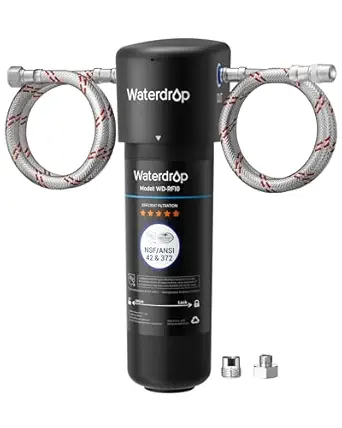 |
| Best Seller A high-volume bestseller chosen again and again | iSpring RCC7-BN 5-Stage RO |  |
APEC Water ROES-50

| Purification Method | Reverse Osmosis |
|---|---|
| Filtration Stages | 5-Stage |
| Daily Output (GPD) | 50 GPD |
| Operating Pressure Range | 40-85 psi |
| Filter Life Cycle | 6 months |
The APEC ROES-50 is a five-stage under-sink reverse osmosis system designed to deliver very pure drinking water for a household. It installs under the sink and includes a dedicated faucet and storage tank to provide steady flow; the system uses prefilters, an RO membrane, and post-filter to reduce chlorine, lead, arsenic, fluoride, PFAs, microplastics, and hundreds of other contaminants. Its 50 GPD output is adequate for most families and the unit ships with quick-connection fittings and color-coded tubing to simplify DIY installation and routine filter changes. Filter lifespans are staggered so prefilters typically need replacement every 6 to 12 months while the membrane and post-filters last 12 to 24 months depending on source water quality. Important practical limits are its modest maximum flow rate and dependency on household water pressure within the 40 to 85 psi operating range, and it requires space under the sink to fit the tank and filter housings. For well-water users who need thorough contaminant removal and are comfortable with periodic maintenance, the ROES-50 is a reliable, easy-to-service option.
Best for: Homeowners with well water who want thorough contaminant removal and a factory-quality under-sink RO system they can install and maintain themselves.
Less Ideal for: Users who need high flow at the tap, have very low household water pressure, or lack space under the sink for a storage tank should consider other filtration approaches.
- 5-stage filtration removes a wide range of contaminants including heavy metals, fluoride, PFAs, and microplastics
- Rated for 50 gallons per day, suitable for typical household drinking and cooking needs
- Includes tank and dedicated faucet for steady supply and easy use
- DIY-friendly quick-connect fittings and color-coded tubing simplify installation and maintenance
- Requires 40–85 psi water pressure and enough under-sink space for the tank and housings
- Relatively low maximum flow rate compared with non-RO point-of-use options
Verdict: Choose the ROES-50 for dependable, high‑quality under-sink reverse osmosis filtration when you need comprehensive contaminant removal for well water.
Clearly Filtered 3-Stage Under Sink System

| Purification Method | Activated Carbon, Carbon Block, Ion Exchange, Deionization |
|---|---|
| Filter Life Cycle | 12 months |
| Supported Water TDS Level Maximum (PPM) | 500 |
| Upper Temperature Rating | 54 °F |
The Clearly Filtered 3-Stage Under Sink System uses a stacked blend of activated carbon, carbon block, ion exchange and deionization media to target hundreds of contaminants commonly found in tap and well water. It installs inline to the cold water supply with 3/8-inch fittings and is designed for DIY installation without adding a separate faucet. Typical use is daily drinking and cooking water for a household, and the manufacturer rates the combined filter life at about 12 months under normal conditions. Notable features include third-party testing to multiple NSF/ANSI standards and a compact stainless steel-bodied module with braided supply lines for a tidy under-sink footprint. Expect a reduction in cold water flow of roughly 25 to 35 percent as the system prioritizes filtration efficiency, and very hard or heavily contaminated well water may require more frequent cartridge changes. The system is portable for renters and avoids the wastewater of reverse osmosis systems, but buyers on wells should confirm local contaminant loads to gauge replacement cadence and flow impact.
Best for: Homeowners and renters who prioritize contaminant removal and verified performance for drinking and cooking water and who accept a modest flow reduction in exchange for broad-spectrum filtration.
Less Ideal for: People who need high flow rates at the tap for filling large pots or who want a system that removes contaminants without any change in water pressure.
- Removes a broad list of contaminants with affinity filtration and multiple media types
- Independently tested to NSF/ANSI 42, 53, 401 and 473 for verified performance
- Compact, stainless-steel design that mounts under the sink and connects to standard 3/8-inch lines
- Extended annual filter life under typical household use and simple cartridge replacement
- Cold water flow can be reduced by about 25–35% due to tight filtration
- May require more frequent filter changes with very hard or heavily contaminated well water
Verdict: Choose this system if you want a compact, independently tested under-sink filter that prioritizes broad contaminant removal for safer drinking water from wells or municipal sources.
Waterdrop WD-15UA Under-Sink Filter
| Purification Method | Activated Carbon |
|---|---|
| Capacity | 19000 gallons |
| Filter Life Cycle | 2 years |
| Maximum Flow Rate | 0.75 gpm |
| Installation Type | Under Sink |
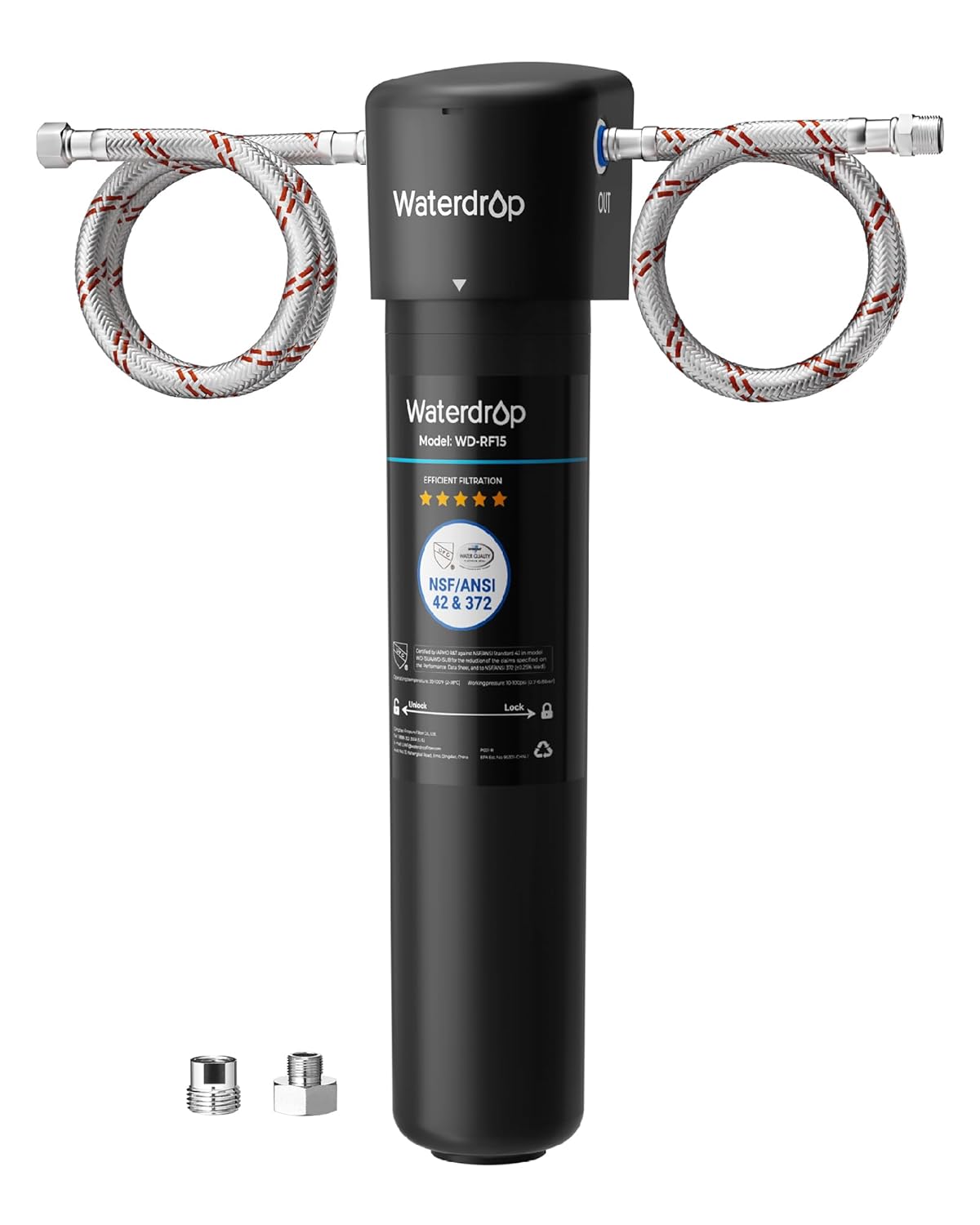
The Waterdrop WD-15UA is a direct-connect under-sink filter that uses multistage activated carbon to reduce chlorine, lead, PFAS/PFOA/PFOS, and common chemical impurities while leaving beneficial minerals. It installs quickly with push-to-connect fittings and a 3/8" direct-connect hose plus a 3/8"–1/2" converter, so no plumber is usually required. The unit is rated for a high capacity—about 19,000 gallons or roughly 24 months of use on municipal cold water—and delivers a steady flow up to 0.75 gpm at 60 psi suitable for drinking, cooking, and ice/coffee makers. Certifications include NSF/ANSI 42 and IAPMO testing for lead reduction and chlorine taste and odor reduction, and the filter is built from BPA-free components. Limits to note: it is intended for cold, municipal sources only (not well water or hot water) and will not appreciably change TDS readings because it retains dissolved minerals; its relatively large cartridge may require verifying under-sink clearance before buying.
Best for: Buyers who want a low-maintenance, long-life under-sink filter they can install themselves and who prioritize reducing chlorine, lead, and PFAS on municipal cold water supplies.
Less Ideal for: Homes using untreated well water or people seeking a filter that also treats hot water or significantly lowers TDS should look at systems designed for those specific needs.
- Long rated service life (about 24 months or 19,000 gallons) reduces frequency of filter changes.
- Push-to-connect direct installation with included 3/8" hose and adapter makes DIY installation fast without plumbing tools.
- NSF/ANSI 42 and IAPMO/third-party test results support chlorine and lead reduction claims.
- Maintains flow suitable for drinking and ice makers (0.75 gpm at 60 psi) while retaining beneficial minerals.
- Not designed or certified for well water treatment.
- Restricted to cold-water supply only, so it cannot be used on hot lines.
- Larger cartridge size may require checking under-sink clearance before installation.
Verdict: Choose the WD-15UA if you need an easy-to-install, long-life under-sink filter that reliably reduces chlorine, lead, and PFAS on municipal cold water.
AQUA CREST 5KDC Under-Sink Filter

| Purification Method | Activated Carbon |
|---|---|
| Maximum Flow Rate | 1.5 gpm |
| Filter Life Cycle | 12 months |
| Capacity | 5000 gallons |
| Supported Water TDS Level Maximum (PPM) | 300 |
The AQUA CREST 5KDC under-sink filter is a straightforward direct-connect system designed to give better-tasting, lower-chlorine water at an affordable cost. It installs to the cold water line using the included push-to-connect hoses and fittings, so you can set it up without drilling or cutting in most kitchens. The cartridge combines coconut shell activated carbon with KDF media and a 0.5 micron nominal rating to cut chlorine, taste and odor, VOCs, and some heavy metals while intercepting sediment and rust. Flow is good for daily use at up to 1.5 gpm, so filling a glass or pot is quick, and the claimed 5,000-gallon/12-month life keeps replacement frequency low. Practical limits to note are that it does not reduce total dissolved solids and it targets certain contaminants rather than providing full multi-stage purification. For buyers on a budget with well water that mainly needs chlorine, taste, and particulate reduction, this unit balances performance, easy installation, and low running costs.
Best for: Homeowners looking for a low-cost under-sink filter that improves taste and removes chlorine and common dissolved particulates without complicated installation.
Less Ideal for: Families needing certified removal of dissolved minerals, nitrates, or biological contaminants should consider more advanced multi-stage or testing-backed systems instead.
- High claimed capacity of 5,000 gallons or 12 months between cartridge changes
- Includes push-to-connect hoses and fittings for tool-free under-sink installation
- Coconut shell activated carbon plus KDF media reduces chlorine, VOCs, taste and odor
- Decent flow rate up to 1.5 gpm for everyday kitchen use
- Does not reduce total dissolved solids (TDS)
- Not a full multi-stage system for bacteria or comprehensive contaminant removal
Verdict: If you want an inexpensive, easy-to-install under-sink filter that improves taste and reduces chlorine for well or municipal water, this offers strong capacity and low upkeep.
iSpring RCC7AK-BN Reverse Osmosis

| Purification Method | Reverse Osmosis, Alkaline, Activated Carbon, Carbon block |
|---|---|
| Power Source | No Power Needed |
| Maximum Flow Rate | 284 liters_per_day |
| Supported Water TDS Level Maximum (PPM) | 750 |
| Filter Life Cycle | 6 months |
The iSpring RCC7AK-BN is an under-sink reverse osmosis system designed to deliver very low-TDS drinking water with a mineral boost for better taste. It uses six stages of filtration including sediment, carbon, RO membrane and an alkaline remineralization stage to restore healthy minerals and raise pH after purification. The unit is NSF/ANSI 58 certified as a complete system and operates without electricity, so it runs reliably off household water pressure. Practical features include a transparent first-stage housing for visual filter checks, push-to-connect tubing and a patented top-mounted faucet fastener that simplifies countertop installation. The included storage tank and brushed-nickel faucet make it a complete under-sink solution, and iSpring offers clear installation videos and US-based technical support. Limitations are routine maintenance: filters need scheduled replacement and the system requires adequate feed pressure and space under the sink for the tank and housings, so planning cabinet layout is necessary for well-water setups that may need pre-filtration for heavy sediment.
Best for: Homeowners who prioritize dependable, lab-certified contaminant removal and want mineralized tasting water from a permanent under-sink system with accessible DIY installation support.
Less Ideal for: People with very limited under-sink space, extremely low incoming water pressure, or those looking for a filter-free countertop solution.
- NSF/ANSI 58 full-system certification for verified RO performance
- Six-stage filtration with alkaline remineralization for improved taste and pH
- Operates without electricity, running on household water pressure
- Transparent first-stage housing for easy visual monitoring of sediment
- Top-mounted faucet fastener and push-fit tubing simplify DIY installation
- Requires periodic filter and membrane replacements to maintain performance
- Needs sufficient under-sink space and adequate feed pressure, which may complicate some installations
Verdict: Choose the iSpring RCC7AK-BN when you want a factory-certified, electricity-free under-sink RO system that reliably produces low-TDS, mineralized drinking water for home well use.
Waterdrop WD-10UA Under-Sink Filter

| Purification Method | Activated Carbon |
|---|---|
| Installation Type | Under Sink |
| Maximum Flow Rate | 2.5 gpm |
| Filter Life Cycle | 12 months |
| Supported Water TDS Level Maximum (PPM) | 700 |
The Waterdrop WD-10UA is an under-sink activated carbon filter designed to connect directly to standard 3/8" or 1/2" cold water lines and deliver improved-tasting water for drinking and cooking. Installation uses push-to-connect fittings and a twist-and-lock cartridge for tool-light setup and quick replacements, and the unit is sized to sit under most kitchen sinks. It is NSF/ANSI 42 certified for chlorine, taste, and odor reduction and claims reductions for PFAS/PFOA/PFOS and lead, while preserving beneficial minerals. The cartridge is engineered for roughly 12 months of service with municipal tap water and the manufacturer highlights a higher dirt-adhesion area to reduce clogging and maintain flow. Practical benefits include straightforward DIY installation, a fast steady flow for everyday use, and compatibility with replacement WD-RF10 cartridges. Important limitations are that it is intended for cold municipal water only, is not rated for well water or hot water, and its stated contaminant reductions and flow depend on inlet water quality and pressure.
Best for: Buyers who value simple, proven under-sink filtration and want an easy-to-install system with documented taste and chlorine reduction for municipal tap water and everyday drinking use.
Less Ideal for: Homes served by untreated well water, users needing hot-water filtration, or buyers who require guaranteed lab-validated removal for complex contaminants without additional testing.
- NSF/ANSI 42 certification for chlorine, taste, and odor reduction
- Twist-and-lock cartridge plus push-to-connect fittings for quick DIY install and fast replacements
- Designed to preserve beneficial minerals while removing harmful contaminants
- Higher filtration surface area to reduce clogging and maintain flow
- Compatible with WD-RF10 replacement cartridges with ~12 month service life on municipal water
- Not suitable for well water or hot water applications
- Specific contaminant removal beyond NSF 42 (for example PFAS/lead) depends on source water and may require lab validation
Verdict: Choose the WD-10UA if you want an easy DIY under-sink carbon filter that reliably improves taste and reduces chlorine on municipal cold water.
iSpring RCC7-BN 5-Stage RO

| Purification Method | Reverse Osmosis, Activated Carbon, Carbon block |
|---|---|
| Power Source | No Power Needed |
| Maximum Flow Rate | 3.4 liters per minute |
| Supported Water TDS Level Maximum (PPM) | 750 |
| Capacity | 75 gallons |
The iSpring RCC7-BN is a traditional 5-stage under-sink reverse osmosis drinking water system designed for municipal tap water use. It uses three pre-filters (sediment, GAC, carbon block), a RO membrane that removes contaminants down to 0.0001 microns, and a final GAC post-filter to polish taste, delivering water to a dedicated brushed nickel faucet and 75 gallon tank. The system installs under most sinks without power and includes clear first-stage housing for quick visual checks, push-to-connect fittings to reduce leak risk, and online support resources for DIY installation. Practical benefits include strong contaminant reduction (including chlorine, lead, PFAS and dissolved minerals), a compact footprint that keeps filtered water on demand, and relatively low maintenance when replacement filters are changed on schedule. Important limits for this listing: it is intended for municipal tap water and is not specified for untreated well water, and achieving very low TDS depends on feed water quality and timely filter changes.
Best for: Homeowners who prioritize proven contaminant removal and certification and want a reliable under-sink RO system that can be installed DIY for municipal tap water.
Less Ideal for: Homes drawing untreated well water or users seeking a whole-house or well-specific treatment solution without adding point-of-entry pre-filtration.
- Five-stage filtration including an RO membrane that removes contaminants to 0.0001 microns
- NSF/ANSI 58 certification for drinking water performance
- Transparent first-stage housing for easy visual inspection of the sediment filter
- Push-to-connect fittings and O-ring sealed housings designed to minimize leaks
- Not recommended for untreated well water without additional pre-treatment
- Requires regular filter replacements and maintenance to maintain TDS reduction
Verdict: Buy this if you want a certified, no-power under-sink RO system that reliably reduces common tap-water contaminants and delivers bottled-quality drinking water at the kitchen sink.
Choosing the Right Under-Sink Water Filter for Home Well Water: Key Factors to Consider
Contaminant Profile
Know what is in your well water before picking a system. Private wells commonly show sediment, rust (iron and manganese), sulfur-related odors, and occasionally total coliform or other microbial indicators. A filter that targets the dominant local issues will be far more effective than a generic cartridge.
Testing your water gives you a baseline for contaminant concentrations and helps you decide whether you need sediment prefiltration, an iron-specific media, activated carbon for taste and organic compounds, or an antimicrobial stage. Different contaminants require different technologies, so matching filter media to your lab results avoids unnecessary expense and ensures safer water.
Micron Rating and Stage Design
Micron rating defines the smallest particle size a filter element can trap. For well water with visible cloudiness or sand, start with a sediment stage of 5 microns or lower to protect later stages and faucets. Multi-stage systems often combine a coarse sediment first stage, then finer mechanical filtration, followed by activated carbon or specialized media for dissolved contaminants.
Systems with clearly described stage functions let you replace only the worn elements. Look for designs that separate sediment removal from taste-and-odor cartridges to extend the life of more expensive media and maintain consistent flow.
Flow Rate and Household Demand
Under-sink filters must supply enough water for drinking and cooking without long waits. Flow rate is usually stated in gallons per minute or liters per minute and depends on cartridge porosity and system design. A higher initial flow is helpful if multiple people share the kitchen or if you often fill pitchers and pots.
Be aware that tighter filtration and clogged cartridges reduce flow. Consider systems that specify flow at the end of rated cartridge life and those that include a dedicated dispenser faucet so kitchen tap flow is not interrupted.
Maintenance Frequency and Cartridge Cost
Regular cartridge replacement keeps filtration effective. Replacement schedules vary widely—some filters last three months, others a year. Maintenance frequency affects long-term cost and convenience. Also factor in the availability and price of replacement cartridges; some proprietary media can be expensive or hard to find.
Choose systems with clear replacement intervals and easy access to parts. Tool-free housings, push-fit plumbing, and visible indicators for change timing reduce the chance of skipped maintenance and degraded water quality.
Installation and Plumbing Compatibility
Under-sink space and existing plumbing determine how easily a system will fit. Check the physical dimensions, whether the unit mounts vertically or horizontally, and which faucet configuration is required. Simpler systems use a single dedicated faucet that mounts through the sink or countertop, while some allow connection to the existing cold-water line at the main faucet.
If you are not comfortable with basic plumbing, select a unit with straightforward hardware and clear instructions, or plan for professional installation. Also consider whether an included adapter kit covers common valve types to avoid last-minute trips to the hardware store.
Taste, Odor Reduction, and Aesthetics
Taste and odor improvements are often the most noticeable benefits of an under-sink filter. Activated carbon and catalytic carbon are common for removing chlorine, volatile organic compounds, and many organic taste-and-odor compounds. For iron or sulfur taste and smell, look for media specifically designed to address those chemistry issues.
Aesthetics matter if you want the dispenser faucet to match your kitchen. Some homeowners prefer systems that hide all hardware under the sink and provide a slim, dedicated faucet with a low-profile spout. Consider both the visible faucet and the footprint of the under-sink unit when planning placement.
Why Well Water Needs Different Filtration
Well water often differs from municipal supplies because its contaminants are driven by local geology and well construction. You may see more dissolved metals such as iron and manganese, naturally occurring minerals that affect hardness, and organic or sulfur compounds that cause taste and odor issues. Point-of-use under-sink filtration lets you target those specific problems at the tap used for drinking and cooking.
Under-sink systems are a practical middle ground: more effective than simple pitchers for taste and particulate removal, but less invasive and costly than a whole-house treatment. They focus resources where you and your family consume water daily while leaving heavy-duty tasks like wellhead disinfection or large-scale iron removal to point-of-entry solutions when needed.
- Targets drinking and cooking water without reworking whole-house plumbing
- Can be configured with sediment, carbon, and specialty media
- Easier maintenance and lower upfront cost than point-of-entry systems
Common Media Types and What They Remove
Understanding filter media helps you match a system to test results. Spun polypropylene or pleated sediment cartridges trap particles and protect downstream stages. Granular activated carbon and carbon blocks remove chlorine, many organic compounds, and improve taste and odor. Catalytic carbon or specialized iron-oxidizing media handle sulfur and some forms of dissolved iron.
Some systems include ion-exchange resins for softening or targeted removal of dissolved metals, while others add antimicrobial or silver-impregnated stages to reduce biological risks. Each media type has tradeoffs in flow rate, longevity, and replacement cost, so pick the combination that aligns with your well's issues.
- Sediment stages protect finer media
- Carbon stages address taste and organic compounds
- Specialty media target iron, sulfur, or metals
Installation Checklist for Homeowners
Before you buy, measure under-sink clearance and identify the cold-water shutoff location. Note whether you prefer a separate dispenser faucet or an inline connection to the existing faucet. Review the system's mounting options and whether flexible tubing or rigid lines are required. These small details often determine whether installation is a weekend DIY or needs a plumber.
Keep basic tools handy: adjustable wrench, drill if a faucet hole is needed, and plumber's tape. If your water test shows heavy sediment, consider adding a prefilter or a coarse sediment cartridge to prevent premature clogging of finer stages.
- Measure vertical and horizontal space under the sink
- Confirm included tubing and adapters match your shutoff valve
- Plan for cartridge replacement access
Maintaining Performance Over Time
Track cartridge replacement intervals and keep a service schedule. If flow declines or taste returns before the scheduled change, inspect sediment stages first and replace early if needed. Some systems offer visual indicators or pressure gauges to help identify clogged elements.
Store spare cartridges on hand for models with long lead times. When replacing media, follow manufacturer flushing instructions to remove trapped carbon fines or installation debris. Regular maintenance prevents bacterial growth in stagnant cartridges and keeps your drinking water consistently good.
- Set reminders for replacements
- Inspect sediment cartridges if flow drops
- Follow flushing instructions after cartridge changes
When to Consider Professional Water Treatment
If test results show high levels of dissolved iron, heavy bacterial contamination, or chemical pollutants above safe limits, an under-sink filter may not be sufficient. Those conditions often require point-of-entry treatments, well rehabilitation, shock chlorination, or professional remediation. Use under-sink systems to improve tap water quality when contaminants are within the scope of point-of-use media.
Consult a certified water-treatment professional when test results exceed typical point-of-use capabilities or when you need integrated solutions that connect whole-house and point-of-use treatments. Professionals can also advise on appropriate prefiltration to preserve under-sink cartridges.
- High iron or microbial contamination may need whole-house solutions
- Use under-sink filters for targeted point-of-use improvements
- Professional advice helps when test results exceed cartridge capabilities
How We Chose the Best Under-Sink Water Filter for Home Well Water
Our shortlist focuses on systems suited to the variable chemistry and contaminants typical of private wells. We prioritized units that offer multi-stage filtration capable of handling common well-water issues such as sediment, iron and manganese, hydrogen sulfide odor, and chlorine byproducts where municipal blending occurs. We also weighed flow rate and filter lifespan, since under-sink units must balance effective contaminant removal with enough output for drinking and cooking. Ease of maintenance was another key filter: replaceable cartridge designs, clear filter-change intervals, and simple shutoff or bypass valves help ensure owners actually keep systems serviced. Installation complexity and compatibility with typical under-sink plumbing were considered to avoid recommending systems that require professional retrofits for basic setups. We excluded point-of-entry whole-house treatments and pitcher-style or countertop filters because they do not address the same point-of-use performance needs. Final selection leaned on measurable specifications—contaminant reduction ratings, micron ratings for sediment, certified contaminant claims when available, stated flow rate, and documented cartridge life—plus user-facing features like tool-free changes and included installation hardware. Those concrete dimensions formed the basis for scoring and ranking.
Our full evaluation process is outlined in our review methodology.
FAQ
How often should I test my well water?
Test at least once a year for a basic panel including bacteria, nitrates, and common minerals. Test more often if you notice taste, odor, or clarity changes, or after nearby drilling or flooding events.
Can an under-sink filter remove iron and sulfur smell?
Some under-sink systems with specialized media can reduce dissolved iron and hydrogen sulfide smell, but effectiveness depends on concentrations. Severe iron or sulfur problems may require point-of-entry treatments.
Will an under-sink filter reduce hard water?
Most under-sink filters are not designed to soften water. Ion-exchange stages exist for small-scale softening, but whole-house water softeners are the typical solution for significant hardness issues.
Is professional installation necessary?
Many systems are designed for DIY installation and include the necessary fittings. However, choose professional installation if you are uncomfortable with plumbing, lack access to tools, or if the system requires extra hookups or electrical components.
How will I know when to change cartridges?
Follow the manufacturer's recommended intervals and watch for signs like reduced flow or return of tastes and odors. Some systems include visual indicators or pressure gauges to signal when a cartridge is clogged.
Final Verdict
Under-sink water filters are an efficient way to improve drinking and cooking water from a private well when your water test shows contaminants suitable for point-of-use media. Prioritize systems that match your lab results: sediment prefiltration to protect downstream stages, carbon or specialty media for taste and specific contaminants, and cartridges with reasonable lifespans and local availability. Balance filtration capability against flow needs and maintenance frequency to find a system you will keep serviced. With the right match, an under-sink filter delivers safer, better-tasting water without reworking your whole-house system.