
Note: This article contains affiliate links. If you click on these links and make a purchase, we may earn a small commission at no extra cost to you. This helps support our research and content. Read our full affiliate disclosure here.
If you are planning for extended emergencies or just want a hardened home water setup, choosing the right under-sink water filter for survival matters. In a prolonged outage or when municipal supply is compromised, your under-sink system is often the most practical point-of-use solution to deliver safe drinking and cooking water without running containers back and forth. This guide covers seven shortlisted under-sink water filters that are suited for survival-minded use. We evaluated options against factors that matter for extended readiness, including filtration capability for common contaminants, cartridge life and availability, flow and storage practicality, and ease of installation. Read on to see which features to weigh for a resilient under-sink setup and how each type supports long-term preparedness.
Top Picks at a Glance
| Best Overall The best all-around choice for most situations | CuZn UC-200 Under Sink Filter |  |
| Best Quality Built to a higher standard if you want something more solid | iSpring CU-A4 Under-Sink Filtration |  |
| Best Value The sweet spot between price and what you get | PUREPLUS Under Sink Water Filter WFS5300A |  |
| Best Budget The cheapest option that still gets the job done reliably | AQUA CREST 5KDC Under-Sink Filter |  |
| Top Rated A top-rated pick with lots of positive feedback | Waterdrop WD-10UA Under Sink Filter | 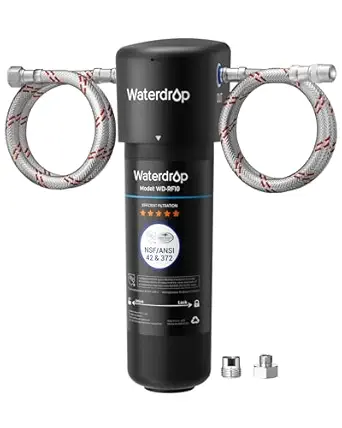 |
| Most Popular A crowd favorite that many people choose with confidence | Waterdrop WD-15UA Under Sink Filter |  |
| Best Seller A high-volume bestseller chosen again and again | ICEPURE Under Sink Water Filter WFS5300A |  |
CuZn UC-200 Under Sink Filter

| Model Number | UC-200 |
|---|---|
| Included Components | Stainless Steel Connection Hose |
| Material Type | NSF Approved Material Components |
| Filter Life | Up to 5 years or 50,000 gallons |
| Certifications | NSF/ANSI 42 & 372 |
The CuZn UC-200 is an inline under-sink filter built for long service life and straightforward DIY installation. It combines a micro-sediment membrane, KDF-55 media, and coconut shell carbon to cut chlorine, bad tastes and odors, lead, PFAS/PFOA, and microplastics without stripping dissolved minerals. Install is simple with the included stainless steel connection hose and no drilling required when tied into a cold-water feed, making it practical for kitchen or bathroom sinks. Its standout feature is lifespan: rated up to 5 years or 50,000 gallons depending on water quality, which reduces maintenance and replacement frequency compared with short-life cartridge filters. The filter does not lower total dissolved solids, so it will not produce RO-style demineralized water — a plus if you want to keep minerals but a limitation if you need very low TDS. Expect modest plumbing work for the hookup and to verify clearances under the sink before fitting the housing; performance depends on incoming water quality and may vary by location.
Best for: Buyers who want a low-maintenance, long-lasting under-sink filter that improves tap water taste and reduces heavy metals and PFAS while preserving healthy minerals for everyday drinking and cooking.
Less Ideal for: People who need RO-level purification, very low TDS water, or precise contaminant removal testing for specialized survival caches should choose a reverse osmosis or dedicated contaminant-specific system instead.
- Very long rated filter life (up to 5 years or 50,000 gallons) which cuts replacement frequency.
- Three-stage media (micro-sediment, KDF-55, coconut shell carbon) removes chlorine, lead, PFAS/PFOA, and improves taste and odor.
- Retains beneficial minerals by not lowering TDS, so water tastes natural.
- Simple inline design with included stainless steel connection hose for relatively easy DIY installation.
- Does not reduce total dissolved solids so it will not replace a reverse osmosis system for mineral-free water.
- Effectiveness and actual lifetime depend on incoming water quality and local contaminants.
Verdict: Choose the UC-200 if you want a durable, low-maintenance under-sink filter that reliably improves tap water quality for long-term everyday use.
iSpring CU-A4 Under-Sink Filtration

| Purification Method | Mechanical Filtration, Chemical Absorption, Redox, and Ultrafiltration |
|---|---|
| Filter Life Cycle | 6 months |
| Capacity | 8000 gallons |
| Installation Type | Under Sink |
The iSpring CU-A4 is a compact, tankless under-sink filtration system built around a 0.01 micron ultrafiltration membrane plus KDF and activated carbon stages for multi-contaminant removal. It installs under the sink and supplies a dedicated brushed-nickel faucet, so you get filtered water at the tap for drinking, coffee, and refilling bottles without the need for power or a storage tank. The four stages start with a sediment prefilter, then ultrafiltration hollow-fiber membrane, KDF/GAC stage for troublesome compounds and heavy metals, and a final carbon polishing stage, which together reduce chlorine, lead, arsenic, odors and many other impurities while leaving beneficial minerals and not lowering TDS. Push-to-connect fittings and twist-on cartridge changes make service straightforward, and the system is rated to treat thousands of gallons with filter life commonly in the 6–12 month range depending on water quality. It is not an RO system, so it will not desalinate or significantly reduce dissolved solids, and performance depends on incoming water quality and maintenance cadence.
Best for: Buyers focused on high contaminant reduction without the complexity of RO systems who want a durable, maintenance-forward under-sink solution for reliable drinking water.
Less Ideal for: People who need desalination, aggressive TDS reduction, or medical-grade sterile water should look to RO or specialized systems instead.
- Very fine 0.01 micron ultrafiltration membrane for strong particulate and microbial reduction
- KDF plus GAC stages target chlorine, chloramine, heavy metals and odors for broader contaminant control
- Tankless design with no electricity or wastewater makes it efficient and simple to use
- Push-to-connect fittings and twist-on cartridges streamline installation and routine filter changes
- Not a reverse osmosis system so it does not lower total dissolved solids or remove dissolved salts
- Filter life varies with source water and may require more frequent replacement in poor-quality supply
Verdict: Choose the iSpring CU-A4 when you want a powerful, tankless under-sink system that combines ultrafiltration and KDF/GAC stages for wide-ranging contaminant removal without power or wastewater.
PUREPLUS Under Sink Water Filter WFS5300A

| Purification Method | Activated Carbon |
|---|---|
| Maximum Flow Rate | 2.5 gpm |
| Upper Temperature Rating | 100 °F |
| Supported Water TDS Level Maximum (PPM) | 500 |
| Filter Life Cycle | 5 years |
The PUREPLUS WFS5300A is an under-sink activated carbon cartridge system designed to deliver long-lasting filtered water for drinking and cooking. It installs inline on a cold-water feed using quick-connect fittings and is intended for everyday kitchen use where improved taste and chlorine removal are the priority. The filter is NSF/ANSI 42 certified and uses a composite carbon block with 0.5 micron nominal filtration to remove chlorine, odor, sediment and some heavy metals while retaining beneficial minerals, and it is built from lead-free, food-grade materials. With a rated service life of 22,000 gallons or roughly five years, it reduces the frequency and cost of replacements compared with many shorter-life cartridges, and it supports flow up to 2.5 gpm at recommended household pressures. Limitations to note: it will not lower TDS so it does not replace a reverse osmosis system for total dissolved solids removal, and it is for cold-water only, so hot water lines and some well-water situations may need additional whole-house prefiltration. For households that want a durable, low-maintenance point-of-use filter focused on chlorine and taste, it is a practical choice.
Best for: Buyers who prioritize long service life and low-maintenance point-of-use filtration to improve drinking water taste and reduce chlorine exposure in a practical, cost-conscious way.
Less Ideal for: Those who need significant TDS reduction, mineral-free water, or a complete whole-house solution should consider RO systems or whole-house filters instead.
- High rated capacity of 22,000 gallons reduces replacement frequency
- NSF/ANSI 42 certified for chlorine and taste reduction
- Quick-connect fittings simplify under-sink installation
- Constructed from lead-free, food-grade materials
- Does not reduce total dissolved solids (TDS) so not a substitute for RO
- Cold-water only operation restricts some installation options
Verdict: Choose this system if you want a long-life, NSF-certified under-sink filter that delivers better tasting, chlorine-reduced drinking water with minimal upkeep.
AQUA CREST 5KDC Under-Sink Filter

| Purification Method | Activated Carbon |
|---|---|
| Capacity | 5000 gallons |
| Maximum Flow Rate | 1.5 gpm |
| Filter Life Cycle | 12 months |
| Supported Water TDS Level Maximum (PPM) | 300 |
The AQUA CREST 5KDC is a direct-connect under-sink filter designed for everyday drinking and cooking water. It installs without drilling using the included push-to-connect hoses and fittings and connects to standard 3/8" cold-water valves, making setup quick for most kitchen or bathroom sinks. The coconut shell carbon block plus KDF media provide 0.5 micron-level filtration aimed at reducing chlorine, taste and odor, VOCs and some heavy metals while maintaining a fast flow up to 1.5 gpm so you still get near-immediate tap water. The cartridge is rated for about 5,000 gallons or roughly 12 months of typical household use, so annual replacement is straightforward. Limitations: it will not lower total dissolved solids and it is a single-stage carbon/KDF system, so it is not designed for full removal of dissolved salts, nitrates, or certain industrial contaminants. Overall it is a practical, easy-to-install option for improving potable water taste and reducing common municipal contaminants on a budget-conscious timeline.
Best for: Buyers who need an affordable, easy-to-install under-sink filter to improve taste and reduce common municipal contaminants and who prioritize low running cost over advanced contaminant removal.
Less Ideal for: People needing certified reduction of dissolved salts, nitrates, or microbiological contaminants or those who require multi-stage purification for survival-grade water treatment should look elsewhere.
- High capacity 5,000-gallon cartridge reduces frequency of replacement
- 0.5 micron coconut shell carbon plus KDF targets chlorine, taste, odor, VOCs and some heavy metals
- Fast flow rate up to 1.5 gpm so filtered water dispenses quickly
- Includes push-to-connect hoses and hardware for tool-free, quick installation
- Does not reduce total dissolved solids (TDS) or remove all dissolved inorganic contaminants
- Single-stage carbon/KDF design is not suited for pathogens or advanced chemical contaminants
Verdict: AQUA CREST 5KDC delivers high-capacity, budget-friendly under-sink filtration with fast flow and simple install for better-tasting, lower-chlorine tap water.
Waterdrop WD-10UA Under Sink Filter

| Purification Method | Activated Carbon |
|---|---|
| Installation Type | Under Sink |
| Maximum Flow Rate | 2.5 gpm |
| Filter Life Cycle | 1 years |
| Supported Water TDS Level Maximum (PPM) | 700 |
The Waterdrop WD-10UA is an under-sink activated carbon filter meant for everyday municipal cold water use; it mounts under the counter and connects directly to standard 3/8" or 1/2" feed lines. Installation is straightforward thanks to twist-and-lock housing and push-to-connect fittings, and replacement cartridges are a quick twist-out operation. The system is NSF/ANSI 42 certified and claims reduction of PFAS, PFOA/PFOS, lead, chlorine, and typical taste and odor issues, making tap water more palatable for drinking and cooking. Its design emphasizes a long single-filter life for this class of product, rated up to 12 months or roughly 11,000 gallons under recommended conditions, and the larger filtration area aims to reduce clogging compared with basic carbon cartridges. Limitations include suitability only for cold municipal water and a maximum tested flow below whole-house levels, so it is intended for point-of-use drinking and kitchen tasks rather than high-demand or well-water treatment. For survival-focused setups it provides reliable, certified contaminant reduction at a compact footprint but requires replacement cartridges to maintain protection over time.
Best for: Buyers who prioritize a compact, tested under-sink filter that reliably improves taste and removes common municipal contaminants for drinking and cooking in everyday or emergency readiness setups.
Less Ideal for: Homes relying on well water, users needing hot-water filtration, or situations requiring whole-house high-flow filtration should look elsewhere.
- NSF/ANSI 42 certified for chlorine and taste reduction and approved components.
- Quick twist-and-lock and push-to-connect fittings simplify installation and filter changes.
- Long rated service life up to 12 months or about 11,000 gallons for typical household use.
- Compact under-sink design that connects to standard 3/8" and 1/2" feed lines, saving space.
- Designed only for cold municipal tap water and not suitable for well water or hot supply.
- Flow rate is point-of-use (tested ~0.75–1.33 gpm), so not for high-flow demands.
Verdict: A compact, NSF-certified under-sink filter that reliably reduces common municipal contaminants and delivers long single-cartridge life for dependable point-of-use protection.
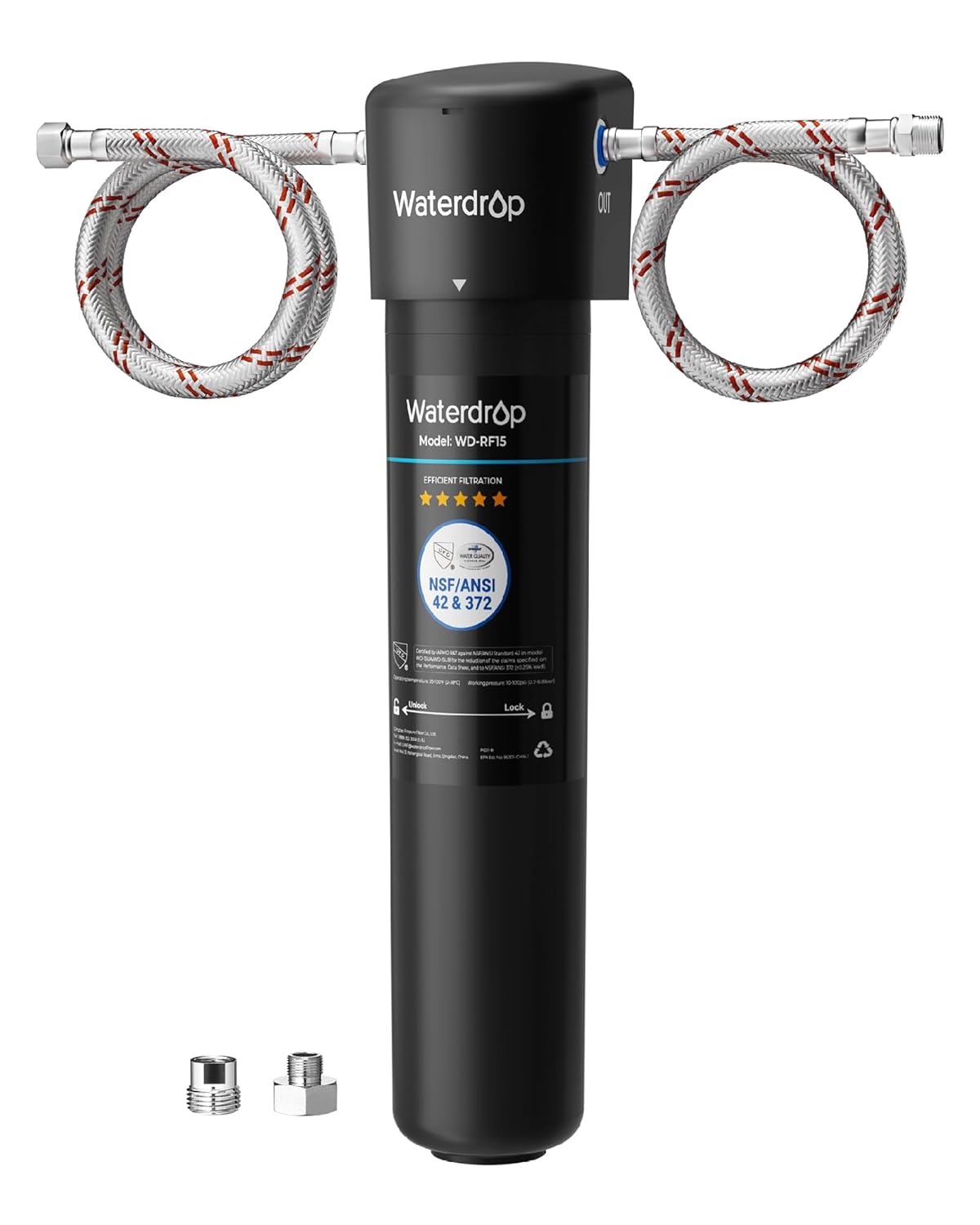
Waterdrop WD-15UA Under Sink Filter
| Purification Method | Activated Carbon |
|---|---|
| Capacity | 19000 gallons |
| Filter Life Cycle | 2 years |
| Maximum Flow Rate | 0.75 gpm |
| Supported Water TDS Level Maximum (PPM) | 700 |
The Waterdrop WD-15UA is an under-sink activated carbon filtration system designed for easy, tool-free connection to standard cold water lines. It installs with push-to-connect fittings and includes a 3/8" direct-connect hose plus a 3/8"–1/2" converter, so you can get filtered water to a faucet, RV, or secondary sink in minutes. The cartridge uses multistage carbon media to target chlorine, lead, PFAS/PFOA, sediment and common chemicals while retaining beneficial minerals, and the manufacturer rates a service life of up to 24 months or about 19,000 gallons on municipal water. Flow is stable for everyday use at up to 0.75 gpm, making it suitable for drinking, cooking, and ice makers. The system is certified to NSF/ANSI 42 and 372 and tested against NSF/ANSI 53 for lead reduction, which supports its contaminant claims. Limitations: it is for cold municipal water only, not intended for well or hot water, and the relatively large cartridge means you should check clearance under your sink before buying.
Best for: Buyers who prioritize proven contaminant reduction and long filter life for everyday drinking and cooking water and who want an easy-to-install under-sink system backed by certifications and many user reviews.
Less Ideal for: People on private well systems, those needing microbial or hot-water filtration, or anyone who needs very high flow for multiple simultaneous fixtures.
- Long rated service life of up to 24 months or about 19,000 gallons under municipal water conditions
- Certified reduction for chlorine and lead with third-party testing and NSF/ANSI 42 & 372 coverage
- Push-to-connect direct install with included fittings and converter for quick, tool-free setup
- Retains beneficial minerals while removing taste, odor, and common chemical contaminants
- Not suitable for well water or hot water use
- Flow rate limited to 0.75 gallons per minute which may be slow for heavy simultaneous use
Verdict: Choose the WD-15UA when you want a certified, long-life under-sink carbon filter that delivers reliable municipal drinking water reduction with simple, no-plumbing install.
ICEPURE Under Sink Water Filter WFS5300A

| Purification Method | Activated Carbon |
|---|---|
| Maximum Flow Rate | 2.5 gpm |
| Filter Life Cycle | 3 years |
| Capacity | 22000 gallons |
The ICEPURE WFS5300A is an under-sink activated carbon cartridge system designed to deliver improved-tasting cold drinking water without drilling a new faucet hole. It installs to a 1/2" or 3/8" female NPT cold-water line and uses a coconut-shell carbon block with a 0.5 micron outer layer to reduce chlorine, taste, odor, sediment and some heavy metals. The unit is sized for high flow households with a tested maximum flow of about 2.5 gpm, and the manufacturer rates the cartridge life at roughly 22,000 gallons or three years under typical municipal water conditions. The package includes the filter head, cartridge and basic adapters, and ICEPURE provides clear installation instructions and video to support a quick, mostly tool-free swap. Limitations to note: it is for cold water only and does not claim TDS reduction or multi-stage contaminant removal beyond carbon block capabilities, so it will not replace systems meant for bacteria, viruses, or comprehensive contaminant removal. For routine drinking and cooking water improvement this is an easy-to-install, long-life option with strong certifications but not a whole-house or emergency microbial treatment solution.
Best for: Buyers who prioritize a low-risk, certified, long-life under-sink filter for reliably better-tasting drinking water and an easy DIY install.
Less Ideal for: People needing comprehensive contaminant removal, microbial disinfection, hot-water filtration, or a whole-house solution should look at other system types.
- NSF/ANSI 42 and 372 certified for chlorine, taste, odor and lead-free materials
- High rated service life of ~22,000 gallons (about 3 years) per cartridge
- Supports up to 2.5 gallons per minute for good faucet flow
- Simple direct-connect design with included adapters and quick cartridge changes
- Made from food-grade, BPA-free materials and coconut shell carbon block
- Cold-water only connection; not designed for hot-water or whole-house use
- Does not reduce TDS and is not rated for microbial (bacteria/virus) removal
Verdict: Pick this if you want a certified, long-life under-sink carbon filter that reliably improves taste and odor with minimal fuss.
Choosing the Right Under-Sink Water Filter for Survival: Key Factors to Consider
Filtration Range
The range of contaminants a system removes determines whether a filter is suitable for survival scenarios. You want validated reduction of bacteria, protozoa, viruses where possible, plus common chemical contaminants like chlorine, lead, and volatile organic compounds. In many survival situations source water quality is unknown or variable, so prioritize systems with independent laboratory testing or certifications that list specific contaminants and reduction rates.
A broader filtration range may require multi-stage cartridges combining sediment prefiltration, carbon adsorption, and finer membranes. Consider which hazards are most likely in your region and balance that against maintenance complexity.
Cartridge Life and Availability
Cartridge life impacts how long a system can run before replacement parts are needed, which is critical for long-term preparedness. Longer-rated capacity reduces the frequency of interventions and the need to store many spares. Look for filters with clear gallon ratings or service-life estimates under realistic water conditions.
Also verify the availability of replacement cartridges in non-emergency supply channels. Systems that use widely available standard cartridges make it easier to stock spares ahead of time and simplify logistics if you must replace parts during a prolonged event.
Flow Rate and Output
Flow rate matters for practicality. In survival situations you will rely on the under-sink point for drinking, cooking, and occasional food prep. Too low a flow can make simple tasks cumbersome, while too high a rate with low filtration capacity can shorten cartridge life.
Consider systems that balance adequate steady flow for a kitchen faucet with a reasonable service interval. If you plan to fill containers, check both instantaneous flow and sustained daily output expectations under the manufacturer-rated life.
Installation and Serviceability
Ease of installation and the ability to service the unit under constrained conditions is essential. Filters that require only common tools and simple shutoff procedures allow you to replace cartridges or troubleshoot without professional help. Quick-release housings or tool-free cartridge swaps are advantageous in stressful situations.
Also consider whether the unit can be isolated from household plumbing for safe replacement and whether spare o-rings and basic fittings are easy to carry and replace in the field.
Durability of Components
Robust housing, reliable fittings, and corrosion-resistant materials extend the useful life of an under-sink system. In survival contexts you may not have ideal storage or installation conditions, so durable components reduce the chance of leaks, cracks, or failures when you need the system most.
Evaluate the mechanical durability of housings, the quality of shutoff valves, and the resistance of materials to repeated cartridge swaps and cleaning. Durable systems reduce maintenance needs and lower the likelihood of emergency failures.
Maintenance Needs and Consumables
Understand what routine maintenance each system requires and how often consumables need replacement. Maintenance tasks may include flushing, sanitizing housings, replacing multiple cartridge stages, and swapping o-rings. Less frequent and simpler maintenance is a clear advantage for households preparing for prolonged outages.
Plan for spare consumables such as replacement cartridges, o-rings, and basic fittings. Consider whether the system allows for partial servicing so you can extend intervals by replacing only the exhausted stage instead of the entire assembly.
Types of Under-Sink Systems for Emergency Use
Under-sink systems fall into a few practical categories for survival: multi-stage carbon-plus-sediment setups, membrane-based filters, and combination systems that include adsorption and fine filtration. Each approach trades off filtration breadth, flow rate, and service life differently.
Carbon-heavy multi-stage systems excel at chemical taste and odor removal and handle chlorine and many organic compounds well. Membrane-based options provide finer particulate and microbial filtration but may reduce flow and require more frequent prefiltration to avoid clogging.
- Multi-stage carbon + sediment: good chemical removal and taste improvement.
- Membrane-based (UF/RO): superior microbe removal but can reduce flow or require storage tank.
- Combination systems: attempt to balance contaminant coverage with usable flow.
Planning Cartridge Spares and Storage
For survival preparations, plan spare cartridges and basic spare parts based on the rated life of each cartridge stage. Store spares in a cool, dry place and rotate them into household use before shelf-life expiration if manufacturers specify a service life limit after opening.
Include common consumables such as o-rings, housing wrenches, and basic fittings in your supply kit. Label spares with installation dates and the intended filter, so you can perform replacements quickly when needed.
- Stock at least one full set of replacement cartridges for each critical stage.
- Keep basic tools and spare seals with the filter cabinet for fast service.
Installation Tips for Reliability
Mount housings securely and avoid placing heavy items on top of the cabinet where they could strain fittings. Use thread tape and hand-tighten fittings before checking for leaks under pressure. Test shutoff valves so you can isolate the under-sink system without disrupting household water if a leak occurs.
If your system uses a storage tank, position it to minimize kinking of lines and ensure the tank sits level. Label shutoffs and train household members on how to bypass or isolate the system in an emergency.
- Check all connections after the first 24 hours of operation.
- Practice a mock cartridge change so the procedure is familiar and clean.
Sanitizing and Winterizing Considerations
Regular sanitizing prevents biofilm buildup inside housings and prolongs cartridge life. Follow manufacturer instructions for safe sanitizing agents and thorough flushing after treatment. For survival setups, schedule sanitizing after any known contamination event and at sensible intervals during long-term storage.
If your home may face freezing temperatures, insulate or drain under-sink lines to prevent frozen housings and cracked fittings. Freeze damage can render a system unusable right when you need it most, so plan protection or quick replacement measures.
- Sanitize housings when replacing cartridges or after contamination exposure.
- Insulate lines and housings in unheated cabinets or winterize when temperatures drop.
Balancing Flow with Filtration Needs
Decide whether you prioritize near-instant faucet flow or maximum contaminant reduction. Systems using very fine membranes or reverse osmosis typically need storage tanks to maintain usable faucet flow. For survival use, a balanced approach often wins: good particulate and chemical removal with a steady faucet flow and a modest service interval.
If you depend on filling containers, confirm sustained daily output at the rated cartridge life rather than only peak flow numbers. This helps ensure the system meets realistic usage patterns during extended events.
- Consider an auxiliary gravity or pumped container if you need larger volumes quickly.
- Match the system output to your household daily drinking and cooking needs.
How We Chose the Best Under-Sink Water Filter for Survival
We prioritized filter systems and configurations that suit prolonged emergency readiness rather than short-term convenience. Key evaluation criteria included filtration capability for biological hazards and chemical contaminants, long cartridge life and measurable rated capacity, durability of fittings and housings for repeated use and potential exposure to variable water quality, and installation simplicity so a homeowner can fit or swap components quickly under limited conditions. We also considered flow rate and compatibility with standard under-sink plumbing to ensure systems can serve drinking, cooking, and basic hygiene needs without frequent intervention. Exclusions: we excluded single-use pitchers, gravity-only countertop rigs, and systems that require specialized plumbing beyond common under-sink hookups. We avoided filters that lack documented rated contaminant removal or have cartridges that are rare or custom-only. The four to six practical filters we depended on were selected for their measurable capacities, broadly available replacement parts, ease of maintenance, and a balance of contaminant coverage versus service interval. These criteria align with the scoring metrics used in our product scorecards.
Our full evaluation process is outlined in our review methodology.
FAQ
Can an under-sink filter handle bacteria and viruses in survival situations?
It depends on the filter technology. Ultrafilter and membrane systems can remove bacteria and many protozoa, while some systems are rated for certain viruses only when paired with specific membrane stages. Verify independent testing or certifications for microbial reduction before relying on a system for biological hazards.
How many replacement cartridges should I store for long-term preparedness?
Plan for enough cartridges to cover the expected duration of an outage plus a safety margin. At minimum, stock one complete service set per filter stage and increase that count based on household size and rated cartridge capacity. Consider shelf life and storage conditions when calculating spares.
Do under-sink survival filters require electricity?
Most under-sink filters are passive and require no electricity, but systems that include pumps or powered UV disinfection will need power. For survival readiness, passive systems or those with low-power options are generally more resilient unless you can guarantee a power source.
Will a high-flow under-sink filter clog faster with dirty source water?
Yes. Higher turbidity or sediment loads will shorten cartridge life, especially in fine membranes. Prefiltration with a sediment stage helps protect finer cartridges and maintain usable flow over longer intervals.
Can I install an under-sink survival filter myself?
Many under-sink systems are designed for homeowner installation using common tools and simple connections. Look for tool-free housings and clear instructions, and practice a cartridge change before an emergency to ensure you can complete service quickly and cleanly.
Final Verdict
Choosing an under-sink water filter for survival requires balancing contaminant coverage, cartridge longevity, and practical flow rates. Prioritize systems with documented filtration capabilities for the specific hazards you are most likely to face, and favor durable components and widely available replacement cartridges to simplify long-term upkeep. Plan spares, learn the installation and service routine, and accept tradeoffs between maximum contaminant removal and ease of use. With the right priorities, you can create a resilient under-sink setup that reliably delivers safe water during extended disruptions.