
Note: This article contains affiliate links. If you click on these links and make a purchase, we may earn a small commission at no extra cost to you. This helps support our research and content. Read our full affiliate disclosure here.
If you store wine in a garage, humidity swings and wide temperature changes can harm bottles and corks. Choosing the right undercounter wine cooler for garages matters because a standard kitchen unit is not always engineered to cope with colder, hotter, or more variable conditions common in unconditioned spaces. This guide looks at five shortlisted undercounter wine coolers that are suitable for garage installation and explains the practical differences you should weigh. We evaluate temperature range and insulation, cooling method, and installation fit so you can pick a cooler that preserves your collection reliably. Read on for focused buying criteria and decision-making guidance tailored to garage environments.
Top Picks at a Glance
| Best Overall The best all-around choice for most situations | Yeego 24 Inch Wine Fridge |  |
| Best Budget The cheapest option that still gets the job done reliably | Stopsad Beverage Refrigerator 203B |  |
| Top Rated A top-rated pick with lots of positive feedback | Tylza 24" Dual Zone Wine Refrigerator |  |
| Most Popular A crowd favorite that many people choose with confidence | Feelfunn 3.2 Cu.Ft Beverage Refrigerator |  |
| Best Seller A high-volume bestseller chosen again and again | EUHOMY Dual Zone Wine & Beverage Cooler |  |
Yeego 24 Inch Wine Fridge

| Capacity | 5.12 cubic feet |
|---|---|
| Bottle capacity | 47 Bottles |
| Temperature range | 40-65°F (5-18°C) |
| Cooling method | Compressor |
| Annual energy consumption | 194 kilowatt hours per year |
The Yeego 24 Inch Wine Fridge is a compressor-based wine cooler that holds up to about 52 standard Bordeaux bottles and fits undercounter or freestanding. It uses a reciprocating compressor and 360° air circulation for fast, even cooling across a 40 to 65°F range, controlled from a front LED touch panel with 1°F increments and power-failure memory. Five wooden shelves are adjustable and removable so you can rearrange for larger bottles, and the dual-pane tempered glass door with a stainless-steel frame blocks most UV light while presenting a clean look. Practical touches include automatic defrost, low-noise operation (around 41–43 dB), adjustable leveling feet and an upgraded front grille for airflow. Trade-offs are that the unit is compressor-based so it will vibrate slightly compared with high-end column coolers, and its stated annual energy use (194 kWh) is moderate rather than ultra-efficient. For someone prioritizing steady, accurate cooling and flexible placement, this cooler is a solid option; buyers who need whisper-quiet thermoelectric operation or the absolute lowest energy draw should compare other technologies.
Best for: Buyers who want reliable, accurate cooling and flexible installation for a medium-sized bottle collection and who prioritize steady temperature control over the absolute lowest energy use.
Less Ideal for: Those seeking the quietest possible thermoelectric coolers or the absolute lowest-energy, most eco-friendly option should consider other technologies.
- Compressor cooling with 360° air circulation for consistent temperature control across the cabinet
- Digital touch controls with 1°F adjustment and power-failure memory for precise setpoint management
- Adjustable wooden shelves that minimize vibration and accommodate different bottle sizes
- Dual-pane tempered glass and stainless-steel frame that reduce UV exposure and present a clean built-in look
- Quiet operation rated around 41–43 dB suitable for home use
- Moderate annual energy consumption (~194 kWh) compared with some more efficient models
- Reciprocating compressor can produce slight vibration compared with thermoelectric systems
Verdict: A dependable 24-inch compressor wine fridge that delivers precise, even cooling and flexible undercounter or freestanding installation for medium collections.
Stopsad Beverage Refrigerator 203B
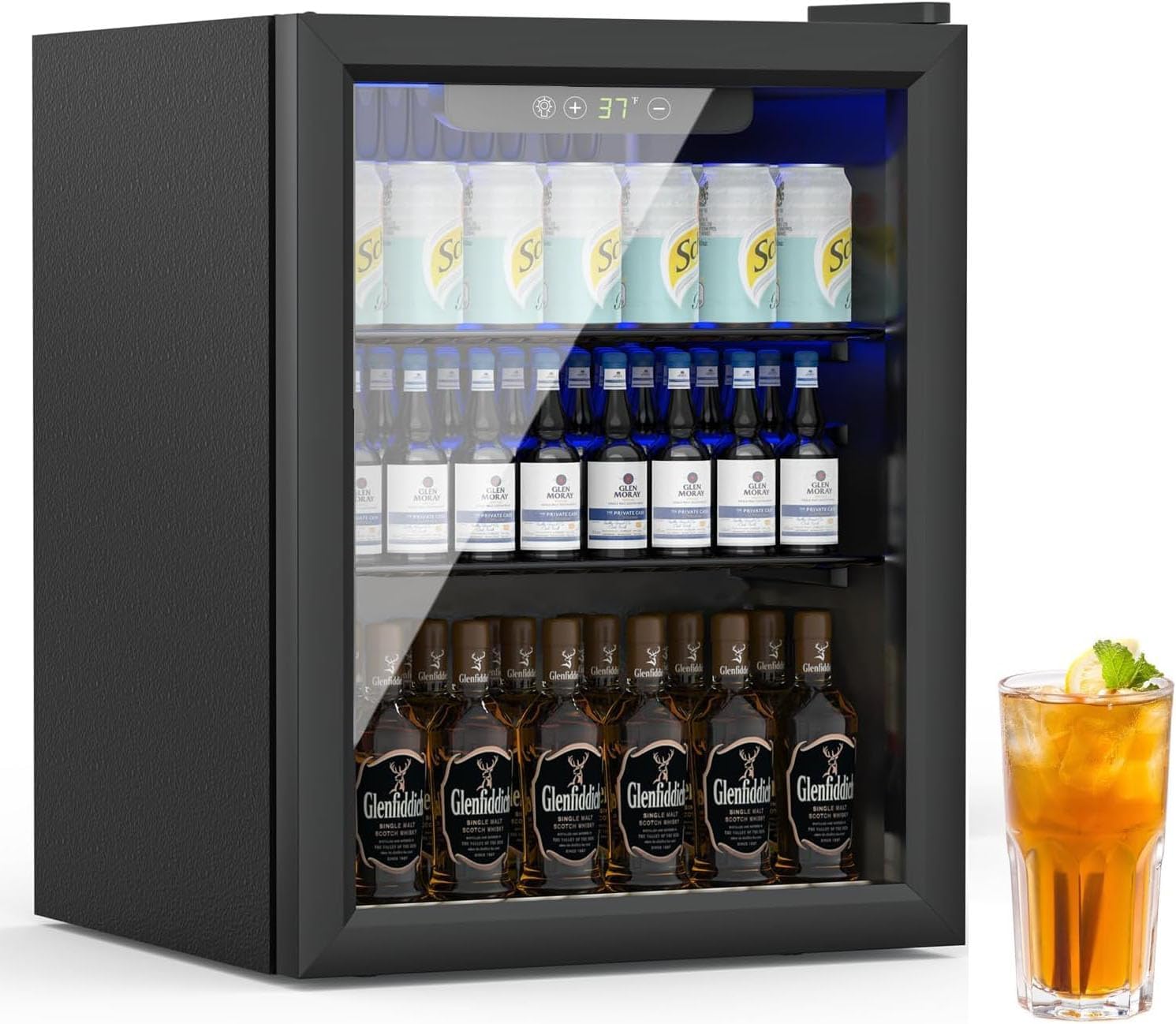
| Capacity | 1.6 cubic feet |
|---|---|
| Unit Count | 70 Count |
| Temperature Range | 37-61°F |
| Cooling Method | Compressor |
| Door Orientation | Reversible |
The Stopsad 203B is a small undercounter-style beverage fridge aimed at basic beverage and wine chilling without extra frills. It fits in tight spaces and holds roughly 70 standard cans across two removable shelves, and the touch LED panel lets you set temperatures between 37 and 61°F for beer, soda, or white wine. The compressor-based cooling and a sealing strip help maintain steady temperatures while the unit runs quietly at about 36 dB, so it will not dominate a garage workspace. A reversible stainless steel-trimmed glass door and adjustable leveling feet make installation under a counter or in a compact built-in gap straightforward. Practical limitations include modest capacity for larger wine bottles and a small number of shelves, so arranging tall bottles may require removing shelves. The one-year warranty is standard for entry-level appliances, and the unit is best where simple, reliable cooling and a low upfront cost matter more than wine-specific features like dual zones or humidity control.
Best for: Buyers seeking an inexpensive, space-saving undercounter fridge to keep beer, soda, and a few bottles chilled in a garage or workshop with straightforward temperature control and quiet operation.
Less Ideal for: Serious wine collectors who need long-term bottle storage, dual-zone cooling, or humidity management should look at purpose-built wine coolers instead.
- Compact 1.6 cu ft footprint fits under counters or in tight garage nooks
- Holds about 70 standard cans with two removable shelves for flexibility
- Digital touch panel with 37–61°F range for precise beverage chilling
- Compressor cooling with low-noise operation (around 36 dB)
- Limited capacity and shelf layout may not accommodate many full-size wine bottles
- Basic one-year warranty and no advanced wine features like humidity control
Verdict: A budget-friendly, compact undercounter beverage fridge that delivers steady compressor cooling and precise temperature control for garage or workshop chilling needs.
Tylza 24" Dual Zone Wine Refrigerator

| Capacity | 4.2 cubic feet |
|---|---|
| Temperature range left zone | 35-50°F |
| Temperature range right zone | 41-64°F |
| Annual energy consumption | 163 kilowatt hours per year |
| Installation type | Under-Counter/Freestanding/Built-In |
This Tylza 24" dual-zone fridge is a focused beverage chiller for households or small bars that need separate temperature control for wine and drinks. It provides two independently controlled cooling zones with adjustable ranges (left 35–50°F, right 41–64°F) and a touch control panel with temperature memory to restore settings after power interruptions. The unit fits under counters or works freestanding and offers a mix of metal and wood shelving that can be rearranged to fit bottles or stacks of 12‑oz cans, with the manufacturer listing capacity for about 20 Bordeaux bottles and 88 cans. A rotary scroll inverter compressor and fan circulation aim for even cooling while running quietly under 38 dB, and the double-layered glass door plus a keyed lock help protect stored bottles. Practical limits include a moderate 4.2 cu ft capacity that will not suit large collections and a 24" footprint that requires planning for built-in installation; buyers should also expect typical compressor vibration and longer pull-down times compared with commercial blast chillers. For a performance-focused mini fridge that balances low noise, dual zones, and flexible shelving, this is a sensible option.
Best for: Buyers who prioritize precise temperature control and low-noise operation for mixed wine and beverage storage in a home bar or under-counter setup.
Less Ideal for: Those needing large-capacity cellars or professional rapid-cooling performance for high-volume commercial use should look elsewhere.
- Independent dual cooling zones with specific temperature ranges for wine and beverages
- Quiet inverter compressor design operating under 38 dB for low noise environments
- Touch control with temperature memory restores settings after power outages
- Flexible metal and wood shelving that can be removed or rearranged to fit bottles and cans
- Built-in or freestanding installation options for versatile placement
- 4.2 cubic foot capacity limits the number of bottles for serious collectors
- Not a rapid commercial-style cooler so pull-down times may be slower than specialty units
Verdict: Choose this fridge when you want a quiet, dual-zone under-counter cooler that keeps wine and cans at independently controlled serving temperatures.
Feelfunn 3.2 Cu.Ft Beverage Refrigerator

| Capacity | 3.2 cubic feet |
|---|---|
| Temperature Range | 34–64°F |
| Cooling Method | Compressor |
| Number Of Shelves | 4 |
| Installation Type | Under-Counter/Freestanding |
The Feelfunn 3.2 cu ft beverage refrigerator is a compact cooler designed to hold up to 126 cans across four adjustable shelves and keep drinks chilled between 34 and 64°F using a compressor-based cooling system. It uses 3D air circulation and a rotary scroll compressor to maintain consistent temperatures, and a double-layer low-E glass door plus interior LED lighting makes contents visible while helping insulation. The unit can be freestanding or installed under a counter thanks to reversible door hinges and adjustable feet, and it is rated for quiet operation at about 36 dB which suits front-of-house or office placement. Practical benefits include flexible shelving for bottles and cans, digital temperature control for serving-specific setpoints, and ETL safety certification. Key limitations are its modest 3.2 cu ft capacity for higher-volume commercial needs and an annual energy consumption figure that buyers should compare against commercial-grade units; it also ships with a one-year accessory service rather than extended commercial warranties. For small bar counters, offices, or low-volume beverage service this fridge covers the basics; larger operations will need bigger commercial refrigerators.
Best for: Shoppers looking for an affordable, compact beverage fridge to stock a small bar, office, or front-of-house service area where visibility and quiet operation matter.
Less Ideal for: Restaurants, busy bars, or high-volume commercial kitchens that need larger-capacity, heavy-duty refrigeration and commercial service agreements.
- Dense 3.2 cu ft holds up to 126 cans for compact high-capacity storage
- Adjustable removable shelves let you fit bottles or cans and reorganize quickly
- Digital temperature control with 34–64°F range for serving-specific chilling
- Quiet compressor operation (~36 dB) suitable for front-of-house or office placement
- Reversible glass door and adjustable feet allow freestanding or under-counter installation
- 3.2 cu ft capacity is small compared with commercial refrigeration needs
- Annual energy consumption may be higher than purpose-built commercial units for continuous use
Verdict: A budget-friendly compact beverage fridge that delivers visible, quiet, temperature-controlled storage for small-scale commercial or hospitality spots.
EUHOMY Dual Zone Wine & Beverage Cooler

| Capacity | 5.3 cubic feet |
|---|---|
| Refrigerator Net Capacity | 4.65 cubic feet |
| Temperature Range (Beverage) | 35°F–50°F |
| Temperature Range (Wine) | 41°F–64°F |
| Cooling Method | Compressor |
The EUHOMY Dual Zone Wine & Beverage Cooler combines a dedicated wine compartment and a lower-temperature beverage section so you can store bottles and cans at their ideal serving temps in one cabinet. It is typically used as an undercounter or freestanding unit in a home bar, kitchen, or entertainment area and offers digital temperature control for independent left and right zones. The cooler uses a compressor-based system with a high-speed fan to circulate air evenly, a low-e insulated glass door to hold temperature, and a blue LED light with sensor or manual control to make contents visible without raising temps. Storage is flexible with seven wooden shelves and three removable wire shelves for bottles and canned drinks, plus a concealed door lock and automatic six-hour defrost cycle for low maintenance. Expect solid cooling performance and quiet operation around 40 dB, but note the cabinet is not oversized—capacity fits about 21 wine bottles and roughly 88 cans—so it is aimed at serious entertaining but not large cellar-level storage.
Best for: Buyers who prioritize precise serving temperatures and even cooling for both wines and cold drinks and want an undercounter-ready unit that performs quietly during entertaining.
Less Ideal for: People who need large long-term cellar storage or a lightweight, easily moved mini fridge should consider larger-capacity or portable alternatives.
- True dual-zone temperature control for wine and beverages
- Compressor cooling with 360° fan circulation for even temperatures
- Undercounter-ready design with front venting for built-in installation
- Multiple removable shelves including wooden racks for bottle storage
- Low noise operation around 40 dB and automatic power-failure temperature recovery
- Capacity is moderate—suitable for parties but not for large wine collections
- Unit is relatively heavy which may complicate installation
Verdict: Choose this cooler if you want reliable, quiet dual-zone cooling that lets you store wine and chilled beverages at their ideal serving temperatures in a built-in-ready cabinet.
Choosing the Right Undercounter Wine Cooler for Garages: Key Factors to Consider
Temperature Range and Stability
Wine stored in a garage faces wider ambient swings than indoor cellars. A cooler with a broad and controllable temperature range lets you set appropriate storage or short-term service temperatures. Equally important is stability: units that maintain setpoint with minimal variance protect wine from repeated thermal cycling, which stresses corks and speeds chemical change.
When evaluating ranges, look for clear specifications showing performance under higher and lower ambient conditions. Measures such as how many degrees the interior deviates when the garage rises or falls in temperature are practical indicators of field performance.
Insulation and Door Construction
Thicker cabinet insulation and a high-quality door seal reduce heat transfer and help the compressor run less frequently. Dual-pane or thermally broken glass doors with low-emissivity coating cut radiant heat gain and are preferable for spaces with sunlight or large temperature differentials.
A tight gasket and full-length sealing surfaces minimize moist air infiltration and dust entry. For garage use, consider units with doors designed to resist condensation when interior and exterior temperatures diverge.
Cooling Method
Undercounter wine coolers typically use either thermoelectric or compressor-based cooling. Compressor systems deliver stronger cooling capacity and better performance when the surrounding air is warm or cold, which makes them more dependable in garages. Thermoelectric units are quieter and have fewer moving parts but struggle to maintain set temperatures when ambient conditions are outside a narrow band.
Assess how the chosen cooling method performs during warm starts and in lower temperatures. Look for features that aid recovery after door openings or power interruptions.
Ventilation and Installation Flexibility
Undercounter placement can be front-vented, rear-vented, or convertible. In garage installations you may have limited overhead clearance or different airflow patterns, so a cooler that supports front-venting or adjustable ventilation is easier to fit without overheating. Check recommended clearances and whether the unit can operate when built into cabinetry or beneath countertops typical of garage workspaces.
Also confirm door swing and reversible hinge options to match your undercounter layout and avoid blocking adjacent storage or utilities.
Durability and Materials
Garages expose appliances to dust, humidity changes, and occasional knocks. Cabinets with powder-coated steel or corrosion-resistant finishes, robust shelving, and hardware that tolerates vibration will last longer in this environment. Interior components that resist mold and mildew help when humidity is variable.
Consider serviceability too: easily accessible filters, replaceable seals, and straightforward ventilation cleaning reduce long-term maintenance hassles in a garage setting.
Controls, Monitoring, and Alarms
Simple, reliable temperature controls are essential in a garage where conditions change. Digital thermostats with precise setpoints and visible displays make it easier to confirm the interior environment at a glance. Some units include alarms for out-of-range temperatures, open doors, or filter checks, which can be valuable if the cooler is in a space you do not visit frequently.
Remote monitoring or connectivity is a bonus for owners who want alerts when the garage is unattended, but even basic audible alarms help prevent extended excursions outside safe storage ranges.
Why Garage Storage Is Different
Garages are subject to wider daily and seasonal temperature swings than conditioned living spaces. These fluctuations, along with dust, occasional moisture, and variable airflow, create a set of stresses that undercounter wine coolers must handle to protect bottles and corks.
A cooler that performs well in a kitchen may not reliably maintain wine-safe temperatures in a garage unless it has the right insulation, cooling capacity, and ventilation options. Understanding these differences helps you choose a unit that will keep bottles stable over time.
- Larger ambient swings increase thermal cycling risk
- Sunlight through windows can add radiant heat
- Dust and debris increase maintenance needs
- Limited clearance may require front-vented options
Thermostat Placement and Accurate Readings
Where the thermostat sensor sits matters. Sensors located near the door or at the front of a cooler can read warmer or cooler than bottles further inside. For garage use, prefer units with internal sensors positioned to reflect the bulk bottle zone, or those that allow you to add an external probe for more accurate monitoring.
Accurate readings prevent overcompensation by the compressor and reduce temperature swings following door openings or ambient changes.
- Look for internal sensor placement near the bottle center
- External probe compatibility is helpful for validation
- Frequent door openings distort short-term readings
Protecting Against Condensation and Humidity
Condensation forms when a cool interior meets warm, humid exterior air. In a garage this can happen often and lead to moist spots on labels and metal parts. Good door seals, anti-condensation designs, and humidity-tolerant finishes reduce these risks.
Some units maintain a safe relative humidity passively through tight sealing and minimal airflow. If your garage is very humid or you plan to store long-term, consider supplemental humidity control or placing bottles in a dry cabinet within the cooler for added protection.
- Tight gaskets minimize moist air ingress
- Anti-condensation door treatments can help
- Rust-resistant shelving protects against corrosion
Power and Reliability Considerations
Garages sometimes have different electrical setups or are more prone to power interruptions. Choose coolers with reliable compressors and straightforward circuitry that tolerate routine power cycling. Units with soft-start features reduce compressor stress after outages.
Consider the availability of service and ease of replacing common wear parts like fans, compressors, and seals when selecting a model for a garage environment.
- Soft-start compressors reduce startup strain
- Accessible components simplify repairs
- Check local serviceability options before installation
Practical Installation Tips
Plan ventilation and clearance before purchasing. Front-venting models are often the easiest for tight undercounter garage installs since they do not require extra rear clearance. Measure door swing and ensure shelving will not interfere with adjacent storage.
If installing beneath a workbench or countertop, confirm that the top surface will not trap heat and that any front grille remains unobstructed. Use a level surface and allow a short break-in period for the cooler to stabilize before loading to full capacity.
- Verify front, rear, or convertible venting options
- Measure hinge swing and reversible door capability
- Allow a 24-hour stabilization period before full loading
How We Chose the Best Undercounter Wine Cooler for Garages
We selected units that are engineered or specified for installation in unconditioned or semi-conditioned spaces, prioritizing thermal stability and build features relevant to garages. Our process emphasized measurable performance attributes rather than brand reputation alone. Key evaluation criteria included the effective temperature range and stability under varying ambient conditions, the quality and thickness of insulation and door seals, the cooling method and how it handles warm starts, and the durability of cabinet materials and components for dusty or damp settings. We also considered installation flexibility for undercounter placement, including ventilation options and clearance requirements, plus user-facing controls and maintenance needs. Units that lacked clear temperature performance data, had thin insulation or single-pane uncompensated doors, or that did not support undercounter ventilation configurations were excluded. We prioritized models with quantifiable performance specs and features that reduce temperature fluctuation and moisture intrusion. The result is a list of five undercounter wine coolers that meet the practical demands of garage storage and undercounter installation.
Our full evaluation process is outlined in our review methodology.
FAQ
Can I use a regular undercounter wine cooler in an unheated garage?
It depends on the cooler. Many standard units are designed for indoor, conditioned spaces and may struggle in unheated garages. Choose models specified for wider ambient ranges or with robust insulation and compressor cooling for unconditioned areas.
Is a thermoelectric cooler acceptable for garage use?
Thermoelectric coolers are quieter and simpler but generally perform best within a narrow ambient band. They may not maintain stable temperatures in garages with large temperature swings, so compressor-based units are usually the safer choice for garages.
How much clearance does an undercounter unit need in a garage?
Clearance requirements vary by unit and venting style. Front-vented models need minimal side and rear space, while rear-vented units require room for airflow at the back. Always follow the manufacturer's stated clearances for undercounter installation.
Will condensation damage wine stored in a garage cooler?
Surface condensation on labels or metal parts is mostly cosmetic, but ongoing moisture can affect corks and promote corrosion. Good seals, anti-condensation door treatments, and corrosion-resistant materials help limit these risks.
Should I install a temperature alarm for a garage cooler?
A temperature alarm is a practical safeguard for garage installations because you may not monitor the space as often. Alarms notify you of excursions that could harm long-term storage and are worth considering for unattended collections.
Final Verdict
For garage installations, prioritize undercounter coolers that maintain stable interior temperatures across a wide ambient range, use robust insulation and door seals, and offer flexible ventilation options for undercounter placement. Expect tradeoffs: compressors offer better performance in variable conditions but introduce more mechanical complexity, while thermoelectric units are quieter but less tolerant of garage extremes. Focus on temperature stability, installation fit, and durability when choosing. With those priorities in mind, you can confidently select an undercounter wine cooler that protects bottles in a garage environment.