
Note: This article contains affiliate links. If you click on these links and make a purchase, we may earn a small commission at no extra cost to you. This helps support our research and content. Read our full affiliate disclosure here.
Choosing the right wall thermostat makes a big difference for home comfort, energy consumption, and HVAC longevity. Whether you want precise temperature control, simple scheduling, or basic manual operation, the thermostat you install affects daily comfort and your heating and cooling system workload. This guide covers seven shortlisted wall thermostats chosen for real-world home use and different installation skill levels. We evaluate each pick for ease of installation, accuracy, compatibility with common HVAC setups, and everyday usability. Read on for concise, practical guidance to match a thermostat to your home and priorities.
Top Picks at a Glance
| Best Overall The best all-around choice for most situations | Amazon Smart Thermostat |  |
| Best Quality Built to a higher standard if you want something more solid | Google Nest Learning Thermostat (4th Gen) |  |
| Best Value The sweet spot between price and what you get | Aowel Non-Programmable Thermostat AW701 |  |
| Best Budget The cheapest option that still gets the job done reliably | Honeywell Home CT30A1005 Thermostat |  |
| Top Rated A top-rated pick with lots of positive feedback | Sensi Smart Thermostat ST55 |  |
| Most Popular A crowd favorite that many people choose with confidence | Google Nest Thermostat |  |
| Best Seller A high-volume bestseller chosen again and again | Riseem S3001 Nonprogrammable Thermostat |  |
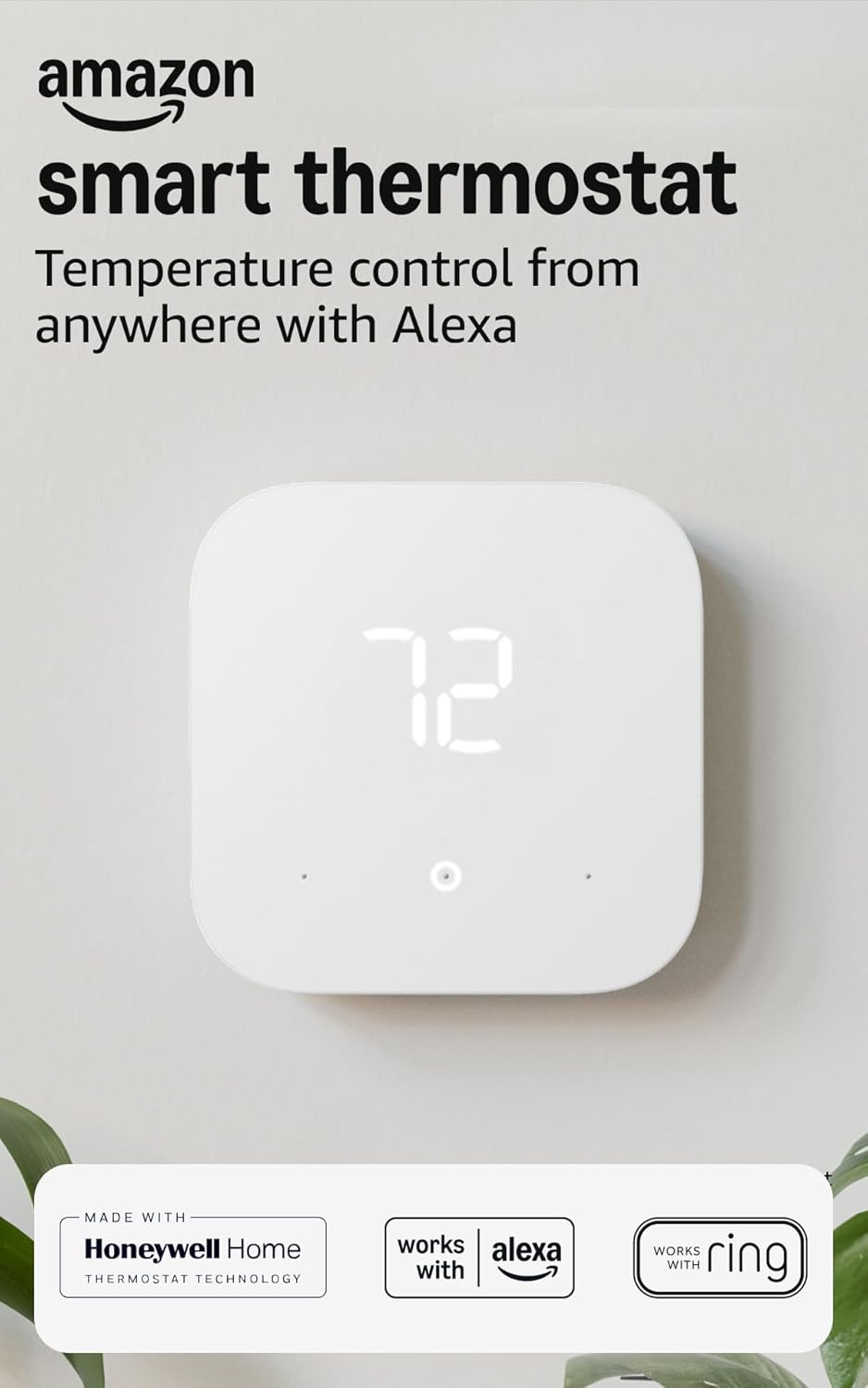
Amazon Smart Thermostat
| Compatible voice assistant | Alexa |
|---|---|
| Requires | C‑wire |
| Manufacturer tech | Honeywell Home technology |
| Energy classification | ENERGY STAR aligned |
The Amazon Smart Thermostat replaces a conventional wall thermostat with a Wi‑Fi connected unit that uses Alexa integration and Honeywell Home thermostat technology to manage heating and cooling. It is installed by the homeowner using step‑by‑step guidance in the Alexa app and supports programmable schedules, home/away modes, and Alexa+ features that can adjust temperatures based on presence detection or linked Echo devices. In practice it provides straightforward remote control through the Alexa app and voice commands, and the ENERGY STAR alignment targets energy savings and utility rebates where available. Notable benefits include easy DIY installation for homes with a C‑wire, solid voice ecosystem integration, and automatic routines when you use other Alexa devices. Limitations are that it requires a C‑wire for reliable power and that advanced HVAC diagnostics or third‑party smart home platforms beyond Alexa are not emphasized, so buyers tied to other ecosystems may find those integrations limited.
Best for: Buyers who want a simple, Alexa‑centric smart thermostat that is easy to install themselves and prioritizes energy savings and voice control.
Less Ideal for: People who need a thermostat that works primarily with non‑Alexa ecosystems or who lack a C‑wire and do not want to install one.
- Works with Alexa for voice control and remote scheduling via the Alexa app
- Energy‑focused features and ENERGY STAR alignment that can reduce runtime and enable rebates
- DIY installation guided by the Alexa app for typical homeowner setup
- Built on Honeywell Home thermostat technology for familiar thermostat controls
- Requires a C‑wire for reliable installation
- Integration emphasis is on Alexa, so other smart home ecosystems are not a primary focus
Verdict: Choose this thermostat if you want an affordable, DIY Wi‑Fi thermostat that tightly integrates with Alexa for easy voice, remote, and energy‑saving control.
Google Nest Learning Thermostat (4th Gen)

| Connectivity Technology | Wi-Fi |
|---|---|
| Power Source | Corded Electric |
| Voltage | 24 volts |
| Display Type | Touchscreen |
| Included Components | Nest Temperature Sensor (2nd gen) |
The Nest Learning Thermostat (4th gen) is a high-end smart wall thermostat that learns your preferences, suggests schedule tweaks, and lets you control temperature from the Google Home app or by voice. It installs on standard 24V systems and includes a Nest Temperature Sensor to manage hot or cold spots remotely. Notable features include Adaptive Eco that factors outdoor conditions to pause HVAC use, Dynamic Farsight for an easy-to-read display across the room, system health alerts, and integration with Alexa, Siri/HomeKit, and Matter. In practice the unit simplifies daily control by proposing energy-saving schedule changes you can accept or edit, and the app remote control makes temperature adjustments straightforward when away from home. Limitations to consider are its reliance on the Google Home ecosystem for the richest experience and that some advanced savings features reference cloud services and notifications, so occasional connectivity is required for full functionality. The thermostat is compact and designed for homeowner self-installation, though professional install may be preferred for complex systems.
Best for: Buyers who prioritize energy performance and automated temperature optimization and want a smart thermostat that actively learns and suggests savings while offering remote control and room sensing.
Less Ideal for: Anyone seeking a purely local, offline thermostat or who wants to avoid cloud-linked platforms and ecosystem-specific features.
- Learns user schedule and suggests energy-saving adjustments automatically
- Includes a Nest Temperature Sensor to manage remote hot or cold spots
- Large Dynamic Farsight display for clear information from across the room
- Works with Google Home app, voice assistants, and Matter for flexible control
- System Health alerts help spot HVAC issues early
- Full feature set depends on cloud connectivity and app notifications
- Best experience tied to Google ecosystem for certain integrations
Verdict: Choose this Nest thermostat if you want a performance-focused smart wall unit that learns your routines, manages hot spots with a sensor, and prioritizes energy savings through adaptive features.
Aowel Non-Programmable Thermostat AW701

| Power Source | Battery Powered |
|---|---|
| Specific Uses For Product | for Conventional Single-Stage Heating (Gas/Oil/Electric Furnace) & Ventilation & Air Conditioning |
| Display Type | LCD |
| Control Type | Button Control |
| Voltage | 24 volts_of_alternating_current |
The Aowel AW701 is a simple, no-frills wall thermostat designed for single-stage 1 heat/1 cool central systems. It provides straightforward temperature and humidity readouts on a large blue backlit LCD, with push-button controls, fan ON/AUTO, and technician-adjustable heating and cooling swing settings for finer temperature control. Installation is user-friendly for typical 24VAC systems: the universal sub-base, clearly labeled terminals (RH/RC, W, Y, G, O, B, C), and battery power mean it usually does not need a C-wire. Practical protections include a selectable 3-minute compressor delay and temperature calibration. The unit does not support multistage systems, heat pumps, line-voltage baseboard heat, or RV/minisplit setups, so it is limited to basic forced-air furnace and AC pairings. Its simplicity benefits users who want reliable manual control without programming, though buyers needing scheduling, smart-home integration, or multi-stage compatibility will need a different model.
Best for: Buyers who want a straightforward, reliable manual thermostat to replace a basic single-stage furnace/AC controller and prefer large readable controls over programming or smart features.
Less Ideal for: Users who need scheduling, smart-home integration, multi-stage or heat-pump compatibility should choose a programmable or Wi-Fi smart thermostat instead.
- Large blue backlit LCD with temperature and humidity display for easy reading
- Compatible with 24VAC conventional single-stage systems and clearly labeled terminals for simple wiring
- Battery powered with easy-access compartment so C-wire is not required in most installs
- Selectable 3-minute compressor delay and adjustable heat/cool swing let technicians fine-tune performance
- Not compatible with multistage systems, heat pump systems, line-voltage baseboard heat, or minisplits
Verdict: Choose the AW701 when you need a simple, easy-to-read manual thermostat that reliably controls single-stage furnace and AC systems without programming.
Honeywell Home CT30A1005 Thermostat

| Controller Type | Hand Control |
|---|---|
| Additional Features | Heat Only |
| Connectivity Technology | Wired |
| Power Source | Low Voltage Control |
| Display Type | Manual |
The Honeywell Home CT30A1005 is a basic, heat-only wall thermostat that uses a manual dial and bimetal sensor to control low-voltage heating systems. Installation is straightforward for a DIYer: it ships with a decorative backplate and mounting hardware and does not require leveling. The snap-action switch provides a tactile on/off feel and reliable switching for furnace systems, and the lack of a digital display keeps operation simple and intuitive. Because it is non-programmable and mercury-free, the unit is well suited to rooms or properties that only need straightforward temperature control without scheduling or smart features. Limitations are clear: it is not compatible with heat pumps, electric baseboard heat, or multi-stage systems, and there are no programmable, remote, or Wi-Fi capabilities for automated energy savings. If you want an inexpensive, durable manual thermostat for a single-stage heating setup, this model delivers dependable performance with minimal setup and maintenance.
Best for: Buyers seeking the cheapest reliable way to control a single-stage heating system who prioritize simplicity and low-maintenance manual operation.
Less Ideal for: Those who need programmable schedules, remote or smart control, or compatibility with heat pumps, electric baseboard, or multi-stage HVAC systems should look elsewhere.
- Easy DIY installation with included backplate and mounting hardware
- Simple manual dial and bimetal sensor make operation intuitive
- Snap-action switch offers reliable on/off control for heating systems
- Mercury-free design and durable mechanical construction
- Only supports heating-only, low-voltage furnace systems and excludes common system types
- No programmable schedules, remote access, or smart features
Verdict: A no-frills, budget-friendly manual thermostat that reliably controls single-stage heating systems for buyers who want simplicity over smart features.
Sensi Smart Thermostat ST55

| Connectivity Technology | Wi-Fi |
|---|---|
| Control Method | App, Touch, Voice |
| Specific Uses For Product | Air Conditioner, Boiler, Furnace, Heat Pump |
| Power Source | Corded Electric |
| Number of Batteries | 2 AA batteries required. (included) |
The Sensi ST55 is a DIY wall thermostat that replaces a traditional programmable stat with Wi‑Fi remote control and voice assistant integration. It pairs with a free mobile app to set schedules, monitor usage reports, and receive system alerts, and it supports Alexa, Google Assistant, Apple HomeKit, SmartThings, and Vera for voice and smart‑home routines. Installation is aimed at homeowners comfortable with basic wiring and includes mounting hardware, wire labels, and 2 AA batteries so it can run without a dedicated C‑wire in many setups. The LED display and button controls keep operation familiar while the app delivers remote access and energy reports that help trim HVAC runtime. On the limitation side, its physical interface is basic compared with full touchscreen models and some advanced HVAC environments may still require a C‑wire; the device focuses on core smart features rather than extensive on‑device customization. For buyers wanting a straightforward, Energy Star certified upgrade that emphasizes reliability and clear system feedback, the Sensi ST55 covers the essentials well.
Best for: Buyers who prioritize a reliable, no‑frills smart thermostat that simplifies monitoring and remote control and who value energy savings and dependable app support.
Less Ideal for: Users who want an advanced on‑device touchscreen experience or a thermostat with extensive built‑in customization and visual controls.
- Easy DIY installation with included hardware and wire stickers for most home HVAC setups
- Wi‑Fi remote access plus app usage reports and system alerts for proactive maintenance
- Works with major voice assistants and smart‑home platforms for routines and voice control
- ENERGY STAR certified to help reduce HVAC energy use and provide savings
- Basic button and LED display lacks the on‑device polish and options of color touchscreen thermostats
- May still require a C‑wire in some HVAC systems for optimal power and features
Verdict: Choose the Sensi ST55 when you want a reliable, Energy Star certified smart thermostat that delivers simple remote control, dependable app features, and straightforward DIY installation.
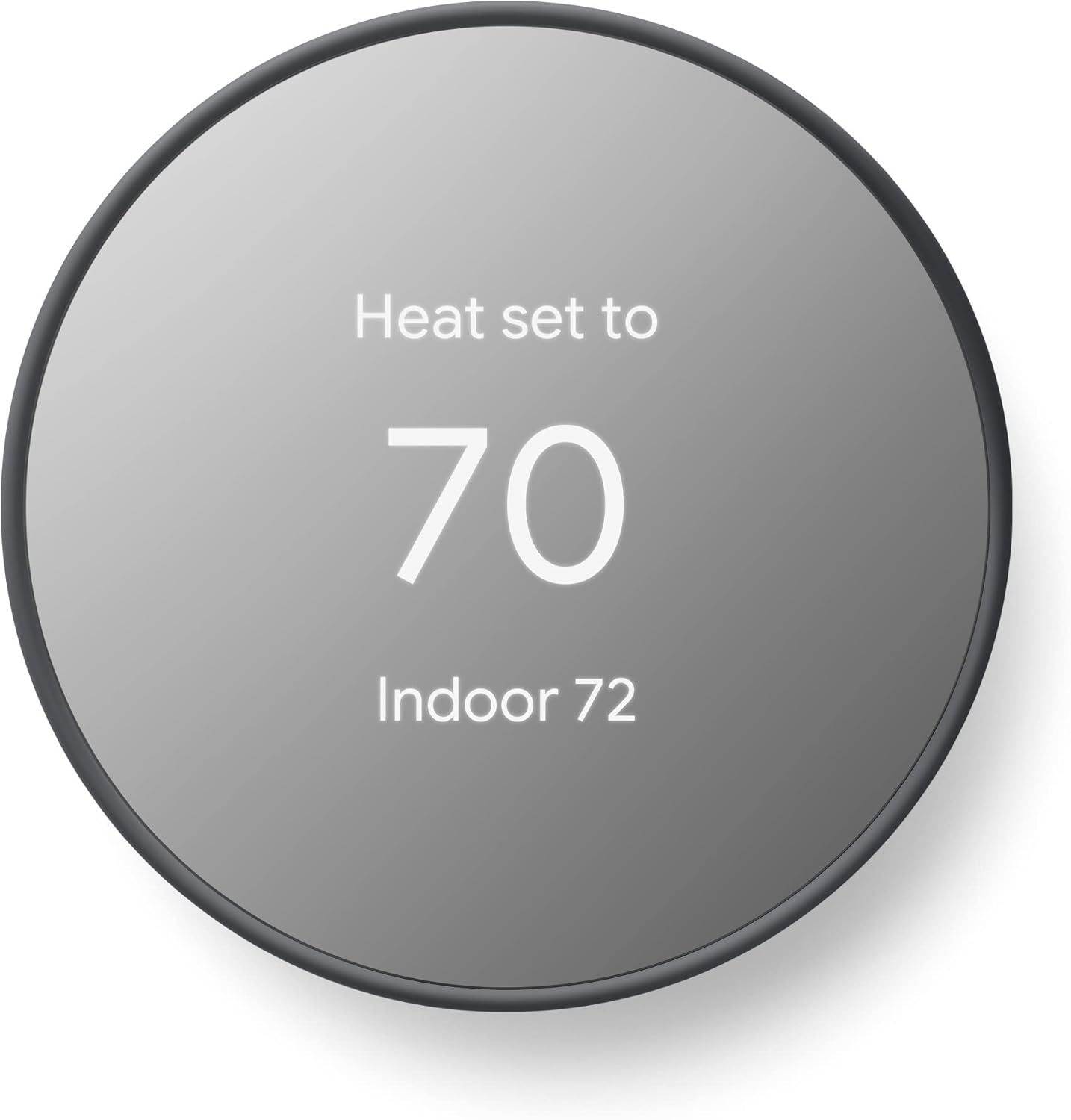
Google Nest Thermostat
| Connectivity Technology | Bluetooth, Wi-Fi |
|---|---|
| Power Source | Battery Powered |
| Display Type | LCD |
| Control Type | Remote Control, Voice Control |
| Number of Batteries | 2 A batteries required (included) |
The Google Nest Thermostat is a compact smart wall thermostat designed to replace a basic programmable unit and add remote control, voice control, and simple energy-saving features. It connects to 2.4 GHz and 5 GHz Wi‑Fi and Bluetooth Low Energy so you can adjust temperature from the Google Home app or with compatible voice assistants, and it learns simple patterns like setting Eco Temperatures when the home is empty. Installation is intended to be user-friendly and typically takes about 30 minutes, with mounting hardware included and the unit running on two A batteries; many homes do not require a C wire. The thermostat also offers HVAC monitoring alerts and Savings Finder suggestions through the app. Practical limits are that it is a budget model without advanced learning of higher-end Nest units, alerts are informational not diagnostic, and some HVAC configurations will still need a C wire or a power accessory. For buyers wanting a straightforward, app-enabled replacement rather than a full-featured learning thermostat, it balances ease of use with useful savings tools.
Best for: Buyers who want an affordable, easy-to-install smart thermostat that adds app and voice control plus basic energy-saving features without the complexity of a higher-end learning model.
Less Ideal for: Homeowners who need advanced self-learning schedules, professional-grade HVAC diagnostics, or those whose systems require robust power delivery without added power accessories.
- Simple, usually DIY install with included mounting hardware
- Remote control and scheduling via Google Home app for adjustments from anywhere
- Works with voice assistants and Matter‑certified devices for hands‑free control
- Energy-saving features like Eco Temperatures and Savings Finder that suggest schedule tweaks
- Requires batteries and may need a C wire or power accessory for some HVAC systems
- Provides alerts and monitoring but not a substitute for professional HVAC diagnostics
Verdict: A budget-friendly smart wall thermostat that lets you add reliable app and voice control plus simple energy-saving tools with an easy DIY install.
Riseem S3001 Nonprogrammable Thermostat

| Controller Type | Push Button |
|---|---|
| Temperature Control Type | Conventional Single Stage Systems |
| Connectivity Technology | Wired |
| Power Source | 24 VAC or 2 AA batteries |
| Display Type | LCD |
The Riseem S3001 is a straightforward nonprogrammable thermostat built for single-stage heating and cooling systems. It mounts on a wall and connects via wired 24VAC or can run on two AA batteries for backup, so it works without a common wire for most setups. The backlit LCD and push-button controls make temperature changes and readouts easy, and the separate heating and cooling swing setting helps reduce short cycling for steadier comfort and modest energy savings. Installation is aimed at DIYers: the universal sub-base and large terminal blocks simplify wiring and the manufacturer claims most installs take about 30 minutes, though buyers should follow the wiring diagram carefully because the base accepts only a limited number of wires. This model is not a programmable or smart thermostat and is explicitly incompatible with heat pumps, multistage systems, mini-splits, and high-voltage electric baseboard setups, so it is intended as a basic replacement for conventional single-stage systems. The unit offers accurate control within about one degree Fahrenheit, but lacks scheduling, Wi-Fi, or app control that some buyers expect from modern thermostats.
Best for: Buyers who want a reliable, no-frills wall thermostat to replace a factory-style single-stage controller and value simple operation and straightforward installation.
Less Ideal for: Anyone who needs schedule programming, remote/smart control, or who has a multistage, heat pump, mini-split, or high-voltage electric heating system should look elsewhere.
- Simple, easy-to-read backlit LCD and intuitive button controls.
- Works with 24VAC systems and can run on 2 AA batteries so a C-wire is not required in most cases.
- Universal sub-base and large terminal blocks simplify DIY installation.
- Separate heating and cooling swing reduces short cycling and can improve comfort.
- Accurate temperature control to about +/-1°F.
- Not programmable and has no Wi-Fi or smart features.
- Incompatible with multistage systems, heat pumps, mini-splits, and high-voltage electric baseboard heat.
- Base accepts a limited number of wires, which can cause fitment issues on complex wiring setups.
Verdict: Choose the Riseem S3001 when you need a dependable, easy-to-install nonprogrammable thermostat for a standard single-stage heating and cooling system.
Choosing the Right Wall Thermostat: Key Factors to Consider
Wiring and Installation
Thermostat wiring standards determine whether a unit will work without modifications. Many homes use a simple 24VAC control circuit with a common wire, but some systems lack a dedicated common conductor. Installation complexity affects whether you can fit the device yourself or need professional help. Consider whether your thermostat location has easy access to the wall box and whether the unit requires a C wire or a power adapter.
HVAC System Compatibility
Different thermostats support distinct system types: single-stage heat/cool, multi-stage systems, heat pumps, and systems with separate furnace or air handler control. Matching the thermostat to your system ensures proper staging and fan control, which preserves comfort and equipment health. Check how the thermostat handles emergency heat, auxiliary heat, and reversing valves for heat pumps to avoid misconfigurations.
Temperature Sensing and Placement
Where you place a thermostat affects how accurately it reports room temperature. Avoid direct sunlight, drafty spots, or walls that get heat from adjacent rooms. The thermostat's internal sensor quality and any support for remote sensors influence how well it measures temperatures across a home. For uneven heating, look for models that allow additional temperature sensors or averaging to reduce hot and cold spots.
Control Features and Scheduling
Decide whether you need simple manual controls, basic programmable schedules, or adaptive learning that adjusts to your routines. Programmable schedules help limit runtime during unoccupied hours, saving energy. Adaptive or learning thermostats can reduce the setup burden but may take days or weeks to reach full efficiency. Ensure the scheduling options match how you live and whether you prefer in-device controls or mobile app management.
Connectivity and Remote Access
Wi-Fi and smart-home integrations provide remote control, alerts, and data logging. Remote access helps fine-tune settings while away and can show runtime trends that inform efficiency improvements. Consider the security and privacy practices of the platform, the quality of the mobile app, and whether the thermostat integrates with other home automation tools you use. If you prefer local control, choose models that offer full functionality from the device itself.
Energy Efficiency and Reporting
Thermostats can help reduce HVAC runtime through setback schedules, adaptive control, and usage reports that make inefficiencies visible. Look for features that encourage reduced runtime during idle periods and provide clear feedback on energy impact. Accurate reporting depends on correct installation and compatible system wiring, so reporting usefulness varies by setup. Also consider whether the thermostat supports utility demand-response programs if that is relevant in your area.
Types of Wall Thermostats
Wall thermostats fall into several functional types: basic manual thermostats, programmable digital thermostats, and connected smart thermostats. Manual units offer straightforward temperature adjustment without schedules. Programmable units add time-based heating and cooling profiles that reduce runtime when spaces are unoccupied. Smart thermostats add remote control, data logging, and adaptive features that can modulate schedules based on detected patterns.
Choose the type that matches how much automation you want and how comfortable you are with app-driven controls. A programmable digital thermostat gives clear energy benefits with minimal complexity, while smart thermostats can deliver convenience and incremental savings if you use their connectivity features.
- Manual: simplest, least features, lower installation requirements
- Programmable: time-based energy savings, good for regular schedules
- Smart: remote access, learning features, and usage analytics
Preparing for Installation
Before removing your old thermostat, turn off power to your HVAC system at the breaker and label existing wires. Photograph the wiring and terminal labels, then compare with the installation guide for the new thermostat to confirm compatibility. If you do not see a common or C wire and the new unit requires one, plan for alternatives such as a power extender kit or a model that does not require a dedicated C wire.
Check the wall box size and mounting options. Some modern thermostats have different mounting footprints or need a larger backplate to cover paint rings. Gather basic tools: a screwdriver, level, wire stripper, and a drill if new anchors are needed.
- Turn off HVAC power at the breaker
- Label and photograph wires before disconnecting
- Confirm C wire requirements before buying
Using Remote Sensors and Zoning
Remote temperature sensors help when a central thermostat sits in a location that does not reflect temperatures in frequently used rooms. Many thermostats support one or more wireless sensors that report localized temperatures or occupancy. This is useful for reducing hot and cold spots without installing additional control zones.
If you need independent control of separate areas, consider true zoning with dampers and multiple thermostats. Remote sensors are a simpler way to influence setpoints in specific rooms but do not replace the benefits of a full zoning system for homes with drastically different load patterns.
- Remote sensors improve room-level comfort
- Sensors influence setpoint averages but do not create separate HVAC zones
- Use sensors in rooms that commonly differ from hallway temperatures
Security, Privacy, and Firmware Updates
For connected thermostats, firmware updates and account security matter. Regular updates patch vulnerabilities and add features that improve reliability. Use strong, unique passwords and enable available two-factor authentication on thermostat accounts. Understand what data the manufacturer collects and whether it is shared with third parties.
If you prefer to minimize network exposure, pick thermostats that offer full local control without mandatory cloud services. Review update procedures so you know how updates are delivered and whether you can defer them when necessary.
- Enable two-factor authentication when available
- Review data collection and privacy policies
- Prefer local control if network exposure is a concern
Maintenance and Long-Term Care
Thermostats usually require little maintenance beyond occasional dusting and checking for firmware updates on connected models. Replace backup batteries annually if the unit uses them and verify that wireless sensors remain within range and have fresh batteries. Periodically confirm that set schedules and temperature offsets still match your household routines.
Keep the area around the thermostat clear of obstructions and avoid mounting near heat sources or vents that bias temperature readings. If you notice frequent short cycling or inconsistent comfort, re-evaluate placement and sensor configuration before assuming a hardware fault.
- Dust and battery checks once a year
- Keep mounting area free of heat sources and obstructions
- Reassess schedules seasonally for best efficiency
How We Chose the Best Wall Thermostat
Our selection process prioritized features and real-world fit for typical residential HVAC systems. We focused on thermostats that provide accurate temperature sensing and reliable control logic, because consistent temperature tracking prevents short-cycling and keeps comfort stable. Installation complexity was a key filter: we favored models that work with standard wiring commonly found in homes, and that offer clear guidance for electricians or competent DIYers. Usability and interface design mattered, from simple programmable schedules to intuitive touch or app controls for remote adjustments. Compatibility with central heating, central cooling, heat pump setups, and common fan control configurations was verified by spec review. Energy-saving features such as adaptive scheduling, setback modes, and built-in learning algorithms were considered where present. We excluded units that require uncommon wiring, proprietary control hubs with limited third-party support, or unclear documentation. In short, the picks balance reliable temperature control, clear installation paths, helpful usability, and energy-focused features.
Our full evaluation process is outlined in our review methodology.
FAQ
Do all wall thermostats need a common C wire?
Not all models need a C wire. Some thermostats run on batteries or include power-saving designs that avoid a C wire, while many smart models require a dedicated common conductor. If your existing wiring lacks a C wire, look for compatible models or power adapter options.
Can a thermostat control both heating and cooling automatically?
Yes, most modern thermostats can control both heating and cooling in a single device. They monitor temperature and switch control between systems based on setpoints, but correct wiring and system type configuration are necessary for reliable operation.
Are remote temperature sensors worth it?
Remote sensors are useful when the main thermostat location does not represent occupied rooms. They help reduce hot or cold spots by averaging or prioritizing readings from specific rooms, though they do not replace full zoning for independent temperature control.
How do learning thermostats save energy?
Learning thermostats adjust schedules over time based on observed occupancy and setpoint changes. By predicting when to preheat or precool and reducing runtime during idle periods, they can lower energy use. Their effectiveness depends on consistent routines and correct installation.
What should I do if my thermostat causes short cycling?
Short cycling can result from incorrect thermostat placement, improper temperature differential settings, or incompatible control logic with your HVAC. Check placement away from drafts and heat sources, verify staging configuration, and consult the thermostat's setup options to increase cycle minimums or differential settings.
Final Verdict
Choose a wall thermostat that matches your HVAC system and how you live. Prioritize compatibility and correct wiring to avoid installation headaches, and select the control feature set that maps to your daily routines. If you value hands-off operation and data insights, choose a connected model with clear privacy practices. For simpler needs, a programmable unit delivers most energy benefits with lower complexity. Focus on installation fit, accurate sensing, and the scheduling or sensor features that will actually be used to get reliable comfort and lower runtime.