
Note: This article contains affiliate links. If you click on these links and make a purchase, we may earn a small commission at no extra cost to you. This helps support our research and content. Read our full affiliate disclosure here.
When you are miles from civilization, the right water filter for backpacking can be the difference between comfortable hydration and avoidable risk. You need gear that is lightweight, durable, and capable of removing pathogens and particulates without slowing your progress. This guide shortlists the top picks for backcountry use, focusing on portability, filtration effectiveness, and real-world ease of use. Below you will find carefully chosen options suitable for multiday treks, quick day hikes, and emergency carry. Each pick was evaluated on practical criteria that matter on trail: flow performance, weight and packability, and how easy the unit is to use and maintain. Read on to find a filter that matches your route and risk tolerance.
Top Picks at a Glance
| Best Overall The best all-around choice for most situations | GRAYL GeoPress 24 oz |  |
| Best Quality Built to a higher standard if you want something more solid | Katadyn Pocket Microfilter |  |
| Best Value The sweet spot between price and what you get | Sawyer MINI Water Filter SP128 |  |
| Best Budget The cheapest option that still gets the job done reliably | kiknek Survival Water Filter Straw |  |
| Top Rated A top-rated pick with lots of positive feedback | LifeStraw Personal Water Filter |  |
| Most Popular A crowd favorite that many people choose with confidence | Sawyer Squeeze Filter SP303 |  |
| Best Seller A high-volume bestseller chosen again and again | Aquatabs 49mg Water Purification Tablets |  |
GRAYL GeoPress 24 oz
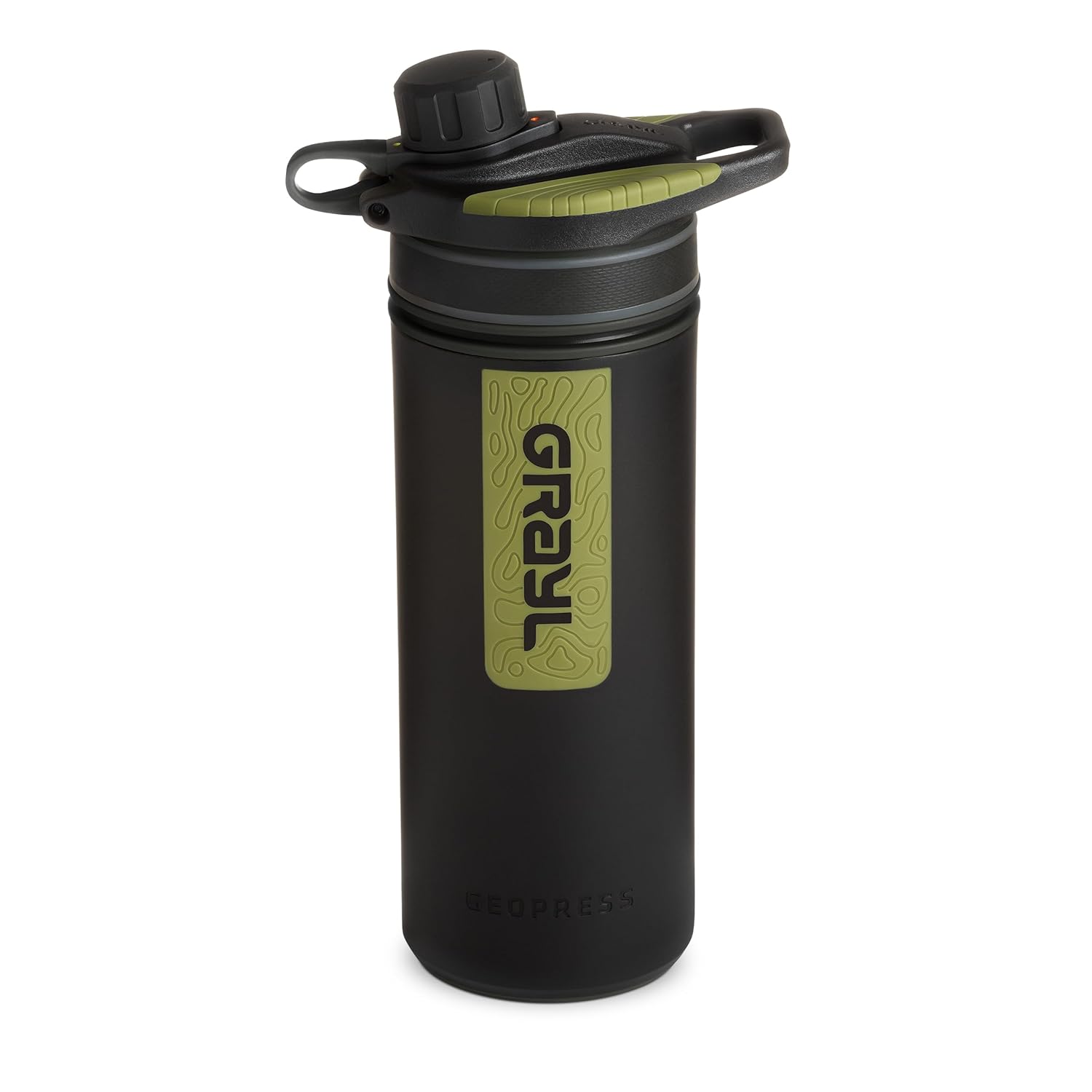
| Capacity | 24 fluid ounces |
|---|---|
| Purification Method | Electroadsorption, Activated Carbon |
| Maximum Flow Rate | 5 liters per minute |
| Supported Water TDS Level Maximum (PPM) | 300 |
| Product Shelf Life | 10 years |
The GRAYL GeoPress 24 oz is a self-contained water purifier bottle designed for hikers, backpackers, and travelers who need fast, reliable drinking water from natural sources. You fill the outer cup with source water, press the inner purifier cartridge through the liquid and in about 8 seconds the electroadsorption and activated carbon media remove viruses, bacteria, protozoa, particulates, and many chemicals and odors so the water is drinkable. Notable features include a RiverFlow spout for fast refilling or chugging, a one-way valve that lets you mix electrolytes or flavored drink mixes without fouling the filter, a SimpleVent cap to avoid cross-contamination, and SoftPress pads for comfortable pressing. The replaceable cartridge is rated for roughly 300 cycles (about 65 gallons) and the bottle disassembles for cleaning, which helps long-term field use. Trade-offs are its heavier pocket presence compared with ultralight squeeze filters and the cartridge eventual replacement cost, but for someone wanting true pathogen-level protection and near-instant flow, the GeoPress delivers a straightforward, low-fuss solution.
Best for: Backpackers and multi-day hikers who prioritize complete pathogen protection and fast, no-fuss water treatment on the trail.
Less Ideal for: Minimalist ultralight hikers focused on saving every ounce or day hikers who only need simple particulate filtration and want the lowest possible weight.
- Removes viruses, bacteria, and protozoa for pathogen-level protection
- Very fast purification — about 8 seconds (5 L/min) per 24 oz
- One-way valve allows electrolyte or flavored mix use without contaminating the filter
- Robust design that disassembles for cleaning and fits pack pockets or cup holders
- Heavier and bulkier than ultralight squeeze or straw filters
- Filter cartridge requires periodic replacement after rated cycles
Verdict: Choose the GeoPress if you want near-instant, pathogen-level purification in a simple press-and-drink bottle for backpacking and travel.
Katadyn Pocket Microfilter

| Purification Method | Ceramic |
|---|---|
| Power Source | Manual |
| Maximum Flow Rate | 1 liters per minute |
| Supported Water TDS Level Maximum (PPM) | 1000 |
The Katadyn Pocket Microfilter is a durable, manually powered ceramic hand-pump designed to remove bacteria and protozoa from untreated water while you are on the trail or in an emergency. You pump water through a cleanable ceramic cartridge that filters at roughly 1 liter per minute, making it suitable for solo or small-group use when you need a reliable flow without batteries. The ceramic element is rated for up to 13,000 gallons depending on source water and can be scrubbed to restore flow, which lengthens service life compared with disposable cartridges. It handles fairly turbid water when pre-filtered and tolerates up to 1000 ppm TDS, but very silty water will require frequent cleaning and slows pumping. The unit is compact and simple to operate, but being a manual pump it requires physical effort and is bulkier than some straw-style filters. For serious backcountry users who value proven durability and cleanability, this is a performance-focused choice; for ultralight or fast-and-light outings a lighter, lower-maintenance option may be preferable.
Best for: Backpackers and outdoor travelers who prioritize long-term reliability and the ability to clean and reuse a durable filter over minimizing weight.
Less Ideal for: Fast-and-light hikers, ultralight backpackers, or anyone who needs a purely grab-and-go filter that requires minimal physical effort or maintenance.
- Cleanable ceramic element restores flow and extends usable life
- High lifetime capacity rated up to 13,000 gallons depending on water quality
- Manual operation requires no batteries or electronics
- Filters bacteria and protozoa using microfiltration
- Requires manual pumping effort which can be tiring for large-volume needs
- Less compact and heavier than lightweight straw or ultralight filters
Verdict: Choose the Katadyn Pocket Microfilter if you want a proven, cleanable ceramic pump filter that delivers durable, performance-oriented filtration in the backcountry.
Sawyer MINI Water Filter SP128

| Purification Method | Hollow Fiber Membrane |
|---|---|
| Other Special Features | Removes bacteria, protozoa, and microplastics |
| Power Source | Manual Operation |
| Capacity | 100000 gallons |
| Upper Temperature Rating | 100 °F |
The Sawyer MINI is a palm-sized, lightweight personal filtration system built around a 0.1 micron hollow fiber membrane that removes bacteria, protozoa, and microplastics for safe drinking water on the trail. It ships with a 16-ounce squeeze pouch, a drinking straw, and a cleaning plunger, and can also attach to standard 28 mm disposable bottles or hydration pack tubing for multiple drinking options. The filter is manually operated and simple to use: fill the pouch or bottle, squeeze or drink through the straw, and backflush with the included plunger to restore flow. Its practical benefits are obvious for backpackers — nearly zero added weight, versatile connections, and a long rated life up to 100,000 gallons that eliminates the need to carry heavy treated water. Limits to consider are manual pumping/squeezing when flow slows and no chemical removal or active taste treatment, so very turbid water benefits from pre-filtering or settling first. For fast-and-light hikers who want durable, proven filtration without batteries or replacement cartridges, the MINI is an efficient, no-frills choice.
Best for: Buyers seeking a proven, ultralight personal filter for multi-day backpacking or travel who prioritize minimal weight, reliability, and flexible connection options.
Less Ideal for: People who need chemical or viral removal, want high continuous flow without any manual effort, or who regularly filter very turbid water without pre-filtering.
- Extremely lightweight and compact for backpacking
- 0.1 micron hollow fiber membrane removes bacteria, protozoa, and microplastics
- Multiple usage modes: squeeze pouch, straw, bottle attachment, or inline with hydration packs
- Includes cleaning plunger to backflush and maintain flow
- Manual operation requires squeezing or sucking and can slow with heavily silty water
Verdict: Choose the Sawyer MINI when you want the lightest, most versatile manual filter for reliable pathogen and microplastic removal on backpacking trips.
kiknek Survival Water Filter Straw

| Purification Method | Hollow Fiber Membrane |
|---|---|
| Filtration Rating | 0.1 micron |
| Capacity | 4000 liters |
| Power Source | Manual Operation |
| Supported Water TDS Level Maximum (PPM) | 1000 |
The kiknek Survival Water Filter Straw is a lightweight, manual straw-style purifier intended for drinking directly from rivers, lakes, and streams while hiking, camping, or during emergencies. It uses a 0.1 micron hollow fiber membrane to block bacteria and protozoa, and the unit requires no batteries or pumps—just place the straw in a freshwater source or a container and sip. The rated capacity is 4,000 liters, which makes it a long-lasting option for solo backpacking trips or to keep in a go-bag. Practical benefits include minimal weight and no setup, BPA-free materials, and lab-tested claims about microbial removal. Limitations are important: it is designed only for freshwater and does not remove salt, heavy metals, or chemical contaminants, and flow can slow with very cloudy water so pre-filtering turbid water may be needed. For routine backpacking use it performs as a simple, low-maintenance purifier but users expecting chemical or desalination performance will need a different solution.
Best for: Backpackers and solo hikers who prioritize low weight, simplicity, and long-lived microbial filtration for freshwater sources during trips and emergencies.
Less Ideal for: Anyone who needs treatment for seawater, chemical contamination, or heavy-metal removal should choose a purifier or filter with chemical adsorption or desalination capability instead.
- 0.1 micron hollow fiber membrane removes bacteria and protozoa
- Up to 4,000 liters of rated filtration capacity per unit
- Ready to use with no batteries or pumps, suitable for quick hydration on the trail
- Compact and lightweight for easy packing in backpacks or emergency kits
- Made from BPA-free, food-safe materials and lab tested
- Does not remove salt, heavy metals, or chemical contaminants
- Flow rate can decrease with very turbid water and may require pre-filtering
Verdict: If you want an inexpensive, ultra-light microbial filter for freshwater on backpacking trips, this straw delivers long-lasting, no-fuss protection.
LifeStraw Personal Water Filter

| Material Type | Plastic |
|---|---|
| Model Number | LSPHF038 |
| External Testing Certification | NSF |
| Product Benefits | Reduce Parasites,Removes Bacteria |
The LifeStraw Personal Water Filter is an ultralight, straw-style purifier designed for backpacking, travel, and emergency kits. You drink directly through the straw or use it to siphon from a container, and the hollow fiber microfilter blocks bacteria, parasites, microplastics, sand, and cloudiness so water from lakes, rivers, and streams is safer to drink. It is easy to use without pumps or chemicals, requires no batteries, and is small enough to tuck into a pack or glovebox. The filter lifespan is long for its size, rated to treat up to 4,000 liters with proper care, and it meets NSF/EPA testing standards for microbiological performance. Limitations are that it does not filter chemical contaminants or most viruses in all contexts, and it requires suction to draw water so very turbid or nearly empty sources need pre-filtering or filling a container first. For straightforward, reliable microbial protection on the trail, the LifeStraw delivers a compact, maintenance-light solution.
Best for: Backpackers and travelers who prioritize a proven, low-maintenance microbial filter they can depend on for straightforward drinking from lakes and streams.
Less Ideal for: People needing chemical or viral removal from water sources or users who want a pump or gravity system for high-flow drinking without suction.
- Ultralight and compact for backpacking and travel
- Microfilter certified to remove bacteria, parasites, and microplastics
- No batteries or pumps required, simple direct drinking use
- Long rated lifetime up to 4,000 liters with proper maintenance
- Does not remove chemical contaminants or reliably remove all viruses
- Requires suction or a filled container, making very turbid water less convenient
Verdict: Choose the LifeStraw when you want a proven, ultralight microbial filter that reliably turns surface water into drinkable water on the trail.
Sawyer Squeeze Filter SP303

| Purification Method | Hollow Fiber Membrane |
|---|---|
| Capacity | 2 liters |
| Power Source | Manual Operation |
| Included Components | Squeeze filter, 2L CNOC bladder, cleaning coupling, syringe |
The Sawyer Squeeze Filter SP303 is a compact, manually operated hollow-fiber membrane system designed for backpacking, travel, and emergency preparedness. You fill the included CNOC 2L bladder, attach the 0.1 micron Sawyer filter and squeeze clean water into a bottle or container, or use it in gravity mode for hands-free filtering. The hollow-fiber membrane removes bacteria, protozoa, cysts, sediment and microplastics while the stronger fiber walls allow aggressive backwashing so the filter is reusable and rated to last many thousands of gallons. The kit is very light (under 6 ounces) and comes with a cleaning coupling and syringe for straightforward maintenance in the field. Practical limitations are the manual squeeze operation which requires effort and a suitable pouch to draw from, and the system does not chemically treat viruses so it is best for typical freshwater sources where viral contamination is low or addressed separately. For hikers who value low weight, durability, and a proven reusable filter, this kit covers core needs with reliable clean-water output and easy field maintenance.
Best for: Backpackers and outdoor-minded users who prioritize proven, lightweight reusable filtration and want a system they can maintain in the field with confidence from other users' experience.
Less Ideal for: Travelers to regions with a high risk of viral contamination or users who need purely hands-free electric filtration without manual pumping or squeezing.
- 0.1 micron hollow-fiber membrane removes bacteria, protozoa, cysts, sediment and microplastics
- Includes 2L CNOC TPU bladder with wide mouth for fast filling
- Very lightweight and compact for backpacking (under 6 ounces)
- Reusable and cleanable with included cleaning coupling and syringe
- Manual squeeze operation requires physical effort and a compatible pouch for use
- Does not inactivate viruses without an additional treatment step
Verdict: A proven, ultralight reusable squeeze system that gives reliable field filtration and easy maintenance for risk-conscious backpackers.
Aquatabs 49mg Water Purification Tablets

| Tablet dosage | 49 mg per tablet |
|---|---|
| Pack count | 100 tablets |
| Water treated per tablet | 0.75–2 liters |
| Treatment time | 30 Minutes |
| Shelf life | 900 days |
Aquatabs 49mg tablets are compact chemical disinfectant tablets designed to make untreated water safe to drink when hiking, backpacking, or in emergencies. Use is simple: drop one tablet into 0.75–2 liters of water, wait about 30 minutes, and you get microbiologically safe water by killing bacteria, viruses, and cysts. The tablets are individually foil-sealed for long shelf life and light weight makes them easy to stash in a pack or a survival kit. Because they are a chemical treatment rather than a mechanical filter, they are especially handy for ultralight setups or when water sources are clear but may be biologically contaminated. Limitations: they do not remove sediment, heavy particulates, or chemical contaminants, and treated water can take the stated contact time before drinking. For cloudy water you may still want a prefilter or to pair these with a small filter system. Overall, Aquatabs are a reliable, low-weight backup for risk-averse hikers who want a proven disinfectant option for making water safe on the trail.
Best for: Hikers and backpackers who prioritize a lightweight, proven chemical disinfectant as a primary or backup method for treating biologically unsafe water on the trail.
Less Ideal for: Travelers or campers who frequently source very turbid or chemically contaminated water and need immediate, particulate-free drinking water without additional filtration.
- Proven broad-spectrum disinfection against bacteria, viruses, and cysts
- Individually foil-sealed tablets for long shelf life and easy portioning
- Very lightweight and compact for backpacking or emergency kits
- Does not remove sediment, particulates, or chemical pollutants
- Requires up to 30 minutes contact time before water is safe to drink
Verdict: A lightweight, long‑shelf‑life chemical disinfectant that reliably renders biologically unsafe water drinkable, making it an ideal backup or ultralight choice for cautious backpackers.
Choosing the Right Water Filter for Backpacking: Key Factors to Consider
Filtration Technology and Targets
Different backpacking filters use hollow-fiber membranes, ceramic elements, or pump-activated cartridges, and some incorporate chemical or activated-carbon stages. Know which pathogens and contaminants the design removes. Bacteria and protozoa are the most common biological concerns on trail; viruses are less common in most wilderness sources but may require a separate chemical treatment or specialized filter.
Understanding the target list matters because it determines whether a filter alone is sufficient for your itinerary. If you expect to encounter murky water with high sediment, prefer a system with prefiltering or a porous element that resists clogging. If taste and odor are concerns, activated carbon stages can reduce organic compounds and improve palatability.
Flow Rate and Real-World Throughput
Flow rate determines how long you spend waiting for water and how practical a filter is for groups. Pumps and gravity filters often offer faster throughput but are usually heavier. Straw-style or inline filters are lighter and ideal for solo use but generally deliver lower instantaneous flow.
Also consider how flow changes with sediment load. Some filters maintain a steady flow with simple backflushing or scrubbing, while others slow dramatically and require replacement. Evaluate expected daily water needs and whether the filter's throughput makes collecting enough water during common resupply breaks feasible.
Weight, Size, and Pack Integration
Every extra ounce matters when backpacking. Filter systems vary from ultralight inline elements to heavier pump units with robust housings. Think about how you will carry the filter: clipped to a pack, stashed inside a hip-belt pocket, or nested with cook and water gear.
Additionally, consider packed volume. Bulky systems can be awkward inside a small backpack or when you are trying to balance gear for long mileage days. If you plan technical or fastpacking routes, prioritize low weight and minimal bulk even if that means accepting slower flow or more frequent maintenance.
Maintenance and Field Serviceability
Backpacking filters exposed to grit and algae will need cleaning. Systems that allow simple field backflushing, element replacement, or scrubbing with a soft brush extend usable life and reduce the need to carry spare parts. Filters that require complex tools or hard-to-find replacement cartridges are less practical for remote trips.
Consider how easy it is to disassemble and reassemble the unit in a campsite or shelter. Some lightweight designs do not permit in-field cleaning and rely on disposable cartridges, which increases waste and the need to carry spares.
Durability and Materials
Trail conditions expose gear to drops, freezing temperatures, and abrasion. Durable housings, reinforced tubing, and robust connectors reduce the chance of failure far from help. For long-term ownership, a filter built from impact-resistant plastics or stainless components can be more reliable than fragile assemblies.
Also weigh resistance to freezing if you hike in shoulder seasons. Water left in a narrow-bore filter can freeze and rupture elements; systems that drain fully or are rated for lower temperatures are better choices in cold weather.
Compatibility With Hydration Systems
You may want to attach a filter directly to a hydration reservoir, water bottle, or use it between a source and a container. Check whether the filter accepts common bottle threads, has adapters for hydration bladders, or can be used inline with a drinking tube. Ease of integration reduces the number of parts you must carry and speeds up water collection.
If you frequently switch between containers, choose a unit with versatile fittings or widely available adapters so you do not need to improvise on trail.
Choosing a Filter Style That Fits Your Trip
Filter styles fall into a few practical categories: straw/inline elements for minimal-weight solo use, pump filters for higher throughput and heavy sediment, and gravity systems for hands-off group water treatment. Each style addresses different priorities on trail. For ultralight solo hikers, a compact inline filter or purifier straw minimizes carry weight and speeds access to water. For groups or basecamp setups, a gravity filter lets you fill once and collect multiple liters without constant pumping.
Match the style to trip length, group size, and typical water sources. Short day hikes usually do not require a large system, whereas multi-day group treks benefit from faster throughput and larger capacity.
- Straw/inline: minimal weight, immediate drinking, lower throughput
- Pump: higher flow, handles sediment, more weight
- Gravity: hands-off, good for groups, bulkier
How to Reduce Clogging and Extend Element Life
Preventing clogging starts with source selection and basic prefiltering. Scoop water from clearer flow areas, avoid silty shallows, and let sediment settle if possible. Some filters include a screw-on prefilter or a separate cloth prefilter that dramatically extends element life by catching large particles.
On the trail, follow recommended cleaning routines such as backflushing after heavy use and drying components between trips. Carry a small squeeze bottle for backflushing and a soft brush to clear visible debris. Regular maintenance preserves flow rate and reduces the chance you will need to replace the element mid-trip.
- Use a bandana or mesh prefilter for turbid sources
- Backflush regularly according to the manufacturer guidance
- Dry and store elements to prevent biofilm and freeze damage
Safety Practices When Filtering Backcountry Water
Even the best filtration approach depends on good field practice. Always assume upstream sources may be contaminated by wildlife or runoff after rain. When in doubt, filter and then treat with a short chemical or UV step if viral contamination is a concern. Boiling is an effective fallback but adds fuel and time costs.
Be cautious about cross-contamination. Keep clean containers separate from dirty intake parts, avoid touching filter inlets with gloved or dirty hands, and sanitize mouthpieces and caps between uses. Inspect seals and O-rings before departure and carry spares for small parts that are critical to maintaining a sealed system.
- Prefer flowing water over stagnant ponds when possible
- Use secondary treatment in areas with potential viral risk
- Carry spare O-rings or adapters for long trips
Packing and Weight-Saving Tips
Integrate your water filter into a broader lightweight system. Carry only the fittings you use and remove optional bulk like extra tubing or large prefilter bags unless needed. For fastpacking, consider a minimal inline element that attaches to your bladder or bottle to reduce hands-on water chores.
Balance the tradeoff between weight and convenience. A slightly heavier pump can save hours of hand-pumping on a group trip, while an ultralight straw is ideal for solo day hikes where every gram counts.
- Choose multipurpose components to reduce redundancy
- Trim unused tubing or carry it inside a dry bag to avoid snags
- Select collapsible containers that nest with other pack items
Winter and Cold-Weather Considerations
Cold conditions pose special challenges. Water and internal tubing can freeze, damaging elements and blocking flow. If you expect freezing temperatures, choose a filter that drains fully or that you can keep warm close to your body while moving. Some components are rated to tolerate light freezing but prolonged exposure will shorten life.
Plan to treat and store filtered water in insulated containers and to perform maintenance indoors when possible. Carry replacement parts or an emergency chemical treatment method as insurance against freeze-related failures.
- Drain filters completely before overnight below-freezing stops
- Keep elements insulated in a jacket pocket when not in use
- Bring chemical treatment as backup in extreme cold
How We Chose the Best Water Filter for Backpacking
We focused on features that make a water filter dependable and convenient in backcountry conditions. Key evaluation criteria included filtration efficacy against bacteria, protozoa, and common chemical or particulate contaminants; flow rate under realistic use and after sediment exposure; weight and packed volume for multi-day carry; durability and construction for repeated use in rough conditions; ease of cleaning and field maintenance to sustain performance on long trips; and compatibility with common hydration systems and containers used by backpackers. Units were excluded if they were primarily designed for household or stationary use, excessively heavy for backpacking, or lacked clear contaminant removal claims relevant to wilderness sources. We prioritized designs with straightforward maintenance, proven mechanical filtration methods, or reliable chemical treatment integration. The choices reflect what matters most on trail: fast usable flow, consistent pathogen reduction, low carry burden, and simple upkeep so a filter remains effective across a trip.
Our full evaluation process is outlined in our review methodology.
FAQ
Do I need a filter that removes viruses when backpacking?
Virus risk in most wilderness water sources is low compared with bacteria and protozoa. However, if you expect to use water near populated areas, downstream of human activity, or in regions with known viral outbreaks, consider a filter plus chemical treatment or a purifier rated for viruses.
How often should I backflush my backpacking filter?
Backflush frequency depends on source turbidity and use intensity. For clear water, occasional backflushing after a few days of use is often sufficient. For silty or algae-prone sources, backflush after each heavy session to maintain flow and extend element life.
Can I use a backpacking filter to fill a hydration bladder?
Yes. Many filters accept common bottle threads or include adapters for hydration reservoirs. Inline options can connect directly to a drinking tube to simplify on-the-go drinking. Confirm compatibility with your bladder fittings before relying on a specific setup.
What is the expected lifespan of a typical backpacking filter element?
Lifespan varies widely by technology and source quality. Hollow-fiber elements can last for hundreds of liters with proper maintenance, while some cartridge-based systems may require replacement after tens to low hundreds of liters. Regular cleaning and prefiltering extend usable life.
Is gravity filtration worth the extra weight for solo hikers?
Gravity systems add weight and bulk but provide hands-off high throughput, which is valuable for groups or basecamp use. For solo hikers focused on low weight and speed, lightweight inline or straw filters are usually a better fit unless you need to treat large volumes at once.
Final Verdict
Selecting the right water filter for backpacking means balancing filtration capability, flow speed, and the weight you are willing to carry. Prioritize filtration targets that match the water sources you expect to use and choose a style that fits your group size and trip pace. Durable construction and simple field maintenance are especially important for multi-day trips. In short, pick the lightest system that reliably removes the contaminants you are likely to encounter, and favor units that are easy to clean and integrate with your hydration setup. That approach minimizes risk and maximizes time on trail without frequent water hassles.