
Note: This article contains affiliate links. If you click on these links and make a purchase, we may earn a small commission at no extra cost to you. This helps support our research and content. Read our full affiliate disclosure here.
When you are heading into the backcountry or a weekend car-camping trip, having a dependable water filter for camping can be the difference between safe hydration and avoidable risk. Filters designed for outdoor use remove pathogens and particulates while keeping your pack weight manageable and flow rates practical for filtering multiple liters. This guide presents seven shortlisted water filters for camping chosen for real-world use, from solo-hiker setups to family outings. We evaluate filtration effectiveness, flow and throughput, weight and packability, and ease of use so you can pick the right tool for your typical trips. Read on to see the top picks and which features matter most for your next outing.
Top Picks at a Glance
| Best Overall The best all-around choice for most situations | Katadyn Hiker Pump-Action Filter |  |
| Best Quality Built to a higher standard if you want something more solid | MSR Guardian Purifier |  |
| Best Value The sweet spot between price and what you get | Sawyer MINI Water Filter SP128 |  |
| Best Budget The cheapest option that still gets the job done reliably | Waterdrop Filter Straw WD-FSBU |  |
| Top Rated A top-rated pick with lots of positive feedback | LifeStraw Personal Water Filter |  |
| Most Popular A crowd favorite that many people choose with confidence | Camco Tastepure RV Water Filter |  |
| Best Seller A high-volume bestseller chosen again and again | Aquatabs Water Purification Tablets |  |
Katadyn Hiker Pump-Action Filter

| Purification Method | Activated Carbon |
|---|---|
| Power Source | Manual |
| Maximum Flow Rate | 0.95 liters per minute |
| Capacity | 750 liters |
| Supported Water TDS Level Maximum (PPM) | 500 |
The Katadyn Hiker is an 11 oz pump-action microfilter intended for backpacking and camping where you need dependable, battery-free water treatment. You pump water from streams, ponds, or lakes through a microfilter membrane that screens out sediment and fine particles, delivering a steady flow (rated about 0.95 L/min) on demand. Its field-cleanable element and simple hand-pump operation make it easy for anyone in a group to use and maintain without tools, and the kit includes intake/output hoses, a prefilter, and a bottle adaptor for convenient collection. This model forgoes an activated carbon stage, so it focuses on particulate removal rather than improving taste or reducing chemical contaminants. It is rated for water with up to 500 ppm TDS and is approved by Backpacker Magazine for long-distance use, making it a lighter alternative to more feature-rich variants. Expect solid mechanical reliability and straightforward upkeep, but plan to combine it with chemical or other treatments if viruses or dissolved contaminants are a concern.
Best for: Backpackers and campers who prioritize low weight, reliable manual operation, and a field-serviceable filter for treating particulate-laden backcountry water.
Less Ideal for: Expedition cooks, international travelers, or groups needing chemical or viral removal and taste improvement should choose a system with carbon or additional purification stages.
- Very lightweight and portable for long-distance backpacking.
- Manual pump provides consistent flow without batteries or electricity.
- Field-cleanable microfilter element simplifies maintenance on the trail.
- Includes hoses, prefilter, bottle adaptor, and carrying bag for versatile use.
- No activated carbon stage so it does not improve taste or remove certain chemicals.
- Microfilter does not claim viral removal, so additional treatment may be required in some regions.
Verdict: A lightweight, field-cleanable pump microfilter built for hikers who need dependable, battery-free particulate filtration on long backcountry trips.
MSR Guardian Purifier
| Purification Method | Activated Carbon, Hollow Fiber Membrane |
|---|---|
| Maximum Flow Rate | 2.5 liters per minute |
| Capacity | 10000 liters |
| Power Source | Manual |
| Supported Water TDS Level Maximum (PPM) | 1000 |
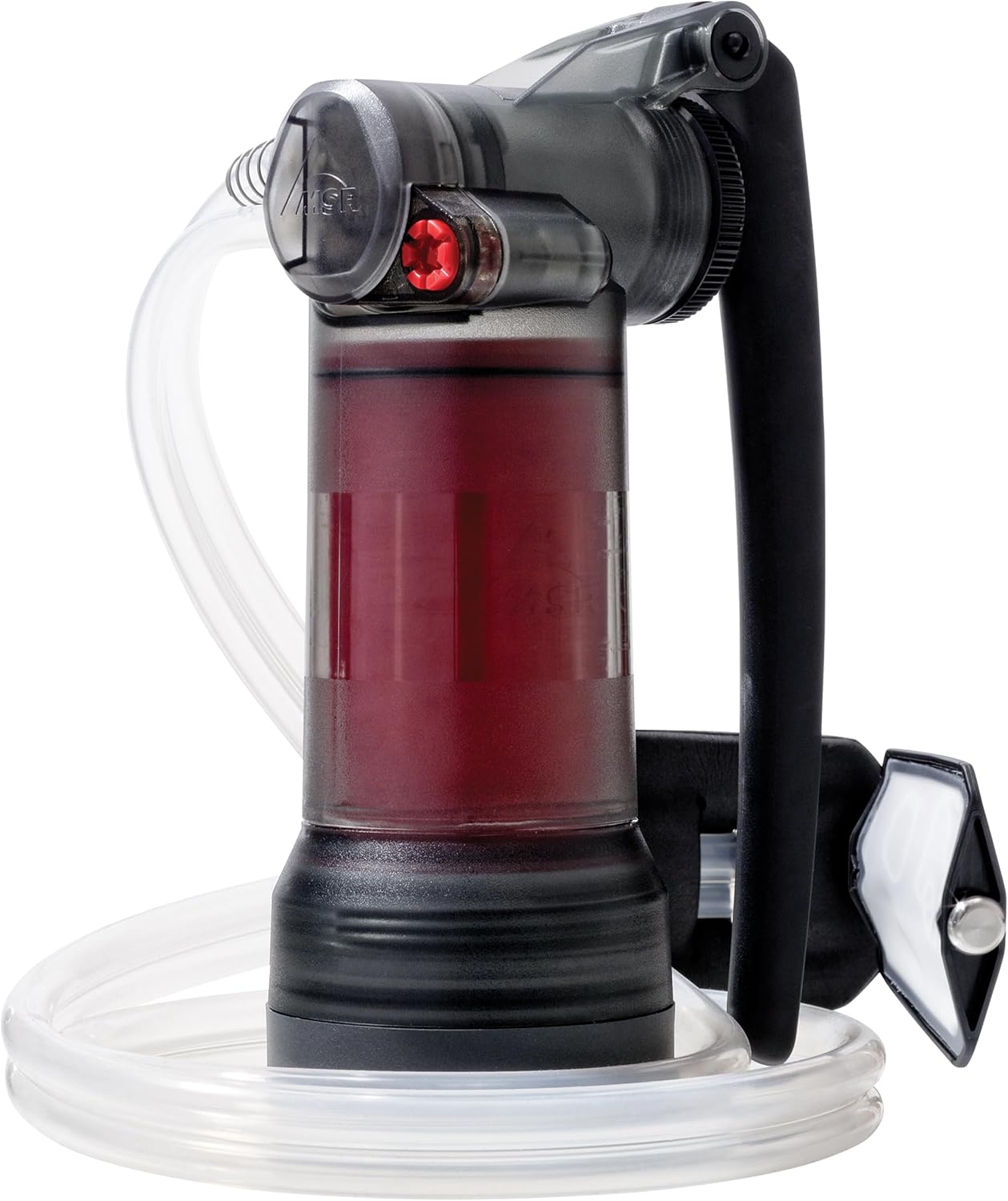
The MSR Guardian is a heavy-duty, manual purifier pump built for demanding field use where performance matters. It uses hollow-fiber membrane and activated carbon to meet NSF P248 testing standards, so it handles viruses, bacteria, protozoa, and sediment that many backpacking filters cannot. In practice the pump delivers a fast 2.5 liters per minute and self-cleans on every stroke, which keeps flow steady without backflushing or fiddly maintenance. The unit is rated to treat up to 10,000 liters and is constructed to withstand freezing, drops, and sustained heavy use, making it suitable for multi-day trips, group use, or emergency caches. The included storage bag with a PFAS-free DWR keeps the system protected and transportable. The main compromises are weight and cost compared with ultralight microfilters: at roughly a pound it is heavier than simple straw filters, and its robust design and military-grade testing put it at the higher end of purifier options. For anyone prioritizing proven pathogen removal and sustained high flow in the outdoors, the Guardian delivers reliable, low-maintenance performance.
Best for: Buyers who need a proven, high-performance purifier for group trips, international travel, or emergency preparedness and prioritize complete pathogen protection and steady flow over minimum weight.
Less Ideal for: Light-and-fast day hikers or solo backpackers who need the lightest possible filter or have a tight gear weight budget should consider lighter microfilters or straw-style filters instead.
- Military-grade NSF P248 testing for removal of viruses, bacteria, protozoa, and sediment
- High flow rate up to 2.5 liters per minute with self-cleaning pump action
- Long service life rated to treat up to 10,000 liters
- Rugged construction designed to resist freezing, drops, and heavy use
- Heavier and bulkier than ultralight microfilters
- Higher upfront cost compared with basic gravity or straw filters
Verdict: Choose the MSR Guardian when you want a rugged, fast, military-tested purifier that removes viruses and other pathogens for high‑stakes backcountry trips or emergency use.
Sawyer MINI Water Filter SP128

| Purification Method | Hollow Fiber Membrane |
|---|---|
| Other Special Features of the Product | Removes bacteria, protozoa, and microplastics |
| Power Source | Manual Operation |
| Capacity | 100000 gallons |
| Upper Temperature Rating | 100 °F |
The Sawyer MINI is a pocket-sized squeeze/filter system built for lightweight outdoor use and emergency prep. It filters water through a 0.1 micron hollow fiber membrane, removing bacteria, protozoa and microplastics, and can be used several ways: attached to the included 16-ounce pouch, screwed onto standard 28 mm disposable bottles, connected inline to hydration pack tubing, or used as a straw to drink directly from a source. The unit is hand-operated so it needs squeezing or bottle pressure to produce flow, and it includes a small cleaning plunger to maintain output. Its rated life is long at up to 100,000 gallons, making it a durable option for repeated outings, while the tiny weight and compact shape make it easy to stash in a pack. Expect slower flow compared with pump or gravity systems and occasional backflushing for peak performance, but for hikers and travelers who prioritize low weight, proven pathogen removal, and flexible attachment options, the MINI is a practical, reliable choice.
Best for: Buyers who want a proven, ultra-lightweight water filter for day hikes, backpacking, travel, or emergency kits and prioritize low weight and long service life over high flow rates.
Less Ideal for: Users who need rapid high-volume filtration for groups or basecamp cooking should choose a pump or gravity system instead.
- 0.1 micron hollow fiber membrane removes bacteria, protozoa, and microplastics
- Extremely lightweight and compact for easy pack storage
- Multiple use modes: squeeze pouch, bottle attachment, straw, or inline to hydration packs
- Rated up to 100,000 gallons for long service life
- Includes cleaning plunger to restore flow
- Manual squeeze operation delivers slower flow than pumps or gravity filters
- May require regular backflushing to maintain performance
Verdict: Choose the Sawyer MINI when you need a proven, ultra-light, versatile personal filter that delivers medical-grade filtration on the trail.
Waterdrop Filter Straw WD-FSBU

| Purification Method | Hollow Fiber Ultrafiltration Membrane |
|---|---|
| Maximum Flow Rate | 700 milliliters_per_minute |
| Supported Water TDS Level Maximum (PPM) | 300 |
| Capacity | 1400 gallons |
| Power Source | Non Electric |
The Waterdrop Filter Straw is a lightweight, pocket-sized purifier designed for hiking, camping, travel and emergency preparedness. It uses a hollow fiber ultrafiltration membrane combined with coconut shell activated carbon to reduce particulates, chlorine, bad taste and odors while providing a claimed lifespan of up to 1,400 gallons. You drink directly through the straw or connect it to compatible water bags and threaded bottles, and the unit supports a relatively fast flow up to 700 ml per minute for quick sips. It is non-electric and includes a backwashable mouthpiece that lets you flush the membrane to clear reduced flow and extend usable life. Practical benefits are portability, long advertised capacity, and simple maintenance without tools. Limitations to note are that it is intended for microbiological and taste/particulate reduction and does not replace full treatment for chemical contamination beyond its specified TDS limit, and real-world lifespan depends on water quality and maintenance.
Best for: Campers and travelers on a tight budget who need a lightweight, no-power water purifier for safe drinking water in the backcountry or emergency kits.
Less Ideal for: Users who require certified removal of specific industrial or chemical pollutants or who prefer filters with long manufacturer warranties and replaceable cartridge programs.
- Hollow fiber ultrafiltration plus activated carbon removes particulates, chlorine, taste and odor
- Rated for up to 1,400 gallons lifespan under recommended use
- Fast maximum flow rate of 700 ml per minute for easier drinking
- Backwashable mouthpiece helps clear blockages and extend service life
- Not designed to remove all chemical contaminants beyond its supported TDS limit
- 30-day limited warranty is short compared with some filters
Verdict: An affordable, portable straw filter that delivers fast, backwashable microfiltration for budget-minded campers and emergency kits.
LifeStraw Personal Water Filter

| Model Number | LSPHF038 |
|---|---|
| Material Type | Plastic |
| External Testing Certification | NSF |
| Product Benefits | Reduce Parasites,Removes Bacteria |
The LifeStraw Personal Water Filter is an ultralight straw-style purifier designed for hiking, camping and emergency use that lets you drink directly from lakes, streams or containers. It uses a microfiltration membrane tested to EPA and NSF protocols to block bacteria, protozoan parasites and microplastics while reducing cloudiness, and it can produce up to 4,000 liters of water with proper care. Typical use is simple: place the straw in a water source and sip, or fill a bottle and draw through the LifeStraw; no batteries, pumps or chemicals are needed. The plastic housing keeps weight minimal and the straw is easy to pack in a daypack or survival kit. Important limitations are that it does not remove chemical contaminants or viruses and you must avoid freezing or crushing the filter to maintain performance. For campers who prioritize proven, maintenance-light microbial protection and minimal carry weight, the LifeStraw is a dependable go-to option.
Best for: Campers and hikers who want a proven, maintenance-light microbial filter to drink directly from streams or to purify water in a simple survival kit.
Less Ideal for: Users needing removal of chemicals, metals, or viral-level protection or those who prefer hands-free pump or gravity-filter systems for group use.
- Removes bacteria and parasites down to tested EPA/NSF standards for microbial protection
- Ultralight, compact straw design that packs easily in a backpack or emergency kit
- Long rated lifetime up to 4,000 liters (1,000 gallons) with proper use
- No batteries, chemicals, or pumps required for operation
- Does not remove chemical pollutants, heavy metals, or reliably filter viruses
- Sensitive to freezing and physical damage which can impair filtration
Verdict: Buy this if you need a lightweight, lab-tested microbial filter that delivers reliable, no-fuss drinking water on solo hikes and in emergency kits.
Camco Tastepure RV Water Filter

| Material Type | Polypropylene (PP) |
|---|---|
| Model Number | 40043 |
| External Testing Certification | NSF/ANSI 42, NSF/ANSI 53, NSF/ANSI 372 |
| Included Components | Adapter |
The Camco Tastepure RV Water Filter is an inline hose filter designed to give campers and boaters cleaner, better-tasting water straight from campground or shore hookups. It installs between a standard garden or drinking-water hose and the supply, and its wide-body, high-flow design keeps water pressure while filtering. The unit uses a six-step Hex-Flow system with GAC media and KDF to reduce chlorine, bad tastes and odors, trap 20-micron sediment, and inhibit bacterial and mold growth when idle. Built-in NSF/ANSI 42, 53 and 372 listings and American manufacture back up its performance and lead-free claim. Practical bonuses include a flexible hose protector that prevents kinks and reduces strain on fittings. Limitations are its inline disposable cartridge format, which will require periodic replacement, and the filter is sized for typical outdoor hookups so it is not a whole-home solution. For campsite use it balances flow and filtration well and gives confident, certified contamination reduction for drinking water on the road.
Best for: Campers, boaters, and pet owners who prioritize certified, easy-to-install filtration for campsite water and want social-proof confidence from widely used, well-reviewed products.
Less Ideal for: People seeking whole-house filtration or long-term municipal water treatment should choose a system designed for larger volume or continuous home use.
- Multi-stage Hex-Flow filtration including GAC and KDF for chlorine, taste and odor reduction
- NSF/ANSI 42, 53 and 372 listings and lead-free certification
- Wide-body, high-flow design preserves water flow at campground hookups
- Includes flexible hose protector to prevent kinks and relieve strain on connections
- Requires periodic replacement of the inline cartridge
- Not intended as a whole-home or long-term municipal filtration system
Verdict: A certified, high-flow inline RV filter that reliably improves campground water taste and safety while staying simple to install and use.
Aquatabs Water Purification Tablets

| Tablet strength | 49mg |
|---|---|
| Pack count | 30 |
| Treatment time | 30 minutes |
| Volume treated per tablet | 0.75–2 liters |
| Supported water TDS max | 1000 ppm |
Aquatabs are single-dose water purification tablets designed to kill bacteria, viruses, and cysts in untreated water, making them a lightweight, no-equipment way to get safe drinking water while camping. To use, drop one 49mg tablet into about 0.75 to 2 liters of water, stir or shake, and wait roughly 30 minutes for the halogen-based chemical to disinfect. They are EPA registered and NSF/ANSI 60 certified, which supports reliability for emergency and outdoor use, and they leave little to no unpleasant taste compared with iodine alternatives. The tablets are compact and low-weight, so they are easy to carry in a backpack, survival kit, or first aid pack. Important limitations are that they do not remove sediment or improve turbidity, so severely cloudy water benefits from pre-filtering, and each tablet treats only a small volume so larger groups or extended trips require carrying many tablets. For campers who want a proven, lightweight disinfection backup, Aquatabs provide a dependable, space-saving solution.
Best for: Campers and travelers who prioritize a proven, low-weight, chemical disinfection backup for unsafe water sources and want certified pathogen removal without bulky gear.
Less Ideal for: People who need filtration for very cloudy or sediment-heavy water or those who prefer a reusable mechanical filter that treats large volumes without repeated consumables.
- EPA registered and NSF/ANSI 60 certified for pathogen reduction
- Fast-acting 30-minute treatment time
- Compact, lightweight single-dose tablets that are easy to carry
- Does not leave the strong taste associated with iodine treatments
- Does not remove sediment or turbidity, so pre-filtering is needed for cloudy water
- Each tablet treats only 0.75–2 liters, requiring many tablets for groups or long trips
Verdict: A compact, certified chemical disinfectant you can pack as a lightweight, reliable backup for safe drinking water on camping trips.
Choosing the Right Water Filter for Camping: Key Factors to Consider
Filtration Method and Rated Pore Size
The underlying filtration method determines which contaminants are removed. Mechanical microfilters with sub-micron pore sizes are typically effective against protozoa and many bacteria. Chemical or activated-carbon stages reduce tastes, odors, and some organic chemicals but usually do not stop microbes on their own.
Pay attention to the rated pore size and any third-party certifications. Smaller pore sizes generally mean better protection from microbes, but extremely fine filters can clog faster in turbid water. For typical camping use, systems that combine mechanical filtration with carbon polishing strike a practical balance between protection and taste.
Flow Rate and Total Throughput
Flow rate affects how long you spend filtering at camp or on the trail. Fast-flowing pumps and squeeze filters save time but may be heavier or require more effort. Conversely, very slow filters are frustrating for groups and increase overall trip time.
Total throughput is the expected lifetime volume before performance drops or the element needs replacement. High-throughput filters are better for multi-week trips or when filtering water for multiple people. Consider both the per-minute flow and the lifetime liters to match your trip length and group size.
Weight, Size, and Packability
Pack weight is critical for backpackers and section hikers. Ultralight filters often sacrifice some convenience features or throughput to save grams. Bulkier systems can be fine for car camping or short walks from the trailhead but are impractical for multi-day minimalist trips.
Also consider how the filter stows in your pack and whether it nests with bottles or hydration bladders. Collapsible bags and integrated connectors reduce packed volume and make setup faster at water sources.
Ease of Use and Field Maintenance
Filters that are simple to operate and clean reduce the chance of user error and downtime on the trail. Look for straightforward assembly, intuitive connectors, and accessible components for backflushing or scrubbing. Some designs let you clean the element with a simple backflush or brush in the field; others require replacement cartridges.
If you expect to be filtering turbid water, prioritize filters with an easy field-clean procedure. Tools that require bench maintenance or specialized chemicals are less practical in remote settings.
Compatibility With Bottles and Hydration Systems
Versatile connectors let you attach a filter directly to common water bottles, hydration bladders, or provide inline compatibility with hydration tubes. This versatility saves time and reduces the need to transfer water between containers.
Check thread types and included adapters. A filter that works with standard wide-mouth bottles or provides multiple adapter options will be more convenient across different pack setups.
Durability and Replacement Parts
Rugged construction and availability of replacement cartridges or seals determine long-term value. Camping exposes gear to drops, dirt, and freezing temperatures, so materials and build quality matter. Metal-bodied pumps and reinforced housings last longer but can weigh more.
Consider whether replacement elements are common and easy to acquire. Filters with widely available cartridges or standardized fittings simplify mid-trip repairs and keep the unit serviceable for years of outings.
Squeeze, Straw, Pump, or Gravity: Choosing the Right Format
There are several common formats for camp filters, and the best choice depends on trip style. Squeeze and straw filters are compact and fast for solo or ultralight hikers. Pump filters deliver steady flow and can handle dirtier water but are bulkier and require manual pumping. Gravity systems are convenient for groups at base camp but are usually too large for long backpacking trips.
Think about how you plan to use the filter. If you need quick refills while on the move, a straw or inline filter with a hydration pack connection makes sense. For group cooking and cleaning, a gravity bag at camp reduces repeated effort.
- Squeeze filters: light, fast, need clean source water
- Straw filters: instant drinking, minimal setup
- Pump filters: handle turbid sources, higher throughput
- Gravity filters: best for groups and basecamp convenience
Field Cleaning and Backflushing Techniques
Proper field cleaning extends filter life and maintains flow. Many filters support a backflush procedure that reverses water through the element to dislodge trapped sediment. Carrying a small brush and following the manufacturer-recommended routine can prevent clogs on long trips.
When backflushing is not possible, letting turbid water settle and pre-filtering through a bandana or coffee filter reduces sediment load. Avoid freezing wet filters and follow drying recommendations to prevent mold and damage.
- Backflush after heavy use to restore flow
- Pre-filter turbid water to reduce clogging
- Keep spare O-rings or seals for pump-style units
Matching Filter Choice to Trip Length and Group Size
Short solo trips usually benefit from the lightest possible option with decent flow. Day hikers and ultralighters often prefer straw-style filters or small squeeze filters. For multi-day trips or larger groups, prioritize higher throughput and easier maintenance to avoid wasted time filtering.
Car camping or family outings can use larger-capacity gravity systems for hands-off operation. Consider how many liters per day you will need and choose a filter with adequate lifetime throughput to match that demand.
- Solo backpacking: prioritize weight and compactness
- Group trips: prioritize throughput and ease of use
- Car camping: convenience and capacity matter more than weight
Taste and Chemical Treatment Options
Mechanical filters remove particulates and many microbes but may not address dissolved chemicals, algae byproducts, or strong tastes. Integrated activated-carbon stages or separate chemical treatments improve taste and reduce odors. If you frequently encounter sources with chlorine, agricultural runoff, or noticeable organic tastes, consider a system with carbon polishing or plan to use water-treatment tablets as a secondary step.
Chemical treatments kill viruses and some bacteria that mechanical filters might miss, but they can take time to work and may impart a taste. Combining filtration with chemical or UV treatment is a valid strategy for the most comprehensive protection when needed.
- Carbon stages improve taste and remove some chemicals
- Chemical treatments can add viral protection when necessary
- UV devices add broad-spectrum microbial inactivation but need power
Storage, Spare Parts, and Long-Term Care
How you store and care for a filter between trips affects performance. Rinse and dry filter elements thoroughly before packing to avoid mold, and store replacement cartridges in a cool, dry place. Carrying a small repair kit with spare O-rings, tubing, and connectors can save a trip if a seal fails in the field.
Plan for end-of-season maintenance and know the expected replacement schedule for cartridges. Regular inspection for cracks, brittle tubing, or worn threads prevents failures during a trip.
- Dry filters completely to prevent mold
- Pack spare seals and connectors for long trips
- Inspect parts seasonally and replace worn elements
How We Chose the Best Water Filter for Camping
We focused on practical, field-oriented criteria that matter when you rely on a water filter for camping. First, filtration effectiveness: we prioritized methods and pore sizes proven to reduce bacteria, protozoa, and common particulates found in natural sources. Second, flow and throughput: a filter that is too slow or clogs quickly becomes unusable on multi-day trips, so we favored designs and materials that sustain reasonable liters-per-minute rates and total throughput. Third, weight and packability: every ounce matters for backpacking, so compact, lightweight systems scored higher. Fourth, ease of use and maintainability: filters that are easy to set up, backflush, or clean in the field reduce downtime and frustration. Fifth, durability: rugged housings and replaceable elements extend service life for repeated trips. We excluded gravity-only systems that are impractically large for backpacking and devices that rely on ambiguous or unverified filtration claims. Units that require uncommon consumables or specialized power sources were also filtered out. The final list balances pathogen reduction, user ergonomics, field maintenance, and overall suitability across different camping styles.
Our full evaluation process is outlined in our review methodology.
FAQ
Do water filters for camping remove viruses?
Most mechanical microfilters do not reliably remove viruses because viruses are much smaller than bacteria and protozoa. For viral protection, use a chemical treatment, a UV purifier, or a filter specifically rated for viral reduction.
How often should I backflush my filter in the field?
Backflush frequency depends on source turbidity and use. For very murky water, backflush after each liter or every time flow noticeably drops. For clear sources, backflushing after a day of use is often sufficient.
Can I use a camping water filter in freezing temperatures?
Freezing can damage filter elements and housings. Avoid leaving filters with water inside exposed to freezing conditions. If you must operate in cold weather, keep the unit insulated and dry it thoroughly after use.
Is activated carbon necessary in a camping filter?
Activated carbon is not strictly necessary for microbial safety but improves taste and removes some organic chemicals and odors. If water taste is a concern or you frequently draw from sources with runoff, a carbon stage is helpful.
What should I carry as backup in case my filter fails?
Carry a compact chemical treatment kit or water-purifying tablets and a small collapsible bottle as backup. These options are lightweight and can serve as emergency viral or bacterial protection if a mechanical filter becomes unusable.
How do I know when to replace the filter cartridge?
Replace cartridges when flow declines despite cleaning, when the manufacturer-stated throughput is reached, or when the element is physically damaged. Keeping track of liters filtered and observing performance trends helps time replacements.
Final Verdict
Choose a water filter for camping by matching its format and capabilities to your typical trips. Prioritize filtration effectiveness for safety, then balance flow rate and total throughput against weight and packability. Give extra weight to ease of field maintenance if you will be filtering turbid water frequently. With these tradeoffs in mind, pick the simplest system that meets your protection needs and travel style to keep your hydration routine reliable on the trail.