
Note: This article contains affiliate links. If you click on these links and make a purchase, we may earn a small commission at no extra cost to you. This helps support our research and content. Read our full affiliate disclosure here.
Hard water with high calcium can leave scale on fixtures, clog appliances, and make water taste flat. Choosing the right water filter for calcium helps protect plumbing, extend appliance life, and improve water quality for drinking and cooking. This guide highlights the top shortlisted water filters specifically aimed at calcium reduction and scale control, and it explains the features and tradeoffs that matter during selection. Below are our top picks and the evaluation criteria we used, followed by detailed buying factors, practical installation and maintenance notes, and answers to common homeowner questions.
Top Picks at a Glance
| Best Overall The best all-around choice for most situations | 3M Aqua-Pure AP430SS |  |
| Best Quality Built to a higher standard if you want something more solid | iSpring RCC7AK-BN RO System |  |
| Best Value The sweet spot between price and what you get | Waterdrop WD-15UA Under Sink Filter |  |
| Best Budget The cheapest option that still gets the job done reliably | AQUA CREST RV Inline Water Filter |  |
| Top Rated A top-rated pick with lots of positive feedback | Waterdrop Lucid Pitcher WD-PT-07B |  |
| Most Popular A crowd favorite that many people choose with confidence | ZeroWater 22-Cup Ready-Read Dispenser |  |
| Best Seller A high-volume bestseller chosen again and again | Aquabliss Revitalizing Shower Filter SF100 |  |
3M Aqua-Pure AP430SS

| Flow rate | Up to 10 gpm |
|---|---|
| Connections | 3/4" NPT inlet/outlet |
| Included components | Head and Cartridge |
| Material Type | Polypropylene, Stainless Steel |
| Certification | NSF (material and structural) |
The 3M Aqua-Pure AP430SS is a whole-house scale inhibition inline system designed to slow mineral scale formation by dosing polyphosphates into a small diverted stream of water and returning it to the supply. It is installed on the cold-water feed to a water heater or at a point-of-entry and delivers up to 10 gallons per minute through its 3/4-inch NPT connections. Typical use is protecting hot-water appliances, boilers, washers, dishwashers and fixtures from calcium and magnesium deposits and reducing corrosion by forming a thin protective layer on metal surfaces. Practical benefits include simple single-vessel cartridge changes, NSF-tested materials, and compatibility with common installation fittings when adapted to pipe size. Important limitations are that this is a scale inhibition system rather than a particulate or chemical contaminant filter, so it does not remove hardness minerals or filter out sediments, and professional-style plumbing parts and tools are required for proper installation.
Best for: Homeowners who want a practical, low-maintenance way to reduce scale in hot-water equipment and plumbing without installing a full water softener.
Less Ideal for: People who need hardness removal, sediment filtration, or chemical contaminant reduction—those users should consider a softener or dedicated filtration system instead.
- Doses polyphosphates to inhibit calcium and magnesium scale formation on heating elements and pipes
- Single-vessel cartridge design makes replacements straightforward
- Rated for up to 10 gpm flow with 3/4" NPT inlet/outlet for typical residential systems
- NSF-tested for material and structural requirements
- Does not remove hardness minerals or act as a particulate/chemical filter
- Requires plumbing fittings and basic tools for installation that are not included
Verdict: Choose the AP430SS if you want a straightforward whole-house scale inhibitor to protect water heaters and fixtures from calcium buildup without adding a full softener.
iSpring RCC7AK-BN RO System

| Purification Method | Reverse Osmosis, Alkaline, Activated Carbon, Carbon block |
|---|---|
| Power Source | No Power Needed |
| Maximum Flow Rate | 284 liters_per_day |
| Supported Water TDS Level Maximum (PPM) | 750 |
| Filter Life Cycle | 6 months |
The iSpring RCC7AK-BN is a six-stage reverse osmosis system designed to sit under your sink and produce high-purity, mineral-balanced drinking water. It uses sediment, carbon, RO membrane, and an alkaline remineralization stage to remove a wide range of contaminants while restoring healthy minerals and pH for better taste. The unit includes a top-mounted faucet design to simplify countertop installation, a transparent first-stage housing for easy visual checks, and push-to-connect fittings to speed up DIY setup. Its NSF/ANSI 58 certification covers the full system and assures removal performance for dissolved solids and heavy metals, and the system operates without electricity which keeps running costs low. Limitations to consider are the typical RO trade-offs: it produces waste water during flushing and requires periodic filter and membrane replacement on a schedule, and the storage tank means flow is limited by tank capacity and refill speed. For buyers focused on clean, low-TDS water with an added mineral boost, this model offers reliable filtration and practical installation features.
Best for: Buyers who prioritize lab-grade contaminant removal and want water with restored minerals and better taste will appreciate this system for everyday drinking and cooking.
Less Ideal for: If you need instant high-flow whole-house treatment, a point-of-use under-sink RO with a storage tank is not the right choice; consider non-RO or whole-house softening solutions instead.
- NSF/ANSI 58 full-system certification for validated contaminant reduction
- Six-stage filtration including alkaline remineralization for improved taste and balanced pH
- Top-mounted faucet fastener and push-to-connect fittings simplify installation
- Transparent first-stage housing allows visual monitoring of sediment buildup
- Operates without electricity, reducing operating cost and complexity
- Produces wastewater during RO rejection, which raises water usage compared with non-RO filters
- Requires regular filter and membrane replacements on a maintenance schedule
- Flow to the faucet depends on the storage tank refill rate, not continuous high flow
Verdict: Choose the RCC7AK-BN when you want NSF-certified RO-level removal plus an alkaline remineralization stage for lower-TDS water that still tastes mineral-balanced.
Waterdrop WD-15UA Under Sink Filter
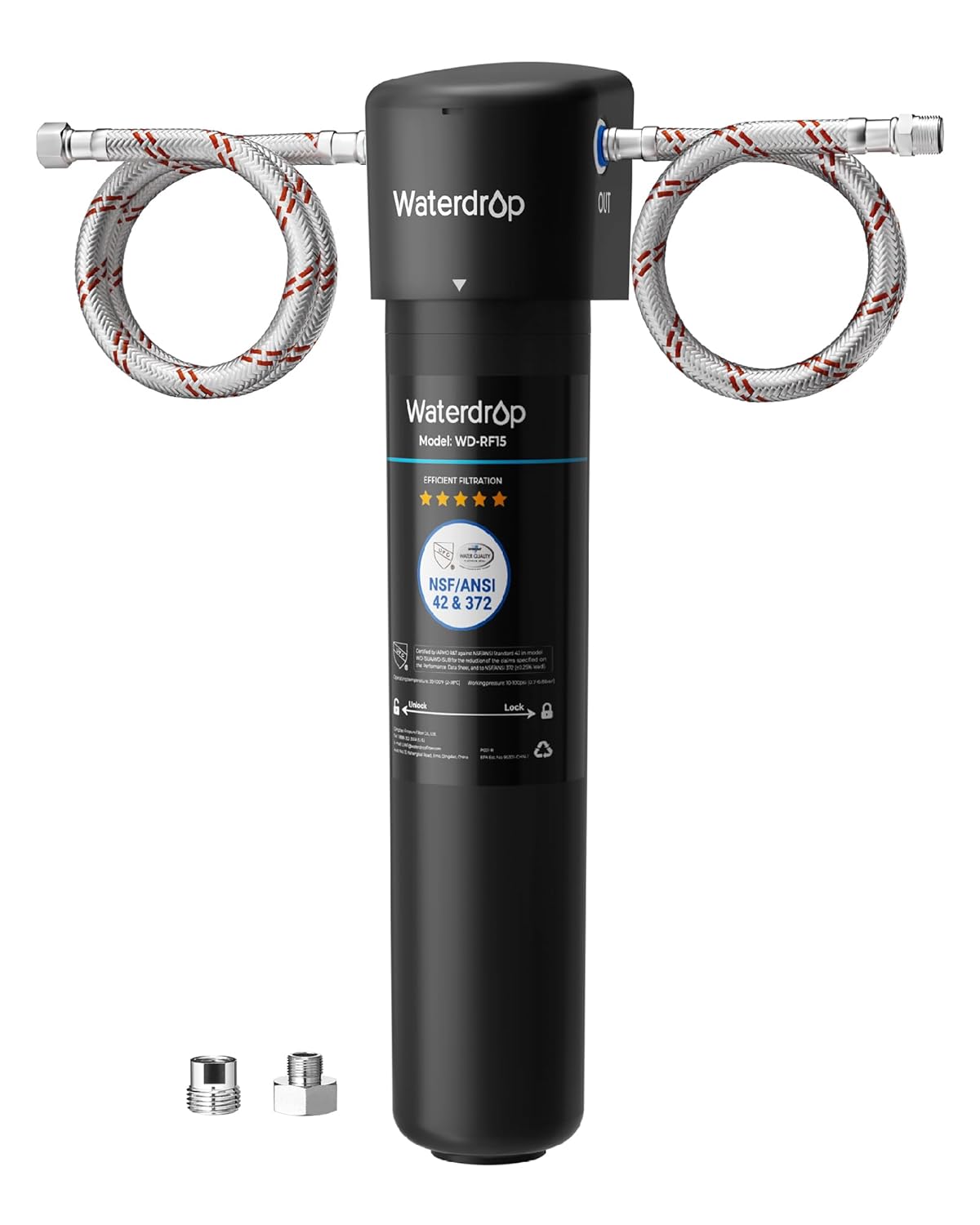
| Purification Method | Activated Carbon |
|---|---|
| Maximum Flow Rate | 0.75 gpm |
| Supported Water TDS Level Maximum (PPM) | 700 |
| Filter Life Cycle | 2 years |
| Capacity | 19000 gallons |
The Waterdrop WD-15UA is an under-sink activated carbon filter that connects directly to a cold-water feed and delivers bottled-water tasting water at a tested flow of 0.75 gpm. It uses multistage filtration to reduce chlorine, lead, PFAS/PFOA/PFOS, sediments and common chemical impurities while retaining beneficial minerals, and the cartridge is rated for up to 19,000 gallons or about 24 months with municipal water. Installation is simple with push-to-connect fittings and a 3/8" direct-connect hose plus a 3/8"–1/2" converter, and filter changes are fast due to the tool-free design. The long service life and larger filtration area reduce clogging and cut replacement frequency and cost compared with short-life cartridges, but the system is only for cold municipal water and is not intended for well water or hot water use. Also buyers should confirm under-sink clearance because the extended-life cartridge is taller than some compact models. For someone who prioritizes low maintenance and wide contaminant reduction without removing dissolved minerals, this unit provides a practical, easy-to-install solution.
Best for: Buyers who want a low-maintenance under-sink filter that removes chlorine, lead and PFAS while keeping beneficial minerals and minimizing replacement hassle.
Less Ideal for: Those needing treatment for well water contaminants, hot water filtration, or an ultra-compact system for very tight under-sink spaces should look elsewhere.
- Long rated service life up to 19,000 gallons or 24 months reduces replacement frequency
- Push-to-connect direct installation with included converter fits common under-sink shutoffs without drilling
- Reduces chlorine, lead, PFAS/PFOA/PFOS, bad taste and odor while retaining beneficial minerals
- Tested flow rate of 0.75 gpm provides steady faucet water for drinking and cooking
- Not suitable for well water or hot water applications
- Larger cartridge height requires checking under-sink clearance before purchase
Verdict: Choose the WD-15UA if you want a long-life, easy-install under-sink filter that removes chlorine, lead and PFAS while preserving beneficial minerals and cutting replacement frequency.
AQUA CREST RV Inline Water Filter

| Number of items | 2 |
|---|---|
| Included components | RV inline water filter *2, Hose protect *1 |
| Material type | Non-Woven Fabric; KDF; Coconut GAC |
| Certification | NSF 42 & 372 |
The AQUA CREST RV Inline Water Filter is a simple inline cartridge aimed at improving drinking water from campground and garden hoses. It uses a combination of KDF and coconut-shell granular activated carbon to cut chlorine, unpleasant tastes and odors and to trap sediment, and it carries NSF/ANSI 42 and 372 certification. Installation is tool-free and designed to attach to standard 3/4 GHT hoses; the included flexible hose protector and anti-rust copper fittings let the filter swivel without stressing the hose. The manufacturer cites a modest flow rate (0.5 gpm) and a three-month service life for normal camping use, so it is best for occasional drinking and cooking supply rather than high-flow tasks. It also notes it will not remove water spots from mineral content, so it is not a solution for calcium hardness. Build testing claims suggest good durability for outdoor use. If you want an affordable, NSF-certified inline filter to improve taste and reduce chlorine on trips, this is a straightforward option, but expect limited flow and no hardness removal.
Best for: Buyers who need an inexpensive, certified inline filter to improve the taste and safety of campsite or garden-hose drinking water and prioritize easy, tool-free setup.
Less Ideal for: Anyone looking to reduce calcium hardness or treat large-volume water needs should look to a dedicated water softening or higher-flow filtration solution.
- NSF/ANSI 42 and 372 certified for chlorine, taste and odor reduction
- Combination KDF and coconut GAC media for effective taste and odor control
- Includes flexible hose protector and swivel-ready copper fittings for easy outdoor hookup
- Tool-free installation onto standard 3/4 GHT hoses
- Low flow rate (0.5 gpm) limits use for high-demand tasks
- Does not reduce hard-water mineral deposits or water spots
Verdict: A low-cost, NSF-certified inline filter that noticeably improves taste and chlorine removal for campsite and hose-sourced drinking water but does not address calcium hardness.
Waterdrop Lucid Pitcher WD-PT-07B

| Capacity | 2.4 liters |
|---|---|
| Filter Life Cycle | 200 gallons / 3 months |
| Purification Method | Activated Carbon |
| Maximum Flow Rate | 0.5 gpm |
The Waterdrop Lucid WD-PT-07B is a compact 10-cup pitcher that uses a multi-stage activated carbon filter to reduce chlorine, some metals and certain organic contaminants while improving the taste of tap water. It is intended for everyday countertop or refrigerator use and features a hands-free lid for spill-free pouring and an LED indicator to track filter life. The included filter is rated for about 200 gallons or roughly three months of typical use, which reduces the frequency of cartridge changes compared with many standard pitchers. Setup is straightforward: soak the cartridge, press it into the reservoir, and discard the first two pitchers of filtered water. Practical limits are that this pitcher does not lower total dissolved solids so it is not a softening solution for hard water calcium removal, and flow depends on gravity so filling and filtering take a few minutes. For users after reliable, better-tasting drinking water with less frequent filter swaps, this pitcher is a sensible, low-maintenance choice.
Best for: Buyers who prioritize a dependable, low-maintenance pitcher that consistently improves taste and minimizes how often filters must be changed will appreciate this model.
Less Ideal for: Those seeking a solution to lower dissolved calcium or to soften very hard water should consider reverse osmosis or dedicated water softening options instead.
- Long filter life rated ~200 gallons / 3 months reduces replacement frequency
- LED indicator for simple filter-use monitoring
- Hands-free lid design helps keep reservoir hygienic and prevents spills
- Compact 10-cup capacity fits most refrigerator doors and small countertops
- Does not reduce total dissolved solids so it will not remove dissolved calcium hardness
- Gravity-fed flow is slower than plumbed or electric systems
Verdict: Choose the Waterdrop Lucid pitcher if you want a reliable, low-maintenance pitcher that delivers better-tasting water with a long-life filter.
ZeroWater 22-Cup Ready-Read Dispenser

| Capacity | 5.2 liters |
|---|---|
| Purification Method | Ion Exchange |
| Supported Water TDS Level Maximum (PPM) | 1 |
| Included Components | 22-Cup Dispenser, 5-Stage Filter, TDS Meter |
The ZeroWater 22-Cup Ready-Read Dispenser is a countertop pitcher-style system that uses a 5-stage ion-exchange filter to remove total dissolved solids, including metals and common contaminants, and includes a TDS meter so you can verify water quality before pouring. You fill the top reservoir, the water passes through the multi-stage cartridge, and filtered water collects in the 22-cup chamber for serving; the ergonomic handle and spigot make daily use simple for a household. Notable features are the included TDS meter, IAPMO certifications for reduction of lead, PFOA/PFOS, chromium and mercury, and the claim of reducing virtually all TDS down to zero when the meter reads 006 or lower. Practical benefits include clearer tasting water, reduced reliance on bottled water, and a visible indicator to know when to replace the cartridge. Limitations are that the unit is countertop-only, replacement filters are required to maintain performance, and ion-exchange filters primarily address dissolved solids like calcium but do not function like whole-home softeners or remove microbiological contaminants on their own.
Best for: Buyers who want visibly measurable reduction of dissolved solids and prefer a countertop solution with independent certification and a built-in meter to confirm results.
Less Ideal for: People looking for whole-house softening, integrated plumbing installation, or solutions that target biological contaminants should consider different systems.
- Five-stage ion-exchange filtration targets total dissolved solids including calcium and heavy metals.
- Integrated TDS meter lets you test water and know when to change the filter.
- Large 22-cup capacity reduces refill frequency for families or small households.
- IAPMO certification for reduction of lead, PFOA/PFOS, chromium and mercury.
- Includes one 5-stage filter and a TDS meter out of the box.
- Requires periodic replacement filters to maintain zero-TDS performance.
- Countertop dispenser design is not suitable for whole-home treatment or water-softening systems.
- Does not replace disinfection methods for microbiological contamination.
Verdict: Choose this dispenser if you want a countertop filter that demonstrably lowers dissolved solids with a built-in TDS meter for immediate verification.
Aquabliss Revitalizing Shower Filter SF100

| Size | 1 Count (Pack of 1) |
|---|---|
| Material | Ceramic Polypropyl Stainless Steel |
| Included Components | Adapter, Cartridge, Plumbers Tape, Replacement Washers |
| Filter cartridge life | 6 months |
The Aquabliss SF100 is a multi-stage inline shower filter designed to attach between your shower arm and existing showerhead without tools. It combines sediment media, activated carbon, calcium sulfite, redox media and ceramic beads to reduce chlorine, odors, pesticides and some dissolved contaminants while adding minerals intended to be gentler on skin and hair. Installation is simple — twist off the showerhead, screw the filter on, reattach the head — and cartridges are user-replaceable with an advertised six-month life, which keeps ongoing cost low. In practice the filter lowers the chemical smell and can noticeably soften water feel for many users, making dry or irritated skin and brittle hair easier to manage. It does not require plumbing changes, but flow rate can be affected slightly depending on your showerhead and your home water pressure. The housing is compact and includes adapters and tape for common fittings, but very hard water with heavy scale may still need a dedicated water-softening system for best calcium control.
Best for: Buyers who want a low-risk, easy-to-install filter to reduce chlorine and chemical irritation in shower water and prefer predictable cartridge replacement and simple maintenance.
Less Ideal for: Homes seeking to eliminate hard water scale or large amounts of dissolved calcium should consider a dedicated water-softening system instead.
- Multi-stage cartridge targets chlorine, odors, pesticides and sediment
- Tool-free installation fits standard 1/2" shower arms and most showerheads
- Replaceable cartridge lasts about six months for predictable maintenance
- Includes adapters, plumber's tape and replacement washers for easy setup
- Not a full water softener so it will not remove dissolved calcium causing hard water scale
- May reduce flow rate slightly on low-pressure systems
Verdict: A simple, low-risk shower filter that reduces chlorine and chemical irritation with easy tool-free installation and six-month replaceable cartridges.
Choosing the Right Water Filter for Calcium: Key Factors to Consider
Scale Reduction Approach
Different water filters use different approaches to address calcium. Some systems remove calcium ions through ion exchange or reverse osmosis, while others use template-assisted crystallization or catalytic media to transform dissolved calcium into inert particles that do not adhere to surfaces.
Understanding the approach matters because it affects what you can expect from the system. Ion exchange and RO can reduce calcium concentration materially but may require regeneration or produce wastewater. Scale-inhibition media do not remove hardness chemically but reduce scale formation on surfaces, which can be sufficient for protecting appliances and fixtures with lower maintenance requirements.
Flow Rate and Pressure Impact
Household water use requires sufficient flow for showers, dishwashers, and faucets. Filters that significantly reduce flow or create large pressure drops can make daily tasks inconvenient.
Look for systems rated to handle your household peak flow, and consider whether the filter is intended for point-of-entry (whole-house) or point-of-use (single tap) installation. Whole-house scale-control systems must maintain higher flow rates, while point-of-use filters can accept lower flow if they serve only a drinking sink.
System Capacity and Replacement Frequency
Capacity determines how long a system will perform before media or cartridges need servicing or replacement. Systems with higher capacity reduce the frequency of interventions, which is important when treating calcium because media effectiveness can decline gradually.
Consider household size and measured hardness when estimating replacement intervals. Also review how capacity is rated. Some manufacturers provide capacity in gallons or months, but real-world factors like water usage and hardness level will change those expectations.
Installation Type and Space Requirements
Installation complexity ranges from simple under-sink cartridges to whole-house tanks that connect to main lines. Available space and plumbing access determine what installations are practical.
If you are not comfortable with basic plumbing, favor systems with simple, tool-free connections or those that fit under a sink. For whole-house systems, measure clearance and consider whether professional installation is necessary to meet local codes or to ensure reliable performance.
Maintenance and Operational Needs
Maintenance burden includes frequency of cartridge changes, media regeneration, flushing, or periodic sanitizing. Systems that need frequent attention may be costlier over time despite lower upfront complexity.
Also check whether maintenance tasks are homeowner-serviceable or require a technician. Simpler maintenance often means quicker filter swaps and minimal downtime, while regenerative systems may need supplies such as salt or chemicals and occasional professional servicing.
Compatibility with Existing Plumbing
Compatibility influences ease of addition to existing setups. Point-of-use units must match sink fittings and available under-sink space, while point-of-entry systems need adequate inlet/outlet sizes and a location for a bypass if desired.
Confirm connections, mounting options, and whether additional fittings or adapters are needed. Ensuring compatibility reduces installation time and lowers the chance of leaks or pressure issues after installation.
Point-of-Entry Versus Point-of-Use Solutions
Decide early whether you need whole-house protection or targeted treatment at specific fixtures. Point-of-entry systems treat all water entering the home and protect appliances, water heaters, and plumbing from scale. Point-of-use filters focus on drinking water and can be more compact and easier to install.
Whole-house systems generally require higher capacity and more robust flow handling. Point-of-use units are useful when your main concern is drinking water taste and scale on faucets rather than preventing scale throughout the house.
- Point-of-entry: protects entire plumbing network and appliances.
- Point-of-use: simpler installs and direct drinking water benefits.
- Choose based on whether the priority is appliance protection or water for consumption.
Measuring Hardness and Setting Expectations
Before selecting a filter, measure your water hardness with a test strip or lab report. Knowing grains per gallon or parts per million of calcium carbonate helps you match a system to the problem severity.
Realistic expectations prevent disappointment. Some systems reduce scale formation without eliminating dissolved calcium entirely, while others remove a large share of hardness but add complexity like regeneration or discharge. Match performance claims to your measured hardness and water usage.
- Use a hardness test to quantify the problem.
- Compare system capacity with household consumption and hardness level.
- Understand whether the system reduces calcium concentration or simply prevents scale.
Installation Tips for Homeowners
Prepare for installation by identifying a suitable mounting location and confirming inlet/outlet plumbing sizes. Turn off the water supply and relieve system pressure before disconnecting lines to reduce leak risk.
Use plumber tape on threaded connections and tighten per manufacturer recommendations. For larger whole-house units, consider a bypass valve so water can be diverted during maintenance without interrupting supply to the house.
- Measure clearance and pipe orientation before ordering a unit.
- Keep a basic toolkit and replacement seals on hand for cartridge swaps.
- Plan for a bypass on whole-house systems to simplify servicing.
Maintenance Best Practices
Follow the recommended replacement intervals and keep a log of service dates. Rinsing or backwashing schedules for certain media types help maintain capacity and performance over time.
Stock replacement cartridges or media ahead of time to avoid operating with degraded protection. Regular visual checks for leaks, pressure changes, or decreased flow can alert you to needed service before failures occur.
- Set calendar reminders for cartridge or media changes.
- Keep spare seals and basic fittings for quick repairs.
- Perform periodic flow and pressure checks to detect problems early.
Impact on Water Taste and Mineral Content
Treatments that remove calcium can change the mouthfeel and taste of water. Some homeowners prefer the subtle mineral presence in naturally hard water, while others favor the cleaner taste from softened or filtered water.
If you drink filtered water directly, consider a system that balances scale control with minimal alteration of desirable trace minerals or pair a scale-control system with a dedicated drinking-water filter to tailor taste.
- Expect taste changes when calcium concentration is reduced.
- Combine treatments if you want both scale control and specific drinking-water flavor.
- Check whether the system alters pH or mineral balance significantly.
How We Chose the Best Water Filter for Calcium
Our shortlist focuses on systems and cartridges designed to reduce calcium deposit buildup and slow scale formation in household water. We prioritized technologies and specifications that directly affect scale control, including claimed calcium hardness reduction, media or cartridge design intended for scale inhibition, and the system capacity before media replacement is needed. Flow rate and pressure drop were evaluated because effective scale control should not come at the cost of unusable flow for daily tasks. We also considered installation type and spatial footprint to ensure practical fit for typical home plumbing setups. Excluded items included general-purpose filters that only target taste or chlorine without any demonstrated effect on calcium or scale. We also filtered out systems that require complex or specialized plumbing beyond typical homeowner capabilities. Final selection emphasized measurable performance attributes, realistic maintenance intervals, and installation accessibility so readers can choose a solution that matches their household usage patterns.
Our full evaluation process is outlined in our review methodology.
FAQ
Will a water filter for calcium soften my water completely?
It depends on the technology. Some systems, like ion exchange softeners, remove calcium ions and can effectively lower hardness. Other scale-control filters change how calcium precipitates without removing it, which reduces deposits but does not produce fully softened water.
How often do I need to replace cartridges or media?
Replacement frequency varies by system capacity, household water usage, and hardness level. Typical intervals range from a few months for small point-of-use cartridges to a year or more for larger media-filled systems. Check the manufacturer ratings and adjust for your measured consumption.
Can I install a calcium-focused filter myself?
Many point-of-use systems are designed for DIY installation with basic tools, while whole-house units often require more plumbing skill. If the system needs new fittings, a bypass valve, or changes to the main line, professional installation may be advisable.
Will these filters affect water pressure?
All filters introduce some pressure drop, but well-sized systems are engineered to minimize flow loss. Choose a unit rated for your household peak flow to avoid noticeable pressure reductions at fixtures.
Do calcium-reduction systems require electricity?
Most passive filter media and template-assisted systems do not require electricity. Systems with pumps, electronic backwash cycles, or regeneration controls may need power. Confirm the system type if you prefer a nonpowered solution.
Final Verdict
Prioritize the outcome you need most: whole-house protection against scale or targeted drinking-water treatment. Match the system technology to your measured hardness and household flow requirements, and pick an installation type that fits your space and DIY comfort level. Balance maintenance frequency and capacity against convenience so the system remains effective over time. With the right focus on scale reduction effectiveness, flow retention, and maintenance simplicity, you can select a water filter that controls calcium-related problems while supporting everyday water use with minimal disruption.