
Note: This article contains affiliate links. If you click on these links and make a purchase, we may earn a small commission at no extra cost to you. This helps support our research and content. Read our full affiliate disclosure here.
Picking the right water filter for hiking matters for safety and enjoyment on the trail. A poor choice can add weight, slow you down, or leave you vulnerable to contaminants. This guide covers the top shortlisted water filters for hiking so you can pick an option that matches your trip length, group size, and typical water sources. We evaluated options across practical trail criteria like filtration effectiveness, weight and packability, flow rate, ease of use, and durability. Below are the best picks for different hiking needs, followed by detailed buying factors and answers to common questions.
Top Picks at a Glance
| Best Overall The best all-around choice for most situations | LifeStraw Peak Personal Filter |  |
| Best Quality Built to a higher standard if you want something more solid | MSR Guardian Purifier |  |
| Best Value The sweet spot between price and what you get | Katadyn BeFree 1.0L |  |
| Best Budget The cheapest option that still gets the job done reliably | Potable Aqua Water Purification Tablets (2×50) |  |
| Top Rated A top-rated pick with lots of positive feedback | LifeStraw Personal Water Filter |  |
| Most Popular A crowd favorite that many people choose with confidence | Sawyer Squeeze SP129 |  |
| Best Seller A high-volume bestseller chosen again and again | Aquatabs Water Purification Tablets |  |
LifeStraw Peak Personal Filter

| Purification Method | Microfiltration membrane |
|---|---|
| Maximum Flow Rate | 2.5 liters per minute |
| Capacity | 4000 liters |
| Supported Water TDS Level Maximum (PPM) | 1000 |
| Upper Temperature Rating | 60 °F |
The LifeStraw Peak is a pocketable personal straw filter designed to let you drink safely from lakes, rivers, and streams or through a filled container. It uses a microfiltration membrane rated to remove bacteria, parasites, and microplastics and delivers a fast flow rate of up to 2.5 liters per minute, which makes sipping or filling a bottle quick compared with older straw filters. The unit is ultralight and durable, with a removable threaded cap to attach to standard water bottles or gravity systems for more versatile use. Its membrane is rated for up to 4,000 liters of water, so it can serve individual hikers for years of regular outings or sit in an emergency kit without degrading. The Peak does not chemically treat water or remove dissolved salts or most viruses, so it is intended for clear surface water rather than desalination or virology-level purification. For day hikes, backpacking, and emergency preparedness where weight, simplicity, and reliable particulate and microbial removal matter, the LifeStraw Peak is a practical, low-maintenance choice.
Best for: Hikers and outdoorists who want a simple, ultralight, long-lasting filter for drinking from streams and lakes without pumps or power, and who prioritize low weight and straightforward use.
Less Ideal for: People who need chemical removal, virus-level purification, or desalination for ocean or heavily contaminated sources should choose a different treatment method.
- Removes bacteria, parasites, and microplastics to make surface water drinkable
- High flow rate up to 2.5 L/min for faster drinking and bottle filling
- Very lightweight and compact for easy carry in a pack or emergency kit
- Membrane life up to 4,000 liters gives long service before replacement
- Threaded cap works with bottles and gravity hoses for flexible use
- Does not remove dissolved chemicals, salts, or most viruses
- Performance can decline with very turbid water and may require pre-filtering
Verdict: Buy this if you want an ultralight, durable straw filter that delivers fast, long-lasting microbial and particulate protection for hiking and emergency kits.
MSR Guardian Purifier
| Purification Method | Activated Carbon, Hollow Fiber Membrane |
|---|---|
| Maximum Flow Rate | 2.5 liters per minute |
| Capacity | 10000 liters |
| Power Source | Manual |
| Supported Water TDS Level Maximum (PPM) | 1000 |
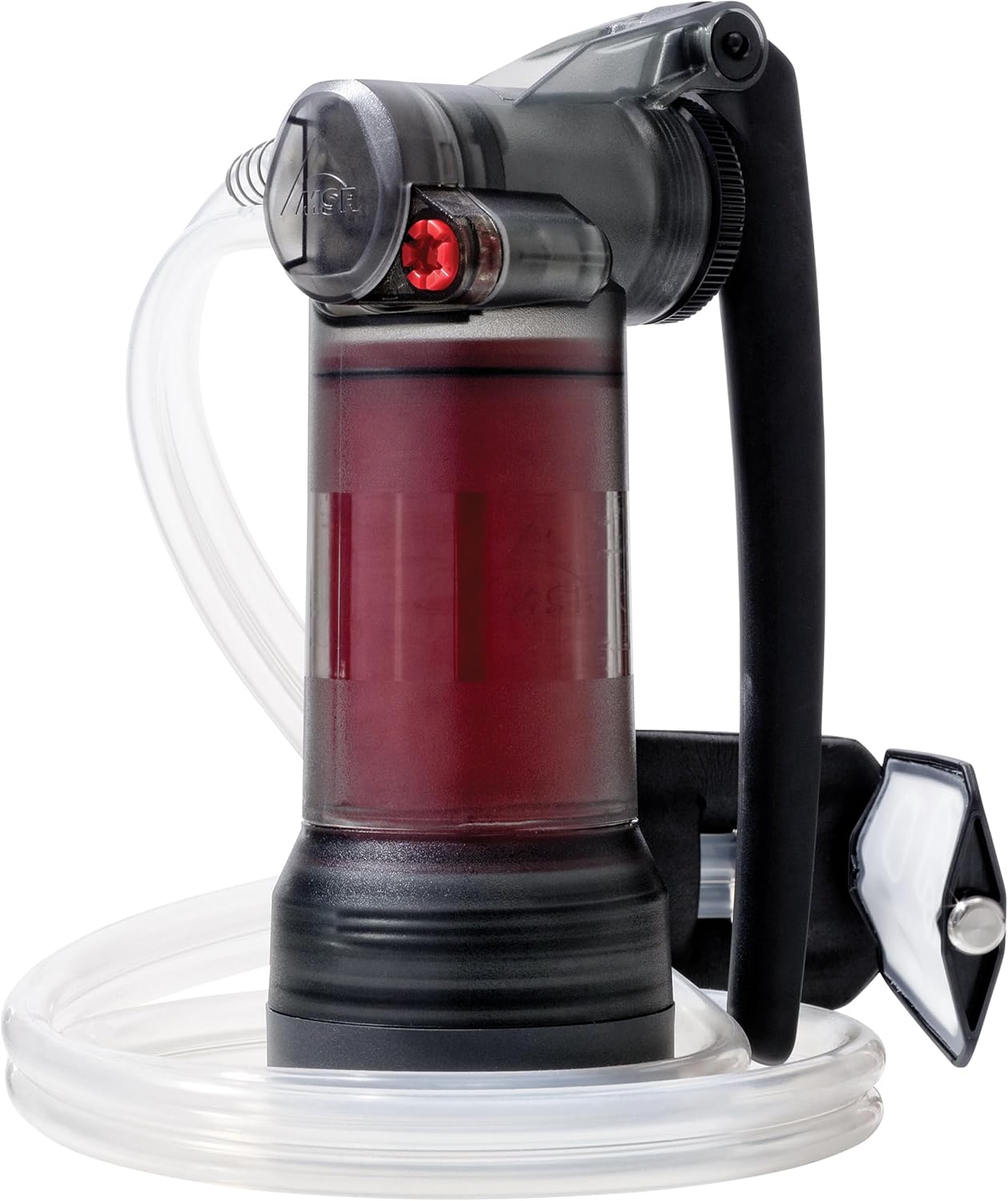
The MSR Guardian Purifier is a heavy-duty manual pump purifier built for fast, reliable treatment in demanding backcountry or travel situations. It uses hollow-fiber membrane and activated carbon media to meet NSF P248 testing standards and is rated to remove viruses, bacteria, protozoa, and particulates. In use it pumps at up to 2.5 liters per minute and self-cleans on every stroke, which keeps flow fast without backflushing or hand-scrubbing filters. The unit is durable enough to withstand freezing, drops, and heavy use and includes a storage bag with a PFAS-free DWR coating. With a long service life—listed capacity up to 10,000 liters—the Guardian suits extended trips or prepping scenarios where you need a single robust purifier rather than short-lived disposable filters. Trade-offs are the weight and size compared with ultralight microfilters and the higher upfront cost, but for hikers prioritizing maximum pathogen protection and continuous high flow, it delivers dependable performance.
Best for: Hikers and backcountry travelers who prioritize maximum pathogen removal, high throughput, and a rugged system that performs reliably on extended trips or in emergency preparedness scenarios.
Less Ideal for: Light-and-fast day hikers or ultralight backpackers who need the smallest, lightest filter and are willing to accept lower protection for reduced weight and cost.
- Meets NSF P248 military-grade testing for viruses, bacteria, and protozoa removal.
- High flow rate up to 2.5 L/min for fast filling and group use.
- Long rated lifetime up to 10,000 liters reduces replacement frequency.
- Self-cleaning pump action maintains consistent flow without backflushing.
- Built for durability and heavy use in harsh environments.
- Heavier and bulkier than ultralight straw or bottle filters, increasing pack weight.
- Higher upfront cost compared with simple microfilters or chemical treatments.
Verdict: Choose the MSR Guardian when you need a rugged, military-grade pump purifier that delivers fast flow and lab-level protection on multi-day backcountry trips.
Katadyn BeFree 1.0L

| Purification Method | Hollow Fiber Membrane |
|---|---|
| Filter Pore Size | 0.1 micron |
| Maximum Flow Rate | 2 liters per minute |
| Capacity | 1.0 L |
| Supported Water TDS Level Maximum (PPM) | 1000 |
The Katadyn BeFree 1.0L is a squeezable, collapsible filter bottle that lets you collect and drink from streams or lakes without pumps or chemicals. It uses a 0.1 micron hollow-fiber membrane to remove bacteria and protozoa while the Free Flow channels deliver high flow—up to about 2 L per minute—so you can hydrate quickly. The soft 1.0L Hydrapak flask packs flat when empty, making it easy to stow in a pack, vest, or pocket, and the stay-clean bite valve reduces debris getting into your mouth. Cleaning is simple: shake or swish the EZ-Clean membrane to restore flow instead of backflushing. Limitations are its capacity and lifespan—filter life is rated to about 1,000 liters and the soft bottle is less rugged than hard-shell options—so plan spare storage or treatment for extended trips or heavy-sediment sources. For routine day hikes and fastpack outings the BeFree balances minimal weight and rapid drinking better than most pump systems.
Best for: Buyers who prioritize minimal weight, fast on-demand drinking, and easy packability for day hikes, fastpacking, and travel.
Less Ideal for: Not ideal for long expeditions where very high total filtration capacity or heavy-sediment water sources require repeated backflushing or a more rugged hard-shell purifier.
- Very fast flow rate up to 2 L/min for quick hydration in the field
- Collapsible, ultralight Hydrapak bottle packs flat to save space
- 0.1 micron hollow-fiber membrane removes bacteria and protozoa without chemicals
- EZ-Clean membrane is simple to clear by shaking or swishing, no tools required
- Rated filter life of about 1,000 liters may require replacement on long or frequent trips
- Soft bottle is less abrasion-resistant than rigid containers
Verdict: Choose the BeFree 1.0L when you want an ultralight, fast-flow filtering bottle that packs small for day hikes and fastpacks.
Potable Aqua Water Purification Tablets (2×50)

| Unit Count | 50 Count |
|---|---|
| Number of Items | 2 |
| Item Type Name | Chemical Water Treatment Tablets |
| Manufacturer | Wisconsin Pharmacal |
Potable Aqua Water Purification Tablets come as a two-bottle kit with one bottle of standard purification tablets and one bottle of PA Plus neutralizing tablets for aftertaste and color. You treat questionable water by dropping the active tablet into a container, waiting the recommended contact time to kill bacteria and Giardia, then adding the PA Plus tablet to neutralize chlorine taste. The tablets are lightweight, compact, and require no pump or battery, making them an easy emergency or hiking backup where filter pumps or bulky purifiers are impractical. They are trusted by military and emergency organizations and work well for short trips or situations where you need to treat multiple liters without carrying heavy gear. Limitations are the short wait times compared with pumps or filters, possible reduced effectiveness against some protozoa or viruses depending on source water, and the need to store bottles carefully to keep tablets dry.
Best for: Hikers and budget-minded campers who want a compact, no-frills method to disinfect water on short trips or as an emergency backup in lightweight packs.
Less Ideal for: Those who need immediate drinking water without a wait, travelers facing unknown viral contamination risks, or users who prefer to remove sediment and particulates rather than rely on chemical treatment.
- Compact, lightweight chemical treatment that is easy to pack for hiking or emergency kits
- Two-step system includes neutralizing tablets to reduce chlorine taste and color
- No mechanical parts or power required, so usable in remote situations
- Proven, widely used formula trusted by military and emergency organizations
- Requires waiting period for disinfection and neutralization before drinking
- Does not mechanically remove sediment or particles like a filter
- May be less effective against certain viruses or very turbid water without prior clarification
Verdict: A lightweight, inexpensive chemical treatment kit that gives hikers a compact, proven way to disinfect drinking water and neutralize taste when carrying pumps or filters is not desirable.
LifeStraw Personal Water Filter

| Material Type | Plastic |
|---|---|
| External Testing Certification | NSF |
| Item Weight | 0.04 kg |
| Item Dimensions D x W x H | 3.75"D x 1.39"W x 12"H |
| Unit Count | 1 Count |
The LifeStraw Personal Water Filter is an ultralight, single-user straw filter designed for hiking, travel, and emergency use. You drink directly through the straw or use it to pull water from a container, and an internal hollow-fiber microfilter removes bacteria, parasites, microplastics, and sediment. It is NSF-tested and rated to provide up to 4,000 liters of treated water with proper care, which makes it a durable option for long trips or preparedness kits. The design is simple with no batteries or replacement parts required, so it is easy to pack and use on the trail. Practical limits include single-user flow rate and no chemical or virus removal, so it works best for clear freshwater sources and as part of a layered approach when viruses are a concern. The LifeStraw is best when you need a compact, reliable way to get microbiologically safe water without filters, pumps, or power.
Best for: Hikers and travelers who prioritize dependable, maintenance-light microbiological protection from natural freshwater sources and want a compact backup for multi-day trips or emergency kits.
Less Ideal for: Groups needing to quickly treat large volumes of water or travelers who require virus or chemical removal should choose a different multi-stage or chemical-capable purifier.
- Very lightweight and compact for backpacking or emergency kits
- Removes bacteria, parasites, microplastics, and sediment to NSF testing standards
- Long usable life rated up to 4,000 liters with proper maintenance
- No batteries or replacement cartridges required, simple to use in the field
- Does not remove viruses or dissolved chemicals
- Single-user straw format limits flow rate and is not ideal for filling large containers quickly
Verdict: If you want a proven, ultralight microbiological filter for solo hiking and emergency use, the LifeStraw delivers reliable, maintenance-free protection in a tiny package.
Sawyer Squeeze SP129

| Purification Method | Hollow Fiber Membrane |
|---|---|
| Maximum Flow Rate | 1.7 liters per minute |
| Upper Temperature Rating | 40 °C |
| Supported Water TDS Level Maximum (PPM) | 1000 |
| Capacity | 100000 gallons |
The Sawyer Squeeze SP129 is a compact, high-performance 0.1 micron hollow fiber filter built for backcountry water treatment and emergency preparedness. It ships with two reusable 32-oz collapsible pouches, adapters to fit 28 mm bottles and hydration packs, and a removable cap so you can drink directly from the filter or squeeze filtered water into a container. In practice the unit is easy to use: fill a pouch from a stream, squeeze through the inline filter at a steady pace, and you get clear, biologically safe water at up to about 1.7 liters per minute when flow is unobstructed. The filter is proven to block virtually all bacteria and protozoa and 100 percent of microplastics, and the reportedly long service life means a single filter can treat a very large volume before replacement. Limitations include slower flow as the filter clogs with sediment unless you pre-filter or backflush, and you will need to carry the pouches or a compatible bottle and occasionally perform maintenance to restore peak flow. For hikers who value reliable, ultralight filtration, the Sawyer Squeeze is a durable, confidence-inspiring choice.
Best for: Hikers and outdoor travelers who prioritize proven, high-contaminant removal in a compact, proven system and who prefer gear with extensive real-world user validation.
Less Ideal for: People who want instant high flow without periodic cleaning or those who need a filter that handles very turbid water without pre-filtering.
- 0.1 micron hollow fiber filter blocks bacteria, protozoa, and 100% of microplastics
- Includes two reusable 32-oz collapsible pouches and adapters for bottles and hydration packs
- Lightweight and compact for easy packing on hikes and in emergency kits
- High claimed lifetime capacity (up to 100,000 gallons) for long-term use
- Flow rate slows as the filter collects sediment and requires backflushing to restore performance
- Must carry pouches or compatible bottles and perform occasional maintenance
Verdict: Pick the Sawyer Squeeze if you want a lightweight, field-proven filter that reliably removes bacteria, protozoa, and microplastics for hiking and emergency use.
Aquatabs Water Purification Tablets

| Tablet strength | 49 mg |
|---|---|
| Pack quantity | 30 Count |
| Treatment time | 30 minutes |
| Water treated per tablet | 0.75–2 liters |
| Supported TDS maximum | 1000 ppm |
Aquatabs are single-dose chemical disinfectant tablets designed to make biologically unsafe water drinkable in the field. Each 49 mg tablet is dropped into about 0.75–2 liters of water and, after a 30-minute contact time, inactivates bacteria, viruses, and many protozoan cysts; the product is EPA registered and NSF/ANSI 60 certified. They are lightweight, shelf-stable, and work without pumps or filters, so they are easy to carry in a backpack, emergency kit, or first aid pack and require no power. Because they chemically disinfect rather than mechanically filter, they are best used on relatively clear water or after pre-filtering turbid sources to remove sediment. Users should plan for the 30-minute wait and may notice a slight residual halogen character; pairing Aquatabs with a microfilter for sediment-heavy water gives the best results. The 30-tablet pack size treats roughly 15 gallons total, making it a compact, low-maintenance option for day hikes, travel, and preparedness where weight and simplicity matter.
Best for: Hikers and mainstream outdoors people who prioritize proven, easy-to-use disinfection and low pack weight for day trips or emergency preparedness.
Less Ideal for: People who need immediate on-demand clear water from very muddy or silty sources or who prefer mechanical filtration to remove sediment and particulates.
- EPA registered and NSF/ANSI 60 certified for microbial disinfection
- Lightweight and compact for backpacking or emergency kits
- No pump, battery, or moving parts required
- Treats bacteria, viruses, and many cysts with a 30-minute contact time
- Not effective at removing sediment or improving turbidity without pre-filtering
- Requires a 30-minute wait time before drinking
Verdict: A lightweight, certified chemical disinfection solution that gives risk-averse hikers reliable microbial protection without pumps or filters.
Choosing the Right Water Filter for Hiking: Key Factors to Consider
Filtration Effectiveness
A water filter's primary job is to reduce or remove health hazards from natural sources. Look for filters that reliably block bacteria and protozoa; some devices also reduce viruses or use chemical treatments to address viral risk. Confirm the particle size rating and whether the device uses mechanical filtration, chemical disinfection, or a combination.
Effectiveness matters because source water quality varies widely. Clear alpine streams may still carry Giardia or Cryptosporidium, while stagnant pools or backcountry lakes can harbor both biological and chemical contaminants. Prioritizing verified removal capabilities helps protect you on longer trips or in areas with unreliable water quality.
Flow Rate
Flow rate determines how quickly you can refill a bottle or bladder and directly impacts your time on the trail. Faster flow filters reduce downtime for daily water needs, which is especially important for groups or when you need to refill multiple containers.
Flow can be affected by cartridge condition, water turbidity, and temperature. Filters rated with higher liters-per-minute under clean-water tests will usually perform better in the field, but expect slower rates when filtering murky water. Consider whether a squeeze-style filter, pump, or gravity system better suits your pace and daily water requirement.
Weight and Packability
Every ounce counts when you are carrying gear up and down the trail. Ultralight filters are attractive for fastpacking and long-distance routes, while heavier systems may be acceptable for short trips or basecamp use. Evaluate both the in-use weight and packed volume so the choice fits your pack and trip profile.
Also consider spare parts and replacement cartridges; some filters require carrying extras for long trips, which changes the effective weight. Choose a solution that balances filtration needs with your allowable carry weight.
Ease of Use and Maintenance
A filter that is finicky to set up, hard to clean, or fussy in cold weather becomes a liability on multi-day hikes. Look for straightforward connection options to bottles and bladders, simple backflushing or cleaning procedures, and clear guidance on cartridge replacement.
Maintenance matters in the field because clogged filters slow flow and raise frustration. Devices designed for easy field cleaning extend usable lifetime and reduce the chance of carrying a nonfunctional unit mid-trip.
Durability and Freeze Resistance
Trail gear is exposed to drops, abrasion, and temperature swings. Durable housings and robust seals reduce the risk of failure when you need water most. Some filters are specifically engineered to resist damage from freezing; others can be ruined if water left inside freezes and expands.
If you hike in shoulder seasons or cold environments, prioritize freeze-resistant designs or carry instructions for winterizing the unit. Durability also affects long-term cost and reliability for frequent hikers.
Cartridge Life and Replacement Availability
Cartridge lifespan affects both ongoing cost and how far you can go between replacements. Check expected liters filtered per cartridge and whether field cleaning recovers significant flow life. Short-lived cartridges can be acceptable for occasional hikers but become costly for regular use.
Availability matters when you plan extended trips or travel internationally. Select systems with widely available replacement elements or consider carrying spare cartridges if you will be away from resupply points.
Filter Types and Trail Use Cases
There are several common filter types suited for hiking, each with different tradeoffs. Pump and squeeze filters use mechanical filtration and are compact for solo hikers but can require pumping effort or manual pressure. Gravity filters sit between economy and convenience for group use because they let you set up a reservoir and walk away while water filters pass through. Chemical purifiers or UV devices add viral protection or rapid treatment but may require batteries or consumables.
Match the filter type to your typical outing. Fastpackers usually prefer minimal weight and compact squeeze filters, while groups on multi-day trips may value the convenience of a gravity system. Consider how much time you want to spend managing water versus moving on the trail.
- Squeeze filters: lightweight, fast for single users, minimal moving parts
- Pump filters: good flow for multiple containers, more components to maintain
- Gravity filters: best for groups, hands-off once set up
- UV or chemical options: add viral protection or quick treatment but need batteries or chemicals
Field Cleaning and Backflushing Tips
Keeping a filter flowing in the field often comes down to simple maintenance. Backflushing with clean water after use and removing sediment before it reaches the cartridge extend service life. Carry a small syringe or dedicated backflush tool if recommended by the manufacturer, and avoid filtering heavily silted water directly when possible.
If you get a clog mid-trip, alternate between filtered and unfiltered water sources for flushing, and let cartridges air-dry fully when not in use to limit biological growth. Follow any freezing precautions and drain filters before cold nights to prevent damage.
- Pre-filter turbid water by letting particulates settle or using a cloth
- Backflush regularly to restore flow
- Store cartridges dry during downtime to prevent mold and odors
Planning Capacity: How Much Water Will You Need?
Estimate daily water needs based on temperature, exertion, and personal thirst patterns. Typical day hikes may require 2 to 4 liters per person, while hot conditions and steep terrain increase consumption. Plan for the longest stretch between reliable water sources and account for contingency when sources are scarce.
Capacity planning informs whether you need a faster filter or larger reservoir. Faster flow devices or multiple cartridges reduce refill time, while gravity systems with larger reservoirs minimize trips to the stream.
- Assess route water availability before choosing filter speed or capacity
- For group trips, prioritize higher flow or multiple filtration points
- Carry a small emergency chemical treatment as backup for unexpected contamination
Winter and Cold-Weather Considerations
Cold temperatures introduce extra risk for filters that retain water inside housings. Some filters tolerate freezing better, and others explicitly warn against leaving water in if the temperature drops below freezing. Simple field tactics, like insulating the filter or storing it inside your jacket at night, can prevent damage.
Also consider how batteries for UV purifiers behave in cold weather and how chemical treatments slow down at low temperatures. For winter use, prioritize mechanical filters with proven freeze resistance or bring a plan to keep components above freezing.
- Drain and dry filters before freezing nights when possible
- Insulate units while inactive to reduce freeze cycles
- Check temperature specs for any electrical treatment devices
Common Mistakes Hikers Make with Filters
A frequent mistake is overestimating cartridge life or underestimating the effects of turbid water. Many hikers assume a filter will perform the same in silty river water as in clear mountain streams. Running a filter past its effective life leads to slow flow and potential contamination risk.
Other pitfalls include skipping practice at home, not packing a simple backup treatment, and ignoring maintenance steps. Practice assembling and using the filter before the trip so you can troubleshoot quickly on trail.
- Practice at home to learn setup and cleaning
- Carry backup chemical tablets or an emergency straw filter
- Replace cartridges on schedule and monitor flow declines
How We Chose the Best Water Filter for Hiking
We focused on real-world trail use when selecting these water filters. Key evaluation criteria included filtration effectiveness against bacteria, protozoa, and, where applicable, viruses; measured or reported flow rate to minimize downtime resupplying; and weight and packed volume for day hikes through multi-day backpacking trips. We also assessed ease of use under outdoor conditions, including set-up with common water sources, cleaning and maintenance requirements, and durability under rough handling and freezing risk. We excluded devices designed only for backyard or emergency-home use, heavy gravity-only systems intended for basecamps, and items that require complex electrical power. Reviews and specifications were used to verify claimed removal rates, expected cartridge lifespans, and real-world flow performance. The shortlisted filters demonstrate a balance of reliable pathogen reduction, reasonable maintenance, and trail-friendly weight and size.
Our full evaluation process is outlined in our review methodology.
FAQ
How often should I replace a hiking water filter cartridge?
Replacement intervals depend on cartridge type, water turbidity, and manufacturer guidance. Many cartridges are rated for several hundred to a few thousand liters; heavy silt exposure reduces life. Monitor flow rate as an indicator and carry a spare if you expect heavy usage.
Can I rely on a filter alone for virus protection?
Most mechanical filters are designed to remove bacteria and protozoa but not all viruses. If viral contamination is a concern, choose a system that includes proven viral removal or add a chemical or UV step. Assess source risk when deciding whether additional treatment is necessary.
What is the easiest filter type to use for groups?
Gravity filters are typically the easiest for groups because they let you fill a reservoir and filter multiple liters without constant attention. They are slower to set up but save time when refilling multiple bottles or bladders.
How do I prevent my filter from freezing on cold trips?
Drain and dry the filter when possible and store it close to your body or in an insulated pack compartment overnight. Some filters tolerate freezing better, but proactive draining and insulation are the most reliable protections.
Are UV purifiers practical for multi-day hikes?
UV purifiers offer rapid neutralization of biological contaminants and are lightweight, but they rely on batteries and require clear water for effective treatment. They can be practical for multi-day hikes if you manage battery supply and pre-filter turbid water.
Final Verdict
Choosing the right water filter for hiking comes down to matching filtration capability, flow speed, and weight to your itinerary. Prioritize verified pathogen removal for longer or riskier routes, and weigh flow rate and maintenance needs against pack weight and time constraints. For cold-weather trips, favor freeze-resistant designs or plan to prevent internal freezing. Decide which tradeoffs you can accept and pick a filter that fits your typical water sources and group size. With the right balance of effectiveness, durability, and convenience, you can stay hydrated and safe on every hike.