
Note: This article contains affiliate links. If you click on these links and make a purchase, we may earn a small commission at no extra cost to you. This helps support our research and content. Read our full affiliate disclosure here.
If your tap water smells like a swimming pool or leaves a metallic taste, a dedicated water filter for chlorine removal can make a noticeable difference. Choosing the right filter affects daily drinking water quality, cooking flavor, and how often you need to replace cartridges. This guide shortlists the top options for chlorine reduction and explains the practical tradeoffs buyers face. Below are our top picks for chlorine removal, with clear notes on filtration performance, flow rate, and maintenance requirements to help you pick the best fit for your home. Read on for buying considerations and expert selection criteria before the product list.
Top Picks at a Glance
| Best Overall The best all-around choice for most situations | CuZn UC-200 Under Sink Filter |  |
| Best Quality Built to a higher standard if you want something more solid | A. O. Smith Whole House Filter AO-WH-Filter |  |
| Best Value The sweet spot between price and what you get | Waterdrop WD-15UA Under Sink Filter |  |
| Best Budget The cheapest option that still gets the job done reliably | ZeroWater 10-Cup Ready-Pour Pitcher |  |
| Top Rated A top-rated pick with lots of positive feedback | AQUA CREST 5KDC Under Sink Filter |  |
| Most Popular A crowd favorite that many people choose with confidence | Brita Metro 6-Cup Pitcher |  |
| Best Seller A high-volume bestseller chosen again and again | AquaBliss Revitalizing Shower Filter SF100 |  |
CuZn UC-200 Under Sink Filter

| Model Number | UC-200 |
|---|---|
| Included Components | Stainless Steel Connection Hose |
| Material Type | NSF Approved Material Components |
| Filter Life | Up to 5 years / 50,000 gallons |
The CuZn UC-200 is an under-sink inline filter built for extended service life and straightforward DIY installation. It uses a three-stage blend of micro sediment membrane, KDF-55, and coconut shell carbon to target chlorine, bad tastes and odors, lead, PFAS/PFOA, and common particulates while leaving healthy minerals intact. Installation is simple with the included stainless steel connection hose and direct-connect design so most homeowners can fit it under a kitchen or bathroom sink without drilling. The standout benefit is its claimed longevity — up to 5 years or 50,000 gallons depending on water quality — which reduces replacement frequency and long-term cost compared with short-life cartridges. Because it does not lower total dissolved solids, it is not a substitute for reverse osmosis if you need TDS reduction. The unit is NSF/ANSI 42 certified for material components and is positioned as a low-maintenance chlorine-focused solution for people wanting reliable, better-tasting tap water with minimal upkeep.
Best for: Homeowners who want a low-maintenance under-sink filter focused on removing chlorine, bad tastes, and common contaminants while minimizing cartridge changes.
Less Ideal for: Anyone who needs aggressive TDS reduction, mineral desalting, or full RO-level purification should choose a reverse osmosis system instead.
- Long service life up to 5 years or 50,000 gallons reduces replacement frequency
- Three-stage media (KDF-55 and coconut shell carbon) effectively reduces chlorine and improves taste and odor
- Designed for easy under-sink direct connection with included stainless steel hose
- Retains beneficial minerals by not lowering total dissolved solids
- Does not reduce total dissolved solids so it cannot replace reverse osmosis for mineral/solute removal
- Performance and lifespan depend on incoming water quality which may shorten filter life
Verdict: Choose the UC-200 if you want a durable under-sink filter that reliably removes chlorine and common contaminants with minimal upkeep.
A. O. Smith Whole House Filter AO-WH-Filter

| Purification Method | Activated Carbon |
|---|---|
| Other Special Features | Chlorine Reduction, NSF/ANSI 42 Certified |
| Maximum Flow Rate | 7 gpm |
| Operating Pressure Range | 20-100 psi |
| Filter Life Cycle | 6 years / 600000 gallons |
The AO-WH-Filter is a whole-house activated carbon filter built to remove chlorine taste and odor from city or well water and deliver treated water to every faucet. It installs inline as a tank-style central filter and ships with a shut-off valve, nipple and hose adapter to simplify DIY hookup; recommended tools include channel locks and thread seal tape. Rated for a maximum flow of 7 gpm and an operating pressure range of 20 to 100 psi, it is sized for typical household demand and advertised to last six years or 600,000 gallons without backwashing or continuous drainage. Because it is a carbon-only system, it improves taste, odor and reduces chlorine exposure for bathing and laundry but will not soften hard water or remove iron, sulfur, or dissolved solids. The fiberglass tank and NSF/ANSI 42 certification support durability and verified chlorine reduction, making it a solid low-maintenance option when your primary goal is long-lasting chlorine control for an entire home.
Best for: Buyers who prioritize reliable, long-lived chlorine and taste removal for an entire household and want a low-maintenance central filter rather than point-of-use cartridges.
Less Ideal for: Homes needing water softening or removal of iron, sulfur, bacteria, or dissolved solids should choose complementary treatment methods instead of this carbon-only system.
- Certified to reduce chlorine taste and odor (NSF/ANSI 42)
- Long service life rated at 6 years or 600,000 gallons
- Tank-style central installation supplies treated water to every tap
- Includes shut-off valve and flushing nipple for easier DIY installation
- No drain or backwash required so it does not waste water during normal operation
- Does not remove hardness, iron, sulfur, or lower total dissolved solids
- Installation may require basic plumbing tools and prep work not included in the box
Verdict: Choose this AO Smith whole-house carbon filter when you want certified, low-maintenance chlorine and odor removal for every tap with an exceptionally long service life.
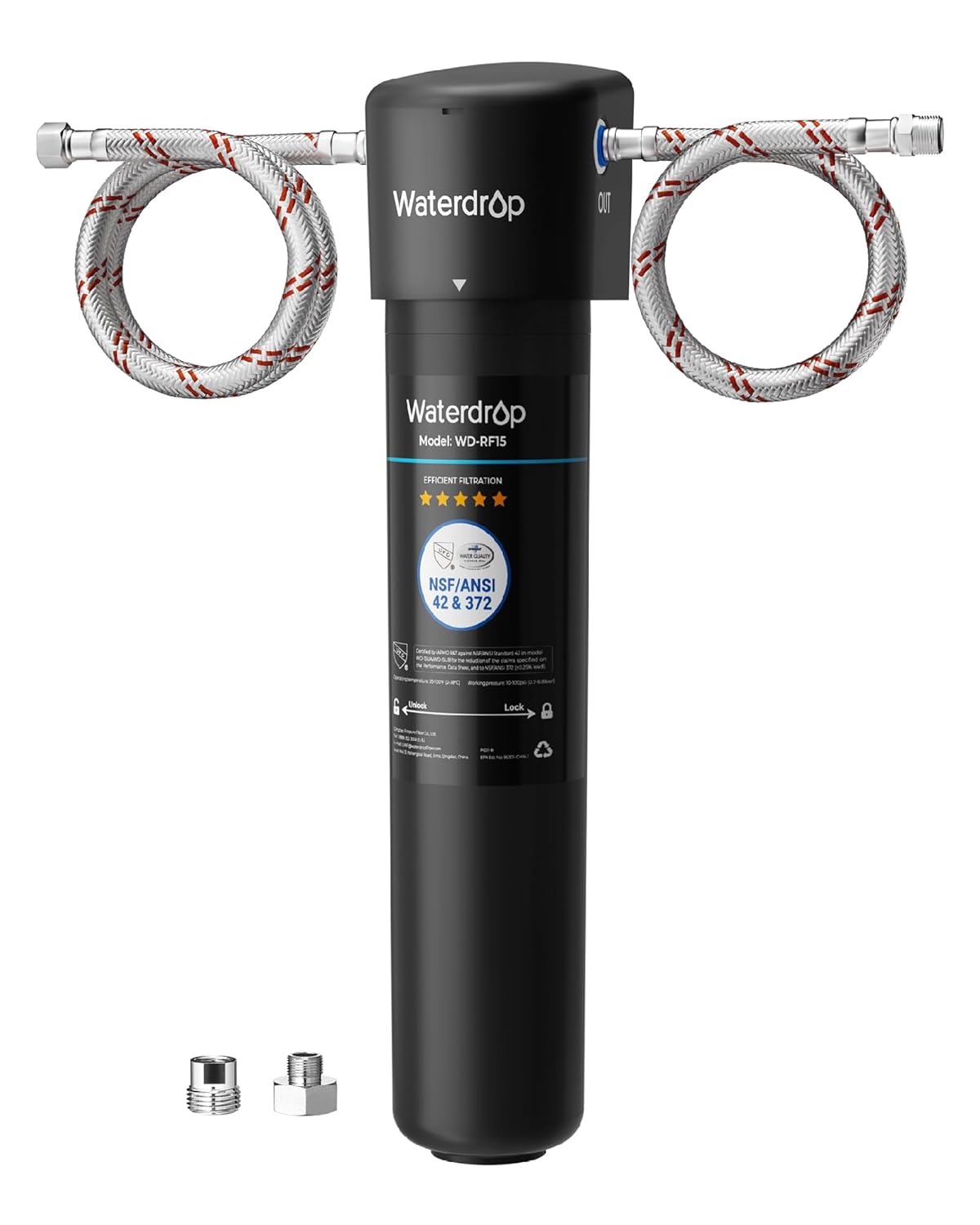
Waterdrop WD-15UA Under Sink Filter
| Purification Method | Activated Carbon |
|---|---|
| Maximum Flow Rate | 0.75 gpm |
| Filter Life Cycle | 24 months |
| Capacity | 19000 gallons |
| Installation Type | Under Sink |
The Waterdrop WD-15UA is an under-sink activated carbon filter that connects directly to a cold-water feed and is designed primarily to remove chlorine, bad taste and odors while also reducing lead and certain PFAS contaminants. It installs without drilling using push-to-connect fittings and a 3/8" direct-connect hose plus a 3/8"–1/2" converter, so setup is fast for DIY homeowners. The cartridge uses a multistage carbon media made from coconut shell and claims a long service life rated at 24 months or about 19,000 gallons on municipal water, which cuts replacement frequency and ongoing cost. Flow is maintained at up to 0.75 gpm, making it suitable for drinking, cooking, and filling pitchers without a noticeable slowdown. Limitations include cold-water-only operation and unsuitability for untreated well water, and the larger cartridge size means you should confirm under-sink clearance before buying. For buyers focused on steady chlorine reduction and low-maintenance long-run performance, this is a practical, easy-to-install option.
Best for: Buyers who want an easy DIY under-sink filter that reliably reduces chlorine and improves tap water taste with minimal upkeep and infrequent cartridge changes.
Less Ideal for: Homes using untreated well water, systems needing hot-water filtration, or installations with very limited under-sink clearance.
- Long rated service life: 24 months or ~19,000 gallons on municipal water
- Certified components (IAPMO/NSF-related standards) for chlorine, taste and lead reduction
- Tool-free, push-to-connect installation with included 3/8"–1/2" converter
- Maintains a usable flow rate up to 0.75 gallons per minute for everyday kitchen tasks
- Designed for cold municipal water only and not suitable for well or hot water applications
- Larger cartridge size may require measuring under-sink space before purchase
Verdict: Choose this filter if you want a low-maintenance under-sink carbon system that focuses on reliable chlorine and taste reduction with a long replacement interval.
ZeroWater 10-Cup Ready-Pour Pitcher

| Capacity | 10 cup |
|---|---|
| Filtration method | 5-stage ion exchange |
| Included components | 5-Stage Water Filter, TDS Meter |
| Power source | Non-powered |
| Supported Water TDS Level Maximum (PPM) | 999 |
The ZeroWater 10-Cup Ready-Pour pitcher is a freestanding, non-powered filtration pitcher that uses a 5-stage ion exchange filter to remove total dissolved solids and reduce contaminants such as lead, chromium, PFOA/PFOS and mercury. It is filled from the top and dispenses through a spout for easy pouring, and the included TDS meter lets you test water quality and know when to replace the cartridge. In daily use it delivers very low-TDS water with a neutral taste, which is useful if you want to reduce chlorine flavor and other dissolved minerals. The pitcher is lightweight plastic with an ergonomic handle and a change-filter indicator, but the 10-cup capacity means it needs more frequent refills than larger dispensers. Filters will need periodic replacement and performance depends on your tap water TDS, so expect shorter cartridge life where source water is high in solids. The unit is simple to operate and requires no power, making it convenient for kitchens and office use.
Best for: Buyers on a budget who want a simple, countertop solution to noticeably reduce dissolved solids and chlorine taste without installing under-sink equipment.
Less Ideal for: Homes that need whole-house treatment, high daily water volume, or the longest possible filter intervals should consider larger-capacity or point-of-use systems instead.
- Comes with a 5-stage ion exchange filter that yields very low TDS water
- Included TDS meter lets you verify water quality and track filter life
- IAPMO certification for reduction of lead, PFOA/PFOS, chromium and mercury
- Ready-pour spout and ergonomic handle make filling and serving easy
- 10-cup capacity can require frequent refilling for larger households
- Plastic construction may feel less durable than heavier pitchers
Verdict: An affordable, countertop pitcher that delivers very low-TDS water and a built-in way to monitor filter performance, making it a practical choice for budget-focused buyers who want to reduce chlorine taste.
AQUA CREST 5KDC Under Sink Filter

| Purification Method | Activated Carbon |
|---|---|
| Maximum Flow Rate | 1.5 gpm |
| Filter Life Cycle | 12 months |
| Capacity | 5000 gallons |
| Supported Water TDS Level Maximum (PPM) | 300 |
The AQUA CREST 5KDC is an under-sink direct-connect filter designed to deliver filtered drinking water without drilling or complicated plumbing changes. It installs using the included push-to-connect hoses and fittings to the cold water line and is intended for everyday uses like drinking, cooking and pet water. The cartridge uses coconut shell activated carbon plus KDF media with a 0.5 micron nominal rating to target chlorine, VOCs, taste and odor and certain heavy metals while maintaining a fast flow rate up to 1.5 gpm so you do not notice a big drop in faucet speed. The unit is rated for about 5,000 gallons or roughly 12 months of typical household use and ships with hoses, clips and mounting hardware for a straightforward swap once a year. Limitations include no reduction of total dissolved solids and the filter is not a multi-stage treatment for microbiological contaminants, so it is best paired with other methods where TDS or bacteria are a concern.
Best for: Buyers who prioritize a reliable, low-maintenance under-sink filter to remove chlorine and improve tap water taste with annual cartridge changes and straightforward installation.
Less Ideal for: Homes that need TDS reduction, microbiological disinfection, or whole-house filtration should consider other systems aimed at those problems.
- High-capacity cartridge rated for 5,000 gallons or about 12 months between changes
- Coconut shell activated carbon plus KDF media specifically reduces chlorine, taste and odor and some heavy metals
- Fast flow rate up to 1.5 gallons per minute preserves normal faucet performance
- Comes with push-to-connect hoses and all mounting hardware for tool-free installation
- Does not reduce total dissolved solids (TDS)
- Not designed to remove microbiological contaminants or replace a whole-house system
Verdict: Choose this under-sink system if you want a dependable, high-capacity carbon/KDF filter that quickly and effectively cuts chlorine and improves taste with annual cartridge changes.
Brita Metro 6-Cup Pitcher

| Filter Life Cycle | 2 months (≈40 gallons) |
|---|---|
| Maximum Flow Rate | 9.7 milliliters_per_second |
| Supported Water TDS Level Maximum (PPM) | 500 |
| Power Source | No Power Source |
The Brita Metro 6-cup pitcher is a small, fridge-friendly water filter pitcher designed for everyday countertop or dorm use. It uses Brita Standard (and compatible Elite) filters with activated carbon and ion-exchange resin to cut chlorine taste and odor plus select heavy metals like copper, mercury, and cadmium, and the SmartLight indicator times filter changes at roughly 40 gallons or about two months. The pitcher fills through an easy-fill lid and fits in most refrigerator doors, making it convenient for frequent access without extra plumbing or power. Practical benefits include lower single-use bottle waste — Brita estimates one filter replaces up to 300 16.9 oz bottles — and simple maintenance: swap the filter when the SmartLight alerts you. Limitations to keep in mind are the modest 6-cup capacity, which means more frequent refills for multi-person households, and that the pitcher is intended for basic contaminant and taste reduction rather than comprehensive treatment or removal of all possible pollutants. For straightforward chlorine taste improvement and everyday filtered drinking water, it is a reliable, low-effort option.
Best for: Buyers who want a simple, proven pitcher to noticeably reduce chlorine taste and light contaminants without plumbing or complex setup, and who value third-party certification and easy maintenance.
Less Ideal for: Homes needing whole-house or medical-grade filtration, users who require removal of hard-to-filter contaminants, or large households that prefer higher-capacity dispensers.
- WQA and NSF/ANSI certified reduction for chlorine taste and odor and select heavy metals
- SmartLight filter indicator provides an accurate reminder to replace the filter
- Compact, fridge-door friendly shape with easy-fill lid for daily convenience
- Compatible with Brita Standard and Elite filters so replacements are widely available
- Small 6-cup capacity requires frequent refilling for multiple users
- Not designed to remove all contaminants or serve as a point-of-entry treatment
Verdict: A compact, certified pitcher that reliably reduces chlorine taste and select heavy metals for everyday drinking water without plumbing or power.
AquaBliss Revitalizing Shower Filter SF100

| Cartridge life | 6 months |
|---|---|
| Connection | Standard 1/2" shower arm |
| Included components | Adapter, cartridge, plumbers tape, replacement washers |
| Material | Ceramic, polypropylene, stainless steel |
The AquaBliss SF100 is a twist-on shower filter designed to cut chlorine and other common contaminants from shower water and deliver gentler water for skin and hair. It installs between your shower arm and showerhead in minutes with no tools, and works with fixed, handheld, rain, and combo heads. The replaceable cartridge uses a multi-stage media blend including activated carbon, calcium sulfite, redox media and ceramic beads to target chlorine, odors and some pesticides and particulates, and Aquabliss rates the cartridge life at about six months. Practical benefits include noticeably softer-feeling water, reduced chlorine smell, and less scalp irritation for people sensitive to chlorinated water. Limitations are that it is an inline filter rather than a whole-home solution so it only treats shower water, and effectiveness depends on local water chemistry and flow rate; cartridges must be replaced periodically to maintain performance. The metal-look housing is hand-tighten only to avoid cracking.
Best for: Buyers who prioritize predictable, low-risk improvements to shower water and want an easy, no-plumber installation to reduce chlorine exposure for sensitive skin or hair.
Less Ideal for: People seeking whole-house filtration or certified laboratory removal guarantees for a long list of specific contaminants should consider larger point-of-entry systems instead.
- Reduces chlorine and common shower contaminants with multi-stage filtration media
- Tool-free installation that fits standard 1/2" shower arms and most showerheads
- Cartridge lasts about six months for predictable maintenance intervals
- Includes adapters and replacement washers for straightforward setup
- Treats only shower water, not whole-home supply
- Performance varies with local water quality and flow rate
Verdict: A simple, reliable inline shower filter that reduces chlorine and deliver gentler water for skin and hair with easy tool-free installation and predictable six-month cartridge swaps.
Choosing the Right Water Filter for Chlorine Removal: Key Factors to Consider
Filtration Technology
Different filters use different methods to remove chlorine from water. Activated carbon is the most common and effective media for reducing free chlorine and improving taste. Some systems combine granular carbon with block carbon for higher contact time and fewer bypass channels.
Understanding the underlying technology matters because it determines how thoroughly chlorine is removed and whether other contaminants are also reduced. When chlorine removal is the primary goal, look for systems with a carbon stage engineered for high contact time rather than minimal, decorative carbon layers.
Certified Reduction Results
Independent certifications or lab test results provide objective evidence that a filter actually reduces chlorine to advertised levels. Look for test standards and data showing percent reduction at realistic flow rates and water chemistry. Certifications are not mandatory, but they reduce the risk of exaggerated marketing claims.
If certification data is unavailable, seek clear manufacturer testing parameters and how reduction rates change over the filter life. Filters that only report initial removal without lifecycle data may lose performance quickly.
Flow Rate And Everyday Use
A highly effective chlorine filter that delivers water at a trickle can be impractical for cooking or filling pitchers. Flow rate affects how you use the system and how long you wait for filtered water. Faucet-mount or pitcher systems trade higher convenience for lower flow, while under-sink or inline systems can offer near-unfiltered tap speeds.
Consider typical household use: a single person may accept slower flow from a pitcher, while a family will likely prefer a point-of-use system with higher delivery. Also account for how flow varies as the filter loads with particulates over time.
Filter Lifespan And Replacement Frequency
Replacement interval influences ongoing cost and convenience. Some carbon cartridges last a few months under typical use while others are rated for longer service. Lifespan estimates often depend on source water quality and daily volume.
When evaluating lifespan, check how performance degrades over time. A filter that maintains high chlorine reduction near the end of its rated life is preferable to one that drops off rapidly. Consider availability and clarity of replacement options as part of long-term ownership.
Installation And Space Requirements
Installation complexity varies widely: pitchers require no plumbing work, faucet-mounts attach to the tap, and under-sink systems need basic plumbing connections. Some setups require tools or permanent modifications to a sink cabinet.
Factor in the available space under your sink or counter and whether you want a portable solution. If you rent, a no-drill, reversible installation may be essential. Also consider whether you have nearby cold-water lines and shutoff valves to simplify installation.
Maintenance And User Experience
Beyond replacement frequency, maintenance includes how easy it is to swap cartridges, whether the unit has filters that can be rinsed, and the clarity of replacement instructions. Features like filter life indicators or quick-release housings reduce hassle.
Also think about how often you will need to handle used cartridges. Systems with sealed cartridges or minimal contact designs make replacement cleaner and less error-prone for busy users.
Point-Of-Use Options Explained
Point-of-use systems are designed to treat water at a single tap or for direct drinking and cooking. Common formats include pitchers, faucet-mounted filters, and under-sink units. Each format balances convenience, performance, and cost differently.
Pitchers are the simplest: fill, wait for gravity to pass water through a carbon filter, and drink. They are highly portable and require no installation, but they tend to have lower flow and smaller capacity. Faucet-mounted filters attach to the spout and provide filtered water on demand, but they may not fit all faucet shapes or handle very high flow without reducing filter life.
Under-sink systems hide the filter out of sight and can deliver faster flow and higher capacity. They require some installation but often produce the best combination of flow and consistent chlorine reduction for frequent use.
- Pitchers: best for low-volume, portable use
- Faucet-mounts: convenient on-demand filtering
- Under-sink: higher flow and capacity, more installation
How Water Chemistry Affects Chlorine Removal
Source water characteristics influence how well a carbon filter removes chlorine. High organic content or particulates can foul carbon media faster, reducing chlorine reduction over time. Hard water does not directly impact carbon chemistry for chlorine removal, but scaling can affect housings and flow.
If your water has significant sediment, consider pre-filtration or a multi-stage system so the carbon stage remains effective longer. For municipal water with predictable chlorine dosing, standard carbon stages usually perform well with regular replacement.
- Organic load and particulates can shorten filter life
- Pre-filter stages help preserve carbon effectiveness
- Know your water profile to match filter design
Maintenance Tips To Keep Chlorine Out
Stick to the manufacturer-recommended replacement intervals but adjust based on your household volume and water quality. If you notice taste or odor returning before the scheduled change, replace the cartridge early. Keep spare cartridges on hand if your preferred filter has long lead times for replacements.
Rinse new cartridges if recommended and follow any priming steps to avoid airlocks or channeling. Clean housings and seals at each change to prevent bacterial growth and ensure a tight fit that avoids unfiltered bypass.
- Buy replacements before the old cartridge expires
- Follow priming and rinse instructions for new cartridges
- Clean housings and seals during each filter change
Measuring Performance At Home
You can verify chlorine reduction with inexpensive test strips that measure free chlorine concentration before and after filtration. Regular spot checks help confirm the filter is performing and indicate when replacement is necessary. Test strips are not a substitute for lab testing but are useful for routine checks.
Also monitor subjective signals like taste and odor, which are reliable indicators for chlorine presence. If a filter shows reduced chlorine removal on strips but still improves taste, evaluate whether a combined approach or more frequent replacement is needed.
- Use free chlorine test strips for quick checks
- Track taste and odor as practical performance cues
- Record results to spot gradual decline in performance
Environmental And Waste Considerations
Filter cartridges create waste, so factor in disposal and recycling options. Some manufacturers offer recycling programs or use recyclable materials in cartridges. Consider systems with longer-life cartridges or recyclable components to reduce environmental impact.
Also weigh the water and energy used in producing replacements. A longer-lasting filter that maintains chlorine removal reduces total waste even if its initial footprint is larger than a short-lived cartridge.
- Look for recyclable cartridges or take-back programs
- Longer-life filters can reduce overall waste
- Check local rules for disposing used filter materials
How We Chose the Best Water Filter for Chlorine Removal
We prioritized products that demonstrably reduce free chlorine and improve taste while remaining practical for everyday home use. Our evaluation focused on measurable filtration effectiveness for chlorine, certified reduction claims where available, and filter media known to target chlorine such as activated carbon. We also weighed flow rate and water delivery so a strong chlorine reduction does not leave you waiting for water. Durability and ease of maintenance were important. We looked for systems with simple cartridge replacement, clear life indicators, and widely available replacement filters. Installation flexibility was considered as well, favoring options that fit common setups like faucet-mounts, under-sink systems, and pitchers. We also assessed expected replacement interval and estimated filter life to reflect realistic yearly upkeep. We excluded products that do not specifically target chlorine reduction or that rely solely on unproven claims without supporting filtration media or certification. Systems intended for whole-house chemical treatment rather than point-of-use drinking water were not included. Our final selection balances verified chlorine reduction, acceptable flow rates, and user-friendly maintenance.
Our full evaluation process is outlined in our review methodology.
FAQ
How quickly does a carbon filter remove chlorine from tap water?
Activated carbon removes free chlorine almost immediately as water contacts the media. Actual removal depends on contact time and flow rate, so systems designed for longer contact or slower flow generally achieve higher reduction.
Can a filter for chlorine removal also remove other contaminants?
Many carbon-based filters reduce taste-and-odor compounds, volatile organic compounds, and some pesticides, but they are not universal. Removal of heavy metals, nitrates, or microbes depends on additional filtration stages or specific media.
How do I know when to replace the filter cartridge?
Replace cartridges according to the rated service life and sooner if you notice taste or odor returning or a drop in flow. Household usage and water quality affect lifespan, so keep an eye on performance and carry spares if replacements are not immediately available.
Are pitcher's carbon filters effective for chlorine removal?
Pitchers with quality carbon media can effectively reduce chlorine and improve taste, but they typically have slower throughput and smaller capacity than under-sink systems. They are a good low-effort option for light use.
Will removing chlorine change my water pressure?
Point-of-use filters can reduce flow rate, especially as the cartridge loads with particulates. Under-sink systems designed for higher flow generally maintain pressure better, but some drop is common compared with untreated tap water.
Final Verdict
When selecting a water filter for chlorine removal, prioritize proven carbon-based filtration and a system format that matches how you use water every day. Balance strong chlorine reduction with an acceptable flow rate and a cartridge lifespan that fits your maintenance preferences. Consider installation constraints and whether you prefer a hands-off pitcher or a higher-capacity under-sink solution. Focus on verified reduction performance, clear replacement schedules, and ease of maintenance to get the best long-term results. With those priorities in mind, you can confidently choose a system that restores taste and removes chlorine without creating new hassles.