
Note: This article contains affiliate links. If you click on these links and make a purchase, we may earn a small commission at no extra cost to you. This helps support our research and content. Read our full affiliate disclosure here.
If rust-colored staining, metallic taste, or clogged pipes are a problem in your home, selecting the right water filter for iron can make a noticeable difference. You want a solution that targets dissolved and particulate iron without severely restricting flow or adding complicated maintenance. This guide covers seven shortlisted water filters for iron that represent practical, widely applicable options for typical household plumbing. We evaluated each option for iron-removal effectiveness, impact on water pressure, required upkeep, and installation fit. Read on to find the approaches that will reduce staining, protect fixtures, and suit your home's plumbing needs.
Top Picks at a Glance
| Best Overall The best all-around choice for most situations | Waterdrop WHF21-FG Whole House Filter |  |
| Best Quality Built to a higher standard if you want something more solid | Fleck 5600 SXT Iron Eater 1.5 cu ft |  |
| Best Value The sweet spot between price and what you get | Waterdrop WF10FG Whole House Filter |  |
| Best Budget The cheapest option that still gets the job done reliably | Sulfur Eliminator Iron Buster SEF2024 |  |
| Top Rated A top-rated pick with lots of positive feedback | iSpring WGB21BM Whole House Filter | 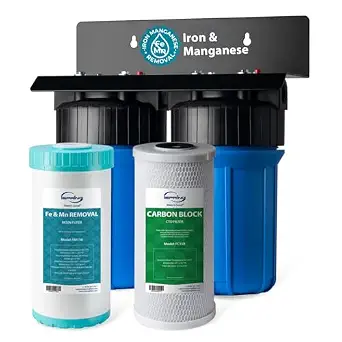 |
| Most Popular A crowd favorite that many people choose with confidence | iSpring F3WGB32BM 3-Stage Whole House Pack |  |
| Best Seller A high-volume bestseller chosen again and again | Pentek RFFE20-BB Big Blue Iron Cartridge |  |
Waterdrop WHF21-FG Whole House Filter

| Purification Method | Granular Activated Carbon |
|---|---|
| Maximum Flow Rate | 15 gpm |
| Filter Life Cycle | 6 months |
| Supported Water TDS Level Maximum (PPM) | 1000 |
| Capacity | 50000 gallons |
The Waterdrop WHF21-FG is a 2-stage whole-house filtration system built for homes with iron or manganese issues and standard municipal or well supplies. It pairs an iron/manganese reduction cartridge with a coconut-shell granular activated carbon cartridge to cut iron, manganese and chlorine and to trap particles larger than 5 microns. With 1" inlet/outlet ports and a stated flow up to 15 gallons per minute it is sized to keep showers and faucets running without obvious pressure loss. The system comes with pre-installed filters, a mounting bracket and a wrench to simplify a DIY install, and reinforced brass threads plus dual O-rings aim to reduce leak risk. Filters are rated for about 50,000 gallons or roughly six months of typical use before replacement, which lowers swap frequency but does require periodic maintenance. This unit is NSF/ANSI 372 lead-free certified for the components called out, but it is limited to mechanical and carbon-style removal and will not soften water or remove dissolved salts on its own.
Best for: Homeowners dealing with visible iron or manganese staining or metallic taste who want a high-flow whole-house filter that reduces those contaminants and improves water taste without professional installation.
Less Ideal for: Those seeking water softening or removal of dissolved salts and hardness should look at dedicated water softeners or multi-technology systems instead.
- Targets iron and manganese specifically alongside chlorine and sediment
- High flow capacity up to 15 gpm to support multiple fixtures
- Dual-stage design with GAC carbon improves taste and odor
- Pre-installed parts, mounting bracket and wrench make DIY installation easier
- Filter cartridges need replacement about every six months
- Does not soften water or remove dissolved minerals beyond targeted metals
Verdict: Choose this Waterdrop system if you need a straightforward, high-flow whole-house filter that specifically reduces iron, manganese and chlorine to improve water quality across the home.
Fleck 5600 SXT Iron Eater 1.5 cu ft

| Media volume | 1.5 Cubic Ft |
|---|---|
| Control valve | Fleck 5600 SXT digital |
| Tank size | 10 x 54 inch mineral tank |
| Included components | complete system with 1 inch plastic bypass |
This Fleck 5600 SXT Iron Eater pairs a proven Fleck digital control valve with 1.5 cubic feet of catalytic carbon and an air-injection oxidation step to target dissolved iron, manganese and hydrogen sulfide odors. The system installs as a single-tank point-of-entry filter and runs an automated daily backwash to flush trapped contaminants, so it is largely hands-off once plumbed into a home supply. The catalytic carbon media and air pocket help oxidize and trap iron species more effectively than plain carbon, improving taste and odor while reducing staining. The Fleck 5600 SXT controller gives reliable timed/regenerative cycles and programmability familiar to installers. Expect a sizable tank footprint and the need for a drain for backwash; the system does not replace a softener for hardness and requires occasional media or component checks after heavy iron loads. For buyers wanting a performance-focused, serviceable whole-house iron filter, this unit delivers industrial-style filtration in a residential package.
Best for: Buyers who prioritize high-performance whole-house iron removal and want a serviceable, programmable system that handles dissolved iron, manganese, and H2S at the point of entry.
Less Ideal for: If you need a compact under-sink solution, a combined softener+filter, or have no easy drain access, this standalone catalytic carbon iron filter is not a good fit.
- Air-injection oxidation boosts conversion of dissolved iron and H2S for better removal
- 1.5 cu ft catalytic carbon provides enhanced contaminant adsorption versus standard carbon
- Fleck 5600 SXT digital control offers programmable automatic backwash and reliable regeneration cycles
- Comes as a complete system including tank and bypass for straightforward POE installation
- Large physical footprint and weight require planning for placement and support
- Requires a drain and regular backwash water discharge which may not suit all installations
Verdict: Choose this Fleck 5600 SXT system when you want a robust, programmable whole-house filter that uses air injection and catalytic carbon to aggressively reduce iron, manganese, and sulfur odors.
Waterdrop WF10FG Whole House Filter
| Model Number | WD-WF10FG |
|---|---|
| Unit Count | 2 Count |
| Material Type | NSF/ANSI Approved Components |
| Compatible Water Purifier Models | Listed compatible 10"x4.5" systems |
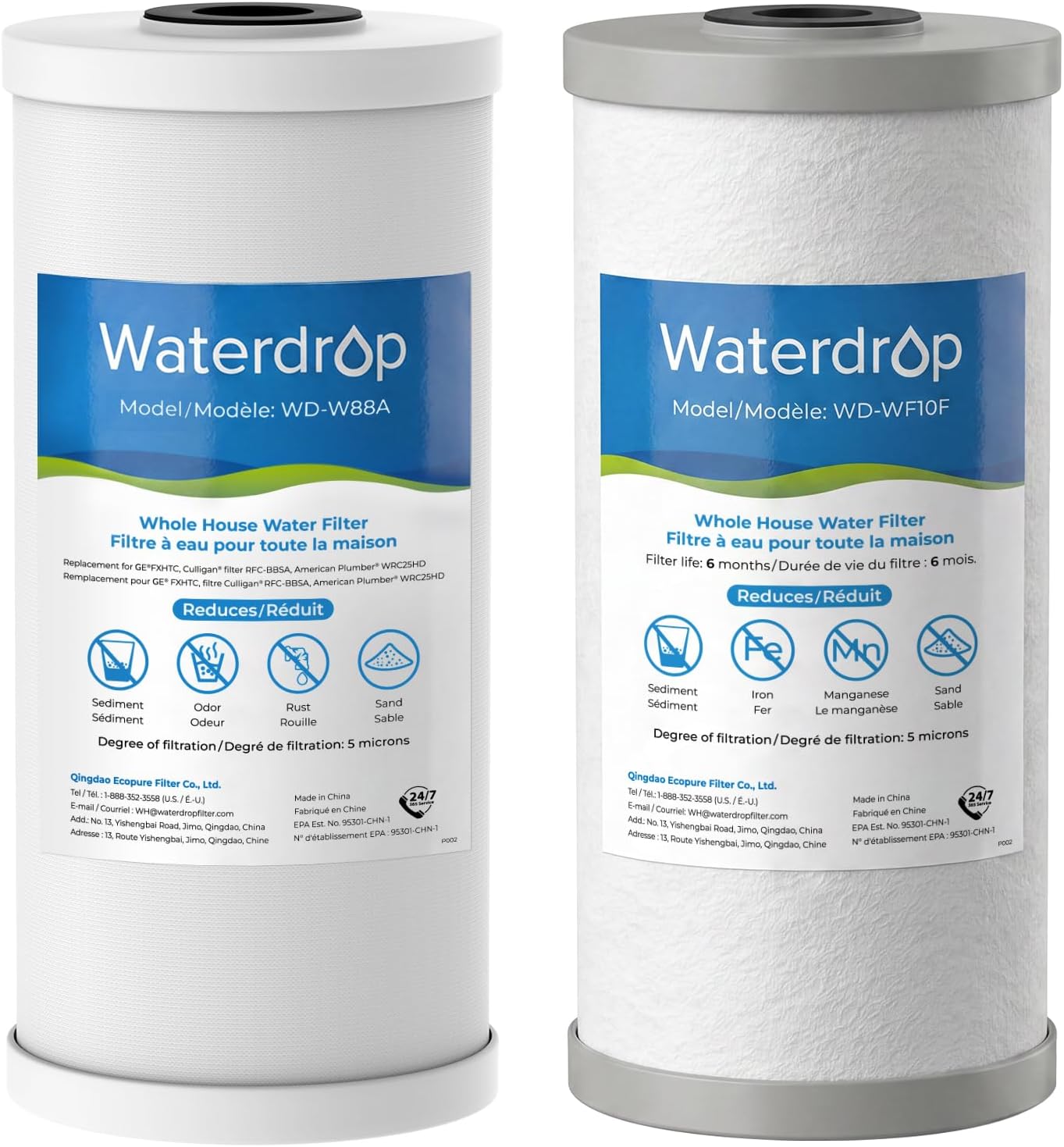
The Waterdrop WF10FG is a 10" x 4.5" replacement filter cartridge built for whole-house and under-sink systems that need heavy iron and manganese reduction. It combines a sediment stage with a GAC coconut-shell carbon stage and additional media to deliver a claimed 5-stage filtration that removes large particles and reduces iron, manganese and chlorine for clearer, better-tasting water. You would install it in compatible housings as a direct replacement and expect around six months of service life under typical conditions before swapping the cartridge. The NSF/ANSI approved components and broad compatibility list make it easy to fit many standard systems, and the coconut-shell carbon helps cut chlorine taste and odor. Limitations to keep in mind are that performance depends on incoming water quality and flow rates, and extremely high iron loads may require pre-treatment or more frequent changes to maintain capacity.
Best for: Buyers who want a practical, easy-to-install replacement filter that prioritizes measurable reduction of iron, manganese and chlorine to improve household water taste and protect appliances.
Less Ideal for: Homes with extremely high dissolved iron concentrations or blackwater iron problems should consider dedicated iron-removal systems or pre-treatment instead of this standard replacement cartridge.
- Targets iron, manganese and chlorine with a multi-stage media blend
- Uses coconut-shell GAC to improve taste and reduce chlorine odor
- NSF/ANSI approved components indicating third-party material standards
- Fits many common 10"x4.5" housings for straightforward replacement
- Rated lifespan of about six months under normal conditions
- Effectiveness depends on feed water concentration and may need pre-treatment for very high iron levels
- Not a complete solution for dissolved iron without specific catalytic or oxidation stages
Verdict: Choose this cartridge when you need a practical, certified replacement that reduces iron, manganese and chlorine to improve water taste and protect plumbing.
Sulfur Eliminator Iron Buster SEF2024

| Model Number | SEF2024 |
|---|---|
| Product Benefits | Reduces chlorine, iron, manganese, etc |
| Material Type | Polypropylene (PP) |
| Unit Count | 1 Count |
The Iron Buster SEF2024 is a replacement filter made for the Sulfur Eliminator Deluxe but sized to fit standard whole-house canister systems, and it focuses on removing iron, rust, sediment and other common well-water contaminants. In typical use you install it in your canister housing and replace it annually; the cartridge is polypropylene-based and marketed to eliminate a broad mix of impurities so your plumbing and fixtures see less rust buildup and your water smell and clarity improve. The unit is straightforward to swap and requires no special tools, which makes maintenance simple for homeowners who change filters themselves. It does not list flow rate or micron rating, so expect general-purpose iron and sediment reduction rather than precision micron filtration used for microscopic particulate or dissolved iron forms. For budget-focused buyers looking to curb visible rust, odor and sediment in well water, this filter is an easy-to-install option that keeps a whole-house canister running effectively with yearly replacements.
Best for: Homeowners on a budget who need a straightforward whole-house replacement to reduce visible iron, rust and odors from well water and prefer an easy annual swap.
Less Ideal for: People who need certified laboratory-grade micron filtration or who require documented flow-rate performance for sensitive equipment should consider higher-spec filtration options.
- Designed to fit Sulfur Eliminator Deluxe and standard whole-house canister systems
- Targets iron, rust and sediment common in well water
- Polypropylene construction for durable, routine use
- Simple, tool-free yearly replacement
- Manufacturer does not specify micron rating or flow rate for precise performance expectations
- Intended replacement interval is yearly which may be more frequent with heavily contaminated water
Verdict: A cost-conscious, easy-to-install whole-house replacement filter that effectively reduces visible iron, rust and sediment in well water when swapped annually.
iSpring WGB21BM Whole House Filter

| Maximum Flow Rate | 15 gpm |
|---|---|
| Filter Life Cycle | 1 years |
| Capacity | 50000 gallons |
| Inlet / Outlet | 1 inch Female NPT |
| Operating Temperature | 40-100 ºF |
The iSpring WGB21BM is a two-stage whole-house filter built to reduce chlorine, bad tastes and odors, plus iron and manganese from the main water line. It pairs a 10" carbon block CTO first stage to remove sediment, chlorine and many VOCs with a catalytic iron and manganese reducing second stage that the manufacturer says can drop iron from 3.0 ppm to 0.01 ppm and manganese from 1.0 ppm to 0.01 ppm. The system mounts on a bracket and uses standard 1" female NPT ports, and the package includes a filter wrench and DIY installation guides and videos, so many homeowners can install it without a plumber. Rated up to 15 gpm flow and a quoted life of up to 50,000 gallons for the cartridges, it is sized for full-house service and appliance protection. It does not remove TDS and is intended for treating iron/manganese and chlorine rather than desalting, and very high iron wells may require a custom solution or professional advice. The metal housings and stated pressure ratings make it a robust option for ongoing whole-house filtration needs.
Best for: Homeowners who prioritize consistent, reliable removal of chlorine and iron from whole-house supply and want a durable, low-maintenance point-of-entry solution they can install or service themselves.
Less Ideal for: People seeking TDS reduction, softening, or a single-unit solution for extremely high iron well water should consider RO, softeners, or specialized treatment instead.
- Targeted iron and manganese reduction with catalytic media for longer life than greensand
- Coconut shell carbon CTO stage removes chlorine, taste, odors and many VOCs
- Pre-assembled mounting bracket and included wrench simplify DIY installation
- Supports high household flow up to 15 gallons per minute to avoid noticeable pressure loss
- Filter life rated up to 50,000 gallons, suitable for about a year of household service
- Does not reduce total dissolved solids so it will not soften water or remove dissolved salts
- Not intended as a turnkey solution for very high iron/manganese well water without consultation
Verdict: If you need a durable whole-house filter that reliably cuts chlorine plus iron and manganese for household protection, this two-stage iSpring system is a practical, installable solution.
iSpring F3WGB32BM 3-Stage Whole House Pack

| Included components | Sediment filter x1; carbon block filter x1; iron & manganese reducing filter x1 |
|---|---|
| Compatible models | iSpring WGB32BM |
| Filter material type | Sediment + Carbon + Iron & Manganese Removal |
| Rated capacity | 100,000 gal per cartridge |
| Flow impact | Up to 15 GPM |
This three-stage replacement set supplies sediment, coconut-shell carbon block, and an iron-and-manganese reducing cartridge sized for standard 20" x 4.5" whole-house housings. In everyday use the polypropylene sediment stage reduces visible sand and rust down to about 5 microns, the carbon block cuts chlorine and organic taste and odor, and the catalytic iron cartridge is designed to reduce dissolved iron and manganese concentrations specified by the manufacturer. The pack is built to industry-standard dimensions so installation is straightforward in compatible systems and the carbon and sediment cartridges are third-party tested to NSF/ANSI levels for performance and life. Practical benefits include longer life on iron removal media compared with greensand and filter capacity claimed at up to 100,000 gallons per cartridge for typical household flow rates up to about 15 GPM. Important limits: it will not lower total dissolved solids or replace an RO system, and performance depends on inlet iron/manganese concentrations and preexisting system configuration, so very high well iron may need a dedicated iron-specific system.
Best for: Buyers who want a proven, multi-stage replacement pack that reduces visible sediment, chlorine taste, and modest iron or manganese concentrations while fitting standard whole-house housings and backed by strong user feedback.
Less Ideal for: Homes with very high dissolved iron or manganese levels, or users who need TDS reduction or water softening, should consider dedicated iron treatment systems or RO/softening alternatives.
- Three-stage combination (sediment, carbon block, iron/manganese) addresses multiple contaminants in one pack
- Fits standard 20" x 4.5" whole-house housings for easy replacement
- Carbon block uses coconut-shell carbon for effective chlorine and taste/odor reduction
- Iron and manganese reducing cartridge uses catalytic media that lasts longer than greensand
- Manufacturer claims high capacity (up to 100,000 gallons) and supports household flow up to about 15 GPM
- Does not reduce total dissolved solids so it will not soften water or remove dissolved salts
- Effectiveness depends on inlet iron/manganese levels and may be insufficient for very high-iron wells
Verdict: Choose this three-stage replacement pack when you need a ready-fit, tested solution to cut sediment, chlorine, and modest iron and manganese levels across a whole-house system.
Pentek RFFE20-BB Big Blue Iron Cartridge
| Material Type | Manganese Activated Zeolite |
|---|---|
| Item Type Name | 20-Inch Radial Flow Iron Reduction Cartridge |
| External Testing Certification | NSF |
| Unit Count | 1 Count |
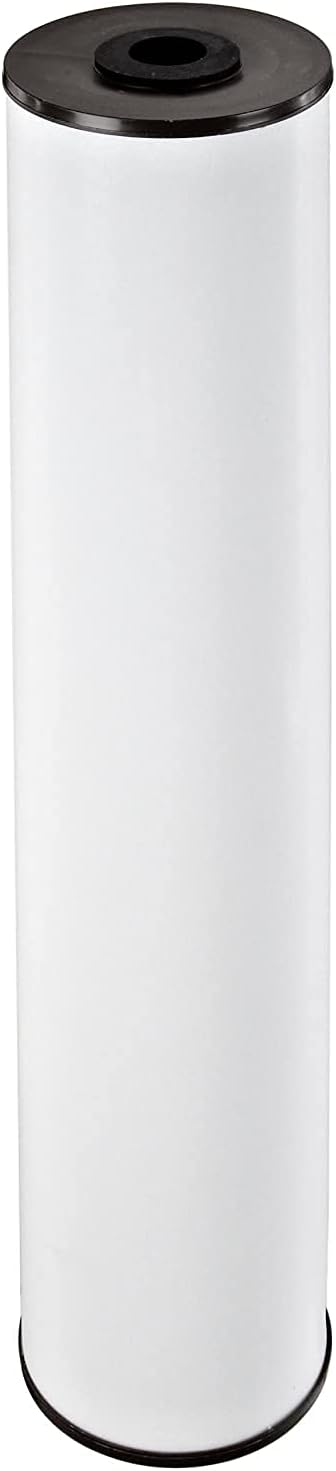
The Pentek RFFE20-BB is a 20-inch radial flow cartridge made to reduce dissolved iron in whole-house systems. It installs in any 20" Big Blue housing on the main cold-water line and is intended to remove up to 3 ppm of dissolved iron, which helps reduce metallic taste and orange-brown staining on fixtures. In practice you should run a sediment pre-filter ahead of it and a carbon post-filter after it for best performance. The cartridge uses manganese activated zeolite and is NSF tested, and Pentek rates it for roughly 26,000 gallons at 3 ppm iron—typically about three to four months for a family of four under those conditions. Benefits are chemical-free iron reduction and straightforward drop-in compatibility with standard Big Blue housings, while limitations include the need for pre- and post-filtration to protect life and polish water, and a service interval that depends strongly on inlet iron concentration and household demand.
Best for: Buyers who want a straightforward, factory-compatible iron reduction cartridge for a Big Blue whole-house system and prioritize predictable, chemical-free iron removal.
Less Ideal for: Homes with very high iron levels or those seeking a long-term media solution without regular cartridge changes should consider larger iron-specific treatment systems or regeneration-based options.
- Specifically designed for 20" Big Blue housings for easy drop-in replacement
- Reduces up to 3 ppm dissolved iron to improve taste and reduce staining
- Made with manganese activated zeolite and holds NSF external testing certification
- Rated capacity of about 26,000 gallons at 3 ppm provides a predictable service life estimate
- Requires a sediment pre-filter and carbon post-filter for optimal protection and polishing
- Service life is relatively short at higher iron concentrations and will need periodic replacement
Verdict: Choose this Pentek Big Blue iron cartridge for a simple, NSF-tested, drop-in way to cut dissolved iron and the staining and taste issues it causes.
Choosing the Right Water Filter for Iron: Key Factors to Consider
Type of Iron Present
Iron appears in water primarily as dissolved ferrous iron and particulate ferric iron, and the treatment method depends on which form is dominant. Dissolved iron often requires oxidation and filtration or a specialized media that targets soluble iron, whereas particulate iron can often be removed by sediment filtration or mechanical trapping. Knowing which type you have changes the equipment you need and affects ongoing maintenance because treatments that work for one form may be ineffective for the other.
Testing water with a simple iron test kit or sending a sample to a lab gives actionable data. Results guide whether you need a point-of-entry whole-house filter, a targeted point-of-use unit, or a combination of oxidation and mechanical filtration.
Iron Concentration and Water Usage
The level of iron in parts per million influences both the required treatment capacity and maintenance schedule. Low concentrations may be manageable with cartridge filters or media beds sized for modest flow, while higher concentrations often need larger-capacity systems or periodic regeneration to avoid frequent clogging. Your household water demand also matters: systems must provide adequate flow to multiple fixtures simultaneously without excessive pressure loss.
Estimate peak simultaneous usage in your home to choose a system with an appropriate rated flow rate and service interval. Undersized systems will foul quickly and reduce water pressure, while oversized systems increase upfront complexity and maintenance scope.
Plumbing Layout and Installation Constraints
Where you plan to place the filter affects the type you can use. Point-of-entry systems treat all water entering the home but require space and a clear shutoff for maintenance. Point-of-use units install under a sink or at a single fixture and are easier to fit but leave other fixtures untreated. Consider access for cartridge changes, drain requirements for backwash systems, and the need to isolate the unit for servicing.
Measure available clearance, check for nearby electrical outlets if a powered conditioner is required, and confirm pipe sizes and fittings. If DIY installation is intended, favor systems with straightforward plumbing diagrams and compatible fittings.
Maintenance Needs and Consumable Availability
Different iron-removal technologies have varying upkeep. Cartridge filters require periodic replacement based on iron load and water volume. Media beds may need backwashing or occasional media replacement. Oxidation systems that use air or chemical regenerants can require routine checks of valves and media condition. Consider how easy it is to source replacement cartridges or media locally and whether the maintenance intervals align with your willingness to service the equipment.
Recurring costs and the convenience of replacing consumables play a major role in the total cost of ownership. Look for clear service intervals and simple procedures to minimize downtime and ensure consistent iron control.
Impact on Water Chemistry and Fixtures
Treatment for iron can affect other aspects of water chemistry. Oxidation and filtration remove iron but may increase the appearance of sediment during media regeneration cycles. Some methods can also alter pH slightly or interact with dissolved manganese and other metals. Consider how the chosen system affects downstream appliances, water-using appliances, and fixture finish. Filters that trap iron effectively protect fixtures and fabrics from staining but must be managed so they do not release trapped material during service.
If you have additional concerns such as hard water or manganese, plan for combined or staged treatment that addresses those constituents without compromising iron removal.
How Different Iron-Removal Technologies Work
Several common approaches remove iron from household water: mechanical filtration, oxidation plus filtration, catalytic media, and sequestration. Mechanical filters trap particulate iron but are limited for dissolved iron. Oxidation converts soluble iron into a solid form that can then be filtered. Catalytic media accelerate natural oxidation and capture iron directly. Sequestration uses a chemical to hold iron in solution to prevent staining but does not remove iron from the water.
Understanding the operating principle clarifies expected maintenance and performance. For example, oxidation systems often need a way to dispose of backwash solids, while sequestrants reduce staining without removing the iron, which may not suit every homeowner's goals.
- Mechanical filtration is straightforward but best for ferric iron and sediment
- Oxidation plus filtration handles both ferrous and ferric iron after conversion
- Catalytic media can remove dissolved iron without frequent chemical regeneration
- Sequestration prevents staining but leaves dissolved iron in the water
Point-of-Entry Versus Point-of-Use Choices
Whole-house, point-of-entry systems treat all water entering the home and are preferable if iron affects laundry, fixtures, and all taps. They require more space and may need a drain for backwashing. Point-of-use units installed under a sink or at a single faucet concentrate treatment where it is most needed and are simpler to install.
Decide whether you need comprehensive protection across the house or targeted treatment at critical fixtures. Many households combine a point-of-entry sediment prefilter with a point-of-use polishing unit to balance coverage and cost.
- Point-of-entry treats every tap but needs space and plumbing access
- Point-of-use is cheaper and easier but leaves other outlets untreated
- Combination approaches can optimize performance and maintenance burden
Routine Care to Keep Iron Filters Working
Scheduled maintenance preserves filtration capacity and prevents recontamination. That includes replacing cartridges on schedule, backwashing media beds at recommended intervals, and inspecting seals and valves. Recordkeeping helps track when consumables were last changed and when the system was serviced.
Also watch for signs of declining performance such as renewed staining, metallic taste, or reduced flow. Those symptoms often indicate the media is exhausted or a cartridge is clogged and prompt service will restore function and prevent downstream problems.
- Keep a service log and follow manufacturer replacement intervals
- Backwash or regenerate media before pressure loss or visible staining occurs
- Inspect plumbing connections and drains for leaks after service
Testing and Monitoring for Ongoing Performance
Regular testing confirms that an installed system continues to meet expectations. Use inexpensive iron test kits for quick checks and pursue lab testing if municipal reports or symptoms suggest persistent issues. Monitoring water flow at peak demand reveals whether the filter is restricting supply.
Install simple indicators where possible, such as pressure gauges or flow meters, and visually inspect filtered water for clarity. Early detection of declining performance reduces the chance of stains or equipment damage.
- Use periodic test kits to detect iron concentration changes
- Watch flow and pressure as a proxy for clogging
- Consider lab testing when results are borderline or symptoms persist
Integrating Iron Treatment With Other Water Concerns
Iron rarely appears alone. Hardness, manganese, and sulfur can coexist and influence system selection. Combining treatments in a staged approach—sediment prefilter, iron-removal media, followed by softening or activated carbon—often delivers the best overall water quality. Make sure each stage is compatible and that upstream treatments do not foul downstream media prematurely.
Plan service so that upstream filters are accessible and replaced on schedule to protect more expensive downstream components. Coordinating maintenance across stages reduces total effort and increases system longevity.
- Stage treatments to protect downstream media and appliances
- Address hardness and manganese as part of a comprehensive plan
- Match service intervals across components when possible
How We Chose the Best Water Filter for Iron
We focused on attributes that matter when controlling iron in household water. First, we prioritized iron-removal effectiveness based on the technology type and documented performance for both dissolved (ferrous) and particulate (ferric) iron. Second, we evaluated hydraulic impact by checking flow-rate specifications and pressure drop tendencies to ensure everyday fixtures remain usable. Third, maintenance and serviceability were considered, including filter life, ease of cartridge replacement, and backwash or regenerant needs. Fourth, we assessed installation flexibility and compatibility with common residential plumbing layouts, including point-of-entry and point-of-use options. Excluded from consideration were devices intended solely for industrial treatment, whole-house softeners that do not address iron specifically, and any products requiring specialized installation beyond typical residential plumbing skills. The choices that made the list balance measurable iron reduction, acceptable flow characteristics, realistic maintenance cycles, and practical home installation. Those criteria reflect the scoring labels used across the guide so readers can compare performance, upkeep, and plumbing fit at a glance.
Our full evaluation process is outlined in our review methodology.
FAQ
How do I know whether I have dissolved or particulate iron?
A simple home test kit or lab analysis can distinguish ferrous (dissolved) iron from ferric (particulate) iron. Dissolved iron often causes metallic taste and stains after exposure to air, while particulate iron appears as visible rust-colored sediment in standing water.
Will an iron filter reduce water pressure in my home?
Any filter can cause some pressure drop if it is undersized or clogged. Choose a system rated for your household peak flow and maintain it regularly to minimize pressure loss. Backwashing and timely cartridge changes help preserve normal flow.
Can I install a whole-house iron filter myself?
Some point-of-entry systems are designed for competent DIY installation if you have basic plumbing skills, proper shutoffs, and sufficient space. However, systems that require drain connections, electrical power, or complex valve setups may be better handled by a licensed plumber.
How often do iron filters need maintenance?
Maintenance frequency depends on iron concentration and system type. Cartridge filters may need replacing every few months under heavy iron load, while media beds with backwash cycles can operate for months to years between media replacement. Monitor performance and follow recommended service intervals.
Will treating iron affect my water hardness?
Iron treatment methods do not typically remove hardness ions. Some combined systems incorporate softening stages, but iron-specific filters alone usually leave hardness unchanged. If hard water is a concern, plan for a staged solution that includes softening where necessary.
Final Verdict
Focus on the form and concentration of iron, household flow requirements, and where you want treatment to occur when selecting a water filter for iron. Balance removal efficiency against flow-rate impact and maintenance commitments, and ensure the system fits your plumbing and service capabilities. With the right match between technology and home needs, you can reduce staining, protect fixtures, and maintain normal water performance.