
Note: This article contains affiliate links. If you click on these links and make a purchase, we may earn a small commission at no extra cost to you. This helps support our research and content. Read our full affiliate disclosure here.
If your home draws water from a private well, you face different quality issues than municipal users. A well under-sink water filter treats a focused set of contaminants at the point of use, improving taste and protecting appliances without reworking the whole house plumbing. You want a unit that removes common well problems such as sediment, iron, and sulfur while matching your faucet flow and maintenance expectations. This guide shortlists seven top-performing well under-sink water filters and explains the practical criteria used to evaluate them, including filtration stages, flow rate, and ease of service. Read on to find a setup that fits your well water concerns and installation comfort level.
Top Picks at a Glance
| Best Overall The best all-around choice for most situations | Frizzlife SP99 Under-Sink Filter |  |
| Best Quality Built to a higher standard if you want something more solid | APEC Water ROES-50 |  |
| Best Value The sweet spot between price and what you get | PUREPLUS WFS5300A Under-Sink Filter |  |
| Best Budget The cheapest option that still gets the job done reliably | Dreamwills DS10 Under Sink Filter | 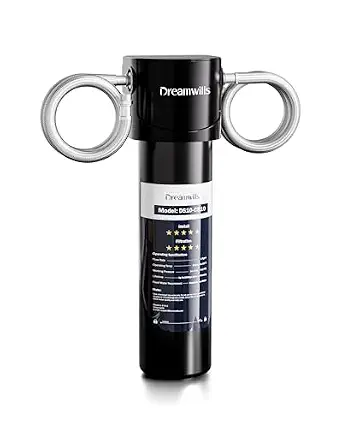 |
| Top Rated A top-rated pick with lots of positive feedback | Waterdrop WD-UL12A Under-Sink Filter |  |
| Most Popular A crowd favorite that many people choose with confidence | iSpring RCC7AK-BN 75 GPD RO System |  |
| Best Seller A high-volume bestseller chosen again and again | Waterdrop WD-15UA Under-Sink Filter |  |
Frizzlife SP99 Under-Sink Filter

| Purification Method | Activated Carbon, Carbon Block, Ultra Filtration |
|---|---|
| Maximum Flow Rate | 1.5 gpm |
| Operating Pressure Range | 20-80 psi |
| Upper Temperature Rating | 100 °F |
| Supported Water TDS Level Maximum (PPM) | 500 |
The Frizzlife SP99 is an under-sink filtration system designed to deliver faster, better-tasting water at a dedicated faucet while preserving beneficial minerals. It uses an 8-layer, 0.5 micron compounded cartridge that targets chlorine, chloramine, PFAS/PFOA/PFOS, lead, particulates and other VOCs, and Frizzlife notes the system does not reduce TDS. Typical use is direct connection under the sink to supply filtered drinking water and optionally a refrigerator ice maker via an add-on kit. Installation is intended as a DIY job and the system emphasizes fast flow (about 1.4–1.5 gpm) and tool-free filter replacement where only the inner cores are discarded to cut waste and cost. The package includes a brushed-nickel lead-free faucet and the housings are described as strengthened with improved caps and an integrated mounting board to reduce leaks. Trade-offs to consider are that this is a dedicated under-sink setup requiring cabinet space and plumbing connection, and ongoing cost and availability of replacement cartridges will determine long-term value.
Best for: Buyers who want a balanced under-sink system that removes chlorine, lead and emerging contaminants while keeping installation and running costs reasonable and preserving beneficial minerals.
Less Ideal for: People seeking a countertop or whole-house solution or those who need a system that lowers TDS significantly should look elsewhere.
- NSF/ANSI 42 and 53 certified filtration for chlorine, lead and particulates
- Fine 0.5 micron, 8-layer cartridge that also targets PFAS/PFOA/PFOS and VOCs
- Included lead-free brushed nickel faucet for a dedicated filtered-water outlet
- Faster flow rate around 1.4–1.5 gpm suitable for everyday drinking and cooking
- Modular design replaces only filter cores to reduce waste and lower replacement cost
- Requires under-sink plumbing and cabinet space for installation
- Does not reduce total dissolved solids (TDS), so not for those wanting remineralization or TDS reduction
Verdict: A certified, fast-flow under-sink filter that removes lead, chlorine and PFAS while keeping beneficial minerals, making it a practical all-around choice for home drinking water.
APEC Water ROES-50

| Purification Method | Reverse Osmosis |
|---|---|
| Filtration Stages | 5-Stage |
| Daily Output | 50 GPD |
| Operating Pressure Range | 40-85 psi |
| Filter Life Cycle | 6 months |
The APEC ROES-50 is a 5-stage under-sink reverse osmosis system engineered to remove a wide range of contaminants and deliver very low-TDS drinking water for households on well supplies. It installs under the sink and pairs with the included brushed-nickel faucet and storage tank to provide steady filtered water on demand; quick-connect fittings and color-coded tubing make DIY setup straightforward for anyone comfortable with basic plumbing. The staging combines sediment and carbon prefilters to protect the RO membrane, the membrane itself for fine contaminant rejection, and a postfilter for taste and odor, which translates to noticeably cleaner, better-tasting water and reduced heavy metals, chlorine, fluoride, and many other impurities. With a 50 GPD output and WQA/NSF-style certifications, it suits performance-focused buyers who want high contaminant rejection without complicated maintenance. Expect routine filter replacements every 6 to 24 months depending on feed water quality, and note the system requires adequate feed pressure and space under the sink for the tank and housing.
Best for: Homeowners on well water or anyone prioritizing very low-TDS, high-rejection drinking water who want a performance-focused under-sink RO system they can install themselves.
Less Ideal for: People who lack space or adequate water pressure under the sink, or those seeking a zero-install countertop solution should consider alternatives.
- Five-stage filtration for high contaminant rejection including heavy metals and fluoride
- 50 gallons per day output suitable for most household needs
- Includes tank, faucet, and installation kit for a complete under-sink setup
- Quick-connect fittings and color-coded tubing simplify DIY installation
- Pre-filters protect the RO membrane and extend service life
- Requires sufficient feed pressure and under-sink space for the tank and components
- Regular filter and membrane replacements are needed based on incoming water quality
Verdict: Choose the ROES-50 when you need a high-performance, under-sink RO system that reliably produces very low-TDS drinking water for a household.
PUREPLUS WFS5300A Under-Sink Filter

| Purification Method | Activated Carbon |
|---|---|
| Capacity | 22000 gallons |
| Maximum Flow Rate | 2.5 gpm |
| Upper Temperature Rating | 100 °F |
| Filter Life Cycle | 5 years |
The PUREPLUS WFS5300A is an under-sink activated carbon cartridge system built for long service life and simple installation. It connects to cold water and filters through a multi-stage coconut-shell activated carbon block to remove chlorine, odors, heavy metals, sediment and other large particles while retaining beneficial minerals. Typical use is for a dedicated drinking-water line for cooking, beverages, and food prep where better taste and reduced chlorine are priorities. Notable features include NSF/ANSI 42 and 372-related certifications, a high claimed capacity of 22,000 gallons (about five years), and a quick-connect style plumbing kit for faster hookups and lower leak risk. At up to 2.5 gpm it supports reasonable faucet flow for kitchen use. Limitations: it does not lower TDS and is intended for cold-water only, so it is not a replacement for reverse-osmosis systems when you need dissolved solids reduction or hot-water filtration. Replacement cadence and filter performance will depend on local water quality and usage patterns.
Best for: Buyers who want a cost-effective under-sink filter that prioritizes long cartridge life and reliable chlorine and taste removal for drinking and cooking water.
Less Ideal for: People who need dissolved-solids reduction, RO-level purification, or a hot-water-capable system should choose a different type of filter.
- NSF/ANSI 42 certified reduction of chlorine and improved taste
- High stated service life of 22,000 gallons (~5 years) for low ongoing maintenance
- Quick-connect fittings and accessory kit simplify under-sink installation
- Rated flow up to 2.5 gallons per minute supports normal kitchen faucet use
- Does not reduce TDS or perform reverse-osmosis level dissolved solids removal
- Cold-water only specification limits some installation options
Verdict: Choose the PUREPLUS WFS5300A if you want a simple, long-life under-sink carbon filter that reliably removes chlorine and improves drinking-water taste.
Dreamwills DS10 Under Sink Filter

| Maximum Flow Rate | 1.3 gpm |
|---|---|
| Purification Method | Carbon Block |
| Supported Water TDS Level Maximum (PPM) | 600 |
| Filter Life Cycle | 2 years |
| Upper Temperature Rating | 101 °F |
The Dreamwills DS10 is a space-saving under-sink water filter that uses a coconut-shell carbon block to cut chlorine, bad taste and odors while retaining beneficial minerals. It is engineered for a 1.3 GPM flow so you get near-instant cold water from the kitchen faucet and the manufacturer recommends a 12-month or 8,000-gallon replacement interval to maintain sanitary performance. Installation is tool-free with the included adapters and fittings, making it approachable for renters or DIYers who want a fast swap under a standard sink. The housing is BPA-free and the unit is tested to NSF/ANSI 42 for aesthetic chlorine reduction. Practical limits are that it is for cold water only and its one-year lifespan means annual filter purchases; it is not designed to remove total dissolved solids or heavy metals beyond what the stated certifications cover. For buyers seeking a straightforward, budget-friendly under-sink filter that improves taste and odor, the DS10 is a low-friction option.
Best for: Buyers who want an inexpensive, easy-to-install under-sink filter that noticeably improves drinking water taste and odor without plumbing work.
Less Ideal for: Homes needing heavy contaminant removal, TDS reduction, or multi-year low-maintenance filters should look to higher-capacity or specialized systems.
- Compact, space-saving under-sink design fits crowded cabinets
- Tool-free installation with included adapters for easy DIY hookup
- Coconut shell carbon block reduces chlorine, taste and odor and retains minerals
- Hydraulically calibrated 1.3 GPM flow provides fast faucet fill rates
- NSF/ANSI 42 testing for aesthetic chlorine reduction
- Rated for cold water only, not suitable for hot water plumbing
- Filter lifespan is one year, requiring annual replacement
Verdict: A budget-friendly, easy-install under-sink carbon filter that quickly improves taste and odor for everyday cold drinking water.
Waterdrop WD-UL12A Under-Sink Filter

| Purification Method | Activated Carbon |
|---|---|
| Filter Life Cycle | 1 years |
| Maximum Flow Rate | 0.75 gpm |
| Supported Water TDS Level Maximum (PPM) | 700 |
The Waterdrop WD-UL12A is a renter-friendly under-sink filter that uses activated carbon to cut chlorine, PFAS/PFOA/PFOS, lead, rust, and other chemical impurities while preserving beneficial minerals. It installs without drilling thanks to a twist-and-lock freestanding design and includes adapters for 3/8" and 1/2" lines, making hookup to typical cold-water valves straightforward. The unit features a built-in time reminder that beeps and turns red when the filter needs replacement, and the manufacturer rates the cartridge for about 11,000 gallons or roughly 12 months of use. Flow performance is solid for under-sink use, and the larger filtration area aims to reduce clogging compared with smaller cartridges. Limitations to note: it does not reduce TDS and is intended for cold-water lines only, and freestanding placement requires some under-sink clearance. For well water buyers seeking consistent contaminant reduction without modifying plumbing, this model balances ease of install with long cartridge life.
Best for: Buyers who prioritize reliable contaminant reduction and low-maintenance operation for a well or municipal cold-water supply will appreciate the long filter life and simple, noninvasive installation.
Less Ideal for: People needing hot-water filtration, TDS reduction, or an in-line under-counter housing that bolts to the cabinet should consider alternative systems.
- No-drill freestanding twist-and-lock installation for renters or noninvasive installs
- Certified reduction of chlorine, lead, PFAS/PFOA/PFOS and common chemical impurities
- Long rated lifespan of about 11,000 gallons or 12 months per cartridge
- Built-in time reminder that beeps and lights up when replacement is due
- Includes 3/8" line and 3/8"–1/2" converter for broad cold-water compatibility
- Designed for cold-water lines only so it cannot be used on hot-water feeds
- Does not reduce TDS so it will not lower dissolved mineral readings
- Freestanding unit needs sufficient under-sink space and a stable surface
Verdict: Choose the WD-UL12A if you want long-lasting, certified contaminant reduction with a no-drill, low-maintenance under-sink install.
iSpring RCC7AK-BN 75 GPD RO System

| Purification Method | Reverse Osmosis, Alkaline, Activated Carbon, Carbon block |
|---|---|
| Power Source | No Power Needed |
| Maximum Flow Rate | 284 liters_per_day |
| Supported Water TDS Level Maximum (PPM) | 750 |
| Filter Life Cycle | 6 months |
The iSpring RCC7AK-BN is an under-sink reverse osmosis system designed to deliver highly purified, mineralized drinking water without needing power. It uses a six-stage filtration sequence including sediment, carbon, RO membrane and an alkaline remineralization stage to reduce TDS and remove a long list of contaminants while restoring healthy minerals and pH. The system includes a top-mounted patented faucet fastener for easier countertop installation and a transparent first-stage housing so you can visually check sediment buildup. Push-to-connect fittings and color-coded tubing make DIY installation approachable for competent homeowners, and the package includes a storage tank and brushed nickel faucet. Expect routine filter replacements on the published schedule and a daily production rate suitable for typical household use, but plan for under-sink space and occasional maintenance. NSF/ANSI 58 certification and clear documentation make this a solid, confidence-inspiring choice for someone prioritizing verified contaminant removal and dependable long-term support.
Best for: Buyers who want a thoroughly tested, certified under-sink RO that removes a broad range of contaminants and prefer clear proof of performance and manufacturer support.
Less Ideal for: People who need a compact countertop unit, want zero maintenance systems, or cannot accommodate an under-sink storage tank and plumbing connections.
- NSF/ANSI 58 full-system certification for validated RO performance
- Six-stage filtration with alkaline remineralization restores minerals and balances pH
- Operates without electricity, making it simple and reliable
- Transparent first-stage housing for easy visual monitoring of sediment
- Top-mounted faucet fastener and push-to-connect fittings simplify DIY installation
- Requires under-sink space and a storage tank that may not fit smaller cabinets
- Filters require periodic replacement which adds recurring maintenance
- No built-in leak-detection or automatic shutoff beyond standard fittings
Verdict: Choose the RCC7AK-BN when you want a proven, NSF-certified under-sink RO that adds minerals and delivers reliable, electricity-free purified water.
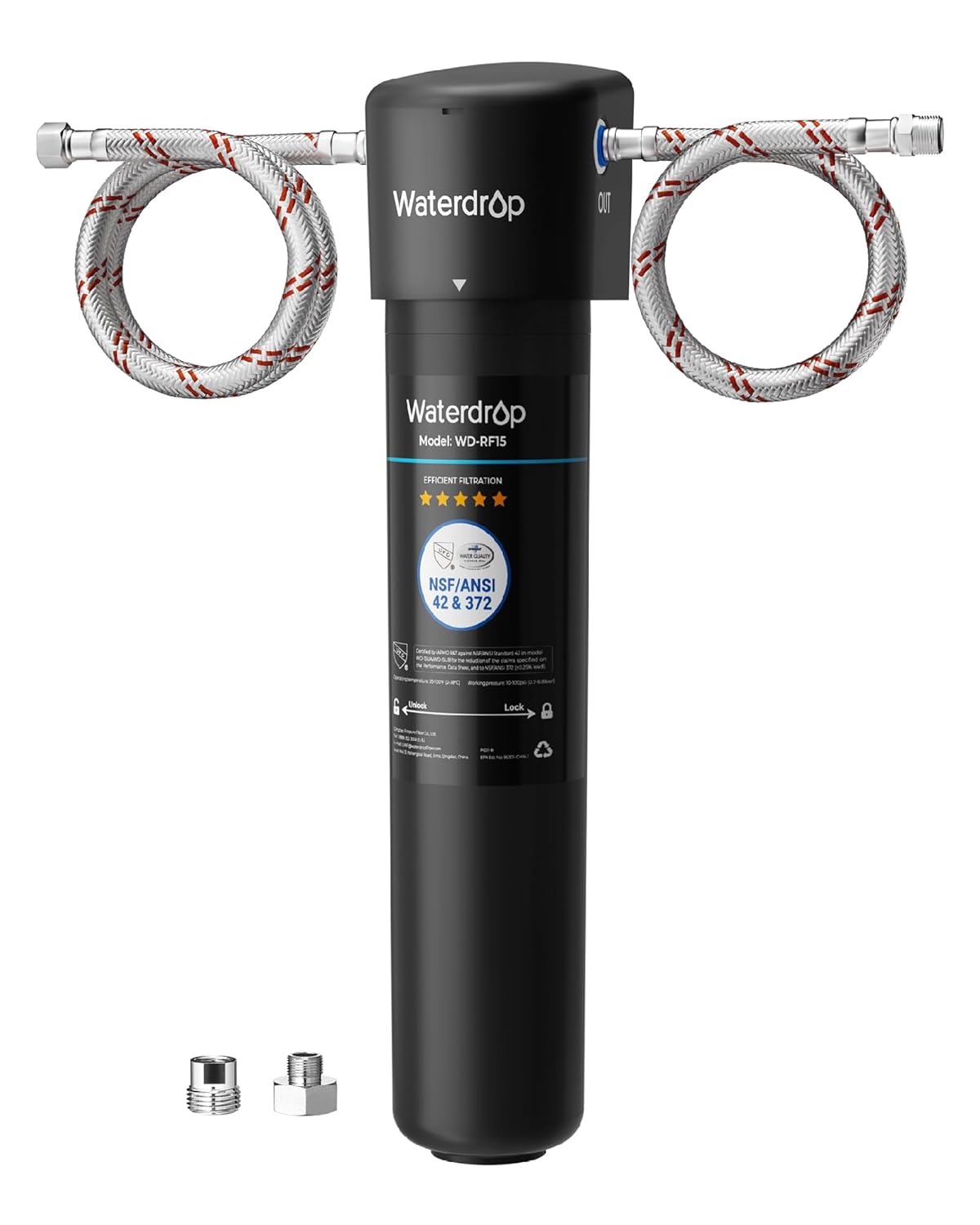
Waterdrop WD-15UA Under-Sink Filter
| Purification Method | Activated Carbon |
|---|---|
| Maximum Flow Rate | 0.75 gpm |
| Filter Life Cycle | 2 years |
| Capacity | 19000 gallons |
| Power Source | Mechanical Water Pressure |
The Waterdrop WD-15UA is an under-sink activated carbon filter built for continuous household use and installs with direct push-to-connect fittings to most standard cold-water lines. It is typically mounted under a kitchen or bathroom sink and provides a steady 0.75 gpm flow, making it practical for drinking, cooking, and filling pitchers without a noticeable slowdown. Notable features include NSF/ANSI 42 and 372 related certifications for chlorine and material safety, a stated capability to reduce lead and PFAS-class contaminants, and an unusually long service life rated at 24 months or about 19,000 gallons on municipal cold water. Installation and cartridge changes are simple and tool-light, and the system is designed to resist clogging by increasing filter surface area. Important limitations for well water users are that the system is specified for municipal cold water only and does not treat hot water or high-TDS situations; it also does not claim microbiological disinfection, so it will not replace sediment prefilters or UV treatment needed for bacterial or iron issues common to wells.
Best for: Buyers who prioritize a low-maintenance, certified under-sink filter for municipal tap water and want a long-life cartridge that keeps everyday drinking and cooking water tasting better with minimal upkeep.
Less Ideal for: Homes on untreated well water, properties with bacterial, iron, or very high TDS issues, or anyone who needs hot-water filtration or proven microbiological protection should look at dedicated well-specific systems instead.
- Long rated service life of about 24 months or 19,000 gallons under municipal cold-water conditions
- Push-to-connect fittings and included adaptors make installation quick without a plumber
- NSF/ANSI 42 and 372 certifications for chlorine reduction and material safety
- Maintains a usable flow rate (0.75 gpm) suitable for everyday kitchen use
- Designed for municipal cold water and not intended for well water or hot water applications
- Does not provide microbiological disinfection so it will not address bacteria or viruses
Verdict: Choose this if you want a certified, low-maintenance under-sink carbon filter that delivers long service life and reliable taste and chlorine reduction for municipal cold water.
Choosing the Right Well Under-Sink Water Filter: Key Factors to Consider
Contaminant Coverage
Know the specific water quality issues in your well before selecting a filter. Private wells commonly have sediment, iron, manganese, hydrogen sulfide, and occasionally bacteria or elevated nitrates. Different filter stages target different problems: sediment prefilters protect downstream media, activated carbon reduces taste and organic compounds, and specialty media address iron or sulfur. Match the filter's stated micron ratings and media types to your well's lab results.
Choosing the right contaminant coverage reduces the chance of repeated cartridge replacements and ensures the filter actually addresses your most pressing water concerns.
Flow Rate and Faucet Performance
Under-sink filter sizing matters for everyday use because a low flow rate can make simple tasks like filling pots slow and frustrating. Check the system's rated flow at realistic conditions and whether it maintains that flow as cartridges load with sediment. Some well-focused filters include bypass valves or parallel cartridges to preserve faucet performance under heavy use.
Consider peak household needs and whether the filter will feed a dedicated drinking-water faucet only or multiple fixtures. Systems that restrict flow too much create tradeoffs between filtration and convenience.
Installation Complexity
Installing an under-sink unit for a well may be straightforward or require moderate plumbing skill. Evaluate whether the system connects to an existing cold-water feed, needs a dedicated shutoff, or requires mounting hardware and drilling. Look for clear instructions, standard compression fittings, and included installation kits. If your well water has hard minerals, plan for pipe fittings that resist corrosion and consider space constraints under the sink where a tall filter head or multiple cartridges might not fit.
If you are uncomfortable cutting tubing or tying into supply lines, factor in professional installation costs when choosing a unit.
Maintenance and Filter Lifespan
Filters for well water often require more frequent attention than municipal systems because of higher sediment loads or specific contaminants that exhaust media quickly. Understand recommended service intervals, whether the system has easily replaceable cartridges, and whether filters can be rinsed or must be discarded. Replacement part availability and clear labeling of cartridge types reduce downtime and prevent incorrect installations.
Also weigh the environmental and time costs of disposal. Systems with longer-life cartridges or dual-stage sediment traps can lower maintenance frequency for busy households.
Materials and Resistance to Well Conditions
Well water can be aggressive toward certain metals and plastics, causing corrosion or premature failure. Choose systems built from corrosion-resistant metals, robust plastics, and reliable seals to handle mineral-rich water. Housing strength matters if pretreatment is needed or if the unit is installed in an unheated basement where thermal changes occur.
Durable materials extend service life and reduce leaks or contamination risk, particularly in wells with high iron or chlorides.
Certification and Testing Information
While not every well-focused filter will have broad third-party certification, transparent lab testing or performance claims tied to specific contaminants provides confidence. Look for systems that document their removal rates for contaminants relevant to wells, such as sediment micron ratings, iron reduction capacity, and any bacterial treatment limits. Documentation helps set realistic expectations for what the filter will and will not do.
Absence of documented testing does not automatically disqualify a product, but documented performance reduces uncertainty for high-stakes water concerns.
Common Well Water Problems and How Point-of-Use Filters Help
Private wells present a predictable set of water quality problems that differ from municipal supplies. Sediment from aquifer particulates, dissolved iron and manganese that cause staining and metallic taste, and hydrogen sulfide that produces a rotten-egg odor are typical. Point-of-use under-sink filters cannot replace well disinfection or whole-house iron treatment, but they can significantly improve drinking water quality by targeting the contaminants most noticeable at the tap.
Under-sink systems are particularly effective at polishing water for taste and clarity, reducing visible particulates and off-flavors before water reaches a glass or kettle. They are also useful where whole-house solutions are impractical because of cost, space, or well system complexity.
- Sediment prefilters protect downstream media and faucets
- Carbon and specialty media improve taste and reduce organics
- Point-of-use filters do not typically handle serious bacterial contamination
Pretreatment Options to Protect Under-Sink Filters
High sediment loads or visible iron can clog under-sink cartridges quickly. Adding a simple inline sediment trap or upgrading to a multi-stage unit with a coarse first-stage cartridge will extend the life of finer media downstream. In some wells, a small water softening or oxidizing iron filter installed at the wellhead or pressure tank is the correct move before any point-of-use equipment.
Pretreatment choices depend on the dominant well issues identified in your water test. For example, heavy sand requires larger pore prefilters while dissolved iron may need oxygenation and filtration before carbon stages.
- Use a coarse sediment filter to capture sand and grit
- Consider wellhead iron removal when dissolved iron exceeds local thresholds
- Match pretreatment to the cartridge change interval you are willing to manage
Installation Tips for Under-Sink Filters on Well Systems
Plan the layout before you cut any supply lines. Identify the cold-water feed, ensure accessible shutoff valves, and verify there is room for cartridge removal and replacement. Measure vertical and horizontal clearances so tall housings or filters with twist-off caps can be serviced easily. Use flexible tubing and standard fittings to simplify a future swap-out.
Test the system after install for leaks and purge air from the cartridges according to the instructions. If your well water has unusual pressure swings, install a simple pressure regulator upstream to protect the filter components.
- Leave 3 to 6 inches clearance under the filter for cartridge removal
- Always depressurize and shut off the water before servicing
- Label connections and replacement dates to streamline future maintenance
Maintaining Performance Over Time
Keep a maintenance log that records filter change dates and any visible changes in water clarity or taste. Establishing a routine prevents surprise failures and preserves filtration performance. If you notice reduced flow before the recommended cartridge interval, check the prefilter and have the well checked for sudden sediment influx from issues like a dropped pump or inflow disturbance.
Store replacement cartridges in a cool, dry place and use the same cartridge types specified by the system to maintain rated contaminant reduction. Some homeowners benefit from setting a recurring reminder tied to household chores to ensure timely cartridge swaps.
- Monitor flow and taste as simple early indicators of cartridge exhaustion
- Keep spare cartridges on hand if your well is prone to seasonal issues
- Follow manufacturer torque guidance to avoid overtightening or leaks
When to Consider Upgrading to Whole-House Treatment
Under-sink filters are ideal for drinking and cooking water, but they do not protect appliances, showers, or laundry from iron staining or mineral buildup. If you are seeing rust stains on fixtures, persistent low pH, or high sediment that affects pumps and valves, whole-house treatment may be more cost-effective long term. Whole-house systems address distribution-wide issues and reduce wear on plumbing and appliances.
Consider the frequency of maintenance and the scale of your water issues. If multiple fixtures show problems or if water quality fluctuates seasonally, consult a water-treatment professional about a wellhead or whole-house approach.
- Point-of-use is best for taste and drinking water clarity
- Whole-house systems protect plumbing and appliances
- Evaluate the total lifecycle cost and maintenance needs before upgrading
How We Chose the Best Well Under-Sink Water Filter
We started by prioritizing systems designed specifically for private well water issues rather than general point-of-use filters. Key evaluation dimensions included contaminant coverage, measured as the types and micron ratings of filtration stages; flow rate and recovery, to ensure comfortable faucet performance; installation complexity, covering tools required and common plumbing fits; maintenance burden, such as filter change interval and cartridge cost; materials and corrosion resistance for long-term use with mineral-heavy water; and verified standards or lab testing where available. We excluded whole-house or under-sink systems intended only for municipal chlorine reduction, and we did not consider single-use pitchers or faucet-mounted devices that lack adequate sediment handling. Products that required significant home-rewiring, structural modification, or specialized trade-only parts were deprioritized. The result is a selection that balances practical contaminant removal for wells, everyday usability, and predictable upkeep.
Our full evaluation process is outlined in our review methodology.
FAQ
How often should I change cartridges for a well under-sink filter?
Change intervals depend on water quality and cartridge type but usually range from three to twelve months. Heavily sedimented wells require more frequent changes; monitor flow rate and taste as indicators to replace earlier.
Can an under-sink filter remove bacteria from well water?
Most standard under-sink filters are not designed for reliable bacterial disinfection. If tests show bacterial contamination, you should consider certified disinfection methods such as UV treatment or targeted whole-house solutions.
Will an under-sink filter remove iron stains in laundry and fixtures?
Under-sink units improve drinking water but do not address the iron throughout your plumbing. For staining issues in laundry and fixtures, whole-house iron removal or wellhead treatment is usually required.
Do I need professional installation for an under-sink well filter?
Many under-sink filters can be installed by a competent DIYer with basic plumbing skills, but professional installation is advisable if you are uncomfortable cutting supply lines, if your under-sink space is constrained, or if the system requires nonstandard fittings.
How do I know which contaminants my well has?
A certified water test from a state or independent lab will identify common well contaminants like iron, manganese, nitrates, and bacteria. Use the test results to match filter media and micron ratings to the actual problems in your well.
Final Verdict
Choosing a well under-sink water filter means balancing the contaminants you need to remove with installation practicality and ongoing maintenance. Prioritize systems that explicitly address the issues flagged by your well test, provide adequate flow for daily use, and use durable materials suited to mineral-rich water. If your water problems extend beyond taste and visible sediment, plan for pretreatment or a whole-house solution. With clear priorities on contaminant coverage and serviceability, you can select an under-sink filter that delivers consistent, better-tasting water at the tap.