
Note: This article contains affiliate links. If you click on these links and make a purchase, we may earn a small commission at no extra cost to you. This helps support our research and content. Read our full affiliate disclosure here.
If you need a dependable water filter for home without electricity, your priorities shift from electronic features to gravity, ceramic, and passive mechanical systems that work continuously without power. The right off-grid filter keeps tap or collected water safe for drinking, reduces reliance on bottled water, and simplifies upkeep when electricity is unavailable. This guide covers seven shortlisted options that excel at nonpowered filtration, with attention to contaminant removal, flow rate, filter life, and ease of maintenance. Read on to compare the practical traits that matter for daily use and long-term reliability.
Top Picks at a Glance
| Best Overall The best all-around choice for most situations | LCF Countertop Water Filter LCF-CF-01 |  |
| Best Quality Built to a higher standard if you want something more solid | Big Berkey 2.25-Gallon System |  |
| Best Value The sweet spot between price and what you get | Purewell 3-Stage Gravity Water Filter |  |
| Best Budget The cheapest option that still gets the job done reliably | Waterdrop PT-05W-L Pitcher |  |
| Top Rated A top-rated pick with lots of positive feedback | Waterdrop WD-10UA Under Sink Filter | 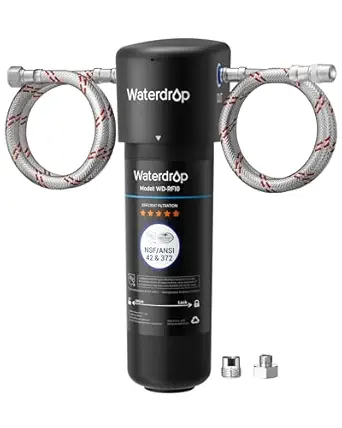 |
| Most Popular A crowd favorite that many people choose with confidence | ZeroWater 23-Cup Dispenser ZD018 |  |
| Best Seller A high-volume bestseller chosen again and again | DREO RO Countertop WF112 | 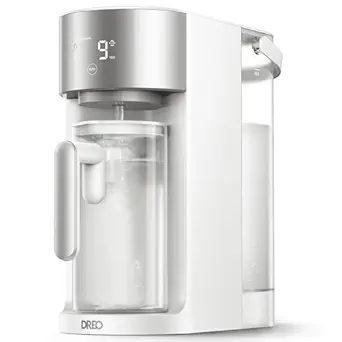 |
LCF Countertop Water Filter LCF-CF-01
| Installation Type | Countertop |
|---|---|
| Purification Method | Silver Ions Enhanced 6-Stage Filter Media |
| Maximum Flow Rate | 1.6 gpm |
| Filter Life Cycle | 2 years |
| Material Type | 304 Food-grade Stainless Steel |
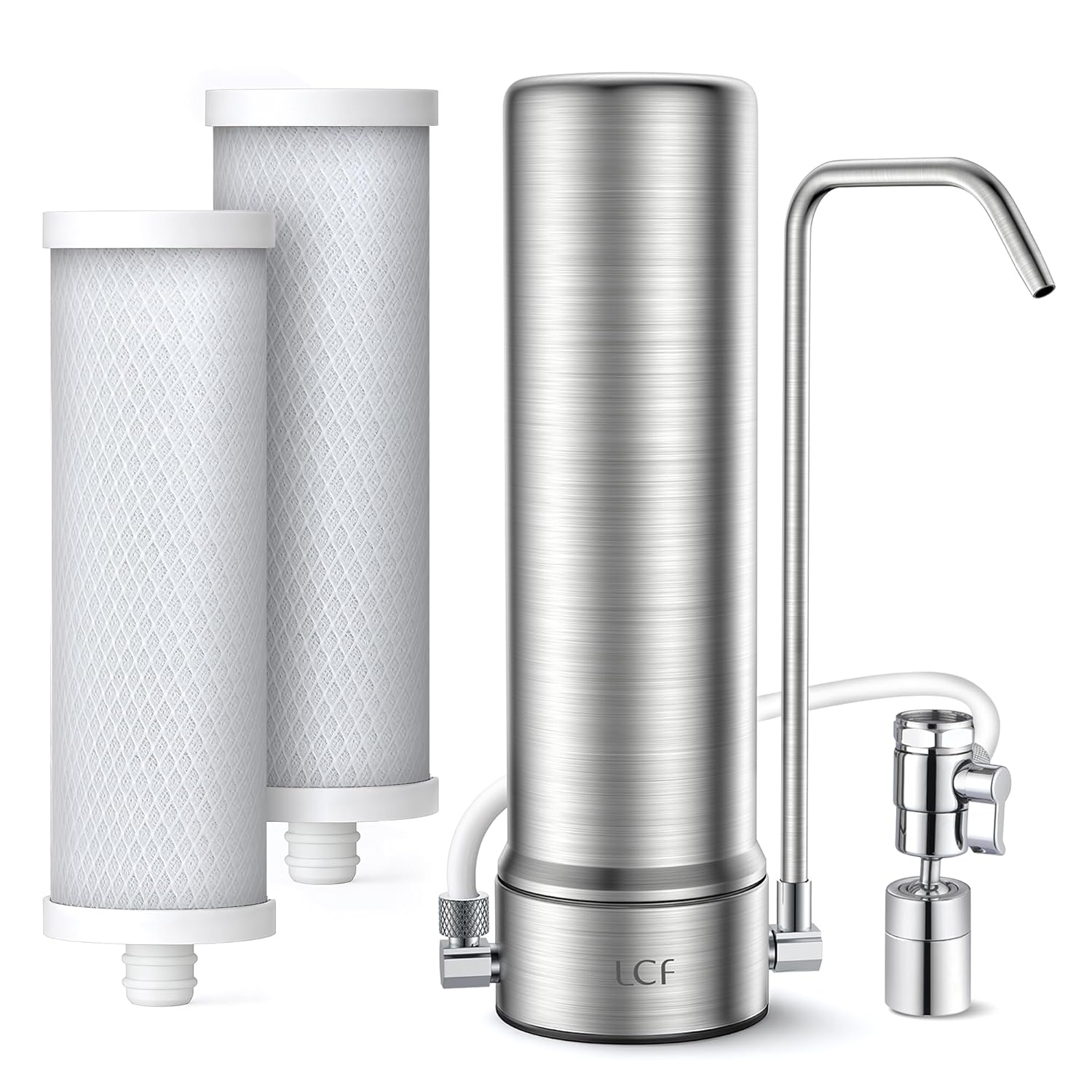
The LCF Countertop Water Filter is a non-electric, pressure-driven unit that connects to a faucet and delivers filtered water at up to 1.6 gallons per minute. It uses two 6-stage cartridges (silver-ion enhanced) combining activated carbon, KDF55, mineralizing media, PP cotton and other layers to cut chlorine, lead, VOCs and reduce PFAS while retaining beneficial minerals. The stainless steel housing and anti-slip base make it durable for countertop use and the 360-degree rotating aerator and multiple faucet adapters simplify installation without drilling. Each cartridge is rated for roughly 8,000 gallons or 12 months under municipal tap conditions, giving the twin-pack about 16,000 gallons total. Limitations include needing a compatible faucet connection and eventual cartridge replacement; filtration performance will vary with local water quality and it does not lower TDS. For buyers who want a durable, high-flow, electricity-free option, it balances long filter life with easy setup, though homeowners with very hard or heavily contaminated source water should verify contaminant reduction needs before relying solely on this unit.
Best for: Buyers who want a reliable, non-electric countertop purifier that delivers fast, drinkable water with long-lasting cartridges and a durable stainless-steel build for everyday home use.
Less Ideal for: Homes that need removal of very high contaminant loads, low-TDS output, or municipal-level certification for specific contaminants should consider more specialized treatment or testing first.
- Six-stage filtration including silver-ion and KDF55 targets chlorine, heavy metals and some VOCs.
- 304 food-grade stainless steel housing resists corrosion and looks durable for countertop use.
- High flow rate (up to 1.6 gpm) provides fast dispensing for everyday use.
- Two cartridges included for up to 24 months or about 16,000 gallons combined under typical conditions.
- Easy installation with multiple faucet adapters and no drilling required.
- Filter effectiveness depends on source water and it does not reduce total dissolved solids (TDS).
- Requires compatible faucet connection and periodic cartridge replacements.
- Claims on PFAS/PFOA reduction may vary by water chemistry and are not a substitute for lab testing.
Verdict: A durable, high-flow countertop filter that provides multi-stage, electricity-free purification and long cartridge life for everyday home drinking water.
Big Berkey 2.25-Gallon System

| Capacity | 8.5 liters |
|---|---|
| Purification Method | Black Berkey proprietary filter media |
| Maximum Flow Rate | 0.03 gpm |
| Supported Water TDS Level Maximum (PPM) | 1000 |
The Big Berkey 2.25-gallon gravity-fed system turns ordinary tap or freshwater into drinkable water using two authentic Black Berkey BB9-2 filter elements housed in polished AISI 304 stainless steel chambers. You pour water into the upper chamber, it flows through the proprietary filter media at a slow, controlled rate and collects in the lower chamber for dispensing through the included spigot, making it useful for everyday kitchen use, beverage prep, and travel situations where no power or plumbing is available. The BB9-2 elements are third-party tested and rated to reduce 200+ contaminants and are advertised to last up to 6,000 gallons per pair, which keeps ongoing costs low. Practical benefits include tool-free setup, a compact footprint for countertop placement, and the option to add more elements or specialty PF-2 elements for fluoride and arsenic reduction. Limitations are the slow flow rate inherent to gravity filtration, which can be a bottleneck for large households or when quick refills are needed, and the system does not address very hot water or extremely high TDS sources beyond the listed maximums.
Best for: Buyers who prioritize high contaminant reduction without relying on electricity and want a durable, low-maintenance countertop solution for everyday drinking water.
Less Ideal for: People who need fast-volume dispensing for large families or who require hot-water filtration or treatment for very high-TDS industrial sources should consider other options.
- Gravity-powered operation requires no electricity or plumbing
- Stainless steel chambers are durable and kitchen-friendly
- Black Berkey BB9-2 elements are third-party tested and reduce 200+ contaminants
- Compact countertop footprint suitable for small to medium households
- Expandable filtration — can add additional elements or optional PF-2 cartridges
- Low maximum flow rate makes filling large containers slow
- Upper temperature rating is low so it is not intended for hot water use
Verdict: Choose the Big Berkey 2.25-gallon system when you want reliable, high-level contaminant reduction on the countertop without any electricity.
Purewell 3-Stage Gravity Water Filter

| Purification Method | Activated Carbon, Silver Ion, Hollow Fiber UF Membrane |
|---|---|
| Capacity | 2.25 gallons |
| Filter Life Cycle | 6 months |
| Supported Water TDS Level Maximum (PPM) | 500 |
| Upper Temperature Rating | 100 °F |
The Purewell 3-stage gravity water filter is a non-electric countertop system that uses a hollow fiber 0.01μm UF membrane, silver ion layer, and activated carbon block to cut chlorine, sediment, rust, organic material, and some heavy metals. You fill the upper stainless-steel chamber and gravity pushes water through the composite filter into the lower chamber for dispensing through a stainless spigot, making it useful indoors or outdoors and during power outages. Notable benefits are the very small pore size for fine particulate removal and NSF/ANSI 42 and 372 certifications for chlorine reduction and lead-free materials, plus a robust 304 stainless housing and included stand and spigot. Filters are rated for roughly 3,000 gallons each (6,000 gallons total) and the manufacturer recommends replacing elements about every six months depending on water quality. Limitations are that it does not reduce TDS, it relies on periodic manual refilling, and flow depends on head pressure so very slow fills or smaller pours are possible compared with powered systems.
Best for: Buyers who want a reliable, maintenance-focused countertop filter that produces high-clarity water without electricity and who prioritize durable, certified materials over automated convenience.
Less Ideal for: People who need active reduction of dissolved minerals or who prefer hands-off, high-volume dispensing from a plumbed or electric system.
- Very fine 0.01μm hollow fiber UF membrane captures tiny particulates
- NSF/ANSI 42 and 372 certifications for chlorine reduction and lead-free construction
- 304 food-grade stainless-steel housing and included spigot and stand improve durability and fit
- Non-electric gravity operation works during outages and outdoors
- Does not lower total dissolved solids (TDS)
- Requires regular manual refilling and periodic filter replacements
- Flow rate and dispense speed depend on gravity and can be slower than powered filters
Verdict: Choose this gravity countertop filter if you need a durable, certified no-electric system that removes very fine particulates and chlorine while working reliably during power outages.
Waterdrop PT-05W-L Pitcher

| Capacity | 7-Cup |
|---|---|
| Filter life | Up to 3 months / 200 gallons |
| Certifications | NSF/ANSI 42 & 372 |
| Material | BPA-free, lead-free |
The Waterdrop PT-05W-L is a simple countertop water filter pitcher designed for everyday drinking water without electricity. It uses an activated carbon fiber filter that is NSF/ANSI 42 and 372 certified to reduce chlorine taste and odor and tested to remove substances including PFOA/PFOS, iron, copper, and mercury, delivering cleaner-tasting water. The unit is sold with one replacement filter and a mechanical dial on the lid to track the filter lifespan, which the brand rates at up to 3 months or 200 gallons depending on use. The slim design fits in many refrigerator doors and the BPA-free construction keeps handling straightforward; no power, plumbing, or installation skills are required. Practical benefits include lower ongoing bottled-water costs and less frequent filter swaps thanks to the extended-life cartridge, but it does not reduce total dissolved solids so it will not soften or substantially change mineral content. For those wanting a low-maintenance, nonpowered pitcher that focuses on taste and common contaminants, this is a solid budget-friendly option.
Best for: Buyers who want an affordable, no-electricity countertop pitcher that improves taste and reduces common contaminants with minimal upkeep.
Less Ideal for: People seeking water demineralization, softening, or systems that significantly lower TDS should consider other technologies.
- NSF/ANSI 42 and 372 certified for chlorine, taste, and certain contaminants
- Long-life filter rated up to 200 gallons or about 3 months
- Mechanical life recorder on the lid to track filter changes
- BPA-free, slim pitcher that fits refrigerator doors and needs no power
- Does not reduce total dissolved solids so minerals and hardness remain
Verdict: A low-cost, electricity-free pitcher that reliably improves taste and reduces common contaminants with a longer-lasting replacement filter.
Waterdrop WD-10UA Under Sink Filter

| Installation Type | Under Sink |
|---|---|
| Purification Method | Activated Carbon |
| Maximum Flow Rate | 2.5 gpm |
| Filter Life Cycle | 1 years |
| Supported Water TDS Level Maximum (PPM) | 700 |
The Waterdrop WD-10UA is a mechanical, under-sink activated carbon filter that connects directly to cold water lines and works without power, making it suitable for homes looking for a reliable, low-maintenance option. It installs with push-to-connect fittings and a twist-and-lock cartridge for tool-light setup and quick replacements, and the package includes hoses and a 3/8"–1/2" converter for common sink connections. Rated for about 12 months of service on municipal water and NSF/ANSI 42 & 372 certified components, the system targets chlorine, lead, PFAS/PFOA/PFOS, and common taste and odor issues while retaining beneficial minerals. The unit offers a steady flow (tested up to 0.75 gpm at 60 psi and a claimed 1.33 gpm from the 3/8" outlet) so it supports drinking and cooking needs without noticeable slowdown. Limitations include that it is intended for cold municipal water only, not well or hot water, and it uses a single cartridge design so deeper multi-stage contaminant removal requires different Waterdrop filter variants or later upgrades.
Best for: Buyers who prioritize a dependable, no-power under-sink filter for improving tap taste and reducing chlorine, lead, and certain PFAS in municipal cold water.
Less Ideal for: Households relying on well water, users needing advanced multi-stage contaminant removal, or those who want hot-water filtration under the sink.
- Operates entirely by water pressure so no electricity or power hookups are required
- NSF/ANSI 42 & 372 approved components and certified reduction claims for common contaminants
- Twist-and-lock cartridge and push-to-connect fittings enable quick installation and fast filter changes
- Compact single-canister design fits easily under most sinks and includes common fittings and hoses
- Designed only for cold municipal water and not suitable for well or hot water applications
- Single-stage activated carbon cartridge limits removal of some contaminants compared with multi-stage systems
Verdict: A simple, factory-quality under-sink carbon filter that reliably improves municipal cold tap water without any electricity.
ZeroWater 23-Cup Dispenser ZD018

| Capacity | 5.4 liters |
|---|---|
| Purification Method | Ion Exchange |
| Power Source | Manual/Gravity-fed |
| Included Components | Dispenser, 5-Stage Filter, TDS Meter |
The ZeroWater 23-Cup Dispenser is a manual, gravity-fed filtration system built for countertop use and small offices. Water is poured into the top reservoir and passes through a 5-stage ion exchange filter that significantly reduces total dissolved solids and is IAPMO certified to reduce lead, PFOA/PFOS, chromium, and mercury. The unit includes a TDS meter so you can check dissolved solids and know when the filter needs replacement, and Ready-Pour technology lets you dispense while the reservoir is still filling. Its 23-cup capacity and spigot make it convenient for filling glasses and bottles without electricity. The dispenser is made of BPA-free plastic and ships with one filter. The main limitations are that it is a countertop pitcher-style system with ongoing filter replacements and is only compatible with ZeroWater replacement filters, so running costs and filter availability should be considered for long-term use.
Best for: Buyers who prioritize verifiable contaminant reduction and want a no-electricity countertop solution that lets them monitor water quality with a meter and dispense large volumes easily.
Less Ideal for: People seeking a maintenance-free or whole-house solution or those who prefer systems with universal third-party filter compatibility should look elsewhere.
- Five-stage ion exchange filtration certified to reduce lead, PFOA/PFOS, chromium, and mercury
- Includes a TDS meter to objectively track water quality and filter life
- Large 23-cup reservoir and spigot support easy dispensing without power
- Ready-Pour design lets you use water while the unit continues filtering
- Requires periodic replacement filters and ongoing consumable cost
- Only compatible with brand replacement filters, limiting third-party options
Verdict: Choose this ZeroWater dispenser if you want a large-capacity, electricity-free filter system with certified contaminant reduction and a TDS meter for measurable reassurance.
DREO RO Countertop WF112

| Purification Method | Reverse Osmosis |
|---|---|
| Capacity | 3 liters |
| Pure to Drain Rate | 3:1 |
| Included Components | RO body, RO filter, autofill pitcher |
| Other Features | Built-in TDS meter; Change filter indicator; Self-cleaning |
The DREO WF112 is a countertop reverse osmosis purifier designed for households that want RO-quality water without plumbing changes. It sits on the counter, filters through a 7-stage RO cartridge and stores treated water in a 3-liter tank while supplying an included 1.1L autofill pitcher for easy servings. The unit reports raw and purified TDS and shows filter life so you can confirm water quality and know when to replace the cartridge. Self-cleaning auto-flush and a touch-control panel simplify maintenance, and the twist-to-install filters make replacements straightforward. Its 3:1 pure-to-drain ratio is more water-efficient than many RO systems, and the filter life rating (about 265 gallons) lets you estimate running costs. Limitations include the slower RO flow compared with gravity or non-RO pitcher filters and the need to replace RO cartridges on schedule; it also requires countertop space and occasional descaling. For buyers who prioritize measured, high-removal filtration on a plug-free countertop unit, the DREO offers a reassuring, low-hassle experience.
Best for: A cautious buyer who wants reliable, measurable removal of contaminants from tap water without installing under-sink plumbing and values built-in indicators that verify performance.
Less Ideal for: People who need very high daily output or instant large-volume dispensing or who prefer zero ongoing cartridge replacements and no water waste.
- Seven-stage RO filtration with SGS-tested contaminant removal for broad impurity reduction
- Built-in TDS meter and filter-life indicator for real-time water-quality confidence
- Auto-fill pitcher and self-cleaning auto-flush reduce hands-on maintenance
- Twist-to-install filter design makes cartridge replacement quick and user-friendly
- Compact countertop design that does not require permanent installation
- RO process is slower and produces drain water compared with non-RO filters
- Filter lifespan (about 265 gallons) requires periodic replacement costs
Verdict: If you want plug-free countertop RO water with real-time TDS monitoring and low-hassle upkeep, the DREO WF112 is a practical, risk-averse choice.
Choosing the Right Water Filter for Home Without Electricity: Key Factors to Consider
Filtration Technology
Different nonpowered filters rely on distinct mechanisms, including gravity-fed activated carbon, ceramic microfilters, slow sand, and mechanical screen systems. Each technology targets a range of contaminants differently: ceramic elements block bacteria and protozoa physically, while activated carbon reduces taste, odor, and organic chemicals. Understanding the underlying technology helps predict which contaminants will be reduced and which may require additional treatment.
For household buyers, technology choice affects both immediate water quality and long-term upkeep. Ceramic and mechanical filters are often cleanable and reusable, lowering recurring cost, while carbon-based media may need periodic replacement to retain chemical adsorption capacity. Consider stacking technologies or using a prefilter when source water is turbid to protect more delicate media.
Flow Rate and Capacity
Without an electric pump, flow depends on gravity head, manual pumping, or pressure differential built into the device. Flow rate determines how quickly you can access drinking and cooking water during daily use and in an emergency. Gravity-fed multi-stage pitchers or countertop units can be fine for small households, but larger homes may need higher-capacity vessels or multiple units to meet demand.
Capacity also covers how much water the filter will process before media replacement or cleaning. A high-capacity ceramic element or a larger activated carbon canister reduces the frequency of maintenance cycles, which is especially valuable when electricity or supply chains are limited. Match estimated household consumption to stated throughput and expected service life to avoid shortages.
Target Contaminants
Know the likely contaminants in your water source before selecting a system. Private wells and surface sources often carry bacteria, protozoa, and sediment, while older municipal supplies or industrial areas might have chlorine byproducts, volatile organics, or metals. Nonpowered filters vary in which of these they address effectively.
If microbiological safety is a concern, choose systems with certified bacteria and protozoa removal ratings or pair filters with a point-of-use disinfectant. For chemical tastes and odors, carbon adsorption is important. For heavy sediment, use a prefilter or settling step to extend media life. Matching the filter to likely contaminants ensures the system solves real risks rather than simply improving clarity or taste.
Maintenance Requirements and Replaceable Parts
Maintenance ranges from simple periodic scrubbing of a ceramic candle to replacing sealed carbon cartridges. Consider how easy it is to access, clean, and replace parts without tools or professional help. Homeowners without reliable electricity may also face supply constraints for replacement cartridges, so systems that include cleanable elements or have widely available generic replacements are preferable.
Check if the manufacturer offers clear instructions for cleaning frequency and end-of-life indicators. Systems with user-serviceable seals and readily obtainable replacement parts reduce downtime and frustration. Also evaluate whether the maintenance process risks contaminating clean water; a straightforward procedure with minimal handling lowers that risk.
Installation and Space Needs
Nonpowered filters come in many form factors: countertop pitchers, gravity tanks, inline plumbing mounts, and portable backpacks. Where you place the unit affects flow and convenience. Gravity systems need an elevated vessel to produce flow, while countertop filters sit at working height but may have lower capacity.
Consider the physical footprint and whether you need a permanent mount or a portable setup for seasonal use. Accessibility for cleaning and cartridge swaps is part of installation planning. For homes without electricity, choose configurations that do not require a pump or special fittings, and make sure the unit can be used with common household containers or faucet adapters if necessary.
Certifications and Independent Testing
Look for systems with third-party testing that verifies claims for specific contaminants. Certifications or test reports covering bacterial, protozoan, particulate, and chemical reduction provide measurable assurance of performance. When certifications are absent, detailed lab reports from accredited labs can still offer actionable data.
Certification also often implies clearer instructions and documented maintenance schedules, which is helpful when you need predictable real-world performance. For buyers relying on filters without power, proven efficacy is more important because remediation options are more limited if a system fails.
How Gravity-Fed Systems Work
Gravity-fed filters use elevation to move water through filtration media without pumps. Clean water collects in a lower chamber as source water slowly passes through ceramic elements, activated carbon, or layered media. Flow rates depend on the head height, filter pore size, and media saturation, so larger vessels or stacked elements yield higher throughput.
- No electricity needed; flow driven by gravity
- Good for countertop or off-grid setups
- Flow rate improves with greater head height
When to Prefer Ceramic Elements
Ceramic filters physically trap bacteria and protozoa and can often be cleaned in place by gentle scrubbing, restoring flow while retaining the element. They are a strong choice where microbiological contamination is the main concern and where replacements may be hard to source.
- Reusable with cleaning
- Effective against bacteria and protozoa
- Slower flow than some carbon systems
Using Carbon for Taste and Chemicals
Activated carbon excels at improving taste and removing chlorine and many organic chemicals that affect odor. Because carbon removes dissolved compounds by adsorption, it eventually saturates and requires cartridge replacement or regeneration. Combine carbon with a particulate or microbiological barrier if your source water contains sediment or pathogens.
- Reduces taste and odors
- Requires periodic replacement
- Best paired with a particle barrier
Portable and Emergency Options
For emergency preparedness or mobile use, small gravity or pump-free microfilters fit into backpacks or cupboards and provide immediate protection against bacteria and protozoa. These options are lightweight and require minimal setup but usually have lower throughput and shorter service life than permanent home systems.
- Lightweight and compact
- Fast deployment during outages
- Lower capacity than permanent units
Integrating Filters with Existing Plumbing Without Power
You can add passive point-of-use filters to a faucet or install a counter-top system that diverts water through the media when needed. Avoid relying on inline filter models that assume pressure from a pump or mains pressure that may be inconsistent in your home. Instead, choose designs that operate under modest pressure or gravity.
- Countertop units are simple to set up
- Ensure the filter works under available pressure
- Avoid systems that need continuous mains pressure
How We Chose the Best Water Filter for Home Without Electricity
We focused on filters designed to operate without any electrical input, then narrowed the field using measurable, homeowner-focused filters. Our selection criteria emphasized filtration performance for common household contaminants, sustained flow rate under gravity or hand-pumped conditions, and realistic service life between cleanings or media replacements. Portability and installation flexibility mattered for homes that may rely on stored, well, or municipal sources. Ease of maintenance and the availability of replaceable cartridges or cleanable elements were prioritized to keep long-term upkeep straightforward. We excluded any unit that requires mains power, batteries, or constant electronic control. We also filtered out specialty systems that address only a single contaminant without offering broader microbiological or particulate protection. Final picks had to balance demonstrable removal capability with practical everyday factors such as serviceability, parts availability, and predictable performance without electrical assistance.
Our full evaluation process is outlined in our review methodology.
FAQ
Can a nonpowered filter remove bacteria and viruses?
Most gravity and ceramic filters are effective against bacteria and protozoa but not all remove viruses. Viruses are much smaller and often need specialized ultrafiltration, chemical disinfection, or combined treatment to achieve reliable reduction.
How often do I need to replace filter cartridges without electricity?
Replacement frequency depends on source water quality and daily use. Carbon cartridges may need replacing after processing a few hundred to a few thousand liters, while cleanable ceramic elements can last years with regular maintenance. Monitor flow decline and any taste or odor changes as indicators.
Will a gravity system work for a family of four?
It can, but you must match capacity and flow to household demand. Larger gravity tanks or multiple filter units are better for higher daily consumption. Smaller countertop or portable options may struggle to keep up without frequent refills.
Do nonpowered filters require special tools to maintain?
Most are designed for simple homeowner maintenance and require no special tools. Cleaning typically involves scrubbing elements, replacing cartridges, or rinsing screens. Check that replacement parts are accessible and that instructions are clear.
Can these filters handle cloudy or turbid water?
Turbid water shortens media life and reduces flow. Use a settling step, prefilter, or coarse mechanical screen to remove sediment before the main filter. Some gravity systems incorporate a sediment chamber to extend service intervals.
Final Verdict
Prioritize the contaminant risks, daily demand, and how easy the system is to maintain without electricity when choosing a home water filter for off-grid use. Ceramic and gravity systems excel where microbiological protection and cleanability matter, while carbon-based units improve taste and chemical reduction but need scheduled cartridge swaps. Match capacity and flow to your household and consider systems with widely available replacement parts or cleanable elements. Choose a setup that balances proven contaminant reduction with realistic upkeep obligations so you can rely on safe water even when power is unavailable.