
Note: This article contains affiliate links. If you click on these links and make a purchase, we may earn a small commission at no extra cost to you. This helps support our research and content. Read our full affiliate disclosure here.
Choosing the right water filter for your kitchen sink affects daily drinking, cooking, and appliance longevity. The right system removes common contaminants, reduces chlorine taste and odor, and fits your under-sink or faucet setup without excessive maintenance. This guide shortlists the top options for kitchen-sink use and explains how we evaluated filtration effectiveness, installation, and upkeep. Use these picks to match a filter to your water concerns and household habits before you dig into product specs.
Top Picks at a Glance
| Best Overall The best all-around choice for most situations | Express Water RO5DX 5-Stage RO |  |
| Best Quality Built to a higher standard if you want something more solid | iSpring RCC7AK-BN RO System |  |
| Best Value The sweet spot between price and what you get | Waterdrop WD-10UA Under-Sink Filter | 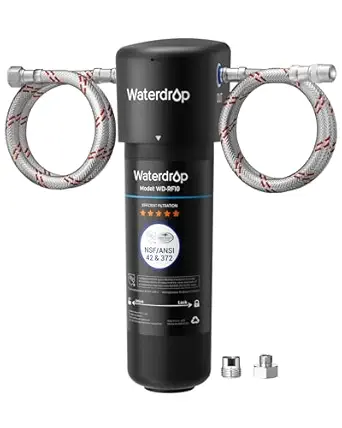 |
| Best Budget The cheapest option that still gets the job done reliably | Vortopt Faucet Water Filter T1 |  |
| Top Rated A top-rated pick with lots of positive feedback | Waterdrop WD-10UB Under Sink Filter |  |
| Most Popular A crowd favorite that many people choose with confidence | Brita On Tap Faucet Filter System |  |
| Best Seller A high-volume bestseller chosen again and again | CECEFIN Faucet Sink Filter Extender |  |
Express Water RO5DX 5-Stage RO

| Filtration | SED, GAC, ACB, ROM, PAC |
|---|---|
| Gallons Per Day | 50 GPD |
| Maximum Flow Rate | 0.8 gpm |
| Installation Type | Under Sink |
| Power Source | No Power Needed |
The Express Water RO5DX is an under-sink reverse osmosis system designed to deliver very high-purity drinking water for a household. It uses five filtration stages — sediment, granular activated carbon, activated carbon block, RO membrane, and post-carbon — to reduce a wide range of contaminants including heavy metals, fluoride, chlorine, VOCs, and many pharmaceuticals. Installation is intended for a typical kitchen under-sink setup and the package includes a brass/chrome faucet, quick-connect fittings, a 4 gallon tank, and a leak-detection fabric disk. The system produces up to 50 GPD with a faucet flow of about 0.8 gpm and operates without electricity, though it requires adequate incoming water pressure. Filter changes are straightforward and labeled for easy swaps, and the manufacturer supplies extra filters for the first year. Expect wastewater discharge of roughly one to three gallons for each gallon produced, and plan space under the sink for the tank and housings. This is a compact, high-performance RO option for cooks and households that want near-bottled-water purity at the sink with relatively simple maintenance.
Best for: Buyers who want consistently very pure drinking and cooking water at the kitchen sink and value NSF-tested multi-stage RO performance with straightforward maintenance.
Less Ideal for: People who prioritize zero wastewater systems, those with low household water pressure without a booster, or renters who cannot allocate under-sink space or modify plumbing.
- Five distinct filtration stages including an RO membrane for broad contaminant reduction
- Produces up to 50 gallons per day, sufficient for most family kitchens
- Includes faucet, tank, quick-connect fittings and extra filters for initial setup
- No electricity required so it works during outages and is simple to operate
- Quick-connect and color-labeled housings make filter changes easier
- Produces wastewater at a rate of about 1–3 gallons per gallon produced
- Requires adequate incoming water pressure and space under the sink for the tank
Verdict: A compact, NSF-tested 5-stage RO system that delivers near-bottled-water purity at the kitchen sink with easy installation and maintenance.
iSpring RCC7AK-BN RO System

| Purification Method | Reverse Osmosis, Alkaline, Activated Carbon, Carbon block |
|---|---|
| Power Source | No Power Needed |
| Maximum Flow Rate | 284 liters_per_day |
| Operating Pressure Range | 70 psi |
| Filter Life Cycle | 6 months |
The iSpring RCC7AK-BN is a six-stage under-sink reverse osmosis system designed to produce low-TDS, mineral-balanced drinking water for a kitchen faucet. It uses sediment and carbon prefilters, an NSF/ANSI 58 certified RO membrane, and a post-stage alkaline mineral cartridge to raise pH and reintroduce beneficial minerals, while a pressurized storage tank supplies water on demand. Installation is aimed at DIYers: push-to-connect fittings, color-coded tubing, and a convertible feed adapter simplify hookup and the top-mounted faucet fastener avoids crawling under the sink. The clear first-stage housing makes visual filter checks easy, and the unit requires no electricity so it works with standard household plumbing and most refrigerators if you add an ice maker kit. Expected filter lifecycles and replacement part SKUs are listed, but routine maintenance and periodic filter changes are required to maintain performance, and the system footprint and tank mean you need adequate under-sink space. For buyers focused on cleaning performance and lab-verified contaminant reduction, this system delivers factory-quality RO results with a mineral boost for better tasting water.
Best for: Buyers prioritizing proven contaminant removal and strong, consistent RO performance who want a factory-certified system that also restores minerals for better taste.
Less Ideal for: Users with very limited under-sink space or those seeking a zero-maintenance countertop filter solution should consider more compact or cartridge-based alternatives.
- NSF/ANSI 58 full-system certification for verified contaminant reduction
- Six-stage filtration including an alkaline remineralization stage for improved taste and pH
- Operates without electricity and integrates with standard plumbing
- Top-mounted faucet fastener and push-to-connect fittings simplify DIY installation
- Transparent first-stage housing lets you visually monitor sediment buildup
- Requires under-sink space for the multi-canister unit and storage tank
- Regular filter and membrane replacements are needed to maintain performance
Verdict: Choose the RCC7AK-BN when you want a proven, NSF-certified RO system that reliably removes contaminants and adds back minerals for better-tasting drinking water.
Waterdrop WD-10UA Under-Sink Filter

| Installation Type | Under Sink |
|---|---|
| Purification Method | Activated Carbon |
| Maximum Flow Rate | 2.5 gpm |
| Filter Life Cycle | 1 years |
| Supported Water TDS Level Maximum (PPM) | 700 |
The Waterdrop WD-10UA is an under-sink activated carbon filter that connects directly to a standard 3/8" cold-water feed to deliver improved-tasting water for drinking and cooking. Installation uses push-to-connect fittings and a twist-and-lock cartridge so setup is straightforward and filter swaps take seconds, making it practical for renters and DIYers. The cartridge is NSF/ANSI 42 and 372 certified for reduction of chlorine, lead, and certain PFAS compounds, and the enlarged filtration area is intended to reduce clogging while extending life to about 12 months with typical municipal water. Flow is adequate for kitchen tasks with a tested flow up to around 1.33 gpm from the 3/8" outlet and a maximum spec of 2.5 gpm under ideal conditions. Limitations: it is for cold municipal water only (not suitable for well or hot water) and does not lower TDS or remove all contaminants that require finer membranes, so users wanting ultra-fine particulate or bacterial removal should consider higher-level systems. For straightforward taste and chemical reduction under the sink, it is a convenient, low-maintenance option.
Best for: Buyers who prioritize a low-maintenance, easy-to-install under-sink filter to improve tap water taste and reduce common chemical contaminants in a rented or primary kitchen.
Less Ideal for: People who need bacterial removal, very low TDS, or treatment for well water should choose a UF, RO, or dedicated well-water system instead.
- NSF/ANSI 42 and 372 certified for chlorine and lead reduction
- Quick twist-and-lock cartridge with push-to-connect fittings for fast installation and replacement
- Designed filtration area to minimize clogging and extend cartridge life
- Compact under-sink footprint suitable for tight spaces
- Tested to provide steady flow (up to 1.33 gpm from 3/8" outlet) for kitchen use
- Only for cold, municipal water — not suitable for well or hot water
- Does not reduce TDS or provide ultrafine/antimicrobial filtration like UF/RO systems
Verdict: Choose the WD-10UA if you want a compact, certified under-sink filter that is easy to install and keeps tap water tasting better with minimal upkeep.
Vortopt Faucet Water Filter T1

| Installation Type | Faucet Mount |
|---|---|
| Purification Method | Activated Carbon |
| Maximum Flow Rate | 1.78 gpm |
| Filter Life Cycle | 3 months |
| Capacity | 400 gallons |
The Vortopt T1 is a compact faucet-mount filter designed to deliver faster filtered water without under-sink installation. It attaches to most standard faucets with the included adapters and offers two water modes so you can switch between raw and filtered flow. The cartridge uses a 5-stage sequence with activated carbon fiber to reduce chlorine, taste, and odor while maintaining a high flow rate (about 1.78 gpm), so filling bottles and washing produce is quick. Installation is straightforward and lightweight plastic construction keeps it inexpensive, and NSF/ANSI 42 certification confirms basic chlorine/taste reduction performance. Expect the cartridge to last roughly 400 gallons or 3 to 6 months depending on use, and note it does not lower TDS or remove dissolved minerals. The T1 is a practical, low-cost choice when you want noticeably better-tasting tap water with minimal fuss but do not need complete contaminant removal.
Best for: Buyers who want an affordable, easy-to-install faucet filter that noticeably improves taste and odor without plumbing changes and who prioritize low upfront cost and convenience.
Less Ideal for: Homes needing heavy contaminant removal, lower TDS, or a more durable metal finish should look at under-sink or RO systems instead.
- NSF/ANSI 42 tested to reduce chlorine, taste, and odor
- High flow rate (~1.78 gpm) keeps filtered water fast for everyday use
- Includes multiple adapters to fit most standard faucets
- 5-stage filtration with activated carbon fiber improves taste and clarity
- Does not reduce TDS or remove dissolved minerals
- Plastic body may feel less durable than metal-bodied alternatives
Verdict: A budget-friendly faucet mount that gives fast, noticeably better-tasting tap water with simple install and NSF-verified chlorine reduction.
Waterdrop WD-10UB Under Sink Filter

| Installation Type | Under Sink |
|---|---|
| Purification Method | Activated Carbon |
| Maximum Flow Rate | 0.75 gpm |
| Filter Life Cycle | 1 years |
| Capacity | 11000 gallons |
The Waterdrop WD-10UB is an under-sink activated-carbon filter designed to deliver clearer, better-tasting cold drinking water through a dedicated stainless steel faucet. It uses multistage filtration and certified filter media to reduce PFAS, PFOA/PFOS, lead, chlorine, sediment and common chemical tastes and odors, while keeping beneficial minerals. Installation is straightforward with push-to-connect fittings and a 3/8"–1/2" converter so it ties into typical cold-water lines without tools, and the twist-and-lock cartridge makes replacements quick. The system is rated for roughly 11,000 gallons and a tested flow around 0.75 gpm at 60 psi, with the faucet capable of higher peak flow, so it balances decent throughput for daily use like drinking, cooking and filling pitchers. Important limits: it is intended only for municipal cold water, not well or hot water, and filter life is about one year depending on water quality. For buyers who prioritize a simple, certified under-sink solution with an included faucet, the WD-10UB is dependable and easy to maintain.
Best for: Buyers who want a reliable, certified under-sink filter with a separate faucet and simple maintenance for everyday drinking and cooking water.
Less Ideal for: Homes using untreated well water, setups that need hot-water filtration, or users who want whole-house or ultrafine particle filtration beyond 0.5 micron performance.
- Reduces PFAS, PFOA/PFOS, lead, chlorine, bad taste and odor using multistage activated carbon filtration
- Includes a lead-free stainless steel dedicated faucet for separate drinking water access
- Tool-free push-to-connect fittings and twist-and-lock cartridge for fast installation and filter changes
- Certified to NSF/ANSI 42 and 372 and tested to NSF/ANSI 53 for lead reduction
- Designed only for cold municipal water so it is not suitable for well water or hot water applications
- Filter life and flow depend on incoming water quality and may require annual replacement
Verdict: A dependable, certified under-sink filter with an included faucet and tool-free serviceability for reliable daily drinking water.
Brita On Tap Faucet Filter System

| Capacity | 100 gallons |
|---|---|
| Filter Life Cycle | 4 months |
| Maximum Flow Rate | 0.5 gpm |
| Supported Water TDS Level Maximum (PPM) | 1000 |
The Brita On Tap Faucet Filter System mounts to a standard kitchen faucet to deliver filtered water without pitchers or bottled water. Installation is tool-free and uses adapters for most threaded faucets, and the unit offers a choice of filtered or unfiltered flow and three spray options for rinsing or filling. It uses Brita carbon-block technology to reduce chlorine taste and odor, sediment, and a long list of contaminants including lead, and includes a status indicator to show when to replace the cartridge. The filter is rated for about 100 gallons or roughly four months under average household use, and you need to flush a new cartridge for five minutes before the filter life starts. Limitations include incompatibility with pull-out or spray-style faucets and a modest maximum flow rate, so water delivery can be slower than an unfiltered tap. For households wanting a simple, space-efficient counter alternative to pitchers, this provides immediate tap filtration with straightforward maintenance.
Best for: Buyers who prioritize proven contaminant reduction and want an easy, low-effort way to get filtered water directly from a standard kitchen faucet while relying on a familiar brand and visible replacement indicator.
Less Ideal for: Those with pull-out or spray-head faucets or households that need high flow rates for frequent large fills should consider other filtration types or sink-mounted alternatives.
- Tool-free installation with faucet adapters for most standard faucets
- Reduces chlorine taste and odor and certified to reduce lead and multiple other contaminants
- Compact, faucet-mounted design that saves counter space and replaces single-use bottles
- Filter status indicator simplifies knowing when to replace the cartridge
- Does not fit pull-out or spray-style faucets
- Maximum flow rate is limited which can feel slower than unfiltered tap water
Verdict: A compact, easy-to-install faucet-mounted filter that delivers certified reduction of chlorine and lead for buyers who want dependable on-tap filtration with minimal fuss.
CECEFIN Faucet Sink Filter Extender

| Thread Size | Female 55/64" (22mm), Male 15/16" (24mm) |
|---|---|
| Flow Rate | 1.2 gpm |
| Material Type | ABS Aerator, Brass Body |
| Included Components | Swivel aerator, 8 replacement cartridges, washers, wrenches |
This CECEFIN sink filter attaches to most standard faucet threads and combines a small filtration cartridge with a swivel aerator and spray extender. It is typically used on bathroom or kitchen sinks to soften water for face washing, reduce chlorine odor, and to switch between a gentle bubble stream and a stronger spray for rinsing dishes or produce. The unit ships with multiple replacement cartridges and basic installation hardware, and the brass connector plus ABS aerator body and chrome plating give it a durable feel. The 1080-degree foldable arm and ball joint make aiming the outlet and storing the extender simple, and the included carbon-fiber and white 1-micron-style cartridges tackle sediment and some odors. Expect a modest reduction in flow when using the carbon filter and plan to replace cartridges every 1 to 3 months depending on local water quality. It will not fit faucets with non-removable aerators or uncommon thread sizes without an adapter.
Best for: Buyers who want an easy-to-install faucet-mounted filter and extender that improves tap water for face washing and light kitchen tasks while offering flexible targeting and replaceable cartridges.
Less Ideal for: Households that need NSF-certified multi-stage drinking-water purification or have faucets with permanently fixed aerators or unusual thread sizes.
- Built-in replaceable cartridges remove sediment and reduce chlorine and odors
- 1080-degree swivel arm and ball joint for flexible aiming and compact storage
- Includes multiple replacement cartridges and basic installation hardware
- Brass connector with ABS body and chrome plating for better durability
- May require an adapter for faucets with nonstandard or non-removable aerators
- Carbon filter can noticeably reduce water flow in lower-pressure faucets
Verdict: A practical faucet-mounted filter and swivel extender that makes sink water gentler and easier to aim while supplying replaceable cartridges for routine maintenance.
Choosing the Right Water Filter for Kitchen Sink: Key Factors to Consider
What Contaminants You Need Removed
Different filters target different contaminants. Carbon-based filters are good for chlorine, taste and odor, while specialty cartridges or multi-stage systems handle lead, cysts, or volatile organic compounds. Knowing which contaminants are present in your supply—from a recent water quality report or a home test—lets you choose a filter with the appropriate certifications.
Selecting a filter rated for the contaminants you care about avoids wasted capacity. For example, if lead reduction is a priority, choose a system explicitly rated for lead. If your utility already treats for most inorganic contaminants, a carbon filter focused on taste and odor may be enough and will typically be less expensive to maintain.
Installation Type and Sink Compatibility
Kitchen-sink filters come in under-sink, countertop, and faucet-mount designs. Under-sink units hide the hardware and usually offer higher capacity but require space under the sink and basic plumbing connections. Faucet-mount filters attach directly to the tap and are easiest to install but can change faucet aeration and may not fit every spout type.
Check your sink cabinet clearance, available shutoff valves, and faucet thread type before selecting a system. Consider whether you want a dedicated filter faucet, which requires drilling or using an existing extra hole, versus a system that shares your primary faucet through a diverter.
Filter Life and Ongoing Maintenance
Filter longevity affects both convenience and operating cost. Longer-life cartridges reduce how often you need to replace parts but can cost more per cartridge. Shorter-life filters might be cheaper up front but require more frequent swaps and can be forgotten, reducing water quality.
Evaluate how easy replacement cartridges are to buy and change. Look for clear replacement schedules expressed in gallons or months and whether the system has indicator features, like pressure drop warnings or change reminders, to prevent performance decline.
Flow Rate and Water Pressure Impact
Some filters noticeably reduce flow rate or pressure, which matters if you use the sink for filling pots or for a high-demand household. Systems with larger housings or bypass designs tend to preserve flow better, while fine-pore membranes can slow water delivery.
Consider household habits and whether a slightly lower flow is acceptable. If not, prioritize systems that advertise minimal pressure loss or larger-element designs that sustain normal tap performance.
Certifications and Material Safety
Certifications from recognized third parties validate claims about contaminant reduction and safety. Look for systems certified for the specific contaminants you care about rather than general claims. Materials that contact water should be food-safe and corrosion-resistant to prevent leaching or premature failure.
Knowing which standards a filter meets gives confidence in performance and longevity. Also check for warranty terms and whether replacement parts are made from durable, nonreactive materials.
Space, Aesthetics, and Installation Footprint
Under-sink systems require cabinet space and clear access for cartridge changes. Countertop or faucet-mounted units occupy visible counter or faucet area and can affect kitchen aesthetics. Dedicated filtered-faucet installations need an extra hole or adapter, which can look more integrated but is more permanent.
Match the system footprint to your available space and your tolerance for visible hardware. If cabinet storage is limited, a compact or wall-mounted option may be preferable even if it has slightly shorter filter life.
Under-Sink Vs Faucet-Mount: Pros and Cons
Under-sink systems typically offer higher capacity, better multi-stage filtration options, and a neater appearance since components are hidden. They are a good choice if you want thorough contaminant reduction without altering the look of your faucet area.
Faucet-mount and countertop units are easier to install and often do not require tools, making them suitable for renters or quick retrofits. They may be limited in filter media complexity and can affect faucet ergonomics or counter space.
- Under-sink: higher capacity, concealed, needs plumbing hookup
- Faucet-mount: quick install, visible on faucet, may affect flow
- Countertop: no plumbing changes, occupies counter space, easy maintenance
Matching Filter Capacity to Household Use
Estimate daily filtered water use for drinking, cooking, and other sink tasks. A household that regularly fills pitchers or uses filtered water for cooking needs a higher throughput system to avoid frequent cartridge changes.
Capacity is commonly expressed in gallons or months. Choose a system whose rated capacity aligns with your household consumption so replacement intervals are predictable and manageable.
- Small households: lower-capacity cartridges may suffice
- Large households: prioritize high-capacity or dual-cartridge systems
- Intermittent use: longer storage life and fewer replacements are helpful
Maintenance Tips and Cartridge Replacement Best Practices
Regular, timely cartridge replacement keeps contaminants from breakthrough and prevents bacterial buildup. Follow manufacturer guidance for replacement intervals based on gallons or months, and reset any indicators after servicing.
When changing cartridges, shut off the feed water, relieve pressure, and inspect O-rings and fittings. Keep spare cartridges on hand if your supply or delivery schedules can be variable.
- Turn off the water and open a valve to depressurize before removing housings
- Lubricate O-rings with food-grade lubricant if recommended
- Check for leaks after reassembly and run water to flush new cartridges
Common Installation Challenges and How to Avoid Them
Limited cabinet space, unusual shutoff valve locations, and nonstandard faucet threads are common hurdles. Measure existing plumbing and note where shutoff valves and supply lines sit before buying a system.
If you plan a dedicated filtered faucet, confirm there is an available hole in the sink or deck, or be prepared to use an adapter. For renters, prefer noninvasive options that clamp to the faucet or sit on the countertop.
- Measure clearance under the sink for filter housings
- Confirm faucet thread type for faucet-mount adapters
- Plan for access to change cartridges without uninstalling the system
How to Interpret Filter Certifications and Test Claims
Certification by a recognized testing organization for specific contaminants is the most reliable way to validate claims. Look for certifications that list the exact contaminants tested and the test conditions used.
Understand whether a claim refers to reduction percentages under lab conditions or to standards that simulate real-world use. Prioritize certifications that match the contaminants you want removed rather than general safety statements.
- Check which contaminants and concentrations were tested
- Distinguish between lab reduction claims and real-use ratings
- Prefer systems with clear, documented testing protocols
How We Chose the Best Water Filter for Kitchen Sink
Our editorial selection focused on real-world kitchen-sink needs, prioritizing measurable filtration, straightforward installation, and low ongoing upkeep. We evaluated products based on contaminant reduction capability using third-party test claims or standardized filter ratings, filter life and replacement cost, and the level of flow and pressure retention typical in household plumbing. Ease of installation and compatibility with common sink configurations were weighed heavily, since many buyers install under-sink or attach-to-faucet solutions themselves. Build quality and materials were checked for food-safe certifications and leak-resistant design. We also considered maintenance complexity, including cartridge-change accessibility and whether tools are required. We excluded whole-house systems and point-of-entry solutions because they exceed typical kitchen-sink scope. Heavy commercial or industrial units were not considered. The final list favors systems that balance reliable contaminant reduction, reasonable maintenance cadence, and simple installation for typical home kitchens.
Our full evaluation process is outlined in our review methodology.
FAQ
How often should I replace kitchen-sink filter cartridges?
Replacement intervals usually depend on gallons filtered or time in months and often range from 3 to 12 months. Heavier use, poor source water quality, or filtered water for cooking may require more frequent changes.
Will a sink filter remove lead and other heavy metals?
Some kitchen-sink filters are specifically rated to reduce lead and heavy metals. Confirm the product's test certifications for those contaminants, as not all carbon filters reduce metals effectively.
Can I install a water filter without cutting into my sink or countertop?
Yes. Faucet-mount and many countertop systems install without drilling by attaching directly to the faucet or sitting on the counter. Under-sink systems usually need connections to the cold-water line but do not require sink or countertop modifications unless you want a dedicated faucet.
Do filters reduce my water pressure?
Some systems can reduce flow rate, especially those with fine membranes or small-capacity cartridges. Look for filters that specify minimal pressure drop or larger flow ratings if maintaining flow is important.
Are replacement cartridges easy to buy and replace?
Availability varies by system, but many common kitchen-sink filters use widely sold cartridges. Check that replacements are readily available and that the replacement process is straightforward and tool-free if ease of maintenance matters.
Final Verdict
When choosing a water filter for your kitchen sink, prioritize the contaminants you need removed, how the system fits your sink and household habits, and the realistic maintenance effort you are willing to do. Expect tradeoffs between filtration thoroughness and flow rate or installation complexity. Focus on certified filtration performance, manageable replacement intervals, and a fitment style that suits your space to confidently select the best option for cleaner tap water.