
Note: This article contains affiliate links. If you click on these links and make a purchase, we may earn a small commission at no extra cost to you. This helps support our research and content. Read our full affiliate disclosure here.
Microplastics are increasingly showing up in tap water and bottled sources, so choosing the right water filter matters if you want to reduce microscopic particles in the water you drink and cook with. A water filter for microplastics targets particle size, filter lifespan, and maintainable flow rate to keep your household routine uninterrupted. This guide shortlists the top picks across common home-use configurations and explains the practical criteria we used to evaluate them, including particle capture rating and everyday usability. Read on to compare the shortlisted options and find the one that fits your household needs.
Top Picks at a Glance
| Best Overall The best all-around choice for most situations | Clearly Filtered Water Pitcher P-V3 |  |
| Best Quality Built to a higher standard if you want something more solid | AquaTru Classic |  |
| Best Value The sweet spot between price and what you get | Aquagear Filter Pitcher |  |
| Best Budget The cheapest option that still gets the job done reliably | LQOQL Faucet Water Filter |  |
| Top Rated A top-rated pick with lots of positive feedback | Brita Large 10-Cup Pitcher |  |
| Most Popular A crowd favorite that many people choose with confidence | Brita UltraMax 27-Cup Dispenser |  |
| Best Seller A high-volume bestseller chosen again and again | DREO RO Countertop WF112 | 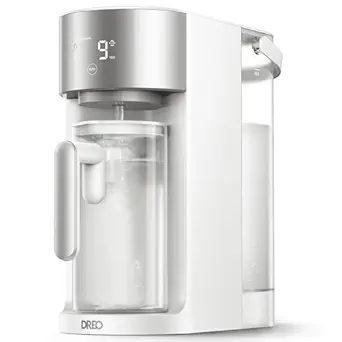 |
Clearly Filtered Water Pitcher P-V3

| Capacity | 80 fluid ounces |
|---|---|
| Purification Method | Affinity Filtration |
| Filter Life Cycle | 100 gallons / ~4 months |
| Supported Water TDS Level Maximum (PPM) | 500 |
The Clearly Filtered P-V3 is a family-sized pitcher-style water filter designed for countertop use and fridge storage, delivering up to 80 fluid ounces of filtered water per fill. It uses the brand's Affinity Filtration media and is independently tested to reduce hundreds of contaminants including microplastics, fluoride, lead, PFAS, chlorine, and arsenic, while retaining beneficial minerals. The pitcher is made from medical-grade Tritan, has a hinge-fill lid and comfort handle for easy pouring, and ships with a priming bag and one filter that lasts roughly 100 gallons or about 3 to 4 months of typical household use. Practical benefits include strong contaminant removal for health-conscious households and a larger capacity that reduces refill frequency. Expect slower fill times if your tap has high contaminant loads and the recurring cost and effort of replacing the proprietary filter every few months. The pitcher is a straightforward, manual solution if you want a tested way to cut microplastics and other tapwater impurities without plumbing changes.
Best for: Buyers who prioritize thorough contaminant removal—including microplastics—and want a no-plumbing, fridge-friendly pitcher that serves a household without installing a system.
Less Ideal for: People who want a maintenance-free or permanently installed whole-house solution or who need instant high-volume filtration for large gatherings.
- NSF-tested filtration that targets hundreds of contaminants including microplastics and PFAS
- Large 80 fl oz capacity reduces how often you need to refill
- Long filter life rated to about 100 gallons (roughly 3–4 months)
- Made from medical-grade Tritan that is BPA/BPS-free and non-leaching
- Filter is proprietary and requires periodic replacement
- Filtration speed can slow with high contaminant levels or as the filter ages
Verdict: Choose this pitcher if you want a fridge-friendly, independently tested filter that specifically reduces microplastics and many other contaminants without any plumbing changes.
AquaTru Classic

| Purification Method | Reverse Osmosis |
|---|---|
| Capacity | 2.7 liters |
| Supported Water TDS Level Maximum (PPM) | 500 |
| Power Source | Corded Electric |
| Filter Life Cycle | Pre/Carbon 300 gal or 6 months; RO 600 gal or 24 months; VOC 300 gal or 12 months |
The AquaTru Classic is a countertop reverse osmosis purifier designed for easy, no-plumbing installation and daily drinking-water use. It uses a multi-stage filter set including pre/carbon, RO membrane, and VOC carbon stages to strip out contaminants that include microplastics, PFAS, and other common tap-water pollutants, and it comes with the first set of filters installed. Setup is straightforward — place on the counter, plug in, and fill the removable dispenser tank for filtered water on demand. Filters are twist-and-change and have staggered lifespans (pre/carbon ~300 gallons or 6 months; RO ~600 gallons or 24 months; VOC ~300 gallons or 12 months), which balances replacement frequency with long RO life. The unit is certified to multiple NSF/ANSI standards for a wide contaminant list, and the countertop format makes it portable and simpler to maintain than under-sink installs. Trade-offs are the counter footprint and the need to monitor separate filter lifetimes, and it is heavier than many standard pitchers, so it is best kept stationary on a counter.
Best for: Buyers who prioritize high-performance contaminant removal and want a countertop RO system that removes microplastics and PFAS without installing under-sink plumbing.
Less Ideal for: Those who need an ultra-compact or lightweight travel filter, or who prefer a simple pitcher or faucet-mounted system with minimal ongoing filter tracking.
- Certified to NSF/ANSI standards covering 84 contaminants including microplastics and PFAS
- No plumbing required — countertop setup is quick and portable
- Multi-stage filtration with a dedicated RO membrane for high contaminant reduction
- Included starter filters and twist-and-change cartridges simplify maintenance
- Relatively large and heavy for a countertop appliance compared with pitchers or faucet filters
- Multiple filters have different lifespans requiring separate monitoring and replacements
Verdict: Choose AquaTru Classic when you want a certified countertop RO system that reliably removes microplastics and other tough contaminants without plumbing.
Aquagear Filter Pitcher

| Capacity | 80 fluid ounces |
|---|---|
| Filter Life Cycle | 120 gallons / 6 months |
| Purification Method | Activated Carbon, Ion Exchange |
| Supported Water TDS Level Maximum (PPM) | 500 |
The Aquagear Filter Pitcher is a freestanding 10-cup water pitcher that uses activated carbon and ion exchange media to target chlorine, lead, PFOA/PFOS, microplastics and other emerging contaminants while retaining healthy minerals. You fill the reservoir and gravity draws water through a replaceable cartridge rated for about 120 gallons or roughly six months of typical household use. Its third-party test results and NSF-class contaminant claims mean it is aimed at buyers who want verifiable microplastic and chemical removal rather than just improved taste. The cartridge life is notably longer than many standard pitchers, and Aquagear offers a recycling program for used filters to reduce landfill waste. Downsides are the manual fill-and-wait operation common to pitchers and the limited capacity compared with larger dispensers, so it is best for counter or fridge use for small families or individuals rather than high-demand settings. Setup is simple and maintenance is limited to periodic cartridge swaps.
Best for: Buyers who prioritize verified removal of microplastics and chemical contaminants and want a low-maintenance, countertop solution with longer cartridge life.
Less Ideal for: Large households or anyone who needs continuous high-volume dispensing or an under-sink/plumbed solution should consider larger or plumbed filter systems instead.
- Third-party tested to remove chlorine, lead, PFOA/PFOS and microplastics
- Long filter life—rated for about 120 gallons (roughly 6 months)
- Retains healthy minerals while removing contaminants
- Includes a filter recycling program to reduce waste
- Manual fill-and-wait pitcher design limits serving speed and capacity
Verdict: Choose this pitcher if you want a countertop filter proven to remove microplastics and other emerging contaminants with a longer-lasting cartridge and recyclable filters.
LQOQL Faucet Water Filter

| Material Type | Stainless Steel |
|---|---|
| Installation Type | Faucet Mount |
| Purification Method | Siphon backwash |
| Maximum Flow Rate | 1.5 liters per minute |
| Capacity | 350 gallons (total with included cartridges) |
This LQOQL faucet-mounted filter converts a standard kitchen or bathroom faucet into a dual-mode tap that delivers filtered water for drinking and regular flow for chores. It uses replaceable cartridges and a siphon backwash purification method housed in a 304 stainless steel body with a transparent top so you can check cartridge condition. The kit includes two cartridges rated for a combined 350 gallons, a nine-piece adapter set to fit most US faucet threads, and tool-free installation for quick setup. In practice the unit is convenient for families who want on-demand filtered water without a separate pitcher or under-sink system, and the stainless construction looks durable and resists rust. Limitations to note are modest flow rate of about 1.5 liters per minute and the relatively small total capacity before cartridge replacement, so heavy filtered-water users will need frequent cartridge changes; performance claims for specific contaminant reductions should be verified against independent test data if you need certified removal levels.
Best for: Buyers wanting an inexpensive, countertop-style faucet filter that reduces microplastics and common contaminants without changing plumbing and who prefer a durable stainless finish and simple, tool-free installation.
Less Ideal for: Households that need high daily volumes of filtered water or certified lab-verified contaminant removal at specific reduction levels should consider larger under-sink systems or certified alternatives.
- Stainless steel 304 body resists rust and looks more durable than plastic housings
- Includes two replacement cartridges and multiple adapters to fit most faucets
- Transparent top lets you visually check filter condition
- Dual flow modes let you switch between filtered drinking water and regular tap flow
- Rated flow around 1.5 L/min, which is slower than an unfiltered faucet
- Combined 350-gallon cartridge life is limited for high-volume households
Verdict: A budget-friendly faucet-mount filter that targets microplastics and common contaminants in a durable stainless package for users who want easy, on-demand filtered water without plumbing changes.
Brita Large 10-Cup Pitcher

| Purification Method | Granular Activated Carbon |
|---|---|
| Capacity | 10 ounces |
| Filter Life Cycle | 2 months |
| Supported Water TDS Level Maximum (PPM) | 500 |
| Power Source | Manual |
The Brita Large 10-Cup Pitcher is a simple, manual pitcher-style filter for everyday tap water use. Water flows through a reservoir into a filter that combines activated carbon and ion-exchange resin to cut chlorine taste and odor and reduce metals like copper, cadmium, and mercury, and the flip-top lid makes refilling convenient. It is sized to fit refrigerator doors and holds enough filtered water for several bottles or a small household's drinking needs. The included Brita filter is certified to last about 40 gallons or roughly two months under average use, and the pitcher is compatible with Brita standard and Longlast filters for longer service intervals. This design is portable, easy to operate without plumbing or power, and produces noticeably better tasting water compared with unfiltered tap water. Limitations include basic mechanical filtration only — it is not designed to remove microbes or reliably capture all microplastics — and regular filter changes are required to maintain performance.
Best for: Buyers who prioritize a reliable, no-fuss way to improve tap water taste and reduce common chemical contaminants without plumbing or power, and who plan to maintain a regular filter replacement schedule.
Less Ideal for: People needing certified microbe removal, advanced particulate or microplastic filtration, or whole-home treatment should look to more robust filtration systems instead.
- Simple, manual operation with an easy-fill flip-top lid
- Certified to reduce chlorine taste and odor plus select heavy metals
- Fits refrigerator shelves and holds 10 cups for everyday use
- Compatible with Brita standard and Longlast replacement filters
- Not intended to purify microbiologically unsafe water
- Basic carbon/ion-exchange filter may not remove all microplastics or very fine particulates
Verdict: Choose this pitcher if you want a dependable, easy-to-use filter pitcher that consistently improves tap water taste and reduces common heavy metals with minimal setup.
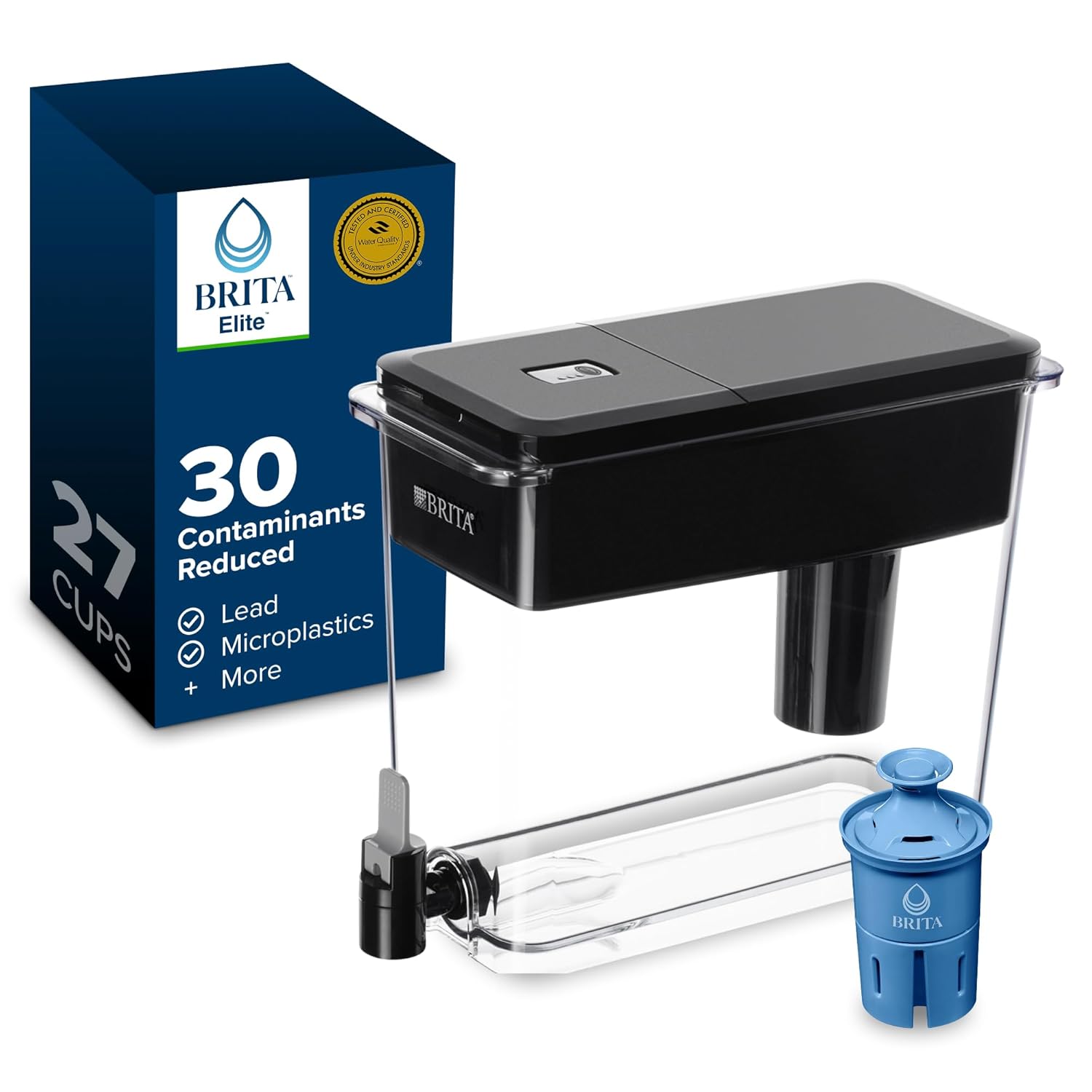
Brita UltraMax 27-Cup Dispenser
| Capacity | 27 cups |
|---|---|
| Filter life cycle | 6 months |
| Purification method | Activated Carbon |
| Supported Water TDS Level Maximum (PPM) | 600 |
The Brita UltraMax is a 27-cup countertop dispenser designed to provide filtered drinking water for families or shared spaces. It uses the Brita Elite filter with Advanced Carbon Core Technology and ion-exchange resin to reduce 99% of lead plus more than 30 other contaminants including microplastics and chlorine, and dispenses water through a convenient spigot for quick filling of glasses and pitchers. The Elite filter is rated for about 120 gallons or roughly six months of typical household use, which lowers replacement frequency compared with many pour-through filters. The BPA-free polystyrene dispenser fits on counters or in a fridge and includes a change-filter indicator to help keep maintenance on schedule. Trade-offs are that it is a manual pour-through system with a spigot rather than an inline or plumbed solution, so it requires periodic refilling and filter replacement and takes countertop space, but it offers certified contaminant reduction and a large reservoir that cuts reliance on bottled water.
Best for: Buyers who prioritize certified contaminant reduction and social proof from testing and reviews and want a low-maintenance, large-capacity pitcher-style dispenser for family or shared use.
Less Ideal for: People seeking a plumbed, hands-off whole-kitchen filtration system or those who need on-demand commercial throughput without refilling should consider other options.
- Certified reduction of lead and microplastics plus 30+ contaminants
- Large 27-cup reservoir reduces trips to refill and is fridge-compatible
- Elite filter rated ~120 gallons (about 6 months) for less frequent replacements
- BPA-free construction and built-in change filter indicator for easier maintenance
- Requires manual refilling and takes counter or fridge space
- Not a plumbed or continuous-flow system so throughput depends on refill frequency
Verdict: Choose the Brita UltraMax when you want a certified, large-capacity countertop dispenser that reliably reduces microplastics and lead with fewer filter changes.
DREO RO Countertop WF112

| Purification Method | Reverse Osmosis |
|---|---|
| Capacity | 3 liters |
| Pure to Drain Rate | 3:1 |
| Included Components | Body, RO filter, Autofill pitcher |
| Filter Runtime | 265 gallons (1000L) |
The DREO WF112 is a countertop reverse osmosis purifier designed to deliver very low-TDS drinking water without permanent installation. It uses a multi-stage RO cartridge and reports a 3:1 pure-to-drain ratio while showing both feed and product TDS on a built-in meter, so you can verify performance in real time. Typical use is simple: place the unit on a counter, attach the included autofill pitcher, and refill hands-free while the system self-flushes internal tubing to reduce buildup. The filter is rated for about 265 gallons (1000 L) per cartridge and swaps out with a twist-to-install design. Practical benefits include verified contaminant reduction, lower plastic waste by replacing bottled water, and an easy maintenance routine aided by filter-life reminders. Limitations are the modest 3-liter tank and countertop footprint that suit one to two people rather than large households, and RO systems produce a waste stream and need periodic cartridge replacements to maintain performance.
Best for: Buyers who prioritize reliably low-TDS, verified filtration and prefer a plug-and-play countertop purifier with minimal installation and clear filter-life feedback.
Less Ideal for: Large families or households that need high daily volumes of stored water or want a permanently plumbed under-sink solution.
- 7-stage RO filtration with SGS-tested impurity removal for thorough contaminant reduction
- Built-in TDS meter and filter life indicator for easy, real-time performance checks
- Auto-fill pitcher and touch controls enable hands-free daily refills
- Self-cleaning/auto-flush system helps reduce internal buildup and maintenance frequency
- Twist-to-install filter replacement simplifies cartridge changes
- Small 3-liter tank limits stored water for larger households
Verdict: Choose the DREO WF112 if you want a verification-friendly countertop RO that delivers very low-TDS water with easy maintenance and hands-free refilling.
Choosing the Right Water Filter for Microplastics: Key Factors to Consider
Particle Size Rating
The micron rating determines the smallest particle size a filter is designed to trap. Microplastics span a range of sizes from visible fragments down to microscopic pieces under one micron. A lower micron rating means finer filtration, but extremely fine membranes can reduce flow and require more frequent replacement.
When choosing a water filter for microplastics, weigh the particle size rating against your household needs. If your primary concern is visible particles or larger fragments, a 1 to 5 micron rating may be sufficient. If independent test data or certifications indicate performance at submicron levels, consider whether the resulting flow rate and maintenance schedule fit your routine.
Flow Rate and Household Demand
Flow rate affects usability for drinking, cooking, and filling containers. Filters that capture very small particles often restrict flow, which can be frustrating at faucets or for filling pitchers. Check published liters-per-minute or gallons-per-minute figures and consider the number of simultaneous users in your home.
A filter that meets your particle capture needs but starves you of water will either be bypassed or require multiple units. For kitchen use, prioritize options that balance fine particle removal with a flow rate that keeps up with typical tap usage. For point-of-use devices, consider matching flow rate to peak demands like meal prep or entertaining.
Filter Capacity and Replacement Frequency
Filter lifespan is usually stated as a volume of water or a time interval. Finer filters and those that trap many particles will clog faster and need earlier replacement. Replacement frequency impacts ongoing cost and the chance that a neglected cartridge will allow particle breakthrough.
Estimate your household water use and pick a filter capacity that aligns with realistic replacement intervals. Longer-lasting cartridges reduce maintenance burden, but confirm that longevity does not come at the cost of weaker particle capture. Look for clear guidance on end-of-life indicators so you can replace cartridges before performance declines.
Filter Materials and Safety
Materials used in filter media and housings influence both performance and the risk of introducing contaminants. High-quality filter media that do not shed fibers are essential when targeting microplastics, since poorly constructed filters can themselves contribute particles to the water stream.
Choose filters with inert, food-safe housings and filtration media designed for particle capture. Avoid filters that rely on loosely bound fiber mats without containment. If possible, look for test data showing low particulate shedding from the cartridge itself.
Installation Type and Compatibility
Installation type determines where and how effectively a filter will be used. Under-sink or whole-house filters treat larger volumes but require more complex installation. Countertop or faucet-mounted units are easier to add and are suitable for point-of-use protection at a single tap.
Match installation style to the location you want protected. For drinking and cooking, a single kitchen tap solution may be practical. For broader protection, consider systems sized for higher flow and with housings that accept replaceable cartridges designed for fine particle capture.
Certifications and Test Evidence
Independent testing and certifications provide confidence that a filter performs as claimed. Look for third-party lab results that report particle reduction at specific micron sizes, and certifications that cover particulate or sediment removal when available.
Absence of certification does not automatically mean poor performance, but documented test data helps compare options objectively. Prefer products with transparent testing methods and results that match the particle sizes you are most concerned about.
Types of Filters That Reduce Microplastics
Several common filtration technologies can trap microplastics, including mechanical screens, depth filter cartridges, and membrane filters. Mechanical screens capture larger fragments, while depth filters and membranes can trap much smaller particles depending on their micron rating.
Each technology has tradeoffs. Membranes with submicron pores offer the finest particle removal but can restrict flow and require more maintenance. Depth filters use layered media to increase capacity and can be a good compromise between capture efficiency and usable lifespan.
- Mechanical screens: best for visible debris and larger particles
- Depth cartridges: layered media for higher capacity and smaller particle capture
- Membrane filters: tightest particle removal, good for very small microplastics
Point-of-Use Vs Whole-House Approaches
Point-of-use systems treat water at a single outlet, such as a kitchen sink or refrigerator supply. They are typically easier and cheaper to install and are ideal when the main concern is drinking and cooking water.
Whole-house filters protect every outlet but require larger housings and flow capacity. If your concern includes showers and laundry, a whole-house solution can reduce particle load throughout the home but usually comes with higher installation complexity and maintenance demands.
- Point-of-use: easier installation, focused protection
- Whole-house: broader protection, higher capacity and complexity
Maintenance Best Practices
Regular maintenance ensures a filter keeps trapping particles effectively. Replace cartridges at the recommended intervals, and follow any flushing or sanitizing steps the manufacturer specifies to avoid buildup or bacterial growth.
Keep a simple schedule tied to either time or water volume, and mark replacement dates. Check for visible changes such as discoloration or reduced flow that indicate a cartridge is nearing end of life.
- Set calendar reminders for cartridge replacement
- Monitor flow rate and water clarity
- Follow manufacturer instructions for flushing and sanitizing
Testing Your Water for Microplastics
If you are unsure about microplastic presence, consider sending a water sample to a lab that specializes in particulate analysis. Labs can report particle counts and size distributions to help you choose a filter with an appropriate micron rating.
At-home observation can also help. Visible particles, odd textures, or persistent turbidity are signs that a finer filter could be useful. Use objective test results where possible to match filter performance to actual contamination levels.
- Lab testing provides particle counts by size
- Visual signs can indicate the need for filtration but are not definitive
Balancing Performance with Ongoing Cost
Consider the total cost of ownership, including replacement cartridges and any required maintenance. Higher initial investment in a system with longer-lasting cartridges can pay off over time, but only if the filter meets your particle capture needs.
Also account for the inconvenience cost if a system restricts flow too much. A technically excellent filter that you or family members avoid using because of slow water will fail to deliver protection in practice.
- Estimate annual cartridge costs based on household use
- Weigh convenience against filtration performance
How We Chose the Best Water Filter for Microplastics
We focused on features that directly affect a filter's ability to reduce microplastics and remain practical for everyday home use. Key evaluation criteria included particle capture rating, measured as the smallest micron size a filter reliably traps; certified contaminant reduction where available; flow rate and water pressure retention under typical household conditions; filter capacity and expected service life before replacement; and materials and construction that avoid shedding or adding particles. We also considered ease of installation and maintenance since filters that are difficult to service are often neglected and less effective over time. Products were excluded if they lacked clear micron ratings or specification data about particle capture, or if they relied solely on vague marketing claims with no supporting test or certification information. We prioritized options with clear technical specs and practical performance tradeoffs so buyers can match a filter to their water source and usage patterns. The scoring labels reflect these practical dimensions and guided our editorial judgments across the shortlist.
Our full evaluation process is outlined in our review methodology.
FAQ
Will a typical sediment filter remove microplastics?
Sediment filters can remove larger microplastic fragments depending on their micron rating. For very small particles, look for filters with lower micron ratings or membrane-based technologies that specify submicron capture.
How often should I replace a cartridge that traps microplastics?
Replacement frequency depends on water quality and household usage. Expect finer filters to clog sooner; follow the manufacturer's stated capacity or time interval and watch for reduced flow or discoloration as replacement indicators.
Can a filter itself shed particles into my water?
Poorly constructed filters with loosely bound fibers can shed material. Choose filters with stable, contained media and review independent tests or manufacturer documentation about particulate shedding to reduce this risk.
Is lab testing necessary before choosing a filter?
Lab testing is useful if you need precise information about particle sizes and counts. For many households, visible particles or persistent turbidity are sufficient reason to select a finer-rated point-of-use filter without formal lab analysis.
Do point-of-use filters protect against microplastics in shower water?
Point-of-use kitchen filters protect the specific outlet they are attached to. To reduce microplastics in shower water you would need a whole-house or dedicated shower filtration solution sized for higher flow rates.
Final Verdict
Prioritize a filter with a particle capture rating that matches the sizes you are concerned about and balance that against usable flow rate and realistic replacement intervals. Check for stable, food-safe materials and documented test data when possible, and match the installation type to the location you want protected. The best choice balances effective microplastic removal with manageable maintenance and acceptable water delivery. Use the factors discussed here to select a solution you will maintain so the filter continues to protect your household water over time.