
Note: This article contains affiliate links. If you click on these links and make a purchase, we may earn a small commission at no extra cost to you. This helps support our research and content. Read our full affiliate disclosure here.
Choosing the right water filtration solution for an office affects daily hydration, kitchen upkeep, and workplace wellness. A proper office water filter reduces contaminants and off tastes while lowering the time staff spend managing dispensers or pitchers. In this guide we shortlist the top options that suit shared kitchens, break rooms, and small business environments. We evaluate systems based on filtration effectiveness, capacity, ease of installation, and ongoing maintenance requirements. Read on to find a practical, low-fuss water filter for offices that fits your space and service needs.
Top Picks at a Glance
| Best Overall The best all-around choice for most situations | iSpring DS4S Water Dispenser |  |
| Best Quality Built to a higher standard if you want something more solid | Big Berkey 2.25-Gallon Water Filter |  |
| Best Budget The cheapest option that still gets the job done reliably | Waterdrop PT-05B-L Pitcher | 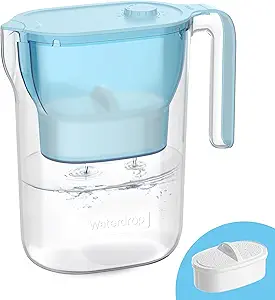 |
| Top Rated A top-rated pick with lots of positive feedback | BRITA Standard Replacement Filter 3-Pack |  |
| Most Popular A crowd favorite that many people choose with confidence | Waterdrop Lucid Pitcher WD-PT-07B |  |
| Best Seller A high-volume bestseller chosen again and again | BRITA Plus Replacement Filter 2-Pack |  |
iSpring DS4S Water Dispenser

| Material Type | Stainless Steel |
|---|---|
| Model Number | DS4-S |
| Included Components | Water dispenser, filters |
| Filtration Stages | 4-stage |
| Temperature Settings | Hot / Cold / Room |
The iSpring DS4S is a bottleless hot and cold water dispenser designed for small offices and homes that need on-demand filtered water without jugs. It combines a built-in 4-stage filtration stack that targets sediments, chlorine, lead, mercury, PFAS and chloramine with immediate hot, cold, and room-temperature dispensing for tea, coffee, and drinking. Installation is DIY-friendly and the unit ships with tubing and adapters for standard supply hookups, while filter cartridges are accessible for routine replacement. The stainless steel cabinet looks professional and the hot tap includes a child safety lock to prevent accidental dispensing. Practical benefits include steady chilled water and instant hot water without separate kettles plus clear filtration claims for common contaminants. Trade-offs are the footprint and weight typical of freestanding dispensers and the need to budget for periodic filter replacements, but for an office that wants clean, instant water and simple maintenance the DS4S delivers a capable, attractive package.
Best for: Office buyers who want a reliable, professional-looking bottleless dispenser that provides on-demand filtered hot and cold water with straightforward installation and maintenance.
Less Ideal for: Teams with extremely tight floor space or users who prefer a countertop or under-sink solution should consider more compact or integrated alternatives.
- Built-in 4-stage filtration removes sediments, chlorine, lead, mercury, PFAS and chloramine
- Instant hot, cold, and room-temperature dispensing for drinks and filling pitchers
- Child safety lock on hot water to reduce burn risk
- Includes installation kit with tubing and adapters for straightforward DIY hookup
- Requires periodic filter replacements which add ongoing cost
- Freestanding unit has a substantial footprint and weight for limited spaces
Verdict: Choose the DS4S when you want a freestanding office dispenser that pairs instant hot and cold service with a multi-stage filtration system for broadly cleaner, better-tasting water.
Big Berkey 2.25-Gallon Water Filter

| Capacity | 8.5 liters |
|---|---|
| Purification Method | Black Berkey proprietary filter media |
| Power Source | Gravity |
| Maximum Flow Rate | 0.03 gpm |
The Big Berkey 2.25-gallon system is a gravity-fed countertop filter that sits on a counter or office breakroom and produces ready-to-drink water from tap or untreated sources. You fill the upper stainless-steel chamber, water passes through two Black Berkey purification elements and collects in the lower chamber where it is dispensed through a spigot. The system is valued for its independently tested Black Berkey elements, which the manufacturer says reduce more than 200 common contaminants and run up to thousands of gallons per pair before replacement is recommended. Because it is gravity powered there is no installation, electricity, or tools required, making it simple to set up and move. The compact 2.25-gallon capacity fits small to medium offices or teams and the polished AISI 304 stainless construction is durable and easy to clean. Limitations include a slow flow rate typical of gravity units and the need to top up the reservoir manually for continuous use, so it works best as a point-of-use option rather than a high-throughput solution for large staffs.
Best for: Office managers who prioritize contaminant reduction and a low-maintenance countertop solution for providing better-tasting, filtered drinking water to small teams.
Less Ideal for: Large offices or environments that need continuous, high-volume chilled water service where a plumbed or electric dispenser would be more appropriate.
- Gravity-powered so no electricity or plumbing required
- Black Berkey elements tested to reduce a wide range of contaminants
- Durable AISI 304 stainless-steel construction that is easy to clean
- Compact 2.25-gallon capacity fits small to medium office countertops
- Slow maximum flow rate typical of gravity-fed systems
- Requires manual refilling and occasional element replacement based on water quality
Verdict: Choose this compact, no-electric countertop system when you want independently tested, high-reduction filtration for a small office without plumbing or installation.
Waterdrop PT-05B-L Pitcher

| Capacity | 7-Cup |
|---|---|
| Filter lifespan | Up to 200 gallons / 3 months |
| Certifications | NSF/ANSI 42 & 372 |
| Material Type | BPA-free, lead-free |
The Waterdrop PT-05B-L is a compact countertop pitcher designed to deliver better-tasting water with minimal upkeep. It uses an activated carbon fiber filter certified to NSF/ANSI 42 and 372 to reduce chlorine, taste and odor, and tested to lower PFOA/PFOS and several metals, making it suitable for routine office drinking water. The filter has an extended lifespan rated up to 200 gallons or about three months depending on use, and the pitcher includes a mechanical dial to track filter life. Setup is straightforward: soak the filter, press it into the reservoir, and discard the first fills. The BPA-free plastic body and slim shape fit easily in a small office fridge or on a counter. Limitations to note are that it does not lower total dissolved solids and the replacement filter lineup must be matched to the model, so buyers should confirm compatibility when ordering. For small teams that want an affordable, low-maintenance way to improve tap water quality, this pitcher is a practical pick.
Best for: Small offices or workplace buyers who want a low-cost, easy-to-use pitcher to improve everyday drinking water without installing plumbing or managing complex systems.
Less Ideal for: Teams needing mineral reduction, very large groups, or facilities that require point-of-use systems with TDS reduction and higher flow capacity should consider other solutions.
- NSF/ANSI 42 and 372 certified filtration for chlorine and select contaminants
- Long filter life rated up to 200 gallons or 3 months reduces replacement frequency
- Slim, fridge-friendly pitcher shape that fits small office spaces
- Mechanical life recorder on the lid to remind when to replace the filter
- Does not reduce total dissolved solids (TDS) so it will not soften or desalinate water
- Requires correct model replacement filters for proper fit and performance
Verdict: An affordable, compact pitcher that delivers NSF-certified chlorine and PFAS reduction with long-life filters, ideal for small office use.
BRITA Standard Replacement Filter 3-Pack

| Set Count | 3 Count |
|---|---|
| Filter Capacity | 40 gallons / ~2 months per filter |
| Compatible Models | Fits all Brita pitchers and dispensers except Stream |
| Certifications | WQA NSF/ANSI (select reductions) |
These BRITA Standard replacement filters are designed for pitcher and dispenser use in offices that need reliable, everyday filtered water. Each filter uses ion-exchange resin and activated carbon to reduce chlorine taste and odor plus metals such as copper, cadmium and mercury, and BRITA says each lasts up to 40 gallons or roughly two months under average use. Installation requires no presoak and is straightforward: flush the filter briefly, insert it into the reservoir, and discard the first few pitchers. The built-in mesh screens help prevent carbon flecks in the water, and the filters are WQA/NSF/ANSI certified for specific reductions, which makes them a safe choice for shared office kitchens. Trade-offs are that they do not filter to the level of under-sink or reverse-osmosis systems and each unit needs regular replacement to maintain performance, so plan for recurring supply purchases for a busy office.
Best for: Office managers who prioritize dependable, easy-to-use pitcher filtration for shared kitchens and want certified reductions with predictable replacement intervals.
Less Ideal for: Facilities that need high-capacity central filtration or advanced contaminant removal should choose a plumbed point-of-use or reverse-osmosis system instead.
- Certified reductions for chlorine taste and certain metals provide consistent, documented filtration performance
- No presoak and simple installation make replacements quick for office staff
- Each filter lasts up to 40 gallons or about two months, giving predictable replacement intervals
- Built-in mesh screens reduce the chance of black flecks in dispensed water
- Does not remove all contaminants that a point-of-use or RO system would
- Requires routine replacement on a fixed schedule to maintain effectiveness
Verdict: A practical, certified pitcher filter pack that delivers predictable, easy-to-maintain drinking water for office breakrooms.
Waterdrop Lucid Pitcher WD-PT-07B

| Capacity | 2.4 liters |
|---|---|
| Filter life cycle | 200 gallons / 3 months |
| Purification method | Activated Carbon |
| Maximum flow rate | 0.5 gpm |
| Certifications | NSF/ANSI 42, 372 |
The Waterdrop Lucid WD-PT-07B is a countertop water filter pitcher built for everyday office use and small teams. It uses a 5-stage activated carbon filter rated for about 200 gallons or three months and is NSF/ANSI 42 and 372 certified to reduce chlorine, odors, certain heavy metals and PFOA/PFOS, which improves coffee and tea taste. The pitcher has a hands-free lid that lets you pour without opening the cover and a simple LED indicator to track filter life, which helps busy staff know when to replace cartridges. Its slim shape fits most fridge doors and it is non-electric so it is quiet and portable between desks or breakrooms. Expect moderate flow speed (listed 0.5 gpm) during filling and the first two pitchers should be discarded as part of activation. The filter does not lower total dissolved solids (TDS), so it will not soften hard water or remove all dissolved minerals. For offices focused on better-tasting, low-maintenance filtered drinking water, this pitcher is a practical, easy-to-manage option.
Best for: Small offices, breakrooms, or teams that prioritize reliably cleaner-tasting water with low-maintenance upkeep and verified contaminant reduction.
Less Ideal for: Workplaces that need water softening, low TDS for lab use, or point-of-use systems that remove a wider range of contaminants should consider alternative filtration methods.
- NSF/ANSI 42 and 372 certification for verified reduction of chlorine, odors, and select metals
- Long filter life rated at 200 gallons or about 3 months reduces replacement frequency
- Hands-free lid and LED life indicator simplify day-to-day use in shared spaces
- Slim, fridge-friendly design and non-electric operation make it portable and quiet
- Does not reduce total dissolved solids (TDS) so it will not soften hard water or lower mineral content
- Initial setup requires soaking the filter and discarding the first two pitchers of water
Verdict: A compact, NSF-certified pitcher that delivers better-tasting office water with a long-life, low-maintenance filter.
BRITA Plus Replacement Filter 2-Pack

| Unit Count | 2 Count |
|---|---|
| Material Type | Plastic |
| Compatible Water Purifier Models | BRITA Marella XL, Marella, ON TAP Pro V-MF, Style |
| External Testing Certification | NSF |
| Item life | 40 gallons / ~2 months |
The BRITA Plus Replacement Filter 2-Pack is a direct replacement for most BRITA pitchers and dispensers (except Stream) intended to improve drinking water quality in everyday settings like offices. Each high-density filter uses activated carbon and ion-exchange resin to reduce chlorine taste and odor plus metals such as mercury, cadmium, copper, and zinc, while claiming to retain beneficial minerals. Filters are NSF/ANSI certified and are rated to last about 40 gallons or roughly two months, so offices with light to moderate daily use can expect predictable replacement intervals. Installation is simple: pop the filter into a compatible pitcher or dispenser and run a couple of fills to prime it. The pack helps reduce single-use plastic bottle consumption and the built-in mesh screens limit particulate “black flecks.” The main limitations are the two-month lifespan per filter and that the filters are not compatible with Stream models, so plan replacements and check compatibility before buying for a shared office dispenser.
Best for: Office buyers who prioritize reliable, certified reduction of common tap-water contaminants and want an easy, familiar pitcher-based solution for shared water stations.
Less Ideal for: Workplaces that need long-life or high-capacity whole-office filtration or that use BRITA Stream dispensers should look at alternative systems.
- NSF/ANSI certified filtration for chlorine, mercury, cadmium, copper, and zinc
- High-density media claims to reduce twice the contaminants versus BRITA Standard filter
- Compatible with most BRITA pitchers and dispensers for easy swap-in replacements
- Each filter lasts ~40 gallons or about two months, simplifying replacement scheduling
- Built-in mesh screens help prevent black flecks from reaching the jug
- Not compatible with BRITA Stream models
- Individual filter lifespan requires regular replacements for medium-to-high use environments
Verdict: Choose this BRITA Plus 2-pack when you want an NSF-certified, easy-to-install pitcher filter that reliably reduces common contaminants for shared office water stations.
Choosing the Right Water Filter for Offices: Key Factors to Consider
Filtration Performance and Contaminant Coverage
Offices need filters that address the contaminants most likely to affect taste, odor, and safety. Chlorine and chloramine treatment in municipal water influence taste and smell, while trace heavy metals like lead can pose health risks. Look for systems that list specific reduction targets, such as percent removal for chlorine, lead, VOCs, and particulate sizes. Higher contaminant coverage means fewer complaints and less dependence on bottled water.
Understanding which contaminants are present in your building starts with a water quality report or a simple test. Choose a filter whose capabilities match those results so you are not paying for features you do not need or missing critical protections the office requires.
Capacity and Flow Rate for Shared Use
An office water filter must serve multiple people during the workday without bottlenecks. Capacity covers both how much treated water the system produces between replacements and how quickly it dispenses water. A unit with low flow or a small reservoir will create queues at peak times and push staff to alternative sources.
Estimate daily usage by counting expected users near the dispenser and their average cups per day. Match that demand to a system rated for that output or choose a larger-capacity option to avoid frequent refills and premature filter changes.
Installation and Plumbing Considerations
Installation complexity affects total cost and downtime. Some office filters require a simple faucet or pitcher setup while others need a dedicated line or under-sink connection. Consider whether you have access to a cold-water shutoff and if the building management permits minor plumbing work.
Prefer systems that offer clear, tool-free installation or that can be fitted by in-house maintenance staff. If more involved plumbing is required, verify labor availability and whether the location supports a drain or pressurized line for certain designs.
Maintenance Frequency and Consumable Costs
Filter replacements drive the long-term cost and effort of any office water solution. Systems with long filter life reduce interruptions and administrative overhead for ordering and swapping cartridges. However, very long-life filters sometimes cost more initially.
Factor in replacement cadence, the ease of swapping cartridges, and whether the system notifies when maintenance is due. Choose designs with widely available consumables and simple access for replacement to keep ongoing maintenance predictable.
Durability, Materials, and Safe Operation
Office installations see heavy daily use, so the filter housing, dispensers, and connectors should be robust. Look for corrosion-resistant materials, sturdy fittings, and stable mounting options to avoid leaks or premature failure.
Also consider safety features such as secure caps, bypass valves, and clear indicators to prevent accidental misuse. Durable construction reduces long-term maintenance calls and helps protect floors and equipment from water damage.
Undersink Vs Countertop Vs Dispenser-Style Systems
Different form factors suit different office layouts and service needs. Undersink systems keep the footprint minimal and provide on-tap filtered water, but they typically require a small plumbing change and under-counter space for the filter housings. Countertop units are easy to set up on a breakroom counter and are often tool-free to install, but they occupy surface area and may have smaller capacities.
Freestanding dispenser-style systems, including large-capacity dispensers with integrated filtration, are designed for high-traffic areas and reduce the need for plumbing work. When choosing among these types, balance installation constraints, daily user counts, and available space.
- Undersink: Low visibility, good for continuous supply, needs plumbing access
- Countertop: Quick setup, limited capacity, ideal for small staff areas
- Dispenser-style: High capacity, minimal plumbing, requires floor space
Assessing Office Water Quality Before Buying
Start by checking your local water quality report or running basic tests for chlorine, pH, and common metals. That data shows which contaminants are present and at what levels, so you can prioritize the filter functions you actually need. If lead or bacterial concerns appear, choose systems rated to address those specific hazards.
A simple test can prevent overspending on unnecessary features and ensure that the selected solution meaningfully improves taste and safety. Facilities teams should document test results and store them with maintenance schedules for future reference.
- Request the municipal water quality report
- Use simple test strips for chlorine and pH
- Test for heavy metals if building plumbing is older
Siting and Accessibility for Busy Break Rooms
Placement matters. Position filters and dispensers where traffic flows naturally and where users can fill bottles or cups without blocking pathways. Consider countertop clearance, cabinet access for under-sink units, and nearby power or drain requirements for certain systems.
Accessibility should also account for maintenance. Leave enough clearance to swap cartridges without removing the whole unit, and store replacement filters close by with clear labeling to streamline upkeep.
- Allow clearance for cartridge changes
- Place near high-traffic areas but out of walkways
- Keep replacement parts nearby and labeled
Sanitation and Preventing Biological Growth
In shared environments, systems can harbor biofilm if not maintained. Choose filters and housings with materials that resist bacterial growth and follow a schedule for sanitizing dispensers and reservoirs. Regular cleaning of faucet aerators and spouts prevents taste issues and reduces contamination risks.
Systems that minimize stagnant water volume or include UV or antimicrobial stages can offer additional protection in offices with irregular usage patterns.
- Regularly sanitize reservoirs and spouts
- Avoid systems with large stagnant-volume designs in low-use areas
- Consider antimicrobial materials where sanitation is a priority
Scaling Up: Multiple Units and Centralized Systems
For larger offices, multiple small units may be more resilient than a single centralized system. Localized dispensers reduce walking time and spread service load, while centralized units require more complex plumbing but can simplify replacements if they serve many outlets from one location.
Decide based on floor layout, the number of users per area, and maintenance capability. Multiple units provide redundancy; centralized systems can be efficient but introduce a single point of failure.
- Use multiple units for redundancy and convenience
- Centralized systems can save space but need professional plumbing
- Match unit placement to user clusters, not just aesthetics
How We Chose the Best Water Filter for Offices
We prioritized systems that reliably reduce common tap-water issues found in office environments while staying straightforward to install and maintain. Our editorial filters emphasized measurable filtration performance such as reduction levels for chlorine, lead, and particulate matter, plus certifications or lab-verified claims where available. We also weighted flow capacity and service interval so a system can serve multiple users without frequent refills. Installation complexity and required tools were assessed to favor options that building staff or local facilities teams can set up without specialist plumbing work. Durability and ease of replacing consumables matter in offices, so filter life, replacement cost implications, and clear maintenance steps were included. We excluded consumer countertop novelty devices and single-cup products that do not scale to shared-office use. Final selection focused on practical, low-maintenance water filters that balance proven contaminant reduction with reliable everyday performance.
Our full evaluation process is outlined in our review methodology.
FAQ
How often should office water filters be replaced?
Replacement frequency depends on the filter's rated capacity and actual usage. Many office-grade cartridges are rated by gallons or months; heavy daily use will shorten the effective life. Follow manufacturer replacement intervals but also monitor flow and taste as practical indicators.
Can a water filter remove lead and other heavy metals?
Some office filters are designed to reduce lead, cadmium, and similar metals when they list specific reduction rates or certifications. Confirm the filter's contaminant list against your water test results to ensure it addresses the specific metals present.
Is professional installation required for undersink systems?
Not always. Many undersink models are designed for straightforward installation by someone with basic DIY skills, but building plumbing complexity or local regulations might require a licensed plumber. Verify access to shutoffs and any permit needs before starting.
What maintenance do dispenser-style systems need?
Dispenser-style systems require regular cartridge changes and periodic cleaning of reservoirs, drip trays, and spouts. High-traffic units may need weekly surface cleaning and scheduled sanitization to prevent biofilm buildup.
How can I estimate the right capacity for my office?
Estimate the number of daily users and average servings per person, then multiply to get daily gallons. Choose a system whose daily output and cartridge life match that demand, or plan multiple units to distribute load across locations.
Final Verdict
Select an office water filter by matching contaminant coverage and daily capacity to your workplace's needs, then factor in installation and maintenance simplicity. Prioritize systems that clearly document what they remove, provide suitable flow for your user count, and offer accessible cartridge changes. Balancing filtration performance with practical serviceability will keep staff hydrated with minimal fuss and predictable upkeep.