
Note: This article contains affiliate links. If you click on these links and make a purchase, we may earn a small commission at no extra cost to you. This helps support our research and content. Read our full affiliate disclosure here.
Hard water driven by dissolved calcium causes scale buildup, shorter appliance life, and spotty glassware. Choosing the right water filter for removing calcium can cut down on limescale, improve soap performance, and protect fixtures and water-using appliances in typical homes. This guide covers seven shortlisted water filters that target calcium reduction and describes the practical tradeoffs buyers face, from filtration efficiency to flow-rate implications and maintenance needs. Read on for the key evaluation points and what to expect from the top options.
Top Picks at a Glance
| Best Overall The best all-around choice for most situations | A. O. Smith Whole House Descaler AO-WH-DSCLR | 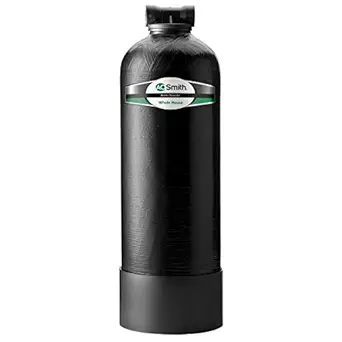 |
| Best Quality Built to a higher standard if you want something more solid | Express Water ROALK5D 50 GPD RO |  |
| Best Value The sweet spot between price and what you get | Waterdrop WD-15UA Under-Sink Filter |  |
| Best Budget The cheapest option that still gets the job done reliably | RUITN Calcium Inhibitor Misting Filter 2-Pack |  |
| Top Rated A top-rated pick with lots of positive feedback | 3M Aqua-Pure AP430SS Scale Inhibitor |  |
| Most Popular A crowd favorite that many people choose with confidence | AQUA CREST RV Inline Water Filter |  |
| Best Seller A high-volume bestseller chosen again and again | Camco TastePURE XL RV Water Filter |  |
A. O. Smith Whole House Descaler AO-WH-DSCLR

| Maximum Flow Rate | 7 gpm |
|---|---|
| Operating Pressure Range | 20-100 psi |
| Upper Temperature Rating | 90 °F |
| Supported Water TDS Level Maximum (PPM) | 1200 |
| Filter Life Cycle | 6 years |
This A. O. Smith descaler is a whole-house, salt-free system that conditions water by transforming dissolved hardness minerals into microscopic crystals that pass harmlessly through plumbing. It installs inline at the main supply and is suited for households with moderate hardness; the unit is rated for up to 600,000 gallons or six years of service and handles up to 7 gpm flow at typical household pressures. Because it is saltless and chemical-free there is no backwashing, salt refill, or ongoing electricity draw, making it low-maintenance for busy homes. Practical benefits include protecting appliances and pipes from scale buildup and compatibility with both city and well water when within the specified TDS and iron limits. Important limitations are that it does not actually remove calcium or other dissolved minerals, so it will not lower water hardness readings or TDS, and it does not reduce chlorine, sulfur, or iron beyond the small-iron tolerance listed, so separate filtration is required if you need contaminant removal.
Best for: Buyers who want a low-maintenance, whole-house scale control solution to protect plumbing and appliances without using salt or electricity and who accept that minerals remain in the water.
Less Ideal for: Households that need actual calcium removal, lower TDS, or contaminant reduction should choose a water softener or filtration system that removes minerals and specific contaminants.
- Salt-free, chemical-free scale control avoids salt refills and electricity use.
- Long service life rated for 600,000 gallons or six years simplifies maintenance.
- Designed for whole-house installation to protect plumbing and appliances.
- Works with both city and well water when within the product's specified water chemistry limits.
- Does not soften water or remove calcium or other dissolved minerals.
- Does not reduce chlorine, sulfur, or high iron concentrations.
Verdict: Choose this descaler if you want a low-maintenance, salt-free whole-house way to reduce scale buildup and protect plumbing without removing calcium.
Express Water ROALK5D 50 GPD RO

| Purification Method | Alkaline, Reverse Osmosis |
|---|---|
| Capacity | 50 gallons_per_day |
| Maximum Flow Rate | 0.8 gpm |
| Operating Pressure Range | 40-80 psi |
| Supported Water TDS Level Maximum (PPM) | 2000 |
The Express Water ROALK5D is a 10-stage under-sink reverse osmosis system that combines standard RO purification with an alkaline remineralization stage to deliver cleaner, better-tasting water for kitchen use. It installs under the sink and uses quick-connect tubing and a 4 gallon (3.2 gallon usable) storage tank so you have ready access to filtered water for drinking, cooking, coffee, and ice. The system is certified to NSF 58 and is rated to remove a broad list of contaminants, with the manufacturer claiming up to 99.99% removal of lead, chlorine, fluoride, heavy metals, and other impurities; it also adds back calcium, magnesium, and potassium via the alkaline stage for improved taste. The unit operates between 40 and 80 psi and delivers up to 50 gallons per day with a 0.8 gpm faucet flow, but like all RO systems it produces wastewater (roughly 1 to 3 gallons discharged per gallon produced) and may require a booster pump if your household pressure is low. Filters are designed for about six months of life, and the compact layout fits typical under-sink cabinets while including a wrench and mounting options for straightforward DIY setup.
Best for: Buyers focused on high contaminant removal and improved drinking-water taste who want a durable under-sink RO system with alkaline remineralization for everyday kitchen use.
Less Ideal for: Households unwilling to accommodate RO wastewater, those with very low water pressure without a booster, or users who prefer a filter with no storage tank or simpler countertop options.
- Comprehensive 10-stage filtration including alkaline remineralization for improved taste
- NSF 58 certification for RO performance and independent lab verification
- 50 GPD capacity suitable for daily kitchen use with 4 gallon storage tank for on-demand water
- Quick connect tubing and included wrench make DIY under-sink installation feasible
- Compatible with common 3/8" and 1/2" under-sink connections and can be wall- or cabinet-mounted
- Produces wastewater at a rate of about 1–3 gallons discharged per gallon produced
- Requires 40–80 psi to operate optimally and may need a booster pump in low-pressure homes
Verdict: Choose this system if you want a high-capacity, NSF-certified RO setup that removes heavy minerals like calcium and returns beneficial minerals for better-tasting drinking water.
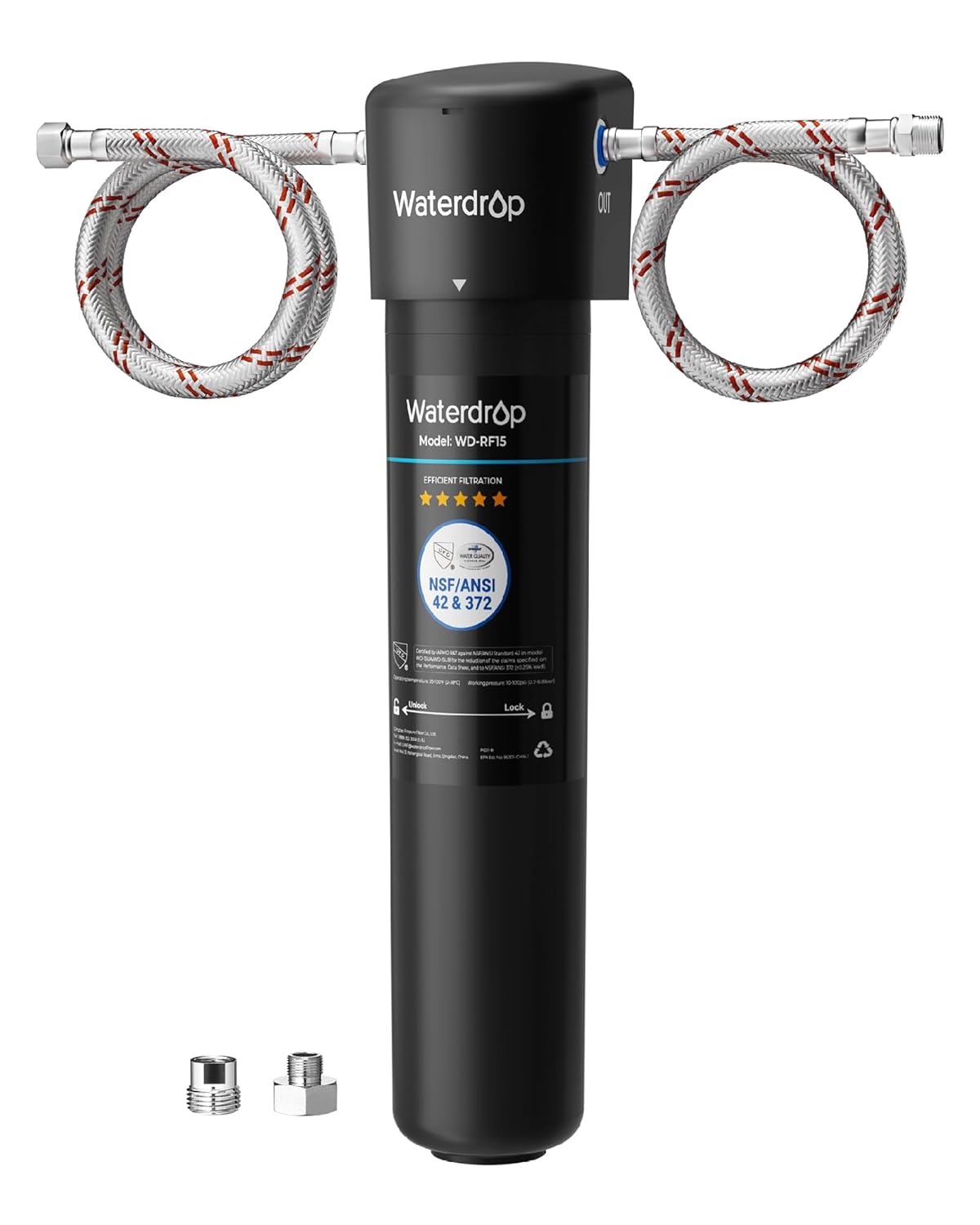
Waterdrop WD-15UA Under-Sink Filter
| Purification Method | Activated Carbon |
|---|---|
| Capacity | 19000 gallons |
| Filter Life Cycle | 2 years |
| Maximum Flow Rate | 0.75 gpm |
| Supported Water TDS Level Maximum (PPM) | 700 |
The Waterdrop WD-15UA is an under-sink activated carbon filter built for long service life and simple installation. It connects directly to the cold-water line with push-to-connect fittings and includes a 3/8" hose plus a 3/8"–1/2" converter, so most standard sink hookups are covered without drilling or a plumber. The filter uses multistage carbon media certified to NSF/ANSI 42 and 372 and tested for lead reduction, chlorine, and taste and odor improvements, and the manufacturer rates it for up to 19,000 gallons or about 24 months on municipal water. Flow holds near 0.75 gpm at 60 psi, so it supplies steady filtered water for drinking, cooking, or an ice maker. It is intended for cold municipal water only and is not suitable for hot or well water. While the filter retains beneficial minerals, it does not claim specialized water softening or significant calcium removal, so homes battling hard water scale should pair it with a dedicated water softener rather than rely on this unit alone.
Best for: Buyers who want a low-maintenance, long-life under-sink filter to improve tap water taste and reduce contaminants from municipal supply and who prioritize easy DIY installation and long replacement intervals.
Less Ideal for: Homes with hard water or scale problems seeking calcium reduction or softening should choose a dedicated water softener instead of this filter, and well water users should look for systems rated for their source.
- Long rated service life up to 19,000 gallons or 24 months on municipal water
- NSF/ANSI certifications for chlorine, taste/odor and materials safety
- Push-to-connect direct install with included adapter for easy DIY hookup
- Maintains steady flow around 0.75 gpm suitable for drinking and cooking use
- Not designed to remove hardness minerals like calcium or function as a water softener
- Intended for cold municipal water only and not suitable for well or hot water use
Verdict: Choose this unit if you need an easy-to-install, long-life under-sink carbon filter to reduce chlorine, lead, PFAS and improve taste on municipal cold water, but pair it with a softener for calcium removal.
RUITN Calcium Inhibitor Misting Filter 2-Pack

| Set Name | 2-Pack |
|---|---|
| Material Type | Carbon |
| External Testing Certification | NSF 42 – Reduces aesthetic impurities |
| Unit Count | 2 Count |
This 2-pack of inline calcium inhibitor filters is built for patio misting systems and garden hoses to reduce scale and sediment that clog nozzles. Each cartridge combines food-grade ion resin, KDF media and granular activated carbon to soften water, cut calcium and magnesium, and reduce chlorine odor and other contaminants; the listing cites NSF 42 testing for aesthetic impurity reduction. Installation is straightforward: standard 3/4" hose threads mean the filters screw into most hose adapters and sit inline before the mist line. In practice the filter helps keep misting nozzles clearer and extend spray-head life, and the sediment-rated 5 micron element removes visible particles that would otherwise cause blockages. The filters are claimed to be long-lasting and use nonleaching materials, but they do not lower TDS and will not replace a full water softener for high-hardness water. For buyers wanting a simple, hose-mounted solution to protect misting systems and reduce scaling, these deliver practical maintenance benefits at a modest level of performance.
Best for: Buyers looking for an inexpensive, easy-to-install way to protect patio misting nozzles and reduce visible scale without installing a full water-softening system.
Less Ideal for: Homes with very hard water or users who need significant TDS reduction or full softening should choose a dedicated water softener or higher-capacity treatment instead.
- Multi-stage media (ion resin, KDF, granular activated carbon) targets calcium, magnesium, chlorine odor and some heavy metals
- Standard 3/4" hose thread for easy inline installation on most garden hoses and misting systems
- NSF 42 certification for reduction of aesthetic impurities provides independent verification
- 5 micron sediment filtration helps prevent nozzle clogs and extends misting head life
- Does not reduce total dissolved solids (TDS) and is not a substitute for a whole-house softener
- Performance and lifespan depend on local water quality and may require regular replacement in very hard water
Verdict: A budget-friendly inline filter that reduces scale and prevents nozzle clogs for patio misting systems without complex installation.
3M Aqua-Pure AP430SS Scale Inhibitor

| Flow rate | Up to 10 gpm |
|---|---|
| Connections | 3/4" NPT inlet/outlet |
| Included components | Head and cartridge, user manual |
| Material | Polypropylene, stainless steel |
| Certification | NSF (material and structural) |
The 3M Aqua-Pure AP430SS is an inline scale inhibition system designed to reduce hard-water scale and help protect water heaters, boilers, dishwashers and plumbing fixtures. It diverts a small portion of the cold-water feed through a cartridge that releases polyphosphates, which bind calcium and magnesium minerals and help keep them from precipitating as hard deposits on metal surfaces. Typical use is point-of-entry or on the cold-water inlet to a water heater with 3/4” NPT connections; installers will need basic plumbing fittings and tools to adapt pipe sizes. Notable practical benefits include simple cartridge change-outs, no restriction to household flow up to 10 gpm when properly plumbed, and an NSF-tested construction for material and structural requirements. Limits to expect are that this is a scale inhibition system, not a removal filter—it conditions minerals rather than removing hardness, and effectiveness depends on water chemistry and maintenance of the cartridge. Professionals and homeowners seeking a low-maintenance way to reduce scale-related wear will find it useful, while those who need true softening should consider ion-exchange softeners instead.
Best for: Buyers who prioritize long-term appliance reliability and want a hands-off, whole-house method to reduce mineral scale on hot-water systems without a full water softener.
Less Ideal for: Homes needing measurable hardness removal for soap performance or strict water-softening requirements should choose an ion-exchange softener or reverse-osmosis solution instead.
- Reduces scale buildup by dosing polyphosphates to inhibit calcium and magnesium precipitation
- Easy cartridge change-out and single-vessel design simplifies maintenance
- Supports high flow rates up to 10 gpm with 3/4” connections so household use is uninterrupted
- NSF-tested for material and structural requirements
- Does not remove dissolved hardness minerals; it conditions water rather than soften it
- Requires plumbing fittings and basic installation tools not included with the unit
Verdict: Choose the AP430SS if you want a factory-quality inline conditioner that helps protect hot-water appliances from calcium scale without installing a full water softener.
AQUA CREST RV Inline Water Filter

| NSF Certification | NSF/ANSI 42 & 372 |
|---|---|
| Filter Media | KDF, Coconut GAC, Non-Woven Prefilter |
| Connection | 3/4 GHT standard hose |
| Flow Rate | 0.5 gpm |
| Number of Items | 2 |
This compact inline filter installs in minutes on any 3/4 GHT standard hose and is built for RV, camping and garden use. The cartridge combines KDF and coconut-shell granular activated carbon with a non-woven prefilter to cut chlorine, taste, odor and visible sediment while the included flexible hose protector and copper fittings help prevent kinks and leaks. It is NSF certified to ANSI 42 and 372 and passed pressure and pulse tests, which supports its reliability in the field. Flow is modest at about 0.5 gallons per minute, so it is best for drinking, rinsing and light washing rather than high-flow tasks. The manufacturer rates the cartridge life at roughly a single camping season (about three months) under typical use, so expect regular replacement if you use it frequently. Note that this filter is not formulated to remove hard-water minerals that cause calcium deposits and water spots.
Best for: Buyers who prioritize proven certification and field-tested reliability for drinking and light-use filtration on RVs or garden hoses will appreciate this straightforward inline filter.
Less Ideal for: People seeking a solution specifically to remove calcium, scale or hard-water deposits should choose a filter designed for hardness reduction or a water softening system instead.
- NSF/ANSI 42 and 372 certified for chlorine, taste and odor reduction
- Multi-stage media (KDF + coconut GAC + prefilter) for sediment and chemical reduction
- Includes flexible hose protector and anti-rust copper fittings for durable outdoor use
- Easy tool-free installation on a 3/4 GHT hose
- Low flow rate (~0.5 gpm) not suited for high-volume tasks
- Not designed to reduce calcium or prevent water spots from hard minerals
Verdict: Choose this NSF-certified inline filter when you want a compact, field-tested unit to improve taste and reduce chlorine on RV and hose water.
Camco TastePURE XL RV Water Filter

| Material Type | Kinetic Degradation Fluxion |
|---|---|
| Model Number | 40019 |
| Included Components | (1) Camco TastePURE XL RV Water Filter / Camper Water Filter |
| External Testing Certification | ANSI |
The Camco TastePURE XL is an in-line RV/marine water filter built for campsite and outdoor use where municipal water quality can be unpredictable. It installs between a standard garden or drinking-water hose and your RV inlet or fill connection and uses a multi-stage Hex‑Flow filtration system that combines sediment screening, GAC and KDF media to cut chlorine, taste and odor while helping control bacterial and mold growth in storage. The wide-body design and 20‑micron sediment stage prioritize higher flow so you can fill tanks and run taps without a big pressure hit, and the included flexible hose protector reduces kinks and connection strain during use. It is ANSI/NSF tested for common contaminant reduction and is made in the USA, which will reassure buyers focused on product standards and traceability. The filter is not a whole-home softener and will not remove dissolved hardness minerals to the same degree as a dedicated calcium-removal system, so expect improved taste and sediment protection rather than full-scale water softening.
Best for: Practical campers and RV owners who prioritize tested, reliable filtration for campground and city hookups and want cleaner-tasting, lower-sediment water without sacrificing flow.
Less Ideal for: Households seeking to remove hard-water minerals like calcium at the source should choose a dedicated water softener or reverse-osmosis system instead.
- Multi-stage Hex‑Flow filtration (GAC + KDF + 20‑micron sediment) reduces chlorine, taste, odor, and sediment
- Wide-body, high-flow design maintains good water flow for filling tanks and everyday use
- ANSI/NSF tested and certified for contaminant reduction and lead-free content
- Made in the USA with a flexible hose protector to prevent kinks and reduce strain on connections
- Not designed to act as a water softener and will not significantly reduce dissolved calcium hardness
Verdict: Choose this ANSI-tested inline RV filter when you want reliable, higher-flow filtration that noticeably improves taste and reduces sediment at campsite and hose connections.
Choosing the Right Water Filter for Removing Calcium: Key Factors to Consider
Calcium Removal Mechanism
Different filters reduce dissolved calcium using distinct mechanisms such as ion exchange, template-assisted crystallization, or selective adsorption. Ion-exchange systems replace calcium ions with sodium or potassium, providing measurable hardness reduction at the point of treatment. Template-assisted crystallization converts dissolved minerals into microscopic crystals that remain suspended and do not adhere as scale.
Understanding the mechanism matters because it affects both performance and downstream considerations. Ion exchange often delivers the strongest immediate reduction but may add sodium to the water and requires regular regeneration or cartridge replacement. Template-assisted systems avoid adding ions but typically reduce scaling rather than removing calcium outright. Choose a mechanism that matches your household priorities around scale reduction, water chemistry changes, and maintenance style.
Measured Reduction and Certification
Look for documented removal rates or third-party test results for hardness or calcium reduction. Independent lab data or certifications that quantify calcium removal across realistic inlet hardness levels give you confidence in performance claims. Percent reduction at specific grain-per-gallon or ppm values is more useful than vague statements about "reducing scale".
Without measurable data, you may not know how well a system will perform in your home. Consider systems that publish performance curves or test results for the types of hardness you experience. Certification bodies or laboratory reports can also clarify how reductions change as cartridges age or at different flow rates.
Impact on Flow Rate and Water Pressure
Significant calcium-reduction media or fine filters can restrict flow, which matters for showers, whole-house systems, and irrigation. Evaluate the rated flow capacity and expected pressure drop at your typical household demand. A system that reduces hardness well but cuts peak flow can cause poor shower performance or reduced pressure to multiple fixtures running at once.
If you have high simultaneous fixture use, prioritize systems rated for higher gallons per minute or that are designed as whole-house units. For single-fixture or under-sink installs, lower flow ratings may be acceptable if they deliver better calcium control.
Service Life and Consumable Costs
Filter media longevity and the frequency of cartridge replacement are practical cost drivers. Some calcium-reduction systems require monthly or quarterly cartridge swaps, while other media types last a year or more before service is needed. Longer service intervals reduce hands-on maintenance but may increase upfront cost.
Estimate annual consumable needs based on your household water use and the vendor's stated service life. Consider whether replacement parts are readily available and whether you can perform the service yourself to avoid professional labor charges.
Installation and Compatibility
Installation complexity ranges from simple faucet- or countertop-mounted units to whole-house systems that need plumbing ties and space for tanks. Check whether the unit fits your intended installation point and whether you have the tools or skills for a DIY install. Some systems require a bypass valve, drain access, or an electrical outlet for regeneration controls.
Compatibility with your household plumbing materials and space constraints determines whether you need professional help. Confirm inlet/outlet sizes, required clearances, and whether additional valves or adapters are necessary before you commit.
Effect on Water Chemistry and Appliances
Reducing calcium can change water chemistry in ways that affect soap performance, plant watering, or occupants on sodium-restricted diets if the system uses ion exchange. Ion-exchange softening raises sodium content slightly, which may be relevant for sensitive uses. Conversely, systems that only change mineral form without removing it might still leave dissolved minerals for certain uses.
Consider how treated water will be used across your home. For drinking water, you may prefer systems that do not add ions or that include separate point-of-use filtration. For appliances, lowering scale formation often outweighs small chemistry changes, but be aware of any tradeoffs if you perform tasks like aquarium maintenance or watering specific plants.
Whole-House Vs Point-of-Use Approaches
Decide whether you need calcium reduction at every tap or only at specific points like the kitchen sink or water heater. Whole-house systems treat all incoming water, protecting plumbing, appliances, and fixtures from scale but require more space and higher flow capacity. Point-of-use units focus on drinking and cooking water or a single problematic fixture and are typically easier to install and maintain.
If scale is visible on multiple fixtures or appliances are showing reduced heater efficiency, a whole-house approach may be worthwhile. For localized issues limited to drinking water taste or a single appliance, point-of-use filters can be a cost-effective option.
- Whole-house systems protect all plumbing and major appliances
- Point-of-use units are simpler to install and usually cheaper to maintain
- Assess where scale causes the most damage before choosing scope
Sizing a System for Your Household
Proper sizing starts with knowing your household water hardness and average daily demand. Calculate peak flow needs if multiple fixtures run simultaneously, and match a system's rated flow and capacity to that demand. Undersized systems can lead to poor performance and frequent maintenance, while oversized systems increase upfront cost and may be unnecessary.
Pay attention to the manufacturer's rated gallons per minute and recommended household size. For whole-house systems, confirm tank volumes and media capacity so you can estimate time between service intervals.
- Measure incoming hardness in ppm or grains per gallon
- Estimate peak simultaneous flow for showers and appliances
- Choose a system with rated capacity above your peak demand
Maintenance Tips and Troubleshooting
Keep a maintenance schedule and record cartridge change dates to maintain performance. Regularly inspect fittings, O-rings, and bypass valves for leaks and replace worn seals promptly. Flush new media according to instructions to remove packing fines and ensure consistent performance.
If you notice reduced flow or a return of scale, check for clogged pre-filters, exhausted media, or incorrect bypass settings. Many issues are resolved by replacing a clogged cartridge or inspecting the system's bypass valve. For persistent problems, consult published performance diagnostics rather than assuming the system has failed.
- Log service dates and follow recommended replacement intervals
- Flush and purge properly after installation or cartridge swaps
- Inspect for leaks and replace O-rings before they fail
Monitoring Performance Over Time
Track signs of scale reduction like fewer mineral spots on glassware and less buildup on heating elements. Some homeowners measure inlet and outlet hardness periodically using test strips or handheld meters to quantify ongoing effectiveness. Comparing before-and-after hardness readings is the most reliable way to confirm sustained calcium control.
Be aware that performance can decline as media approaches end of life or if flow rates exceed rated values. Establish testing intervals that align with your expected service life so you can swap cartridges or regenerate media before performance drops significantly.
- Use hardness test strips or meters for periodic checks
- Watch for increased soap scum or spotting as early warning signs
- Replace media proactively based on usage rather than waiting for failure
Combining Calcium Treatment With Other Filtration
Many households benefit from pairing calcium-specific treatment with sediment or carbon filtration. Sediment pre-filters protect media from particulate fouling and extend life, while carbon stages improve taste and remove chlorine that can affect downstream uses. Ensure the combined system maintains adequate flow and does not introduce excessive pressure drop.
When combining stages, verify that service intervals are compatible to avoid frequent staggered maintenance. A modular approach lets you service only the exhausted stage while keeping other stages in service, which can be more convenient for busy households.
- Add sediment pre-filters to protect media
- Use carbon stages for taste and chemical removal
- Design stages with compatible service intervals for easier upkeep
How We Chose the Best Water Filter for Removing Calcium
We focused on filtration approaches and system features that directly affect calcium reduction and everyday household use. Primary evaluation criteria included measured calcium-removal effectiveness across common hardness ranges, impact on household flow rate and water pressure, filter media longevity and maintenance frequency, and installation compatibility with typical home plumbing. We also considered the presence of certifications or lab results for mineral-reduction performance, and the clarity of maintenance instructions and parts availability. Products were excluded if they relied solely on temporary or cosmetic treatments that do not measurably reduce dissolved calcium, or if documentation failed to provide removal rates or service intervals. We prioritized systems that balance proven calcium reduction with practical day-to-day considerations like cartridge life, ease of installation, and impact on water flow. These selection filters align with the scoring criteria used to rate each shortlisted water filter.
Our full evaluation process is outlined in our review methodology.
FAQ
How quickly will I notice less scale after installing a calcium-reducing system?
You can see reduced scale on surfaces within weeks for visible areas, while internal buildup on appliances may take longer to clear. Immediate reductions depend on the system type and existing buildup. Systems that remove calcium from incoming water prevent new scale, but existing deposits usually require mechanical descaling.
Will a calcium-reducing water filter remove other contaminants?
It depends on the system. Some calcium-focused systems include additional stages like carbon for taste or sediment filters for particulates. Pure ion-exchange or crystallization media primarily target hardness and may not address microbes or dissolved organics unless paired with other filtration stages.
Does reducing calcium affect water taste or mineral content significantly?
Ion-exchange softening can slightly increase sodium or potassium content, which some people notice as a subtle change in taste. Other methods that alter mineral form without removing ions tend to have minimal taste impact. If taste is important, choose a system with a polishing stage or a dedicated point-of-use filter for drinking water.
How do I test whether my current system is still reducing calcium effectively?
Use hardness test strips or a handheld hardness meter to compare inlet and outlet water at different times. Test when the system is under normal flow conditions and again after periods of heavier use to detect decline. Consistent outlet hardness readings approaching inlet values indicate the media may be exhausted.
Are there situations where a calcium filter is unnecessary?
If your incoming water hardness is low and you do not see scale on appliances or fixtures, targeted calcium reduction may be unnecessary. Also, if you already have water treatment designed to control hardness, adding another calcium-focused filter could be redundant. Confirm inlet hardness before committing to treatment.
Final Verdict
Choosing the right water filter for removing calcium requires balancing measurable hardness reduction with practical concerns like flow rate, maintenance frequency, and installation complexity. Prioritize systems that document calcium or hardness removal and that match your household's peak flow and service tolerance. For many homes, a combined approach that includes pre-filtration and a calcium-targeted stage delivers strong protection against scale while keeping upkeep manageable. Evaluate tradeoffs up front and pick the solution that aligns with how much maintenance you want and where in the home you need protection.