
Note: This article contains affiliate links. If you click on these links and make a purchase, we may earn a small commission at no extra cost to you. This helps support our research and content. Read our full affiliate disclosure here.
If you want consistently clean, great-tasting tap water at home, choosing the right water filter matters. Differences in filtration media, flow rate, and installation type affect how well a filter removes contaminants, how often you need to change cartridges, and how convenient it is to use day to day. This guide shortlists seven top-performing water filters for home drinking water and evaluates them against the needs most households have: filtration effectiveness, ease of installation and maintenance, and steady delivery at the kitchen faucet. Read on to see which filter styles are best suited to your usage pattern and household plumbing, and which tradeoffs to expect when prioritizing contaminants versus convenience.
Top Picks at a Glance
| Best Overall The best all-around choice for most situations | iSpring CKC1C Countertop Filter |  |
| Best Quality Built to a higher standard if you want something more solid | Big Berkey 2.25-Gallon Water Filter |  |
| Best Value The sweet spot between price and what you get | Waterdrop Lucid Pitcher WD-PT-07B |  |
| Best Budget The cheapest option that still gets the job done reliably | Brita Metro 6-Cup Pitcher |  |
| Top Rated A top-rated pick with lots of positive feedback | iSpring RCC7-BN 5-Stage RO System |  |
| Most Popular A crowd favorite that many people choose with confidence | BRITA Large Water Filter Pitcher |  |
| Best Seller A high-volume bestseller chosen again and again | DREO RO Countertop Water Filter 5L |  |
iSpring CKC1C Countertop Filter
| Model Number | CKC1C |
|---|---|
| Included Components | Housing, Carbon Block Filter, Tubing, Wrench, Diverter Valve, O-ring |
| External Testing Certification | ANSI, NSF |
| Material Type | Food-grade Materials |
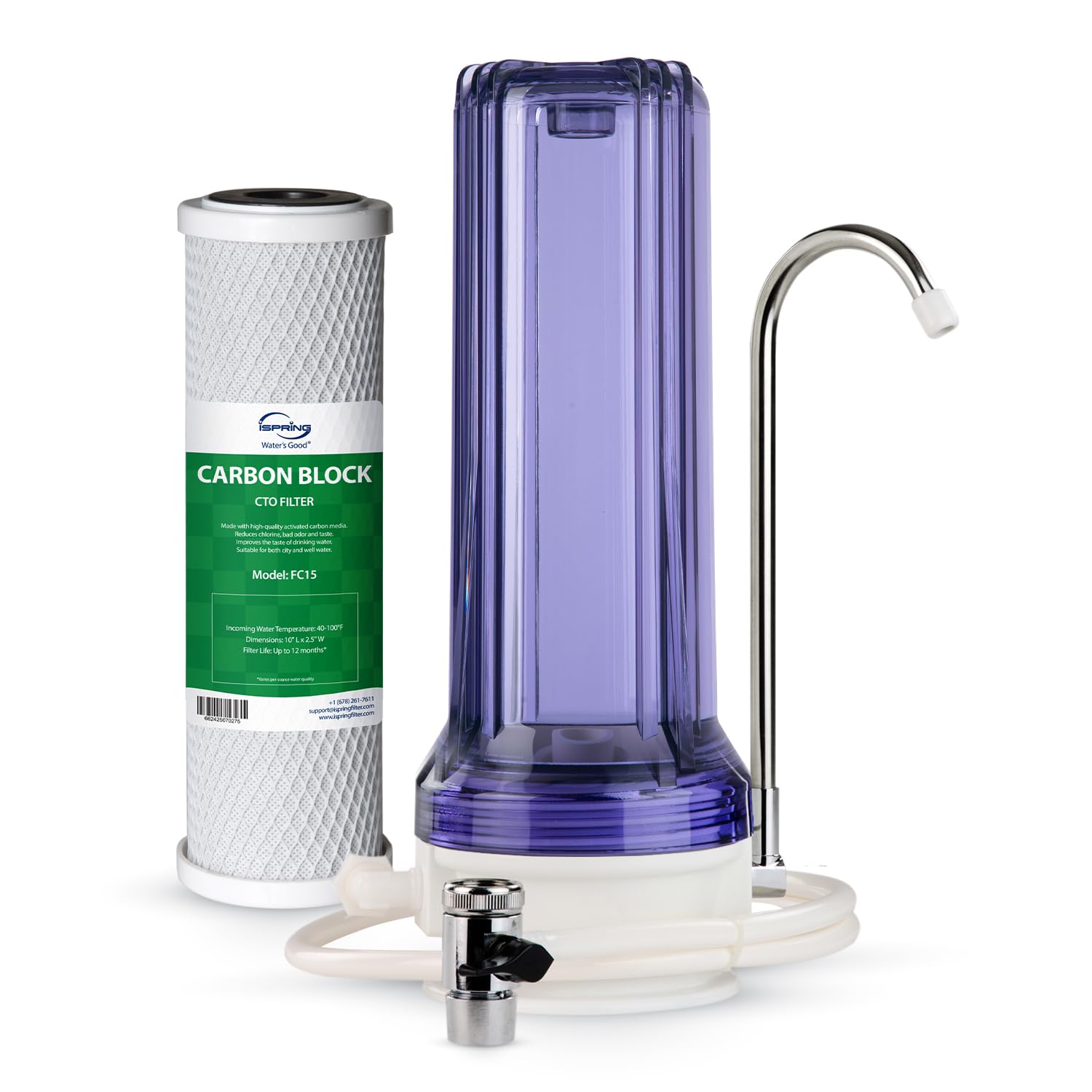
The iSpring CKC1C is a no-drill countertop filtration system built around a 5-micron carbon block cartridge that removes chlorine, odors, sand, silt, sediment and rust, and is third-party tested to NSF/ANSI standards. It connects to most standard faucets using the included diverter, tubing and adapters and is straightforward to install and switch between filtered and unfiltered water. The clear housing makes it easy to see when the cartridge needs replacing and the unit is made from food-grade, BPA-free materials to reduce leak risk. Typical use is daily drinking and cooking water on a kitchen counter, or in temporary setups such as rentals and RVs. The filter is rated to provide clean water for roughly 6 to 12 months depending on local water quality, but it is not a reverse-osmosis system so it will not lower total dissolved solids. For buyers who want a simple, visibly monitored countertop option that keeps healthy minerals while removing common contaminants, this unit is a practical, low-effort choice.
Best for: Buyers who want a simple, reliable countertop filter for daily drinking and cooking that is easy to install and monitor without altering beneficial minerals.
Less Ideal for: Those who need advanced purification like reverse-osmosis for TDS reduction, heavy metal removal, or water softening should look at dedicated RO or specialty systems instead.
- NSF/ANSI tested carbon block removes chlorine, odors, sediment and rust
- Clear housing allows quick visual inspection of cartridge condition
- No-drill installation with included diverter valve and adapters
- Made from food-grade, BPA-free materials and includes lifetime support
- Does not reduce total dissolved solids so it will not soften hard water or remove dissolved minerals
Verdict: Choose the iSpring CKC1C if you want an easy-to-install, NSF-tested countertop filter that visibly removes chlorine and sediment while preserving healthy minerals.
Big Berkey 2.25-Gallon Water Filter

| Capacity | 8.5 liters |
|---|---|
| Purification Method | Black Berkey proprietary filter media |
| Power Source | Gravity |
| Maximum Flow Rate | 0.03 gpm |
| Supported Water TDS Level Maximum (PPM) | 1000 |
The Big Berkey 2.25-gallon system is a countertop gravity filter that converts tap or freshwater into drinkable water using two authentic Black Berkey BB9-2 elements. It is filled in the top chamber, passes through the proprietary filter media, and dispenses from a spigot in the lower chamber, so no electricity, tools, or installation are required. The stainless steel chambers are polished and compact enough for kitchen counters while providing on-demand filtered water for a small household. The Black Berkey elements are independently tested and rated to reduce or remove more than 200 common contaminants and are rated to treat up to 6,000 gallons per pair before replacement is recommended, which makes running costs very low. Practical limitations include a slow gravity flow rate and the need to manually refill the top chamber, so it is better for steady household use than high-flow situations, and additional fluoride/arsenic reduction requires optional PF-2 elements. For those who prioritize contaminant reduction and a long-lasting, tool-free system, the Big Berkey is a strong performer; for instant high-volume dispensing or fully plumbed solutions, consider alternatives.
Best for: Buyers who want a high-contaminant-reduction, low-running-cost countertop filter for everyday drinking water and who prioritize tested filtration performance over instant high flow.
Less Ideal for: People who need fast, high-volume dispensing, fully plumbed under-sink solutions, or built-in fluoride removal straight out of the box should look elsewhere.
- Gravity-fed design requires no electricity or plumbing
- Black Berkey elements are independently tested to reduce 200+ contaminants
- Long element lifespan rated up to 6,000 gallons per pair lowers operating cost
- Compact stainless steel construction fits on most countertops and looks durable
- Slow maximum flow rate due to gravity filtration
- Does not remove fluoride/arsenic without optional additional elements
Verdict: Choose the Big Berkey when you want a proven, long-lasting gravity countertop filter that prioritizes broad contaminant reduction and low operating cost.
Waterdrop Lucid Pitcher WD-PT-07B

| Capacity | 2.4 liters |
|---|---|
| Filter Life Cycle | 200 gallons / 3 months |
| Purification Method | Activated Carbon |
| Maximum Flow Rate | 0.5 gpm |
The Waterdrop Lucid WD-PT-07B is a countertop 10-cup water filter pitcher that uses a multi-stage activated carbon filter to reduce chlorine, PFOA/PFOS and certain heavy metals while improving taste. It is used like any pitcher filter: fill the reservoir, the filter pulls water into the pitcher, and a hands-free lid dispenses filtered water without opening the top. Notable features include NSF/ANSI 42 and 372 certifications, a smart LED filter-life indicator, and a filter rated for about 200 gallons or roughly three months of typical household use. The slim profile is intended to fit most refrigerator doors and the non-electric design needs no power. Practical benefits are clearer tasting water for everyday drinking, coffee and tea, plus fewer replacement cycles compared with shorter-life cartridges. Limitations are that it does not lower total dissolved solids and replacement filters must be matched to the model for proper fit and performance.
Best for: Buyers who want an easy, low-maintenance pitcher that delivers noticeably better-tasting daily drinking water and fewer filter changes.
Less Ideal for: If you need to significantly lower TDS or want whole-home treatment, choose a dedicated TDS reduction system or point-of-use reverse osmosis instead.
- NSF/ANSI 42 and 372 certified for validated contaminant reduction
- Long-life filter rated ~200 gallons or 3 months between changes
- LED indicator to monitor filter life and prompt replacements
- Slim, hands-free lid design that fits most fridge doors and limits dust exposure
- Does not reduce total dissolved solids (TDS)
- Requires specific replacement filter model for best performance
Verdict: Choose this pitcher if you want a compact, NSF-certified pitcher filter that improves everyday drinking water taste with a longer-lasting cartridge.
Brita Metro 6-Cup Pitcher

| Capacity | 6-cup |
|---|---|
| Filter life cycle | About 2 months / 40 gallons |
| Material Type | Plastic |
| Supported Water TDS Level Maximum (PPM) | 500 |
The Brita Metro 6-cup pitcher is a compact, fridge-friendly filtered water pitcher intended for everyday tap-water improvement. It uses Brita's Standard filter (WQA NSF/ANSI certified) to reduce chlorine taste and odor, copper, mercury, and cadmium, and the SmartLight change indicator tracks filter life so you know when to replace it — about every 40 gallons or two months for typical family use. The pitcher's easy-fill lid and slim profile make it simple to top off and store in most fridge doors or dorm fridges. One Standard filter can replace up to 300 single-use 16.9 oz bottles, which helps reduce plastic waste and ongoing bottled-water costs. Because it is a manual pitcher, filling and cooling require hands-on refills and it does not remove every contaminant, so performance depends on what is present in your tap water. The small 6-cup capacity suits singles, couples, or dorm rooms but means more frequent refills for larger households. Overall this is a practical, budget-focused way to improve taste and reduce certain contaminants without plumbing changes or electricity.
Best for: Buyers who want an affordable, no-plumbing way to improve tap water taste and cut bottled-water costs for one or two people in apartments, dorms, or small kitchens.
Less Ideal for: Larger households, those who need high-capacity or point-of-use filtration, or anyone seeking comprehensive contaminant removal should consider larger dispensers or under-sink systems instead.
- WQA NSF/ANSI certified reductions for chlorine taste and several heavy metals
- SmartLight indicator gives a clear, simple reminder to change the filter
- Compact, space-saving design fits most fridge doors and mini-fridges
- Compatible with Brita Standard and Elite filters so replacements are easy to find
- Small 6-cup capacity requires frequent refilling for multiple people
- Manual pitcher format means no continuous dispensing or refrigeration beyond what's in the fridge
Verdict: A compact, budget-friendly pitcher that reliably improves tap water taste and reduces select contaminants while fitting easily in small fridges.
iSpring RCC7-BN 5-Stage RO System

| Purification Method | Reverse Osmosis, Activated Carbon, Carbon block |
|---|---|
| Capacity | 75 gallons |
| Maximum Flow Rate | 3.4 liters per minute |
| Supported Water TDS Level Maximum (PPM) | 750 |
The iSpring RCC7-BN is a five-stage under-sink reverse osmosis system designed to deliver bottled-quality drinking water at the tap. It uses three pre-filters (sediment, GAC, carbon block), a high-rejection RO membrane and a final GAC polish to reduce TDS and remove contaminants down to 0.0001 microns, including chlorine, PFAS, lead and other common impurities. The system includes a pressurized storage tank and a 100% lead-free designer faucet for daily dispensing and fits under most kitchen sinks without needing electricity. Notable practical touches are the transparent first-stage housing for quick visual checks, push-to-connect fittings to reduce leaks, and online installation videos for DIY setup. Trade-offs are typical for RO units: it is intended for municipal water rather than untreated well water and requires periodic filter and membrane replacements and a storage tank that occupies cabinet space. For buyers prioritizing reliable, high-capacity contaminant removal, the RCC7-BN is a durable, well-documented option.
Best for: Buyers who want a dependable, high-capacity under-sink system that consistently delivers near-bottled quality water and who prefer a DIY-friendly, well-supported product.
Less Ideal for: Homes on raw well water without a point-of-entry prefilter or buyers who need a countertop or portable solution.
- Five-stage filtration including RO membrane for high contaminant rejection
- NSF/ANSI 58 certification for manufacturing and performance standards
- Transparent first-stage housing for easy visual inspection
- Push-to-connect fittings and included components simplify leak-free DIY installation
- Includes pressurized tank and lead-free faucet for ready-to-use drinking water
- Not designed for untreated well water without pre-treatment
- Requires periodic replacement of filters and RO membrane
- Takes under-sink cabinet space for tank and components
Verdict: Choose the RCC7-BN when you want a proven, NSF-certified under-sink RO system that reliably produces high-quality drinking water for daily household use.
BRITA Large Water Filter Pitcher

| Capacity | 10 cups |
|---|---|
| Purification Method | Granular Activated Carbon |
| Filter Life Cycle | 2 months / 40 gallons |
| Power Source | Manual |
The BRITA Large Water Filter Pitcher is a simple, manually operated pitcher that filters tap water through a Brita Plus filter to improve taste and reduce chlorine, copper, cadmium and mercury. You fill the flip-top lid reservoir and filtered water collects in the 10-cup carafe for easy pouring and fridge storage. The included filter is certified to last about 40 gallons or roughly two months under average household use, and the pitcher accepts Brita Longlast or Standard filters for longer service intervals if desired. Practical benefits include a compact shape that fits refrigerator shelves, a visible indicator to remind you when to change the filter, and an easy-to-use refill mechanism with minimal setup. Limitations are inherent to pitcher systems: flow rate depends on gravity so initial fills take a few minutes and the pitcher is not designed to remove microbiological contamination or replace a whole-home system. For buyers who want straightforward chlorine and heavy-metal reduction and an affordable way to avoid bottled water, this pitcher is a dependable, low-effort option.
Best for: Buyers who prioritize proven contaminant reduction and straightforward, low-effort filtration for everyday drinking water and want social-proofed reliability from a widely used brand.
Less Ideal for: Homes needing whole-house filtration, rapid dispensing for large gatherings, or treatment for microbiologically unsafe water should look at undersink or point-of-entry systems instead.
- Certified reduction of chlorine and select heavy metals for better taste and safety
- Compact 10-cup capacity that fits refrigerator shelves and fills reusable bottles
- Accepts Brita Longlast and Standard filters for flexible replacement intervals
- Easy-fill flip-top lid and visible filter change indicator for low-maintenance use
- Gravity-fed filtering can be slower than powered systems
- Does not remove microbiological contaminants and is not a substitute for disinfection
Verdict: A reliable, easy-to-use 10-cup pitcher that delivers certified chlorine and heavy-metal reduction for everyday drinking water.
DREO RO Countertop Water Filter 5L

| Purification Method | Reverse Osmosis |
|---|---|
| Capacity | 5 liters |
| Other Special Features | Built In TDS Meter, Change Filter Indicator, Touch Control |
| Pure to Drain Rate | 3:1 |
| Included Components | RO Filter; 2 Autofill Water Pitchers |
The DREO countertop RO system provides seven-stage reverse osmosis filtration in a compact, install-free package designed for everyday drinking water. It sits on a counter, plugs in, and delivers filtered water to a 5 L tank while a pair of 1.1 L auto-fill pitchers let you grab purified water without moving the unit. Real-time TDS readings and a filter-life indicator make it easy to confirm water quality and know when to replace the cartridge, and the self-cleaning flush reduces stagnant lines that can affect taste. The system reports a 3:1 pure-to-drain ratio to limit waste compared with older RO units, and the twist-to-install filter cartridge and included replacement options simplify maintenance. Expect steady, very clean drinking water for a small household, though the unit requires countertop space and periodic filter changes and will produce some wastewater during operation. For buyers who prioritize measurable purity and convenience without plumbing work, this unit is a straightforward choice.
Best for: Buyers who want measurable, laboratory-backed purity and easy maintenance without installing under-sink plumbing, and who prefer a plug-and-play countertop solution for daily drinking water.
Less Ideal for: People who need a permanently installed under-sink system, have extremely limited counter space, or want a zero-waste filtration method should consider other options.
- 7-stage RO filtration removes a wide range of contaminants with SGS testing claims
- Built-in TDS meter and filter-life indicator provide real-time water quality and maintenance feedback
- Auto-fill dual-pitcher system offers hands-free refills and keeps filtered water ready
- Self-cleaning flush helps keep internal tubing fresh and reduces taste issues
- Produces wastewater as part of RO process despite improved 3:1 ratio
- Requires counter space and an electrical outlet since it is a plug-in unit
Verdict: If you want plug-and-play, lab-tested RO-level purification with easy monitoring and auto-fill convenience for a small household, this countertop system is a reliable pick.
Choosing the Right Water Filter for Home Drinking Water: Key Factors to Consider
Filtration Effectiveness
Different filters target different contaminants. Activated carbon excels at removing chlorine taste and organic compounds, while specialty media or reverse osmosis systems reduce heavy metals, nitrates, and dissolved solids. Matching the filter media to the specific contaminants in your water source is essential because a filter that removes taste contaminants may not address lead or microbial concerns.
Ask for independent test data or certifications that verify specific removal claims. Effectiveness also depends on proper installation and timely cartridge replacement; a worn-out or improperly installed cartridge will underperform regardless of the media type.
Flow Rate and Daily Delivery
Flow rate matters for everyday use. Slow point-of-use systems can frustrate users if they restrict faucet flow during cooking or filling pitchers. Filters with larger media beds or higher-rated flow specifications deliver water faster but may require more space under a sink or more frequent maintenance.
Consider how many people will use the filter and whether the system can keep up with peak demand, for example when multiple household members are filling glasses or pots. Balance the desired contaminant removal against acceptable wait times for filtered water.
Installation and Plumbing Compatibility
Ease of installation affects who can realistically set up the system. Countertop and pitcher filters usually require no tools, under-sink systems may attach to existing plumbing with simple fittings, and some units need minor drilling or professional help. Confirm the connections match your faucet and shutoff locations so installation is smooth.
Think about whether you want a permanent under-sink unit or a moveable countertop solution. Some systems include adapter kits that increase compatibility, which can be useful if you expect to relocate the filter between homes.
Maintenance Needs and Cartridge Replacement
Regular cartridge changes are critical to maintaining filtration performance and water quality. Filters differ in recommended replacement intervals, ranging from monthly cartridges to multi-year membrane elements. Shorter intervals can mean fresher filtration but higher recurring work and cost.
Consider how easy it is to swap cartridges, whether a tool is required, and whether the replacement parts are readily available. Also check for clear indicators or flow-based warnings that tell you when performance is degrading so you do not unknowingly run unfiltered water.
Space, Aesthetics, and Installation Footprint
Where you plan to locate the filter will limit your choices. Under-sink systems need cabinet space and may interfere with storage, while countertop units take up counter space and affect kitchen appearance. Pitcher filters are compact but provide limited capacity.
Measure available space before choosing a system and account for clearance needed during cartridge swaps. Consider the visual impact as well if the unit will be in plain sight in a small kitchen.
Ongoing Cost and Parts Availability
Upfront cost is only part of the total ownership picture. Long-term expense depends on cartridge life, cost of replacement parts, and how easy those parts are to source. Filters with proprietary cartridges that are hard to find can lead to downtime or forced replacements.
Estimate annual replacement frequency and check supplier reliability. Some systems also allow bulk or subscription purchases of cartridges, which can lower effective running costs and simplify maintenance planning.
Types of Home Drinking Water Filters
Home drinking water filters come in several common formats, each with tradeoffs. Pitcher filters are the simplest and most portable, using gravity to pass water through carbon cartridges. Countertop units connect to a faucet or stand-alone line and usually offer better flow than pitchers while remaining easy to install. Under-sink systems hide the hardware and often provide the best balance of performance and convenience for daily kitchen use.
More advanced point-of-use options include reverse osmosis and multi-stage under-sink designs that target a wider range of dissolved contaminants. Those systems can dramatically reduce dissolved solids but may require dedicated faucet hookups and generate wastewater during operation.
- Pitcher filters: easiest setup, limited capacity and lifespan.
- Countertop filters: better flow, still simple to install.
- Under-sink systems: best integration and capacity for daily kitchen use.
- Reverse osmosis: broad contaminant removal but needs space and produces waste.
How to Match a Filter to Your Water
Start by identifying what is actually in your tap water. Many municipalities publish annual water quality reports that list common contaminants and their concentrations. If you use well water or suspect specific contaminants, a laboratory test will reveal the precise issues to address.
Choose filter media that targets the contaminants you found. For example, if chlorine taste is your main concern, carbon filtration is sufficient. For lead or other heavy metals, look for media or certifications that specifically list those removals. When in doubt, favor filters with broader certified removal lists.
- Check local water quality reports or get a lab test for private wells.
- Match media type to contaminants found in your water.
- Prioritize certified removal claims for serious contaminants.
Installation Tips and Common Plumbing Considerations
Before buying, inspect the faucet and shutoff valves under your sink. Many under-sink systems can tie into existing cold-water lines with simple compression fittings, but some older plumbing may require adaptors. For countertop units, verify that your faucet adapter size is compatible or that an included kit will work.
If you are renting or prefer a nonpermanent solution, choose a countertop or pitcher system that does not alter in-wall plumbing. For permanent under-sink installs, plan cabinet clearance and ensure you can access cartridges easily for replacement.
- Measure cabinet and counter space before selecting a unit.
- Confirm faucet adapter compatibility for countertop hookups.
- Opt for noninvasive setups if you cannot modify plumbing.
Maintenance Best Practices
Follow manufacturer replacement intervals and record the date when you install a new cartridge. Keep spare cartridges on hand to avoid letting the filter run past its effective life. Flush new cartridges per instructions to remove initial carbon fines and ensure optimal performance.
If your system includes a pressure or flow indicator, monitor it to detect when capacity is decreasing. For reverse osmosis systems, remember to sanitize the storage tank during scheduled maintenance to prevent bacterial buildup.
- Track installation dates and set calendar reminders for replacements.
- Flush new cartridges before first use.
- Sanitize storage components on systems that include them.
Evaluating Certifications and Test Data
Independent certifications from recognized labs provide third-party verification of removal claims. Look for certifications that list specific contaminants and the reduction levels achieved. Certification does not guarantee perfect performance in every household, but it is a useful baseline for comparing systems.
Review the scope of the certification carefully. Some certifications cover microbial reductions while others focus on chemical contaminants. Prefer documentation that is recent and relevant to the filter configuration you are considering.
- Verify which contaminants are covered by each certification.
- Check that test conditions match expected household usage.
- Use test reports to compare expected removal rates across media types.
How We Chose the Best Water Filter for Home Drinking Water
We focused on practical performance and real-world usability when selecting the seven water filters included in this guide. Our evaluation prioritized measurable filtration effectiveness against common tap contaminants such as chlorine, lead, and particulate matter, along with certified removal claims from independent test labs where available. We required clear maintenance profiles, including straightforward cartridge replacement and predictable service intervals, to ensure a good owner experience. Installation flexibility was another filter: we selected systems that cover a range of household plumbing setups, from under-sink units to countertop and pitcher styles, and we prioritized options with minimal tools or plumbing changes. Flow rate and consistent delivery were weighted to reflect daily drinking and cooking use, since slow filters are often rejected by households despite strong contaminant removal. We also considered filter lifespan and replacement cartridge availability as proxies for ongoing cost and convenience. Exclusions: we omitted specialty commercial systems, point-of-entry whole-home treatment not intended specifically for drinking water, and any products requiring professional-only installation in most homes. The included criteria align with the scoring metrics below and emphasize what buyers can verify and expect in typical residential settings.
Our full evaluation process is outlined in our review methodology.
FAQ
How often should I replace a drinking water filter cartridge?
Replacement intervals depend on the filter type and household usage. Typical carbon cartridges last from one to six months, while longer-life cartridges and membranes can last one year or more. Follow the manufacturer schedule and monitor flow or taste changes as practical indicators.
Will a home drinking water filter remove lead and other heavy metals?
Some filters are designed to reduce lead and other heavy metals, but not all. Look for independent removal claims or certifications that specifically list those contaminants. For reliable heavy metal reduction, multi-stage media or membranes are often required.
Do pitcher and countertop filters improve water taste as well as under-sink systems?
Pitcher and countertop filters with activated carbon effectively improve taste and remove chlorine and many organic compounds. Under-sink systems with larger media or additional stages can offer stronger contaminant reduction while maintaining flow, but the taste benefits are achievable with simpler carbon-based units.
Is professional installation required for under-sink drinking water filters?
Many under-sink units are designed for DIY installation with common fittings and clear instructions. However, some models that require drilling or modifying plumbing may be better handled by a professional. Choose a unit that matches your comfort level with basic plumbing tasks.
How do I know if my water needs a specialized filter?
Check your municipal water quality report or have a private well tested. If contaminants like nitrate, arsenic, or high dissolved solids appear, you may need a specialized media or membrane system. For simple taste or chlorine issues, standard carbon filters often suffice.
Final Verdict
Selecting the right water filter for home drinking water comes down to matching removal capability with your household habits and plumbing. Prioritize filtration effectiveness for the contaminants you face, but balance that against flow rate and maintenance frequency so the system fits daily routines. If you value convenience and steady delivery, choose a system with longer cartridge life and straightforward replacement. For targeted contaminant removal, opt for media or membrane configurations that explicitly list those reductions. With clear priorities and a plan for routine maintenance, you can choose a home drinking water filter that reliably improves tap water quality.