
Note: This article contains affiliate links. If you click on these links and make a purchase, we may earn a small commission at no extra cost to you. This helps support our research and content. Read our full affiliate disclosure here.
If hard water and mineral taste are affecting your pipes, fixtures, and drinking water, a combined water filter with a water softener can solve two problems at once. These systems reduce hardness minerals that cause scale while also removing chlorine, sediment, and other common contaminants that affect taste and appliance life. Choosing the right system matters because capacity, filter type, and softening method determine how well it handles your household flow rate and water chemistry. This guide walks through our top shortlisted systems and explains the evaluation criteria we used, including filtration efficiency, softening capacity, installation needs, and maintenance. Use the summary to match a system to your home's water hardness, flow demands, and ongoing service preferences.
Top Picks at a Glance
| Best Overall The best all-around choice for most situations | NU Aqua 4-Stage Whole House System | 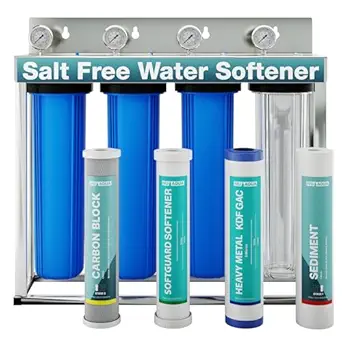 |
| Best Quality Built to a higher standard if you want something more solid | DuraWater Fleck 5600 SXT 48K |  |
| Best Value The sweet spot between price and what you get | Ziwshom Whole Home Water Filter System 125 |  |
| Best Budget The cheapest option that still gets the job done reliably | DYLSDFQ 3-Stage Whole House Filter |  |
| Top Rated A top-rated pick with lots of positive feedback | AFWFilters Iron Pro 2 64k |  |
| Most Popular A crowd favorite that many people choose with confidence | Aquasure AS-PR75HS48D Bundle | 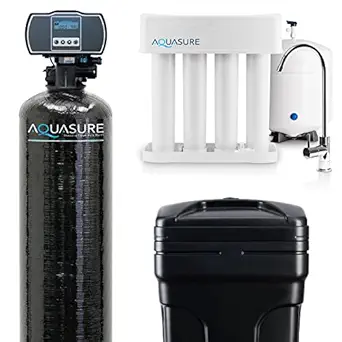 |
| Best Seller A high-volume bestseller chosen again and again | Kenmore Elite 520 Water Softener |  |
NU Aqua 4-Stage Whole House System

| Purification Method | Activated Carbon, Carbon Block |
|---|---|
| Installation Type | Whole House Water Tank |
| Supported Water TDS Level Maximum (PPM) | 300 |
| Other Special Features of the Product | Clean Water From Every Tap, Easy to Install, Extend Lifespan of Appliances, Protect House Plumbing, Softer Laundry |
The NU Aqua 4-Stage Whole House System combines scale-prevention softening with multi-stage filtration to deliver treated water to every tap. Installed at the point of entry, it uses a salt-free scale control media plus sediment, KDF/GAC and carbon block stages to cut chlorine, VOCs, bad tastes, and reduce heavy metals like lead and mercury while leaving beneficial minerals in the water. Because it does not use salt, the system does not require electricity, brine discharge, or backflushing, which simplifies maintenance and makes it more eco-friendly than traditional softeners. Practical benefits include protection for plumbing and appliances, softer-feeling laundry and showers, and whole-home coverage including outdoor spigots. Trade-offs are that a salt-free approach conditions rather than removes hardness minerals and it lists a maximum supported TDS of 300 ppm, so homes with very hard or high-TDS water may need a different solution or pre-treatment. The aluminum build and included system parts provide a full point-of-entry package for homeowners looking to reduce contaminants without the upkeep of a conventional salt-based softener.
Best for: Homeowners who want whole-house filtration plus salt-free scale control and prefer low-maintenance, eco-friendly systems that protect plumbing and improve water taste across the house.
Less Ideal for: Homes with very high hardness or TDS levels that require full ion-exchange softening or users who need guaranteed mineral removal for specific water chemistry issues.
- Salt-free scale prevention protects plumbing and appliances without brine, electricity, or backflushing
- Multi-stage filtration (sediment, KDF/GAC, carbon block) reduces chlorine, VOCs, odors, and heavy metals
- Point-of-entry design treats all household water including outdoor spigots
- Leaves beneficial minerals while conditioning water, so drinking water mineral balance is preserved
- Does not remove dissolved hardness completely since it is a salt-free conditioner rather than an ion-exchange softener
- Supported maximum TDS listed as 300 ppm which may be insufficient for very hard water sources
Verdict: Choose this system if you want whole-house filtration with low-maintenance, salt-free scale control that improves water taste and protects plumbing without using salt.
DuraWater Fleck 5600 SXT 48K

| Purification Method | Ion Exchange |
|---|---|
| Maximum Flow Rate | 14 gpm |
| Power Source | Corded Electric |
| Capacity | 1.5 cubic feet |
| Supported Water TDS Level Maximum (PPM) | 8 |
This combination system pairs a fine mesh ion-exchange resin with a Fleck 5600 SXT digital metered valve to deliver whole-house softening plus iron removal in one unit. It is designed for residential use, sized for typical 2–5 person homes, and installs freestanding with a bypass for service. The digital metered valve tracks actual water use and only regenerates when needed, which reduces salt and water waste compared with time-clock systems. Fine mesh resin improves iron capture so you should see less red staining and fewer iron-related deposits on fixtures. The system supports a high peak flow and is corded electric, so it can handle typical household demand without complex hookups. Limitations include the need for periodic salt replenishment and service, and the unit requires space and basic plumbing for installation; very high TDS or industrial iron loads exceed the stated supported levels. For buyers wanting a single, performance-focused unit that handles hard water and iron together, this is a practical, efficient choice.
Best for: Buyers who prioritize reliable performance and efficient operation and want a single whole-house system that softens water and removes iron for typical family-sized homes.
Less Ideal for: Homes with extremely high TDS or industrial-strength iron problems, or buyers who need a compact under-sink solution rather than a freestanding whole-house unit.
- Combined softener and iron filtration eliminates scale and reduces red staining in one unit
- Fleck 5600 SXT digital metered valve regenerates based on actual water use to save salt and water
- Fine mesh ion-exchange resin improves iron removal compared with standard resin
- Sized for typical 2–5 person homes and includes bypass valve for easier maintenance
- Requires periodic salt replenishment and occasional professional servicing
- Not intended for very high total dissolved solids or industrial iron concentrations
Verdict: Choose this unit if you want a single, performance-oriented whole-house system that softens water and removes iron with a metered Fleck valve to minimize wasted salt and water.
Ziwshom Whole Home Water Filter System 125

| Purification Method | Activated Carbon, Sedimentation |
|---|---|
| Maximum Flow Rate | 15 gpm |
| Supported Water TDS Level Maximum (PPM) | 1000 |
| Filter Life Cycle | 6 months |
| Capacity | 10000 gallons |
This Ziwshom 3-stage whole-home system combines sediment, GAC/KDF, and softener-style cartridges to reduce chlorine, sediment, odors, heavy metals, and scale at the point where water enters the home or under a sink. It is supplied as a complete kit with filter housings, wrench, tape, two shut-off valves and three sets of cartridges intended to cover about 1.5–2 years of normal use, which makes initial ownership low-effort. Installation uses water pressure and fits 3/4" plumbing and the built-in bypass/valve head simplifies servicing and filter changes without shutting off the entire supply. The system does not lower TDS because it is not a reverse-osmosis unit, so it preserves dissolved minerals while addressing taste and sediment. Expect periodic cartridge replacements roughly every six months and allow space for the housings when installing under a sink or in a utility area.
Best for: Buyers who want a turnkey, low-maintenance whole-house filtration package that improves taste and reduces sediment and chlorine without changing water mineral content.
Less Ideal for: Homes needing true water softening to remove hardness minerals or very low-TDS drinking water should consider ion-exchange softeners or RO systems instead.
- Complete kit includes three sets of cartridges so you get up to 1.5–2 years of use before buying replacements.
- Three-stage filtration (PP sediment, GAC/KDF, softener-style) targets sediment, chlorine, odors, heavy metals and scale.
- Built-in bypass head and two shut-off valves make installation and filter changes quicker and reduce downtime.
- Designed for whole-house or under-sink installation on 3/4" plumbing and runs on water pressure with no electrical connection.
- Filter life listed as about six months per cartridge so long-term ownership requires periodic cartridge purchases.
- Does not reduce TDS or perform true water softening like an ion-exchange softener or RO system.
Verdict: If you want an easy-to-install whole-house filter that improves taste and cuts chlorine and sediment with two years of included cartridges, this system delivers a practical, low-hassle solution.
DYLSDFQ 3-Stage Whole House Filter

| Purification Method | Carbon Block, Granular Activated Carbon |
|---|---|
| Maximum Flow Rate | 15 gpm |
| Supported Water TDS Level Maximum (PPM) | 300 |
| Filter Life Cycle | 5 months |
| Capacity | 10000 gallons |
This DYLSDFQ system is a three-stage whole-home filter pack that combines sediment (PP), carbon/KDF, and a salt-free softener cartridge to tackle chlorine, heavy metals, scale and taste issues for the whole house. It installs on the main line with 3/4" ports, clear housings for visual monitoring, and individual shut-off valves so you can replace cartridges quickly without shutting off the entire supply. The package includes three sets of cartridges plus a wrench and fittings, which should cover roughly 12 to 24 months depending on usage and water quality. At up to 15 gpm the unit supports showering and laundry without noticeable flow loss, and the see-through housings make maintenance timing obvious. Limitations: the softening is salt-free so it conditions rather than fully removes hardness minerals, filter life is listed in months rather than gallons which can vary with TDS, and long-term reliability details are limited compared with established brand OEM systems. For budget buyers who want whole-home filtration plus basic anti-scale protection and easy DIY maintenance, this system is a pragmatic choice.
Best for: Buyers looking for an affordable whole-house solution that improves taste, reduces chlorine and limits scale without complex installation or salt handling.
Less Ideal for: Homes needing full ion-exchange softening for very hard water or buyers who require documented OEM support and warranty backing.
- Three-stage filtration (PP sediment, GAC/KDF carbon, softener) addresses taste, chlorine, heavy metals and scale.
- Includes three sets of replacement cartridges and installation fittings so you get immediate multi-month coverage.
- Clear housings let you visually check debris and know when to replace cartridges.
- 15 gpm maximum flow supports simultaneous household use like showers and laundry.
- Softener is salt-free conditioning rather than true ion-exchange softening.
- Filter life given in months can vary widely with local water quality and is not expressed in gallons.
- Brand and long-term support information is limited compared with major factory-quality systems.
Verdict: A cost-conscious whole-house 3-stage filtration and salt-free conditioning kit that delivers cleaner-tasting water and basic anti-scale protection with easy DIY maintenance.
AFWFilters Iron Pro 2 64k

| Capacity | 64,000 Grain |
|---|---|
| Control Valve | Fleck 5600SXT Digital Metered |
| Removes | Hardness, Iron, Manganese, Sediment, Rust |
| Includes | Brine tank and bypass valve |
The Iron Pro 2 is an all-in-one whole-house system that pairs a 64,000-grain softener with an iron filter to treat hardness and common iron and manganese problems at the main line. It uses fine mesh resin and a Fleck 5600SXT digital metered valve so regeneration is demand-driven, which conserves salt and water compared with time-clock systems. The unit is built for high flow so it can feed a typical household without noticeable pressure loss and the package includes a brine tank, bypass valve, and DIY instructions for straightforward installation for someone comfortable with plumbing. Practical benefits include integrated iron removal up to specified ppm levels, meter-based regeneration, and a Pentair tank with a long warranty for durability. Important limitations are its weight and size that make handling and placement a consideration during installation, and it is intended for homes with the specified iron and manganese ranges so very high contaminant loads may require pre-treatment or a different configuration.
Best for: Homeowners who prioritize a reliable, factory-quality whole-house softener that also removes iron and manganese and want a system that regenerates only as needed to reduce maintenance.
Less Ideal for: Homes with extremely high iron or manganese concentrations, or buyers who need a compact, lightweight point-of-use solution rather than a whole-house system.
- Combines softening and iron removal in a single high-flow unit for whole-house protection
- Fleck 5600SXT metered valve provides demand-based regeneration to save water and salt
- 64,000-grain capacity supports larger households and longer intervals between regenerations
- Includes brine tank and bypass valve so basic installation is possible without sourcing extra parts
- Pentair tank with extended warranty adds durability and long-term reliability
- Heavy and bulky which complicates lifting and placement during installation
- Designed for up to specified iron and manganese concentrations so very high levels may need additional pretreatment
Verdict: Choose the Iron Pro 2 when you want a durable, high-flow whole-house system that combines proven softening with effective iron removal and demand-driven regeneration.
Aquasure AS-PR75HS48D Bundle

| Capacity (grains) | 48,000 |
|---|---|
| RO Capacity | 75 gallons per day |
| Maximum Flow Rate | 15 gpm |
| Supported TDS Max | 2000 ppm |
| Power Source | Corded Electric |
This Aquasure bundle pairs a 48,000-grain digital-metered water softener with a 75 GPD reverse osmosis drinking system to deliver softened water throughout the house and purified water for drinking and cooking. The softener uses a metered Aquatrol control head to regenerate on demand, which helps reduce salt and water use compared with time-clock systems, and the included prefilters plus RO membrane are rated to remove a wide range of dissolved contaminants for better tasting tap water. In practice the system is aimed at 3 to 4 bathroom homes and its 15 gpm maximum flow rate supports whole-house use without obvious pressure drops in most typical installations. Maintenance is straightforward but recurring: sediment and carbon stages need changing about every 6 to 12 months and the RO membrane less often, so owners should budget for filter replacements. Installation requires space and basic plumbing/electrical hookup and some users may prefer professional install to ensure correct setup. For households seeking both soft water and an under-sink quality RO output, this bundle covers both needs in one package.
Best for: Buyers who want a single solution that delivers both whole-house soft water and under-sink purified drinking water and who value systems with measurable, usage-based controls and established customer feedback.
Less Ideal for: People who need a minimal DIY plug-and-play purifier for a single faucet or who cannot accommodate dedicated installation space and routine maintenance.
- Combines whole-house softening with a 75 GPD RO system for softened water everywhere and purified drinking water
- Digital metered control head regenerates based on usage to save salt and water
- Rated maximum flow of 15 gallons per minute suitable for typical multi-bath homes
- RO system designed to remove a wide range of contaminants including TDS, chlorine, and heavy metals
- Requires periodic filter and membrane replacements on a set schedule
- Installation needs space and plumbing/electrical work which may require a professional
Verdict: Choose this Aquasure bundle if you want a combined whole-house softening system plus a 75 GPD RO unit that delivers softened water everywhere and purified drinking water from a single package.
Kenmore Elite 520 Water Softener

| Grain capacity | 31,000 |
|---|---|
| Maximum flow rate | 8 gpm |
| Operating pressure range | 20 – 125 psi |
| Supported water TDS maximum | 500 ppm |
The Kenmore Elite 520 is a hybrid whole-home water treatment unit that pairs a 31,000-grain ion-exchange softener with a self-cleaning carbon media filter, giving softened water plus improved taste from a single, space-saving cabinet. It is typically installed as a freestanding unit in a basement or utility area and connects to the main water line using the included bypass valve and installation kit. Notable features include IntelliSoft adaptive regeneration that learns household usage to cut salt and water waste, a 1-inch high-flow valve to preserve water pressure, and NSF certification for reductions including barium and radium. The self-cleaning carbon media means you avoid routine cartridge replacements, and the system handles clear iron up to 3 ppm. Limitations are the modest 31k grain capacity relative to larger homes with very hard water and the requirement for a standard power connection for the controller. For risk-averse buyers this model offers predictable factory-quality filtration and softening in a single footprint with familiar controls and proven certifications.
Best for: Buyers who want a single, factory-quality unit that reliably softens whole-house water and improves taste with minimal maintenance and predictable, certified performance.
Less Ideal for: Homes with very high hardness levels or very large households that need a higher grain capacity or separate advanced point-of-use filtration.
- Combined softener and self-cleaning carbon filter eliminates the need for a separate drinking-water filter
- IntelliSoft adaptive regeneration reduces salt and water use by matching household patterns
- NSF certified for removal of contaminants like barium and radium
- 1" high-flow valve maintains strong water pressure for showers and appliances
- 31,000-grain capacity may be small for very large households or extremely hard water
- Carbon media addresses chlorine taste and odor but does not replace specialty or point-of-use filtration for all contaminants
Verdict: A compact, NSF-certified hybrid that delivers whole-home softening plus carbon filtration with smart regeneration for buyers who want low-maintenance, proven performance.
Choosing the Right Water Filter with a Water Softener: Key Factors to Consider
Filtration Performance and Contaminant Targets
Filtration media and filter stages determine which contaminants a combined system removes. Some units focus on sediment and chlorine taste and odor, while others include activated carbon or specialty media to reduce specific contaminants such as VOCs, chloramine, or heavy metals.
Understanding your water test results is critical. If your primary concern is hardness plus aesthetic issues like chlorine taste, choose a system that pairs broad-spectrum carbon filtration with a softening stage. If you need removal of dissolved metals or specific chemical contaminants, confirm the system's certified reduction claims or lab data before buying.
Softening Method and Capacity
Most combined systems use ion-exchange resin to replace hardness minerals with sodium or potassium, but alternative technologies exist that reduce scale without exchanging ions. Ion-exchange provides predictable capacity measured in grains removed before regeneration, which helps you size a unit for your household's water usage and hardness level.
Capacity determines how often regeneration or service is required. Undersized systems regenerate frequently, increasing salt or service needs, while oversized systems may be less efficient. Match the softening capacity to your household size and the hardness measured in grains per gallon to balance convenience and operating cost.
Flow Rate and Household Demand
Whole-home systems must deliver sufficient flow for simultaneous uses such as showers, faucets, and laundry. Flow rate is usually expressed in gallons per minute and should exceed your peak demand to avoid pressure drop during heavy use.
Consider the layout and number of plumbing fixtures. Homes with high simultaneous demand need systems rated for higher continuous flow or parallel installations. Check pressure-drop curves and manufacturer guidance to ensure consistent performance under typical household conditions.
Maintenance Frequency and Consumables
Maintenance varies by system type and can include replacing filters, adding salt for ion-exchange systems, or periodic media replacement. Frequency affects ongoing cost and convenience; some systems require monthly or quarterly attention while others run longer between service intervals.
Look for systems with clear maintenance guides, accessible filter housings, and readily available replacement parts. Consider whether you prefer a DIY-friendly unit or are willing to schedule professional service for regeneration or media changes.
Installation Complexity and Space Requirements
Combined systems are often installed at the main water entry point and can require space for tanks, filter housings, and a brine tank. Installation complexity ranges from simple cartridge swaps to plumbing modifications and drain hookups for regeneration cycles.
Evaluate available space, whether a drain is nearby for regeneration discharge, and whether you can complete a moderate DIY installation or need a professional. Also check if the unit supports bypass valves for servicing without cutting off house water.
Long-Term Operating Costs
Operating costs include replacement filters, salt or potassium for ion-exchange softeners, energy for any powered control valves, and occasional professional servicing. These costs vary widely depending on system capacity and local water chemistry.
Estimate annual consumable needs based on water usage and hardness, and weigh those ongoing costs against upfront convenience. Systems that regenerate less frequently or use inexpensive consumables often have lower lifetime costs, but initial purchase and installation expenses also matter when budgeting.
How Combined Systems Work
Combined water filtration and softening systems integrate two core functions into one plumbing location. Typically, incoming water first passes through a sediment or carbon stage to remove particulates and chlorine, protecting downstream softening media and improving taste. The softening stage then treats dissolved hardness minerals using ion-exchange resin or a scale-inhibition method to reduce mineral deposits in pipes and appliances.
- Pre-filtration protects softening media and improves overall contaminant removal.
- Ion-exchange softeners exchange calcium and magnesium for sodium or potassium ions.
- Some systems use catalytic or template-assisted media that inhibit scale without ion exchange.
Sizing the System for Your Home
To size a combined unit, start with a water test to determine hardness and common contaminants, then calculate daily water usage for your household. Multiply average daily usage by hardness in grains per gallon to determine required daily grain removal, and choose a system with a regeneration interval and capacity that fits your schedule and salt budget.
- Estimate peak flow needs by adding simultaneous fixture demands.
- Allow margin above calculated daily capacity to avoid frequent regeneration.
- Confirm the system's stated maximum continuous flow rate matches shower and appliance needs.
Installation Checklist
Plan the installation location near the main water shutoff and, if applicable, a drain for regeneration or backwash cycles. Verify enough clearance for filter cartridge changes and brine tank access. Ensure water pressure and piping size meet the system specifications to prevent pressure loss and ensure efficient softening and filtration.
- Confirm presence of a floor drain or utility sink for regeneration discharge.
- Install a bypass valve to isolate the system during maintenance.
- Check whether additional pre-filters are recommended for well water or high-sediment conditions.
Common Maintenance Tasks
Routine maintenance includes checking control valve operation, refilling salt or potassium for ion-exchange systems, and replacing sediment or carbon filters on the schedule recommended by the manufacturer. Monitoring water quality after service helps confirm the system is performing as expected.
- Replace sediment and carbon cartridges at specified intervals to protect softening media.
- Inspect brine tank for bridging or impurities at least annually.
- Keep a log of regeneration cycles and water test results to spot performance drift.
Water Testing and Troubleshooting
Before purchase and periodically after installation, test for hardness, pH, chlorine, and any contaminants of concern. Tests help verify that the filtration stage and softening stage meet expectations and identify when media replacement or reprogramming is needed. If you notice residual hardness, check for salt bridging in the brine tank, programming errors, or exhausted resin. If taste or odor persists, inspect and replace carbon filter cartridges and confirm pre-filtration is adequate for your source water.
- Use simple home test kits for routine checks and certified labs for comprehensive analysis.
- Track changes after maintenance to confirm the effect of service actions.
- When in doubt, isolate components to determine whether filtration or softening is the limiting factor.
How We Chose the Best Water Filter with a Water Softener
We shortlisted systems that combine mechanical or media filtration with ion-exchange or alternative softening technology and then applied category-specific filters to ensure real-world usefulness. Primary evaluation focused on measurable filtration performance and softening capacity, plus factors that affect everyday ownership such as flow rate, serviceability, and long-term operating costs. Specifically, we prioritized: lab-rated contaminant reduction or well-documented filter media, softening capacity expressed in grain removal or equivalent, continuous flow capacity suitable for typical household fixtures, and clarity about maintenance intervals and parts availability. We excluded systems that only offer point-of-use treatment without whole-home capability and units lacking clear specification data for either filtration or softening. Additional editorial filters included build quality and installation flexibility. We favored systems with clear installation paths for standard plumbing, accessible filter elements or resin tanks for routine service, and straightforward regeneration or media-replacement procedures. Systems that required proprietary consumables with unclear supply chains were deprioritized.
Our full evaluation process is outlined in our review methodology.
FAQ
Do combined systems remove hardness and chlorine effectively?
Often they do, but effectiveness depends on the specific filter media and the softening method. Look for documented reduction rates or certifications for the filtration stage and clear capacity ratings for softening to confirm performance.
How much maintenance do these systems require?
Maintenance varies. Expect periodic filter cartridge changes and regular addition of salt or potassium for ion-exchange systems. Some systems regenerate weekly while others run longer between service events depending on capacity and usage.
Can I install a combined system myself?
That depends on your plumbing skills and the unit's complexity. Basic cartridge-style systems are often DIY-friendly, but units requiring tank hookups, drain lines, or electrical control valves may be better handled by a professional.
Will a combined system change my water's sodium content?
Ion-exchange softeners add sodium or potassium in exchange for hardness minerals. The increase is typically modest but depends on water hardness and the softening method. Alternative scale-inhibition technologies do not add sodium.
How do I know what size system to buy?
Size by combining household daily water usage with measured hardness in grains per gallon to calculate required grain removal. Then choose a system with a capacity that yields a convenient regeneration interval and meets your peak flow needs.
Are combined systems suitable for well water?
They can be, but well water often has higher sediment, iron, or manganese that can foul filters and resin. Additional pre-filtration or specialized media may be necessary to protect the system and maintain performance.
Final Verdict
Choose a combined water filter and softener that matches your measured water chemistry, household flow demands, and maintenance preferences. Prioritize clear filtration claims and a softening capacity sized to your daily usage so the system regenerates at a convenient interval. Balance installation complexity and ongoing consumable costs against the convenience of whole-home treatment. If you need low-touch ownership, favor systems with longer service intervals and user-friendly maintenance. If precise contaminant reduction is the priority, select a filtration stage with documented performance and plan for the recommended replacement schedule. These tradeoffs will guide a confident choice for cleaner water and reduced scale in your home.