
Note: This article contains affiliate links. If you click on these links and make a purchase, we may earn a small commission at no extra cost to you. This helps support our research and content. Read our full affiliate disclosure here.
If you want filtered water that tastes crisp while adding back healthy minerals, choosing the right water filter with minerals matters. You need a system that removes common contaminants without stripping every dissolved mineral, and that fits your daily flow and maintenance habits. This guide shortlists the top-performing water filters with minerals for home use, focusing on filtration effectiveness, mineral retention, installation type, and upkeep. Below you will find our selected options and an explanation of the criteria we used to evaluate them, so you can match a model to your sink, usage, and water quality concerns.
Top Picks at a Glance
| Best Overall The best all-around choice for most situations | AquaTru Carafe Alkaline |  |
| Best Quality Built to a higher standard if you want something more solid | Waterdrop X16-BAS Reverse Osmosis |  |
| Best Value The sweet spot between price and what you get | Waterdrop T3-M Tankless RO |  |
| Best Budget The cheapest option that still gets the job done reliably | Santevia MINA Alkaline Pitcher |  |
| Top Rated A top-rated pick with lots of positive feedback | iSpring RCC7AK-BN RO System |  |
| Most Popular A crowd favorite that many people choose with confidence | Bluevua ROPOT Countertop RO |  |
AquaTru Carafe Alkaline

| Purification Method | Reverse Osmosis |
|---|---|
| Power Source | Corded Electric |
| Maximum Flow Rate | 0.5 gpm |
| Filter Life Cycle | Prefilter 6 months; RO up to 2 years; VOC/alkaline 1 year |
| Material Type | Borosilicate Glass |
The AquaTru Carafe Alkaline is a countertop reverse osmosis purifier built around a removable borosilicate glass carafe and a four‑stage filter stack that includes an alkaline VOC stage to return minerals like calcium and magnesium. You fill the top tank, plug the unit into a standard outlet, and purified water is dispensed into the glass carafe — a setup designed for everyday drinking, coffee and tea, cooking, and baby formula. Notable features include NSF‑tested contaminant reduction claims covering 84 contaminants including PFAS and lead, long filter lifespans (prefilter ~6 months, RO up to 2 years, alkaline VOC ~1 year), and built‑in filter indicators so replacements are straightforward. Because it uses RO and a powered pump, it yields very low-TDS water that the alkaline filter remineralizes for taste and pH balance. The trade-offs are typical for compact RO systems: it produces purified water in batches rather than instantly like a tap, requires electricity and periodic filter replacement, and takes some counter space compared with simple pitcher filters. For buyers wanting high contaminant removal plus mineralized taste, the Carafe Alkaline is a strong countertop option.
Best for: Buyers who want near‑RO level contaminant removal but also prefer mineralized, better‑tasting water for daily drinking, coffee, and cooking and who are comfortable with a countertop, plugged‑in unit and periodic filter changes.
Less Ideal for: People who need instant high‑volume output, have no counter space, or prefer a purely passive, non‑electric pitcher filter should consider other options.
- Removes a wide range of contaminants including PFAS, lead, and microplastics as a 4‑stage RO system.
- Includes an alkaline VOC filter that adds minerals back for improved taste and pH.
- Long filter life on RO and carbon stages reduces replacement frequency.
- Plug‑in countertop design requires no plumbing or drilling and is easy to set up.
- Glass carafe provides a durable, inert container for storing filtered water.
- Operates in batches and requires electricity and counter space compared with passive pitcher filters.
- RO systems produce lower output flow rates, so filling large quantities takes time.
Verdict: Choose the AquaTru Carafe Alkaline when you want strong RO contaminant removal with a built‑in alkaline stage that brings minerals and better taste back to your drinking water.
Waterdrop X16-BAS Reverse Osmosis

| Certification | NSF/ANSI 42, 58, 372 |
|---|---|
| Filtration stages | 11-stage |
| Capacity | 1600 gallons (peak GPD) |
The Waterdrop X16-BAS is a tankless under-sink reverse osmosis system designed for high-throughput households that want mineral-enhanced drinking water. It uses an 11-stage filtration train with a reinforced 0.0001 μm RO membrane to remove contaminants while an integrated mineralization stage adds calcium, magnesium and other ions for a mildly alkaline taste. Because it is tankless and rated to 1600 GPD peak, it delivers near-instant water flow—enough to fill a small cup in a couple of seconds—which makes it useful for frequent kitchen use and entertaining. The system includes a digital faucet that reports real-time TDS and filter life and supports automatic shutoff during filter replacement. Waterdrop emphasizes efficiency too, with a claimed 3:1 pure-to-drain ratio and an energy-saving mode for quieter operation. Expect routine filter replacements and faucet installation that may require drilling the countertop, but the X16-BAS is a strong option if you prioritize fast, remineralized RO water and onboard monitoring in a compact under-sink package.
Best for: Buyers who want fast, on-demand reverse osmosis water with added minerals and real-time quality monitoring for heavy kitchen use and a performance-first setup.
Less Ideal for: If you prefer a simple, low-flow countertop filter or want a unit that requires no faucet modification, this system is not the best fit.
- High peak flow (1600 GPD) for near-instant dispensing
- 11-stage filtration including reinforced RO membrane for broad contaminant reduction
- Alkaline mineralization to restore calcium, magnesium and other ions for improved taste
- Tankless design saves under-sink space and reduces standing water
- Digital faucet with real-time TDS and filter life monitoring for easy maintenance
- Faucet installation may require drilling the countertop
- High peak capacity may be overkill for very small households
Verdict: Choose the X16-BAS when you need high-flow, tankless RO water with alkaline remineralization and built-in digital monitoring for performance-focused daily use.
Waterdrop T3-M Tankless RO

| Purification Method | Reverse Osmosis |
|---|---|
| Other Special Features | 9-Stage, Remineralization, Auto-Flush |
| Capacity | 450 gallons |
| Filter Life Cycle | CF 6 months, CB 12 months, RO 24 months |
| Pure to Drain Ratio | 2:1 |
The Waterdrop T3-M is a compact, tankless under-sink RO system designed to produce mineral-enriched drinking water without a bulky storage tank. It uses a 9-stage filtration train, including a 0.0001μm RO membrane and a remineralization stage that adds calcium and magnesium for improved taste. Installation requires under-sink plumbing and a plug-in power connection, and the system supplies up to 450 gallons per day with continuous auto-flush and LED status alerts. Cartridge changes are straightforward thanks to all-in-one replaceable filter elements with staggered lifespans (CF ~6 months, CB ~12 months, RO ~24 months), and the claimed 2:1 pure-to-drain ratio reduces water waste compared with many tankless ROs. Practical benefits for daily use include fast flow for filling pitchers, reduced countertop clutter since there is no tank, and smart reminders to help keep maintenance on schedule. Limitations include the need to drill a hole for the dedicated faucet if your countertop lacks a spare hole and the requirement for a nearby outlet for the unit to operate.
Best for: Buyers who want a compact, low-waste RO system that delivers mineralized drinking water and prioritizes fast flow and easy filter changes for everyday household use.
Less Ideal for: Homes without an accessible under-sink outlet or renters who cannot drill a faucet hole should consider alternatives that do not need power or countertop modification.
- Mineral remineralization stage adds calcium and magnesium for better taste and nutrients.
- Tankless design saves under-sink space and provides continuous fast flow up to 450 GPD.
- 9-stage filtration with 0.0001μm RO membrane reduces heavy metals, chlorine, PFOA and PFOS.
- All-in-one cartridges and smart LED alerts make filter replacement simple and user-friendly.
- Requires an electrical outlet to operate and will not work without being plugged in.
- Faucet installation may require drilling a hole in countertops without a spare hole.
Verdict: Choose the Waterdrop T3-M when you want tankless, mineral-enhanced RO water with fast flow and simple cartridge maintenance.
Santevia MINA Alkaline Pitcher

| Capacity | 2 liters |
|---|---|
| Purification Method | Alkaline |
| Filter Life Cycle | 2 months |
| Supported Water TDS Level Maximum (PPM) | 300 |
The Santevia MINA Alkaline Pitcher is a manual 9-cup pitcher that uses a two-stage process to reduce contaminants and reintroduce minerals like calcium and magnesium to produce mildly alkaline, better-tasting water. You fill the top reservoir and water passes through the filter media that targets chlorine, lead and other common impurities, then flows into the pitcher where mineral media raises pH and softens flavor. It is designed for everyday kitchen use and fits in most refrigerator doors for chilled storage. Notable features include North American manufacturing, third-party testing claims, and a replaceable filter cartridge with an average life of about two months. The practical benefits are improved taste and mineral content without electricity or complex installation, making it simple to keep a steady supply of mineralized water. Limitations are the relatively short filter life and the manual refill process, so ongoing replacement costs and occasional refilling are part of ownership rather than set-and-forget performance.
Best for: Buyers who want a simple, countertop solution that improves tap water taste and adds minerals without installation or electricity and who prioritize drinking water quality on a budget.
Less Ideal for: People who need high-capacity, low-maintenance filtration for large households or who prefer longer-lasting cartridges and fewer replacements should consider other systems.
- Adds calcium and magnesium back into filtered water for improved taste and mild alkalinity
- Reduces common contaminants including chlorine and lead according to product claims
- Manual pitcher design requires no power and fits refrigerator doors for chilled storage
- Made in North America with third-party testing mentioned
- Filter life is relatively short at about two months, increasing replacement frequency
- Capacity is moderate so frequent refills are needed for larger households
Verdict: Choose the Santevia MINA if you want an affordable, countertop pitcher that filters contaminants and restores minerals for better-tasting alkaline water.
iSpring RCC7AK-BN RO System

| Purification Method | Reverse Osmosis, Alkaline, Activated Carbon, Carbon block |
|---|---|
| Power Source | No Power Needed |
| Maximum Flow Rate | 284 liters_per_day |
| Operating Pressure Range | 70 psi |
| Filter Life Cycle | 6 months |
The iSpring RCC7AK-BN is a 6-stage under-sink reverse osmosis system that removes a wide range of contaminants and then reintroduces healthy minerals for improved taste and higher pH. It is typically installed beneath the kitchen sink and feeds a dedicated brushed-nickel faucet; the clear first-stage housing makes it easy to visually check sediment buildup and the top-mounted faucet fastener simplifies installation from above. The system is NSF/ANSI 58 certified for full-system performance and uses no electricity, so it runs reliably as long as house water pressure is within the operating range. Practical benefits include strong contaminant reduction (TDS, lead, PFAS, chlorine and more), an alkaline mineral stage for better tasting water, and user-friendly push-to-connect fittings and color-coded tubing for DIY maintenance. Limitations are routine filter replacements (standard 6-month and longer-life options) and the need for adequate feed pressure to hit the rated 75 GPD output, plus it requires under-sink space for the tank and housings.
Best for: Buyers who prioritize a dependable, certified under-sink RO that produces mineralized, better-tasting drinking water and want a system they can maintain themselves with clear visual checks.
Less Ideal for: Renters or users with very limited under-sink space or homes with low incoming water pressure where a booster pump is not desirable.
- NSF/ANSI 58 full-system certification ensures verified contaminant removal
- Alkaline remineralization stage restores minerals and raises pH for better taste
- Transparent first-stage housing allows quick visual checks for sediment
- No electricity required so it operates during power outages
- Push-to-connect fittings and video support ease DIY installation and maintenance
- Requires regular filter changes and periodic membrane care
- Needs sufficient incoming water pressure to reach maximum flow rate
Verdict: Choose the RCC7AK-BN if you want a proven, NSF-certified RO that reliably removes contaminants and returns mineral-rich, better-tasting alkaline water without needing electricity.
Bluevua ROPOT Countertop RO
| Purification Method | Reverse Osmosis |
|---|---|
| Power Source | Corded Electric |
| Maximum Flow Rate | 0.26 liters per minute |
| Supported Water TDS Level Maximum (PPM) | 1000 |
| Filter Life Cycle | 24 months |
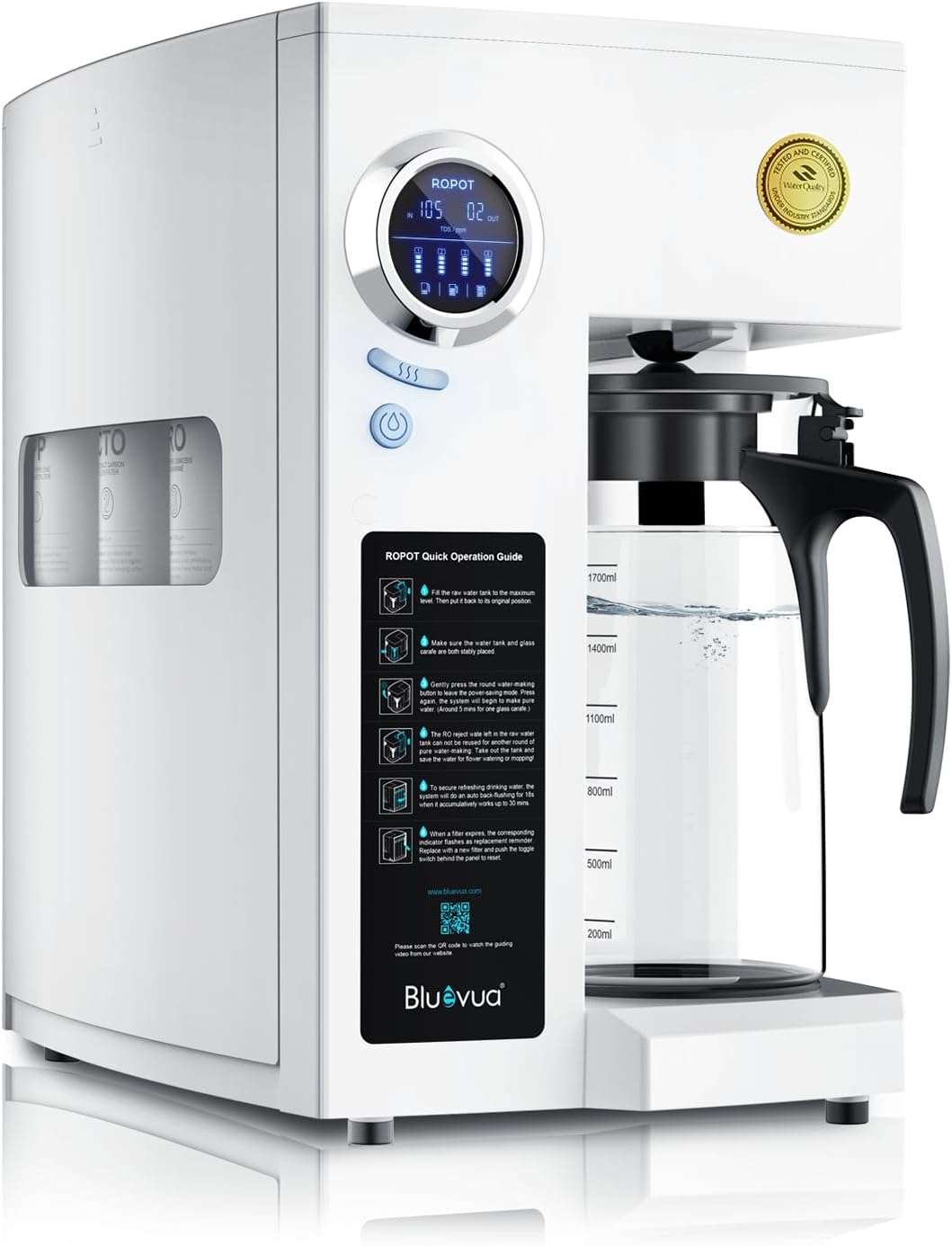
The Bluevua ROPOT is a plug-in countertop reverse osmosis unit that produces bottled-quality water without any plumbing. Water is poured into the top reservoir and the system runs an RO cycle through five stages, including a remineralization stage, then dispenses into a high borosilicate glass carafe. A smart display reports TDS and filter life so you can see water quality and when to replace cartridges. The unit emphasizes water and power efficiency with an automatic standby mode and a claimed 2:1 pure-to-drain ratio to reduce wastewater compared with many RO systems. Practical benefits include the glass carafe to avoid plastic contact, a relatively long filter replacement interval listed at 12 to 24 months depending on parts, and included starter filters and mineral filter. Trade-offs are the modest 1.7 liter capacity and a maximum flow rate of about 0.26 L/min, so filling many bottles or a pitcher takes time, and countertop footprint is larger than simple pitchers. It is best used as a dedicated kitchen countertop appliance for daily drinking water rather than a fast bulk filler for parties.
Best for: Buyers who want countertop RO water that closely mimics bottled water taste and want visible proof of water quality and filter status before committing to a purchase.
Less Ideal for: Homes that need high daily volumes of treated water or very fast dispensing for frequent large gatherings should consider higher-capacity systems instead.
- Five-stage RO filtration with remineralization for low-TDS, mineral-enriched water.
- High borosilicate glass carafe reduces plastic contact and secondary pollution.
- Smart display shows TDS and filter life for visible water-quality monitoring.
- No installation required—plugs into power and sits on the countertop.
- Designed standby mode and 2:1 pure-to-drain ratio to conserve power and water.
- Relatively slow flow rate (0.26 L/min) makes large fills time-consuming.
- 1700 ml capacity limits how much treated water is available before a refill.
Verdict: Choose the ROPOT if you want a no-installation countertop RO that adds minerals back into very low-TDS water and provides visible TDS and filter-life monitoring.
Choosing the Right Water Filter with Minerals: Key Factors to Consider
Filtration Performance
This determines what contaminants the filter actually removes and to what extent. Look for clear lists of substances reduced or removed, such as chlorine, lead, volatile organic compounds, and sediment. Performance affects both safety and taste. A unit that only softens water or masks flavors without documented reduction of target contaminants may not meet household health needs.
Check for laboratory or manufacturer-provided reduction data for specific contaminants. If your water source has known issues, choose a system with targeted reduction capabilities rather than a one-size-fits-all approach.
Mineral Retention And Remineralization
Some filters strip nearly all dissolved solids, leaving demineralized water that can taste flat. A water filter with minerals either retains healthy minerals through selective filtration media or adds minerals back in a dedicated remineralization stage. Consider which minerals are added and in what form; calcium and magnesium are common and contribute to taste and alkalinity.
Also consider dosage and stability. Remineralization should be consistent across cartridge life and should not introduce contaminants or off-flavors. If you prefer slightly alkaline water, confirm the expected pH change and whether that aligns with your needs.
Flow Rate And Daily Capacity
Flow rate affects whether a filter suits a kitchen tap, countertop use, or whole-home needs. A low flow rate can be frustrating during cooking or filling pitchers, while very high capacity may be unnecessary for single-person households. Capacity also determines how often you replace cartridges; higher capacity filters reduce replacement frequency but may be bulkier.
Match the filter's gallons-per-minute and total lifespan in gallons to your household size and water usage patterns. Consider peak usage moments like meal prep when flow matters most.
Installation Type And Compatibility
Filters come as under-sink, countertop, faucet-mounted, or pitcher-style units. Installation complexity and physical footprint vary widely. Under-sink models offer out-of-sight operation and often higher capacity but require some plumbing work. Countertop and faucet-mounted options are simpler but may look bulky or reduce sink clearance.
Confirm connection types and whether additional adapters or tools are needed. If you rent or want a low-commitment option, prioritize countertop or pitcher solutions that do not alter plumbing.
Maintenance And Long-Term Supplies
Ongoing maintenance largely determines the total cost and convenience of owning a water filter. Check how often cartridges need replacement and how easy that process is. Filters that require speciality tools or professional servicing increase lifetime hassle.
Also verify the availability of replacement cartridges. Systems with proprietary or hard-to-find cartridges can lead to delays or forced changes. Clear replacement indicators or simple date-based schedules improve maintenance adherence and water quality over time.
Materials And Build Quality
Materials used in housings, seals, and cartridges affect durability and potential contamination risks. Look for lead-free fittings, BPA-free plastics, and corrosion-resistant components when the filter will see frequent use. A sturdily built unit reduces leaks and long-term replacement frequency.
Consider warranty coverage and manufacturer support as indirect indicators of build confidence. Good documentation for installation and troubleshooting reduces user error and improves the ownership experience.
Types Of Mineralizing Technologies
Manufacturers add or preserve minerals in different ways. Some use selective media that allow beneficial ions like calcium and magnesium to pass while trapping contaminants. Others include post-filtration remineralization cartridges that slowly dissolve mineral-rich media to raise hardness and alkalinity.
Each approach has tradeoffs. Selective media can be efficient and lower-maintenance, but may not significantly change pH. Remineralization cartridges can fine-tune taste and alkalinity but require periodic replacement and add cost.
- Selective filtration media: lets certain dissolved minerals remain
- Remineralization cartridges: add measured amounts of calcium or magnesium
- Mineral-rich ceramic or mineral stones: slow-release but require replacement schedules
Testing Your Water Before Choosing
A basic water test helps you prioritize which contaminants to target and whether remineralization is needed. Home test strips or municipal water reports reveal hardness, pH, and common contaminants like chlorine or lead. Match the filter's listed reduction capabilities to your water profile.
If your water is already low in mineral content and you prefer a slight boost in flavor or alkalinity, prioritize systems with reliable remineralization stages. If your source is hard but has mineral balance you like, a selective filter that preserves minerals may be preferable.
- Check municipal water quality reports for baseline data
- Use a home test kit for hardness and pH if municipal data is incomplete
- Identify any specific contaminants reported in your area before selecting a filter
Installation Considerations For Different Kitchens
Space under the sink, faucet clearance, and plumbing layout determine which installation types will work. Under-sink systems conceal hardware and often provide higher capacity, but require valve shut-offs and some DIY plumbing. Countertop units usually connect to a faucet adapter and are easier to move between locations.
If you have limited under-sink space or prefer a portable option, countertop or pitcher-style mineralizing filters are practical. For a seamless look and higher throughput, plan for an under-sink installation and verify clearances before buying.
- Under-sink: higher capacity, hidden, needs plumbing
- Countertop: portable, easier install, takes counter space
- Pitcher: simplest, limited capacity, best for occasional use
Maintenance Tips To Keep Mineral Levels Consistent
Follow manufacturer guidelines for cartridge replacement to maintain both contaminant reduction and mineral dosing. Mineral media can deplete over time, causing the remineralization effect to weaken. Set calendar reminders or use a simple usage tracker to avoid lapses.
Flush new cartridges per instructions to remove dust or loose mineral particles. Keep spare cartridges on hand if lead times for replacements are long in your area.
- Document replacement dates when you install new cartridges
- Flush and prime new cartridges before first use
- Store spare cartridges in a cool, dry place to preserve effectiveness
pH And Taste: What To Expect From Mineralized Water
Adding calcium and magnesium typically raises pH slightly and improves mouthfeel. Expect water from remineralizing filters to taste fuller and less flat than demineralized water. The exact pH change depends on the mineral blend and initial water chemistry.
If you need precise pH control for health or appliance reasons, look for products that publish expected pH ranges. For most users, small shifts toward neutral or slightly alkaline are desirable and improve beverage and cooking results.
- Remineralization commonly produces a modest pH increase
- Taste improvements are subjective; trial and adjustment can help
- Check published pH ranges if you need consistent alkalinity
How We Chose the Best Water Filter with Minerals
We evaluated water filters with minerals using criteria that matter to everyday home users. First, filtration effectiveness: we prioritized systems that reduce chlorine, heavy metals, sediment, and common organic contaminants while clearly listing reduction capabilities. Second, mineral retention and restoration: we looked for filters or remineralization stages that specifically preserve or reintroduce calcium, magnesium, or alkalizing minerals without masking contaminants. Third, flow and capacity: acceptable gallons-per-minute rates and realistic cartridge life matter for usability and operating cost. Fourth, installation and compatibility: we favored units with clear installation options for common home setups and straightforward replacement procedures. Fifth, maintenance and filter availability: easy-to-source cartridges and simple maintenance reduce long-term frustration. We excluded systems that only perform cosmetic flavoring or those that made unsupported health claims about mineral content. We also excluded filters with no documented contaminant reduction data or proprietary processes lacking transparency. The final list balances verified contaminant reduction, measurable mineral contribution, practical flow rates, and manageable upkeep.
Our full evaluation process is outlined in our review methodology.
FAQ
Do mineralizing filters make water healthier?
They can restore calcium and magnesium that contribute to taste and dietary intake, but they are not a substitute for dietary minerals. The added amounts are usually modest and mainly affect taste and alkalinity rather than providing significant nutritional intake.
How often do remineralization cartridges need replacing?
Replacement intervals vary widely based on capacity and household use, but many cartridges last several months to a year. Check the rated gallons or months per cartridge and match that to your daily usage to estimate replacement frequency.
Will remineralization affect my coffee or tea taste?
Yes. Restoring minerals often improves extraction and mouthfeel, which can make coffee and tea taste fuller and cleaner. The specific effect depends on the mineral blend and the initial water profile.
Can I use a mineralizing filter with well water?
Often yes, but you should test your well water first. Well water can have unique contaminants that require specific treatment steps. Confirm the filter's reduction capabilities against any known contaminants in your well.
Does remineralization increase water hardness?
It can increase measured hardness slightly because calcium and magnesium contribute to hardness. If you already have very hard water, consider a system that preserves beneficial minerals without significantly raising hardness, or consult a water professional.
Final Verdict
Prioritize a water filter with minerals that matches your water profile, desired taste, and installation preferences. Focus on verified contaminant reduction, consistent remineralization performance, and a flow rate that fits daily use. Balance upfront convenience against long-term maintenance needs when choosing between countertop, under-sink, or pitcher designs. Choose the option that aligns with how you use water at home and the level of upkeep you are willing to perform. That approach will deliver better-tasting, mineral-balanced water without unnecessary complexity.