
Note: This article contains affiliate links. If you click on these links and make a purchase, we may earn a small commission at no extra cost to you. This helps support our research and content. Read our full affiliate disclosure here.
If you care about reducing sediment, chlorine taste, and common contaminants at the kitchen sink while keeping strong faucet flow, choosing the right whole-house water filter matters. Whole-house systems designed for kitchen sinks treat water at the main inlet so every tap benefits, but not every unit balances filtration performance and household water pressure equally. This guide highlights seven top picks selected for reliable contaminant reduction, minimal effect on flow rate, and straightforward maintenance. Below you will find shortlists that focus on filtration capability, flow compatibility with typical kitchen faucets, and ease of upkeep to help you narrow options quickly.
Top Picks at a Glance
| Best Overall The best all-around choice for most situations | Express Water 3-Stage Whole House Filter |  |
| Best Quality Built to a higher standard if you want something more solid | iSpring WGB32B Whole House Filter |  |
| Best Value The sweet spot between price and what you get | Waterdrop WD-WHF21-FG Whole House Filter |  |
| Best Budget The cheapest option that still gets the job done reliably | Max Water 2-Stage Whole House Filter |  |
| Top Rated A top-rated pick with lots of positive feedback | iSpring WGB21B 2-Stage Whole House Filter |  |
| Most Popular A crowd favorite that many people choose with confidence | Culligan WH-HD200-C Whole House Filter |  |
| Best Seller A high-volume bestseller chosen again and again | SimPure DB10P 10" Filter Housing |  |
Express Water 3-Stage Whole House Filter

| Purification Method | Activated Carbon, KDF, Polyphosphate |
|---|---|
| Maximum Flow Rate | 17 gpm |
| Operating Pressure Range | 20-80 psi |
| Supported Water TDS Level Maximum (PPM) | 800 |
| Filter Life Cycle | 6 months |
This Express Water 3-stage whole house system filters incoming water at the point of entry to deliver cleaner water to every faucet in the home, including kitchen sinks. It uses a sediment/anti-scale stage plus activated carbon and KDF media to cut chlorine, bad tastes and odors while a dedicated stage targets heavy metals such as lead and arsenic. The unit is mounted on a stainless steel free-standing frame with pressure gauges and release buttons for easier cartridge changes, and it supports high flow rates up to 17 gpm so it should not noticeably reduce household water pressure. Filters are rated for roughly 6 months or up to 100,000 gallons depending on use, and the system is manual with no electrical requirements. Limitations include no TDS reduction since it is not an RO system and the replacement schedule means ongoing maintenance and filter costs; professional plumbing work may be needed for installation at the main inlet. For a balanced whole-house solution that prioritizes chlorine, sediment, scale and heavy metal reduction at the kitchen sink and throughout the home, this model is a practical option.
Best for: Buyers who want a balanced whole-house solution that improves water quality at the kitchen sink and throughout the home by reducing chlorine, sediment, scale and heavy metals without adding electrical components.
Less Ideal for: Homes that need TDS reduction, water softening, or drinking-water-level purification should consider reverse osmosis or dedicated softening systems instead.
- Three-stage filtration targets sediment, chlorine/taste/odor, and heavy metals
- Stainless steel free-standing frame with pressure gauges and release buttons for easier maintenance
- High flow capacity (up to 17 gpm) designed to preserve household water pressure
- Includes anti-scale polyphosphate stage to protect pipes and appliances
- Does not reduce total dissolved solids so it will not soften water or replace an RO system
- Requires periodic filter replacement and potential professional installation
Verdict: A practical freestanding three-stage system for homeowners who want reliable chlorine, sediment, scale and heavy-metal protection to improve kitchen-sink water without adding power or an RO unit.
iSpring WGB32B Whole House Filter

| Maximum Flow Rate | 15 gpm |
|---|---|
| Operating Pressure Range | 25 – 80 psi |
| Operating Temperature | 40 – 100 °F |
| Supported Water TDS Level Maximum (PPM) | 300 |
| Filter Life Cycle | 1 years |
The iSpring WGB32B is a 3-stage whole-house filter built around a 20×4.5-inch Big Blue sediment cartridge plus two CTO carbon block filters to tackle chlorine, visible particulates, taste, and odor. It is installed on the main line and used to deliver treated water to every tap including the kitchen sink, and it supports high flow rates up to 15 gallons per minute so you should not notice pressure loss in typical residential plumbing. The first stage is a multi-layer polypropylene sediment element that captures sand, rust, and silt while the two coconut-shell carbon blocks reduce chlorine and organic tastes; cartridges are rated for about 100,000 gallons or roughly 12 months of service depending on your water. Installation is DIY-friendly with a 1-inch female NPT inlet/outlet and online video/manual guidance, but the unit is tankless and sizable so plan indoor, protected mounting and occasional cartridge changes. The system does not soften water or lower TDS, so pair with a softener if hardness control is needed.
Best for: Buyers who prioritize delivering chlorine-free, better-tasting water to every tap and need a high-flow, durable whole-house filter they can install and maintain themselves.
Less Ideal for: Homes that require scale reduction or significant TDS removal should choose a dedicated water softener or reverse-osmosis system instead.
- Lab-tested carbon blocks remove up to 99% of chlorine and reduce taste and odor
- High flow capacity up to 15 gpm maintains household water pressure
- Filters rated up to 100,000 gallons or about 12 months between replacements
- DIY installation with 1" NPT connections and included wrench and guides
- Does not remove dissolved minerals or soften hard water
Verdict: Choose the WGB32B if you want a high-flow, lab-tested 3-stage whole-house filter that reliably removes chlorine and improves water taste at every kitchen sink.
Waterdrop WD-WHF21-FG Whole House Filter

| Purification Method | Granular Activated Carbon |
|---|---|
| Maximum Flow Rate | 15 gpm |
| Filter Life Cycle | 6 months |
| Supported Water TDS Level Maximum (PPM) | 1000 |
| Capacity | 50000 gallons |
The Waterdrop WD-WHF21-FG is a 2-stage whole-house filter designed to sit at the main line and protect plumbing and fixtures, including the kitchen sink, from iron, manganese, chlorine, rust and particles larger than 5 microns. It pairs an iron/manganese reduction cartridge with a granular activated carbon cartridge to improve taste and lower water hardness, and both cartridges meet NSF/ANSI 372 lead-free standards. The system supports up to 15 gallons per minute through 1" NPT inlet/outlet ports so you can run showers and a kitchen faucet simultaneously without major pressure loss. Filters are rated for roughly 50,000 gallons or about six months of typical household use, and the housing uses brass threads and dual O-rings to reduce leak risk. Installation is intended for DIY with preinstalled parts, a mounting bracket and included wrench, but proper Teflon tape and basic plumbing familiarity are required. If you need point-of-use polishing at the sink, pair this with a dedicated under-sink filter for the finest drinking-water taste and mineral control.
Best for: Buyers looking to reduce iron, manganese and chlorine across the whole house while keeping maintenance intervals low and preserving water pressure at fixtures like kitchen sinks.
Less Ideal for: Those who need ultra-fine, final-stage drinking-water purification at a kitchen sink should choose or add a dedicated point-of-use filter instead.
- Reduces iron, manganese, chlorine, heavy metals and sediment down to 5 microns
- High flow rate up to 15 gpm maintains household water pressure during simultaneous use
- Dual cartridges rated for ~50,000 gallons or six months lower replacement frequency
- Built with reinforced brass threads and dual O-rings to help prevent leaks
- Includes mounting bracket, wrench and preinstalled parts for quicker DIY setup
- Does not perform final polishing for drinking water so additional under-sink treatment may be needed
Verdict: A practical whole-house system that strips iron, manganese and chlorine while keeping household water pressure steady and requiring only semiannual cartridge changes.
Max Water 2-Stage Whole House Filter

| Purification Method | Carbon Block |
|---|---|
| Installation Type | user-installed |
| Operating Pressure Range | 40-100 psi |
| Upper Temperature Rating | 125 °F |
| Included Components | Filter, Inlet Hose, Outlet Hose |
The Max Water 2-Stage Whole House Filter is a simple, user-installed inline system built around a 10-inch clear housing with sediment and carbon block cartridges. It is installed on the main water line (3/4" inlet/outlet) to trap sand and particulates and reduce chlorine and odors before water reaches taps and appliances. The compact, manually operated unit is easy to mount in a utility area and comes with inlet and outlet hoses for basic hookup. Because it uses standard 10" cartridges, replacements are straightforward and keep ongoing costs predictable. Practical benefits include protecting plumbing and fixtures from sediment and improving tap water taste without removal of dissolved minerals. Limitations are that it is a basic two-stage filter so it will not remove dissolved solids, heavy metals, or soften water, and its operating temperature and pressure ranges should be checked against local supply conditions before installation.
Best for: Buyers seeking an inexpensive, easy-to-install whole-house prefilter to remove sediment and improve chlorine taste for kitchen sinks and general household use.
Less Ideal for: Homes needing removal of dissolved solids, heavy metals, or comprehensive filtration should choose a reverse osmosis or multi-stage purification system instead.
- Two-stage design with sediment prefilter and carbon block for chlorine and taste reduction
- Standard 10-inch clear housing makes cartridge changes easy to inspect and service
- User-installed with included inlet and outlet hoses for straightforward hookup
- Compact footprint suitable for tight utility spaces
- Does not reduce total dissolved solids or act as a water softener
- Limited to basic contaminant reduction rather than comprehensive multi-stage purification
Verdict: A budget-friendly, easy-to-install two-stage whole-house filter that reliably reduces sediment and chlorine to improve tap water taste.
iSpring WGB21B 2-Stage Whole House Filter
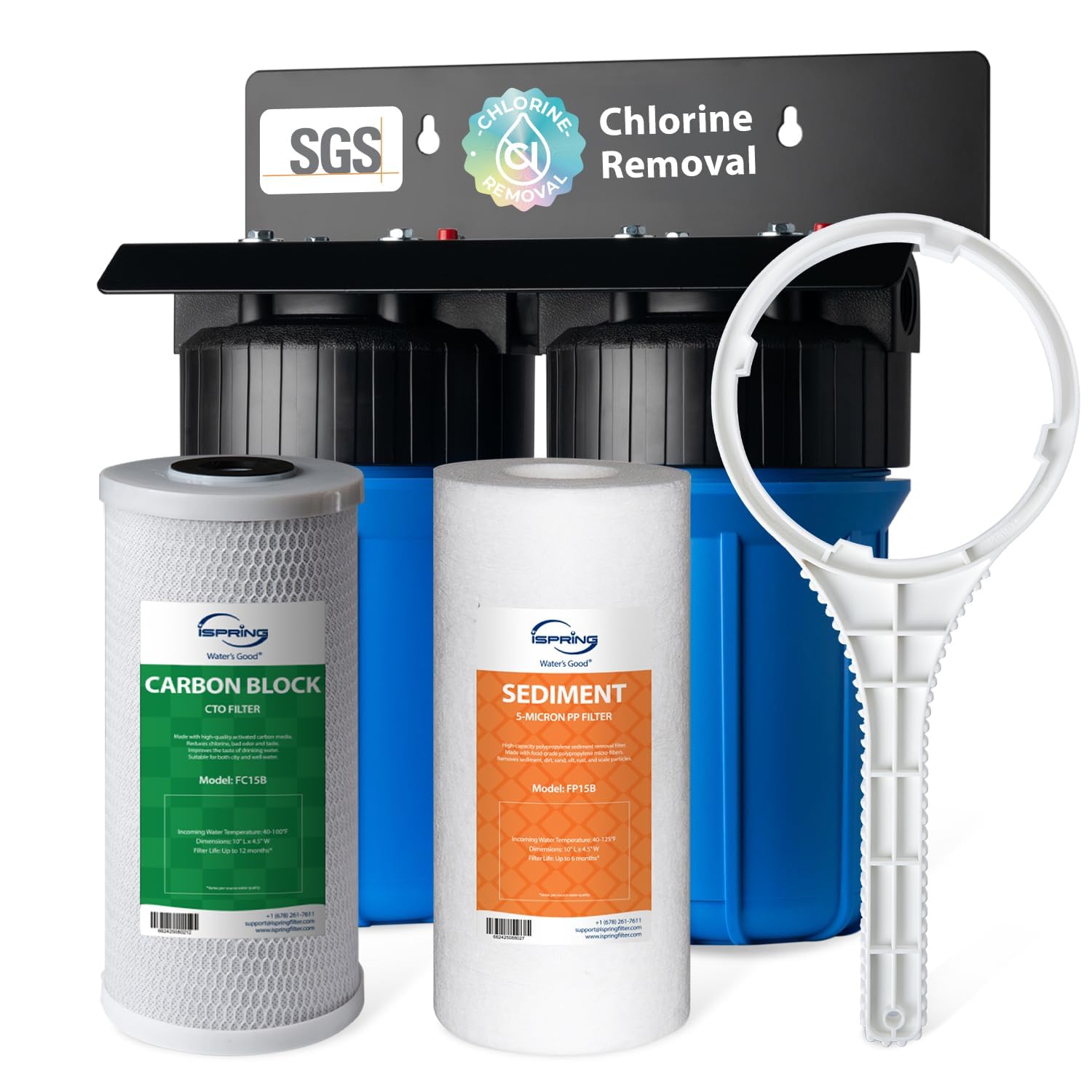
| Maximum Flow Rate | 15 gpm |
|---|---|
| Operating Pressure Range | 25-80 psi |
| Operating Temperature | 40-100 °F |
| Filter Life Cycle | 12 months |
| Inlet / Outlet | 1 inch Female NPT |
The iSpring WGB21B is a point-of-entry two-stage whole-house filter that combines a 5-micron polypropylene sediment cartridge with a coconut-shell carbon CTO block to reduce dirt, rust, chlorine taste and odor and many organic VOCs before water reaches fixtures and appliances. It mounts on a bracket and arrives preassembled with a filter wrench and installation kit, so homeowners comfortable with basic plumbing can DIY the hookup to the main supply; there is also a pressure-relief valve to make cartridge changes easier. The 1" inlet/outlet and claimed 15 gpm flow rate mean it can handle typical household flows without noticeable pressure loss, and the long-life cartridges are rated up to 50,000 gallons or roughly a year for many families. Because it does not reduce TDS or perform reverse osmosis, it preserves beneficial minerals while focusing on sediment and chlorine reduction. Limitations include the need for annual filter replacement and indoor, sheltered installation to avoid weather exposure, and it will not address dissolved salts, heavy metals, or microbes that require dedicated treatment stages.
Best for: Homeowners who prioritize dependable whole-house sediment and chlorine removal and want a robust, installable system that delivers clean-tasting water to kitchen sinks and all fixtures without removing beneficial minerals.
Less Ideal for: Homes needing removal of dissolved salts, lead, or microbial disinfection or buyers who want a maintenance-free system without annual cartridge changes.
- Two-stage setup (sediment + carbon CTO) removes sediment, chlorine, taste, odor and many VOCs
- Preassembled bracket and included installation kit simplify DIY installation
- 1" inlet/outlet and up to 15 gpm maximum flow support whole-house supply with minimal pressure loss
- Long filter capacity rated up to 50,000 gallons per filter for about a year of service
- Pressure release valve and included filter wrench make cartridge changes straightforward
- Does not reduce total dissolved solids, heavy metals, or microbial contamination
- Requires annual filter replacements and routine maintenance to maintain performance
Verdict: Choose this system if you want a reliable, whole-house sediment and chlorine filter that supplies cleaner, better-tasting water to kitchen sinks with straightforward DIY installation and yearly cartridge changes.
Culligan WH-HD200-C Whole House Filter

| Maximum Flow Rate | 10 gpm |
|---|---|
| Supported Water TDS Level Maximum (PPM) | 600 |
| Capacity | 16000 gallons |
| Material Type | Stainless Steel |
The Culligan WH-HD200-C is a stainless-steel capped whole-house filter housing that connects to a 1-inch main and holds a compatible cartridge (sold separately) to remove sediment, rust, scale, sand and other particulates from incoming water. It is typically installed at the main point of entry to protect plumbing and appliances and to improve tap water taste throughout the house or at a dedicated kitchen feed. Notable features include a clear sump so you can visually inspect the cartridge, an integrated bypass and shut-off valve for servicing, a pressure relief valve, mounting bracket and a housing wrench. Practical benefits are straightforward: visible filter condition for timely cartridge changes, easy isolation and maintenance without shutting off the whole house, and a durable stainless-steel cap for long-term use. Important limitations are that the unit is a housing only — you must buy the correct filter cartridge separately — and it requires a 1" inlet/outlet connection and appropriate space for installation. It also does not reduce dissolved contaminants that need specialized media.
Best for: Buyers who prioritize visible, heavy-duty whole-home sediment protection and straightforward serviceability and who want to protect appliances and kitchen plumbing from particulate buildup.
Less Ideal for: People who need a single-package system that removes dissolved chemicals or biological contaminants, or those without a 1" supply line or space for a whole-house housing should consider alternatives.
- Clear sump allows visual inspection of the cartridge
- Built-in shut-off, bypass and pressure relief for easier servicing
- Stainless steel cap and heavy-duty construction improve durability
- Includes mounting bracket and housing wrench for installation
- Filter cartridges are sold separately so ongoing cost and selection are buyer responsibilities
- Requires a 1-inch plumbing connection and space for mounting
Verdict: Choose this Culligan housing if you want a visible, heavy-duty whole-house sediment filter housing that makes cartridge inspection and service quick and reliable.
SimPure DB10P 10" Filter Housing

| Inlet/Outlet | 1" NPT Brass Port |
|---|---|
| Compatible Filter | 10" x 4.5" cartridges |
| Maximum Flow Rate | 20 gpm |
| Working Water Pressure Range | 15-90 PSI |
| Applicable Water Temperature | 5-38 ℃ (41-100 ℉) |
The SimPure DB10P is a single-stage whole-house filter housing intended as a pre-filter to protect plumbing and appliances from sediment and chlorine. It accepts standard 10" x 4.5" cartridges including sediment, carbon, and pleated types and connects with 1" NPT brass inlet and outlet ports to support higher flow. Installation is straightforward: the package includes a mounting bracket, wrench, and screws and the housing has a red pressure-relief button to make cartridge changes easier. Built from reinforced, food-grade polypropylene with brass threads, the unit is rated for municipal and well water and supports up to 20 gpm and typical household pressures. For buyers focused on reliability, the thicker threaded bosses and brass fittings reduce leakage risk versus cheaper housings. The main limitations are that cartridges are not included and you must allow space for the 10" canister during installation and replacement; the housing also does not provide multi-stage contaminant removal by itself, so you will still need the appropriate cartridge type for taste, chlorine, or fine sediment concerns.
Best for: Homeowners who prioritize a durable, leak-resistant pre-filter housing to protect kitchen sinks and appliances and prefer a conservative, factory-quality installation.
Less Ideal for: Buyers who want an all-in-one multi-stage filtration system or expect included cartridges for removing specific chemical contaminants without buying additional filters.
- Accepts universal 10" x 4.5" cartridges so you can choose sediment, carbon, or pleated filters
- 1" NPT brass inlet/outlet provide robust, leak-resistant connections for higher flow
- Reinforced food-grade polypropylene body resists corrosion and is NSF-tested
- Includes mounting bracket, wrench, screws, and a pressure-relief button for easier cartridge changes
- Filter cartridges are sold separately so additional purchase is required
- Requires sufficient installation space for the 10" canister and cartridge changes
Verdict: A sturdy, brass‑fitted 10" housing that reduces leak risk and lets you pick the cartridge needed to protect kitchen sinks and downstream equipment.
Choosing the Right Whole-House Water Filter for Kitchen Sinks: Key Factors to Consider
Filtration Performance and Certifications
What contaminants the system reduces and whether those claims are backed by third-party certification matters because it determines the actual improvement in water quality at the kitchen sink. Look for systems that provide published reduction data for sediment, chlorine, volatile organic compounds, or specific minerals common in your supply.
Certification by an independent lab or standards body indicates the manufacturer's performance claims were tested. Systems without verifiable data may still improve taste or clarity, but certified reduction figures give confidence that the filter will address the contaminants you care about.
Flow Rate and Pressure Drop
A whole-house filter must treat the home's supply without noticeably reducing pressure at the kitchen faucet. Check published flow rates and expected pressure drop at common household flows. If the system significantly reduces flow, kitchen tasks like filling pots or using spray faucets will feel sluggish.
Some filters have staged media or larger housings to preserve flow. Matching the system's rated flow to your household demand avoids nuisance issues and ensures that filtration does not come at the cost of everyday usability.
Filter Lifespan and Replacement Frequency
Filter longevity affects ongoing costs and how often you must attend to the system. Longer-lasting elements reduce the frequency of replacements and the chance of lapses in protection, but very long lifespans sometimes come with larger cartridges that are more expensive to replace.
Consider your water quality and household usage when estimating replacement intervals. Easy-to-find, standardized replacement cartridges make ownership simpler. Systems that provide clear service intervals and accessible replacement parts typically deliver lower total ownership effort.
Compatibility With Kitchen Plumbing
A whole-house unit designated for kitchen sinks should fit typical residential plumbing without the need for extensive rework. Pay attention to inlet/outlet sizes, mounting requirements, and whether a bypass or pressure relief valve is included for maintenance.
If the system requires special fittings or professional-only installation, factor that into the decision. Compatibility influences installation cost, the time required to bring the system online, and whether you can easily isolate the unit for filter changes.
Maintenance and Serviceability
Routine maintenance such as replacing cartridges, cleaning housings, or flushing media should be as straightforward as possible. Systems with user-friendly housings, clear service instructions, and simple cartridge swaps reduce the chance of errors during maintenance.
Also consider whether basic troubleshooting is documented and if common wear parts are easy to source. Complex maintenance increases ongoing time and the risk of deferred service that can compromise filtration performance.
Material Quality and Corrosion Resistance
Materials that contact the water stream should resist corrosion and leaching over time. High-quality housings, seals, and internal media supports extend system life and reduce the risk of contamination from degraded components.
Look for durable construction rated for your local water chemistry and operating pressure. Better materials may add upfront cost but usually result in more reliable long-term performance and fewer service issues.
How Whole-House Systems Serve the Kitchen Sink
Whole-house filters mounted at the main inlet condition water for every tap, which means the kitchen sink benefits from the same sediment reduction, taste improvement, and contaminant control as other fixtures. For food prep and drinking water, this broader approach prevents contaminants from reaching the faucet in the first place without relying on a separate under-sink or countertop device.
Because these systems filter at the source, they can also reduce wear on faucet aerators and sprayers caused by sediment. That said, not every whole-house unit is optimized for point-of-use taste-sensitive tasks, so checking published reduction data for chlorine and organic compounds is important if drinking-water quality at the kitchen sink is a priority.
- Treats all outlets, so no separate kitchen-only device is required
- Can prolong life of downstream fixtures and appliances
- Performance at the kitchen tap depends on specific contaminant reduction ratings
Sizing a System for Typical Kitchen Usage
Sizing a whole-house filter involves matching its rated flow capacity to your household peak demand rather than just kitchen use. For most kitchens, consider peak events such as simultaneous faucet and dishwasher use when selecting a system with sufficient flow headroom.
If you routinely use high-flow pull-down faucets, instant hot dispensers, or separate spray functions, prioritize systems with higher flow ratings and lower pressure drop at moderate flows. Oversizing slightly reduces the chance of pressure-related complaints at the kitchen sink.
- Check peak household flow and choose a system with headroom
- Higher-rated flow preserves faucet responsiveness during heavy use
- Consider future changes like added fixtures or higher flow faucets
Installation Considerations and Common Plumbing Questions
Many whole-house units install on the main supply line before branch-offs to fixtures. For kitchen-focused outcomes, verify that the chosen location treats all water feeding the sink. Standard installations use common pipe sizes and straightforward shutoff valves, but some homes may require adapters or minor pipework.
If you are not comfortable working with household plumbing, professional installation ensures proper sealing and pressure testing. Also assess whether the system needs a dedicated bypass valve to allow servicing without interrupting supply to the rest of the house.
- Confirm inlet/outlet sizing and mounting space before purchasing
- Bypass valves simplify filter changes without shutting off the entire house
- Professional installation is recommended for complex plumbing layouts
Common Media Types and What They Target
Filter media vary by function. Sediment filters trap particulates such as sand and rust, carbon media reduce chlorine and organic tastes and odors, and specialized media target minerals or specific contaminants. Multi-stage systems combine media to cover a broader range of issues relevant at the kitchen sink.
Understanding which contaminants are present in your supply lets you select media that address the right problems. For example, municipal supplies often benefit from carbon filtration to remove chlorine taste, while some private wells require sediment plus targeted mineral reduction.
- Sediment stages protect against particles and prolong subsequent media life
- Carbon stages improve taste and reduce many organic compounds
- Specialized media target hardness, iron, or other specific constituents
Maintenance Best Practices for Reliable Kitchen Tap Water
Establish a routine replacement schedule based on manufacturer guidance and actual usage. Mark calendar reminders and purchase replacement cartridges in advance to avoid gaps in protection. Inspect housings during changes for seal wear and check for leaks after reassembly.
Flushing the system after a cartridge change and keeping a spare O-ring kit can prevent common service issues. Record dates and operating conditions to recognize trends such as quicker-than-expected cartridge fouling, which can indicate upstream issues like heavy sediment load.
- Keep replacement cartridges and basic seals on hand
- Flush according to instructions after every cartridge swap
- Monitor flow and taste as simple indicators of when service is needed
How We Chose the Best Whole-House Water Filter for Kitchen Sinks
We evaluated whole-house water filters for kitchen sinks by focusing on measurable, user-relevant factors that affect daily performance and long-term ownership. Key filters applied included: certified contaminant reduction capability for common municipal and well-water issues, published flow rates and pressure drop figures to ensure kitchen faucets maintain usable water flow, filter lifespan and replacement ease to minimize maintenance burden, build quality and compatibility with typical household plumbing, and availability of clear installation guidance and replacement parts. We excluded systems that are solely point-of-use under-sink units or those intended only for commercial applications. We also excluded models lacking published filtration data or systems that require custom plumbing modifications for standard homes. The resulting list prioritizes systems with verifiable filtration ratings, practical flow performance for kitchen use, and straightforward service requirements that most homeowners can manage.
Our full evaluation process is outlined in our review methodology.
FAQ
Will a whole-house filter affect my kitchen faucet pressure?
A properly sized system should have minimal effect on faucet pressure. Expect some pressure drop tied to the filter media and flow rate. Choosing a unit rated for your household peak flow reduces noticeable pressure loss at the kitchen sink.
How often do I need to change the filter cartridges?
Replacement intervals depend on water quality and usage but typically range from several months to a year. Heavier sediment or higher flow will shorten life. Follow manufacturer guidance and monitor flow and taste to determine actual service frequency.
Can I install a whole-house filter myself at the kitchen inlet?
Many systems are designed for homeowner installation using common tools and fittings, but installation complexity depends on your plumbing layout. If you are unsure about pipe sizes, mounting, or pressure testing, professional installation ensures proper setup and leak-free operation.
Do whole-house filters remove chlorine taste at the kitchen tap?
Some whole-house systems include carbon stages that reduce chlorine taste and odor. Look for published reduction data for chlorine or organic compounds to confirm that a model targets taste and odor at the kitchen sink.
What should I do if my filter clogs quickly?
Quick clogging usually indicates high sediment load or incorrect prefiltration. Inspect upstream conditions, consider adding or upgrading a sediment stage, and verify that the installed cartridge matches the system's recommended micron rating.
Final Verdict
When choosing a whole-house water filter for kitchen sinks, prioritize proven filtration for the contaminants you care about and a flow rating that preserves faucet responsiveness. Balance filter lifespan and maintenance ease against the degree of contaminant removal you need. Durable construction and readily available replacement parts reduce long-term hassle. Focus on systems with clear, verifiable performance data and the right flow capacity for your household to get cleaner, better-tasting water from the kitchen tap without sacrificing everyday usability.