
Note: This article contains affiliate links. If you click on these links and make a purchase, we may earn a small commission at no extra cost to you. This helps support our research and content. Read our full affiliate disclosure here.
If you are worried about PFAS in your household supply, picking the right whole-house solution matters for every tap and appliance. A whole-house water filter designed for PFAS removal protects showers, laundry, and drinking sources by lowering compounds that are persistent in water. This guide presents seven shortlisted whole-house water filters for PFAS, each selected for measurable removal capability, reliable flow rates, and practical maintenance needs. We evaluate systems on filtration effectiveness, system capacity, and installation and upkeep to help you choose the option that fits your home plumbing and water usage. Read on for the evaluation criteria and buying guidance that will help you select the best whole-house water filter for PFAS for your situation.
Top Picks at a Glance
| Best Overall The best all-around choice for most situations | iSpring WGB32B-PFKS Whole House Filter |  |
| Best Quality Built to a higher standard if you want something more solid | HQUA WF3 Whole-House System | 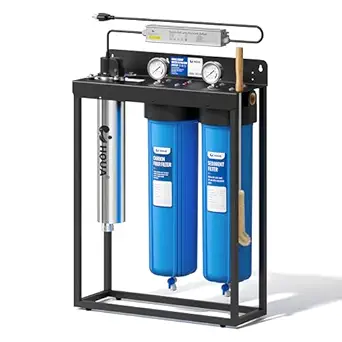 |
| Best Value The sweet spot between price and what you get | Waterdrop WHF21 Whole House Filter |  |
| Best Budget The cheapest option that still gets the job done reliably | Culligan WH-HD200-C Whole House Filter |  |
| Top Rated A top-rated pick with lots of positive feedback | iSpring WGB21B-PFKS Whole House Filter | 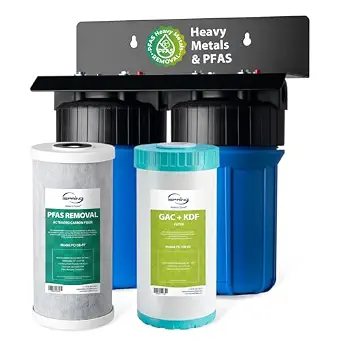 |
| Most Popular A crowd favorite that many people choose with confidence | Waterdrop WHF21-PG Whole House Filter |  |
| Best Seller A high-volume bestseller chosen again and again | SimPure DB10P Whole House Filter Housing |  |
iSpring WGB32B-PFKS Whole House Filter

| Filter life cycle | 12 months |
|---|---|
| Capacity | 100000 gallons |
| Operating pressure range | 25-80 psi |
| Operating temperature | 40-100 °F |
| Inlet / Outlet | 1 inch Female NPT |
The iSpring WGB32B-PFKS is a wall‑mount, three-stage whole-house filter built to protect every tap in a home from PFAS, heavy metals, chlorine and sediment. Water first passes through a polypropylene sediment stage to capture sand, rust and large particles, then through an SGS-tested PFAS media cartridge and a composite KDF/GAC/carbon-fiber stage that cuts chlorine, lead, mercury and many VOCs. It installs using 1 inch NPT inlet/outlets and is intended for indoor, frost‑protected locations; iSpring provides step-by-step video and written instructions to support a DIY install. The system is rated for up to 100,000 gallons or about 12 months of service depending on water quality, so filter replacement cadence is predictable. Expect improved taste and odor, less scale and reduced contaminant exposure at every faucet, but note it does not soften water or lower TDS so a separate softener is recommended for hard-water households. Overall, it is a high-capacity option for buyers prioritizing PFAS and heavy-metal reduction in whole-house filtration.
Best for: Buyers who want a robust, high-capacity whole‑house filter focused on removing PFAS and heavy metals for everyday household use and who prefer a DIYable system with predictable service intervals.
Less Ideal for: Households that need water softening, TDS reduction, or an outdoor installation without additional weatherproofing should consider other solutions or add-ons.
- Targets PFAS with SGS-tested PFAS media for high removal efficiency
- Three-stage design (sediment + PFAS + KDF/GAC/carbon) reduces a wide range of contaminants
- High capacity rated up to 100,000 gallons or about 12 months between replacements
- DIY-friendly installation with 1" NPT ports and step-by-step video and manual support
- Does not reduce water hardness or total dissolved solids
- Designed for indoor installation and needs protection/insulation if placed outdoors
Verdict: Choose the iSpring WGB32B-PFKS if you want a high-capacity whole‑house system proven to target PFAS and heavy metals while treating every tap in your home.
HQUA WF3 Whole-House System
| Capacity | 100000 gallons |
|---|---|
| Flow Rate | 3–15 gpm |
| Operating Pressure Range | 25–116 PSI |
| Operating Temperature | 40–125 °F |
| Inlet/Outlet Thread Size | 1" FNPT (adapters included) |
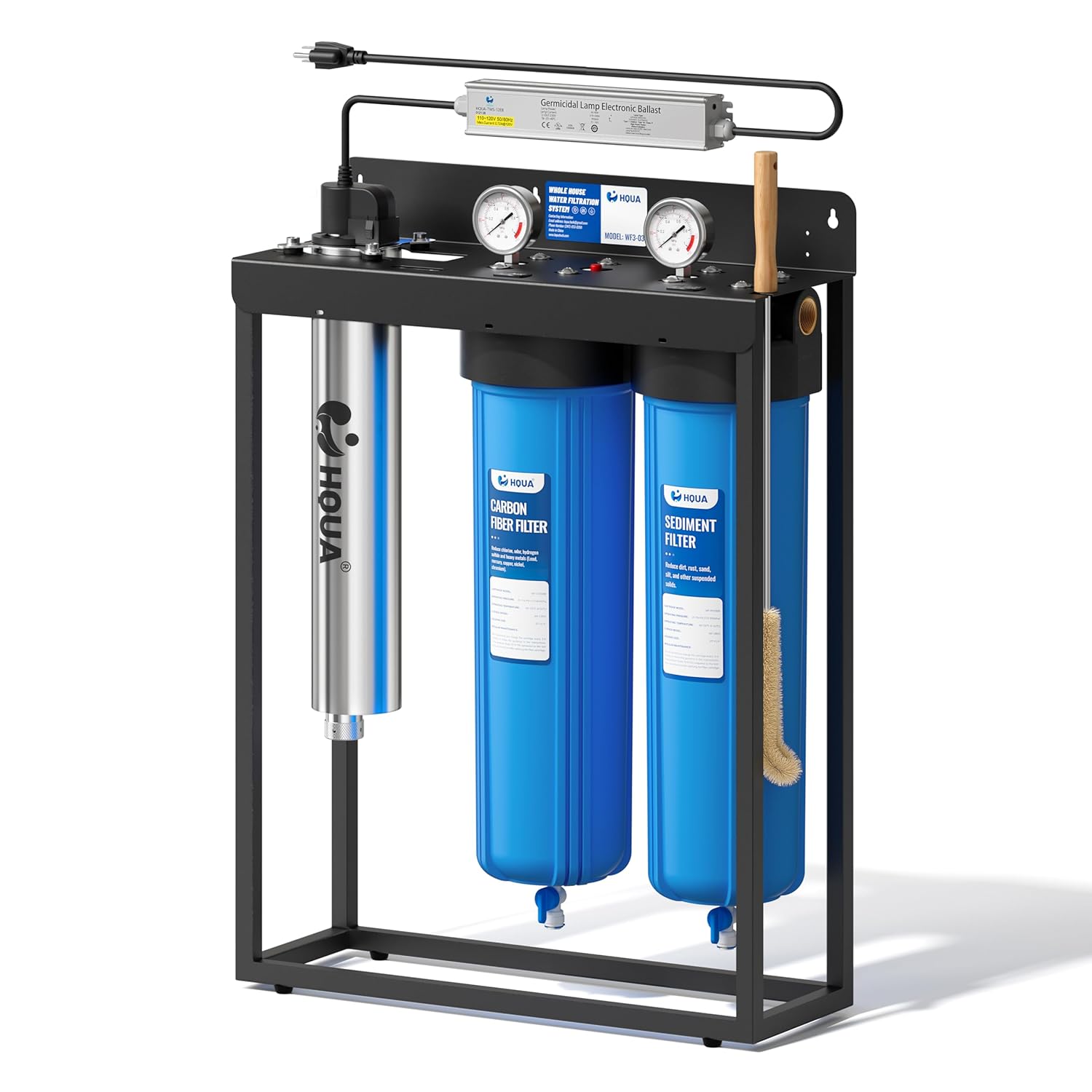
The HQUA WF3 is a floor-standing three-stage whole-house filter that pairs large-capacity carbon/PP housings with a TWS-12 UV chamber to tackle chemical and biological contaminants at point-of-entry. It is typically installed in a utility area or basement and can be mounted on a wall to save floor space; plumbing uses 1" FNPT with included adapters for 3/4" or 1" connections. Two big-blue 20" filter housings handle sediment and activated carbon fiber for reduction of chlorine, PFAS, and heavy metals while the UV stage provides up to 99.99% reduction of microorganisms. Built-in pressure gauges, preinstalled relief and drain valves, and 180-day countdown timers simplify monitoring and maintenance, and the kit includes basic installation fittings and a wrench. Expect annual UV lamp replacement and cartridge swaps roughly every six months depending on water quality, and the unit is not rated for outdoor installation. The system supports high flow up to 15 gpm for whole-house supply but requires room and some DIY or plumbing skills to install and service.
Best for: Homeowners who prioritize high-performance contaminant removal for whole-house water—including PFAS and heavy metals—and want a system with clear maintenance indicators and high flow capacity.
Less Ideal for: Renters, those with limited basement/utility space, or buyers seeking a plug-and-play under-sink unit should look at smaller point-of-use options instead.
- Three-stage design combining sediment, activated carbon fiber, and UV for chemical and microbial control
- High flow capacity up to 15 gallons per minute suitable for whole-house supply
- Built-in pressure gauges and 180-day timers simplify maintenance tracking
- Includes adapters, pressure relief/drain valves, and basic installation tools for a smoother setup
- Requires annual UV lamp replacement and periodic quartz sleeve cleaning
- Not rated for outdoor installation and must be protected from moisture
Verdict: Choose the HQUA WF3 when you need a high-flow whole-house system that combines carbon fiber filtration and UV treatment to reduce PFAS, heavy metals, and microbes across the entire water supply.
Waterdrop WHF21 Whole House Filter

| Purification Method | Carbon Block, Reverse Osmosis |
|---|---|
| Maximum Flow Rate | 12 gpm |
| Supported Water TDS Level Maximum (PPM) | 500 |
| Filter Life Cycle | 9 months |
| Capacity | 90000 gallons |
The Waterdrop WHF21 is a preassembled whole-house filtration unit that pairs a pleated sediment stage with an activated carbon-based second stage to tackle sediment, chlorine taste, lead, PFAS and other heavy-metal contaminants. It mounts on a bracket and connects with 1" FNPT inlet/outlet ports to support typical household flow while the pleated PP sediment element claims much larger surface area to slow clogging. Routine use is straightforward: install near the main line, change the 10"x4.5" cartridges as recommended, and use the included wrench and pressure-release valve for safe servicing. Notable practical benefits include high nominal capacity (listed at up to 90,000 gallons) and NSF/ANSI compliant components with dual O-ring sealing for leak protection. Limitations are the 1" fittings, which may require plumbing adaptation in some homes, and a manufacturer filter life guideline (6–12 months) that will vary with well or municipal water quality and could increase operating cost if replacements are frequent.
Best for: Buyers who want a practical, factory-ready whole-home filter that reduces PFAS, lead and chlorine while minimizing installation complexity and maintenance time.
Less Ideal for: Homes requiring higher flow through larger-diameter mains or users who need certified multi-stage systems specifically rated for very high iron or sediment loads without prefiltration.
- Two-stage design with pleated sediment plus activated carbon for broad contaminant reduction including lead and PFAS
- Preassembled on mounting bracket with wrench and pressure-release valve for easier installation and servicing
- High stated filtration capacity (up to 90,000 gallons) for fewer replacements under typical use
- 1" FNPT ports and standard 10"x4.5" cartridges that fit common whole-house plumbing and replacement filters
- Dual O-ring sealing and NSF/ANSI compliant components for improved leak protection and material safety
- 1" inlet/outlet may need fittings or plumbing changes in homes with different pipe sizes
- Filter life depends heavily on local water quality so replacements may be more frequent than the nominal interval
Verdict: A straightforward, preassembled whole-house system optimized to cut PFAS, lead and chlorine for buyers who prioritize easy installation and low-touch maintenance.
Culligan WH-HD200-C Whole House Filter

| Maximum Flow Rate | 10 gpm |
|---|---|
| Supported Water TDS Level Maximum (PPM) | 600 |
| Capacity | 16000 gallons |
| Material Type | Stainless Steel |
The Culligan WH-HD200-C is a durable whole-house filter housing intended to be fitted with a compatible cartridge (sold separately) to protect plumbing and appliances from sediment and related contaminants. Its stainless steel cap, clear sump for visual inspection, built-in bypass and shut-off valves, and included mounting bracket and wrench make installation and routine cartridge changes straightforward for a typical residential point-of-entry setup. The housing supports a maximum flow rate of 10 gpm and is rated to handle up to 600 ppm TDS, so it is suitable for basic sediment, rust, scale, and aesthetic taste and odor issues when paired with the right cartridge. Importantly for PFAS removal, this unit is only the housing and does not include specialized PFAS media out of the box, so buyers must select a cartridge or aftermarket media specifically rated for PFAS reduction to address those contaminants. It is a practical, robust option as the foundation of a whole-home filtration strategy but requires careful cartridge selection to meet PFAS-focused goals.
Best for: Buyers who need a robust, easy-to-service whole-house filter housing on a budget and plan to match it with cartridges or media targeted to the contaminants they care about.
Less Ideal for: Users who want a turnkey, certified PFAS removal system right out of the box or those who prefer a complete factory-specified PFAS solution without selecting separate cartridges.
- Sturdy stainless steel cap and heavy-duty construction for long service life
- Clear sump lets you visually check cartridge condition without disassembly
- Built-in bypass, shut-off and pressure relief valves simplify installation and maintenance
- Supports up to 10 gpm flow, suitable for most single-family homes
- Sold as a housing only, requires purchasing a separate cartridge or PFAS-capable media
- Not marketed or certified specifically for PFAS removal without an appropriate cartridge
Verdict: A budget-friendly, heavy-duty filter housing that gives you a durable foundation for whole-house filtration provided you fit it with PFAS-capable cartridges.
iSpring WGB21B-PFKS Whole House Filter

| Purification Method | Carbon Block, Granular Activated Carbon |
|---|---|
| Installation Type | Wall Mount |
| Filter Life Cycle | 12 months |
| Capacity | 50,000 gallons |
| Upper Temperature Rating | 100 °F |
The iSpring WGB21B-PFKS is a compact two-stage whole-house system designed to protect every tap from sediment, chlorine, heavy metals and PFAS. It installs on 1-inch plumbing and uses a first stage KDF and granular activated carbon cartridge to trap particles and remove chlorine and common contaminants, followed by an SGS-tested PFAS cartridge targeting PFOA, PFOS and related compounds. Each cartridge is rated for about 50,000 gallons or 12 months, which keeps annual maintenance straightforward for a typical household. The housing and fittings are built for permanent wall-mounted use and the package includes filters and an installation kit plus video guidance for DIY setup. Practical limits: it will not lower TDS and it relies on proper water pressure and sizing for peak flow; very high TDS or needs for near-pure water still require an RO system. For buyers prioritizing dependable PFAS and heavy-metal reduction across a whole home supply, this system delivers a durable, easy-to-service solution.
Best for: Buyers who want a dependable whole-home solution to cut PFAS, chlorine and heavy metals with predictable yearly filter changes and straightforward installation.
Less Ideal for: Homes that need TDS reduction or near-pure drinking water should consider adding an RO system rather than relying on this filter alone.
- Two-stage filtration combining KDF/GAC plus SGS-tested PFAS media for broad contaminant removal
- Rated for up to 50,000 gallons or 12 months per filter for predictable maintenance intervals
- Standard 1" inlet/outlet and included installation kit simplify DIY or pro installation
- Compact, wall-mount design fits smaller homes and saves space
- Includes sealed cartridges and US-based support for reliability and parts access
- Does not reduce total dissolved solids (TDS) so it will not produce RO-level purity
- Depends on adequate water pressure and correct plumbing sizing for full flow performance
Verdict: Choose this iSpring system when you need a reliable whole-home filter that specifically targets PFAS and heavy metals with annual, easy-to-manage cartridge changes.
Waterdrop WHF21-PG Whole House Filter

| Purification Method | Granular Activated Carbon, Sedimentation |
|---|---|
| Maximum Flow Rate | 15 gpm |
| Operating Pressure Range | 25 psi |
| Upper Temperature Rating | 100 °F |
| Filter Life Cycle | 6 months |
The Waterdrop WHF21-PG is a compact two-stage whole-house system built around a 10" x 4.5" PP sediment cartridge paired with a granular activated carbon (GAC) cartridge to cut particles down to 5 microns and reduce chlorine, lead, unpleasant tastes and odors. It installs inline on municipal water and is designed for DIY fitment using the included wrench and basic plumbing supplies, while the rugged, food-grade housing is rated to handle everyday household water pressure and repeated water hammer testing. The GAC stage uses coconut-shell carbon, which helps with taste and volatile organic contaminants that bind to carbon, and the system supports up to 15 gpm flow so it will not noticeably restrict household water delivery. Routine maintenance is straightforward: the sediment and carbon cartridges require replacement on a schedule of roughly 3 to 6 months and about every 6 months respectively depending on local water quality, so expect periodic parts and time costs. This model is a practical, lower-complexity prefilter/carbon option for improving potable water quality across an entire home, but it is not a multi-technology PFAS-specific system and will not replace dedicated adsorptive or AOP stages for certified PFAS removal.
Best for: Homeowners who want a straightforward whole-house sediment and carbon filter to reduce chlorine, lead and bad tastes across all taps and who prioritize proven user reviews and reliable, easy DIY installation.
Less Ideal for: Homes needing verified PFAS reduction or multi-technology treatment should choose a system with dedicated PFAS-certified adsorption media or advanced oxidation rather than this unit.
- Two-stage PP sediment plus GAC carbon effectively reduces sediment, chlorine, taste and odor
- Supports up to 15 gpm flow so it maintains household water pressure
- Durable food-grade housing tested for water hammer and typical municipal pressure
- Includes installation wrench and replacement cartridges for DIY setup
- Not designed or certified specifically for PFAS removal
- Filter cartridges require regular replacement every few months depending on water quality
Verdict: A simple, well-reviewed whole-house sediment plus carbon system that reliably improves taste and reduces chlorine and some heavy metals for households wanting an easy DIY filter upgrade.
SimPure DB10P Whole House Filter Housing

| Maximum Flow Rate | 20 gpm |
|---|---|
| Inlet/Outlet | 1" NPT Brass Port |
| Compatible Filter Dimensions | 10" x 4.5" |
| Working Pressure Range | 15-90 PSI |
| Applicable Water Temperature | 5-38 ℃ (41-100 ℉) |
The SimPure DB10P is a single 10" x 4.5" whole-house filter housing intended as a pre-filter to capture sediment and accept carbon or other 4.5" x 10" cartridges. It installs in-line using the 1" NPT brass inlet and outlet and includes a steel mounting bracket, wrench, and screws for a straightforward mounted installation. Built of reinforced, food-grade polypropylene with brass threaded ports and a red pressure-relief button, the housing is aimed at protecting downstream appliances and reducing sediment, chlorine taste, and odor when paired with appropriate cartridges. The 20 gpm maximum flow rate and 15-90 PSI working pressure range mean it will handle most residential flows without restricting water delivery. Limitations are that the unit is only the housing so you must buy compatible filter cartridges separately, and it provides no standalone PFAS-specific media out of the box; achieving PFAS reduction requires installing cartridges designed for that contaminant. For buyers prioritizing a durable, leak-resistant pre-filter housing to pair with chosen cartridges, this is a practical, easy-to-install option.
Best for: Homeowners who want a rugged, factory-quality pre-filter housing to protect plumbing and appliances and who prefer choosing their own replacement cartridges based on local water concerns.
Less Ideal for: Buyers looking for a complete PFAS removal system or an all-in-one cartridge included solution should consider packaged systems with certified PFAS media instead.
- Durable food-grade polypropylene body with reinforced construction for strength
- 1" NPT brass inlet/outlet provides robust threaded connections and good sealing
- Includes mounting bracket, wrench, and screws for easier installation
- Built-in red pressure-relief button simplifies cartridge changes
- Supports up to 20 gallons per minute, suitable for most residential flows
- Sold as the housing only so filter cartridges are not included
- No PFAS-specific media included; requires compatible cartridges to address PFAS
Verdict: Choose this robust 10" housing if you want a reliable, leak-resistant whole-house pre-filter you can pair with certified PFAS-capable cartridges of your choice.
Choosing the Right Whole-House Water Filter for PFAS: Key Factors to Consider
PFAS Removal Effectiveness
Not all filtration media reduce PFAS equally. Look for systems that use media known to adsorb or capture PFAS-class compounds, and that provide third-party test data or manufacturer lab reports documenting removal at relevant concentrations. Higher removal percentages are better, but pay attention to the conditions of testing, such as flow rate, contact time, and influent concentration.
Effectiveness determines whether a whole-house system meaningfully reduces exposure at every tap. If your water has elevated PFAS, choose a system designed specifically for those compounds rather than a generic carbon filter that lacks validated performance.
System Flow Capacity
Whole-house filters must maintain adequate gallons per minute for simultaneous household use. Check the rated continuous flow capacity and peak flow capability to ensure showers, faucets, and appliances do not suffer pressure loss when multiple fixtures run.
Low flow capacity can cause frustration and may push homeowners to bypass the system. Match the system rating to your household size and typical peak demand. Some systems allow parallel installs or staged tanks to increase flow for larger homes.
Filter Life and Consumables
Filter media life affects ongoing operating cost and maintenance frequency. Understand the expected service life in gallons or months, and whether pre-filters are required to protect PFAS media from sediment and chlorine. Replacement intervals that require frequent changes increase long-term cost and effort.
Also check availability and lead time for replacement media. Media that is specialized or sourced from limited suppliers may be harder to replace quickly, which can leave the home unprotected if you cannot get replacement cartridges promptly.
Installation and Plumbing Compatibility
Whole-house systems vary in size and connection type. Confirm the unit fits the space near the main water shutoff, that piping connections match your home plumbing, and that a professional install is feasible if needed. Some units are designed for DIY with common fittings, while larger tanks or skid-mounted systems usually require a licensed plumber.
Consider whether the system needs bypass valves for maintenance, and whether it integrates with existing water softeners or pressure tanks. Installation complexity affects initial cost and how long the system is out of service during replacement or repair.
Pre- and Post-Filtration Stages
A dedicated PFAS media performs best when protected by pre-filtration that removes sediment and reduces chlorine, which can degrade adsorptive media. Post-filtration or polishing stages can improve taste and remove residuals. Systems with multi-stage designs can extend PFAS media life and produce better overall water quality across the whole house.
Evaluate the quality and serviceability of each stage. Easy-to-replace pre-filters and accessible housings simplify upkeep and keep the primary PFAS media working efficiently.
Monitoring and Verification
Because PFAS are difficult to detect at home, consider systems that offer monitoring options or that provide clear testing protocols. Some manufacturers supply third-party lab data or can assist with post-install verification testing. Regular testing after installation helps confirm the system performs as expected over time.
Monitoring capability and clear test documentation give homeowners confidence and help detect when media replacement or system service is needed to maintain PFAS reduction.
How PFAS Get Into Household Water
PFAS can enter drinking water from industrial discharges, firefighting foam sites, and contaminated groundwater. These compounds are persistent and mobile, so they may affect municipal supplies or private wells depending on local contamination sources. Understanding local water quality reports or well testing results helps determine whether a whole-house PFAS solution is necessary.
If testing shows detectable PFAS, a whole-house filter prevents exposure across showers, laundry, and any household use of tap water. This holistic protection differs from point-of-use devices that treat only a single faucet or pitcher.
- Municipal water reports may include PFAS screening data for your area.
- Private wells should be tested periodically for PFAS if contamination risk exists.
- Source and concentration influence the type and size of whole-house treatment required.
Types of Whole-House PFAS Treatments
Several treatment approaches are used to reduce PFAS at whole-house scale. Granular activated carbon is common for adsorption of many PFAS compounds but requires sufficient contact time and regular media replacement. Other technologies include specialized adsorbents and combination systems that pair pre-filtration with PFAS-specific media.
When selecting a treatment type, consider expected influent concentrations and how long the media maintains capacity before breakthrough. Some homeowners choose multi-stage systems that protect the primary PFAS media and improve overall reliability.
- Granular activated carbon for general adsorption.
- Specialized adsorbents designed for PFAS affinity.
- Multi-stage configurations with prefilters and polishing stages.
Sizing a System for Your Home
Sizing depends on household peak flow and annual water consumption. Check the system's recommended maximum flow rate and the service life measured in gallons or months. Oversizing on flow capacity reduces pressure loss during peak use, while undersizing can lead to premature media exhaustion and reduced PFAS control.
Also account for incoming water quality. Higher sediment or chlorine levels can shorten media life, so systems in such conditions may need larger prefilter capacity or more frequent service.
- Estimate peak simultaneous fixture use to determine required GPM.
- Compare rated continuous and peak flow figures for the system.
- Factor in local water quality to adjust media capacity and service intervals.
Installation Tips and Placement
Place whole-house PFAS systems where they are accessible for regular maintenance and near the main shutoff to allow easy bypass during service. Ensure there is enough clearance for filter changes and that the installation allows a bypass valve so water can continue to flow during maintenance.
If you lack plumbing experience, hire a licensed plumber familiar with whole-house filtration. Proper installation affects system performance, sealing, and any warranty coverage.
- Allow space for media replacement and servicing.
- Install a bypass valve to maintain water during servicing.
- Confirm piping sizes and pressures match the system specifications.
Maintenance and Long-Term Considerations
Regular maintenance keeps PFAS control consistent. Follow replacement schedules for prefilters and PFAS media and periodically test water to verify ongoing removal. Keep records of service dates and media changes to avoid unintentional exposure after media reaches capacity.
Consider long-term availability of replacement media and monitoring costs. Systems that are easy to service and have widely available consumables tend to be more practical for homeowners over time.
- Adhere to recommended replacement intervals for prefilters and PFAS media.
- Schedule periodic water testing to confirm continued effectiveness.
- Track consumable availability before committing to a specific system.
How We Chose the Best Whole-House Water Filter for PFAS
We prioritized systems that target PFAS with demonstrable filtration methods and capacity suited to whole-house service. Our editorial filters emphasize measurable removal performance for PFAS-class compounds, rated filter media or certified processes, and realistic flow rates that match typical household demand. Key criteria included PFAS Removal Effectiveness, verified by lab test data or recognized media types; System Flow Capacity, to ensure adequate gallons per minute for simultaneous fixtures; Filter Life & Service Interval, because whole-house filters must handle sustained loads; Installation Flexibility, covering common residential plumbing setups; and Ongoing Operating Cost, including replacement media availability and frequency. We also considered build quality and the availability of pre- and post-filtration stages that reduce fouling and extend PFAS media life. Products were excluded if they lacked clear data on PFAS reduction, were unsuitable for whole-house flow volumes, or depended solely on point-of-use cartridges without a proven whole-home configuration. The selections focus on systems that deliver measurable PFAS reduction while remaining practical for typical residential installation and maintenance.
Our full evaluation process is outlined in our review methodology.
FAQ
Will a whole-house filter remove all PFAS from my water?
Whole-house systems can significantly reduce many PFAS compounds, but removal depends on the media type, contact time, and influent concentrations. No single home system can guarantee complete elimination of every PFAS variant, so post-install testing is recommended to verify results.
How often do PFAS filter media need to be replaced?
Replacement intervals vary by system, water quality, and household usage. Many systems rate media life in thousands of gallons or months of service. Heavy sediment or high PFAS levels shorten media life, so follow manufacturer guidance and monitor performance.
Can I install a whole-house PFAS filter myself?
Some smaller whole-house units are designed for DIY installation if you are comfortable with basic plumbing. Larger tanks or systems that require hard piping and bypass valves usually need a licensed plumber. Check local codes and any warranty conditions before DIY installation.
Should I test my water after installing a PFAS system?
Yes. Post-install testing confirms the system is performing as expected and helps detect breakthrough if media becomes exhausted. Periodic testing also provides documentation that the installed system continues to reduce PFAS over time.
Do prefilters matter for PFAS systems?
Yes. Prefilters remove sediment and chlorine that can foul or degrade PFAS media. Proper prefiltration extends the life of the PFAS-specific media and maintains consistent removal performance.
Final Verdict
Choosing a whole-house water filter for PFAS means balancing removal performance, flow capacity, and practical maintenance. Prioritize systems with validated PFAS reduction data and sufficient flow ratings for your household, and protect adsorptive media with appropriate prefiltration. Regular maintenance and post-install testing ensure the system continues to reduce PFAS over time. Focus on the tradeoffs between media life and flow rate when selecting a system, and pick an installation option that matches your plumbing skills or professional help. With the right balance of effectiveness and upkeep, you can keep PFAS exposure at home to a minimum.