
Note: This article contains affiliate links. If you click on these links and make a purchase, we may earn a small commission at no extra cost to you. This helps support our research and content. Read our full affiliate disclosure here.
Picking the right water filter for your kitchen sink matters because it directly affects the safety, taste, and everyday convenience of the water you use for drinking and cooking. You want a unit that removes the contaminants you care about, fits your sink and plumbing, and is simple to maintain. This guide presents seven shortlisted water filters for kitchen sinks that performed well against practical criteria like filtration performance, installation complexity, and ongoing filter life. Read on for the evaluation factors we used and what to expect from each type of sink-mounted system before you review the product list.
Top Picks at a Glance
| Best Overall The best all-around choice for most situations | Express Water RO5DX Reverse Osmosis |  |
| Best Quality Built to a higher standard if you want something more solid | iSpring RCC7AK-BN 75 GPD RO System |  |
| Best Value The sweet spot between price and what you get | Waterdrop WD-10UA Under Sink Filter | 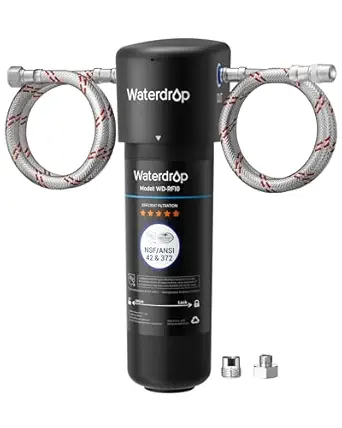 |
| Best Budget The cheapest option that still gets the job done reliably | CaoXiong 360° Rotating Faucet Filter | 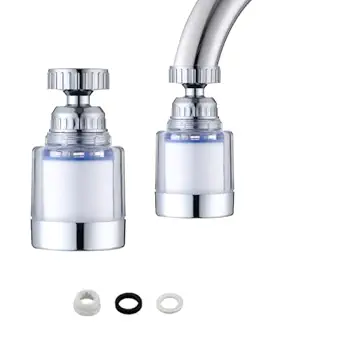 |
| Top Rated A top-rated pick with lots of positive feedback | Waterdrop WD-10UB Under Sink Filter |  |
| Most Popular A crowd favorite that many people choose with confidence | BRITA On Tap Faucet Filter System |  |
| Best Seller A high-volume bestseller chosen again and again | PUR Plus Faucet Filter 2-Pack |  |
Express Water RO5DX Reverse Osmosis

| Purification Method | Reverse Osmosis |
|---|---|
| Installation Type | Under Sink |
| Maximum Flow Rate | 0.8 gpm |
| Capacity | 4 gallons |
| Supported Water TDS Level Maximum (PPM) | 300 |
The Express Water RO5DX is a compact under-sink reverse osmosis system that uses five filtration stages—sediment, granular activated carbon, carbon block, RO membrane, and post-carbon—to deliver very low-TDS drinking water for a household. It installs under a cabinet and connects to a dedicated chrome faucet and 4 gallon storage tank, producing up to 50 gallons per day with a 0.8 gpm faucet flow for typical kitchen use like drinking, cooking, coffee, and ice. Notable features include quick-connect fittings for faster plumbing hookups, a leak stop valve with a fabric sensor for accidental spills, and color-matched labeled housings for easier filter replacement; pre/post filters are swapped semiannually while the RO membrane is yearly. The system is NSF-tested to relevant standards for dissolved solids and lead reduction, so it performs significantly better than pitcher or faucet filters. Limitations to consider are the wastewater ratio typical of RO systems (about 1:1 to 1:3 produced-to-waste) and the need for adequate incoming water pressure or an optional booster pump if pressure is low. It also requires space under the sink for the tank and components and occasional filter purchases to maintain performance.
Best for: Buyers who want a reliable, high-purity under-sink system that replaces bottled or pitcher water for everyday kitchen use and value certified contaminant reduction with straightforward maintenance.
Less Ideal for: People who need zero-waste filtration or very compact, tankless countertop solutions should consider alternative technologies or models designed specifically for low-waste or portable use.
- Five-stage filtration including RO membrane for high impurity removal
- Certified testing for reduction of heavy metals, fluoride, pharmaceuticals, and VOCs
- Quick-connect fittings and included adapters simplify installation
- Leak stop valve and extra filter set included for first year of use
- Produces wastewater during operation common to RO systems
- Requires sufficient water pressure and under-sink space for the tank and components
Verdict: A full five-stage RO system that delivers very clean, tap-worthy water for kitchen sinks with easy installation and NSF-tested performance.
iSpring RCC7AK-BN 75 GPD RO System

| Purification Method | Reverse Osmosis, Alkaline, Activated Carbon, Carbon block |
|---|---|
| Power Source | No Power Needed |
| Maximum Flow Rate | 284 liters_per_day |
| Supported Water TDS Level Maximum (PPM) | 750 |
| Filter Life Cycle | 6 months |
The iSpring RCC7AK-BN is a six-stage under-sink reverse osmosis system that combines sediment, carbon, RO membrane, and an alkaline remineralization stage to produce low-TDS drinking water. It is typically plumbed under a kitchen sink and supplies filtered water through the included brushed nickel faucet while storing treated water in the tank. Notable features include a transparent first-stage housing for visual monitoring, push-to-connect fittings and color-coded tubing to simplify DIY installation, and an NSF/ANSI 58 certification covering the full system. The mineral AK stage raises pH slightly and restores some beneficial minerals for a more balanced taste. Because it is a non-electric system rated at 75 gallons per day, it works reliably without power but relies on household water pressure and has a tank-based delivery that limits instant flow. Filter replacement intervals are defined (six months for some stages) and replacement kits are available, so ongoing maintenance is straightforward but needed to sustain performance. The patented top-mounted faucet fastener makes countertop installation easier than many under-sink faucets.
Best for: Buyers who prioritize high contaminant reduction and lab-backed certification and want a durable, performance-focused under-sink RO system that improves taste with mineral restoration.
Less Ideal for: People who need immediate high-flow dispensing without a storage tank or those unwilling to perform regular filter maintenance should consider different solutions.
- Certified to NSF/ANSI 58 for whole-system RO performance
- Six-stage filtration including an alkaline remineralization stage for improved taste
- Transparent sediment housing lets you see when the first filter needs changing
- DIY-friendly fittings, color-coded tubing, and installation videos simplify setup
- Operates without electricity and produces up to 75 gallons per day
- Uses a storage tank so flow is limited to tank supply rather than instant high flow
- Requires periodic filter and membrane replacements to maintain ratings
- Performance depends on incoming water pressure and TDS levels
Verdict: Choose the RCC7AK-BN when you want a certified, high-performance under-sink RO that delivers very low-TDS water with a mineral boost and reliable, electricity-free operation.
Waterdrop WD-10UA Under Sink Filter

| Purification Method | Activated Carbon |
|---|---|
| Maximum Flow Rate | 2.5 gpm |
| Filter Life Cycle | 1 years |
| Supported Water TDS Level Maximum (PPM) | 700 |
| Other Special Features | NSF/ANSI 42&372, PFAS/PFOA/PFOS reduction |
The Waterdrop WD-10UA is an under-sink activated carbon filter built for straightforward, everyday use on municipal cold water lines. It installs with push-to-connect fittings and a twist-and-lock cartridge so a typical homeowner can hook it to a 3/8" feed valve without drilling or complex plumbing. The cartridge is NSF/ANSI 42 and 372 certified for chlorine, bad taste and odor reduction and is stated to reduce PFAS and lead, delivering water that tastes cleaner for drinking and cooking. The unit emphasizes fast flow for a single dedicated faucet, with an upgraded 3/8" outlet and reported full-flow performance around 0.75 to 1.33 gpm depending on pressure, and the replaceable WD-RF10 filter lasts up to 12 months under normal municipal use. Practical design touches include included hoses and fittings and a compact vertical canister that fits under most sinks. Limitations are that it only accepts cold water and is not intended for well water or hot water applications, and performance depends on feed water quality so users with very high particulate loads or well water will need a different solution.
Best for: Buyers who want a low-maintenance, easy-to-install under-sink filter to improve tap water taste and reduce common contaminants without complicated plumbing work.
Less Ideal for: People with well water, high sediment or bacterial contamination, or who need hot-water filtration should choose a system designed for those specific conditions.
- NSF/ANSI 42 & 372 certified for chlorine, taste, and material safety
- Quick push-to-connect and twist-and-lock design enables fast DIY installation and filter changes
- Compact vertical canister that fits under most kitchen sinks and includes necessary hoses and fittings
- Long single-cartridge life rated up to 12 months for typical municipal water use
- Designed for cold municipal water only and not suitable for well water or hot water
Verdict: A practical, easy-to-install under-sink carbon filter that delivers cleaner tasting municipal cold water with year-long cartridge life.
CaoXiong 360° Rotating Faucet Filter
| Purification Method | Activated Carbon, Ion Exchange |
|---|---|
| Installation Type | Faucet Mount |
| Upper Temperature Rating | 120 °F |
| Supported Water TDS Level Maximum (PPM) | 300 |
| Material Type | Plastic |
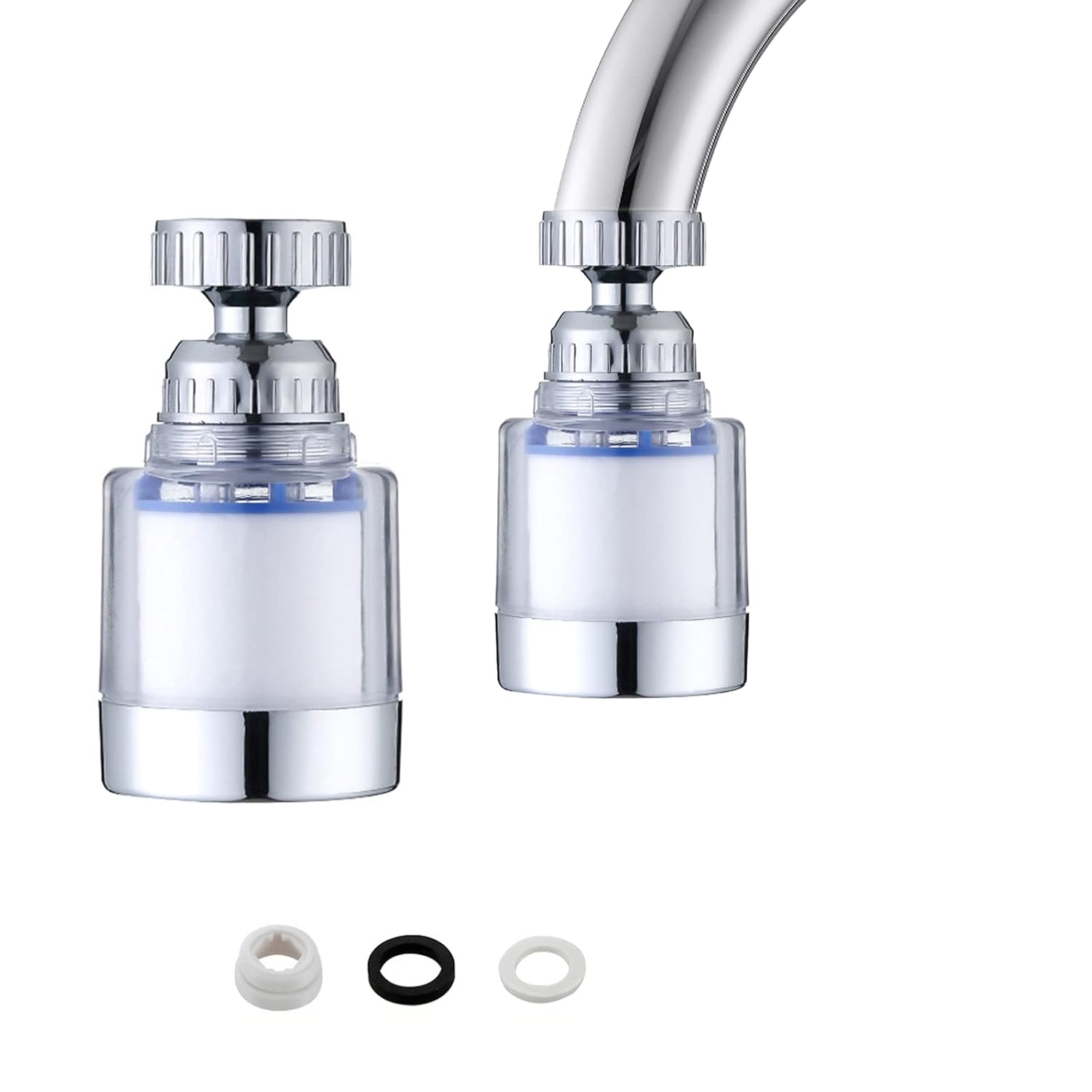
This small, 360-degree rotating faucet filter installs in place of the faucet aerator and uses a combination of micron PP cotton, mineral balls, activated carbon, and ion exchange to reduce lead, iron, rust, chlorine, chloramine, and some hardness minerals. It is intended for quick, tool-free installation on round faucets with an outlet diameter of about 0.86 inches and includes an adapter for inward-thread spouts. The transparent housing makes it easy to see when the cartridge is loading with sediment, and the unit rotates so you can aim the outlet. Because the cartridge is replaceable the filter can be refreshed without swapping the whole body, though replacement frequency depends on local water quality and will reduce flow over time. The small plastic construction is lightweight and not meant for heavy-duty use or high-temperature handling beyond 120°F. For buyers who want a low-cost way to improve tap water taste and basic contaminant reduction, this offers convenience and visible results, but it is not a whole-house solution or certified for all contaminants, so expect modest performance on very hard or highly contaminated supplies.
Best for: Buyers wanting an inexpensive, quick upgrade to kitchen tap water quality who prioritize easy installation and visible, short-term filtration improvements.
Less Ideal for: Homes with very hard water, well water with high contaminant loads, or buyers seeking certified lab-verified filtration performance should look at more robust or certified systems.
- Simple, tool-free faucet-mount installation with included adapter for common round spouts
- Transparent body and 360-degree rotation make positioning and filter condition easy to check
- Multi-stage media (PP cotton, mineral balls, activated carbon, ion exchange) targets chlorine, sediment, heavy metals and some hardness components
- Replaceable cartridge lets you refresh filtration without replacing the entire unit
- Plastic construction and small size limit durability and high-temperature use
- Not certified to NSF standards and not suitable as a sole solution for heavily contaminated or very hard water
Verdict: A very affordable, easy-to-install faucet filter for basic taste and sediment improvement on round kitchen spouts.
Waterdrop WD-10UB Under Sink Filter

| Installation Type | Under Sink |
|---|---|
| Purification Method | Activated Carbon |
| Maximum Flow Rate | 0.75 gpm |
| Filter Life Cycle | 1 years |
| Supported Water TDS Level Maximum (PPM) | 700 |
The Waterdrop WD-10UB is an under-sink activated carbon filtration system designed to give a steady supply of improved-tasting, lower-contaminant cold water through its included dedicated faucet. It installs using push-to-connect fittings and a 3/8"–1/2" convertor so typical DIYers can have it running in minutes, and the twist-and-lock cartridge change makes replacements quick. The multi-stage filter media and carbon block construction target chlorine, bad taste and odor, PFAS/PFOA, and lead while keeping beneficial minerals, making it suitable for drinking, cooking and small commercial uses. Flow performance is solid for an under-sink unit with a tested full flow of 0.75 gpm at 60 psi and an upgraded 3/8" outlet rated to provide faster faucet flow when needed. Limitations: it only connects to cold municipal water and is not intended for well water or hot lines, and the one-year filter life claim means ongoing replacement costs and planning for annual maintenance.
Best for: Buyers who prioritize a reliable, certified under-sink filter that is easy to install and maintain and who want demonstrable reductions in chlorine, lead and PFAS for everyday drinking and cooking water.
Less Ideal for: Homes supplied by well water, users who need hot-line filtration, or those who want ultra-fine micron or ultra-filtration performance for bacteria removal.
- IAPMO-tested components with NSF/ANSI 42 and 372 certifications and third-party testing for lead reduction
- Includes a dedicated brushed stainless steel faucet for separate filtered water delivery
- Quick push-to-connect fittings and twist-and-lock cartridge enable fast tool-free installation and filter changes
- Multistage activated carbon block filtration that reduces PFAS, PFOA/PFOS, chlorine, taste and odor
- Designed only for cold municipal water so not suitable for well water or hot-line filtration
- Filter life listed as one year, requiring annual replacement planning and recurring cost
Verdict: Choose the WD-10UB when you want a certified, easy-to-install under-sink filter with a dedicated faucet that reliably reduces chlorine, lead and PFAS for everyday kitchen use.
BRITA On Tap Faucet Filter System

| Capacity | 100 gallons |
|---|---|
| Filter Life Cycle | 4 months |
| Maximum Flow Rate | 0.5 gpm |
| Purification Method | Sedimentation |
The BRITA On Tap Faucet Filter System attaches to a standard kitchen faucet to deliver filtered water on demand without permanent plumbing changes. It uses a carbon-block filter cartridge to reduce chlorine taste and odor, sediment, lead, asbestos and a number of other listed contaminants, and offers three spray settings plus a switch to choose filtered or unfiltered flow. Installation is tool-free for faucets with external threads and adapters are included for other standard fittings, and the cartridge installs with a one-click motion and a visible indicator to show when it is time to replace the filter. The filter is rated for about 100 gallons or roughly four months of typical family use, which makes replacement frequency predictable but does mean ongoing cartridge purchases. The system does not fit pull-out or spray-style faucets and it reduces flow to about 0.5 gpm, so expect slower water when filling containers. For a compact, easy-to-install point-of-use filter that noticeably improves tap taste and removes several health-related contaminants, this is a practical sinkside solution.
Best for: Buyers who want a low-effort, proven faucet-mounted filter to improve tap water taste and reduce contaminants and who prefer visible indicators and simple maintenance backed by wide user adoption.
Less Ideal for: People with pull-out or spray-style faucets or households that need high flow for filling large pots or frequent heavy water use should consider other solutions.
- Reduces chlorine taste and odor plus a long list of contaminants including lead and asbestos
- Tool-free installation with included adapters for standard faucets
- Three spray options and a filtered/unfiltered switch for everyday convenience
- Visible filter indicator and one-click cartridge replacement for easy maintenance
- Not compatible with pull-out or spray-style faucets
- Lower flow rate (about 0.5 gpm) compared with an unfiltered tap
Verdict: A compact, easy-to-install faucet filter that reliably improves tap taste and reduces lead and other contaminants for buyers who value low-effort maintenance and proven performance.
PUR Plus Faucet Filter 2-Pack

| Model Number | RF-9999-2 |
|---|---|
| Unit Count | 2 Count |
| Compatible Water Purifier Models | PUR FM-2000B, FM-2100B, FM-2500V, FM-2700G, FM-2800N, FM-3333B, FM-3400B, FM-3700, FM-3700B, FM-3800, FM-3800B, FM-4000B, FM-4100B, FM-9000B, FM-9100B, FM-9400B, FM-9500, FM-9600B, Pur-0A1 |
| External Testing Certification | NSF, WQA |
The PUR Plus Faucet Filter 2-Pack is a straightforward replacement cartridge set for PUR faucet-mount systems that delivers on basic water-quality improvements for everyday kitchen use. Each cartridge uses a 14-layer, 3-in-1 filtration design with an internal mineral core to improve taste while reducing chlorine, lead, PFAS, VOCs, microplastics, and other listed contaminants; PUR notes each filter treats up to 100 gallons or roughly three months of typical household use. Installation is simple thanks to the pull-tab design and the filters are sold as genuine PUR parts intended for compatibility with multiple PUR faucet models. Practical benefits are consistent, certified contaminant reduction backed by NSF and WQA testing and the convenience of on-tap filtered water for drinking and cooking. The main limitations are the replacement cadence and capacity — you will need to plan for regular swaps every three months — and the filters do not address microbiological contamination, so they are not a substitute for treatments targeting pathogens.
Best for: Buyers who prioritize proven, certified contaminant reduction and want a simple, manufacturer-backed replacement for a PUR faucet-mount system to improve drinking and cooking water quality.
Less Ideal for: Households needing microbiological protection, very high-flow whole-house filtration, or longer-duration cartridges that reduce the frequency of replacements should consider other solutions.
- Certified by NSF and WQA to reduce a wide range of contaminants including lead and PFAS
- 14-layer 3-in-1 design with mineral core improves taste and captures small particles
- Easy install with pull-tab design and sold as genuine PUR replacement parts
- Each filter treats up to 100 gallons, providing roughly three months of typical use per cartridge
- Requires scheduled replacement every three months, increasing ongoing cost
- Does not filter microbes or serve as a microbiological treatment
Verdict: Choose these genuine PUR faucet replacement filters when you want certified, manufacturer-backed reduction of lead, PFAS, and other common tap contaminants for dependable on-tap drinking water.
Choosing the Right Water Filter for Kitchen Sinks: Key Factors to Consider
Contaminant Reduction and Certification
What contaminants the filter removes affects safety and taste. Look for specific reductions listed in third-party test data or certifications rather than vague claims. Certifications from independent labs indicate a filter has been tested for particular contaminants such as chlorine, lead, VOCs, or specific particulates.
Pay attention to which contaminants matter for your water source. Municipal water and private wells have different typical issues, and a filter that targets chlorine taste will not necessarily remove heavy metals or microbial contaminants. Certification scope and test conditions determine real-world effectiveness.
Installation Type and Sink Compatibility
Kitchen sink water filters come as faucet-mounted, countertop, or under-sink systems, each with different plumbing implications. Faucet-mounted units attach to the existing faucet but may not fit every tap style. Countertop systems need space on the counter and a diverter hose. Under-sink filters hide out of sight but require a dedicated cold-water line and more complex installation.
Check clearance under the sink, the type of faucet connections, and whether you are comfortable with a simple DIY install or will need a plumber. Compatibility can also affect warranty terms and the types of replacement parts you need.
Flow Rate and Water Pressure Effects
A filter that significantly reduces flow can be frustrating for filling pots or running a faucet for rinsing. Evaluate published flow rates and whether the unit maintains adequate pressure at normal household water supply levels. Some multi-stage filters or those with very fine membranes will produce slower output.
Consider your household habits. If you routinely need high flow for cooking tasks, prioritize filters with minimal flow reduction or that include a separate faucet to preserve full pressure for the main tap.
Filter Capacity, Replacement Frequency, and Ongoing Cost
Filter life influences long-term cost and convenience. Look at the rated capacity in gallons or months and whether replacement cartridges are easy to find and install. A longer-lasting cartridge usually costs more upfront but reduces frequent maintenance interruptions.
Also check whether the manufacturer provides clear replacement part numbers and whether cartridges have built-in flow indicators or simple twist-and-lock mechanisms. Consider total lifecycle cost, including replacement filters and any tools required for servicing.
Materials, Build Quality, and Leak Risk
Durable materials and solid fittings reduce the chance of leaks and the need for early replacement. Metal housings and reinforced fittings tend to last longer than thin plastics in high-use kitchens. Examine the type of seals and whether quick-connect fittings or threaded connections are used.
A robust build is particularly important for under-sink systems where leaks can cause concealed damage. Also consider corrosion-resistant materials if your water has a high mineral content.
Maintenance Convenience and Filter Disposal
Maintenance convenience affects whether you actually keep the system running optimally. Ease of changing cartridges, availability of local or online replacements, and clear service intervals help maintain filtration performance. Some designs allow tool-free filter changes, while others require a wrench or shutoff of the water supply.
Proper disposal of used cartridges is another consideration. Cartridges with recyclable components or guidance from the manufacturer make responsible disposal simpler. Factor in whether the replacement schedule aligns with your willingness to perform periodic service.
Types of Kitchen Sink Filters and Where They Fit
There are three common types of water filters used at the kitchen sink: faucet-mounted, countertop, and under-sink. Faucet-mounted units are the simplest to install and switch between filtered and unfiltered flow, making them suitable for renters or those who want minimal changes to plumbing. Countertop filters attach to the faucet via a diverter and sit on the counter, offering larger cartridges and often better capacity without under-sink installation work. Under-sink systems connect to a dedicated cold-water line and can provide multi-stage filtration with less visible hardware.
- Faucet-mounted: easiest install, limited capacity, may not fit all faucets
- Countertop: better capacity, visible on counter, uses diverter hose
- Under-sink: hidden installation, higher capacity, usually requires more plumbing work
Understanding Filter Media and Stages
Filters combine media such as activated carbon, sediment pre-filters, and membrane elements. Activated carbon is effective at reducing chlorine taste and many organic compounds. Sediment pre-filters capture rust and particulates to protect finer media. Reverse osmosis and ultrafiltration membranes remove a wider range of contaminants but can slow flow and produce wastewater in some configurations.
Choosing the right combination depends on your priorities. Carbon-focused systems excel at improving taste and removing common organic contaminants. Membrane-based systems are better for removing dissolved solids and certain heavy metals but add complexity and may need a storage tank.
- Activated carbon: best for taste and organic contaminants
- Sediment filters: protect downstream media and extend life
- Membranes: remove dissolved solids, require more maintenance
Measuring Performance: What the Specs Mean
When evaluating technical specs, pay attention to certified removal rates, flow rate in gallons per minute, and rated capacity in gallons. Certified removal rates should list the contaminant and the percentage reduction under test conditions. Flow rates indicate how quickly filtered water will be delivered at typical household pressure.
Also note operating pressure and temperature ranges to ensure your household supply falls within the unit's specifications. If numbers are missing or vague, that increases uncertainty about real-world performance and may mean the product is not ideal for cautious buyers.
- Certified reduction values clarify what contaminants are removed
- Flow rates show everyday convenience impact
- Capacity ratings inform replacement frequency
Installation Tips and Common Pitfalls
Before buying, verify that your faucet type is compatible and measure under-sink space for canisters or tanks. For under-sink installs, locate the cold-water shutoff and plan where to mount the filter housing and any required bracket. Use the correct fittings and avoid over-tightening plastic connections which can crack threads.
Common pitfalls include ordering a faucet-mounted unit that does not fit an unusual spout, neglecting to account for the space a storage tank will occupy, and failing to check that replacement cartridges are readily available. If you are unsure, factor in professional installation costs or select models explicitly designed for tool-free DIY setup.
- Measure and confirm faucet compatibility before purchase
- Plan tubing runs and shutoff valve access for under-sink units
- Keep replacement cartridge numbers on hand for future ordering
Maintaining Peak Performance
Regular maintenance keeps filtration effective. Replace cartridges at the recommended intervals, flush new filters as directed, and inspect fittings and seals for wear. If your filtered water develops an off taste or odor before the replacement interval, change the cartridge and check for source water changes.
Record the installation date and set reminders for replacements. Some systems include indicators for replacement; otherwise, a calendar reminder based on the rated capacity is a reliable approach.
- Flush new cartridges according to instructions
- Inspect seals and fittings periodically for leaks
- Use calendar reminders to track replacement intervals
Assessing Long-Term Costs
Total cost of ownership goes beyond the initial unit. Include the price and frequency of replacement cartridges, any required tools or plumber time for servicing, and energy or wastewater losses in the case of some membrane systems. A higher upfront cost can be worthwhile if filters last longer or replacement parts are inexpensive.
Balance the convenience of longer-life cartridges against their environmental impact and potential disposal restrictions. If you prefer low-maintenance operation, prioritize systems with widely available, affordable replacements or those with extended capacity cartridges.
- Factor replacement cartridge cost and frequency into annual running cost
- Include potential installation or servicing charges in total cost
- Consider environmental impact and disposal requirements of used cartridges
How We Chose the Best Water Filter for Kitchen Sinks
We focused on practical, measurable features that matter for in-home sink filtration. Primary evaluation criteria included certified contaminant reduction to confirm claimed removals, flow rate and pressure impact so filtered water remains convenient, and filter capacity and lifespan to determine maintenance frequency. We also assessed installation complexity and required fittings because a difficult install can add cost or require a plumber. Build quality and materials were reviewed to gauge longevity and leak risk. Finally, we considered ongoing maintenance logistics such as filter replacement availability and ease of servicing. Excluded items included whole-house filtration systems and pitcher-style filters because they address different use cases. We prioritized units designed specifically for under-sink, countertop, or faucet-mounted installation that match typical kitchen plumbing. Products were selected for clear specification disclosure and verifiable contaminant reduction claims rather than marketing language alone. The scoring focused on dimensions a buyer can check before purchase: verified filtration performance, installation and compatibility, flow impact, filter life and maintenance, and construction quality.
Our full evaluation process is outlined in our review methodology.
FAQ
How do I know which contaminants my home water needs filtered?
Check your municipal water quality report or get a private well test to identify common contaminants. Match those results to filters that specifically list reductions for the same contaminants or that are certified for those contaminants.
Can I install a sink water filter myself?
Many faucet-mounted and countertop filters are designed for DIY installation with basic hand tools. Under-sink systems may require more plumbing work or a drill for mounting brackets, and some buyers prefer professional installation for leak-sensitive setups.
How often should I replace the filter cartridges?
Replacement intervals depend on rated capacity and household water use but commonly range from three to twelve months. Monitor flow rate and taste as indicators and follow the manufacturer guidelines for your chosen cartridge.
Will a sink filter affect my water pressure?
Some filters reduce flow, especially multi-stage or membrane systems. Check the specified flow rate and choose a system that balances filtration needs with acceptable flow for your daily tasks.
Are replacement cartridges easy to find?
Availability varies by model but is an important consideration. Choose systems with clear replacement part numbers and good distribution to avoid long lead times when you need a new cartridge.
Final Verdict
Focus first on the contaminants you need removed and choose a filter type that fits your installation preferences. Balance filtration performance against flow impact and ongoing maintenance commitments. Prioritize systems with verifiable reduction claims, straightforward installation, and accessible replacement cartridges. With those tradeoffs in mind, you can pick a sink water filter that delivers reliable cleaner tasting water without undue hassle.