
Note: This article contains affiliate links. If you click on these links and make a purchase, we may earn a small commission at no extra cost to you. This helps support our research and content. Read our full affiliate disclosure here.
A Wi-Fi thermostat can change how you manage comfort and energy use in your home. With remote scheduling, smart temperature control, and better runtime monitoring, the right thermostat makes daily heating and cooling easier and often more efficient. This guide covers the top shortlisted Wi-Fi thermostats available today, focusing on compatibility, ease of setup, and the features that matter for long-term reliability. Below you will find our picks along with clear evaluation criteria to help you pick a unit that fits your HVAC wiring, thermostat location, and control preferences. Read on for practical details about what to expect during installation, which features help reduce bills, and how each shortlisted thermostat earned a place on the list.
Top Picks at a Glance
| Best Overall The best all-around choice for most situations | Google Nest Learning Thermostat (4th Gen) |  |
| Best Quality Built to a higher standard if you want something more solid | ecobee Smart Thermostat Premium |  |
| Best Value The sweet spot between price and what you get | ecobee Smart Thermostat Essential |  |
| Best Budget The cheapest option that still gets the job done reliably | WYZE Smart WiFi Thermostat |  |
| Top Rated A top-rated pick with lots of positive feedback | Sensi Touch ST75 |  |
| Most Popular A crowd favorite that many people choose with confidence | Google Nest Thermostat |  |
| Best Seller A high-volume bestseller chosen again and again | Sensi Smart Thermostat ST55 |  |
Google Nest Learning Thermostat (4th Gen)

| Connectivity Technology | Wi-Fi |
|---|---|
| Power Source | Corded Electric |
| Voltage | 24 volts |
| Display Type | Touchscreen |
| Number of Batteries | 1 CR2 (included) |
The Nest Learning Thermostat (4th gen) is a premium smart thermostat that learns your temperature preferences, suggests schedule tweaks, and lets you control HVAC from the Google Home app or by voice. It pairs with the included Nest Temperature Sensor to manage hot and cold spots, shows useful info across the room with Dynamic Farsight, and reports system health alerts to help catch equipment issues early. The unit supports most 24V systems and installs in about 40 minutes with step-by-step app guidance, and it works with Alexa, Siri, and Google Assistant as well as Matter for broader smart home integration. Practical benefits include automatic Eco temperatures when you leave, adaptive behavior based on outdoor conditions, and energy-shift features to favor cleaner or cheaper energy when available. Trade-offs are that this is a higher-end, design-forward thermostat so it may be more expensive than basic programmable units, and some advanced energy features require account setup and app permissions to function as intended.
Best for: Buyers who want a smart, well‑designed thermostat that reduces energy use without constant programming and who value seamless smart home integration and remote control.
Less Ideal for: People seeking the simplest, lowest-cost programmable thermostat or those who prefer no account setup or cloud‑dependent features.
- Learns schedules and suggests energy-saving adjustments automatically.
- Includes a remote Nest Temperature Sensor to address hot and cold spots.
- Wide smart home compatibility including Google Home, Alexa, Siri, and Matter.
- Large, readable display with Dynamic Farsight for glanceable info.
- System Health monitoring provides alerts if heating or cooling needs attention.
- Advanced energy features require app setup and permissions to deliver full benefits.
- Premium design and features command a higher price than basic thermostats.
Verdict: Choose the Nest Learning Thermostat if you want a top-tier, Wi‑Fi smart thermostat that learns your habits and integrates smoothly with major smart home ecosystems.
ecobee Smart Thermostat Premium

| Connectivity Protocol | Wi‑Fi |
|---|---|
| Connectivity Technology | Bluetooth |
| Power Source | Battery Powered |
| Voltage | 24 volts |
| Number of Batteries | 1 Lithium Ion (included) |
The ecobee Smart Thermostat Premium is a high-end Wi‑Fi thermostat designed to optimize comfort and reduce energy use while acting as a smart home hub. It pairs with the ecobee app and supports Siri, Alexa, Google Assistant, HomeKit, and SmartThings, and includes a SmartSensor to detect occupancy and reduce hot or cold spots. Notable features are a built-in air quality monitor with alerts and filter reminders, radar occupancy sensing for improved presence detection, dual‑band Wi‑Fi, and a bundled Power Extender Kit to simplify DIY installs on systems without a C‑wire. The unit also includes a speaker for voice control and streaming, and a large LCD display housed in a metal matte finish. Practical benefits for a performance buyer include advanced occupancy and sensor-based control that can deliver meaningful HVAC savings and tighter temperature control in prioritized rooms. Limitations to weigh are that some integrations (Siri) require an Apple home hub and full smart security features may need a subscription, and compatibility should be confirmed with ecobee's checker before purchase.
Best for: A buyer focused on HVAC performance and energy savings who wants advanced occupancy sensing, room sensors, and broad smart home voice control to tighten comfort and reduce run time.
Less Ideal for: People who prefer a simple manual thermostat or who have noncompatible high‑voltage or millivolt HVAC systems should consider simpler or specialized controllers instead.
- Built‑in Alexa and Siri support plus broad smart home integrations for flexible voice and app control
- Included SmartSensor improves room‑by‑room temperature control to reduce hot and cold spots
- Air quality monitor with alerts and filter reminders helps maintain home air health
- Radar occupancy sensing and geofencing enable smarter, energy‑saving schedules
- Power Extender Kit and trim kit included to simplify DIY installation on homes without a C‑wire
- Some features require an Apple home hub or subscription for full functionality
- Compatibility with nonstandard HVAC or high‑voltage systems is limited and must be checked
Verdict: If you want a performance‑oriented smart thermostat that uses room sensors, radar occupancy, and built‑in voice to tighten comfort and cut HVAC runtime, this is a top pick.
ecobee Smart Thermostat Essential

| Connectivity Technology | Wi-Fi |
|---|---|
| Power Source | Battery Powered |
| Display Type | LCD |
| Control Type | Touchpad Control |
| Specific Uses For Product | Air Conditioner, Electric Baseboard Heater, Furnace |
The ecobee Smart Thermostat Essential is a pared-down smart thermostat designed to give homes remote and voice control of heating and cooling without the premium price. It mounts to the wall and pairs with the ecobee app so you can change temperature schedules, check energy usage, and control the unit from iOS or Android. The touchscreen is simple and responsive, and it integrates with Siri, Alexa, Google Assistant, and HomeKit for hands-free commands. Built-in eco+ features like schedule assistant, time-of-use preconditioning, and indoor humidity detection help reduce runtime and energy costs, and the device supports most 24 VAC HVAC systems; homes lacking a C-wire can use ecobee's Power Extender Kit. The thermostat does not include remote sensors in the box, so room-by-room balancing requires purchasing SmartSensors separately, and this Essential model omits some advanced sensors and air quality monitoring found on higher-tier ecobee units. For buyers who want straightforward app control and energy-saving automation without extra bells and whistles, it delivers reliable, easy-to-use smart thermostat functionality.
Best for: Practical buyers who prioritize straightforward energy savings and reliable remote control over premium sensors or extras, and who want an easy DIY upgrade to a Wi‑Fi thermostat.
Less Ideal for: Homes that need factory‑included room sensors or advanced environmental monitoring should consider higher‑end models that include those features out of the box.
- Simple touchscreen and mobile app for remote control and scheduling
- Works with Alexa, Google Assistant and Apple HomeKit for voice control
- Built-in eco+ features that help optimize runtime and reduce energy use
- Compatible with most 24 VAC HVAC systems and supports a Power Extender Kit for homes without a C-wire
- SmartSensors for room-level occupancy and temperature are sold separately
- Lacks some higher-end features and built-in air quality monitoring found on premium ecobee models
Verdict: A cost-conscious Wi‑Fi thermostat that delivers dependable app and voice control plus built-in energy‑saving features for buyers focused on practical savings.
WYZE Smart WiFi Thermostat

| Connectivity Technology | Wi-Fi |
|---|---|
| Controller Type | Amazon Alexa, Google Assistant |
| Temperature Control Type | programmable |
| Power Source | Corded Electric |
| Mounting Type | Wall Mount |
The Wyze Smart WiFi Thermostat is a no-frills smart thermostat that brings remote control, voice commands, and basic automation to cost-conscious buyers. It connects to 2.4 GHz Wi‑Fi and integrates with Alexa and Google Assistant so you can change temperature settings by voice or the Wyze app, and it includes a motion sensor and phone-location triggers to switch between Home and Away automatically. Setup is aimed at DIYers with step-by-step guidance in the app and a C-wire adapter included for homes missing a common wire, and the display and dial control make local adjustments straightforward. The app offers 7-day scheduling and usage insights to help reduce energy waste, though compatibility is limited to typical low-voltage systems and only 2.4 GHz networks. As a renewed unit, it carries a short limited warranty and is a practical way to add smart control without spending much, but buyers should confirm system compatibility before purchasing.
Best for: Buyers looking to add smart temperature control on a tight budget who want app and voice control plus basic scheduling without paying for high-end features.
Less Ideal for: Homes that require 5 GHz Wi‑Fi support, uncommon or high-voltage HVAC systems, or buyers who need extended factory warranties and advanced energy management features.
- App control with remote temperature adjustment and 7-day scheduling
- Works with Alexa and Google Assistant for voice control
- Includes C-wire adapter and guided DIY setup in the Wyze app
- Built-in motion sensor and phone-location triggers to auto-switch modes
- Only compatible with 2.4 GHz Wi‑Fi networks
- Sold renewed with a limited 90-day warranty which is shorter than many new models
Verdict: An affordable way to add app and voice-enabled smart thermostat control for typical low-voltage homes without spending much.
Sensi Touch ST75

| Connectivity Technology | Wi-Fi (2.4 GHz) |
|---|---|
| Screen Size | 4.3 inches |
| Power Source | AC/DC (C-wire required) |
| Temperature Control Type | Programmable |
| Controller Type | Alexa, Apple HomeKit, Google Assistant, SmartThings, Vera |
The Sensi Touch ST75 is a wall‑mounted smart thermostat designed to replace a standard HVAC thermostat and provide remote control, scheduling, and usage reports via the Sensi mobile app. It uses 2.4 GHz Wi‑Fi for remote access, supports common HVAC equipment including heat pumps and furnaces, and offers a 4.3‑inch color touchscreen for local control plus app and voice control through major platforms. Practical benefits include easy DIY installation with illuminated easy‑click terminals and a built‑in level, Energy Star certified scheduling to reduce HVAC energy use, and system alerts and maintenance reminders to help protect equipment. The thermostat requires a common wire (C‑wire) and relies on Wi‑Fi for remote features, so homes without a C‑wire will need an adapter or professional wiring. The interface is straightforward but power must be AC/DC and some advanced users may prefer thermostats with tighter third‑party ecosystem integrations or additional sensors. For a reliability‑minded buyer, the Sensi Touch pairs proven HVAC OEM pedigree with clear install guidance and basic smart features that reduce the risk of setup problems.
Best for: Buyers who prioritize a dependable, easy‑to‑install smart thermostat with clear app control and OEM HVAC lineage and want straightforward energy‑saving features without complex third‑party setups.
Less Ideal for: People who lack a C‑wire and do not want to add one, or buyers who need advanced multi‑sensor zoning or deep third‑party automation beyond basic voice and app control.
- Simple DIY installation with illuminated easy‑click terminals and built‑in level
- 4.3‑inch color touchscreen plus app and voice control for convenient access
- Energy Star certified with scheduling and usage reports to reduce HVAC energy
- Provides system alerts and maintenance reminders to help protect equipment
- Requires a C‑wire for power, which may need an adapter or rewiring in some homes
- Depends on 2.4 GHz Wi‑Fi for remote features, limiting use on different bands or unreliable networks
Verdict: Choose the Sensi Touch ST75 if you want a reliable, OEM‑backed Wi‑Fi thermostat that is easy to install and offers straightforward app, voice, and energy‑saving features.
Google Nest Thermostat
| Connectivity Technology | Bluetooth, Wi-Fi |
|---|---|
| Power Source | Battery Powered |
| Display Type | LCD |
| Screen Size | 2 inches |
| Number of Batteries | 2 A batteries required. (included) |
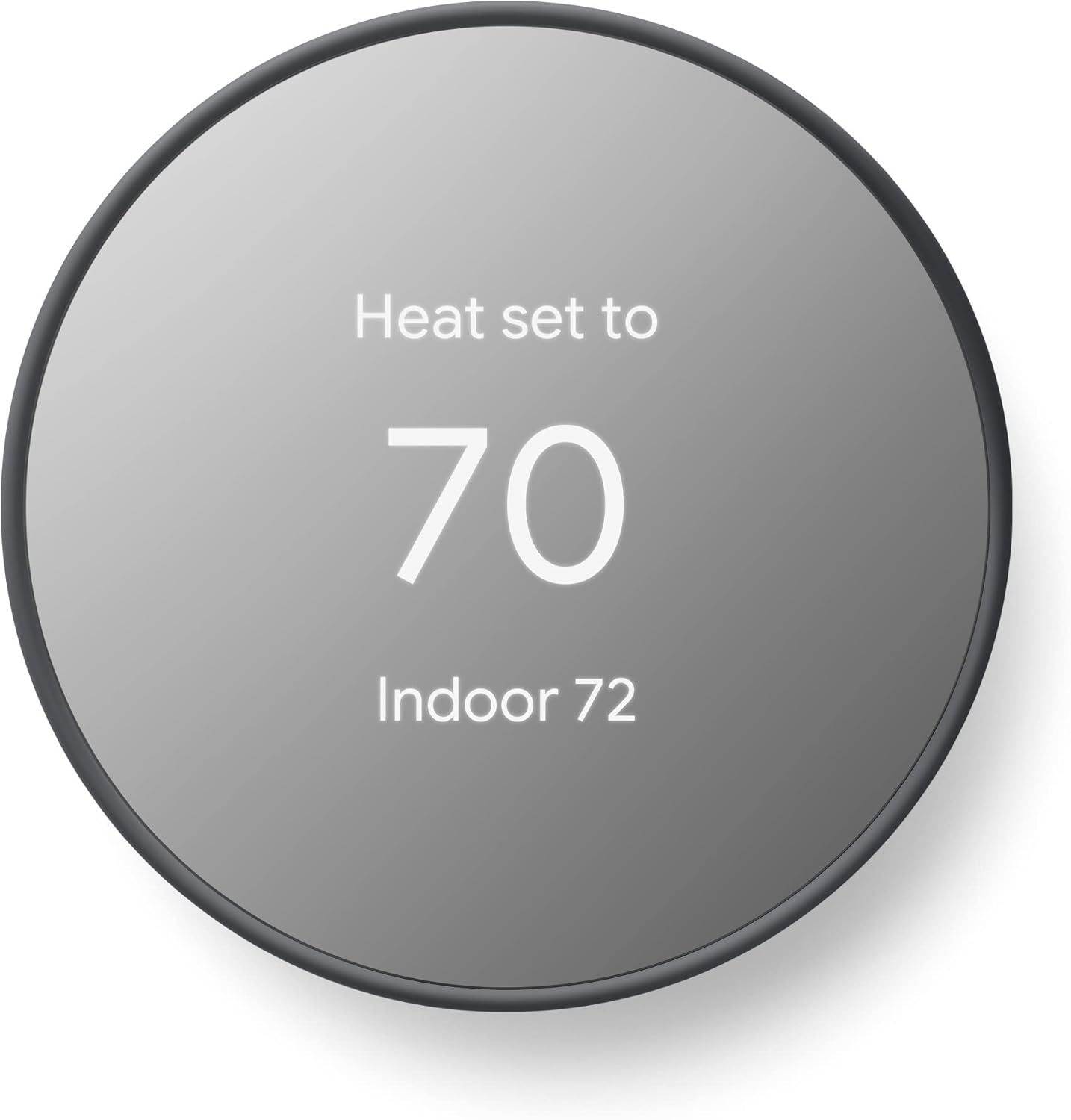
The Google Nest Thermostat is a compact smart thermostat that replaces a basic wall control to let you adjust temperature from the Google Home app or with voice assistants. It installs on most HVAC systems and is designed for DIY setup in about 30 minutes, with included mounting hardware and two AA batteries for power. In daily use it provides remote control, simple scheduling, and automatic Eco temperatures when it detects the home is empty, while Savings Finder suggests schedule tweaks to save energy. The unit also offers HVAC monitoring and will send alerts if it detects potential system issues, and connects over 2.4/5 GHz Wi‑Fi and Bluetooth Low Energy for integration with Google Assistant and Matter‑certified platforms. Limitations to note are that some systems require a C wire or power accessory for reliable operation and advanced features, and voice/remote features require working internet and compatible smart devices. The thermostat is a straightforward, energy‑minded option for upgrading to app and voice control without the complexity of high‑end learning thermostats.
Best for: Buyers who want a simple, app‑driven smart thermostat that adds energy‑saving features and voice control without a complex learning curve and who value peer recommendations and mainstream platform support.
Less Ideal for: People who need advanced self‑learning schedules, installers requiring enterprise or multi‑zone commercial controls, or those without stable home Wi‑Fi should consider other options.
- Easy DIY installation with included mounting hardware and step‑by‑step app guidance
- Remote control and scheduling via Google Home app for temperature changes from anywhere
- Supports voice control and Matter‑certified platforms for smart home integration
- Energy features like Eco Temperatures and Savings Finder help reduce standby energy use
- Sends HVAC monitoring alerts to notify you of potential system issues
- May require a C wire or power accessory for some HVAC configurations
- Full functionality depends on working Wi‑Fi and compatible smart devices
Verdict: A simple, reliable Wi‑Fi thermostat that delivers app and voice control plus practical energy features for mainstream smart‑home buyers.
Sensi Smart Thermostat ST55

| Connectivity Technology | Wi-Fi |
|---|---|
| Controller Type | Amazon Alexa, Apple HomeKit, Google Assistant, SmartThings, Vera |
| Power Source | Corded Electric |
| Display Type | LED |
| Number of Batteries | 2 AA batteries required (included) |
The Sensi Smart Thermostat ST55 is a wall‑mounted Wi‑Fi thermostat built for easy DIY replacement of a conventional thermostat. It connects to your home network and the Sensi mobile app to provide remote scheduling, usage reports, and smart alerts, and it works with Alexa, Google Assistant, Apple HomeKit, SmartThings and Vera for voice and smart‑home control. The unit looks and operates like a traditional thermostat with buttons and a clear LED display, while the app guides you through step‑by‑step installation and includes a built‑in level and wire stickers to simplify wiring. Practical benefits include Energy Star certification and usage reports that can help reduce HVAC energy use, filter reminders and system alerts to help with maintenance, and a factory manufacturer lineage from Emerson. Limitations to note are that it expects a 24 VAC HVAC system and traditional wiring rather than being a battery‑only wireless device, and advanced users who want a color touchscreen or highly customizable in‑unit controls may find the physical interface basic.
Best for: Buyers who want a dependable, easy‑to‑install smart thermostat that integrates with major voice assistants and prioritizes energy savings and straightforward app control.
Less Ideal for: Users seeking a luxuriously featured in‑unit interface or those without standard HVAC 24 VAC wiring should consider other options.
- Simple DIY installation with built‑in level, wiring stickers, and app guidance
- Works with major voice assistants and smart‑home platforms for remote control
- Energy Star certified with usage reports and smart alerts to help reduce HVAC energy
- Includes two AA batteries and common mounting hardware for a quick swap
- Requires 24 VAC wiring typical of conventional HVAC systems, so not ideal for truly wireless installs
- No color touchscreen and limited physical controls compared with some premium models
Verdict: The Sensi ST55 is the safe, easy smart‑thermostat pick for mainstream buyers who want reliable Wi‑Fi control, broad voice compatibility, and proven energy‑saving features.
Choosing the Right Wi-Fi Thermostat: Key Factors to Consider
Wiring and HVAC Compatibility
Confirming wiring and system compatibility is vital before buying a Wi-Fi thermostat. Different furnaces, heat pumps, and multi-stage systems use distinct control circuits; knowing whether your system uses a common C-wire, single-stage heat/cool, or a heat-pump configuration changes which thermostats will work without additional adapters.
Choosing a thermostat that lists direct support for your HVAC type avoids installation complexity and potential control issues. If your system lacks a C-wire, look for thermostats that either include a power module or explicitly support C-wire alternatives. Mis-matched compatibility can lead to frequent power cycling, display errors, or failure to control auxiliary heating.
Setup Process and Mobile App
The setup process directly affects how smoothly you get remote control working. Buyers should check whether the thermostat provides clear in-device prompts, step-by-step app guidance, and straightforward Wi-Fi pairing workflows. Thermostats that require complex account creation, multi-step cloud linking, or nonstandard pairing can prolong installation and troubleshooting.
A well-designed mobile app makes daily scheduling and temperature adjustments painless. Look for apps with clear scheduling interfaces, reliable remote connectivity, and straightforward firmware update handling. Good documentation and accessible support resources reduce friction during initial setup and future maintenance.
Network Reliability and Security
Wi-Fi connectivity is the backbone of remote thermostat control, so assess both range and stability. A thermostat with weak Wi-Fi performance can drop off the network intermittently, preventing remote control and hampering scheduled changes. Consider where your thermostat is located relative to your router and whether your home network uses extenders or mesh systems.
Security is also important. Thermostats that support secure authentication, encrypted communication, and regular firmware updates reduce the risk of unauthorized access. Devices with poorly documented security practices or infrequent updates increase long-term vulnerability.
Automation and Energy Reporting
Smart scheduling and automation determine how much convenience and savings you get from a Wi-Fi thermostat. Features like multi-period schedules, adaptive learning, geofencing, and occupancy sensing let the thermostat adjust automatically to your routines, which can cut runtime without constant manual changes.
Energy reporting and runtime summaries help you and technicians diagnose inefficiencies. Clear, useful reports show trends and highlight opportunities to adjust setpoints or schedules. Avoid units that only provide minimal or confusing usage data, since meaningful feedback is essential to save energy over time.
Physical Controls and Display
Even with smart apps, the physical user interface matters for daily convenience. A responsive touchscreen or tactile buttons let you make quick adjustments without opening an app. The display should be readable from common standing positions and provide essential data such as current temp, setpoint, system mode, and Wi-Fi status.
Durable construction and a secure wall mount are practical considerations. Cheap or flimsy controls can become unreliable after frequent use, and poor mounting can lead to inaccurate temperature sensing if the unit is pulled away from the wall or exposed to drafts.
Compatibility With Home Automation
If you use a broader home automation system, check whether the Wi-Fi thermostat integrates with voice assistants, smart hubs, or home platforms you already own. Native integration simplifies routines and scenes, while open APIs or local control options offer more advanced setups for tech-savvy users.
Be mindful that deeper integrations sometimes require cloud linking or account bridging. Consider whether you prefer local-only control for privacy and reliability or cloud-based services for richer remote features.
Installing a Wi‑Fi Thermostat Yourself
Many homeowners can install a Wi-Fi thermostat without professional help, provided they confirm wiring compatibility first. Turn off power at the breaker, document the existing wire labeling, and take a photo of the old thermostat wiring before removing it. This simple documentation significantly reduces wiring confusion during installation.
Follow the new thermostat manufacturer's wiring diagram closely and use the included wall plate to position the device securely. If your system needs a C-wire and you do not have one, check whether the thermostat supports a power adapter or a C-wire adapter kit. After wiring, follow the app or on-device prompts to connect the thermostat to your home Wi-Fi and complete any required account setup.
- Turn off HVAC power at the breaker before touching wires
- Label and photograph existing wires to avoid mistakes
- Use a multimeter only if you are comfortable testing voltages
- Consider a professional if your system has more than two stages or unfamiliar wiring
Maximizing Energy Savings With Scheduling
To get measurable savings, set schedules that reduce heating and cooling when the home is unoccupied or during sleep hours. Small setbacks of a few degrees for several hours add up over a season. Use multi-period schedules to match weekdays and weekends and consider gradual setpoint changes rather than abrupt swings.
If your thermostat supports geofencing or occupancy detection, enable those features cautiously and verify they match your routines. Overly aggressive automation can cause comfort issues, so monitor the first few weeks and adjust thresholds as needed.
- Set larger setbacks for long absences and smaller ones for short departures
- Use gradual temperature ramps to maintain comfort while saving energy
- Review runtime reports monthly to fine-tune schedules
Troubleshooting Common Connectivity Issues
If the thermostat loses connection to Wi-Fi, first check whether your router has changed SSID or password. Rebooting the router and the thermostat can resolve transient issues. Placement behind a metal panel or far from the router can cause weak signals; moving the router or adding a mesh node often improves stability.
If firmware updates fail or pairing repeatedly stalls, verify that your home network supports the thermostat's required frequency band and security mode. Some older routers or enterprise-grade settings block device discovery. Consult the device documentation for network requirements before major changes.
- Confirm router SSID and password have not changed
- Place thermostat away from obstructions that block Wi‑Fi
- Check router settings for client isolation or blocked ports
When to Hire an HVAC Pro
Hire a professional when your system uses complex controls such as multiple heating stages, dual-fuel setups, or integrated zoning. Professionals can ensure correct wiring of relays and safely interface the thermostat with equipment like boilers or commercial control systems. They can also verify system settings so the thermostat's algorithms work as intended.
Also consider a technician if you notice unusual cycling, inconsistent temperature control after installation, or error codes from your HVAC equipment. These symptoms may indicate equipment-side issues rather than thermostat faults.
- Complex multi-stage systems often need professional installation
- Get help if you experience uncontrolled short cycling or error codes
- A pro can validate wiring and configure advanced control features
Privacy Considerations for Connected Thermostats
Connected thermostats collect occupancy patterns and climate control data that may be routed through cloud services. Review the privacy policy and data retention practices of any thermostat platform you consider. Some services keep detailed logs, while others limit stored data to anonymized usage metrics.
If privacy is a priority, prefer thermostats that support local control or provide clear options to restrict data sharing. Regularly update firmware and use strong account passwords to reduce exposure to unauthorized access.
- Check data retention and sharing policies before account creation
- Prefer local-control options when available for sensitive setups
- Use strong, unique passwords and enable two-factor authentication if offered
How We Chose the Best Wi-Fi Thermostat
We prioritized real-world compatibility, setup simplicity, and ongoing control features when selecting Wi-Fi thermostats for this list. First, we verified wiring and system support as a primary filter, because a thermostat that does not match common HVAC control types creates installation problems. We also looked for clear, documented setup workflows including app pairing and local network behavior, since many buyers install these themselves. Connectivity and security were weighted heavily: stable Wi-Fi performance and reasonable security settings are essential for remote control and firmware updates. Feature usefulness was another criterion, focusing on scheduling flexibility, geofencing or occupancy sensing, and usable energy reports. We evaluated build quality and physical user interface to ensure durable, day-to-day operation without needing frequent adjustments. Units lacking standard HVAC compatibility information, with poorly documented installation steps, or with limited remote-control features were excluded. The result is a set of thermostats that balance installation practicality, smart features that save energy, and long-term reliability for homeowners.
Our full evaluation process is outlined in our review methodology.
FAQ
Do I need a C-wire to install a Wi‑Fi thermostat?
Often a C-wire is required to provide continuous power, but some thermostats support power adapters or C-wire alternatives. Check the thermostat's documented wiring options and whether a power module is included before assuming you must run new wiring.
Can a Wi‑Fi thermostat save me money on energy bills?
It can, especially when you use smarter scheduling and setbacks. Energy savings depend on your climate, existing thermostat behavior, and how aggressively you use automated features. Regular monitoring and schedule adjustments increase the likelihood of savings.
Will a Wi‑Fi thermostat work with my heat pump or multi-stage system?
Some models explicitly support heat pumps and multi-stage equipment, but not all do. Verify compatibility with your specific control configuration and the thermostat's documented wiring and mode support before purchase.
How reliable is remote control when the internet goes out?
Local control usually continues for basic heating and cooling schedules, but remote access and cloud-dependent features will be unavailable until connectivity is restored. Thermostats that offer local network control or fallbacks provide better resilience during outages.
Are firmware updates important for thermostats?
Yes. Firmware updates often fix bugs, improve connectivity, and patch security issues. Regular updates help ensure stable remote operation and reduce exposure to vulnerabilities.
Final Verdict
Choose a Wi‑Fi thermostat that matches your HVAC wiring and provides the setup experience you can manage. Prioritize system compatibility, reliable Wi‑Fi performance, and the scheduling or automation features you will actually use. Balance the convenience of remote control and energy reporting against privacy preferences and integration needs. When in doubt, confirm wiring details and consider professional installation for complex systems. Focusing on these practical tradeoffs helps you pick a thermostat that delivers steady comfort, easier control, and potential energy savings over time.