
Note: This article contains affiliate links. If you click on these links and make a purchase, we may earn a small commission at no extra cost to you. This helps support our research and content. Read our full affiliate disclosure here.
Storing wine in a garage presents distinct challenges: larger temperature swings, higher humidity, and potential dust and vibration. Choosing the right wine cooler for garages helps you protect cellared bottles from premature aging, off flavors, and label damage. This guide shortlists the top wine coolers suited to garage conditions and evaluates them for temperature stability, insulation, cooling type, and durability. Below we cover the key specs and real-world considerations that matter most when you keep wine in a garage, then walk through our top picks and why they made the list.
Top Picks at a Glance
| Best Overall The best all-around choice for most situations | Wine Enthusiast 24-Bottle Freezerless |  |
| Best Quality Built to a higher standard if you want something more solid | Velieta 24-Inch Dual Zone Wine Cooler |  |
| Best Value The sweet spot between price and what you get | EUHOMY BR013-110 Beverage Refrigerator |  |
| Best Budget The cheapest option that still gets the job done reliably | Feelfunn 24-Can Beverage Refrigerator | 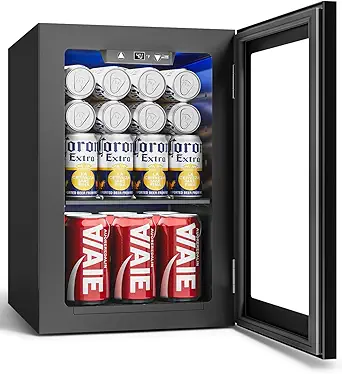 |
| Top Rated A top-rated pick with lots of positive feedback | Vushine 24" Wine Fridge JCD-508QE |  |
| Most Popular A crowd favorite that many people choose with confidence | hOmeLabs Beverage Refrigerator HME030065N | 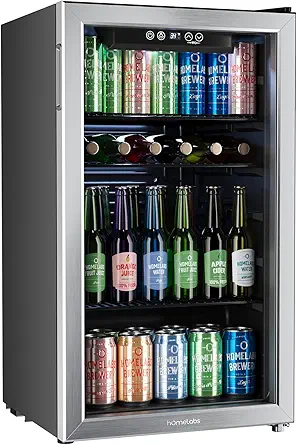 |
| Best Seller A high-volume bestseller chosen again and again | EUHOMY 25-Bottle Wine Cooler |  |
Wine Enthusiast 24-Bottle Freezerless

| Capacity | 2.4 cubic feet |
|---|---|
| Size | 24-Bottle |
| Cooling Method | Compressor |
| Defrost System Type | Manual Defrost |
| Power Plug Type | Type A – 2 pin (North American) |
This Wine Enthusiast 24-bottle cooler uses compressor-based cooling to provide steadier, more energy-efficient temperatures than thermoelectric units, which helps when storing a medium collection in variable environments like a garage. It has four chrome wire shelves plus an upright holder for up to four open bottles, and a front digital touchscreen with LED readout for setting and monitoring the single temperature zone. The unit runs quietly around 40 dB with only occasional cycling or auto-defrost sounds, and the glass door and metal racks make it easy to see and access bottles. Practical limitations include a non-reversible door and a compressor that can produce on/off cycle noise and temperature variance of about plus or minus 5 degrees when it cycles; the shelves are removable but not adjustable, which limits arrangement for odd-size bottles. For a buyer seeking stable, compressor cooling in a compact freestanding cabinet, this cooler balances performance and usable capacity for a garage setting.
Best for: Buyers who want a compact, reliable compressor cooler to preserve a modest wine collection in a variable environment like a garage and prioritize steady temperatures over adjustable shelving flexibility.
Less Ideal for: Not the best choice for collectors needing flexible shelf layouts, reversible door placement, or strictly vibration-free thermoelectric operation for extremely delicate aging setups.
- Compressor cooling delivers more stable temperatures and better performance in warmer or variable ambient conditions.
- Digital touchscreen and LED display make temperature control and monitoring straightforward.
- Sturdy chrome wire shelves and upright holder keep bottles secure and visible.
- Runs relatively quietly at about 40 dB for low-noise locations.
- Shelves are removable but not adjustable, limiting storage flexibility for oversized bottles.
- Door is not reversible which may constrain placement in tight garage layouts.
Verdict: A compact compressor wine cooler that offers stable, garage-friendly temperature control for a balanced, medium-sized collection.
Velieta 24-Inch Dual Zone Wine Cooler
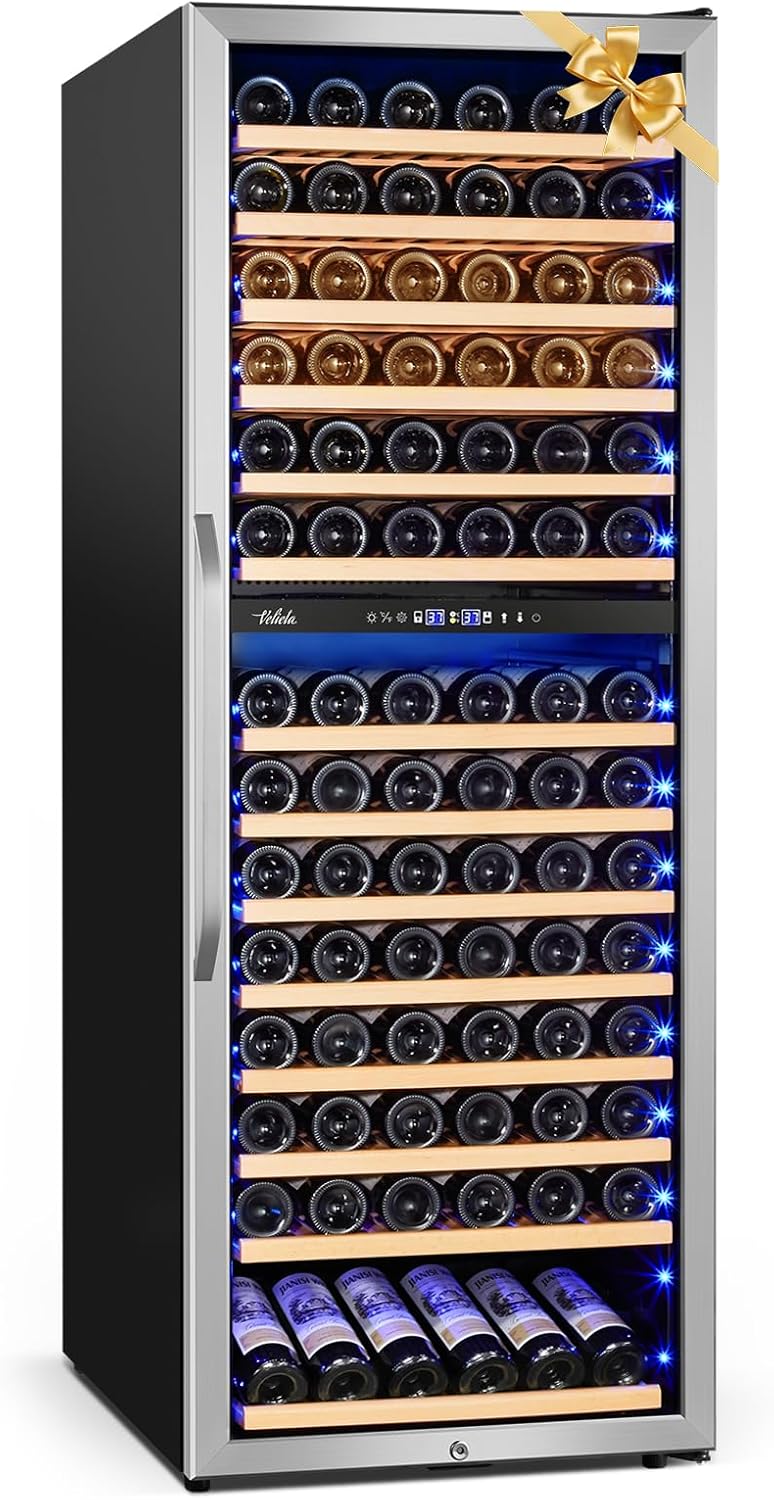
| Cooling Method | Compressor |
|---|---|
| Number Of Shelves | 14 |
| Number of Sections | 2 |
| Defrost System Type | Automatic |
| Capacity | 13.5 cubic feet |
This Velieta 24-inch dual-zone wine cooler is built for serious storage and controlled temperature management. It uses a compressor cooling system with two independently set zones so you can keep whites and reds at their ideal ranges (upper zone about 40 to 55 F, lower zone about 55 to 65 F). The cabinet offers a high bottle capacity with 14 wood and wire shelves and a lockable glass door with internal blue lighting that reduces UV exposure while making bottles easy to see. Controls are on an LED display and the unit includes automatic defrost, a temperature memory after power loss, and a sound reduction system intended to keep compressor noise low. In real-world garage use expect robust cooling performance and stable temperatures, though the compressor and size mean it is large and heavy and will need adequate ventilation and a dedicated circuit in some installations. The fridge is freestanding and matte stainless steel finished so it fits utility spaces, and removable shelves simplify reconfiguring for odd bottle shapes.
Best for: Buyers who prioritize consistent, professional-level temperature control and large capacity for long-term wine storage in a non-climate-controlled garage environment.
Less Ideal for: Not a good choice for buyers needing a compact, lightweight cooler for tight spaces or for occasional short-term chilling.
- True dual-zone compressor cooling for separate red and white storage
- Large internal capacity with 14 wood and wire shelves for many bottles
- LED digital controls with temperature memory after power loss
- Automatic defrost and sound reduction features for quieter, lower-maintenance operation
- Very large and heavy cabinet that requires sufficient floor space and ventilation
- Annual energy consumption is relatively high compared with small thermoelectric coolers
Verdict: Choose this unit if you need robust compressor cooling and large dual-zone capacity to store and protect a sizable wine collection in a garage setting.
EUHOMY BR013-110 Beverage Refrigerator

| Capacity | 3.2 cubic feet |
|---|---|
| Temperature Range | 37°F to 61°F |
| Cooling Method | Compressor |
| Number Of Shelves | 5 |
| Installation Type | Freestanding |
The EUHOMY BR013-110 is a compact 3.2 cubic foot beverage fridge built around a rotary scroll compressor and a tempered glass door, intended to store cans, bottles, or wine at controlled temperatures. You set the temperature with a touch panel in 1°F increments across a 37°F to 61°F range, and the interior LED and five removable shelves let you configure the space for cans or taller bottles. Its reversible door and adjustable feet make siting flexible, and the manufacturer rates noise around 36 dB during operation, which is quiet enough for a garage if the unit is placed on a solid level surface. Practical features include ETL certification and a manual defrost system that keeps the appliance simple to maintain. Expect reasonable energy use for a compressor unit and the ability to keep beverages at cellar or fridge temperatures. The trade-offs are its modest capacity—about 125 cans—and manual defrost, which means occasional maintenance and limited storage compared with larger cellar units.
Best for: Buyers who want a compact, reliable garage-friendly cooler that balances precise temperature control and flexible shelving for everyday beverage storage.
Less Ideal for: Not a good fit for collectors needing high-capacity long-term wine cellaring or those who want a frost-free, maintenance-free unit.
- Compressor cooling with a wide 37°F–61°F range for precise beverage or wine storage
- Five removable shelves let you reconfigure interior for cans or taller bottles
- Reversible door and adjustable feet make placement flexible in tight garage spaces
- Quiet operation around 36 dB suitable for a garage or nearby living area
- Manual defrost requires occasional thawing and wiping
- Capacity is limited to roughly 125 cans, so it is not ideal for large collections
Verdict: A compact, garage-friendly compressor beverage fridge that delivers precise temperature control and configurable shelving for practical everyday storage.
Feelfunn 24-Can Beverage Refrigerator
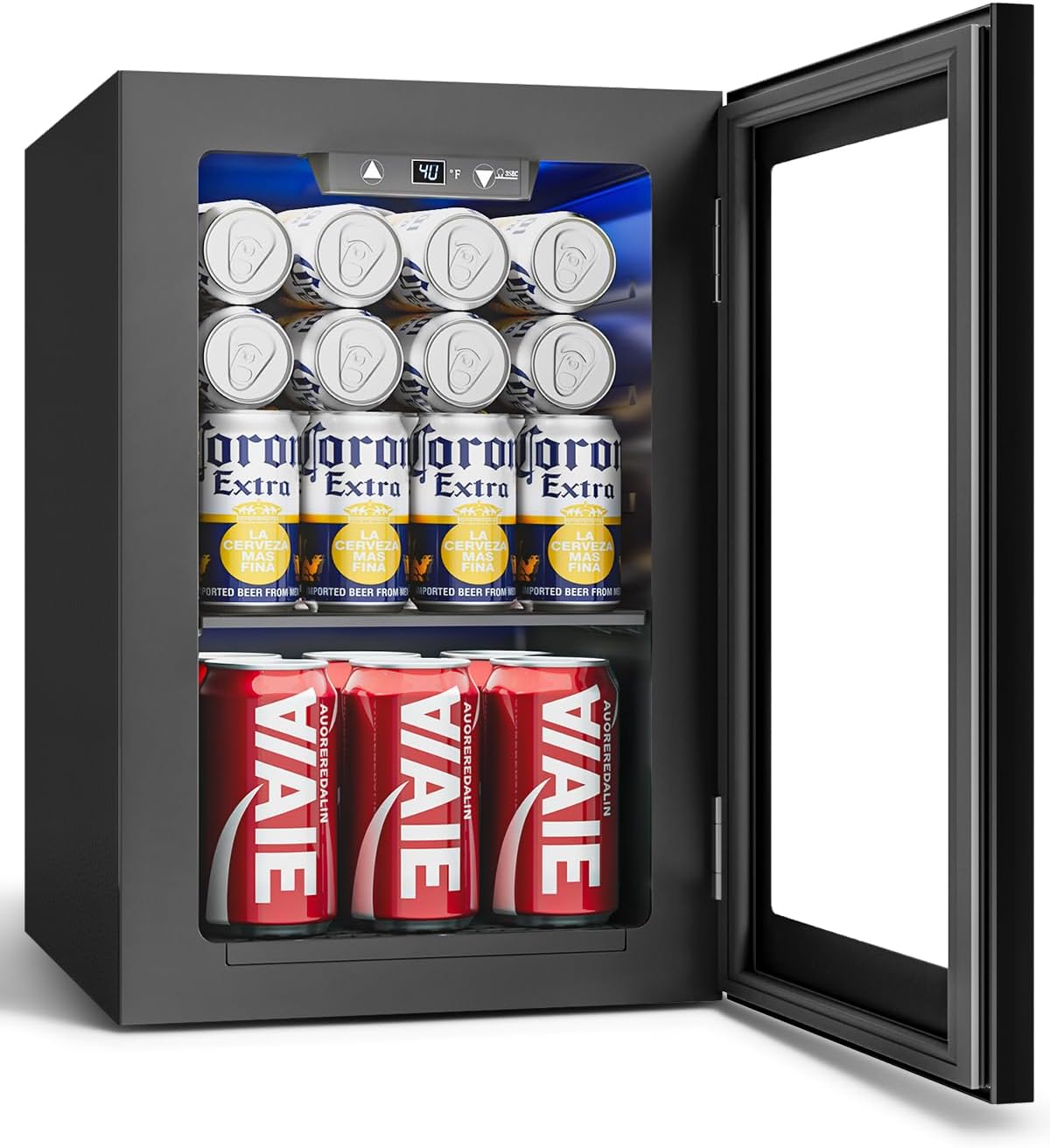
| Capacity | 0.6 cubic feet |
|---|---|
| Temperature Range | 40-61°F (4-16°C) |
| Noise Level | ≤38 dB |
| Cooling Method | Compressor |
| Power | 115 volts |
The Feelfunn 24-Can Beverage Refrigerator is a small compressor-based mini fridge built for drinks and limited bottle storage. It cools between 40 and 61°F using a 3D circulating air system and a compressor for faster, more even cooling than thermoelectric units, and it includes a removable shelf and interior LED lighting for flexible organization and visibility. Controls are digital with a clear LED display and a low-noise design rated at 38 dB or less, which keeps it suitable for bedrooms, offices, or dorm rooms. The unit is freestanding with adjustable feet and a sealed door to reduce frost and help maintain set temperatures. Trade-offs include a very small 0.6 cu ft capacity that limits how many bottles you can store and a manual defrost system rather than automatic defrost, so occasional maintenance is needed. For its size the fridge is energy conscious but buyers should allow upright resting time before first use to protect the compressor.
Best for: Buyers who want a compact, quiet beverage fridge for a bedroom, office, dorm, or small home bar and who prioritize steady cooling and low noise over large capacity.
Less Ideal for: Anyone needing to store many bottles or use the fridge as a primary food refrigerator should choose a larger capacity unit instead.
- Compressor cooling with 3D air circulation for faster, more uniform cooling
- Quiet operation rated at 38 dB or less, suitable for bedrooms and offices
- Adjustable temperature range (40–61°F) with digital LED controls
- Removable shelf and interior LED light for flexible storage and visibility
- Very small 0.6 cu ft capacity limits bottle and can storage
- Manual defrost requires periodic maintenance
Verdict: A very quiet, compressor mini fridge that delivers reliable, even cooling in a compact package ideal for small spaces and drink storage.
Vushine 24" Wine Fridge JCD-508QE
| Capacity | 177 bottles |
|---|---|
| Cooling Method | Compressor |
| Temperature Range Upper Zone | 41–54°F |
| Temperature Range Lower Zone | 54–64°F |
| Installation Type | Built-In or Freestanding |
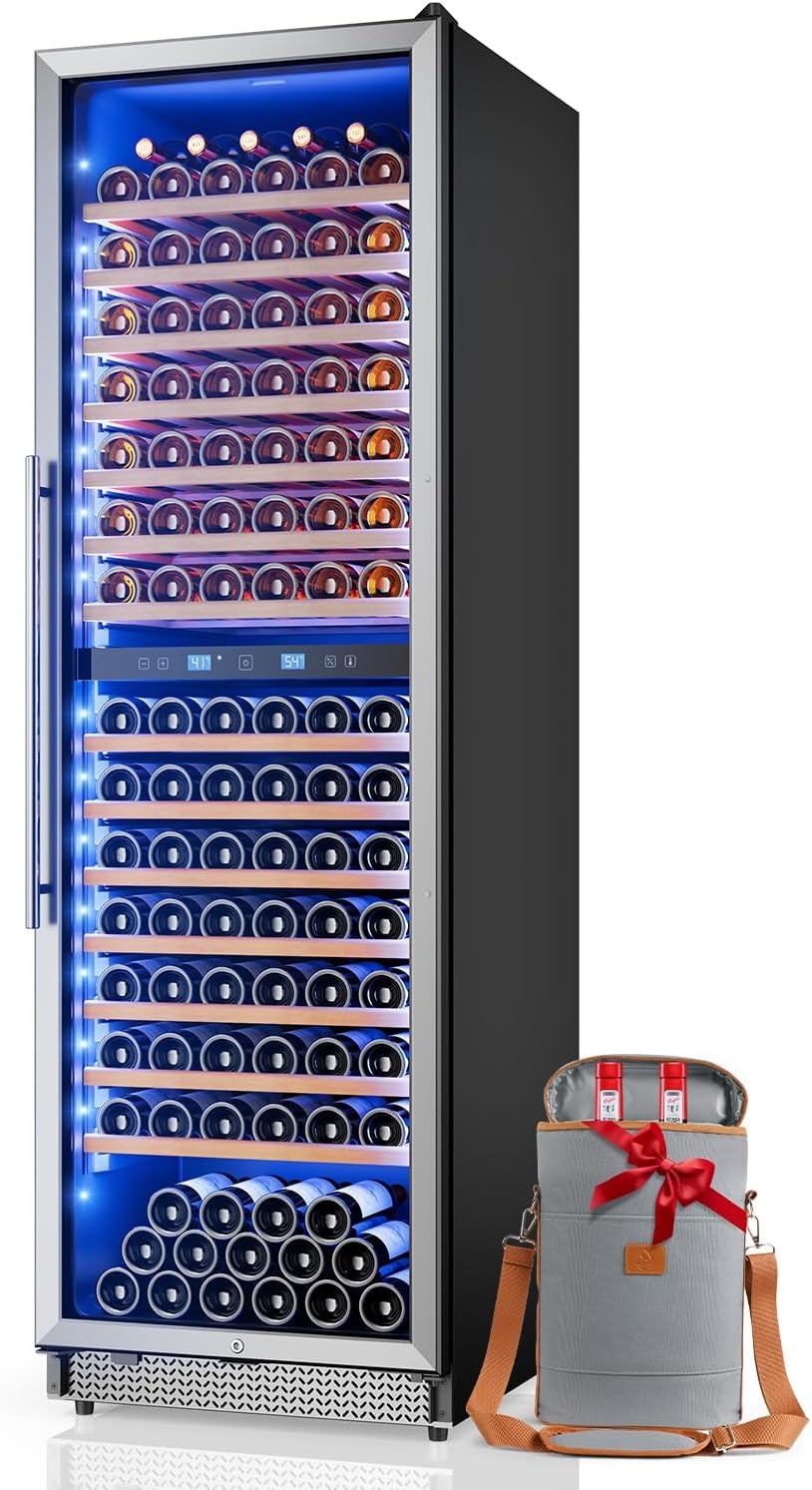
This Vushine 24-inch wine fridge is a large-capacity compressor cooler that divides storage into two independently controlled temperature zones for storing whites and reds. In daily use it functions as a cellar replacement: digital touch controls let you set the upper zone to about 41–54°F and the lower to 54–64°F, while a double-layer glass door and internal fans aim to keep temperature stable across its 14 adjustable wood shelves. The unit is built for flexibility with a built-in or freestanding installation, a left-hinged glass door with stainless trim, and automatic defrost for low-maintenance operation. Performance-wise the compressor cooling and reported low-noise design make it suitable for places like a garage where steady cooling and quieter operation matter, and the fridge restores set temperatures after power interruptions. Trade-offs are its large footprint and weight, which require a dedicated space and careful leveling, and the 24-inch width may be taller than typical undercounter openings, so plan installation accordingly.
Best for: Buyers who prioritize reliable, consistent long-term wine storage in unconventional spaces like a garage and who need a large-capacity, compressor-cooled cellar alternative.
Less Ideal for: Anyone with limited floor-to-ceiling or undercounter clearance or those seeking a compact countertop wine cooler should look at smaller units instead.
- Very large 177-bottle capacity for extensive collections
- Independent dual zones for storing different wine types at optimal temperatures
- Compressor cooling with automatic defrost for consistent cellar-like temperatures
- Digital touch controls and memory of last set temperature after power loss
- Built-in or freestanding installation offers placement flexibility
- Substantial size and weight require planning for garage placement and installation
- Left-hand door orientation may limit placement options in some layouts
Verdict: Choose this Vushine if you need a reliable, garage-ready compressor wine cooler with large dual-zone capacity for stable long-term storage.
hOmeLabs Beverage Refrigerator HME030065N

| Capacity | 3.2 cubic feet |
|---|---|
| Storage Capacity | Up to 120 cans |
| Temperature Range | 34°F-50°F |
| Cooling Method | Compressor |
| Defrost System Type | Automatic |
This hOmeLabs beverage refrigerator is a compact, performance-focused cooler for home bars, offices, or dorms. It uses a compressor-based cooling system with a whisper-quiet compressor and an adjustable digital thermostat that reaches as low as 34°F, so it reliably maintains cold, ready-to-drink beverages. The reinforced double-glazed glass door and bright internal LED let you see contents without opening the unit, and three removable chrome wire shelves give flexible storage for cans or bottles. Setup is simple: it is freestanding, has reversible door hinges, and adjustable feet to level on uneven floors. Practical benefits include steady cooling for long periods and quiet operation suitable for living spaces. Limitations are its compact 3.2 cubic foot capacity if you need larger chilled storage and moderately high annual energy consumption compared with some small fridge alternatives. If you plan to store a mixture of taller bottles and cans you will need to rearrange or remove shelves to fit larger items.
Best for: Buyers prioritizing reliable, low-noise cooling and precise temperature control who need a compact dedicated beverage fridge for a home bar, office, or dorm.
Less Ideal for: Those seeking a high-capacity refrigerator for entertaining large groups or users who need the most energy-efficient mini fridge available.
- Compressor cooling with whisper-quiet compressor for consistent, low-noise performance
- Digital touch temperature control down to 34°F for precise beverage chilling
- Reinforced glass door with bright interior LED for clear display without opening
- Three removable adjustable shelves for flexible can and bottle organization
- Reversible door and adjustable feet for flexible placement and installation
- 3.2 cubic foot capacity may be small for larger households or party use
- Annual energy consumption listed as 288 kWh per year, higher than some compact models
Verdict: Choose this unit when you want a compact, quiet beverage fridge that maintains precise, cold temperatures for ready-to-drink cans and bottles.
EUHOMY 25-Bottle Wine Cooler

| Capacity | 3.2 cubic feet |
|---|---|
| Cooling Method | Compressor |
| Temperature Range | 41°F to 64°F |
| Number Of Shelves | 6 |
| Installation Type | Freestanding |
The EUHOMY 25-bottle wine cooler is a compact, freestanding unit designed to store and display a small collection at controlled temperatures. It uses a compressor cooling system to deliver consistent, vibration-minimized cooling and an adjustable digital thermostat that ranges from 41°F to 64°F so you can set precise serving temperatures for reds, whites, or sparkling wine. Inside are five adjustable shelves plus a flat shelf and a bottom compartment that let you mix bottle sizes and rearrange storage. The glass door is double-pane to reduce temperature shifts and block UV, and an internal LED provides low‑heat illumination for easy viewing. Practical touches include a reversible door, leveling legs, built-in handle, and manual defrost. Expect straightforward installation as a freestanding unit, but note the 3.2 cu ft capacity and compact footprint limit large collections, and annual energy use is moderately high at the stated consumption level. For garage use the compressor design handles wider ambient swings better than thermoelectric units, though you should keep the cooler in a sheltered, temperature-stable part of the garage to maintain optimal performance.
Best for: Buyers who want a reliable, compressor-cooled wine cooler that holds a modest collection and offers precise temperature control without complicated setup.
Less Ideal for: People who need large-capacity storage, those seeking the lowest possible running cost, or buyers who want a built-in undercounter model instead of a freestanding unit.
- Compressor cooling provides consistent, low-vibration temperature control suitable for long-term storage.
- Digital touchscreen thermostat with a wide 41°F–64°F range for precise serving temperatures.
- Double-pane glass door blocks UV and reduces temperature fluctuation while displaying bottles.
- Adjustable shelving and additional flat/bottom shelf allow flexible bottle arrangements.
- Reversible door and leveling legs make placement easier in constrained spaces.
- 3.2 cu ft capacity limits storage to about 25 bottles, not suitable for larger collections.
- Annual energy consumption is relatively high compared with small thermoelectric models.
Verdict: A compact, compressor-cooled wine cooler that gives risk-averse buyers precise, display-friendly storage for a 25-bottle collection.
Choosing the Right Wine Cooler for Garages: Key Factors to Consider
Ambient Temperature Range
Garages often see wide daily and seasonal swings. A wine cooler intended for garage use must be able to operate reliably at higher and lower ambient temperatures than typical indoor appliances. Check the unit's specified operating ambient range and consider where your garage sits within that band.
If a cooler cannot maintain set temperatures when the surrounding air is very hot or very cold, wines can experience accelerated aging, freeze-related cork pushout, or stalled maturation. Knowing the expected garage range helps you choose a model with the right cooling margin or supplemental insulation.
Insulation and Door Sealing
Good cabinet insulation slows heat transfer and reduces how often the compressor cycles. For garage use, thicker panels and a well-sealed door matter more than in stable indoor locations because they buffer external swings and humidity changes.
Pay attention to door gasket quality and whether the door is solid or glass. Dual-pane or low-e glass and magnetic gaskets help keep temperatures steady and limit UV exposure. Tight sealing also reduces condensation and dust ingress, which preserve labels and reduce maintenance.
Cooling Method and Compressor Strength
Thermoelectric coolers are quieter and simple but generally offer less cooling capacity and poorer performance in hot ambients. Compressor-based systems provide stronger cooling and better recovery after door openings or heat spikes, which is important in garages that can get very warm.
Look for compressors rated for frequent cycling or continuous duty and for units that include adaptive fan control. These features help the system handle heavier loads without premature wear.
Vibration Isolation and Shelving
Excess vibration can disturb sediments, affecting taste in older bottles, and may accelerate cork dryness. For long-term storage in a garage where the compressor might work harder, vibration isolation and sturdy shelving are important.
Consider racks that cradle bottles and reduce contact with the cabinet floor, plus systems that dampen compressor vibration. Wooden or padded shelves can help minimize movement compared with thin metal wire racks.
Humidity Control
Relative humidity affects cork condition and label adhesion. Garages can be humid in summer and dry in winter. A cooler that maintains internal relative humidity near the midrange helps keep corks from drying out and labels from peeling.
Some units manage humidity passively through insulation and limited air exchange; others include features that limit moisture buildup. Avoid models that promote condensation inside the cabinet, as pooling can damage corks and labels.
Ventilation and Installation Flexibility
How and where a cooler is installed in the garage influences performance. Built-in or under-counter units require exhaust management, while freestanding models need clearance for airflow. In a garage, you may need to position the cooler away from direct sunlight, water sources, or flammable materials.
Check the ventilation clearances and whether the unit requires front or rear ventilation. Also plan for cabling, leveling on uneven floors, and protection from dust and pests to prolong service life.
Why Garage Storage Is Different
Garages are exposed to larger temperature and humidity swings than conditioned rooms. That makes passive indoor cooling strategies less effective and places more demand on a cooler's insulation and compressor. Understanding these environmental differences helps set realistic expectations for performance and maintenance.
Think about seasonal extremes in your area. A cooler that can maintain 55 to 58 degrees in a 70-degree room may struggle in a garage that reaches 90 degrees on summer afternoons. Planning for extremes reduces the risk of heat-related damage to valuable bottles.
- Greater ambient temperature variance increases compressor duty cycle
- Higher humidity can cause label damage and cork issues
- Dust and pests are potential service concerns in garages
Installation Tips for Garages
Place the cooler away from direct sunlight, water sources, and heavy dust paths. Ensure it sits level on a solid surface and allow manufacturer-specified clearance for ventilation. If your garage floor is uneven, use leveling feet to avoid vibration and door misalignment.
Consider elevating the unit slightly off bare concrete if your garage is prone to dampness. Keep the cooler under a small awning or in a shed-style enclosure inside the garage if extreme conditions are a concern, but maintain adequate airflow.
- Maintain recommended clearance for airflow
- Level the unit to minimize vibration and door sealing issues
- Protect from direct splashes and heavy dust accumulation
How to Monitor and Maintain Performance
Install a separate thermometer and a humidity gauge inside the cooler to verify that setpoints match internal conditions. Check these readings after the first 48 hours and again across seasonal changes to detect drift or insulation issues.
Clean door gaskets and ventilation intakes periodically and inspect racks and shelving for wear. If you notice rapid cycling, excessive vibration, or wide temperature swings, address airflow, location, or service before storing valuable bottles long-term.
- Use an independent thermometer and hygrometer for verification
- Clean vents and gaskets regularly to maintain sealing
- Watch for increased compressor runtime as a sign of stress
Bottle Organization Strategies for Garages
Organize bottles by drinking window and varietal to minimize frequent door openings. Keep active stocks near the front and long-term cellared bottles deeper inside. This reduces time the cooler spends recovering from temp disturbances.
Label shelves and use dividers or slotted racks to prevent bottles from rolling and to keep them from contacting the floor or cabinet sides where temperature variance may be greater.
- Store long-term bottles in the most thermally stable positions
- Minimize door openings by grouping by intended use
- Use racks that secure bottles and limit movement
Protecting Labels and Corks in Garage Conditions
Keep relative humidity in check to prevent corks from drying or labels from peeling. If ambient garage humidity is very high, inspect bottles occasionally for mold or label lift and remove or rehouse affected bottles.
Avoid storing bottles directly against the cooler walls where condensation can form. Use slotted shelves or separators to allow air circulation around bottles and reduce localized humidity pockets.
- Monitor internal humidity to protect corks and labels
- Avoid contact with cold or wet cabinet surfaces
- Rotate stock occasionally to check bottle condition
How We Chose the Best Wine Cooler for Garages
We focused on features that directly affect long-term bottle health in garage environments. Temperature control accuracy and the ability to maintain setpoints across hot and cold swings were primary filters because unstable temps accelerate aging and risk cork failure. Insulation and cabinet sealing were evaluated next, since thicker insulation and tight seals reduce energy load and protect internal temps from external swings common in garages. We also screened for cooling method and compressor robustness, preferring systems designed for continuous duty or with adaptive fan control for high-variation settings. Vibration and shelving design were considered because excess vibration and improper racking can disturb sediments and increase oxidation risk. Additional filters included humidity management, ventilation needs, and ease of service access. We excluded units intended only for indoor climate-controlled rooms or that explicitly list ambient requirements incompatible with garage ranges. Final selections balanced thermal performance, build durability, installation flexibility, and practical use features for garage storage.
Our full evaluation process is outlined in our review methodology.
FAQ
Can I use a standard indoor wine cooler in a garage?
Often indoor models have narrower operating ambient ranges and may struggle in hot or cold garages. Check the manufacturer's specified ambient range before placing an indoor-only appliance in a garage.
What temperature should a garage wine cooler be set to?
For mixed storage, aim for the classic cellar range near 55 degrees. If you store predominantly reds or whites, adjust slightly warmer or cooler, but prioritize a consistent setpoint that the unit can maintain in garage conditions.
How do I prevent condensation inside a garage wine cooler?
Ensure the door seals are tight and ventilation clearances are maintained. Improving insulation around the unit and avoiding direct sunlight or garage heat sources reduces condensation risk. Monitor humidity and address sources of excessive moisture in the garage.
Is vibration a real concern for wine stored in a garage?
Yes. Increased compressor workload in extreme ambients can raise vibration. Over time, this may disturb sediments in older bottles. Choose units with vibration dampening or sturdy cradling racks and avoid placing the cooler on shaky surfaces.
Do I need to service a garage wine cooler more often?
Maintenance frequency can increase if the unit runs more often to compensate for ambient swings. Regularly clean vents and gaskets, verify temperature and humidity, and inspect for dust buildup to keep the cooler operating efficiently.
Final Verdict
Choosing a wine cooler for garages comes down to matching equipment capability to the environment. Prioritize units with proven temperature stability, robust compressors, good insulation, and features that limit vibration and moisture. Planning installation and monitoring internal conditions will extend bottle life and protect labels. Balance tradeoffs between cooling strength and energy use, and select a setup that meets your local garage extremes. With the right cooler and placement, you can store and enjoy bottles reliably even in a non-climate-controlled garage.