
Note: This article contains affiliate links. If you click on these links and make a purchase, we may earn a small commission at no extra cost to you. This helps support our research and content. Read our full affiliate disclosure here.
Picking the right wine cooler under $200 matters when you want reliable temperature control and sensible storage without overspending. You need a unit that keeps bottles at steady serving temperatures, fits the space you have, and minimizes vibration and light exposure that can degrade wine over time. This guide presents seven shortlisted wine coolers that meet those core needs in the budget segment. We evaluated performance, capacity, and user-facing features to help you choose the cooler that fits your routine and space. Read on to see how each option stacks up against practical criteria buyers care about.
Top Picks at a Glance
| Best Overall The best all-around choice for most situations | Antarctic Star Wine Cooler 1.7 Cu Ft |  |
| Best Quality Built to a higher standard if you want something more solid | BLACK+DECKER 12-Bottle Wine Fridge BD60336 |  |
| Best Value The sweet spot between price and what you get | ROVSUN 18-Bottle Wine Fridge |  |
| Best Budget The cheapest option that still gets the job done reliably | Icyglee Beverage Refrigerator WC-6B |  |
| Top Rated A top-rated pick with lots of positive feedback | Bonnlo 16-Bottle Wine Fridge |  |
| Most Popular A crowd favorite that many people choose with confidence | EUHOMY BR013-110 Beverage Refrigerator |  |
| Best Seller A high-volume bestseller chosen again and again | EUHOMY 18L Wine Fridge |  |
Antarctic Star Wine Cooler 1.7 Cu Ft

| Capacity | 1.7 cubic feet |
|---|---|
| Bottle Capacity | 16 bottles |
| Can Capacity | 68 cans |
| Temperature Range | 40°F–61°F |
| Defrost System Type | Manual Defrost |
This Antarctic Star wine cooler is a compact freestanding unit intended for chilled beverages and wine rather than food storage. It offers 1.7 cubic feet of capacity with two adjustable shelves so you can fit standard bottles or stacks of cans, and the digital thermostat lets you set temperatures between 40°F and 61°F. The compressor-based cooling and double-pane tempered glass door with an airtight seal help keep temperatures steady while the internal blue LED makes it easy to see contents at night. Setup is simple—place it on a countertop or under a counter and plug in—though defrosting is manual. The cooler is relatively quiet in operation, which suits shared spaces like home bars, dorm rooms, or offices. Practical limitations are its small footprint and single-zone design, so it is best for short-term chilling or small collections rather than long-term wine aging or storing large-format bottles. The unit delivers good features for its size and budget-focused price point if you need a reliable compact beverage fridge.
Best for: Buyers who want an affordable, compact beverage fridge for a small home bar, office, or dorm and prioritize easy temperature control and a tidy display over long-term wine cellaring.
Less Ideal for: Collectors with large wine inventories, those needing dual-zone temperature control, or anyone planning to age bottles long term should choose a larger or specialized cellar instead.
- Holds up to 16 bottles or 68 cans in a compact 1.7 cu ft footprint
- Digital thermostat with 40°F–61°F range for straightforward temperature control
- Adjustable shelving lets you arrange space for bottles or cans
- Double-pane tempered glass door and airtight seal improve insulation
- Quiet compressor operation suitable for living spaces
- Manual defrost requires occasional maintenance
- Single temperature zone is not suitable for simultaneously storing red and white at different temperatures
Verdict: A compact, budget-friendly beverage cooler that gives reliable compressor cooling and simple digital control for small collections and convenience chilling.
BLACK+DECKER 12-Bottle Wine Fridge BD60336

| Capacity | 12 Bottles |
|---|---|
| Temperature Range | 46°F – 66°F |
| Cooling Method | Thermoelectric |
| Shelves | 5 removable chrome racks |
| Power | 115 volts |
The BLACK+DECKER 12-bottle wine fridge is a small freestanding cooler that uses thermoelectric cooling to keep bottles between 46 and 66°F. It is set up with five removable chrome racks and an LED temperature display for simple electronic control, plus an interior light and a recessed handle for a tidy look. Thermoelectric technology means quieter operation and low vibration, which helps short- to medium-term storage and entertaining use in living rooms, home bars, or offices. The mirrored glass door blocks UV light and gives the unit a sleek, space-conscious presence on a countertop or floor. Because it is thermoelectric rather than compressor-based, it is more energy efficient and avoids refrigerants, but it will struggle to maintain very low temperatures in hot ambient rooms and is not intended for long-term cellar aging. Its 12-bottle capacity and compact footprint make it a practical, affordable option for buyers who want a stylish secondary cooler rather than a high-end cellar-grade appliance.
Best for: Buyers on a tight budget who want a tidy, low-noise secondary cooler for entertaining or short-term bottle storage and who prioritize style and compact footprint over professional-grade performance.
Less Ideal for: Collectors who need long-term, cellar-grade temperature stability or anyone placing the unit in very warm rooms where compressor cooling is required.
- Compact 12-bottle capacity fits small spaces and counters
- Thermoelectric cooling provides quiet, low-vibration operation
- Electronic temperature control with LED display for easy set-up
- Mirrored glass door blocks UV light and adds a modern look
- Five removable chrome racks and interior light improve access and presentation
- Thermoelectric system cannot cool as aggressively as compressor units in hot rooms
- Not designed for long-term cellar aging or strict temperature stability
Verdict: A budget-friendly, compact wine cooler that delivers quiet, low-vibration chilling and a stylish mirrored door for short-term storage and entertaining.
ROVSUN 18-Bottle Wine Fridge

| Capacity | 1.8 cubic feet |
|---|---|
| Size | 18 Bottle |
| Temperature range | 41-64°F |
| Cooling Method | Compressor refrigeration |
| Power | 115 volts |
This ROVSUN 18-bottle wine fridge uses a compressor refrigeration system to cool bottles faster and across a wider temperature range than thermoelectric units, making it suitable for storing reds, whites, champagne, or beer between 41 and 64°F. It is designed as a freestanding unit with removable chrome-plated metal shelves, a soft LED interior light, and an exterior touch control panel so you can adjust temperature without opening the door. The compressor is described as whisper quiet and the double-layer glass door plus good sealing help maintain steady internal temperatures. Practical features include an automatic defrost system, a keyed lock, and ETL specification compliance. Expect typical small-fridge trade-offs such as limited internal capacity for oversized bottles and the footprint of a 30-inch-tall cabinet, but the compressor cooling and touch controls deliver reliable, consistent performance for everyday home use.
Best for: Buyers who want a compact, budget-friendly wine cooler that prioritizes reliable compressor cooling and easy temperature control for everyday home use.
Less Ideal for: Collectors needing storage for large-format or long-term cellaring should look at larger or dedicated wine cellar options instead.
- Compressor refrigeration provides faster, more stable cooling than thermoelectric designs
- External touch control panel lets you change temperature without opening the door
- Removable chrome-plated metal shelves for flexible bottle arrangement
- Double-layer glass door with LED light and good sealing helps keep temperature steady
- 18-bottle capacity may not fit oversized or international-format bottles
- Freestanding footprint requires planning in tight spaces
Verdict: A compact, budget-conscious compressor wine fridge that delivers faster, steadier cooling and simple touch controls for everyday home wine storage.
Icyglee Beverage Refrigerator WC-6B

| Capacity | 0.6 cubic feet |
|---|---|
| Cooling Method | Compressor |
| Temperature Range | 40–61°F |
| Defrost Type | Manual Defrost |
The Icyglee WC-6B is a small compressor beverage fridge designed to chill cans and a few bottles in tight spaces. It offers one removable wire shelf so you can stack cans or lay a couple of wine bottles flat, and a temperature dial that ranges roughly from 40 to 61°F for basic beverage and wine chilling. Because it uses an R600 compressor it cools faster and more consistently than thermoelectric units, and the manual defrost and tight door seals help keep internal temps steady. The compact freestanding design and mirrored black door make it easy to tuck under a counter, in an office, or next to a home bar, and the claimed noise level under 40 dB keeps operation unobtrusive. Limitations include very small capacity — listed as 18 liters or 0.6 cu ft — so it is best for singles, couples, or very light entertaining, and there are no advanced controls like a digital thermostat or dual zones. For buyers wanting an affordable, space-saving compressor cooler for a handful of drinks, this covers the basics well.
Best for: Buyers looking for an inexpensive, space-saving beverage cooler to hold a small rotation of drinks in a dorm, office, or compact home bar.
Less Ideal for: Anyone who needs larger capacity, multi-zone temperature control, or a dedicated wine cellar solution for long-term bottle storage.
- Compressor cooling (R600) for faster, more consistent chills than thermoelectric units
- Removable shelf lets you switch between cans and a few bottles
- Very compact freestanding footprint fits tight spaces and under counters
- Quiet operation reported under 40 dB for low-noise placement
- Very small internal capacity (0.6 cu ft) limits storage to about a dozen cans or a few bottles
- No digital thermostat or dual-zone control for precise wine storage
Verdict: A budget-friendly, compressor-cooled mini beverage fridge that saves space while reliably chilling a small number of drinks.
Bonnlo 16-Bottle Wine Fridge

| Capacity | 1.7 cubic feet / 16 bottles |
|---|---|
| Temperature range | 41–64°F |
| Cooling method | Compressor |
| Refrigerant | R-600A |
| Shelves | 6 metal racks |
This compact Bonnlo wine fridge uses a compressor cooling system to keep a small collection at a steady temperature between 41 and 64°F, making it suitable for both reds and whites. It is freestanding and fits on counters or in tight spaces while offering six metal shelves that hold up to sixteen Bordeaux-style bottles. The front digital touchscreen and LED display make setting and monitoring temperature straightforward, and the soft interior LED lighting lets you see labels without harsh light exposure. The unit includes a lock for security and an energy-efficient rotary scroll compressor that handles ambient heat better than thermoelectric alternatives. Trade-offs are typical for its price and size: it is a single-zone cooler so you cannot store wines at two different temperatures, and vibration or noise from the compressor can be more noticeable than in larger, premium models. For buyers who need a small, affordable, factory-style wine refrigerator with reliable cooling and simple controls, this model covers the essentials well.
Best for: Buyers on a tight budget who want a small, reliable wine fridge to store a modest collection at proper cellar temperatures for everyday drinking and short-term aging.
Less Ideal for: Collectors who need multi-zone temperature control, large-capacity storage, or whisper-quiet, ultra-low-vibration operation should consider higher-end or multi-zone alternatives.
- Compressor cooling provides consistent temperatures suitable for long-term storage and aging
- Digital touchscreen and LED display for easy temperature setting and monitoring
- Compact freestanding design fits small kitchens or apartments
- Interior LED lighting illuminates bottles without harsh light that can fade labels
- Includes a lock for added security
- Single-zone design does not support storing different wines at separate temperatures
- Compressor models can produce more vibration and noise than thermoelectric coolers
Verdict: A budget-friendly single-zone compressor wine cooler that reliably chills up to 16 bottles with simple digital controls.
EUHOMY BR013-110 Beverage Refrigerator

| Capacity | 3.2 cubic feet |
|---|---|
| Temperature Range | 37°F to 61°F |
| Cooling Method | Compressor |
| Number Of Shelves | 5 |
| Installation Type | Freestanding |
This EUHOMY 3.2 cu ft beverage refrigerator is a compact compressor fridge built to store cans and bottles with steady cooling and easy organization. It uses a compressor cooling system and an internal circulation fan to keep temperature uniform, while a digital touchscreen lets you set temperatures between 37°F and 61°F. Five removable wire shelves slide into multiple positions so you can arrange cans or taller bottles, and the reversible double-layer glass door with a tight seal and foam insulation helps maintain a stable interior climate. For truck use, the unit is freestanding with adjustable feet and a built-in handle for repositioning, and the manufacturer rates daily energy use at about 0.69 kWh and noise around 36 dB, so it runs quietly. Expect the compressor design to handle frequent door openings and warm cabin starts better than a thermoelectric model, but note it is a full compressor appliance and will need secure leveling and stable placement in a truck to avoid vibration issues during long hauls.
Best for: Drivers who prioritize a steady, fridge-style cooling system for keeping drinks cold over long shifts and want a configurable interior and precise temperature control.
Less Ideal for: Drivers who need a purpose-built 12V automotive fridge or an appliance specifically certified for constant vibration and mobile installation should consider truck-rated units instead.
- Compressor cooling with circulation fan for even, reliable temperatures
- Digital touchscreen temperature control from 37°F to 61°F for precise settings
- Five removable shelves for flexible can and bottle organization
- Reversible double-layer glass door and tight seal to retain cold and reduce light exposure
- Relatively quiet operation (~36 dB) suitable for sleeper cabs
- Freestanding compressor units require secure mounting to minimize vibration in trucks
- Not specifically rated for mobile or on-road use which may affect long-term reliability in heavy vibration environments
Verdict: Choose this compressor mini fridge if you want reliable, fridge-quality cooling and precise temperature control for long-haul use, provided you secure it properly in your truck.
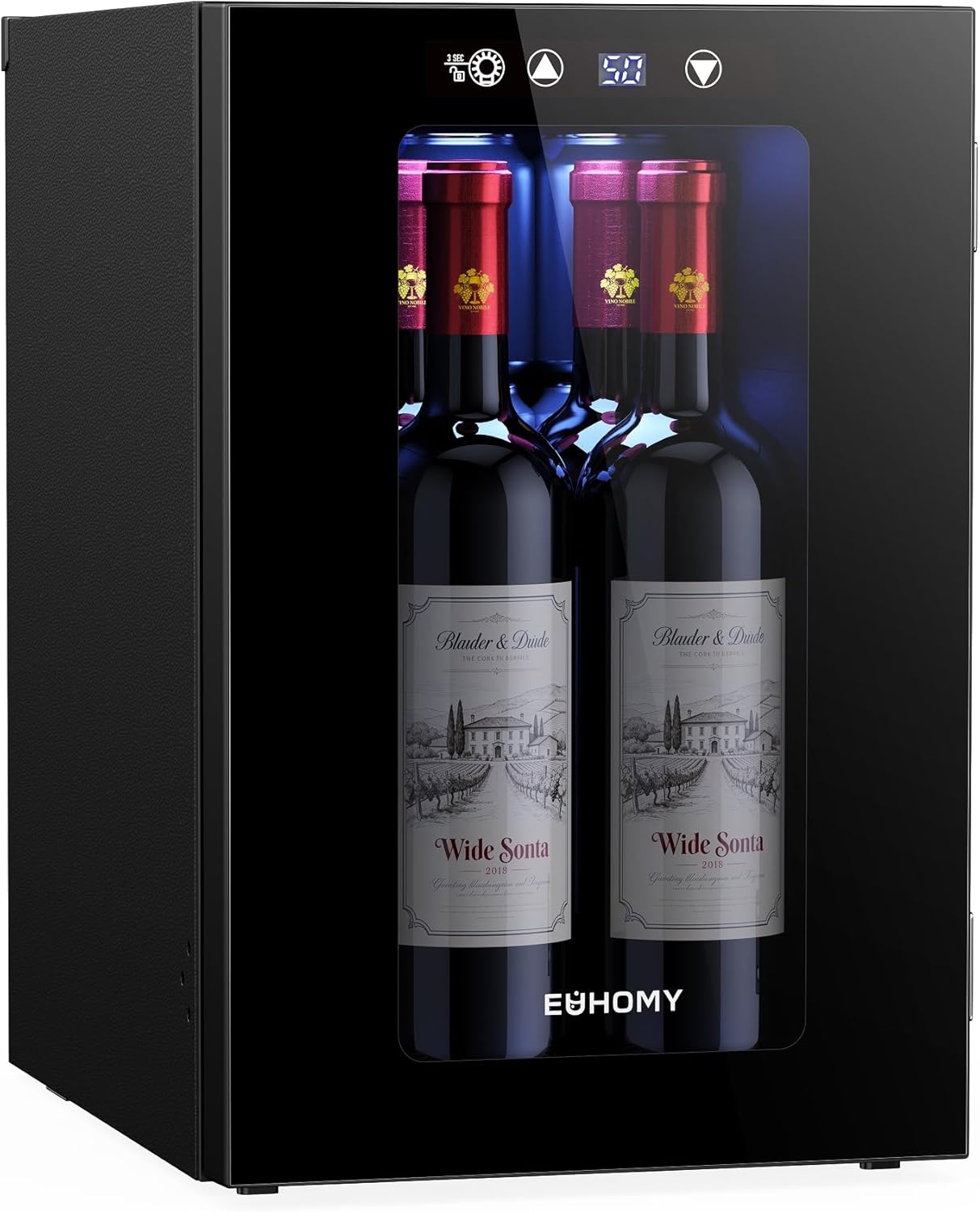
EUHOMY 18L Wine Fridge
| Capacity | 18 liters |
|---|---|
| Cooling Method | Compressor |
| Temperature Range | 40°F to 61°F |
| Number Of Shelves | 1 |
| Installation Type | Countertop |
The EUHOMY 18L Wine Fridge is a small compressor-cooled cooler designed for countertop or freestanding use to store a handful of bottles and cans. It offers a digital touchscreen that sets temperatures between 40°F and 61°F, a double-pane glass door with LED interior lighting, and one removable shelf so you can fit bottles or stacks of cans. The compressor system provides steady cooling and the manufacturer states quiet operation around 38 dB, which helps the unit sit beside a bar, office, or kitchen without creating a constant noise nuisance. Practical benefits include the ability to keep red, white, sparkling wine, or beer at ready-to-serve temperatures and the compact footprint that fits tight spaces. Limitations to expect are the very small 18 L capacity that only holds about four 750 ml bottles or up to two dozen cans when arranged differently, manual defrosting, and a single door orientation without reversible mounting, so placement options are somewhat constrained.
Best for: Buyers who want a reliable, compact cooler to keep a small selection of wines or beverages at controlled serving temperatures without complicated setup or large space requirements.
Less Ideal for: Those who need to store larger collections, organize many bottle sizes, or require a built-in undercounter installation should look at larger-capacity or different-format coolers.
- Digital touchscreen with adjustable 40°F–61°F temperature range for precise control
- Compressor cooling for consistent, dependable chilling compared with thermoelectric units
- Compact countertop form that fits small kitchens, dorms, or home bars
- Double-pane glass door with LED lighting showcases contents while blocking UV rays
- Very limited 18 L capacity suitable for only a few bottles or a small can stash
- Manual defrost requires occasional maintenance and can be inconvenient
Verdict: A compact, compressor-cooled countertop wine fridge that delivers quiet, accurate temperature control for buyers who need dependable short-term storage for a few bottles.
Choosing the Right Wine Cooler: Key Factors to Consider
Temperature Range
The cooler's temperature range determines which styles of wine you can store and serve. A unit that can reach low temperatures around 40 to 45°F works for sparkling and lighter white wines, while the ability to hold mid-50s to low-60s°F accommodates fuller whites and many reds. Buyers should check the manufacturer's stated minimum and maximum temperatures and prefer models with a range that covers the types of wine they most often keep.
If you plan to use the cooler for both short-term storage and serving, choose a model with a flexible range rather than a single fixed setting. Limited ranges reduce versatility and may force frequent transfers between appliances.
Temperature Stability
Stability is different from range. A cooler that reaches a target temperature but fluctuates wildly can damage wine over weeks. Look for units with thermostats that hold temperature within a couple degrees and systems that avoid wide cyclical swings. Compressor-based coolers typically offer tighter control than basic thermoelectric units, but well-designed thermoelectric designs can still be adequate for short-term storage.
Pay attention to how the unit responds to door openings and room-temperature changes. Models with solid door seals, internal fans for air circulation, and consistent control logic will keep the internal environment steadier, which matters for preserving delicate aromas and aging potential.
Storage Capacity and Layout
Capacity numbers alone do not tell the whole story. Bottle count is useful as a baseline, but shelving style, bottle spacing, and internal height affect what fits. Buyers who store a mix of Bordeaux, Burgundy, or larger magnum bottles should inspect shelf spacing and whether shelves slide or are fixed. Horizontal storage that cradles bottles reduces movement and ensures corks stay moist.
Also consider footprint and orientation. Countertop or freestanding units need different interior layouts than built-in or under-counter designs. Make sure the usable internal volume fits your typical bottle mix rather than relying solely on the maximum advertised bottle count.
Noise and Vibration
Noise matters if the cooler will sit in a living area, kitchen, or home office. Compressor-based coolers tend to be louder and can produce vibration that disturbs sediment in older bottles. Thermoelectric models are generally quieter and vibration-free but may be less effective at precise cooling in warm rooms.
Check reported decibel levels when available, and look for design features such as rubber mounting, decoupled compressors, or vibration-damping shelves. If the unit will be in a quiet space, prioritize lower noise and minimal vibration even if that slightly reduces capacity.
Door and Light Features
Door design affects both temperature retention and light exposure. Tinted or UV-resistant glass helps limit harmful light that can degrade wine, while good door seals prevent warm air infiltration. Solid doors offer the best protection but reduce visibility into the unit.
Interior lighting is convenient for quick checks, but bright or unfiltered bulbs can harm wine. Prefer models with low-heat LED lighting and the option to turn lights off. Magnetic or tight gasket seals help preserve temperature stability when the door is closed.
Ease of Use and Maintenance
Controls, shelving access, and cleaning requirements determine how pleasant the unit is to live with. Digital controls and clear readouts make temperature setup straightforward, while hard-to-reach dials can lead to incorrect settings. Removable or sliding shelves simplify loading and cleaning.
Consider how filters or condensers are accessed for cleaning and whether the unit needs periodic defrosting. Energy efficiency and simple user interfaces reduce the hands-on time needed to keep the cooler operating reliably.
Where to Put a Budget Wine Cooler
Placement affects performance. Keep the cooler away from direct sunlight, heat sources, and poorly ventilated closets. Even budget coolers need clearance for airflow, especially compressor models that exhaust heat from the back or sides.
Countertop units are convenient for small collections, while under-counter or freestanding units require more planning for ventilation and door swing. Measure the intended space and account for required clearance described in the manual.
- Allow recommended clearance behind and above the unit for ventilation
- Avoid locations near ovens, dishwashers, or heating vents
- Choose a spot with stable ambient temperature for best cooling performance
Thermoelectric Vs Compressor Cooling
Thermoelectric coolers use a heat pump effect and are typically quieter and produce less vibration. They work best in moderate room temperatures and with smaller loads. For users who prize silence and are storing wine short term, a well-built thermoelectric model can be a good choice.
Compressor-based units generally handle higher ambient temperatures and larger capacities better. They often achieve lower internal temperatures and tighter control, which helps for mixed collections, but they can be louder and produce more vibration.
- Thermoelectric: quieter, low vibration, best for small collections in stable rooms
- Compressor: stronger cooling, better for higher ambient temps and larger loads
Setting and Monitoring Temperature
Set the cooler to the target serving temperature for the wines you mostly drink, then allow the unit at least 24 hours to stabilize before adding a full load. Use an internal thermometer to verify the cooler's readout, as some controls are optimistic about actual internal conditions.
Monitor temperatures during the first week of use and after location changes. Door openings cause short-term rises, so allow recovery time and avoid frequent, prolonged openings when trying to maintain a stable environment.
- Verify factory settings with an independent thermometer
- Allow 24 to 48 hours for stabilization after setup
- Minimize door openings to reduce temperature swings
Maximizing Capacity Without Compromising Performance
To fit more bottles without harming temperature performance, stagger placement and avoid stacking bottles directly on top of each other. Use the supplied shelves as intended and remove only when necessary. Overpacking can obstruct airflow and increase the compressor duty cycle, reducing efficiency and increasing wear.
If you need to store oversized bottles, reserve space for them or remove a shelf. Think about typical bottle mix and leave room for new purchases so the unit does not run at full capacity constantly.
- Do not block internal air vents with bottles
- Leave some empty space for air circulation
- Adjust shelving to accommodate nonstandard bottle shapes
Routine Care and Troubleshooting
Keep the cooler clean by wiping interior surfaces with a mild detergent and removing any spills promptly. Check door gaskets for wear and replace them if they no longer seal tightly. Periodically dust the exterior grille and condenser area to maintain efficient heat exchange.
If you notice persistent temperature swings or loud noise, check that the unit is level, that vents are clear, and that the door seal is intact. Many common problems stem from poor placement or blocked airflow rather than component failure.
- Clean interior and exterior vents every few months
- Check door gasket condition regularly
- Level the unit to reduce vibration and noise
How We Chose the Best Wine Cooler
We narrowed the field to compact wine coolers that cost under $200 and deliver usable temperature control for wine storage and short-term cellaring. Selection prioritized units with reliable thermostat range suitable for typical red and white serving temperatures, stable internal temperature with minimal fluctuation, and storage configurations that maximize usable bottle capacity without wasting space. We also favored models with low vibration cooling systems, interior lighting options that do not expose wine to excessive UV, and straightforward controls that owners can set and maintain. Excluded from consideration were full-size refrigeration units, single-purpose beverage fridges without wine-oriented shelving, and products that lacked clear temperature specifications. We examined build features such as door sealing, shelving layout, compressor versus thermoelectric cooling, and reported noise and vibration levels. Final choices emphasize the combination of temperature performance, usable capacity, energy efficiency, and user convenience that matters most to buyers shopping on a budget.
Our full evaluation process is outlined in our review methodology.
FAQ
Can a wine cooler under $200 properly age wine?
Short-term aging or storage for months can be acceptable if the unit holds a stable, appropriate temperature and has minimal vibration. Long-term cellaring for years typically requires more precise control and humidity management than budget units provide.
Will a small wine cooler fit standard Bordeaux bottles?
Many compact coolers accommodate standard Bordeaux bottles, but spacing varies. Check shelf width and depth; adjustable or sliding shelves increase the chance that different bottle shapes will fit comfortably.
How often should I clean a wine cooler?
Wipe the interior as needed when spills occur and perform a light cleaning every few months. Also dust exterior vents and check seals regularly to maintain efficient cooling and hygiene.
Is a glass door a bad idea for wine storage?
Tinted or UV-resistant glass doors are acceptable for short- to medium-term storage because they allow visibility without exposing wine to direct sunlight. For long-term aging, a solid door provides better protection from light exposure.
Are thermoelectric coolers quieter than compressor models?
Generally yes. Thermoelectric units have fewer moving parts and produce less vibration, making them quieter. However, compressor models can vary widely in noise level depending on build quality and vibration control.
Final Verdict
When choosing a wine cooler under $200, prioritize temperature range and stability first, then consider storage layout, noise, and convenience features. Expect tradeoffs: quieter thermoelectric units may be less robust in hot rooms, while compressor models deliver stronger cooling but can be louder. Focus on the criteria you value most—consistent temperature control for short-term storage, usable shelving for your bottle mix, and a footprint that suits your space—to select a unit that meets your everyday serving and modest storage needs.