
Note: This article contains affiliate links. If you click on these links and make a purchase, we may earn a small commission at no extra cost to you. This helps support our research and content. Read our full affiliate disclosure here.
Baking challah at home rewards you with rich flavor and soft, springy crumb, but the dough's high egg and sugar content can challenge standard bread machines. If you want reliably even kneading, consistent rise, and enough capacity to braid full loaves, the right bread maker makes a big difference. This guide covers seven shortlisted bread makers for baking challah, chosen for their ability to handle enriched doughs and produce even loaves. Below you will find why each machine made the list and the evaluation criteria we used, so you can match features to how you bake and the size of challah you usually make.
Top Picks at a Glance
| Best Overall The best all-around choice for most situations | Zojirushi Home Bakery Virtuoso Plus BB-PDC20BA |  |
| Best Quality Built to a higher standard if you want something more solid | Breville Custom Loaf BBM800XL | 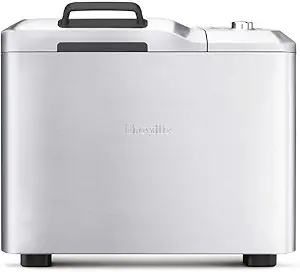 |
| Best Value The sweet spot between price and what you get | Neretva 2LB Bread Maker PE8866SU |  |
| Best Budget The cheapest option that still gets the job done reliably | Elite Gourmet Programmable Bread Maker EBM8103B |  |
| Top Rated A top-rated pick with lots of positive feedback | Saluna Bread Maker BM901 |  |
| Most Popular A crowd favorite that many people choose with confidence | Cuisinart Bread Maker CBK-110P1ES |  |
| Best Seller A high-volume bestseller chosen again and again | OSIPOTO Bread Maker BM8205 | 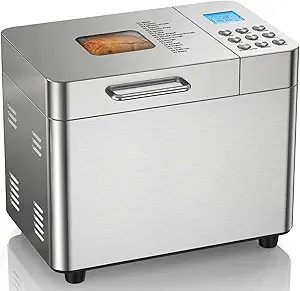 |
Zojirushi Home Bakery Virtuoso Plus BB-PDC20BA

| Capacity | 2 pounds |
|---|---|
| Wattage | 700 watts |
| Voltage | 120 volts |
| Number of Programs | 7 |
The Zojirushi Home Bakery Virtuoso Plus is a premium countertop breadmaker built to deliver consistent, rectangular 2-pound loaves with minimal fuss. It uses dual heaters (bottom and lid) and double kneading blades to improve rise and even browning, and the large viewing window and clear LCD make program selection straightforward. The machine includes seven preset courses that cover whole wheat, multigrain, gluten free and rapid baking, plus three crust shades and a 13-hour delay timer so you can bake to a schedule. Practical extras include a removable nonstick pan, two kneading blades for better dough development, and a recipe booklet with measuring tools. Trade-offs are its relatively heavy weight and larger footprint compared with simpler models, and hand-wash care for components rather than dishwasher-safe parts. For bakers who want reliable, bakery-style loaves with flexible timing and healthy-bread options, this model performs very well.
Best for: Home bakers who want a dependable, versatile machine for everyday loaves and healthier recipes and who value consistent crust and crumb without manual oven baking.
Less Ideal for: Buyers who need a compact, lightweight appliance for small kitchens or who prefer fully dishwasher-safe components should consider a simpler model.
- Dual heaters and double kneading blades promote even baking, good rise, and consistent crust color
- Seven preset programs cover whole wheat, multigrain, gluten-free, and rapid baking needs
- 13-hour delay timer lets you schedule fresh bread to finish when you want it
- Removable nonstick pan and clear viewing window simplify monitoring and cleanup
- Heavier and bulkier than basic bread machines, taking more counter space
- Bread pan and accessories require hand washing rather than dishwasher cleaning
Verdict: Choose this Zojirushi if you want a reliable, feature-rich breadmaker that produces consistent 2-pound loaves with excellent crust control and flexible timing.
Breville Custom Loaf BBM800XL

| Capacity | 2.5 pounds |
|---|---|
| Wattage | 830 watts |
| Voltage | 120 volts |
| Number of Programs | 13 |
The Breville Custom Loaf BBM800XL is built for serious home bakers who want tight control over the baking process. It offers 13 automatic programs plus nine user-definable recipe slots so you can create and save custom loaf profiles, which is useful for tailoring dough and bake times for enriched breads like challah. The machine mixes, kneads and proofs on a collapsible kneading platform that folds away before bake so the loaf can expand without leaving a large paddle hole. An automatic dispenser times additions such as raisins or nuts and a clear LCD shows program progress; the unit also includes a fixed paddle for jam cycles. Power-interruption protection holds settings for up to 60 minutes, and the 830-watt motor handles dense doughs reliably. Trade-offs are its relatively large footprint and the need to hand-wash some parts, but for bakers focused on consistent, customizable loaves this machine turns complex recipes into repeatable results.
Best for: Bakers who prioritize consistent, bakery-style results and want to customize programs and timings to perfect enriched recipes like challah.
Less Ideal for: Casual users who want a compact, low-maintenance machine or who rarely bake enriched loaves should consider simpler, smaller models instead.
- Extensive programmable options including nine custom recipe slots for precise control
- Collapsible kneading paddle reduces large holes and improves crumb on enriched breads
- Automatic fruit and nut dispenser adds mix-ins at the correct time
- 60-minute power interruption protection preserves progress during outages
- 830-watt motor capable of handling dense or enriched doughs
- Large countertop footprint compared with compact models
- Some components require hand washing rather than being dishwasher-safe
Verdict: Choose the Breville Custom Loaf BBM800XL if you want a programmable, performance-focused bread maker that can reliably produce bakery-quality enriched loaves like challah.
Neretva 2LB Bread Maker PE8866SU

| Capacity | 2 pounds |
|---|---|
| Wattage | 565 watts |
| Number of Programs | 20 |
| Voltage | 120 volts |
This Neretva bread maker is a full-featured countertop machine aimed at everyday home baking. It runs 20 preset programs including whole-wheat, gluten-free, dough and sweet breads, and offers three crust settings and a 15-hour delay timer so you can schedule fresh loaves. The dual heaters (top and bottom) and 565 W power are designed to produce more even browning and cut bake time, and the nonstick ceramic pan plus removable kneading paddles make cleanup straightforward. The stainless steel body feels durable and noise is kept low thanks to a quiet motor with a built-in keep-warm function for one hour. For challah specifically, the machine will handle dough mixing, kneading, and first rise reliably, though shaping and final braiding will still require manual work before the bake cycle if you want a traditional braid. The control requires a three-second hold to unlock during operation, which prevents accidental stops but adds a small operational quirk. Overall it balances capacity, program variety, and build quality for regular home bakers who value convenience.
Best for: Home bakers who want a reliable, no-fuss machine to mix, knead, proof, and bake a variety of breads and who prioritize convenience and consistent results over fully manual shaping.
Less Ideal for: Bakers seeking a machine that produces finished, bakery-style braided challah without any manual shaping or those who need extremely compact or lightweight equipment for travel.
- Wide selection of 20 preset programs for different flours and recipes
- Dual top-and-bottom heaters for more even baking and faster cycle times
- Nonstick ceramic bread pan and removable paddles for easier cleanup
- 15-hour delay timer and 1-hour keep-warm for scheduling fresh bread
- Stainless steel body offers a durable, heat-resistant finish
- Machine will mix and proof challah dough but requires manual braiding for traditional appearance
- Control lock requires holding the button to unlock which can slow adjustments during a run
Verdict: A practical, durable bread maker that streamlines mixing, kneading, and baking for regular home challah bakers while still leaving shaping to you.
Elite Gourmet Programmable Bread Maker EBM8103B

| Capacity | 2 pounds |
|---|---|
| Wattage | 550 watts |
| Number of Programs | 19 |
| Voltage | 120 volts |
The Elite Gourmet EBM8103B automates mixing, kneading, rising, and baking so you can make fresh loaves at home with minimal effort. You pick a loaf size (1, 1.5, or 2 lb), choose from 19 one-touch programs including gluten-free and dough modes, set crust darkness, and use the 15-hour delay timer to have bread ready when you want it. Practical extras include a 60-minute keep-warm function and accessories such as a nonstick pan, kneading blade, measuring tools, and a blade removal tool for easier cleaning. At 550 watts it uses less energy than an oven and its compact footprint suits small kitchens. Limitations are its basic controls and aluminum construction, which feel more utilitarian than premium, and it will not replace advanced manual shaping or multi-loaf bakery workflows; results for enriched or very delicate breads like some challah recipes may require adapting dough hydration and using the dough cycle with a separate oven bake for best crust and crumb. For straightforward home baking this machine reliably produces consistent, hands-off loaves.
Best for: Home bakers on a budget who want a low-effort way to make fresh loaves and experiment with a variety of breads and doughs without needing an oven for every step.
Less Ideal for: Bakers seeking a high-end machine for precise artisan loaves or those who need a unit that replicates traditional hand-shaped challah without post-processing in an oven.
- Wide range of 19 preset programs for different breads and doughs
- Selectable loaf sizes (1, 1.5, 2 lb) to match household needs
- 15-hour delay timer and 60-minute keep-warm for scheduled baking
- Compact, energy-efficient operation compared with a full oven
- Includes useful accessories like a nonstick pan and blade removal tool
- Basic control panel without advanced customization for professional-style loaves
- Aluminum construction and utilitarian finish feel less premium than higher-end models
Verdict: A budget-friendly, compact bread maker that delivers consistent, hands-off loaves and plenty of preset options for cooks who want fresh bread with minimal fuss.
Saluna Bread Maker BM901

| Capacity | 2 pounds |
|---|---|
| Wattage | 600 watts |
| Number of Programs | 25 |
| Voltage | 120 volts |
The Saluna BM901 is a countertop bread machine aimed at making a wide variety of loaves with minimal babysitting. You pick ingredients, choose one of 25 programs on the touchscreen, set loaf size and crust color, and the visible lid lets you monitor kneading and rise without opening the machine. It supports three loaf weights up to 2 lb, offers a 13-hour delay timer for fresh morning bread, and includes an automatic dispenser for nuts and fruit to add at the correct kneading stage. The 600 W heater and nonstick aluminum baking pan are designed for consistent baking, and the machine ships with measuring tools and a kneading hook to get started. For specialty breads like challah, the custom program and visible process help you tailor longer kneads and richer doughs, though shaping braided loaves will still need hands-on finishing after baking. The unit is compact for counter storage and cleans easily thanks to the removable pan, but materials require some hand-washing care for longevity.
Best for: Bakers who prioritize consistent, reliable machine-based mixing and programmable control to produce enriched doughs at home and who value a model that minimizes guesswork.
Less Ideal for: If you need a machine that creates fully finished, braided loaves without any hand shaping or glossy egg-wash crusts straight from the pan, this is not the right fit.
- Wide program selection including custom setting for tailored doughs
- Visible lid to monitor kneading and rising without opening
- Automatic nut/fruit dispenser times add-ins during mixing
- Supports three loaf sizes and three browning levels for flexibility
- 13-hour delay timer for ready-on-wake-up convenience
- Braided or highly shaped breads like challah still require manual shaping and may need oven finishing for best crust and gloss
- Inner materials list nonstick aluminum yet product care notes hand wash only
Verdict: Choose the Saluna BM901 when you want a dependable, programmable bread maker that reliably handles enriched doughs and timed add-ins for consistent home-baked results.
Cuisinart Bread Maker CBK-110P1ES

| Capacity | 2 pounds |
|---|---|
| Wattage | 550 watts |
| Number of Programs | 12 |
| Voltage | 120 volts |
This Cuisinart bread maker is a compact, fully automatic machine that handles mixing, kneading, rising, and baking with 12 preprogrammed cycles and three crust color and loaf-size options. Typical use is straightforward: add ingredients, choose a program and loaf size, set the 13-hour delay if desired, and the machine runs an audible cycle and keep-warm function so fresh bread is ready when you want it. The vertical nonstick pan and digital LCD make monitoring and removing loaves easy, and the unit's 2-pound max capacity and 550-watt motor are well matched for standard recipes. For enriched or braided breads like challah you can use dough cycles to knead and rise, then finish baking in the machine or transfer shaped loaves to the oven for a more open crumb and glossy finish. The compact footprint saves counter space but limits loaf width and maximum batch size, and the pan shape means very large or highly decorated braids may not fit perfectly in a single bake cycle.
Best for: Home bakers who want a reliable, easy automated way to mix and bake small to medium loaves and appreciate validated performance and reviews when choosing kitchen gear.
Less Ideal for: Bakers who need to produce large single loaves, wide artisan-style loaves, or finished glossy braided challah entirely inside the machine without reshaping or oven finishing.
- 12 preprogrammed cycles and 3 crust color settings for flexible baking
- Compact vertical pan fits on most counters and bakes up to 2 lb loaves
- 13-hour delay-start and 60-minute keep-warm features for timed fresh bread
- LCD display and audible reminders make operation and monitoring simple
- Vertical pan limits loaf shape and may not accommodate large braided or decorative loaves
- 550-watt motor and compact capacity restrict very large or commercial batches
Verdict: A compact, reliable bread maker that simplifies dough handling and bakes up to 2 lb loaves, making it a dependable choice for home bakers who want consistent results.
OSIPOTO Bread Maker BM8205

| Capacity | 2 pounds |
|---|---|
| Wattage | 600 watts |
| Number of Programs | 17 |
| Voltage | 120 |
The OSIPOTO BM8205 is a compact automatic bread maker built for straightforward home baking from knead through bake. You add ingredients, pick one of 17 programs (including basic, whole wheat, gluten-free, and cake), set one of three loaf sizes and crust colors, and the machine handles mixing, rising, and baking with a 600W motor and 360 degree heat distribution. The 15-hour delay timer and one-hour keep-warm function make it easy to schedule fresh loaves for breakfast or dinner, and the nonstick pan plus included hook and measuring tools simplify cleanup and setup. Its stainless steel housing and quiet operation keep the unit stable and unobtrusive on the counter, while overheat protection pauses cycles to protect the motor. Limitations to note are the 2 lb maximum loaf size, which constrains very large batches, and the hand-wash care instructions for removable parts rather than dishwasher-safe components.
Best for: Home bakers who want a reliable, beginner-friendly machine that consistently handles the full bake cycle with convenient scheduling and multiple preset options.
Less Ideal for: People who need commercial-scale output or who expect dishwasher-safe components and heavier-duty industrial features.
- Wide selection of 17 preset programs for different breads and extras like jam and yogurt
- Large 2 lb capacity with three loaf-size options for family-sized loaves
- 15-hour delay timer plus keep-warm lets you schedule fresh bread when you want it
- Nonstick pan and included tools make ingredient handling and cleanup easier
- Stainless steel body and quiet 600W motor provide stable, low-noise operation
- Not dishwasher-safe; removable parts require hand washing
- Maximum loaf capacity is 2 lb, limiting very large batches
Verdict: Choose this model if you want a dependable, easy-to-use bread maker that handles a wide range of presets and schedules reliably for everyday home loaves.
Choosing the Right Bread Maker for Challah: Key Factors to Consider
Kneading Strength and Paddle Design
Challah dough is enriched with eggs, oil, and sugar, which makes it softer and stickier than lean doughs. Strong, consistent kneading action is essential to develop gluten properly and create the dough structure needed for a good braid and lift.
Look for machines with robust motors and paddles that can handle tacky dough without stalling. Paddle shape and placement matter because they influence how evenly ingredients are incorporated and whether the machine leaves large unmixed pockets. A removable or multiple-paddle design can help when you need to minimize leftover dough in the pan.
Proofing Temperature Stability
Accurate and stable proofing temperatures are critical for enriched doughs because eggs and sugar slow yeast activity and can make rise times more sensitive to temperature. A machine that maintains steady, slightly warm proofing conditions helps ensure predictable rises and prevents underproofing or overproofing.
Some bread makers offer multiple proofing temperature settings or a warm-hold feature. Those options let you coax enriched dough to the correct volume without overheating the eggs or killing yeast. Consistent temperature control also improves crumb texture and oven spring during the baking phase.
Loaf Capacity and Pan Shape
Challah is often braided and served as larger, taller loaves. Pan capacity determines whether you can make a single large braided loaf or need to split the dough into smaller loaves. A wider, taller pan accommodates multi-strand braids better than a short, squat pan.
Consider the volume in ounces or pounds the pan supports and how that matches your usual recipe. If you plan to make holiday-sized challahs, pick a machine with a larger capacity and a pan shape that leaves enough headroom for a rising braid to expand without hitting the lid.
Programmability and Custom Dough Cycles
Standard bread programs are often optimized for leaner doughs. For challah, you may need longer initial mixing, extended first rise, or delayed baking to get the best texture. Machines with custom cycle programming let you adjust knead, rise, and bake times to suit enriched doughs.
Look for features like multiple-rise settings, a dedicated dough-only program, and the ability to save or tweak cycles. A programmable delay timer can be useful, but with enriched eggs present you should use delay functions cautiously and only when the machine offers safe, cool storage modes.
Mixing Capacity and Ingredient Access
Working with sticky, enriched dough can require occasional manual additions or adjustments, such as scraping the sides or adding a splash of water. A machine that provides easy access to the pan during early mixing or a removable paddle makes these tasks simpler.
Also consider whether the lid or viewing window lets you monitor dough consistency without interrupting the cycle. Larger ingredient hoppers or secondary dispensers for adding seeds or glazes can be helpful if you like sprinkling toppings before baking.
Ease of Cleaning and Maintenance
Enriched doughs are greasier and can leave a residue that is harder to clean than lean breads. Removable, nonstick pans and detachable paddles reduce cleanup time and help you maintain hygiene between bakes.
Evaluate how easy it is to reach corners of the pan and whether components are dishwasher safe. Machines that require frequent deep cleaning or have many small crevices will slow down your baking rhythm, especially when making multiple loaves for events.
Preparing Challah Dough in a Bread Maker
Start by measuring ingredients precisely, especially eggs and liquid, because small differences change dough hydration. Many machines benefit from adding liquid first, then dry ingredients, and placing yeast in a small well on top of the flour to keep it separate before mixing.
During the first knead, watch dough consistency through a window or by briefly opening the lid if the machine allows it. You are aiming for a cohesive, slightly tacky dough that clears the pan sides. If it is too wet, add flour a teaspoon at a time; if too dry, add small amounts of water or egg.
- Use room-temperature liquids for predictable yeast activity.
- If your machine has a dough cycle, use it and finish with a manual braid before bake if you prefer a traditional shape.
- For richer recipes, reduce sugar slightly or lengthen knead time to compensate for stickiness.
Braiding and Shaping Options
Most bread makers bake a single loaf in the pan, which can limit braid size. If you prefer a large three- or four-strand challah, you can use the machine for mixing and the first rise, then remove the dough to braid and bake in a conventional oven or back in the machine if the pan fits the braid.
If you plan to braid in the pan, form a low, tight braid to give the loaf room to expand upward. Alternatively, divide dough into smaller loaves for multiple braids that fit the pan shape better.
- Use flour or oil on your work surface to prevent sticking during braiding.
- Egg wash after shaping creates the classic glossy crust; apply gently to avoid deflating the dough.
- Allow for a final proof after braiding if you remove dough from the pan before baking.
Adjusting Recipes for Bread Machine Use
Traditional challah recipes can be adapted for machines by slightly reducing liquid and increasing knead time. Because machines often use a single paddled action, achieving full gluten development may take longer than hand kneading or stand mixers calibrated for enriched dough.
Consider reducing sugar and fat relative to oven recipes or extending the first rise to let yeast activity catch up. Take note of how your machine responds and keep a baking log so you can tweak hydration and cycle length for consistent results.
- Start with the manufacturer's enriched-dough setting when available.
- If your machine runs cool, increase rise time instead of increasing temperature.
- Keep an eye on dough temperature after kneading; cooler dough proofs more slowly.
Common Troubleshooting Tips
If your challah turns out dense, check that the dough was fully kneaded and reached appropriate elasticity. Under-kneading, insufficient proofing, or weak yeast are the usual culprits. Also confirm that paddle action did not leave unmixed pockets of flour.
If the crust is too dark before the interior is baked, use a shorter bake time or lower the crust setting if available. Alternatively, tent the pan with foil after the loaf reaches the desired color and continue baking until fully cooked through.
- Poor rise: verify yeast freshness and proofing temperature.
- Sticky dough: increase knead time or add flour sparingly.
- Uneven bake: rotate loaf mid-bake only if the machine design permits safe access.
Using Your Machine for Holiday Baking
When planning multiple challahs for holidays, choose a machine that balances capacity with reliable continuous operation. Machines with quick turnaround for cleaning and a steady motor are helpful when baking back-to-back loaves.
Consider staging: use the machine for mixing and first rise, then finish shaping and baking in a conventional oven if you need larger presentation loaves. That hybrid approach speeds throughput while preserving the braided appearance.
- Pre-plan ingredient batches to avoid interruptions during busy baking sessions.
- Stagger cycles so pans cool enough to clean between loaves.
- Use extra egg wash and a gentle brush to achieve uniform sheen across multiple loaves.
How We Chose the Best Bread Maker for Challah
We prioritized machines that handle enriched, high-fat doughs typical of challah without frequent manual intervention. Key evaluation criteria included kneading performance with sticky, egg-rich batters, precise temperature control during proofing and baking, and available loaf sizes suitable for braided loaves. We also considered programmability for custom dough cycles, ease of cleaning after working with sticky dough, and build quality for reliable kneading over repeated bakes. Products were excluded if they lacked a dedicated dough or custom program, had no option for larger loaf capacities, or offered poor temperature consistency based on manufacturer specifications and user reports. We focused on features that materially affect challah success: paddle design and torque, proofing temperature stability, timer and custom program flexibility, and pan shape that accommodates braiding or multi-braid loaves. Durability and ease of maintenance rounded out the selection filters to ensure picks are practical for frequent enriched-dough baking.
Our full evaluation process is outlined in our review methodology.
FAQ
Can a bread maker handle enriched challah dough without hand kneading?
Often yes. Many modern machines have strong kneading cycles designed for enriched doughs. However, some users prefer to finish shaping and final proofing by hand to achieve traditional braids and loft.
What loaf size should I look for when making challah?
Aim for a pan capacity that matches your desired braid—larger 1.5 to 2 pound capacities work well for full-size braids, while smaller pans suit dinner-sized loaves. Check the machine's volume specs against your recipe yield.
Is it better to bake challah entirely in the machine or remove and bake in an oven?
It depends. Baking entirely in the machine is convenient and consistent, but removing to braid and bake in a conventional oven gives more control over shaping and crust. Use the machine for mixing and the first rise if you plan to finish in the oven.
How should I adapt recipes to prevent overly sticky dough in a machine?
Reduce liquid slightly or add flour in small increments during the initial mix. Extending knead time can also help gluten development. Keep a close eye on dough condition during the first knead and adjust conservatively.
Can I use the delayed start timer when making challah with raw eggs?
Delayed start is generally not recommended with eggs present unless the machine offers a cool, refrigerated delay mode. Leaving raw eggs at room temperature for long periods can be unsafe, so use delay features cautiously.
Final Verdict
Choosing the right bread maker for challah is about matching kneading strength, proofing stability, and pan size to the demands of enriched, braided dough. Prioritize machines with robust dough handling, stable temperature control, and programmable cycles so you can tweak timing for egg-rich recipes. If you mostly make single large braids, favor larger capacity pans and reliable proofing. If you value convenience and consistent results, pick a machine that simplifies cleanup and offers enriched-dough settings. Balance these tradeoffs to find the model that fits how often and how large you bake challah.