
Note: This article contains affiliate links. If you click on these links and make a purchase, we may earn a small commission at no extra cost to you. This helps support our research and content. Read our full affiliate disclosure here.
If you prefer artisan-style loaves with a deeply browned, crackly exterior, the right bread maker can deliver reliable crusty results without the fuss of a professional oven. You want machines that support high-heat crust settings, strong kneading, and accurate timing so loaves develop structure and a good rise before finishing with a crisp crust. This guide shortlists the top options built to produce crusty bread and explains the practical features that matter in everyday home baking. Read on to see how we evaluated loaf consistency, crust control, and ease of use to pick the best candidates for crust-forward baking.
Top Picks at a Glance
| Best Overall The best all-around choice for most situations | Zojirushi Home Bakery Virtuoso Plus |  |
| Best Quality Built to a higher standard if you want something more solid | Breville Custom Loaf BBM800XL | 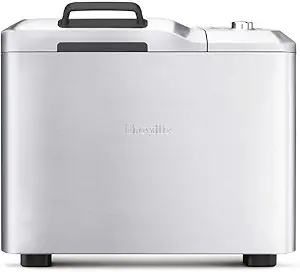 |
| Best Value The sweet spot between price and what you get | Amazon Basics 2-Pound Bread Maker |  |
| Best Budget The cheapest option that still gets the job done reliably | Elite Gourmet Bread Maker EBM8103B |  |
| Top Rated A top-rated pick with lots of positive feedback | KITCHENARM 29-in-1 Bread Machine |  |
| Most Popular A crowd favorite that many people choose with confidence | Cuisinart Bread Maker CBK-110P1ES |  |
| Best Seller A high-volume bestseller chosen again and again | OSIPOTO 2LB Bread Maker BM8205 | 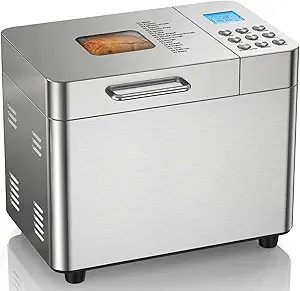 |
Zojirushi Home Bakery Virtuoso Plus

| Capacity | 2 pounds |
|---|---|
| Wattage | 700 watts |
| Voltage | 120 volts |
| Number of Programs | 7 |
The Zojirushi Home Bakery Virtuoso Plus is a full‑featured breadmaker designed to produce consistently well browned, bakery‑style rectangular loaves up to 2 pounds. It uses dual heaters (bottom and lid) and double kneading blades to promote even baking, thorough kneading, and good rise, and the machine offers seven programs including whole wheat, gluten free, and rapid courses that can finish a loaf in about 2 hours and 25 minutes. The large viewing window and easy LCD controls make selection and monitoring straightforward, and the 13‑hour delay timer is handy for waking to fresh bread. The removable nonstick pan simplifies cleanup, and included measuring accessories and a recipe book help beginners get started. Tradeoffs are its substantial footprint and weight compared with compact machines, and hand‑wash care instructions mean a bit more cleanup attention, but for someone who wants reliable crust color control and flexible baking programs the Virtuoso Plus delivers dependable, crusty results.
Best for: Home bakers who want a reliable, all‑around breadmaker that prioritizes consistent crust color and versatile program options for everyday loaves.
Less Ideal for: People who need a compact, lightweight machine for limited counter space or who prefer fully dishwasher‑safe parts.
- Dual heaters promote even baking and well browned crust
- Double kneading blades produce thorough dough development and higher rise
- Seven program options including gluten free and rapid cycles for versatility
- 13‑hour delay timer lets you schedule fresh bread for morning or evening
- Relatively heavy and large compared with smaller home breadmakers
- Requires hand washing for care of some components
Verdict: Choose the Virtuoso Plus if you want a versatile, reliable breadmaker that consistently delivers well browned, crusty loaves for everyday home baking.
Breville Custom Loaf BBM800XL

| Capacity | 2.5 pounds |
|---|---|
| Wattage | 830 watts |
| Number of Programs | 13 |
| Voltage | 120 volts |
The Breville Custom Loaf BBM800XL is a high-end bread maker aimed at bakers who want control over loaf style and mix-ins while still using an automated machine. It handles everything from mixing and kneading to baking, with 13 programs including gluten-free and crusty-loaf cycles plus nine custom recipe slots you can save. The collapsible kneading paddle folds away before baking to reduce holes in the crumb and the timed fruit and nut dispenser adds mix-ins at the right moment without manual intervention. A clear LCD shows progress and the unit includes 60 minutes of power interruption protection so a short outage will not ruin a bake. At 830 watts it bakes consistently and the stainless steel housing feels durable, though the machine is relatively heavy and requires hand washing of components. If you prioritize customizable programs and reliable crust performance in a countertop machine, this makes it easy to produce bakery-style loaves at home, but those seeking the lightest, simplest model or dishwasher-safe parts may prefer alternatives.
Best for: Bakers who want precise control over crust and loaf customization and who will use saved recipes and timed mix-ins to reproduce consistent, crusty loaves at home.
Less Ideal for: Buyers looking for the smallest, lightest countertop machine or those who need dishwasher-safe parts for easier cleanup should consider other models.
- Customizable programs with nine user recipe slots for repeatable results
- Collapsible kneading paddle reduces holes in finished loaves
- Automatic fruit and nut dispenser times mix-ins correctly
- Clear LCD and dual automatic/manual program control for precise baking
- 60 minutes of power interruption protection preserves in-progress bakes
- Components require hand washing rather than dishwasher-safe cleaning
- Heavier and larger than some compact bread makers
Verdict: Choose the Breville Custom Loaf BBM800XL if you want a performance-focused bread maker that delivers customizable settings and features designed to produce reliable, crusty loaves.
Amazon Basics 2-Pound Bread Maker

| Voltage | 120 volts |
|---|---|
| Capacity | 2 pounds |
| Wattage | 550 watts |
| Number of Programs | 14 |
This Amazon Basics bread maker is a straightforward, no-frills machine for making home loaves without manual kneading. You load ingredients, choose one of 14 programs (including gluten-free and dough-only), pick light, medium, or dark crust, and the machine handles mixing, kneading, rising, and baking for up to a 2-pound loaf. The ExpressBake option can produce bread in under 90 minutes when you need a quick loaf, and the nonstick pan simplifies removal and cleanup. At 550 watts the unit is compact and suitable for most kitchen countertops, though it is not designed for heavy commercial use or very large loaves. The control interface is basic but functional, and stainless steel construction gives it a clean look. If you want artisan-level crust control or advanced timing features for scheduling multi-day bakes, this model is limited, but for consistent everyday loaves and occasional quick bakes it delivers reliable results at a practical value.
Best for: Home bakers who prioritize reliable, hands-off daily bread and occasional fast bakes and want a simple programmable machine that consistently produces 2-pound loaves.
Less Ideal for: Those seeking artisan-level crust customization, scheduling for complex multi-day recipes, or machines that handle larger loaves and commercial volumes.
- 14 preset programs cover basic breads, doughs, gluten-free options, and jams
- ExpressBake option produces bread in under 90 minutes
- Nonstick 2-pound pan simplifies loaf removal and cleanup
- Three crust color settings let you choose light to dark crust
- Limited power and controls compared with higher-end machines for precise crust or texture tuning
- Not suitable for larger than 2-pound loaves or heavy commercial use
Verdict: A practical, easy-to-use bread maker that reliably produces 2-pound loaves with a fast bake option for everyday crusty bread needs.
Elite Gourmet Bread Maker EBM8103B

| Capacity | 2 pounds |
|---|---|
| Wattage | 550 watts |
| Number of Programs | 19 |
| Voltage | 120 volts |
The Elite Gourmet EBM8103B is a straightforward countertop bread machine that automates kneading, rising, and baking for home loaves up to 2 pounds. You pick a loaf size and crust darkness, choose from 19 programs (including gluten-free, quick bread, pizza dough, and jam), set the 15-hour delay timer if you want fresh bread in the morning, and the unit handles the rest. Its compact footprint and 550-watt power draw make it practical for small kitchens and lower energy use compared with firing up an oven. The nonstick pan, included kneading blade, and accessory tools simplify cleanup and routine use, and the keep-warm function holds bread for up to an hour. Limitations to note: as a budget-friendly machine it lacks advanced features for artisan-style crust control like steam injection or dual heating elements, so crusts are adequate but not as crisp as specialty ovens; loaf shape is typical of pan machines. For everyday fresh bread, doughs, and convenience baking, it performs reliably at its price point.
Best for: Buyers who want an affordable, no-fuss machine to make daily homemade loaves, try different preset recipes, and wake up to fresh bread without a steep learning curve.
Less Ideal for: Bakers seeking bakery-level crust crispness, artisan crumb and shape, or machines with advanced crust-control features should look at higher-end specialty ovens or models with steam/convection options.
- Wide range of 19 one-touch programs covering gluten-free, white, wheat, rye, quick bread, dough, and jam
- Three loaf size options (1 lb, 1.5 lb, 2 lb) and crust darkness control for flexible output
- 15-hour delay timer and 60-minute keep-warm make it easy to schedule fresh bread
- Compact, energy-efficient 550-watt design suited to small kitchens
- Includes nonstick pan and accessories for simple setup and cleanup
- Does not have features for producing very crisp, artisan-style crusts such as steam or convection assistance
- Loaf shaping and crust finish follow typical pan-machine results rather than bakery-style appearance
Verdict: A budget-friendly programmable bread maker that reliably produces fresh home loaves and wide recipe flexibility for everyday use.
KITCHENARM 29-in-1 Bread Machine

| Voltage | 120 volts |
|---|---|
| Capacity | 2 pounds |
| Wattage | 550 watts |
| Number of Programs | 29 |
This KITCHENARM bread machine is built for serious home bakers who want flexibility and dependable results. It offers 29 automatic menus including gluten free and sourdough options, plus a fully customizable HOME MADE cycle that lets you set knead, rest, rise, and bake times, which is useful for refining crust development and internal crumb. The unit supports three loaf sizes and three crust colors, has a 15-hour delay timer and a 1-hour keep-warm function, and includes useful alerts such as add-nuts and remove-paddle. The stainless steel housing and ETL certification give it a sturdy, safety-conscious feel, while the nonstick pan and large LCD make day-to-day use straightforward. Limitations are typical for bread machines: you have less direct control over oven-style steam and external browning compared with a countertop oven or dutch oven for truly crusty artisan loaves, and the paddle can leave a small hole in the bottom of loaves. For routine, reliable home bread baking with advanced program control, this model performs well, though those seeking very crisp, artisan-style crusts may need supplemental techniques after baking.
Best for: Home bakers who prioritize a reliable machine that can run many preset programs and be finely tuned for consistent, repeatable loaves over time.
Less Ideal for: Bakers whose top priority is an artisan, ultra-crispy crust produced like a steam-assisted oven or Dutch oven should look at traditional ovens and specialized techniques instead.
- Extensive 29 automatic programs including gluten free, sourdough, and specialty options
- Fully customizable HOME MADE cycle with cycle-level timing for precise control
- Three loaf sizes and three crust color settings for repeatable results
- Stainless steel build with ETL certification and large LCD for easy operation
- Bread machine format limits ability to produce very crisp, oven-style crusts
- Kneading paddle leaves a small hole in the bottom of loaves
Verdict: If you want a dependable, highly programmable bread machine for consistent homemade loaves and flexible recipe control, this KITCHENARM model is a strong choice.
Cuisinart Bread Maker CBK-110P1ES

| Capacity | 2 pounds |
|---|---|
| Wattage | 550 watts |
| Number of Programs | 12 |
| Voltage | 120 volts |
The Cuisinart CBK-110P1ES is a countertop bread maker that handles the whole baking cycle from mixing and kneading to proofing and baking, with programs for breads, cakes, jams, and more. It is typically used for hands-off home baking: choose one of 12 preset programs, set loaf size and crust color, then use the 13-hour delay timer to have fresh bread ready on your schedule. Notable features include a removable nonstick vertical pan for up to 2 lb. loaves, an LCD countdown display with audible alerts, and a 60-minute keep-warm function. Practical benefits are consistent results for everyday sandwich loaves, convenience for busy households, and compact counter footprint that still yields a full-size loaf. For those seeking crustier, artisan-style loaves the vertical pan and machine environment produce softer crusts compared with traditional ovens, so it is better for convenience breads than a crust-first specialty bake. The unit runs at 550 watts and offers three crust color settings and three loaf sizes, making it versatile for family baking without complicated setup.
Best for: Buyers who want a reliable, easy-to-use machine to produce fresh daily loaves with preset programs and timed baking convenience, and who value social proof from a well-known kitchen brand.
Less Ideal for: Bakers who prioritize very crisp, artisan-style crusts or who want full oven-style shaping and steam-based techniques should consider an oven or specialized artisan bread oven instead.
- Fully automatic mix-knead-bake cycle for hands-off baking
- Twelve preset programs for a wide range of breads and other baked goods
- Removable nonstick vertical pan for easy loaf removal and cleaning
- 13-hour delay-start and 60-minute keep-warm for timed fresh bread
- Compact footprint that still bakes up to a 2 lb. loaf
- Vertical baking pan yields softer crusts than oven-baked artisan loaves
- Plastic and stainless steel construction may feel less heavy-duty than pro units
Verdict: Choose this Cuisinart if you want a user-friendly, preset-driven bread maker that reliably produces fresh home loaves with minimal fuss.
OSIPOTO 2LB Bread Maker BM8205

| Capacity | 2 pounds |
|---|---|
| Wattage | 600 watts |
| Number of Programs | 17 |
| Voltage | 120 |
The OSIPOTO BM8205 is a user-friendly countertop bread maker aimed at home bakers who want fresh loaves without fuss. You add ingredients, pick one of 17 programs and the machine handles mixing, kneading, rising and baking; it supports three loaf sizes and three crust settings so you can tailor crust color and loaf volume. The 600W motor and described 360° heat distribution produce consistent browning, and a 15-hour delay timer plus a one-hour keep-warm function make fresh bread convenient for mornings or evenings. Practical touches include a nonstick baking pan, a viewing window and basic accessories like a measuring cup and kneading hook, and the unit is mostly quiet in operation. Limitations to consider are that the pan is listed as hand wash only and extremely large or artisan-format loaves are beyond its 2 lb capacity, so it is best for standard sandwich and rustic-style loaves rather than large hearth breads. For buyers prioritizing dependable, easy crust control in a compact machine, this model is a solid option.
Best for: Home cooks who want a low-risk, easy-to-use machine that reliably bakes everyday sandwich and rustic loaves with customizable crust and minimal intervention.
Less Ideal for: Bakers seeking to produce very large artisan hearth loaves, tray breads, or who need fully dishwasher-safe internals should look elsewhere.
- Large 2 lb capacity with 3 loaf size options for family-sized loaves
- 17 preset programs including gluten-free and whole wheat for flexibility
- Three crust settings let you dial crust color for crisper or softer finishes
- Quiet 600W motor with claimed even heat distribution for consistent baking
- 15-hour delay timer and keep-warm for scheduled baking and serving convenience
- Pan is hand-wash only which adds cleaning effort compared with dishwasher-safe inserts
- 2 lb maximum capacity limits baking of oversized or artisan-style large hearth loaves
Verdict: If you want a straightforward, dependable bread maker that produces consistent crust control and family-size loaves with minimal fuss, this OSIPOTO 2 lb model delivers.
Choosing the Right Bread Maker for Crusty Bread: Key Factors to Consider
Crust Control and Browning Range
Crust control determines how dark and crisp the loaf exterior becomes. Machines with multiple browning settings or adjustable crust timers let you dial in a light, medium, or dark crust and compensate for recipe variations or humidity. Consistent surface heat near the end of the bake promotes a well-formed crust rather than a soft or soggy exterior.
When aiming for artisan crust, look for models that permit longer final bake times or higher browning intensity without overcooking the crumb. This control helps when using wetter doughs or enriched recipes that otherwise struggle to form a firm outer shell.
Kneading Power and Paddle Design
Strong, consistent kneading builds the gluten network necessary for good oven spring and even crumb structure. Bread makers with robust motors and thoughtfully positioned paddles handle stiffer, higher-hydration doughs better than underpowered units.
Paddle shape and how it interacts with the bread pan affect how well ingredients are incorporated and how easily dough releases after baking. A design that minimizes leftover dough on the paddle reduces manual cleanup and preserves loaf shape.
Programmability and Proofing Options
Being able to customize knead, rise, and bake times matters for crusty loaves because proofing length and final bake duration directly affect crust formation. Timers that allow separate adjustment of proofing stages, or a manual program mode, give you flexibility to tailor cycles for artisan recipes, sourdough-adjacent mixes, or wetter doughs.
Accurate and consistent proofing temperatures are also important. Some machines use gentle warmth during proofing while others may run hotter; choose a unit that keeps yeast activity steady without premature browning.
Loaf Size and Shape Options
Loaf size and shape influence crust-to-crumb ratio and how the heat interacts with the loaf. Smaller loaves often brown more evenly and develop crisper crusts relative to their volume, while larger loaves require longer bake times to reach the same level of crust development.
Look for models that offer multiple pan sizes or loaf-shape options so you can experiment. Adjustable crust settings combined with a choice of loaf sizes let you refine texture and crust thickness for different recipes.
Interior Heat Distribution
Even heat distribution within the baking chamber prevents hot spots that can overbrown one side of a loaf while leaving another pale or soft. Machines with insulated lids or well-designed heating elements deliver steadier crust development and more predictable results across repeated bakes.
Consider units that list heating element placement or mention uniform browning in their feature set, because consistent thermal behavior reduces the need for manual intervention.
Maintenance and Ease of Cleaning
A machine that is easy to clean encourages regular use and prevents buildup that can interfere with baking. Removable, nonstick pans and detachable paddles simplify cleanup, while accessible interiors reduce the risk of trapped flour or dough residues affecting future bakes.
Durable finishes on pans and paddles also preserve performance over time. Consider how often you are willing to perform deeper maintenance and choose a design that matches your cleaning preferences.
How Crusty Bread Is Achieved in a Bread Maker
Crust development in a home bread maker is a function of dough strength, final bake heat, and moisture management. Strong gluten formation during kneading traps the gases that produce oven spring. During the final bake phase, higher surface temperatures and reduced internal steam encourage Maillard browning and crisping.
Many bread makers simulate these conditions through extended browning cycles, higher-element output during the final bake, or venting that allows excess moisture to escape. Understanding how your machine handles the last 10 to 20 minutes of baking helps you predict crust outcome.
- Longer final bake or higher browning settings increase crust firmness
- Proper kneading supports oven spring and a more open crumb
- Moisture control in the pan influences whether the crust crisps or stays soft
Practical Baking Tips to Improve Crust
Small adjustments to ingredient ratios and program choices can enhance crust quality. For wetter doughs, reduce liquid slightly or extend the baking phase to allow more moisture to evaporate. Using a delayed start can be useful, but avoid long unattended proofing periods in warm kitchens that could overproof the dough.
For extra crunch, some bakers remove the loaf from the pan and finish it briefly in a conventional oven if available. Another option is to dab water into the machine early in the bake to encourage a glossy, blistered crust, then use a darker browning setting for the final phase.
- Reduce hydration slightly for crust-prone recipes
- Experiment with extended final bake times for darker crust
- Consider finishing in an oven if you need an especially thick crust
Common Dough Types and How They Behave
Basic white and whole-wheat doughs bake predictably and respond well to higher browning settings. Enriched doughs with fats, milk, or sugar brown faster on the outside and may need shorter high-heat phases to avoid overdarkening.
High-hydration or sourdough-style mixes produce open crumbs and can develop excellent crusts, but they require strong kneading and sometimes a longer final bake to remove surface moisture. Match the program and crust setting to the dough type rather than relying on one universal cycle.
- Enriched doughs brown quickly; monitor final bake carefully
- Whole-grain flours may need longer kneading for proper gluten development
- High-hydration doughs benefit from stronger kneading and longer final bake
When to Choose a Bread Maker Over Traditional Baking
A bread maker is ideal when you want consistent loaves with minimal hands-on time. It automates kneading, proofing, and baking cycles, which is helpful for daily or weekly bread production. For bakers whose priority is a reliably crusty loaf without complex shaping, a machine with good crust control is a time-saver.
However, if you seek very large, free-form artisan loaves with extreme crust textures, a conventional oven or combination workflow may offer additional flexibility. Consider how much manual shaping and finishing you want to do versus the convenience of one-step bread-making.
- Choose a bread maker for ease and repeatability
- Use a conventional oven for maximum crust customization
- A hybrid approach can combine convenience with final-oven finishing
How We Chose the Best Bread Maker for Crusty Bread
We focused on features and performance characteristics that matter specifically for producing crusty, artisan-style loaves in a home bread maker. Key evaluation criteria included crust-temperature control and browning range, because surface heat and adjustable crust settings determine exterior color and texture. We also weighted kneading strength and paddle design, since consistent dough development and gluten structure underpin oven spring and crust formation. Loaf consistency and rise were assessed by looking at programmable loaf sizes, proofing accuracy, and timer flexibility. Usability factors such as control layout, display clarity, and preset program versatility mattered for repeatable results. Finally, cleanup and maintenance were considered to ensure practical, long-term ownership. We excluded models that lack adjustable crust settings or have limited program flexibility because those units rarely produce reliably crisp artisan crusts. The shortlist favors machines that give bakers control over browning, allow delayed start without compromising proofing, and provide durable kneading mechanics that handle denser doughs. These filters ensured the picks are suited to home bakers who prioritize crust quality and loaf consistency.
Our full evaluation process is outlined in our review methodology.
FAQ
Can a bread maker produce the same crust as a professional oven?
Often a bread maker can produce a crisp, dark crust, but professional ovens offer stronger, drier heat and steam control that enable more extreme artisan crusts. For many home bakers, a high-quality machine delivers a satisfactory crust without extra equipment.
Does loaf size affect how crusty the bread becomes?
Yes. Smaller loaves generally brown and crisp more quickly relative to their volume, while larger loaves may need longer final bake times to reach the same crust level. Choose the pan size that matches your crust preferences.
Are special recipes required for crusty bread in a bread maker?
Not necessarily. Standard recipes can yield crisp crusts with the right program and browning settings, but adjustments to hydration and bake time can improve results. Some bakers slightly reduce liquid or extend the final bake phase for a firmer crust.
Will delayed start affect crust quality?
Delayed start can be useful, but long unattended proofing, especially in warm environments, risks overproofing and weaker crust formation. Use delayed start for timing convenience but monitor proofing conditions when crust is a priority.
How important is cleaning the pan and paddle for crust outcomes?
Regular cleaning does not directly change crust chemistry, but buildup on paddles or pans can affect dough adhesion and loaf shape, indirectly influencing how heat reaches the surface. Keeping parts clean ensures consistent baking behavior.
Final Verdict
Prioritize models that give you direct control over crust browning and that provide strong, consistent kneading. Tradeoffs are common: machines with extensive programmability and stronger motors tend to be a bit heavier or require slightly more maintenance, but they also produce steadier, crustier loaves. Focus on crust control, reliable proofing, and ease of cleaning to match your baking style. With those priorities in mind, you can confidently choose a bread maker that consistently delivers the crunchy artisan crust you want.