
Note: This article contains affiliate links. If you click on these links and make a purchase, we may earn a small commission at no extra cost to you. This helps support our research and content. Read our full affiliate disclosure here.
If you drink fresh-squeezed citrus regularly, the right citrus juicer can make morning routines simpler and reduce wasted fruit. A good citrus juicer extracts maximum juice with minimal effort, keeps pulp and seeds where they belong, and cleans up quickly so you actually use it every day. This guide covers the six top citrus juicers shortlisted for home kitchens, explaining how they perform on extraction efficiency, ease of cleaning, durability, and control over pulp. Read on to see the evaluation criteria and what to expect from each style of juicer before the product list.
Top Picks at a Glance
| Best Overall The best all-around choice for most situations | Breville Citrus Press BCP600SIL |  |
| Best Quality Built to a higher standard if you want something more solid | Breville Citrus Press Pro 800CPXL |  |
| Best Value The sweet spot between price and what you get | Cuisinart Pulp Control CCJ-500P1 | 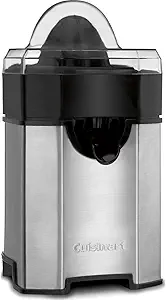 |
| Best Budget The cheapest option that still gets the job done reliably | ChefVille Citrus Juicer |  |
| Top Rated A top-rated pick with lots of positive feedback | Eurolux Electric Citrus Juicer ELCJ-4800 |  |
| Most Popular A crowd favorite that many people choose with confidence | Zulay Metal 2-In-1 Lemon Squeezer | 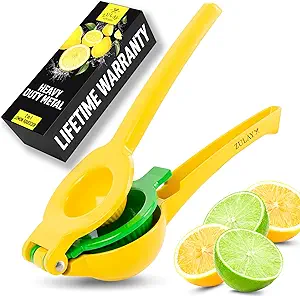 |
Breville Citrus Press BCP600SIL

| Power | 110 Watts |
|---|---|
| Voltage | 110 to 120 Volts |
| Warranty | 1 Year Limited Product Warranty |
The Breville Citrus Press is a motorized juicer designed for quick, consistent citrus extraction with minimal effort. You place halved fruit on the finned cone and lower the hinged arm to apply steady pressure while the motor spins the cone to maximize juice release. Notable features include the one-size-fits-all juicing cone and fruit dome that accommodate everything from limes to large grapefruits, a drip-stop spout to prevent counter mess, and dishwasher-safe removable parts for easier cleanup. The dual-switch safety and triple-hinged arm help ensure the cone only spins when sufficient downward pressure is applied, which makes operation feel secure and hands-off. At 110 watts it runs quietly compared with larger juicers and fits well on a kitchen counter for daily use or weekend brunches. The main limitations are that it is specialized for citrus only and does not process non-citrus produce, and its parts add routine cleaning despite being dishwasher-safe. If you want straightforward, efficient citrus juice without manual squeezing, this machine delivers consistent results.
Best for: Buyers who want an easy, reliable way to make fresh citrus juice frequently with minimal manual effort and a compact countertop appliance mindset.
Less Ideal for: Those seeking a multipurpose juicer that can process whole fruits, vegetables, or make smoothies should consider a different style of juicer.
- One-size-fits-all finned cone extracts juice from limes to grapefruits
- Motorized operation reduces manual effort and provides consistent pressure
- Drip-stop spout prevents countertop spills during use
- Removable juicing cone, collector, filter, and dome are dishwasher-safe
- Designed exclusively for citrus so it cannot handle other fruits or vegetables
- Requires periodic cleaning of removable parts after each use
Verdict: Choose the Breville Citrus Press if you want a compact, motorized appliance that makes fast, consistent fresh citrus juice with minimal effort.
Breville Citrus Press Pro 800CPXL

| Wattage | 110 watts |
|---|---|
| Power Source | Corded Electric |
| Voltage | 120 volts |
| Capacity | 800 ml |
The Breville Citrus Press Pro uses a power‑assisted, triple‑hinged arm and a quadra‑fin juicing cone to press a wide range of citrus sizes efficiently while reducing hand effort. You lower the arm onto a halved fruit and the safety interlock lets the cone spin only when enough downward pressure is applied, which helps prevent slips and improves extraction. The die‑cast stainless steel cone and body are acid resistant for long life, and removable components including the cone, juice collector, filter and fruit dome are dishwasher safe for easy cleanup. A drip‑stop spout keeps counters tidy during use. With a single speed motor and about 110 watts of power this is built more for high extraction and durability than for multi‑function versatility, so it shines when you want consistently high yields and fast juicing sessions but does not offer variable speeds or noncitrus functionality.
Best for: Buyers who prioritize maximum juice yield and durable, performance‑focused construction for frequent citrus juicing sessions.
Less Ideal for: People who want a lightweight, multi‑function juicer for a variety of produce or who need adjustable speed control.
- Power‑assisted lever and triple‑hinged arm deliver strong, consistent pressure for high juice extraction
- Quadra‑fin, acid‑resistant die‑cast cone extracts juice from a wide range of citrus sizes
- Removable cone, collector, filter and dome are dishwasher safe for easy cleanup
- Drip‑stop spout prevents countertop mess while pouring
- Single speed motor limits control over extraction for delicate fruits or noncitrus tasks
- Relatively heavy die‑cast build makes it less portable than lightweight plastic juicers
Verdict: Choose the Citrus Press Pro if you want a heavy‑duty, lever‑assisted juicer that squeezes the most juice from any citrus quickly and reliably.
Cuisinart Pulp Control CCJ-500P1

| Power Source | Corded Electric |
|---|---|
| Wattage | 800 watts |
| Number of Speeds | 3 |
| Capacity | 12 ounces |
The Cuisinart Pulp Control CCJ-500P1 is a small electric citrus juicer designed to handle everything from limes to grapefruits. It uses an auto-reversing universal reamer and a final-spin feature to extract extra juice, while three adjustable pulp-control settings let you dial in texture. Its extra-long snap-up spout helps fill taller glasses without drips and several removable parts are dishwasher safe for easy cleanup. The unit runs on corded power and has straightforward button controls with three speeds, making it simple to use for daily breakfast juice, cocktail prep, or occasional large batches. Because it is compact and mostly stainless steel, it stores neatly on a counter and resists staining. Trade-offs include modest capacity—its carafe holds about 12 ounces—so you may need multiple cycles for larger families, and the motor is targeted to citrus only rather than whole-fruit juicing. For buyers who want reliable, easy-to-clean citrus extraction without complicated setup, this is a sensible kitchen tool.
Best for: Buyers who want a no-nonsense, easy-to-clean citrus juicer that consistently extracts more juice and fits small kitchens.
Less Ideal for: People looking to juice whole apples, carrots, or large-volume batches in a single run should choose a larger extractor or masticating juicer instead.
- Auto-reversing reamer and final-spin function maximize juice extraction
- Three pulp-control settings let you choose juice texture
- Dishwasher-safe removable parts simplify cleanup
- Compact stainless steel design stores easily and resists staining
- Small 12-ounce capacity requires multiple cycles for larger batches
- Designed for citrus only and not suited for whole fruits or vegetables
Verdict: A compact, easy-to-use citrus juicer that extracts extra juice and cleans up quickly, ideal for efficient everyday citrus squeezing.
ChefVille Citrus Juicer

| Capacity | 591 ml |
|---|---|
| Material | Polypropylene (PP) |
| Power Source | Manual |
| Special Features | Portable |
This ChefVille manual citrus juicer is a plastic, hand-powered tool made for quick home squeezing and small prep tasks. It combines two reamer heads (one fine for lemons/limes and one large for oranges), a 16.9 oz clear measuring cup with marked ml scales, a detachable handle, and small accessories like an egg separator and grater. You use it by cutting fruit in half and pressing against the reamer with the side-grip or the included handle for pouring; the built-in seed filter and V-shaped spout help reduce spills while measuring directly into the cup. The polypropylene construction keeps it lightweight and easy to hand-wash, and the non-slip silicone base improves stability on the counter. Because it is fully manual there is no electricity or complicated assembly, and the flip-top and compact design store easily in a drawer. Limitations are the all-plastic build, which is less durable than metal for heavy daily use, and the juice capacity is best suited for small batches rather than large parties.
Best for: Buyers wanting an inexpensive, no-frills citrus juicer that measures juice as you squeeze and stores compactly for occasional home use.
Less Ideal for: Avoid this if you need a heavy-duty, long-lasting juicer for frequent large-volume juicing or prefer a motorized extractor for parties.
- Two reamer sizes for both lemons/limes and oranges
- 16.9 oz cup with clear ml markings for measuring as you juice
- Built-in seed filter and V-shaped spout reduce spills when pouring
- Compact, flip-top design and detachable handle for easy storage and carrying
- All-polypropylene construction may wear faster than metal parts under heavy use
- Hand wash only care requirement can be slower than dishwasher-safe alternatives
Verdict: A budget-friendly, space-saving manual juicer that covers lemons to oranges and measures juice as you go, ideal for occasional home use.
Eurolux Electric Citrus Juicer ELCJ-4800

| Maximum Power | 300 watts |
|---|---|
| Wattage | 300 watts |
| Power Source | Corded Electric |
| Material | Stainless Steel |
| Special Features | Auto-Reversing |
The Eurolux ELCJ-4800 is a compact countertop citrus juicer designed for straightforward, everyday use. It uses a 300 watt motor running at about 110 RPM with an auto-reversing cone to extract juice from oranges, lemons, limes, and similar fruit with minimal noise. Operation is one-touch: cut the fruit, place it on the cone, close the lid and press the button, which makes quick work of morning juice or small batches for recipes. The stainless steel body and dishwasher-safe removable parts simplify cleanup and give the unit a durable, kitchen-friendly feel. Safety features such as secure part locking and a stable base reduce wobble during use. Because it is small and efficient rather than commercial-grade, it is best for home use and short juicing sessions rather than heavy continuous output. If you prioritize a reliable, quiet juicer that is easy to operate and maintain, this model covers those bases without complicated controls.
Best for: Buyers who want a dependable, easy-to-use home citrus juicer that runs quietly and requires minimal upkeep for daily or occasional fresh juice.
Less Ideal for: People who need a heavy-duty or commercial juicer for large batches or continuous high-volume extraction should look at commercial-grade machines instead.
- Powerful 300W motor with auto-reversing cone for efficient extraction
- One-touch operation simplifies use for quick juicing
- Stainless steel construction with dishwasher-safe removable parts for easy cleaning
- Quiet performance suitable for early-morning use
- Compact design is not intended for high-volume or commercial juicing
Verdict: A quiet, reliable stainless steel citrus juicer built for easy one-touch home use and low-maintenance cleanup.
Zulay Metal 2-In-1 Lemon Squeezer

| Material | Aluminum |
|---|---|
| Power Source | Manual |
| Special Features | Ergonomic Handle |
| Capacity | 0.5 liters |
The Zulay Metal 2-in-1 Lemon Squeezer is a hand-operated citrus press that combines a bowl-style reamer with a lever for extra extraction. You use it by placing a halved citrus fruit in the bowl and squeezing the handles to press juice through the perforated bottom while seeds and larger pulp are held back. Built from aluminum with a stainless steel blade component and an ergonomic handle, it feels solid in hand and is intended for frequent kitchen or bar use without electricity. Its compact shape stores easily and the seed-filter holes reduce cleanup, and the manufacturer states it is hand-wash only though product images and text also mention dishwasher cleaning. The main practical limits are its capacity and manual operation: it is best for single servings or small batches and requires physical force for firmer citrus. If you need high-volume or fully hands-free juicing, an electric or larger commercial press would be more efficient. For home cooks and cocktail makers who value a durable, simple tool, this squeezer delivers reliable extraction and easy storage.
Best for: Buyers who prioritize well-reviewed, reliable kitchen tools and want a sturdy manual squeezer for occasional fresh juice or cocktails without an electric appliance.
Less Ideal for: Those who need to juice large volumes regularly or want a fully hands-free, high-speed juicer should consider electric or commercial models instead.
- Durable aluminum construction with stainless steel components for longevity
- Ergonomic handle designed to reduce hand strain during use
- Seed-filtering perforations in the bowl keep seeds and large pulp out of juice
- Compact, two-in-one design stores easily and works without power
- Simple to clean and low-maintenance
- Manual operation limits speed and is tiring for large quantities
- Small bowl capacity makes it better for single servings than batch juicing
Verdict: A compact, heavy-duty manual squeezer that reliably extracts juice for single servings and small batches while feeling secure and well made.
Choosing the Right Citrus Juicer: Key Factors to Consider
Extraction Yield and Efficiency
How much juice you can get from each piece of fruit matters because higher yield saves money and reduces waste over time. Extraction depends on reamer shape, cone size, and, for electric models, motor torque and rotation speed. A model that extracts efficiently reduces the number of fruits you need per serving and produces less residual moisture in the pulp. Pay attention to whether the design compresses fruit well without requiring repeated reaming, and whether different-sized cones are included for small limes versus large oranges.
Ease of Cleaning and Maintenance
You will likely use the juicer more often if it is easy to clean. Removable parts that are dishwasher-safe or rinse clean under running water minimize the friction of post-use chores. Also consider crevices where pulp and sticky juice can accumulate. Simple assembly and few small parts reduce the chance of losing pieces and make periodic deep cleaning faster. Materials that resist staining and odor retention will keep the unit fresher between uses.
Durability and Material Quality
Citrus juice is acidic, so materials that contact the juice should resist corrosion and degradation. Stainless steel, BPA-free plastics specified for food contact, and coated cast parts hold up better over years of use. Evaluate the construction of moving parts and seals for electric models to avoid leaks and motor strain. A well-built manual juicer should have a stable base and solid reamer that does not wear or crack with repeated citrus acids and pressure.
Motor Performance and Control (For Electric Models)
Motor torque and speed control influence extraction efficiency and whether juice foams. Higher torque at a moderate speed often squeezes more juice with less foaming than very high RPMs. Variable-speed controls or automatic engage mechanisms let you adapt to fruit size and ripeness. Consider motor cooling and duty cycle if you plan on doing several batches; consistent performance under short-to-moderate loads is ideal for home use.
Size, Footprint, and Storage
Counterspace is limited in many kitchens, so the physical footprint and storage profile of the juicer matter. Smaller electric reamers and handheld options tuck away easily, while larger countertop models need a permanent spot. Think about where you will store the unit between uses and whether it fits in a cabinet or on a counter. Weight and shape also affect portability if you want to move it in and out of storage regularly.
Pulp Control and Versatility
Different people prefer varying amounts of pulp, and some recipes call for clearer juice. Look for units that offer adjustable pulp filters or removable strainers to tailor results. Versatility includes whether the juicer handles a range of citrus sizes and whether it produces juice suitable for drinking, cooking, or cocktails. Models that permit easy filter removal and reinstallation give you more control over texture without extra steps.
Types of Citrus Juicers and When to Use Them
There are three common styles of citrus juicers for home kitchens: handheld reamers, manual lever or press models, and electric reamers. Handheld reamers are compact, inexpensive, and good for occasional use or small jobs. Manual press units use mechanical advantage to squeeze more juice with less wrist effort and are suitable for moderate daily use.
Electric reamers speed up the process and are best when you need frequent or larger batches of juice. They typically provide consistent extraction and often include multiple cone sizes for different fruit. Choose the style that fits your frequency of use, storage capacity, and how much control you want over pulp and yield.
- Handheld reamers: best for occasional, small-volume juicing.
- Manual presses: balance force and control for moderate use.
- Electric reamers: fastest, best for frequent or larger batches.
How Fruit Prep Affects Results
Prep steps like rolling the fruit on the counter before cutting, microwaving briefly to soften, or using room-temperature fruit all affect how much juice you can extract. Softer, room-temperature citrus yields more easily than cold, firm fruit.
Cut size and where you cut also matter. Cutting slightly off-center can expose more vesicles to the reamer on some cones, improving extraction. For recipes that need clear juice, strain through a fine mesh after juicing to remove excess pulp and oil.
- Roll fruit to break internal membranes before cutting.
- Room-temperature fruit yields more juice than refrigerated fruit.
- Strain if you need smooth, pulp-free juice for cocktails or sauces.
Maintaining Your Juicer for Long Life
Rinse components immediately after use to prevent sticky residue and staining. For electric models, avoid submerging the motor housing and wipe it clean with a damp cloth. Periodically inspect seals and gaskets for wear, and replace consumable parts as recommended by the manufacturer.
Deep-clean removable strainers and cones with a soft brush to remove trapped fibers. For stubborn stains or buildup, a brief soak in warm, soapy water usually does the trick. Proper storage in a dry place prevents mold and prolongs the life of plastic parts.
- Rinse parts immediately after use to prevent residue.
- Avoid submerging motor housings; wipe them clean instead.
- Soak and brush strainers to remove trapped fibers and oils.
Choosing for Specific Uses: Cocktails, Baking, and Daily Juice
If you make cocktails, you may prefer a juicer that delivers quick, pulp-controlled pours and pairs well with a small strainer. Baking often calls for larger volumes of juice where extraction yield matters most. For daily breakfast juice, ease of cleaning and compact storage usually top the priority list.
Consider how precise you need the output to be. Cocktail prep benefits from clearer juice with less bitter pith, while baking can tolerate more pulp and some extra flavor from zest oils. Match the juicer to the dominant use case in your kitchen.
- Cocktails: prioritize pulp control and clarity.
- Baking: prioritize yield and larger batch capability.
- Daily use: prioritize quick cleanup and compact storage.
Common Problems and Simple Fixes
If a juicer foams excessively, try using a lower speed or pressing more slowly to reduce aeration. Foam often traps flavor compounds and can make juice taste thin. If the reamer slips on fruit, ensure the cut surface is flat and consider rolling the fruit first to firm the interior.
Leaking from seams on electric models usually indicates a worn gasket or improper assembly. Disassemble, dry, and re-seat parts carefully. Persistent leaks or motor issues should be addressed by checking part alignment and seals before assuming the unit is defective.
- Too much foam: use lower speed or slower pressing.
- Reamer slipping: roll and flatten fruit before juicing.
- Leaks: check seals and reassemble carefully.
How We Chose the Best Citrus Juicer
We focused on practical, repeatable criteria that matter for everyday citrus use in a home kitchen. Extraction efficiency and yield were primary priorities because small differences in juicing method and reamer design affect how much usable juice you get from lemons, limes, oranges, and grapefruits. Ease of cleaning and disassembly were next, since a juicer that is quick to rinse and store is far more likely to be used regularly. Durability and materials were evaluated to ensure components that contact acidic juice resist corrosion and staining. Motor power and speed control were considered for electric models to balance extraction with pulp control and to reduce foaming. Ergonomics and user comfort, including grip and reamer sizes, were included because handheld and countertop models require different handling approaches. We excluded specialty cold-press machines and high-volume commercial equipment that are impractical for typical home kitchens. Products that lacked clear material specifications or had consistently poor user servicing options were not considered. The final shortlist reflects devices that meet extraction, cleaning, durability, motor/control, and ergonomics standards for home citrus juicing.
Our full evaluation process is outlined in our review methodology.
FAQ
Can a citrus juicer handle grapefruits and limes equally well?
Most juicers accommodate a range of citrus sizes, but extraction efficiency varies by cone size and motor power. Look for units with multiple cone sizes or a sufficiently large reamer to handle grapefruits and a smaller cone or adaptable design for limes.
Is an electric citrus juicer worth it for occasional use?
For occasional use, a handheld reamer or manual press may be more economical and easier to store. Electric models save time for frequent juicers but add footprint and a motor that requires care.
How do I reduce bitterness from citrus pith when juicing?
Avoid pressing the pith or cutting too close to the rind. Use a reamer or cone that does not over-crush the peel. Straining the juice after extraction also helps remove bitter particles and oily residues.
Are citrus juicer parts typically dishwasher-safe?
Many removable cones and strainers are dishwasher-safe, but motor housings are not. Always check manufacturer guidance. Materials resistant to staining and odor retention are preferable for dishwasher cycles.
What maintenance extends the life of a citrus juicer?
Rinsing or washing removable parts immediately after use, keeping the motor housing dry, inspecting seals, and replacing worn gaskets will extend service life. Periodic deep cleaning prevents buildup that can degrade performance.
Final Verdict
When choosing a citrus juicer, prioritize the combination of extraction yield, ease of cleaning, and build materials that suit your usage frequency. If you juice daily, favor models that are quick to disassemble and resist staining; if you only juice occasionally, compact manual options can save space while still delivering good results. Consider pulp control and motor characteristics to match the kinds of recipes you make, and expect to trade a bit of footprint for faster extraction with electric units. With these priorities in mind, you can select a juicer that fits your routine and delivers consistent, fresh citrus juice.