
Note: This article contains affiliate links. If you click on these links and make a purchase, we may earn a small commission at no extra cost to you. This helps support our research and content. Read our full affiliate disclosure here.
Beetroot is dense, fibrous, and full of nutrients, so the juicer you choose affects both yield and texture. A cold press juicer for beetroot helps preserve nutrients and produces smoother juice with less oxidation than fast-spinning machines. In this guide we shortlist the top-performing cold press juicers for extracting beetroot, focusing on extraction efficiency, ease of cleaning, and durability. Below you will find concise reviews of the seven best options and clear evaluation criteria that matter for beetroot juicing. Use the sections that follow to match a juicer to your prep habits, kitchen space, and juice goals.
Top Picks at a Glance
| Best Overall The best all-around choice for most situations | Canoly C16 Cold Press Juicer |  |
| Best Quality Built to a higher standard if you want something more solid | Hurom H70 Slow Juicer |  |
| Best Value The sweet spot between price and what you get | TUUMIIST Cold Press Juicer TM-580SJ |  |
| Best Budget The cheapest option that still gets the job done reliably | NEWBULIG Cold Press Juicer |  |
| Top Rated A top-rated pick with lots of positive feedback | NAMA J2 Cold Press Juicer |  |
| Most Popular A crowd favorite that many people choose with confidence | EanOruus 3-in-1 Cold Press Juicer E-18 |  |
| Best Seller A high-volume bestseller chosen again and again | Ninja NeverClog Cold Press Juicer JC151 |  |
Canoly C16 Cold Press Juicer

| Maximum Power | 250 watts |
|---|---|
| Power Source | ac |
| Number of Speeds | 45 |
| Capacity | 2.65 liters |
The Canoly C16 is a single‑auger cold press juicer designed for everyday family use and batch preparation. It processes whole fruits and large produce through a 6-inch feed chute, uses a 250 W brushless AC motor with auto-reverse to reduce clogging, and includes three strainers for juice, sorbet, and nut milk. The wide throat cuts prep time, the large hopper supports big batches, and tool-free disassembly with dishwasher‑safe parts makes cleanup straightforward. For fibrous vegetables like beetroot the slow masticating action extracts more juice and preserves texture compared with centrifugal units, though very hard roots may still benefit from pre-cutting if unusually large. The motor is quiet in typical use, and the machine's sturdy polycarbonate parts feel durable, but the unit is relatively heavy and takes some counter space. Overall it is a practical, low-noise choice if you want a versatile cold press that handles whole produce and makes occasional nut milk or sorbet in addition to juice.
Best for: Buyers who want a quiet, versatile cold press that handles whole fruits and fibrous vegetables and also makes nut milk or sorbet for family-sized batches.
Less Ideal for: People who need an ultra-compact, lightweight juicer for small kitchens or those who only want a simple single-purpose centrifugal juicer for occasional single-servings.
- 6-inch extra-wide feed chute reduces chopping and speeds prep
- Brushless AC motor with auto-reverse for quieter operation and fewer clogs
- 3-in-1 strainers let you make juice, frozen sorbet, and nut milk with one machine
- Large capacity hopper supports batch juicing for families or meal prep
- Tool-free disassembly and dishwasher-safe parts simplify cleaning
- Relatively heavy and requires substantial counter space
- Very hard or oversized roots may still need pre-cutting for best extraction
Verdict: Choose the Canoly C16 if you want a quiet, family-friendly cold press that handles whole produce and doubles as a sorbet and nut milk maker.
Hurom H70 Slow Juicer

| Wattage | 150 watts |
|---|---|
| Power Source | Corded Electric |
| Material | Plastic |
| Product Care Instructions | Hand Wash Only |
The Hurom H70 is a single-auger cold-press juicer built to maximize yield while keeping cleanup simple. It uses a low-speed auger and a strainer-free Easy Clean chamber to separate pulp without a mesh filter, which reduces maintenance and produces very smooth juice ideal for fibrous vegetables like beetroot. The larger self-feeding hopper and wider inlet mean you can add whole or larger pieces of produce with less chopping, speeding up prep for frequent juicing. At 150 watts it handles hard roots and leafy greens steadily and the front-facing gauge lets you monitor juice level as you go. Practical benefits include higher juice extraction, quieter operation than centrifugal models, and parts that detach for quick rinsing. Limitations are its plastic construction and hand-wash-only care, and while compact, it still occupies counter space and requires some patience compared with fast centrifugal machines.
Best for: Buyers who prioritize maximum yield and smooth, low-pulp juice from hard produce and are willing to trade processing speed for quieter, higher-quality extraction.
Less Ideal for: Those who want instant, high-speed juicing for occasional use or prefer fully dishwasher-safe components should consider alternative designs.
- Strainer-free Easy Clean chamber reduces scrubbing and speeds up cleanup
- Self-feeding wide hopper accepts larger pieces and reduces prep time
- Low-speed masticating action yields more juice with less pulp from hard roots
- Front-facing gauge lets you monitor juice volume while juicing
- Mainly plastic construction and hand-wash-only parts may feel less durable
- Slower processing speed than centrifugal juicers for quick single servings
Verdict: Choose the H70 if you want a compact cold-press juicer that extracts maximum juice and produces very smooth, low-pulp results from beetroot and other hard produce.
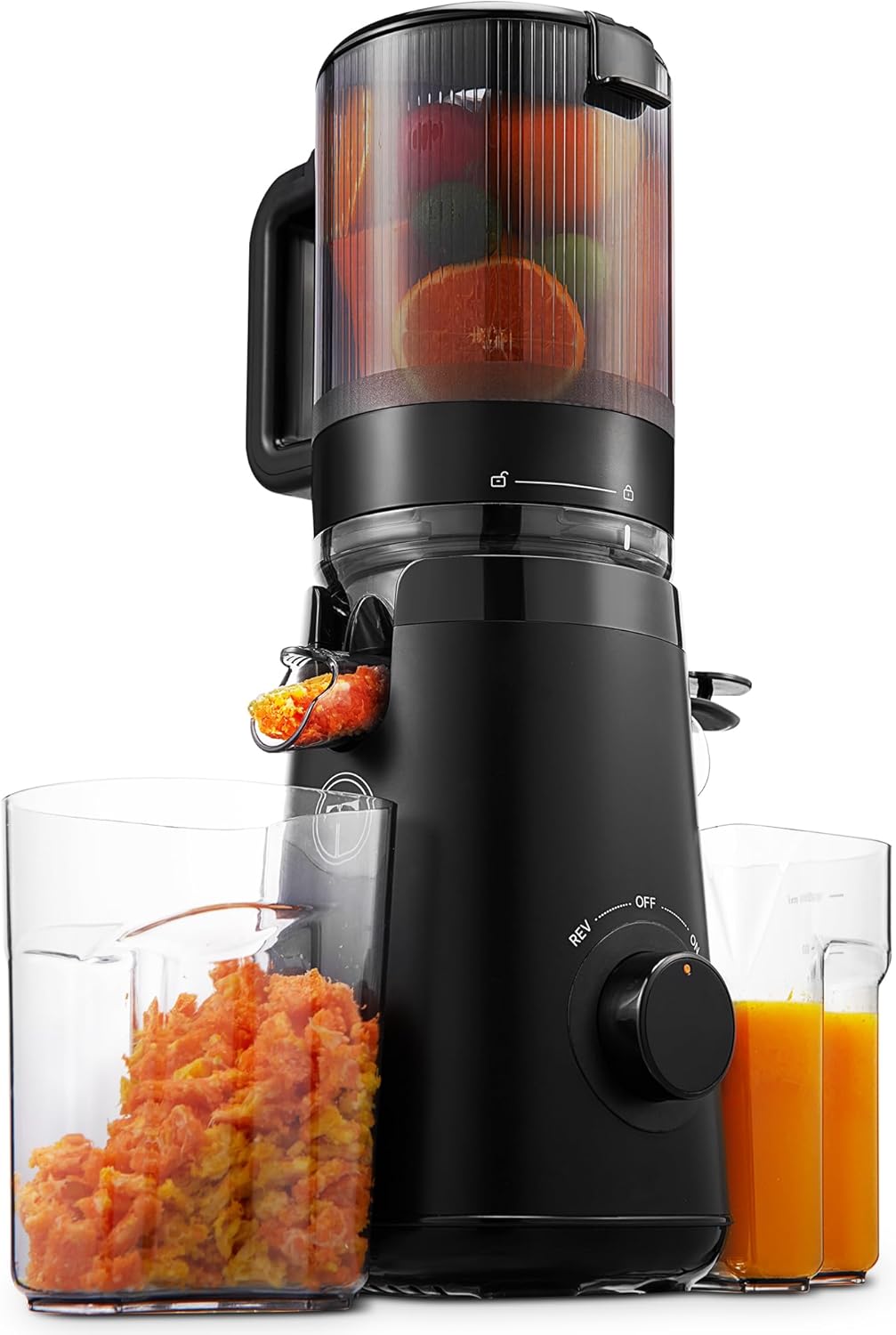
TUUMIIST Cold Press Juicer TM-580SJ
| Wattage | 300 watts |
|---|---|
| Number of Speeds | 55 RPM |
| Power Source | AC |
| Special Features | No Mesh Filter, Whole Fruit Processing |
The TUUMIIST TM-580SJ is a single-auger cold press juicer designed to squeeze high juice yield from whole fruits and vegetables using a low-speed 55 RPM auger and a roomy 5.8-inch feed chute. It is typically used for daily fresh juices and vegetable extractions where preserving nutrients and minimizing prep are priorities; whole apples, carrots, and beetroot can be fed with little or no chopping. The unit runs on a 300 watt motor, includes a simple knob controller, and ships with a cleaning brush plus juice and pulp cups for straightforward setup and cleanup. Practical benefits include gentle extraction that reduces foam and heat, a no-mesh-filter design that simplifies assembly, and a wide chute that speeds routine use. Expect reasonable countertop footprint and mostly plastic ABS construction, which keeps weight down but may feel less premium than metal-bodied machines. Also note the manufacturer recommends proper alignment during assembly and there is a short satisfaction trial rather than a long warranty period.
Best for: Buyers who prioritize efficient, low-prep cold-pressed juice from whole produce and want a practical, easy-to-clean machine for regular home use, including juicing tougher roots like beetroot.
Less Ideal for: People seeking heavy-duty commercial use, a metal-bodied premium appliance, or an extended manufacturer warranty should look at higher-end models instead.
- Large 5.8-inch feed chute accepts whole fruits and many vegetables to cut prep time
- Slow 55 RPM extraction preserves nutrients and reduces heat buildup
- No mesh filter design simplifies assembly and cleaning
- Included cleaning brush and dedicated juice and pulp cups make cleanup easier
- ABS plastic construction may feel less durable than metal alternatives
- 30-day satisfaction trial offers limited post-purchase coverage
Verdict: If you want a practical, low-prep cold press juicer that extracts high-yield juice from whole produce including beetroot, this TUUMIIST model is a solid everyday choice.
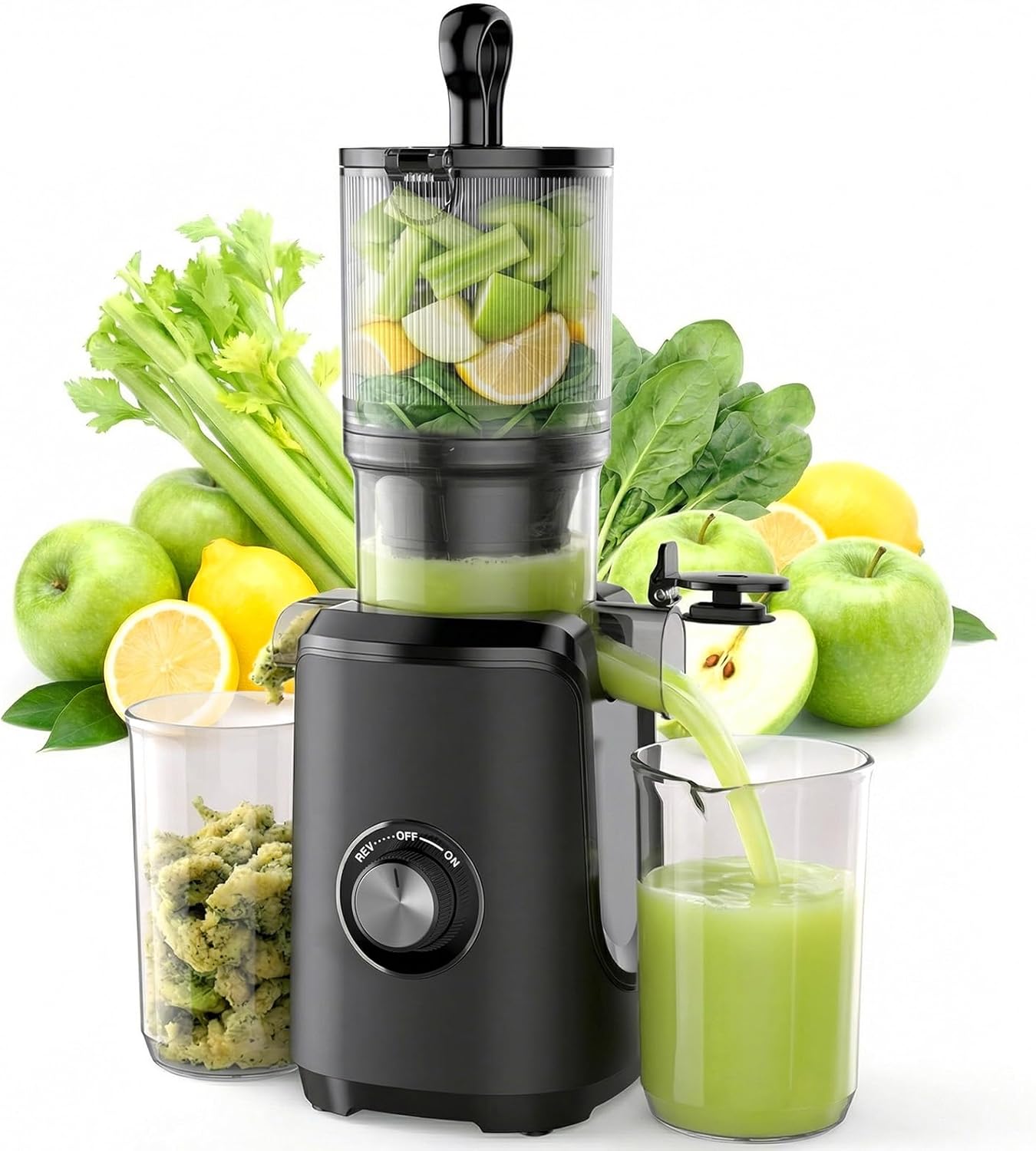
NEWBULIG Cold Press Juicer
| Wattage | 200 watts |
|---|---|
| Voltage | 120 volts |
| Feed chute | 4.25 inches |
| Special Features | Reverse function, Safety lock, Quiet Motor |
The NEWBULIG Cold Press Juicer is a single-auger masticating machine meant for daily home juicing of fruits, vegetables, and leafy greens. Its slow 200 W motor and blade-free design press produce gently to limit heat and oxidation, which helps retain more nutrients and yields a smoother juice from beetroot and other fibrous ingredients. The 4.25-inch feed chute accepts whole carrots and many other items with less prep, and the reverse function clears clogs quickly without full disassembly. Parts detach for hand washing and the package includes a cleaning brush for easier maintenance. Safety features include an automatic safety lock and a quiet motor that keeps kitchen noise low during use. Limitations to note are hand-wash-only care and a modest motor that may process very dense produce more slowly than high-powered centrifugal juicers, so expect longer extraction times for heavy-duty batches.
Best for: Buyers on a budget who want a nutrient-preserving juicer for regular home use and prefer minimal prep and quiet operation when juicing beetroot and other vegetables.
Less Ideal for: People who need very fast commercial-level throughput or want dishwasher-safe parts for frequent heavy use should consider more heavy-duty or fully dishwasher-compatible alternatives.
- Masticating slow-speed extraction preserves nutrients and reduces oxidation.
- Extra-wide 4.25" feed chute reduces chopping and speeds prep.
- Reverse function clears jams without taking the machine apart.
- Quiet motor and safety lock make it suitable for family kitchens.
- Hand wash only; not dishwasher-safe.
- 200 W motor processes dense produce more slowly than higher-wattage models.
Verdict: A budget-friendly masticating juicer that preserves nutrients and handles beetroot well while minimizing prep and noise.
NAMA J2 Cold Press Juicer

| Maximum Power | 200 watts |
|---|---|
| Power Source | Corded Electric |
| Voltage | 120 |
| Number of Speeds | 1 |
| Capacity | 30 fluid ounces |
The NAMA J2 is a compact cold-press (masticating) juicer built for hands-free batch juicing. It uses a single auger and a large self-feeding hopper so you can load an entire recipe and walk away while the machine processes fruits and vegetables at a low 50 RPM. The 200 W motor and slow extraction are aimed at higher yields and better nutrient retention, and the included strainers and containers let you collect juice and separate pulp easily. Its stainless steel and Tritan construction and quick-release parts make it straightforward to rinse and scrub, and the package includes a spinning brush and coarse strainer to simplify cleanup. Because it runs quietly and is engineered for continuous operation, it is suited for daily use and repeated cycles. Limitations are typical of slow juicers: processing hard items like whole beets or large root vegetables may require pre-cutting, and the single-speed design gives less control than multi-speed models for very fibrous produce.
Best for: Buyers who prioritize dependable, daily cold-press juicing and want a mostly hands-off machine that delivers steady yields and quiet operation.
Less Ideal for: If you need adjustable speed settings or frequent dishwasher-safe cleanup, or you plan to juice very large uncut root vegetables without prep, consider other options.
- Self-feeding wide hopper enables hands-free batch juicing
- 200 W motor with 50 RPM auger for high-yield cold-press extraction
- Includes strainers, juice and pulp containers, and cleaning brush for complete setup
- Stainless steel and Tritan parts with quick-release design for easy cleaning
- Single-speed operation offers no speed control for very fibrous or hard produce
- Hand-wash only parts instead of dishwasher-safe components
Verdict: Choose the NAMA J2 if you want a reliable, hands-free cold-press juicer that consistently extracts high-yield juice for daily use.
EanOruus 3-in-1 Cold Press Juicer E-18

| Capacity | 100 fluid ounces |
|---|---|
| Maximum Power | 250 watts |
| Power Source | ac |
| Voltage | 110 volts |
The EanOruus E-18 is a single-auger cold press juicer built for high-volume home use and meal prep. It extracts juice slowly from whole fruit and vegetables through a wide 6.5-inch chute into a large 100 oz hopper so you can process multiple apples, beets, or carrots with minimal chopping. The included juice and sorbet strainers let you switch between clear juice, creamy nut milk, and frozen-fruit sorbet, while the auto-reverse and overheat protection help manage clogging and heavy loads. A 250-watt AC motor provides steady torque for tougher produce like beetroot and leafy greens, and most removable parts are designed for hand washing to simplify cleanup. Practical limits are its reliance on hand washing and plastic components in contact with produce, and the unit is fairly heavy so it is more of a countertop appliance than a portable one. For buyers who want high-yield, quiet cold-press performance and a large hopper for batch juicing, this model is a strong option.
Best for: Buyers who want quiet, high-yield cold-press juicing for frequent batch use and value social proof of reliable performance when processing hard produce like beetroot.
Less Ideal for: If you need a lightweight, portable juicer or prefer mostly dishwasher-safe metal components, look for a different model or a compact centrifugal juicer.
- Extra-wide 6.5-inch chute reduces prep time by accepting whole fruit and large pieces
- Large 100 oz hopper supports batch juicing for families or meal prep
- Auto-reverse and overheat protection reduce jams and protect the motor during heavy use
- 250-watt AC motor delivers steady torque for fibrous produce like beetroot
- Includes interchangeable strainers for juice, nut milk, and sorbet versatility
- Primary food-contact parts are plastic rather than metal
- Most parts require hand washing rather than dishwasher-safe cleaning
- Heavier, countertop-oriented design is not convenient to move frequently
Verdict: Choose the EanOruus E-18 if you want a quiet, high-capacity cold press juicer that handles whole fruits and tough roots like beetroot with minimal prep.
Ninja NeverClog Cold Press Juicer JC151

| Maximum Power | 150 watts |
|---|---|
| Number of Speeds | 2 |
| Capacity | 24 fluid ounces |
| Power Source | Corded Electric |
The Ninja NeverClog JC151 is a slow masticating juicer designed to handle fibrous fruits and vegetables like beets, carrots, celery, and leafy greens. Its 150-watt high-torque motor turns a single auger at low speed to extract juice while minimizing foam and preserving nutrients, and the NeverClog technology plus a reverse function reduces jams when processing dense or stringy ingredients. You get two interchangeable pulp filters to choose between less pulp for smoother juice and lots of pulp for a thicker, fiber-forward drink, and the included 24 oz juice jug and 36 oz pulp container let you make larger batches without frequent stops. Setup and cleanup are straightforward since juice-contact parts are dishwasher safe and the design includes an anti-drip lever to prevent spills. The unit is compact enough for most countertops but is focused on cold-press performance rather than speed, so it is best for planned juicing sessions rather than quick single-serves. It also relies on a 150W motor, so extremely heavy commercial workloads are beyond its intent.
Best for: Buyers who prioritize reliable, clog-resistant cold-press extraction for nutrient-dense vegetables and want a straightforward, low-maintenance home juicer for regular batch juicing.
Less Ideal for: Users seeking the fastest possible single-cup juicing or those who need a heavy-duty appliance for commercial continuous use should consider other options.
- Strong low-speed auger handles fibrous produce like beetroot and leafy greens.
- NeverClog design plus reverse program reduces jams and keeps extraction moving.
- Two interchangeable pulp filters let you control texture from smooth to pulpy.
- Large juice jug and pulp container support making multiple servings or batch prep.
- Dishwasher-safe juice-contact parts and anti-drip lever simplify cleanup and pouring.
- 150-watt motor is for home use and not suited to continuous commercial juicing.
- Not the fastest option—masticating extraction takes longer than centrifugal juicers.
Verdict: Choose the Ninja JC151 if you want a cautious, clog-resistant cold-press juicer that reliably extracts juice from fibrous vegetables like beetroot for regular home batch use.
Choosing the Right Cold Press Juicer for Beetroot: Key Factors to Consider
Extraction Efficiency
How much juice a machine extracts from beetroot matters because roots are dense and can leave significant usable liquid in the pulp. Higher extraction efficiency reduces waste and lowers the per-serving cost of ingredients. Efficiency is influenced by auger design, gear reduction (slow rpm), and the juicer's ability to compress fiber completely. When assessing efficiency, consider both published yield claims and how the juicer handles repeated batches without overheating. Machines that maintain performance over continuous use will give more consistent yields for kitchen routines that include regular beetroot juicing.
Juice Texture and Foam
Beetroot can produce gritty or foamy juice if not pressed slowly and thoroughly. The juicer's rotation speed and straining method determine how much foam and fine particulate end up in the cup. Look for designs that minimize agitation and include fine mesh screens or secondary strainers for a smoother mouthfeel. Texture matters for recipes and palates: smoother juice blends better into smoothies and shots, while foamy, aerated juice can separate quickly and affect flavor perception.
Ease of Cleaning and Stain Resistance
Beetroot juice stains plastic and can cling to small crevices, so cleaning effort is a practical concern. Juicers with fewer parts, tool-free disassembly, and pieces that fit in a standard sink are easier to maintain. Look for detachable strainers that can be brushed clean and materials that resist staining or can be easily bleached if needed. Consider the time you are willing to spend after each juicing session; more frequent use will favor machines with dishwasher-safe components or quick-rinse designs.
Build Quality and Longevity
Masticating juicers for beetroot undergo stress from hard roots and fibrous pulp, so solid construction matters. Metal housings, reinforced augers, and quality bearings extend working life. Durable parts also reduce the chance of warping or cracking when processing dense batches. Warranty length and the availability of replacement components are practical proxies for long-term reliability. Choosing a juicer with robust engineering decreases the likelihood of service interruptions and preserves performance across heavy use.
Feed Chute Design and Clogging Resistance
A narrow or poorly shaped feed chute can lead to frequent jams when introducing beets, especially if you prefer minimal pre-cutting. Juicers designed with efficient pulp ejection and continuous compression help prevent blockages. Consider whether the unit allows for gradual feeding and has reverse or unclogging functions to clear compacted fiber. Reduced clogging means fewer interruptions, less lost product, and a smoother juicing session overall.
Noise, Speed, and Heat Management
Cold press juicers are typically quieter than centrifugal types, but noise and motor heat still vary. Excessive heat can accelerate oxidation and diminish nutrient retention in beetroot juice. A low-rev motor with good torque and cooling will preserve more nutrients and run longer continuous cycles. Noise level affects where you can use the juicer in the home, and thermal management influences how many beets you can process in one go without performance drop-off.
Preparing Beetroot for Best Results
Prep steps influence both yield and cleanup. Trim greens, scrub roots to remove soil, and cut beets into pieces that match the juicer's feed chute. Smaller pieces reduce strain on the auger and lower the chance of clogging.
If you want smoother juice with less sediment, consider briefly steaming or blanching very hard beets to loosen fibers before cold pressing. That extra step can improve extraction but adds prep time and changes flavor slightly.
- Scrub instead of peeling to preserve nutrients when the skin is clean.
- Cut to the recommended piece size for the feed chute to avoid overloading.
- Alternate beets with softer produce like apples or cucumbers to help push fiber through.
Routine Maintenance to Prevent Staining and Odors
Rinse and disassemble parts soon after juicing to prevent beet pigments from setting. Use a soft brush on strainers and a mild cleaning solution for stubborn stains.
Store removable parts in a dry place to avoid mildew. Periodic deep cleans using a diluted vinegar or baking soda soak can remove residual pigments and odors without damaging components.
- Rinse immediately, then soak for 10 to 15 minutes if pigment sets.
- Use a nonabrasive brush on mesh screens to avoid deformation.
- Dry components thoroughly before reassembly to prevent mold.
How Juicing Technique Affects Flavor and Nutrition
Feeding speed, produce order, and batch size all change the final juice. Slow, steady feeding reduces foam and maximizes extraction, while overloading the hopper can increase residual moisture in the pulp.
Cold pressing retains more phytonutrients than high-speed shearing, but exposure to air still causes some oxidation. Drink beetroot juice shortly after pressing or refrigerate in an airtight container to preserve color and nutrients.
- Feed slowly and steadily for consistent compression.
- Consume fresh within 24 to 48 hours for best nutrient retention.
- Combine beets with citrus or ginger for balanced flavor and improved shelf life.
Space and Storage Considerations
Cold press juicers tend to be taller and heavier than compact centrifugal machines, so consider counter footprint and cabinet space. If you have limited counter area, look for models with vertical profiles or parts that nest for storage.
Think about where you will keep frequently used parts like the pulp container and juice jug for quick access. Units with modular components that stack take less space in a pantry or cupboard.
- Measure countertop clearance including feed chute height before buying.
- Check whether components disassemble to a compact form for storage.
- Plan for a dedicated cleaning brush and container near the juicing station.
Common Troubleshooting Tips
If the juicer stalls or chokes on beetroot, stop and reverse briefly if the unit supports it, then clear the feed and continue with smaller pieces. Do not force the motor beyond recommended continuous run times.
If juice tastes bitter or metallic, check for overprocessing or heating. Allow the machine to cool and reduce feed rate. Persistent off-flavors after proper use may indicate need for a deep clean.
- Use the reverse function to clear jams gently.
- Reduce piece size if the auger struggles with dense roots.
- Perform a deep clean monthly to prevent buildup that affects taste.
How We Chose the Best Cold Press Juicer for Beetroot
We prioritized factors that directly affect how well a cold press juicer performs with hard, fibrous roots like beetroot. Extraction efficiency was a top filter because beetroot yield varies dramatically between machines; we favored models with screw designs and feed paths that reduce clogging and squeeze more liquid from pulp. Texture control was a second key criterion, emphasizing slow-speed pressing and auger geometry that produce smooth, low-foam juice. Durability and build materials were included to ensure the machine stands up to frequent root vegetable use, with attention to robust housings and wear-resistant screws. Ease of cleaning was another decisive factor since beetroot can stain and leave fibrous residue; units with fewer parts and accessible strainers scored higher. Finally, warranty and serviceability considerations informed selections to reduce downtime from failures. We excluded centrifugal or high-speed blenders and any juicers not designed for masticating or cold-press operation. Machines with inadequate spec sheets for pulp separation, unclear rotation speed, or limited customer-service coverage were removed from contention. The final shortlist balances real-world extraction performance, maintenance effort, and expected longevity for regular beetroot juicing.
Our full evaluation process is outlined in our review methodology.
FAQ
Can I juice raw beetroot without peeling it?
Often you can juice beets with the skin on if they are thoroughly scrubbed and free of dirt. The skin contains nutrients and nutrients transfer to the juice, but thick or waxed skins may affect flavor and texture.
How much yield can I expect from one medium beet?
Yield varies by juicer and beet size, but a medium beet typically produces a small glass of juice. Machines with higher extraction efficiency will yield noticeably more liquid from the same root.
Will beetroot juice stain my juicer parts permanently?
Beet pigments can leave stains if not cleaned promptly, but most stains fade with regular cleaning and occasional soaking. Choosing materials that resist staining and rinsing parts immediately reduces long-term discoloration.
Is it better to feed whole beets or pre-cut pieces?
Pre-cut pieces sized to the feed chute reduce motor strain and clogging. Whole beets may be acceptable for wide chutes, but cutting into manageable segments helps consistent extraction and protects the auger.
How often should I deep clean the juicer when juicing beets regularly?
For frequent beet use, perform a quick rinse after each session and a thorough clean weekly or monthly depending on volume. Deep cleaning prevents pigment buildup and keeps seals and strainers working properly.
Final Verdict
When choosing a cold press juicer for beetroot, prioritize extraction efficiency, a slow-speed auger, and easy-to-clean components. Those three factors most directly influence how much juice you get, the texture and flavor, and the time you spend maintaining the machine. Balance build quality and clog-resistance with the practicalities of your kitchen space and cleanup routines. Pick the unit that matches how often you will juice, how much prep you are willing to do, and the amount of counter or storage room available to make a confident long-term choice.