
Note: This article contains affiliate links. If you click on these links and make a purchase, we may earn a small commission at no extra cost to you. This helps support our research and content. Read our full affiliate disclosure here.
A dependable dryer makes laundry day faster and protects clothes from unnecessary wear. When you limit the budget to under $800, choices can still deliver solid drying power, sensible cycle options, and reasonable operating costs. This guide narrows the field to seven top picks that balance capacity, efficiency, and fabric care. Below you will find shortlisted dryers selected for real-world home use, plus the evaluation criteria we used to compare them. Use this guide to match features to your drying habits and household size before diving into product details.
Top Picks at a Glance
| Best Overall The best all-around choice for most situations | BLACK+DECKER BCED26 Portable Dryer |  |
| Best Quality Built to a higher standard if you want something more solid | Panda Compact Dryer PAN760SF |  |
| Best Value The sweet spot between price and what you get | Feelfunn 1.5 Cu.Ft Portable Dryer |  |
| Best Budget The cheapest option that still gets the job done reliably | MOJOCO Portable Dryer MJC-T03 |  |
| Top Rated A top-rated pick with lots of positive feedback | BANGSON 1.5 Cu.Ft Portable Dryer |  |
| Most Popular A crowd favorite that many people choose with confidence | BLACK+DECKER BCED37 Compact Dryer | |
| Best Seller A high-volume bestseller chosen again and again | Euhomy Portable Clothes Dryer 1.5 Cu. Ft. |  |
BLACK+DECKER BCED26 Portable Dryer
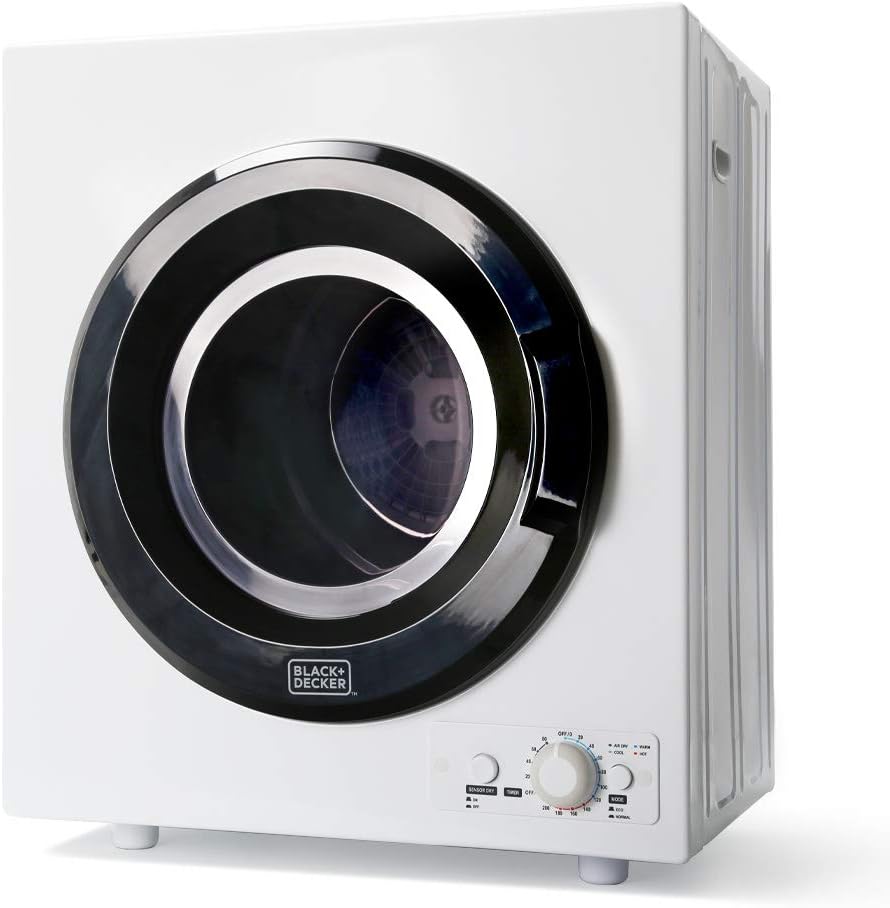
| Capacity | 2.65 cubic feet |
|---|---|
| Max load | 8.8 lbs |
| Power | 1400W, 120V |
| Drying modes | Air Dry, Cool, ECO, Warm, Hot |
The BLACK+DECKER BCED26 is a front-load portable dryer designed for apartments, RVs, and small laundry rooms where a standard 120V outlet is all that is available. It handles up to about 8.8 pounds per load in its 2.65 cu ft stainless drum and offers five modes—Air Dry, Cool, ECO, Warm, and Hot—plus a Sensor Dry feature that monitors moisture to help avoid overdrying. Installation is straightforward with the included 4-inch exhaust connector and it runs on 1400W/120V so drying times are longer than 220V full-size dryers; expect cycles from roughly 30 to 200 minutes depending on load size and settings. The ECO mode that starts with cool air then shifts to heat can save energy on mixed loads, and the transparent front lid and leveling feet make everyday use simple. Trade-offs are its slower cycle times and lower capacity compared with full-size machines, but for buyers needing a reliable, easy-to-install dryer that fits tight spaces this unit delivers sensible features and practical safety protections like overheat prevention.
Best for: Buyers who need a straightforward, plug-in dryer for small living spaces and prioritize easy installation and flexible drying modes over large capacity.
Less Ideal for: Anyone who regularly dries large family loads, bulky bedding, or wants the fastest possible cycle times should choose a full-size 240V dryer instead.
- Compact footprint fits small apartments or closets
- Multiple drying modes including ECO and Sensor Dry for moisture-based shutoff
- Stainless steel drum is gentler on fabrics than plastic tubs
- Includes 4" exhaust connector and adjustable leveling feet for easy setup
- Slower drying times on 120V compared with full-size 220V dryers
- Capacity is limited to about 8.8 lb per load, requiring smaller or more frequent loads
Verdict: A practical plug-in dryer that balances compact size, useful drying modes, and simple installation for renters and small households.
Panda Compact Dryer PAN760SF

| Capacity | 3.52 cubic feet |
|---|---|
| Rated Input | 1500W |
| Voltage | 120V/60Hz |
| Tumble Material | Stainless Steel |
| Included Components | Plastic Venting Hose, mounting kits |
The Panda Compact Dryer PAN760SF is a vented, front-load dryer built for apartments, dorms, and small laundry spaces where a full-size machine does not fit. It offers a 3.5 cubic foot stainless steel drum and a 1500W motor with selectable timed modes including Cold, Hot and Air Dry plus ECO and Sensor Dry for more efficient cycles. The unit can be freestanding, stacked, or wall-mounted and includes a venting hose and mounting kit, which makes installation flexible. Practical touches include a clear door that opens to 105 degrees, an automatic shut-off when the door opens, and a three-layer lint filter for easier maintenance. Because it plugs into a standard 120V outlet it avoids special wiring, but the 1500W rating means longer run times compared with higher-power full-size dryers when tackling heavy or bulky loads. This dryer is best when you need a compact, versatile unit that handles regular household loads without extra electrical work, though users with very frequent heavy laundry needs should expect slower dry times than larger machines.
Best for: Buyers who need a compact, install-flexible dryer for apartments or small homes and who prioritize consistent drying performance without special electrical work.
Less Ideal for: Households that run large, frequent bulky laundry loads or that need the fastest possible dry times should consider a larger capacity or higher-power machine.
- Compact 3.5 cu ft stainless steel drum fits small spaces and handles typical household loads
- 1500W motor with timed, ECO and Sensor Dry modes for flexible drying and energy savings
- Multiple installation options (freestanding, stacked, wall-mounted) and included venting kit
- Standard 120V plug-in design avoids special electrical requirements
- Vented design releases moisture unless externally vented or paired with an indoor venting kit
- 1500W power level can mean longer dry times for bulky or very wet loads compared with full-size dryers
Verdict: A versatile compact vented dryer that delivers reliable, energy-conscious drying for apartments and small homes without requiring special wiring.
Feelfunn 1.5 Cu.Ft Portable Dryer

| Capacity | 1.5 cubic feet |
|---|---|
| Rated Power | 850W |
| Access Location | Front Load |
| Door Orientation | Left |
The Feelfunn 1.5 Cu.Ft Portable Dryer is a space-saving electric dryer aimed at apartments, dorms, and RV use. It delivers up to 850W of power and reaches a maximum temperature around 140°F, using forward and reverse tumbling to reduce tangles and wrinkles. Controls are a simple knob with four drying modes, so basic loads like underwear, t-shirts, and baby clothes are easy to run without fuss. The stainless steel drum and a three-layer lint filter add durability and help contain lint, while a transparent door lets you check progress and a door-safety cutout stops the machine if opened. It is lightweight enough to wall-mount with included brackets, and the unit is rated to handle small loads—manufacturer guidance suggests limiting wet load to about 10 pounds for faster drying. Expect realistic limitations: drying capacity and cycle times are modest compared with full-size dryers, and the 850W power means larger or very wet loads will take longer. For buyers who need a compact, easy-to-use dryer for frequent small loads, this model delivers practical performance in a small footprint.
Best for: Buyers who prioritize a compact, no-fuss dryer to handle regular small loads in tight living spaces and value easy operation and install flexibility.
Less Ideal for: Households that need to dry large weekly loads or want high-speed, feature-rich drying cycles should consider full-size or higher-powered dryers instead.
- Compact 1.5 cu.ft footprint suited to apartments, dorms, and RVs
- 850W power with forward and reverse tumbling to reduce tangles and wrinkles
- Stainless steel drum for durability
- Three-layer lint filter and transparent door for easy monitoring and maintenance
- Includes wall-mount brackets and exhaust connector for flexible placement
- Small capacity means longer or multiple cycles for larger laundry loads
- Lower power compared with full-size dryers, so very wet items dry slowly
- Only basic knob controls without advanced programs or digital timing
Verdict: A practical compact dryer that delivers dependable, low-complexity drying for small loads in apartments and other tight spaces.
MOJOCO Portable Dryer MJC-T03

| Form Factor | Top Load |
|---|---|
| Capacity | 22 pounds |
| Heating Power | 600W |
| Included Components | Dryer, Dryer Bag |
The MOJOCO Portable Dryer is a lightweight, top-load folding dryer intended for small loads and tight spaces. It uses a 600W heating element with two temperature modes and a timer to dry lightweight garments; the brand claims light items dry in 1–2 hours and heavier items in 3–4 hours. You hang clothes inside the collapsible drum and select the heat level and timer, and the unit circulates warm air while offering whisper-quiet operation. Notable extras include a built-in LED UV sanitizing lamp and automatic overheat protection for safety. Practical benefits are clear: it is easy to move, stores flat in a carry bag, and avoids running a full-size dryer for a few items, which can save energy. Limitations are its modest capacity and slower cycle times compared with full-size vented dryers, and performance will vary with fabric type and how wet garments are at start of the cycle.
Best for: Buyers on a tight budget who need a portable, space-saving dryer for small loads, travel, or apartment living and prioritize low energy use and easy storage.
Less Ideal for: Households that regularly dry large, heavy loads or need fast turnaround for full laundry baskets should choose a full-size dryer instead.
- Compact, foldable design with included carry bag for easy storage and travel
- 600W heating with two temperature modes for gentle or faster drying
- Built-in timer and whisper-quiet operation suitable for bedrooms or small spaces
- LED UV sanitizing lamp and automatic overheat protection for added garment care and safety
- Can handle multiple lightweight items at once (up to nine garments)
- Not as fast or powerful as full-size vented dryers, especially for heavy fabrics
- 22 lb capacity and compact drum limit bulk items and large loads
Verdict: A compact, energy-saving portable dryer that stretches a tight laundry budget by handling small loads and travel needs without taking much space.
BANGSON 1.5 Cu.Ft Portable Dryer

| Form Factor | Front Load |
|---|---|
| Capacity | 1.5 cubic feet |
| Door Orientation | Right |
This BANGSON portable dryer is a small, vented electric unit aimed at apartments, dorms, and RVs where space and a standard 120V outlet are the rule. It supports two drying modes — heat dry for thorough drying and cool air for gentle freshening — controlled by a simple knob, so cycles are easy to set without a learning curve. The stainless steel drum and removable washable lint filter make upkeep straightforward and help prevent odors and lint buildup. Installation options are flexible thanks to the included exhaust hose and the unit's compact footprint, and it claims capacity for up to about 9 lb wet load (about 5.5 lb dry), enough for shirts, underwear, small towels, and light pants. Expect longer run times for heavy loads because the compact dryer trades speed for portability. Because it is a vented 120V model, it needs exhaust space and will not be as fast or high-capacity as full-size models, but it offers reliable, low-effort drying where larger machines are impractical.
Best for: Buyers who need a dependable, space-saving dryer for frequent small loads and prioritize straightforward operation and low-maintenance components.
Less Ideal for: Households that regularly dry large, heavy loads or need a ventless installation should consider a larger capacity or condenser/heat-pump alternative.
- Compact footprint fits tight spaces and installs on a standard 120V outlet
- Two-mode control (heat and cool air) for deep drying or gentle freshening
- Stainless steel drum resists rust and helps prevent odors
- Removable washable lint filter and included exhaust hose simplify maintenance and setup
- Vented design requires an exhaust outlet and some clearance for the hose
- Small 1.5 cu ft capacity means longer cycles for heavy items and limited single-load size
Verdict: A reliable, compact vented dryer that delivers simple, low-maintenance drying for small spaces and frequent small loads.
BLACK+DECKER BCED37 Compact Dryer
| Capacity | 3.5 cubic feet |
|---|---|
| Load volume | 13.2 lbs. |
| Power | 1500W, 120V |
| Drum material | Stainless steel |
| Exhaust connector | 4" diameter |
The BLACK+DECKER BCED37 is a compact, vented electric dryer built for apartments and small laundry areas where a 120V outlet is all that is available. It handles up to about 13.2 lb. loads in a 3.5 cu ft stainless steel drum and offers multiple drying modes including Air Dry, Cool, ECO, Warm and Hot plus a Sensor Dry function that measures moisture and adjusts runtime. Because it runs at 1500W on 120V, drying cycles are longer than a 220V full-size machine and the manufacturer recommends filling the drum halfway for best results. The unit includes a 4-inch exhaust connector, reusable lint and exhaust filters, adjustable leveling legs and overheat protection for safety. Practical benefits are easy installation, front-loading access with a transparent lid, and a size that fits tight spaces; limitations are heavier drying times and the need to vent the exhaust through the included connector. For buyers prioritizing compact fit and vented drying without a dedicated 240V circuit, this is a capable option under $800.
Best for: Buyers who need a vented dryer that fits tight spaces and must run from a standard household outlet while prioritizing reliable, proven performance and clear user feedback.
Less Ideal for: People who need very fast, full-size drying performance or who cannot install an external vent should consider other solutions.
- Runs on standard 120V outlet so no hardwiring or special circuit is needed
- 3.5 cu ft stainless steel drum with up to 13.2 lb load capacity suitable for apartment-sized loads
- Multiple drying modes plus Sensor Dry to reduce over- or under-drying
- Includes 4" exhaust connector and reusable lint/exhaust filters for vented installation
- Safety features like overheat protection and adjustable leveling legs
- 120V/1500W operation means significantly longer drying times compared with 240V full-size dryers
- Requires venting through an exhaust hose so not suitable for unvented installations
Verdict: A practical, vented compact dryer that delivers reliable apartment-friendly drying on a standard 120V outlet.
Euhomy Portable Clothes Dryer 1.5 Cu. Ft.

| Capacity | 1.5 cu. ft. |
|---|---|
| Power | 850W |
| Max temperature | 140°F |
| Max wet load | 10 lb |
| Certifications | ETL, DOE |
The Euhomy portable clothes dryer is a small-capacity electric dryer intended for apartments, dorms, RVs, or places without full-size machines. It uses an 850W heater and stainless steel drum to reach a reported maximum temperature around 140°F and handles up to about 10 lb of wet laundry, making it suitable for shirts, underwear, towels, and baby clothes. The unit offers multiple timed modes including cool, warm, hot, anti-wrinkle, and air-fresh cycles so you can match heat and run time to fabric needs, and a 105° wide-angle door plus a triple-layer lint filter help with loading and keeping lint contained. Safety features include an auto-stop when the door opens and ETL/DOE certifications. Trade-offs are its limited capacity and lower power compared with full-size dryers, longer runs for heavy items, and the need to use dehydration or spin-dry beforehand for best results. For buyers who need a quiet, moveable dryer for small loads, it is a practical compact option within the small-appliance price range.
Best for: Buyers who want a quiet, safety-certified portable dryer for small, frequent loads in tight living spaces and prioritize reliability over high capacity.
Less Ideal for: Households that regularly dry large loads, heavy bedding, or need fast turnaround on bulky items should choose a larger, more powerful dryer instead.
- Compact 1.5 cu. ft. design fits apartments and small spaces
- Multiple timed heat modes (cold, warm, hot, air dry) for fabric-specific drying
- Stainless steel drum and 105° wide-angle door make loading and unloading easier
- Triple-layer lint filter reduces lint scatter and helps with pet hair
- ETL and DOE certifications indicate tested safety and energy compliance
- 10 lb wet load limit means larger items and heavy loads require multiple cycles or a full-size dryer
- 850W heater and lower maximum temperature lead to longer drying times than conventional dryers
- No built-in condenser or ventless heat-pump system so performance depends on pre-spin/extraction
Verdict: A safe, compact electric dryer that reliably handles small, frequent loads for apartment or dorm living.
Choosing the Right Dryer: Key Factors to Consider
Drying Efficiency and Sensor Accuracy
How quickly and evenly a dryer removes moisture affects both utility bills and clothes longevity. Models with accurate moisture sensors typically avoid over-drying, which preserves fabric fibers and reduces the need for ironing.
In practical terms, look for dryers that offer sensor-based cycles rather than fixed-timer-only operation. Sensor accuracy matters more for mixed loads and thicker items such as towels and jeans. Better sensors reduce cycle time and energy use, both important when choosing within an under-$800 budget.
Energy Consumption and Operating Cost
Initial price is only part of the cost equation. Energy consumption per cycle determines ongoing utility bills. Dryers with improved insulation, lower heat loss, and efficient drying algorithms use less electricity over time.
Check typical cycle energy use and available eco modes. For households that run frequent loads, a slightly more efficient dryer can save noticeable money across seasons. Also consider vented versus ventless designs, as ventless heat-pump style machines often run differently and may have distinct installation impacts.
Capacity, Drum Size, and Load Matching
Capacity dictates how much you can dry in one cycle and influences convenience. Larger drums reduce the number of cycles needed but can cost more; smaller drums might force frequent runs that increase wear and energy use.
Match drum size to your household: singles or couples often prefer compact but efficient drums while families usually benefit from a larger capacity. Also factor in drum design features that improve tumbling and prevent tangling for bulky items like comforters.
Fabric-Care Features and Cycle Variety
Different fabrics require different care. A dryer that offers dedicated modes for delicates, heavy fabrics, and refresh/steam options can extend clothing life and reduce trips to a professional cleaner.
Evaluate whether the machine provides low-heat cycles, wrinkle-reduction settings, and a gentle tumble option. Those capabilities matter if you own mixed-fabric wardrobes or frequently dry delicate garments.
Installation Requirements and Venting
Venting type determines where and how the dryer can be installed. Vented dryers need ducting to the outside, which affects placement and potential retrofit costs. Condensing or ventless models simplify placement but can have different drying times and moisture management needs.
Confirm space, electrical supply, and ventilation before buying. For apartments or tight laundry rooms, ventless options may be attractive, while homes with existing ducts can often use vented units with faster cycle times.
User Interface, Maintenance, and Durability
Controls should be intuitive and durable since you will use them frequently. Mechanical knobs and straightforward displays tend to be easier to repair, while digital panels offer precision but can be costly to fix.
Also consider lint-trap accessibility, drum finish, and how easy it is to clean vents and filters. A machine that is simple to maintain will typically last longer and avoid costly service calls.
Vented Vs Ventless: Which Works for Your Space
Vented dryers expel moist air through ducting to the exterior, which usually results in shorter cycle times and straightforward drying. If your laundry area has existing ductwork to the outside, a vented model is often the most efficient and easiest to maintain.
Ventless and condenser dryers route moisture into a collection container or use heat-pump technology to recycle air. These models are useful where external venting is not possible, such as in apartments, but they may have longer cycle times and different humidity considerations.
- Vented: typically faster drying, requires exterior ductwork
- Ventless: flexible placement, may need more frequent water reservoir emptying
- Heat-pump variants: higher efficiency in many cases but may cost more upfront
Sizing Your Dryer for Household Needs
Choose a drum size that aligns with how often and how much laundry you do. For one- to two-person households, a medium-capacity drum often balances space and efficiency. Families that wash larger loads should prioritize larger drums to reduce cycle frequency.
Also consider door design and orientation for installation. A dryer that fits ergonomically in your laundry space reduces bending and makes loading bulky items easier.
- Medium drum: good balance for couples or small families
- Large drum: better for frequent large loads and bulky items
- Check door swing and stacking compatibility if pairing with a washer
Practical Fabric-Care Settings to Look For
Seek models with a range of temperature settings and a dedicated low-heat or air-dry option for delicate fabrics. Steam or refresh cycles can reduce wrinkles and the need for ironing, while timed tumble and moisture-sensor modes help avoid over-drying.
For heavy bedding or sportswear, look for a heavy-duty or bulky-item cycle that increases tumble action without excessive heat exposure.
- Delicate/low-heat cycles protect sensitive fabrics
- Sensor drying prevents over-drying and saves energy
- Steam/refresh reduces wrinkles and odors between washes
Installation, Electrical Needs, and Safety
Confirm the electrical requirements for the unit you choose. Most residential dryers require a dedicated circuit and either a 120V or 240V connection, depending on the model and region. Mismatched electrical setups can prevent safe operation or require electrician work.
Consider clearance for ventilation and airflow. Proper installation that preserves vent pathway and lint access reduces fire risk and maintains drying performance.
- Verify voltage and circuit requirements before purchase
- Ensure sufficient clearance for door opening and ventilation
- Maintain accessible lint filters and vent runs for safety
Noise, Vibration, and Home Comfort
Dryer noise and vibration can impact where you place the appliance, especially in open floor plans or near living spaces. Look for units with balanced drums, quality suspension, and noise-reduction features if quiet operation matters.
Rubber feet, anti-vibration mounts, and precise drum balancing all reduce transferred noise. If your laundry area is near bedrooms, prioritize quieter models or install sound-dampening measures.
- Check decibel ratings when available for quieter operation
- Anti-vibration features help on uneven floors
- Consider placement and door sealing to limit sound leakage
How We Chose the Best Dryer
We prioritized criteria that matter for long-term satisfaction with a budget of under $800. First, we looked at drying performance across common load types, including sensor-controlled cycles that stop when clothes reach the right moisture level. Second, we measured energy efficiency by cycle and drum insulation, since efficient models lower operating costs over time. Third, we considered cycle variety and fabric-care features such as low-heat, steam refresh, and delicate settings that reduce shrinkage and wear. Fourth, capacity and drum size were assessed so buyers can choose models that match typical household loads. Finally, we factored in reliability signals like simple mechanical controls and user-serviceable components which tend to reduce repair complexity. We excluded specialty commercial units and high-end premium models above the $800 limit. Products that lacked basic safety features or offered no moisture sensing were removed from consideration. The final list emphasizes balanced choices that deliver usable features, predictable energy use, and straightforward maintenance.
Our full evaluation process is outlined in our review methodology.
FAQ
Can I use a dryer under $800 for large family loads?
Yes. Many budget dryers offer larger drum sizes that handle family-sized loads. Prioritize capacity and a heavy or bulky cycle to ensure even drying of towels and bedding.
Are ventless dryers less effective than vented models?
Ventless dryers work well where exterior venting is not possible but can have longer cycles and different moisture handling. They are a practical choice for apartments or tight spaces.
How important are moisture sensors in this price range?
Moisture sensors are valuable because they reduce over-drying and save energy. Many models under $800 include sensor cycles, making them a worthwhile feature to prioritize.
What maintenance keeps a dryer running safely and efficiently?
Regularly clean the lint trap after each load, clear vent ducts periodically, and check seals and drum bearings for wear. Proper maintenance improves performance and reduces fire risk.
Can I stack a dryer on top of my washer with models under $800?
Stacking is possible with many compact or front-loading dryers, but verify stacking kit compatibility and clearance. Ensure the combined setup fits your space and maintains stable operation.
Final Verdict
When shopping for a dryer under $800, prioritize the features that match how you do laundry: sensor accuracy and energy use for ongoing savings, capacity for load size, and fabric-care cycles for delicate items. Installation constraints such as venting and electrical supply will also narrow your options, so confirm those details before choosing. Balance the tradeoffs between cost, efficiency, and convenience. Focus on dryers that offer reliable sensor drying, straightforward controls, and reasonable capacity to get the best long-term value within the budget.