
Note: This article contains affiliate links. If you click on these links and make a purchase, we may earn a small commission at no extra cost to you. This helps support our research and content. Read our full affiliate disclosure here.
If you rely on kitchen knives for daily prep, an easy to use knife sharpener saves time and keeps blades cutting cleanly. The right sharpener minimizes guesswork, reduces the risk of damage, and helps you maintain consistent edges with minimal skill. This guide covers seven shortlisted, easy-to-use sharpeners chosen for home cooks who want reliable results without learning complex sharpening techniques. We evaluate each option for how simple it is to operate, the consistency of the resulting edge, and whether it protects blade geometry and safety during routine use. Read on for quick, practical guidance to match a sharpener to your routine and skill level.
Top Picks at a Glance
| Best Overall The best all-around choice for most situations | Sharp Pebble Adjustable Knife Sharpener |  |
| Best Quality Built to a higher standard if you want something more solid | Chef'sChoice Trizor 15XV |  |
| Best Value The sweet spot between price and what you get | AnySharp Hands-Free Knife Sharpener |  |
| Best Budget The cheapest option that still gets the job done reliably | Smith's 2-Step Knife Sharpener CCKS |  |
| Top Rated A top-rated pick with lots of positive feedback | Work Sharp MK2 Knife Sharpener |  |
| Most Popular A crowd favorite that many people choose with confidence | KitchenIQ Edge Grip 2-Stage Sharpener |  |
| Best Seller A high-volume bestseller chosen again and again | KITCHELLENCE 3‑Stage Knife Sharpener |  |
Sharp Pebble Adjustable Knife Sharpener
| Grit Type | Coarse, Medium, Fine |
|---|---|
| Material Type | Acrylonitrile Butadiene Styrene, Rubber |
| Included Components | Knife Sharpener |
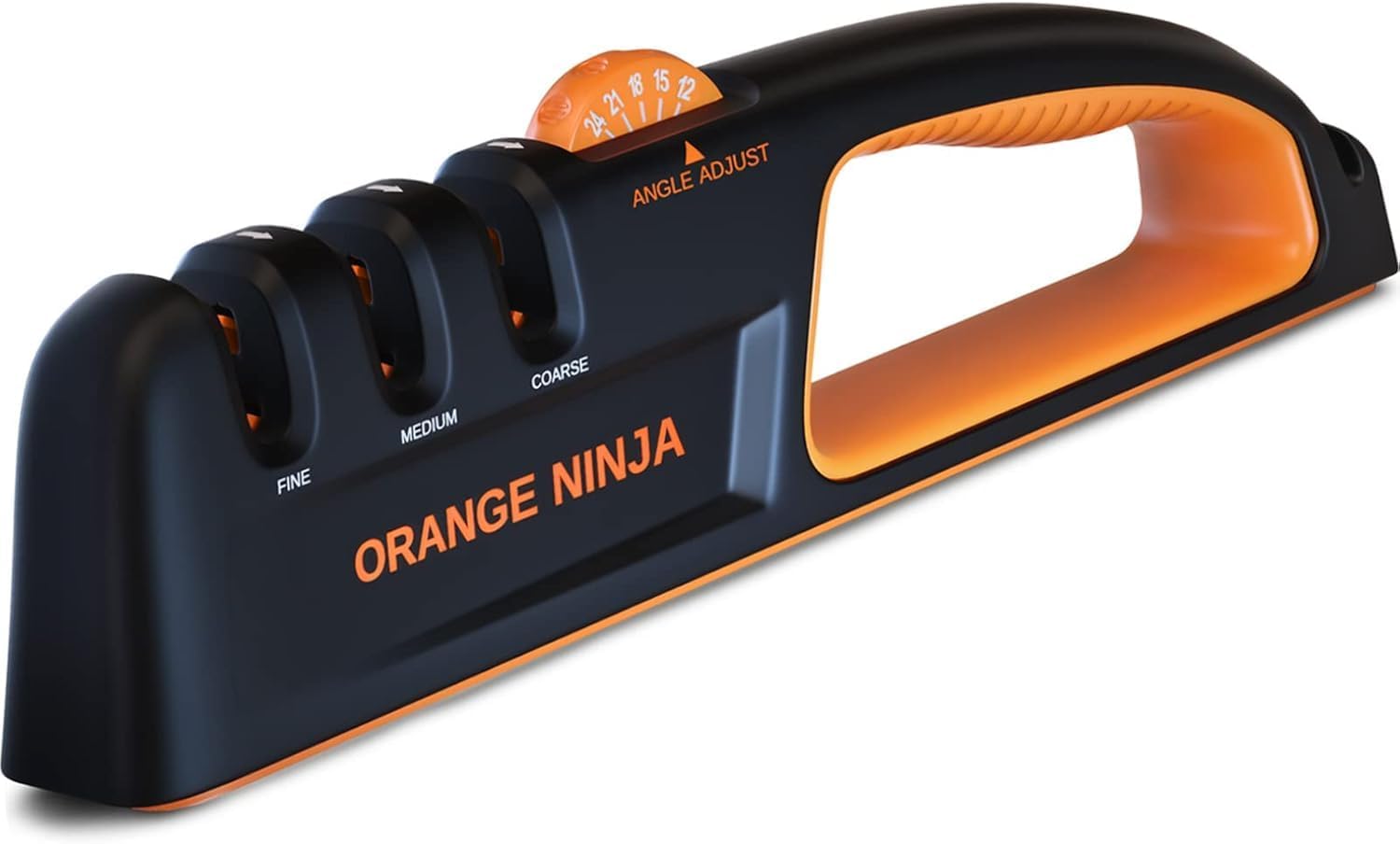
The Sharp Pebble Adjustable Knife Sharpener is a compact, handheld system that sharpens straight-edge knives in three progressive grit stages. Users set one of five angle positions (12°, 15°, 18°, 21°, 24°) and draw the blade through the coarse, medium, and fine slots to repair, restore, and polish the edge. Its ergonomic ABS housing and rubberized grip make it easy to hold while sharpening kitchen, pocket, or hunting knives, and the stepwise grit progression makes it simple to move from edge repair to finishing. Because it is manual, you control the speed and pressure, which helps avoid over-sharpening but requires a steady hand for consistent results. The unit is not suitable for serrated blades or scissors, and very high-end specialty blades may benefit from a stone or professional service instead. For someone who wants a fast, tool-free way to refresh dull straight knives at home, this sharpener provides predictable, repeatable results without a steep learning curve.
Best for: Buyers who want an easy, low-effort way to restore and maintain straight-edge knives at home without learning stone sharpening.
Less Ideal for: People who need to sharpen serrated knives, scissors, or who prefer precision stone sharpening for high-end blades.
- Adjustable five-angle settings for matching common sharpening angles
- Three grit stages (coarse, medium, fine) for repair through polishing
- Ergonomic ABS body with rubber grip for stable handheld use
- Compact and portable design suitable for kitchen or outdoor knives
- Not designed for serrated blades or scissors
- Manual operation requires consistent hand technique for best results
Verdict: A straightforward, portable manual sharpener that makes it fast and easy to bring straight-edge knives back to a usable, polished edge.
Chef'sChoice Trizor 15XV

| Material Type | Diamond |
|---|---|
| Grit Type | Fine |
| Stages | Three |
| Included Components | Knife Sharpener |
The Chef'sChoice Trizor 15XV is a compact three-stage electric sharpener designed to convert and maintain 15-degree class edges using 100 percent diamond abrasives and a final stropping stage for a polished finish. You use it by running a straight or serrated blade through the guided slots in stage 1 to form the primary bevel, stage 2 to hone with finer diamond abrasives, and stage 3 to polish and prolong the edge; conversion from a typical 20-degree factory edge to a sharper 15-degree Trizor edge is straightforward. The built-in precision angle guides and flexible spring guides remove most of the guesswork, so sharpening is fast and repeatable — initial sharpening takes about a minute and touch-ups only seconds. Practical benefits include consistently thin, razor-like edges for cleaner slicing and a simple, safe user flow that does not require hand sharpening skill. Limitations are that it is specialized for 15-degree edges so some knife styles or users who prefer thicker, more robust factory angles may not want that conversion, and electric slots can be less suitable for extremely narrow or oddly shaped blades.
Best for: Buyers who prioritize high cutting performance and want a fast, easy way to produce a thin, razor-sharp 15-degree edge without mastering hand sharpening.
Less Ideal for: Users who prefer to preserve original thicker factory angles, owners of highly specialized or unusually shaped blades, or those who want a manual honing-only tool.
- Three-stage system with 100% diamond abrasives for fast, durable sharpening
- Precision angle guides and flexible spring guides for consistent, repeatable edges
- Final stropping/polishing stage produces a refined, razor-like finish
- Can convert common 20-degree factory edges to a sharper 15-degree Trizor edge
- Optimized for 15-degree edges so it may not suit knives meant to keep thicker factory angles
- Electric slot design may not accommodate very narrow, curved, or specialty blade profiles
Verdict: If you want a fast, no-fuss way to achieve and maintain razor-sharp 15-degree edges, the Trizor 15XV delivers consistent professional results.
AnySharp Hands-Free Knife Sharpener

| Material Type | Plastic, Tungsten Carbide |
|---|---|
| Grit Type | Fine |
| Included Components | 1 x Knife Sharpener |
The AnySharp hands-free sharpener is designed for quick edge restoration without skill or electricity. You lock the unit to a smooth countertop with the PowerGrip suction base, then draw blades through the pre-set 20-degree tungsten carbide slots to restore a fine edge; it works for most kitchen knives including some serrated and hardened blades. Its lightweight plastic body keeps the sharpener compact for drawer storage and the fixed angle removes guesswork, making it useful for busy cooks, beginners, and seniors who want a safe, repeatable process. Because the grit is fine and the angle is fixed, it excels at routine touch-ups rather than heavy re-profiling of damaged or very dull blades. The simple design and no-frills operation offer reliable, low-cost maintenance, though professional sharpeners or adjustable-angle systems are better choices when you need custom edge geometry or aggressive material removal.
Best for: Practical home cooks who want a fast, low-effort way to keep kitchen knives sharp without learning sharpening techniques or using power tools.
Less Ideal for: Users who need professional-level sharpening, adjustable edge angles, or who regularly restore chipped or heavily worn blades.
- PowerGrip suction base locks the sharpener to smooth surfaces for hands-free, safer sharpening
- Pre-set 20-degree tungsten carbide slots remove guesswork and simplify daily touch-ups
- Compact, lightweight design stores easily in a drawer and needs no power or batteries
- Works on a wide range of kitchen knives including many serrated and hardened blades
- Fixed fine grit and single angle mean limited ability to re-profile severely damaged or very dull blades
- Plastic body may feel less durable than metal-bodied professional sharpeners
Verdict: A safe, compact, and foolproof option for everyday edge touch-ups that keeps kitchen knives usable with minimal effort.
Smith's 2-Step Knife Sharpener CCKS

| Material Type | Synthetic |
|---|---|
| Grit Type | Coarse,Fine |
| Included Components | 1 sharpener |
Smith's CCKS 2-Step Knife Sharpener is a small, portable pull-through unit that uses crossed tungsten carbide blades in a coarse slot to quickly reprofile dull edges and crossed ceramic rods in a fine slot to hone and polish the bevel. It is intended for handheld use in the field or kitchen and works the same way each time thanks to preset angles, so three to four pulls through the carbide slot will usually restore a very dull blade and a few passes through the ceramic rods will refine the edge. Practical features include non-slip rubber feet for stability, a lanyard hole for carry, and a lightweight plastic housing that floats if dropped in water, making it convenient for fishing and hunting trips. The design is simple and easy to use for beginners, but it offers limited control over angle and is not a substitute for stones or guided systems when you need precise bevel work or repair on premium blades.
Best for: Buyers who want an inexpensive, no-fuss sharpener for basic edge restoration at home or on outdoor trips and prioritize ease of use and portability.
Less Ideal for: Users seeking precision angle control, full blade reprofiling, or maintenance of premium kitchen knives should choose a guided stone system or professional sharpening service instead.
- Two preset stages (coarse tungsten carbide and fine ceramic) simplify sharpening for beginners
- Portable, lightweight design with lanyard hole and flotation for outdoor use
- Non-slip rubber feet add stability during sharpening
- Preset angles limit ability to change bevel or perform advanced repairs
- Plastic housing and simple abrasives are not ideal for very high-end knives
Verdict: A cheap, easy-to-use two-stage pull-through sharpener that quickly restores a working edge for everyday and outdoor knives.
Work Sharp MK2 Knife Sharpener

| Included Components | Abrasive Belts, Knife Sharpener |
|---|---|
| Material Type | Plastic |
| Grit Type | Medium |
| Model Number | WSKTS2 |
The Work Sharp MK2 is an electric belt sharpener built to make regular sharpening fast and repeatable. It uses flexible abrasive belts that conform to the blade edge so you can sharpen kitchen knives, pocket knives, serrated edges, scissors, axes and other yard tools without complex jigs. The unit has a two-speed motor for more control when you need heavier material removal on tools and a guided edge support that helps maintain consistent angles all the way to the tip. In practice the MK2 is straightforward: pick a belt grit, seat the blade in the guide, and run it through a few passes to restore a working edge. It comes with replacement abrasive belts included which keeps maintenance simple. Limitations are that it is a power tool that removes metal quickly so it is not the gentlest option for delicate or very thin specialty blades, and you will need to stock belts for different grits over time. For buyers who want a fast, repeatable, and versatile sharpener the MK2 is a solid, reliable choice.
Best for: Buyers who prioritize a dependable, low-effort sharpening routine and want a single machine that can service kitchen knives and common tools with consistent results.
Less Ideal for: People who prefer nonpowered, ultra-fine hand honing for preserving minimal stock on heirloom or specialty blades should look at manual stones or strops instead.
- Flexible abrasive belts conform to the blade for consistent contact across tips and serrations
- Two-speed motor lets you choose more power for heavy tools or gentler removal for knives
- Guided edge support helps maintain repeatable sharpening angles
- Includes abrasive belts so you can sharpen out of the box
- Removes stock relatively quickly so it is less suited to very thin or specialty blades
- Requires replacement belts for different grits over time
Verdict: The MK2 is a fast, reliable electric sharpener that delivers repeatable edges for knives and common tools with minimal setup.
KitchenIQ Edge Grip 2-Stage Sharpener

| Material Type | Plastic |
|---|---|
| Grit Type | Fine |
| Included Components | Complete |
The KitchenIQ Edge Grip 2-Stage Sharpener is a simple pull-through tool for quickly restoring and honing kitchen knives. You use the coarse carbide slot to set an edge on dull or nicked blades, then finish with the fine ceramic rods to polish and refine the bevel; sharpening is done with a single-direction pull, not back-and-forth. Its small footprint and V-shaped edge grip let you stabilize the tool on a countertop edge or flat surface, and non-slip feet plus a soft rubber handle improve comfort and safety during use. The preset angles make it easy for anyone to get a usable edge without learning complex sharpening technique, and it works on most straight and many serrated blades. Expect it to remove material relatively quickly with the carbide stage, so frequent heavy use will eventually need more aggressive maintenance from a professional or a stone. It is also a manual, basic sharpener so it cannot set custom angles or deliver the ultra-refined factory edge that some powered or guided systems can produce.
Best for: Buyers who want a low-effort, reliable way to keep everyday kitchen knives sharp and prefer a proven, easy-to-use tool with clear social proof of performance.
Less Ideal for: Enthusiasts seeking precise angle control or mirror-polished, factory-level edges should choose a guided stone system or electric sharpener instead.
- Two-stage system (carbide coarse and ceramic fine) handles both edge setting and polishing
- Patented V-edge grip allows safe sharpening on a countertop edge and prevents blade drag
- Preset angles make it quick and easy for non-experts to sharpen knives
- Compact size stores easily in a drawer and has non-slip feet for stability
- Fixed-angle, manual pull-through design cannot produce custom bevel angles or the finest professional edge
Verdict: A compact, user-friendly two-stage pull-through sharpener that reliably restores and hones household knives with minimal skill required.
KITCHELLENCE 3‑Stage Knife Sharpener
| Material Type | Plastic |
|---|---|
| Number of Items | 1 |
| Included Components | Yes |
| Item Weight | 180 g |
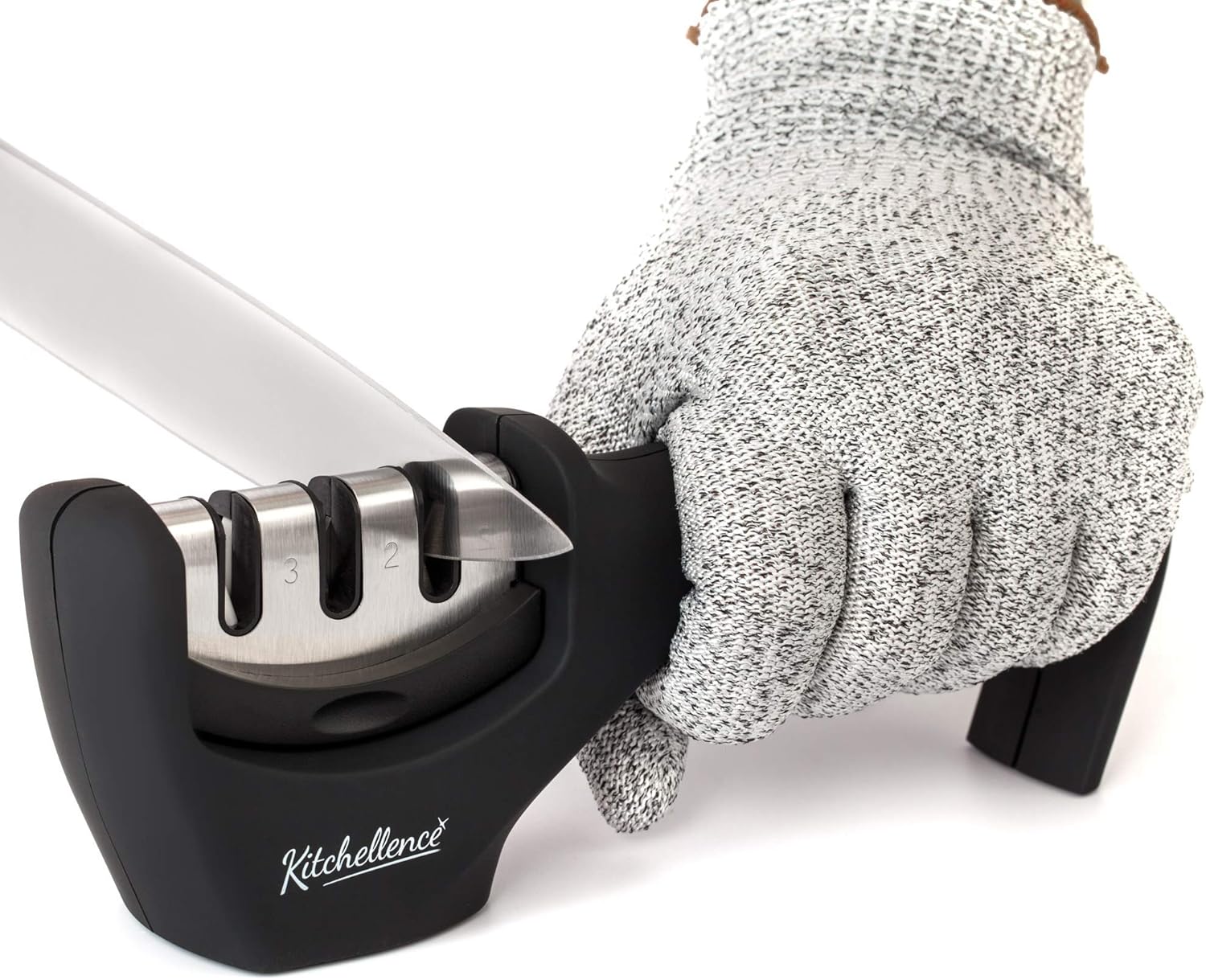
This three-slot sharpener is built for simple, quick blade maintenance at home. The first slot uses a diamond rod to realign damaged edges, the second restores the knife's V profile, and the third fine-polishes for a smoother cutting edge. It has an ergonomic handle and nonslip base for one-handed stability and includes a cut-resistant glove to reduce the risk of slips while sharpening. Because it is manual and compact, you can sharpen most straight-edged kitchen knives in a few controlled pulls without tools or electricity. The ABS-plastic housing keeps the unit lightweight and easy to store, though heavy use will reveal its consumer-grade construction compared with metal-bodied models. It works best for routine edge upkeep and simple repairs but is not a replacement for professional re-profiling of high-end knives or serrated blades. For a risk-averse buyer who wants an easy, safe way to keep everyday knives usable, this is a practical, low-effort choice.
Best for: Buyers who prioritize safety and ease of use and want a straightforward, low-risk way to maintain everyday kitchen knives without tools or electricity.
Less Ideal for: Users seeking a professional-grade sharpening system for high-end knives, serrated blades, or full re-profiling should choose a different solution.
- Three distinct sharpening stages for repair, sharpening, and polishing
- Ergonomic handle and nonslip base for stable one-handed use
- Includes a cut-resistant glove for added user safety
- Manual operation requires no electricity and is quick for routine touch-ups
- Plastic construction is less durable than metal-bodied professional sharpeners
- Not suitable for serrated knives or complex blade geometry
Verdict: A simple, safe three-stage sharpener that makes routine at-home knife maintenance fast and low risk.
Choosing the Right Easy to Use Knife Sharpener: Key Factors to Consider
Sharpening Method
The sharpening method—guided slots, pull-through abrasives, guided rods, or electric honing systems—determines how much skill is required and what results you can expect. Guided systems hold the blade at a fixed angle for consistent results and are usually easiest for beginners. Pull-through abrasive sharpeners are often fastest but can be more aggressive and risk removing more metal if used improperly. Electric stropping or motorized options speed the job but may demand attention to pressure and motion to avoid overheating or uneven wear.
Consider whether you prefer a tool that enforces an exact angle or one that allows manual control. For most home cooks, a guided or slot-based sharpener offers a predictable edge with fewer passes, while manual stones or rod systems provide greater versatility for those willing to invest time learning technique.
Angle Compatibility
Kitchen knives are typically sharpened at a range of angles depending on intended use; thinner edges require lower angles, while robust kitchen knives need higher angles for durability. A sharpener that supports common angle ranges or offers adjustable angle guides helps maintain the correct geometry and prolong blade life. Fixed-angle devices work well when the preset angle matches your knives, but they can be limiting if you use a mix of western and thinner Asian-style blades.
When evaluating angle compatibility, check whether the tool preserves the factory bevel or forces a new one. For many users, the priority is keeping a consistent, serviceable edge rather than regrinding the blade profile, so look for options that balance ease with appropriate angle support.
Material and Abrasive Type
Different abrasives cut steel at different rates and produce different finishes. Carbide or ceramic abrasives are common in easy-to-use sharpeners because they are hard, cut fast, and require little maintenance. Diamond abrasives cut the quickest and last longest but can be more aggressive. Natural or synthetic whetstones and stropping compounds provide the finest finishing results but usually call for more user skill.
Choosing the abrasive affects both how quickly you can restore an edge and how much metal is removed. For general kitchen use, medium-to-fine ceramic or diamond stages balance speed with a smooth finish. Consider whether replaceable abrasive elements are available, since longevity affects the long-term value of a tool.
Safety Features and Ergonomics
Because sharpening involves handling a sharp blade and applying force, safety features matter. Non-slip bases, finger guards, and clear hand placement instructions reduce the chance of slips. A well-designed handle or clamp that holds the knife steady makes the process safer and more consistent. Ergonomics also affect fatigue; a tool that lets you work at a comfortable posture with minimal wrist strain will encourage regular maintenance of your knives.
Also consider how the tool collects or sheds metal debris and whether it is easy to clean without exposing your hands to fresh filings. Safe storage of the sharpener and replacement parts contributes to long-term usability.
Maintenance and Replacement Parts
Some easy-to-use sharpeners require very little upkeep, while others need periodic replacement of abrasive cartridges or cleaning of guides. Maintenance affects both performance and cost over time. Replaceable abrasives mean you can refresh cutting performance without buying a new tool, but they must be available and reasonably simple to swap.
Evaluate how to inspect wear and when to replace elements. A tool that allows cleaning of its guides and base without tools will be easier to keep in good working order, improving reliability and safety over long-term use.
Versatility and Knife Types
Not every sharpener handles all knife shapes and sizes equally. Consider whether you need to sharpen straight-edge chef knives, serrated blades, small paring knives, or wide cleavers. Some easy-to-use sharpeners include dedicated slots or attachments for serrated edges and smaller blades, while others focus only on standard straight blades.
If you own a diverse set of knives, choose a tool that supports multiple widths and edge types or that pairs well with a simple manual finishing stone. Versatility reduces the need for multiple devices and ensures you can maintain most of your kitchen cutlery with a single, simple system.
When To Use A Guided Sharpener Versus A Stone
Guided or slot sharpeners are ideal when you want fast, predictable results with minimal technique. They are especially useful for refreshing edges between more thorough sharpenings and for cooks who prefer a low-skill maintenance routine. Stones and rods deliver more control and can reshape bevels, but they require practice to maintain consistent angles.
If you rarely sharpen and want a quick touch-up, a guided device will usually give the best tradeoff of speed and safety. If you plan to fully reprofile neglected or damaged blades, a stone or guided rod system with progressive grits offers the control needed for more aggressive metal removal.
- Guided sharpeners: fast, repeatable, beginner-friendly
- Whetstones: flexible, precise, learning curve
- Rod/honing steels: upkeep between sharpenings, not a replacement for sharpening
Maintaining Edge Health Between Full Sharpenings
Regular light maintenance reduces how often you need to fully sharpen a blade. Use a honing rod or light stropping to realign the edge after several uses. This preserves the bevel geometry and keeps knives cutting well with minimal material removal.
Store knives properly and avoid cutting on hard surfaces like ceramic or glass, which dull edges quickly. Periodic gentle touch-ups with a fine abrasive stage on your easy-to-use sharpener can extend the interval between deeper sharpening sessions.
- Hone weekly or after heavy chopping sessions
- Use cutting boards made of wood or approved plastic
- Avoid twisting motions that compromise the edge
How To Read A Sharpener's Claims
Manufacturers often describe grit equivalents, angle settings, and the types of steel a sharpener can handle. Look for clear, measurable specifications rather than marketing phrases. Grit equivalents indicate the coarseness of the abrasive stages and help you understand whether a tool is primarily for reshaping or finishing edges.
Also check whether the device specifies adjustable angles or fixed presets and whether it includes guidance for serrated edges. Practical claims to prioritize are the number of stages, availability of replacement abrasives, and clear safety instructions.
- Grit equivalents signal coarseness and finish
- Number of stages shows reshaping versus finishing capability
- Look for evidence of replaceable or durable abrasives
Cleaning And Storing Your Sharpener
Keeping a sharpener clean preserves abrasive performance and prevents buildup of metal particles that can affect edge consistency. Follow manufacturer cleaning guidance when available, typically wiping down with a dry brush or cloth and avoiding water on mechanisms not designed to be wet.
Store the sharpener in a dry place away from high humidity and ensure any removable abrasive cartridges are fully dry before reinstallation. Proper storage maintains the tool's functionality and extends the life of consumable parts.
- Brush away filings after each use
- Dry abrasive elements before storage if cleaned
- Keep in a cool, dry cabinet or drawer
Common Mistakes Beginners Make
Beginners often apply too much pressure or use too many passes, which removes excess metal and shortens blade life. Follow the recommended number of passes for the abrasive stage and let the abrasive do the cutting rather than forcing the blade.
Another frequent error is ignoring angle alignment. Even guided systems benefit from consistent entry and exit paths to avoid creating misaligned spots on the bevel. Take a few practice strokes on an inexpensive knife or a less-valued blade before sharpening a favorite piece.
- Avoid excessive pressure during sharpening
- Keep strokes consistent and controlled
- Practice on less critical blades first
How We Chose the Best Easy to Use Knife Sharpener
We prioritized tools that deliver repeatable, straight edges with minimal setup and clear user guidance. Key criteria included the ergonomics and safety of the design, the sharpening method and stages supported, the ability to preserve common kitchen blade angles, and the durability of abrasive components. We also assessed ease of cleaning and maintenance, plus whether the sharpener required specialized skills or lots of time to produce a usable edge. Excluded from consideration were professional bench grinders and systems that require extensive technique training, because this roundup focuses on devices that a typical home cook can use immediately. We favored sharpeners that offer multiple stages or adjustable angle guidance to handle both dull and touch-up scenarios and that include clear safety features like non-slip bases or hand guards. Testing factors emphasized how consistently a device restores a keen edge, how many passes are required, and how forgiving the tool is with different steel types and blade widths. Finally, longevity of abrasive parts and availability of replacement components informed selections.
Our full evaluation process is outlined in our review methodology.
FAQ
How often should I use an easy to use knife sharpener?
Frequency depends on use. For home cooks who use knives daily, a light touch-up every 4 to 8 weeks and honing between sessions is common. Heavy use or cutting abrasive materials will require more frequent attention.
Can I sharpen serrated knives with these tools?
Some easy-to-use sharpeners include dedicated serration tools or attachments, but many do not. Serrated edges often need specialized treatment, so check whether a device supports serrations or plan to use a tapered diamond rod for individual scallops.
Will a guided sharpener damage my knives?
Guided sharpeners are designed to be safe when used as instructed. The main risks are overuse or excessive pressure, which can remove too much material. Use the correct stage and avoid aggressive, repeated passes to protect blade life.
Is an electric sharpener better than a manual one?
Electric sharpeners can be faster and easier for quick edge restoration, but they may remove metal more quickly if misused. Manual guided systems and stones give more control and are often preferable for maintaining blade geometry over time.
How do I know when to replace abrasive cartridges?
Replace abrasives when they no longer restore a keen edge after the usual number of passes or when you see visible wear or glazing on the abrasive surface. Availability of replacements and simplicity of swapping are important factors when choosing a tool.
Final Verdict
Prioritize a tool that matches your comfort level and the knives you own. If you want fast, consistent touch-ups with minimal learning, choose a guided or slot-style sharpener with appropriate angle settings and durable abrasives. If you plan to reshape edges or prefer fine finishing, pair a simple guided device with a manual stone or rod for occasional deeper work. Balance ease of use, angle compatibility, and abrasive longevity when deciding. With the right approach you can keep kitchen knives reliably sharp while minimizing blade wear and reducing the time spent on maintenance.