
Note: This article contains affiliate links. If you click on these links and make a purchase, we may earn a small commission at no extra cost to you. This helps support our research and content. Read our full affiliate disclosure here.
If you rely on filtered tap water for drinking, cooking, and filling pitchers, flow speed matters as much as contaminant removal. A Fast Water Filter reduces wait time at the tap or dispenser while still providing meaningful reduction of chlorine, sediment, and common impurities. In this guide we shortlist the top options that deliver both quick dispensing and dependable filtration for everyday household use. Each pick was evaluated on flow rate, filter life, and contaminant reduction to help you pick a fast, practical solution for kitchen use. Read on to see the shortlisted fast water filters and the specific criteria we used to evaluate them.
Top Picks at a Glance
| Best Overall The best all-around choice for most situations | Waterdrop 10UA Under Sink Filter | 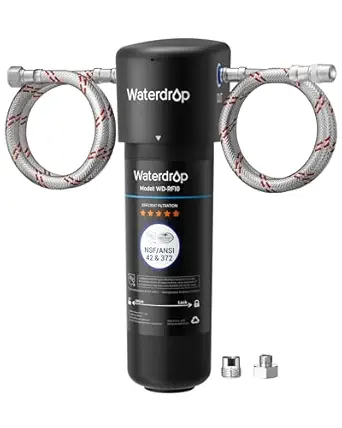 |
| Best Quality Built to a higher standard if you want something more solid | iSpring RCC7AK-BN RO System |  |
| Best Value The sweet spot between price and what you get | Waterdrop 40-Cup Dual Dispenser |  |
| Best Budget The cheapest option that still gets the job done reliably | PUR 7-Cup Water Filter Pitcher |  |
| Top Rated A top-rated pick with lots of positive feedback | BRITA Large Water Filter Pitcher |  |
| Most Popular A crowd favorite that many people choose with confidence | ZeroWater 23-Cup Filter Dispenser |  |
| Best Seller A high-volume bestseller chosen again and again | BRITA Metro 6-Cup Pitcher |  |
Waterdrop 10UA Under Sink Filter

| Purification Method | Activated Carbon |
|---|---|
| Maximum Flow Rate | 2.5 gpm |
| Filter Life Cycle | 1 years |
| Supported Water TDS Level Maximum (PPM) | 700 |
The Waterdrop 10UA is an under-sink activated carbon filter designed for municipal cold water that installs with push-to-connect fittings and a twist-and-lock cartridge for quick swaps. It reduces PFAS, PFOA/PFOS, lead, chlorine, bad tastes, and odors and is NSF/ANSI 42 and 372 certified for relevant contaminant reduction. The system is compact and connects to standard 3/8" or 1/2" feed valves using the included convertor, making it easy to fit beneath most sinks or in small spaces like RVs. Waterdrop rates the cartridge life at about 12 months for typical household use and specifies a tested flow that supports faster use than many basic undersink filters, helping when you need steady water for filling pitchers or cooking. Limitations to note are that it is intended for cold, municipal water only and will not lower TDS or remove bacteria; users with well water or thermal needs should look elsewhere. Replacement WD-RF10 cartridges are sold separately and the system works best when you want simple, fast access to improved-tasting tap water without an elaborate install.
Best for: Buyers who want a straightforward, fast under-sink filter that improves tap taste and reduces common chemical contaminants with easy DIY installation and yearly cartridge changes.
Less Ideal for: Homes relying on well water, users who need microbial or heavy TDS reduction, or anyone needing hot-water filtration or advanced multi-stage purification.
- NSF/ANSI 42 and 372 certified for chlorine, taste, odor and related contaminant reduction
- Quick twist-and-lock cartridge and push-to-connect fittings for fast installation and replacement
- Designed to connect directly to standard 3/8" or 1/2" feed valves for wide compatibility with sinks
- Higher tested flow rate than many basic undersink filters for faster dispensing
- Only for cold, municipal water and not suitable for well water or hot water
- Does not reduce TDS or provide microbial (bacteria) removal
Verdict: Choose the Waterdrop 10UA when you want a fast, easy-to-install under-sink filter that reliably improves taste and cuts common chemical contaminants for everyday drinking and cooking.
iSpring RCC7AK-BN RO System

| Purification Method | Reverse Osmosis, Alkaline, Activated Carbon, Carbon block |
|---|---|
| Power Source | No Power Needed |
| Maximum Flow Rate | 284 liters_per_day |
| Supported Water TDS Level Maximum (PPM) | 750 |
| Filter Life Cycle | 6 months |
The iSpring RCC7AK-BN is a six-stage under-sink reverse osmosis system that combines heavy contaminant reduction with a mineral boost to raise pH and improve taste. It installs under the sink and uses no electricity, producing up to 75 gallons per day while protecting the RO membrane with prefilters and activated carbon stages; the clear first-stage housing helps you see sediment buildup. The included brushed-nickel top-mounted faucet and push-to-connect fittings simplify installation, and the convertible feed-water adapter supports common supply lines. NSF/ANSI 58 certification for the full system and stated removal rates for TDS, lead, PFAS, chlorine and more make it a performance-focused choice. Maintenance requires scheduled filter replacements (typical prefilter six-month cycle) and space under the sink for the tank and housings, and like most RO systems it generates wastewater during production. For buyers who prioritize fast, high-quality filtration and improved drinking water taste, this model delivers strong real-world results backed by clear housings and DIY-friendly fittings.
Best for: Buyers who want high-performance, fast under-sink filtration with certified contaminant removal and improved drinking-water taste, and who are comfortable with DIY installation and routine filter maintenance.
Less Ideal for: People wanting a filter-free of wastewater production or those with extremely limited under-sink space should consider alternative solutions.
- Six-stage filtration with alkaline remineralization for improved taste and balanced pH
- NSF/ANSI 58 full-system certification and high removal rates for common contaminants
- Produces up to 75 gallons per day without electricity
- Transparent first-stage housing allows visual monitoring of sediment
- Top-mounted faucet and push-to-connect fittings simplify installation
- Requires regular filter replacements and under-sink space for tank and housings
- Typical RO waste water production during operation
Verdict: Choose the RCC7AK-BN when you need a fast, NSF-certified under-sink RO system that delivers strong contaminant removal plus a mineralized, better-tasting output.
Waterdrop 40-Cup Dual Dispenser

| Capacity | 40 cups |
|---|---|
| Purification Method | Activated Carbon |
| Filter Life Cycle | 400 gallons / 2 months |
| Supported Water TDS Level Maximum (PPM) | 100 |
| Installation Type | Countertop |
The Waterdrop 40-Cup Dual Dispenser is a manual countertop dispenser that pairs two built-in activated-carbon filters to produce faster filtration for everyday use. It is designed to sit on a counter or fridge shelf and pours through an easy-pour spigot while the sliding lid and side handles make refilling and moving the unit straightforward. The dual-filter layout targets taste and odor reduction, chlorine removal and some heavy-metal/PFOA/PFOS reduction with NSF 42 and 372 certified replacement filters, and the company rates the combined lifespan at about 400 gallons or roughly two months. A smart filter-life reminder helps you know when to swap cartridges, and the faster flow is useful when you need filtered water quickly for cooking or filling bottles. Limitations include a relatively short filter lifetime compared with long-life cartridges and the unit does not alter TDS, so it is not suitable if you need reduced mineral content or ultrapure water.
Best for: Buyers who prioritize quick, everyday filtered water and low-fuss maintenance for a household or busy kitchen where speed and certified taste/odor removal matter most.
Less Ideal for: People who need lower TDS, mineral-free water, advanced contaminant removal beyond NSF 42/372, or very long filter intervals should look at other purifier types.
- Dual built-in activated-carbon filters for faster flow and improved taste/odor reduction
- NSF 42 and 372 certified replacement filter performance for chlorine and some contaminant reduction
- Smart filter-life reminder simplifies maintenance
- Large 40-cup capacity reduces refill frequency for families or busy kitchens
- Sliding lid and carrying handles make refills and transport easy
- Filter lifespan is about 400 gallons (around 2 months), requiring relatively frequent replacement
- Does not lower TDS or provide ultrapure/filtered-mineral reduction
Verdict: If you want fast, certified carbon filtration and large daily capacity for quick access to better-tasting water, this dual-filter dispenser is an efficient, low-effort choice.
PUR 7-Cup Water Filter Pitcher

| Capacity | 7 cups |
|---|---|
| Purification Method | Activated Carbon |
| Filter Life Cycle | 2 months |
| Supported Water TDS Level Maximum (PPM) | 600 |
| Included Components | Extra Filter |
The PUR 7-Cup Water Filter Pitcher is a compact, fridge-friendly pitcher that uses a Genuine PUR activated carbon filter with 2-in-1 filtration to reduce chlorine, microplastics, and select chemical contaminants for cleaner-tasting water. It is filled through an easy-fill lid and pours through a stay-tight cover, making it convenient for daily kitchen or office use. The pitcher is lightweight and portable, with dishwasher-safe components for straightforward cleaning and maintenance. Each included filter is rated for about two months or up to 40 gallons of use, and the system is NSF certified for the listed reductions. For buyers focused on quick, simple filtration without plumbing changes, it provides fast on-demand filtered water and reduces single-use bottle waste. Limitations are that it does not treat microbes and requires regular filter replacements, so ongoing cost and replacement scheduling are part of ownership.
Best for: Buyers who want an affordable, no-plumbing way to get faster, better-tasting tap water for daily drinking and cooking in small kitchens, apartments, or offices.
Less Ideal for: People needing treatment for biological contamination or those who prefer a one-time purchase solution without recurring filter costs should consider other options.
- NSF certified to reduce chlorine, microplastics, and other chemical and physical substances
- Compact 7-cup design fits in most fridge doors and is easy to fill and pour
- Dishwasher-safe parts make cleaning low-effort
- Includes an extra Genuine PUR filter and each filter lasts about 2 months or 40 gallons
- Does not filter microbes, so not suitable for microbiologically unsafe water
- Requires regular filter replacements, adding ongoing operating cost
Verdict: A compact, NSF-certified pitcher that delivers faster, better-tasting tap water without plumbing and with low upfront cost.
BRITA Large Water Filter Pitcher

| Capacity | 10 cups |
|---|---|
| Purification Method | Granular Activated Carbon |
| Filter Life Cycle | 2 months / 40 gallons |
| Material Type | Plastic |
The BRITA Large Water Filter Pitcher is a simple countertop pitcher designed to deliver improved-tasting tap water for daily use. Water is poured into the flip-top reservoir and passes through a granular activated carbon filter and ion-exchange resin that reduce chlorine taste and odor plus select metals like copper, cadmium, and mercury. It holds about 10 cups, fits on fridge shelves, and comes with one filter rated for roughly 40 gallons or two months of typical use. Practical touches include an easy-fill lid and a sticker filter indicator to remind you when to replace the cartridge. The pitcher is manual and portable, so there is no plumbing or power required, and initial setup is just rinsing and installing the filter. Limitations are the modest capacity compared with dispensers and the need to replace filters every couple of months to maintain performance; it is not a microbiological purifier and should not be used with unsafe water sources. For reliably improving tap flavor and reducing specific contaminants in everyday household use, this pitcher is a low-effort solution.
Best for: Buyers who prioritize a dependable, no-fuss way to improve everyday tap water flavor and reduce common chemical impurities without installation or power requirements.
Less Ideal for: People who need high-capacity municipal or whole-home filtration, or those requiring certified microbiological purification should consider other systems.
- Certified reduction of chlorine taste and odor and select heavy metals
- 10-cup capacity that fits refrigerator shelves for convenient cold storage
- Includes one filter and a sticker indicator to track replacement schedule
- Portable, manual design requires no installation or power
- Filter life is about 40 gallons so cartridges need replacing every ~2 months under typical use
- Not intended to remove microbiological contaminants or make unsafe water safe to drink
Verdict: If you want a reliable, easy-to-use pitcher that consistently improves tap water taste and reduces select contaminants, this BRITA 10-cup pitcher is a practical daily choice.
ZeroWater 23-Cup Filter Dispenser

| Capacity | 5.4 liters |
|---|---|
| Purification Method | Ion Exchange |
| Power Source | Manual/Gravity-fed |
| Included Components | 5-Stage Water Filter, TDS Meter |
| Certification | IAPMO certified to reduce PFOA/PFOS, lead, chromium, mercury |
The ZeroWater 23-Cup Filter Dispenser is a countertop gravity-fed pitcher-style system that uses a 5-stage ion exchange filter to strip dissolved solids and common contaminants from tap water. You fill the top reservoir and the filter reduces total dissolved solids (TDS) and certified contaminants like lead, PFOA/PFOS, chromium, and mercury while the Ready-Pour design lets you dispense filtered water before the full reservoir finishes. It includes a TDS meter so you can check water quality and know when the filter is exhausted, and the spigot makes filling bottles and cups easy for everyday use at home or a small office. Practical benefits include large capacity for fewer refills, clear verification of filter performance via the meter, and disposable replacement filters that are compatible with ZeroWater units. Limitations are typical for pour-through systems: filter life depends heavily on your source water TDS, replacements are proprietary, and filtration is slower than pressurized systems or under-sink setups.
Best for: Buyers who prioritize verifiable contaminant reduction and want a high-capacity countertop dispenser they can monitor with objective TDS readings for home or small-office use.
Less Ideal for: People who need very fast flow under pressure, whole-house or under-sink filtration, or those who prefer non-proprietary or refillable filter media.
- Five-stage ion exchange filtration certified to reduce lead, PFOA/PFOS, chromium, and mercury
- Large 23-cup capacity reduces refill frequency for families or shared spaces
- Includes TDS meter so you can monitor water quality and know when to change the filter
- Ready-Pour spigot allows dispensing while the reservoir is still filtering
- Filter life and replacement frequency depend on incoming water TDS and can be shorter with higher TDS levels
- Uses proprietary ZeroWater replacement filters only
Verdict: If you want a large-capacity countertop filter with verifiable TDS readings and strong contaminant reduction, this ZeroWater dispenser is a practical, confidence-building choice.
BRITA Metro 6-Cup Pitcher

| Filter Life Cycle | 2 months |
|---|---|
| Maximum Flow Rate | 9.7 milliliters_per_second |
| Supported Water TDS Level Maximum (PPM) | 500 |
| Power Source | No Power Source |
The Brita Metro 6-cup pitcher delivers on straightforward, fast water filtration for everyday household use. It uses a Standard Brita filter with activated carbon and ion-exchange resin to reduce chlorine taste and odor as well as certain heavy metals, and the SmartLight indicator tracks the filter life so you know when to replace it (about every 40 gallons or two months). The space-efficient design and easy-fill lid make it convenient for fridge doors, dorms, or small kitchens, and the pitcher is BPA-free and freestanding with no power required. Practical benefits include lower reliance on bottled water, simple maintenance with widely available replacement filters, and certification by WQA/NSF/ANSI for specific contaminant reductions. Limitations are inherent to pitcher filters: it does not remove all contaminants, has a modest capacity that requires frequent refills for larger households, and flow rate is relatively slow compared with plumbed or inline systems.
Best for: Buyers who want a simple, certified pitcher filter for daily tap water improvement and prefer a low-risk, easy-to-use solution with predictable filter replacement.
Less Ideal for: Homes needing whole-house or high-capacity filtration, users who require removal of a wide range of contaminants beyond what a pitcher filter targets, or those who want instantaneous high flow without refills.
- WQA and NSF/ANSI certified to reduce chlorine taste and odor plus select heavy metals
- SmartLight filter change indicator provides an accurate reminder when to replace the filter
- Compact, fridge-door friendly design with easy-fill lid for quick refills
- Standard filters are widely available and one replaces up to 300 single-use 16.9 oz bottles
- Small 6-cup capacity requires frequent refilling for larger households
- Slower flow rate compared with plumbed or in-line filtration systems
Verdict: A compact, certified pitcher that gives fast, reliable filtered drinking water for buyers who want a low-effort, proven alternative to bottled water.
Choosing the Right Fast Water Filter: Key Factors to Consider
Flow Rate and Throughput
Speed is the defining feature of a fast water filter. Higher flow rate means shorter wait times when filling glasses, pitchers, or pots. Consider both the maximum flow rate the device can deliver and the flow you will get at your household water pressure. A filter with a high nominal flow that drops sharply under lower pressure may feel slow in practice.
Throughput also matters for applications like refilling pitchers or dispensing into containers. Some fast filters prioritize instantaneous flow at the faucet, while others increase daily throughput by using larger filter media and wider flow channels. Think about how you use filtered water—intermittent glass fills or continuous flow for cooking—and choose a unit rated for that usage pattern.
Contaminant Reduction Performance
A fast filter should still meaningfully reduce the contaminants you care about. Look for verified reduction of common issues such as chlorine taste and odor, sediment, and heavy metals if these are relevant for your water source. Certification by an independent lab or a recognized testing body provides confidence that the filter removes or reduces specified contaminants at stated efficiencies.
Pay attention to the specific contaminants listed and the reduction percentages. A filter optimized only for taste and odor may not remove lead or other dissolved solids. Match the filter's reduction profile to your priorities rather than assuming speed implies full-spectrum purification.
Filter Life and Replacement Frequency
Longer filter life reduces ongoing maintenance and the total cost of ownership. Fast filters sometimes use larger or denser media to maintain throughput, which can lengthen service intervals. Check the expected gallons or months between replacements and consider your household's daily water use. A very high-flow system with short-life cartridges may cost more in replacement parts and be less convenient overall.
Also assess how filter performance changes over time. Some units maintain near-peak flow until the end of life, while others gradually slow as the media loads with particles. Prefer filters with predictable rated life and clear replacement indicators.
Installation and Compatibility
Ease of installation affects whether you can set up the filter yourself or need professional help. Many fast water filters are designed as countertop, faucet-mounted, or under-sink systems. Faucet-mounted models are quick to install but may require an adapter; under-sink units can deliver higher throughput but need space and basic plumbing skills. Check compatibility with your existing faucet, water lines, and cabinet space.
Consider whether additional parts are commonly required, such as adapters, shutoff valves, or mounting hardware. Simpler installations reduce time and the chance of leaks, which is particularly important with higher-flow systems.
Materials, Construction, and Durability
Higher flow often comes from wider channels and sturdier housings that resist deformation. Durable materials and solid construction reduce the risk of leaks and premature failure. Look for corrosion-resistant fittings, BPA-free plastics in potable-water paths, and robust sealing designs. Sturdier housings also withstand repeated cartridge changes without cracking or wearing out.
Consider warranty terms and the reputation for long-term reliability in similar products. Durable construction matters more for permanently installed or high-throughput units where downtime for repairs is inconvenient.
Operating Noise and User Experience
Some fast filters, especially those that incorporate pumps or aeration to increase flow, produce noticeable noise during operation. For kitchen use, quieter systems are preferable so normal activities are not interrupted. Evaluate user-friendly features such as clear filter-change indicators, tool-free cartridge swaps, and accessible housings.
Also think about drip control and how the device integrates with existing fixtures. A well-designed fast filter should minimize splashing at higher flow rates and be intuitive to operate for multiple household members.
Types of Fast Water Filters
Fast water filters come in several common formats that balance speed and filtration differently. Faucet-mounted units deliver quick access directly at the tap and are simple to install, but can add weight to the faucet and sometimes restrict handle movement. Countertop systems sit beside the sink and connect to the faucet with a diverter, offering higher capacity without under-sink plumbing.
Under-sink fast filters integrate into your plumbing and can provide the highest continuous flow and larger media for longer life. Inline refrigerator or pitcher-compatible rapid filters are also available for specific uses but may offer narrower contaminant coverage. Choose the form factor that fits your kitchen layout and the kind of use you expect.
- Faucet-mounted: fastest access, minimal countertop footprint
- Countertop: higher capacity, easy to remove or replace
- Under-sink: best for whole-kitchen flow and permanent installation
- Inline/fridge: targeted solutions for specific dispensers
When Faster Is Better Versus When It Is Not
Speed is valuable if you frequently refill pitchers, have multiple people using filtered water, or need near-instant flow for cooking. In those cases, faster throughput reduces friction and makes filtered water the default choice rather than an occasional convenience.
However, extremely fast systems that compromise on contaminant reduction or require very frequent cartridge swaps may not be worth it for infrequent users. If you rarely use filtered water or need the highest level of contaminant removal, a slower, higher-capacity purification system can sometimes be the better long-term option.
- Good fit: busy households, frequent refilling, multi-person kitchens
- Less ideal: occasional users, situations demanding ultra-fine filtration
Maintaining Flow and Performance Over Time
Regular maintenance keeps a fast water filter performing at its rated flow and reduction levels. Replace cartridges according to the manufacturer-stated interval or sooner if you notice slowed flow or taste changes. Flushing new cartridges and occasional system sanitization can prevent biofilm and preserve performance.
If you experience a sudden drop in flow, check for clogged pre-filters, shutoff valves, or kinks in supply lines before assuming the cartridge is at end of life. Simple troubleshooting steps can avoid unnecessary replacements and restore normal operation quickly.
- Follow rated replacement intervals measured in gallons or months
- Flush new cartridges to remove loose media fines
- Inspect lines and fittings for flow restrictions before replacing cartridges
Measuring Flow and Real-World Throughput
Published flow numbers are useful starting points, but real-world throughput depends on household water pressure, plumbing layout, and how many fixtures draw simultaneously. Measure flow yourself by timing how long it takes to fill a known-volume container. Repeat the test at peak household usage times to see how performance changes under load.
For anyone installing an under-sink unit, check the expected pressure drop at the rated flow. Small pressure losses are normal, but large drops can make other fixtures feel starved. Planning for actual plumbing conditions ensures the filter performs as intended.
- Test with a liter or quart container and a stopwatch
- Measure during typical peak household use for realistic results
- Account for pressure loss when installing inline or under-sink units
Environmental and Ongoing Costs
Filter replacements and disposal represent ongoing costs and environmental impact. Filters with longer service life use fewer resources over time, and some manufacturers offer recyclable cartridges or take-back programs. Consider the frequency of replacements and whether replacement cartridges are widely available when estimating long-term costs.
Also weigh the tradeoff between a fast system that uses more material or larger cartridges and a slower, minimal-waste solution. The best choice balances speed with manageable replacement cadence and responsible disposal options.
- Longer-life cartridges reduce waste and replacement frequency
- Check for cartridge recycling or take-back programs
- Factor replacement availability into long-term maintenance planning
How We Chose the Best Fast Water Filter
We focused on products engineered to deliver noticeably higher flow rates without sacrificing core filtration performance. Key evaluation dimensions included measured or manufacturer-stated flow rate under typical household water pressure, laboratory or certified contaminant reduction capabilities, and real-world filter lifespan to ensure speed does not come at the cost of frequent cartridge changes. We also assessed installation complexity and compatibility with common kitchen faucets or under-sink setups so buyers can estimate setup time and potential additional parts. Exclusions included models that trade filtration effectiveness for speed by offering only coarse sediment screening, units designed solely for outdoor or camping use with very small capacity, and specialty systems that require complex plumbing modifications beyond normal DIY capability. We prioritized practical combinations of throughput, tested contaminant reduction, longevity, and ease of use that suit daily kitchen and potable-water needs.
Our full evaluation process is outlined in our review methodology.
FAQ
How much faster are fast water filters compared with standard filters?
Often they deliver noticeably higher flow rates due to larger flow channels or lower-resistance media. Actual speed improvement depends on your household water pressure and plumbing; testing with a measured container gives the best comparison.
Will a fast filter remove lead and other heavy metals?
Some fast filters do reduce heavy metals, but you must check the verified contaminant reduction list. Not all fast units target dissolved metals, and certification or lab data is the reliable indicator of capability.
Can I install a fast under-sink filter myself?
Many under-sink units are designed for DIY installation with basic tools, shutoff valves, and clear instructions. If your setup requires new drilling, soldering, or complex modifications, professional installation is recommended.
Do fast filters require more frequent cartridge changes?
Not necessarily. Some fast filters use larger or more efficient media to maintain both flow and long service life. Check the rated gallons or months per cartridge to understand replacement cadence.
Are faucet-mounted fast filters compatible with all faucets?
Compatibility varies. Faucet-mounted units often require an adapter and may not fit some pull-out or single-hole-styled faucets. Verify your faucet type before purchasing.
How can I test whether my fast filter is still effective?
Taste and visual inspection can flag obvious issues, but for measurable verification consider test strips for specific contaminants or professional water testing. Some users track flow rates and replace cartridges when flow drops below a preferred threshold.
Final Verdict
Prioritize the combination of flow rate and verified contaminant reduction that matches how you use filtered water. For busy kitchens, higher throughput and easy cartridge changes matter most. For those focused on specific contaminants, confirm reduction claims and choose a unit with the appropriate certifications. Balance expected filter life, installation complexity, and ongoing replacement availability when making a decision. With those tradeoffs in mind, you can select a fast water filter that delivers both the speed and protection your household needs.