
Note: This article contains affiliate links. If you click on these links and make a purchase, we may earn a small commission at no extra cost to you. This helps support our research and content. Read our full affiliate disclosure here.
If you need dependable drinking water without plumbing or electricity, a gravity water filter for home use is a practical option. These systems rely on simple physics to move water through ceramic, carbon, or composite filters, delivering treated water for drinking, cooking, and small household tasks. Choosing the right gravity unit matters because filter media, flow rate, and capacity affect how well the system meets daily needs and how often you must service it. This guide presents our shortlisted top picks for home use and explains the features we prioritized, from filtration effectiveness to maintenance demands. Read on to compare the characteristics that matter when selecting a gravity water filter for your home.
Top Picks at a Glance
| Best Overall The best all-around choice for most situations | Royal Berkey Gravity-Fed Water Filter |  |
| Best Quality Built to a higher standard if you want something more solid | British Berkefeld Gravity 12L |  |
| Best Value The sweet spot between price and what you get | Waterdrop King Tank WD-TK-A |  |
| Best Budget The cheapest option that still gets the job done reliably | SimPure Gravity Water Filter 3L |  |
| Top Rated A top-rated pick with lots of positive feedback | Purewell 3-Stage Gravity Water Filter PW-OB |  |
| Most Popular A crowd favorite that many people choose with confidence | Big Berkey 2.25-Gallon Water Filter |  |
| Best Seller A high-volume bestseller chosen again and again | Waterdrop Gravity Water Filter Straw | 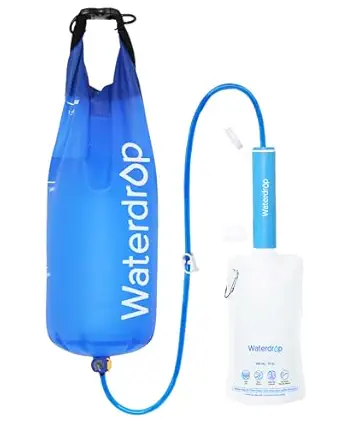 |
Royal Berkey Gravity-Fed Water Filter

| Capacity | 3.25 gallons |
|---|---|
| Material Type | Stainless Steel |
| Included Components | 2 Black Berkey Elements, Standard Spigot |
| Power Source | Gravity |
| Maximum Flow Rate | 0.07 gpm |
The Royal Berkey is a freestanding gravity-fed water filtration system designed for everyday countertop use without electricity or plumbing. You fill the upper stainless steel chamber and filtered water slowly passes through two Black Berkey elements into the lower chamber, where a spigot dispenses clean water for drinking, cooking, or beverages. The system uses proprietary Black Berkey filter media that third-party labs test to reduce a wide range of common contaminants, and the stainless steel construction feels durable and easy to wipe clean. At 3.25 gallons it suits medium-sized households and can be expanded to four elements for faster flow or heavier use. Expect a slow flow rate by design (0.07 gpm per element) and periodic priming and cleaning of the elements to maintain output. The system is portable and simple to set up, but it does require countertop space and an initial learning curve to assemble and care for the filters properly.
Best for: Buyers who want a low-maintenance, reliable countertop filtration system that provides robust contaminant reduction without plumbing or power and who value durability and long-term filter life.
Less Ideal for: Those who need instant, high-volume water delivery for large gatherings or who cannot commit countertop space for a freestanding unit should consider other options.
- No electricity or plumbing required so it works during outages and in places without hookups.
- Authentic Black Berkey elements are independently tested to reduce 200+ common contaminants.
- Durable AISI 304 stainless steel construction that is easy to clean and long lasting.
- Expandable filter capacity — system ships with two elements and can accept up to four for higher throughput.
- Flow is intentionally slow, so it is not suited to immediate high-volume dispensing.
- Takes countertop space and requires occasional maintenance like priming and cleaning the elements.
Verdict: A durable, no-power countertop gravity filter that delivers thorough contaminant reduction for households that prefer a simple, long-lasting solution.
British Berkefeld Gravity 12L

| Capacity | 12 liters |
|---|---|
| Purification Method | Sedimentation |
| Power Source | Gravity Fed |
| Supported Water TDS Level Maximum (PPM) | 600 |
| Filter Life Cycle | 6 months |
The British Berkefeld Doulton 12L gravity system is a freestanding countertop purifier that removes bacteria, cysts and particulate contaminants using two Ultra Sterasyl ceramic filter candles. You fill the stainless steel upper chamber and gravity draws water through the ceramic elements into the lower reservoir, producing ready-to-drink water without electricity or taps. The system is portable and straightforward to set up, useful for kitchens, emergency preparedness, or off-grid use, and the stainless body is easy to wipe clean. The Ultra Sterasyl cartridges are rated to reduce a wide range of contaminants while retaining beneficial minerals, and the manufacturer recommends replacing filters about every six months. Limitations include a multi-hour filtering cycle for large fills and ongoing filter replacement costs, and the system does not reduce total dissolved solids beyond the stated TDS limit or provide active remineralization or heating. For buyers who prioritize reliable, maintenance-light particulate and microbial reduction in a plug-free countertop unit, this model delivers practical, proven performance.
Best for: Buyers who want a high-performance, low-tech countertop purifier that reliably removes microbiological contaminants and works without power, ideal for households focused on safety and preparedness.
Less Ideal for: People who need rapid or high-volume daily filtration, advanced chemical removal beyond the specified TDS/fluoride options, or integrated dispensing features should consider other systems.
- No electricity or plumbing required thanks to gravity-fed operation
- Ceramic Ultra Sterasyl cartridges remove bacteria and particulate matter effectively
- Stainless steel construction is durable and easy to clean
- Portable freestanding design suitable for home, camping, or emergencies
- Filter throughput is slow compared with powered systems so large volumes take hours to process
- Filters need replacement roughly every six months, adding recurring cost
Verdict: A dependable, power-free countertop gravity filter that prioritizes microbial and particulate removal for home use and emergency readiness.
Waterdrop King Tank WD-TK-A

| Capacity | 2.25 Gallons |
|---|---|
| Material Type | Stainless Steel |
| Included Components | Gravity Water Filter System, 2 Water Filter Replacements, User Manual |
| Filter Capacity | 6,000 Gallons / 1,000 Gallons |
The Waterdrop King Tank WD-TK-A is a gravity-fed stainless steel filter designed for countertop or outdoor use when you need filtered water without plumbing or power. It holds 2.25 gallons and uses two black carbon filters (with optional fluoride filters) to remove chlorine, improve taste, and reduce lead, with filter lifespans quoted up to thousands of gallons depending on cartridge type. Setup is simple and tool-free: screw in the filters, fill the top chamber, and water passes through to the lower tank to dispense via a metal spigot with a sight glass option on some variants. The system is convenient for households that want a low-maintenance, economical purifier for drinking and cooking water and for trips where electricity is unavailable. Limitations are that it only accepts two filter cartridges, does not lower TDS, and filtration performance depends on choosing the right replacement cartridges, so it is not a substitute for full RO treatment when you need mineral and dissolved solids reduction.
Best for: Buyers who want a low-maintenance, portable countertop filter that delivers noticeably better tasting water without plumbing or power and prioritizes durability and running economy.
Less Ideal for: People who need to remove dissolved minerals or require a fully plumbing-integrated purification system should consider reverse osmosis or under-sink alternatives instead.
- Stainless steel construction for durability and easy cleaning
- 2.25-gallon capacity suitable for a small family or countertop use
- Uses coconut activated carbon filters that significantly reduce chlorine and improve taste
- No electricity or plumbing required, simple tool-free setup
- Only two filter cartridges supported, limiting multi-stage customization
- Does not reduce total dissolved solids so not a replacement for reverse osmosis
Verdict: A durable, no-power gravity filter that gives families better-tasting, lower-chlorine water with minimal setup and running cost.
SimPure Gravity Water Filter 3L

| Purification Method | Activated Carbon, Hollow Fiber Membrane |
|---|---|
| Capacity | 3 liters |
| Maximum Flow Rate | 27 liters per hour |
| Filter Life Cycle | 3.5 years |
| Supported Water TDS Level Maximum (PPM) | 1000 |
The SimPure gravity water filter is a simple, no-power purification system built around a 3 L TPU bag and a hollow-fiber plus activated carbon filter. You hang the filled bag by the included tree strap, let gravity pull water through the 0.1 micron ultrafiltration membrane and coconut shell carbon, and collect filtered water without pumping or batteries. It is designed for camping, emergency preparedness, and short-term home use where municipal water may be compromised. The filter is advertised to treat up to 5,000 L over roughly 3.5 years and delivers about 27 liters per hour under gravity, so a small group can get drinking water quickly. The kit is very lightweight and packable, and the included tube and bottle adapters let you use it as a personal straw or attach to a plastic bottle for flexibility. Limitations are its modest 3 L capacity for continuous household demand and reliance on a place to hang the bag; it is best as a short-term or supplemental solution rather than a whole-home treatment system.
Best for: Buyers who want an inexpensive, portable gravity purifier for short-term home emergency use, weekend camping, or to supplement drinking water during outages.
Less Ideal for: Households needing continuous daily filtered water for multiple people or a permanent whole-home solution should choose a larger or plumbed system instead.
- No external power required so it works during outages or off-grid trips
- Ultrafiltration plus activated carbon removes particulates, bacteria and improves taste
- High advertised lifespan (about 5,000 L) for extended use before replacement
- Very lightweight and rollable for easy storage or packing
- Includes tube and bottle adapters for multiple use modes
- 3 L bag capacity is small for sustained household use
- Requires a place to hang the bag for gravity flow
Verdict: A low-cost, lightweight gravity purifier that delivers fast, no-power filtered water for emergency use and short trips.
Purewell 3-Stage Gravity Water Filter PW-OB

| Purification Method | Activated Carbon, Silver Ion, Hollow Fiber UF Membrane |
|---|---|
| Power Source | Non Electric |
| Capacity | 2.25 gallons |
| Filter Life Cycle | 6 months |
| Supported Water TDS Level Maximum (PPM) | 500 |
The Purewell 3-stage gravity system sits on the counter and uses an upper chamber, hollow-fiber UF membrane plus activated carbon and silver ion media to deliver filtered water into a lower chamber through gravity alone. It is typically filled from the top and yields about 4 gallons per hour while trapping chlorine, sediment, rust, organic matter and many heavy metals with a 0.01 micron membrane and NSF/ANSI 42 and 372 certifications for material and chlorine reduction. The stainless-steel housing and included spigot and stand make setup simple and durable, and because it is non-electric it works during outages or outdoors. Filters are rated for roughly 3,000 gallons each (6,000 gallons total) and are replaceable every six months depending on local water quality. Expect slower throughput compared with plumbed systems and remember the unit does not lower TDS, so dissolved mineral levels remain unchanged.
Best for: Buyers who prioritize a low-maintenance, reliable countertop purifier that works without power and provides certified chlorine reduction for everyday drinking water.
Less Ideal for: Households that need rapid, high-volume dispensing, TDS reduction, or active removal of dissolved salts should consider reverse osmosis or plumbed alternatives instead.
- Three-stage filtration including 0.01μm hollow-fiber UF membrane for fine particulate and microbial protection.
- NSF/ANSI 42 and 372 certifications for chlorine reduction and lead-free materials.
- 304 food-grade stainless-steel upper/lower chambers and included spigot and stand for durability and easy setup.
- Non-electric gravity operation so it works during power outages and can be used outdoors or where plumbing is not available.
- Replaceable filters with a combined advertised capacity of about 6,000 gallons.
- Gravity-fed flow is slower than plumbed or electric systems, about 4 gallons per hour.
- Does not reduce total dissolved solids (TDS) or soften water.
- Filter life varies with source water quality and may need replacement sooner than six months in poor-quality water.
Verdict: Choose this Purewell gravity filter when you want a durable, certified countertop purifier that reliably produces filtered drinking water without electricity.
Big Berkey 2.25-Gallon Water Filter

| Capacity | 8.5 liters |
|---|---|
| Container Type | Stainless Steel Chambers |
| Purification Method | Black Berkey proprietary filter media |
| Maximum Flow Rate | 0.03 gpm |
| Power Source | Gravity |
The Big Berkey 2.25-gallon system is a countertop gravity water filter built from polished AISI 304 stainless steel and fitted with two authentic Black Berkey BB9-2 elements. You fill the top chamber and gravity pulls water through the proprietary filter media into the lower chamber, where a spigot dispenses drinking water for cooking, beverages, or refills. The system is compact enough for small to medium households and can be expanded to four elements for faster flow or heavier use. Notable practical benefits include long element life—each pair is rated up to about 6,000 gallons—no electricity or plumbing required, and independent third-party testing cited for broad contaminant reduction. The maximum flow rate is modest, so expect a slow drip-style fill rather than instant taps, and the unit requires bench space and occasional cleaning of the chambers and spigot. Also be sure to use authentic Black Berkey elements and consider optional PF-2 elements if you need targeted fluoride or arsenic reduction. For buyers who value dependable, low-maintenance filtration without installations, this is a proven option; if you need instant high flow or an under-sink hard-plumbed system, look elsewhere.
Best for: Buyers who want a trusted, low-tech countertop purifier that delivers long-lasting contaminant reduction without installation or electricity and who weigh real-world user reviews when choosing a reliable system.
Less Ideal for: Households that need fast, on-demand high flow, a hard-plumbed under-sink solution, or those with very limited counter space should consider alternative setups.
- Gravity-powered design requires no electricity or plumbing
- Stainless steel chambers resist corrosion and look polished on a countertop
- Black Berkey elements have long rated lifespan (about 6,000 gallons per pair)
- Independently tested filter media removes or reduces a large list of common contaminants
- Expandable to four elements for higher throughput or heavier households
- Relatively slow flow rate compared with pressurized or plumbed systems
- Requires countertop space and occasional manual cleaning and maintenance
Verdict: A durable, countertop gravity filter that delivers broad, long-lasting contaminant reduction for buyers seeking a proven, no-electricity purification solution.
Waterdrop Gravity Water Filter Straw

| Purification Method | Hollow Fiber Ultrafiltration Membrane |
|---|---|
| Maximum Flow Rate | 700 milliliters_per_minute |
| Power Source | Non Electric |
| Supported Water TDS Level Maximum (PPM) | 300 |
| Capacity | 1400 gallons |
The Waterdrop Gravity Water Filter Straw is a freestanding, non-electric purification kit built around a 0.1 micron hollow fiber ultrafiltration straw and a 1.5 gallon gravity bag, intended for camping, travel, and emergency home use. You fill the included bag or a compatible bottle, hang or set the bag to allow gravity to push water through the straw, and the hollow fiber membrane removes particulates, sediment, chlorine taste and some contaminants while delivering up to 700 ml per minute flow. The kit includes a 16 oz pouch for smaller fills and the straw supports backwashing to clear the membrane and prolong usable life. Waterdrop rates the straw for up to 1,400 gallons of treated water, which makes it a practical supplement to household emergency supplies or occasional household use when tap water is suspect. Important limitations are that it is not an active chemical or reverse osmosis system, so it does not remove dissolved salts or guarantee removal of all pathogens in very high-TDS or microbiologically extreme water; users should follow instructions for backwashing and replacement to maintain performance.
Best for: Homeowners prioritizing reliable, easy-to-use emergency or backup filtration who want a low-tech, fast gravity solution for making questionable water potable without power.
Less Ideal for: People seeking a permanent whole-house or countertop purifier for removing dissolved minerals, heavy metals, or high-TDS contamination should consider higher-capacity chemical or RO systems instead.
- Very fine 0.1 micron hollow fiber membrane that removes particulates, sediment and improves taste and odor
- Gravity-fed, non-electric operation suitable for outages and remote use
- High rated lifespan of up to 1,400 gallons per straw
- Fast maximum flow rate up to 700 ml/min for quicker filling of containers
- Includes 1.5 gallon gravity bag plus a 16 oz pouch for flexible use
- Does not remove dissolved salts or provide full chemical purification like RO or some activated-carbon-chemical systems
- Effectiveness depends on source water quality and proper maintenance/backwashing
Verdict: Choose this kit if you want a portable, non-electric gravity filter that delivers fast, fine-filtration water for emergency home use and outdoor trips.
Choosing the Right Gravity Water Filter for Home Use: Key Factors to Consider
Filter Media and Contaminant Reduction
The type of filter media determines which contaminants the system can reduce. Ceramic elements are effective at removing bacteria and particulates, while activated carbon reduces chlorine taste and some organic compounds. Composite or multi-stage cartridges can combine mechanical filtration with adsorption to tackle a broader range of concerns.
Knowing the specific contaminants you want to address helps select a gravity water filter for home use that matches your priorities. For example, if microbial safety is the main concern, prioritize certified ceramic or hollow-fiber elements with documented log reductions. If taste and odor are the issue, ensure the system includes reliable carbon-based media.
Flow Rate and Usable Capacity
Gravity systems operate without pumps, so flow rate depends on the head height and the filter element. Faster flow reduces wait time but often comes at the expense of finer filtration. Usable capacity refers to how much treated water the lower chamber holds before a refill is needed.
Consider household drinking and cooking needs when evaluating capacity. For families or frequent entertaining, choose a larger-capacity unit or one with quick refill cycles. For infrequent use or single-person households, a smaller, more compact unit may be sufficient and easier to store.
Maintenance Frequency and Ease
Routine cleaning and periodic filter replacement are unavoidable with gravity filters. Some ceramic elements can be scrubbed and reused many times, while carbon cartridges typically require scheduled replacement. Ease of disassembly, availability of replacement parts, and straightforward cleaning procedures reduce the long-term burden on the owner.
Assess how often the manufacturer recommends filter replacement and whether the element is user-serviceable. If maintenance is difficult or parts are hard to access, a seemingly inexpensive unit can become a hassle over time. Select a system whose upkeep matches your willingness to perform regular cleaning.
Materials, Build Quality, and Durability
Materials affect longevity and taste. Food-grade stainless steel and BPA-free plastics resist staining and odor absorption, while thin or brittle plastics may degrade with repeated handling or exposure to sunlight. The integrity of seals, spigot fittings, and chamber connections also influences leak risk and overall lifespan.
Choose units constructed from durable, food-safe materials and pay attention to the spigot design; a loose or poorly seated spigot is a common source of drips and contamination. Higher-quality construction often costs more upfront but reduces the chance of failure and the need for early replacement.
Certifications and Performance Data
Independent test data or third-party certifications provide objective evidence of what a filter will remove. While not all gravity systems are certified to the same standards, look for performance claims supported by lab reports or standardized test methods. Certification does not guarantee fit for every situation, but it helps compare how well different filter technologies handle targeted contaminants.
Where certification is unavailable, detailed performance specifications such as particle size rating, flow at specified head height, and documented microbial log reduction are helpful. Transparency in testing and clear claims are valuable when making a confident purchase.
Portability and Footprint
Gravity water filters vary in size and weight. Some are compact for tight counters or occasional transport, while others are large and designed to sit in one place. Consider the unit's footprint relative to your storage space and whether you need to move it for refilling or cleaning.
If you anticipate moving the unit frequently, look for robust handles, balanced weight distribution, and secure closures. For permanent countertop use, choose a size and style that fits your kitchen layout without crowding other appliances.
How Gravity Filtration Works
Gravity filtration relies on the natural force of gravity to move water from an upper reservoir through one or more filter elements into a lower storage chamber. There are no pumps or electricity involved, so operation is quiet and simple. The upper chamber typically holds unfiltered water and the lower chamber collects treated water ready for dispensing.
Different filter media use mechanical straining, adsorption, or microbiological barriers to remove or reduce contaminants. Flow rate is driven by the water column height and the permeability of the filter element, which is why larger head heights or coarser media produce faster output. Knowing the mechanism helps set realistic expectations for wait times and performance.
- Common media: ceramic, activated carbon, hollow fiber
- No electricity required
- Flow depends on head height and media permeability
Setting Up and Positioning Your Unit
Place the unit on a stable, level surface to avoid spills and ensure the spigot aligns with your container. Many units perform best when the upper reservoir is elevated slightly above the lower chamber to maximize gravitational pressure.
Avoid direct sunlight and extreme temperatures because plastics and filter media can degrade. Make sure there is easy access for refilling the top chamber and for routine cleaning of both compartments.
- Use a dedicated counter area with room for a refill
- Keep away from heat sources and direct sun
- Check spigot clearance for glasses and pitchers
Maintaining Performance Over Time
Regular maintenance preserves flow rate and filtration performance. Ceramic elements develop a layer of trapped particles and should be cleaned gently with a soft brush or scouring pad following the manufacturer's instructions. Carbon cartridges should be replaced when their adsorption capacity is exhausted, which is usually specified in liters or months.
Inspect seals and the spigot periodically to prevent leaks. If the flow slows significantly even after cleaning, the media may be reaching the end of its useful life and should be replaced or professionally serviced.
- Clean ceramic elements periodically
- Replace carbon cartridges per recommended intervals
- Inspect seals and spigot for wear
Using a Gravity Filter With Variable Water Quality
Gravity units are best for improving taste, reducing particulates, and addressing microbial concerns when source water is relatively clear. Heavily turbid or chemically contaminated water may overwhelm a gravity filter or require pre-treatment steps like settling or pre-filtration.
If you expect variable source quality, plan for more frequent maintenance and consider a multi-stage element that includes a mechanical pre-filter or sediment trap to protect the main media.
- Pre-filter turbid water by settling or using a cloth
- Expect increased cleaning frequency with poor source water
- Multi-stage elements help handle variable inputs
Common Installation Mistakes to Avoid
Do not overtighten the spigot or seals as this can crack threads or deform gaskets. Use only gentle hand tightening unless the instructions specify tools. Avoid using harsh chemical disinfectants on media unless the manufacturer explicitly allows them.
Do not place the unit directly on a wet or unstable surface. Also, do not store treated water for excessively long periods in the lower chamber; even treated water can absorb odors or develop microbial growth if left stagnant for weeks.
- Avoid overtightening spigots and fittings
- Do not store treated water for very long periods
- Follow cleaning instructions; avoid unsupported disinfectants
How We Chose the Best Gravity Water Filter for Home Use
We prioritized units that deliver tested microbial and particulate reduction while staying suitable for everyday household use. Key evaluation criteria included filter media and rated contaminants, because actual removal capabilities determine whether a unit meets drinking-water goals. We also weighed flow rate and usable capacity to match typical family consumption patterns and to avoid excessive refill frequency. Durability and materials were assessed to ensure the unit holds up to daily handling and cleaning cycles. Maintenance demands such as filter cleaning, replacement interval, and ease of accessing components were factored in to estimate ongoing time and cost. Finally, ease of setup and stable, drip-free performance were considered so the unit can be used immediately with minimal fuss. We excluded systems intended only for backpacking, single-person survival use, or devices that require electrical pumps or permanent plumbing. Units that lacked clear filtration specifications or that relied solely on unverified claims were not considered. The final list emphasizes practical, well-specified gravity water filters that balance effective treatment with simple household operation.
Our full evaluation process is outlined in our review methodology.
FAQ
How often should I clean a ceramic gravity filter element?
Typically, ceramic elements should be cleaned when flow slows noticeably, which can range from a few weeks to several months depending on source water quality. Cleaning frequency increases with turbid water and decreased with clearer inputs.
Can gravity filters remove viruses and bacteria reliably?
Many ceramic and hollow-fiber elements can significantly reduce bacteria and protozoa when properly maintained, but virus removal varies by media and pore size. If viral contamination is a concern, look for documented performance data or consider additional disinfection steps.
Is it safe to use a gravity filter with well water?
Gravity filters can improve taste and reduce particulates from well water, and specific elements can reduce microbial contamination. However, well water chemistry varies, so testing your water first helps identify whether a gravity filter alone is sufficient or if additional treatment is necessary.
How long does filtered water stay safe in the lower chamber?
Filtered water is generally fine for several days if kept covered and stored at room temperature out of direct sunlight. For longer storage, refrigeration or regular turnover is recommended to minimize any microbial regrowth or taste changes.
What should I do if the flow rate is very slow after cleaning?
If flow remains slow after proper cleaning, the filter media may be clogged internally or worn out. Check for channeling or damage to the element and follow replacement guidance if cleaning no longer restores normal flow.
Final Verdict
When choosing a gravity water filter for home use, prioritize the filtration media and documented contaminant reductions that match your water concerns. Balance usable capacity and flow rate against how much time you will spend refilling and maintaining the system. Durable materials, straightforward maintenance, and transparent performance data reduce long-term hassle and help ensure safe, great-tasting water. With those tradeoffs in mind, pick the unit whose maintenance rhythm and capacity fit your household routine.