
Note: This article contains affiliate links. If you click on these links and make a purchase, we may earn a small commission at no extra cost to you. This helps support our research and content. Read our full affiliate disclosure here.
If you make fresh citrus juice regularly, the right hand juicer can save time, reduce waste, and deliver better flavor. A compact manual juicer is especially useful for quick single servings or when you do not want to run an electric appliance. This guide covers seven shortlisted hand juicers chosen for consistent extraction, durable materials, and simple maintenance. We evaluate each pick for how well it extracts juice, how easy it is to clean, and whether it holds up to frequent use. Read on to find a compact manual juicer that fits your kitchen habits and yields the most juice from every fruit.
Top Picks at a Glance
| Best Overall The best all-around choice for most situations | Zulay Stainless Steel Lemon Squeezer |  |
| Best Quality Built to a higher standard if you want something more solid | Eurolux Cast Iron Juicer ELJ-5001B |  |
| Best Value The sweet spot between price and what you get | Chef'n FreshForce Lemon Juicer |  |
| Best Budget The cheapest option that still gets the job done reliably | HomeyVenture Manual Lemon Squeezer |  |
| Top Rated A top-rated pick with lots of positive feedback | OXO Good Grips 2-in-1 Citrus Juicer |  |
| Most Popular A crowd favorite that many people choose with confidence | Zulay Metal 2-in-1 Lemon Squeezer | 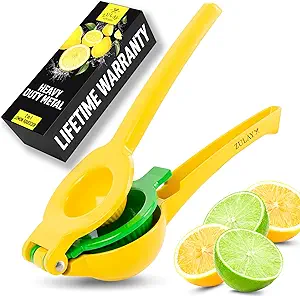 |
| Best Seller A high-volume bestseller chosen again and again | MONKKINO Lemon Squeezer |  |
Zulay Stainless Steel Lemon Squeezer

| Material | Stainless Steel |
|---|---|
| Power Source | Manual |
| Capacity | 0.5 liters |
| Product Care Instructions | Dishwasher Safe |
This Zulay stainless steel lemon squeezer is a straightforward manual press built for frequent use. The 18/8 stainless construction and solid bowl give it a durable, no-flex feel that makes extracting juice from lemons, limes, and even small oranges easy with minimal hand effort. The deep bowl and press design keep seeds and pulp mostly contained, and the blue silicone sleeve on the handles improves grip during repeated squeezes. It cleans quickly and is dishwasher safe, so maintenance is simple after cocktail prep or baking. Because it is fully manual there is no power required and it is compact to store, but very large citrus like grapefruits will not fit and it lacks adjustable strain settings for finer pulp control. For buyers wanting a robust, simple juicer that performs reliably for everyday citrus tasks, this model delivers consistent results without the bulk of an electric machine.
Best for: Buyers who want a durable, easy-to-use manual citrus press for everyday juicing and cocktail prep that cleans up quickly and stores compactly.
Less Ideal for: People who need to juice very large fruit, want automatic extraction, or require fine control over pulp and strain in the finished juice.
- Heavy-duty 18/8 stainless steel construction for long-term durability
- Deep bowl and press design that keeps seeds out of the juice
- Dishwasher safe for easy cleanup
- Comfort grip silicone sleeves on handles reduce hand strain
- Not suited for very large citrus like grapefruits
- No adjustable pulp or strain settings
Verdict: A rugged, no-nonsense manual citrus press that reliably extracts juice with minimal effort and cleans up easily.
Eurolux Cast Iron Juicer ELJ-5001B

| Capacity | 15 ounces |
|---|---|
| Material | Stainless Steel Cast Iron |
| Power Source | Manual |
| Special Features | Easy to Clean, Portable, Rust Resistant |
This Eurolux cast iron manual juicer is built for high-volume, low-effort citrus extraction using a long lever and heavy cast-iron frame to generate strong pressing force. You use it by halving fruit, placing the cut face down on the removable stainless steel cup, and pulling the lever to press out juice; the suction feet hold the unit steady during operation. The parts that touch fruit are removable and dishwasher-safe, which makes cleanup straightforward for frequent use. At 15 ounces capacity in the cup and a solid, rust-resistant stainless steel/cast iron construction, it feels like a commercial tool rather than a flimsy kitchen gadget, so it stands up to repeated daily juicing. The unit is heavy, which stabilizes pressing but reduces portability and requires a dedicated countertop spot. It also lacks electric assist and is limited to manual pressing, so very large whole fruits require pre-cutting and some physical effort. For anyone needing reliable, efficient manual extraction with easy cleanup, this model performs like a small commercial press.
Best for: Buyers who prioritize extraction power and durability for frequent or commercial-style juicing and want a reliable manual press that minimizes repeated hand squeezing.
Less Ideal for: People who need a lightweight, cordless, or fully automatic juicer for occasional use or for quickly processing whole oversized fruits without cutting.
- Heavy cast iron frame and long lever provide strong pressing force for efficient juice extraction
- Removable stainless steel cup and parts that contact fruit are dishwasher-safe for easy cleaning
- Suction feet keep the press stable during operation for safer, more consistent pressing
- Rust-resistant stainless steel components increase durability for frequent use
- Substantial weight reduces portability and needs a permanent countertop location
- Manual operation requires physical effort and pre-cutting larger fruits
Verdict: Choose this robust cast-iron manual press if you want commercial-style squeezing power and durability in a countertop manual juicer.
Chef'n FreshForce Lemon Juicer

| Capacity | 0.8 liters |
|---|---|
| Material | Plastic |
| Blade Material | Stainless Steel |
| Power Source | hand_powered |
| Special Features | Dishwasher Safe |
The Chef'n FreshForce Lemon Juicer is a hand-pressed citrus tool built around a patented dual-gear mechanism that increases leverage for easier squeezing and higher yield. You use it by placing a halved lemon or similar small citrus in the basket and pressing the long ergonomic handles together; the dual gears transfer force so you extract more juice while reducing hand strain. The unit combines nylon and stainless-steel parts for durability, a built-in basket that keeps pulp and seeds contained, and dishwasher-safe components for quick cleanup. Its compact footprint stores easily in a drawer and the bright finish makes it simple to find. Limitations are that it is optimized for lemons, limes, and other small citrus so very large fruit will not fit well, and the plastic construction means it is not as heavy-duty as full metal commercial presses. For everyday kitchen and cocktail use it speeds juicing and cuts the effort compared with standard handheld reamers.
Best for: Buyers who want a compact, low-effort juicer for everyday cooking and cocktails and who prioritize efficient extraction and easy cleanup.
Less Ideal for: Those who need to juice large oranges or heavy commercial use should choose a larger or all-metal press instead.
- Dual-gear mechanism increases leverage for easier squeezing and up to 20% more juice
- Ergonomic non-slip handles reduce hand strain during repeated use
- Basket captures pulp and seeds for cleaner juice
- Dishwasher-safe parts make cleanup simple
- Designed primarily for lemons and small citrus so large fruit may not fit
- Plastic/nylon construction is less rugged than full-metal commercial presses
Verdict: If you want a small, easy-to-use hand press that extracts more juice with less effort, this FreshForce model is a practical pick.
HomeyVenture Manual Lemon Squeezer
| Material | Polypropylene (PP) |
|---|---|
| Power Source | Manual |
| Special Features | Easy to Clean, Portable |
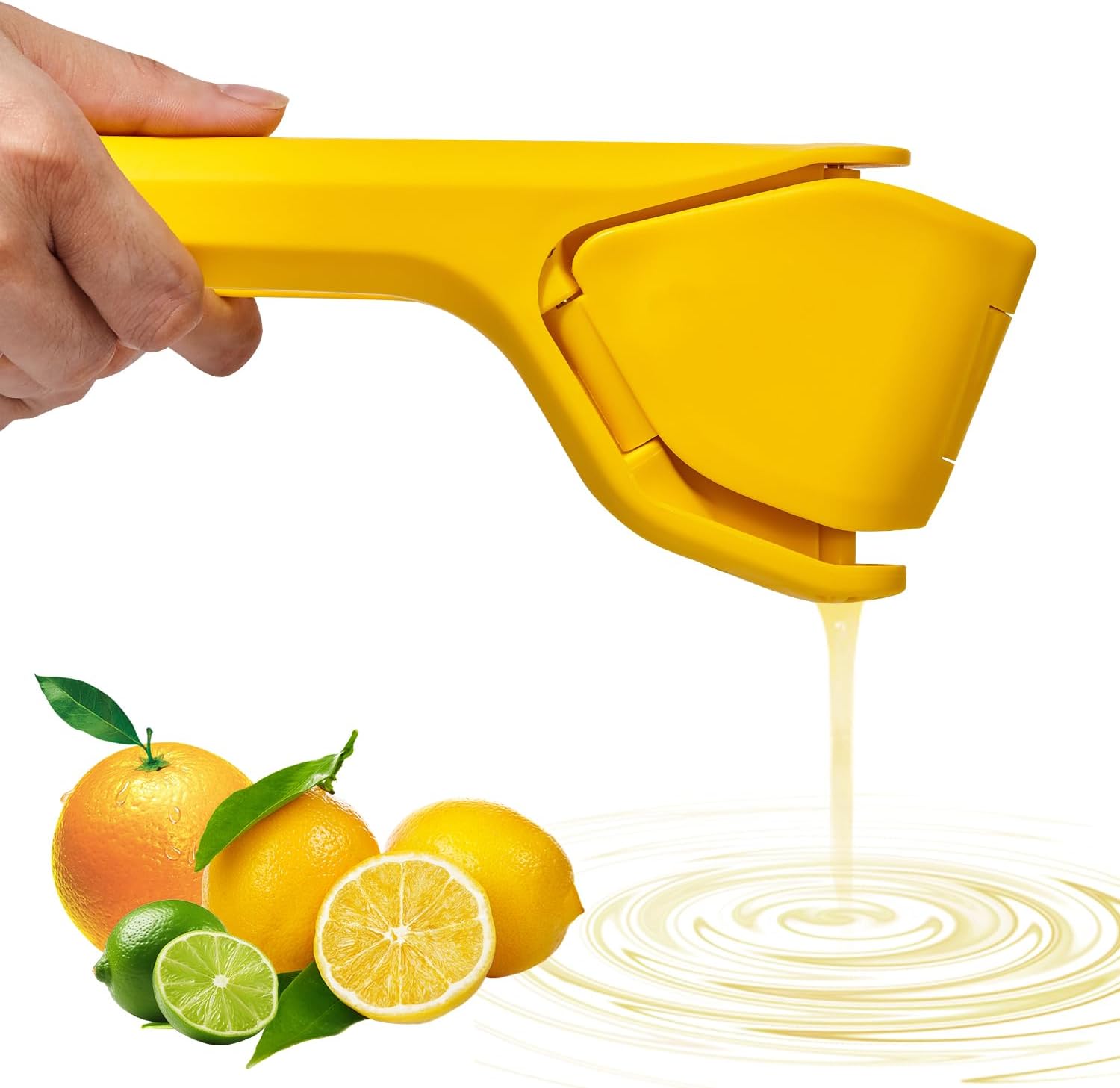
This compact hand squeezer is a simple, no-frills tool for extracting juice from lemons, limes, and small citrus fruits. Its thickened, food-grade polypropylene construction keeps it odor-free and resistant to bending, while the ergonomic lever design reduces squeezing effort by roughly 40 percent compared with basic squeezers. The built-in filter separates seeds and most pulp so the juice you collect is relatively clean, and the slim, fold-flat shape stores easily in a drawer. It is intended for occasional, small‑batch use rather than heavy commercial juicing, and the manufacturer specifies hand washing only, so it needs a quick rinse after each use to avoid staining. The squeezer performs best when fruits are cut to fit the opening and when you need a fast single lemon or lime for cooking or drinks, offering a practical, inexpensive alternative to electric juicers for everyday home tasks.
Best for: Buyers who want an inexpensive, durable manual tool for quickly juicing a lemon or lime for cooking or cocktails without hauling out an electric juicer.
Less Ideal for: People who need to juice large volumes regularly or want a dishwasher-safe, heavy-duty commercial tool should consider other options.
- Food-grade BPA-free polypropylene construction that resists odors and bending
- Ergonomic lever reduces squeezing force for easier extraction
- Built-in filter separates seeds and most pulp for cleaner juice
- Slim, foldable shape stores flat in a drawer for compact storage
- Hand wash only; not dishwasher safe
- Designed for small-batch use and not suitable for high-volume juicing
Verdict: A budget-friendly, lightweight manual squeezer that makes quick single-serving citrus juicing effortless and compact to store.
OXO Good Grips 2-in-1 Citrus Juicer

| Power Source | Manual |
|---|---|
| Capacity | 350 ml |
| Material | Plastic |
| Product Care Instructions | Dishwasher Safe |
The OXO Good Grips 2-in-1 Citrus Juicer is a straightforward manual juicer that covers small and large citrus with two removable reamers that snap on and nest for storage. You use the small reamer for lemons and limes and the large one for oranges and grapefruits; the contoured body gives a secure grip while you press and twist, and the internal measurement markings read up to 350 ml for recipe use. Juice pours out through a drip-free spout and the reamers are dishwasher-safe for easy cleanup. Because it is fully manual and made of BPA-free plastic, it is quiet, portable, and requires no power or bulky storage. The main limitations are its modest capacity and plastic construction, which may not feel as heavy-duty as metal options for very frequent, commercial use, and it does not extract as completely as a powered juicer on very fibrous fruit.
Best for: Buyers who prioritize a reliable, no-frills manual juicer for everyday home use and want something easy to clean and store.
Less Ideal for: People who need high-capacity or heavy-duty commercial extraction or who prefer the highest possible yield from very fibrous citrus should consider a powered or metal juicer instead.
- Two reamers for small and large citrus so you get a better fit for different fruits
- Clear internal measurement markings up to 350 ml for cooking and portioning
- Drip-free pour spout reduces mess when transferring juice
- Removable reamers are dishwasher safe and nest for compact storage
- Plastic construction may feel less durable than metal alternatives
- Modest 350 ml capacity requires more frequent emptying for larger batches
Verdict: A simple, dependable manual citrus juicer that reliably handles lemons through grapefruits and is easy to clean and store.
Zulay Metal 2-in-1 Lemon Squeezer

| Material | Aluminum |
|---|---|
| Power Source | Manual |
| Blade Material | Stainless Steel |
| Capacity | 0.5 liters |
The Zulay Metal 2-in-1 Lemon Squeezer is a simple hand press that combines a bowl-style juicer with a heavy-duty lever for maximum extraction. You use it by placing a halved citrus fruit in the bowl and squeezing the ergonomic handles together to press juice through the perforated bowl that traps seeds and most pulp. The aluminum construction and stainless steel blade areas give it a sturdy feel, and the ergonomic handle reduces hand strain during repeated use. It is compact, requires no power, and stores easily in a drawer, making it handy for cocktails, dressings, or a quick glass of lemonade. The unit is intended for hand washing but the product notes say it can also be rinsed or placed in the dishwasher, which speeds cleanup. Limitations include its small bowl size that best fits lemons, limes, and small oranges rather than large citrus, and its manual operation which requires physical effort for larger batches.
Best for: Buyers who prioritize proven performance and social proof and want a reliable, easy-to-use manual juicer for occasional to moderate home use and cocktail prep.
Less Ideal for: Those who need high-volume juicing for large oranges, commercial use, or a fully hands-free electric juicer should consider other options.
- Solid aluminum construction for durability
- Ergonomic handle designed to reduce hand fatigue
- Perforated bowl filters seeds and most pulp for cleaner juice
- Compact, no-power design that stores easily
- Bowl capacity is small so not ideal for large oranges or high-volume juicing
- Requires manual force for each press which can be tiring for many servings
Verdict: A sturdy, well-reviewed manual squeezer that reliably extracts citrus juice for home and cocktail use without electricity.
MONKKINO Lemon Squeezer

| Recommended Uses For Product | Citrus Fruits, Grapefruit, Lemon, Orange |
|---|---|
| Material | Zinc |
| Product Care Instructions | Dishwasher Safe |
| Capacity | 0.75 liters |
The MONKKINO Lemon Squeezer is a lever-style manual juicer that uses a deep bowl and reinforced hinge to press citrus down onto multi-directional juice outlets for seed-free extraction. You use it by halving a citrus fruit, placing the cut side down in the bowl, and pulling the long ergonomic handles together to compress the fruit; the design channels juice while keeping pulp and seeds mostly contained. It is made from zinc with an electroplated finish and comes with a stainless-steel zester for added utility. Practical benefits include strong leverage that reduces hand strain, a compact footprint that stores easily, and dishwasher-safe materials for low-effort cleanup. Important limitations are that it is best suited to lemons, limes, and small oranges rather than large grapefruits, and the metal finish can show wear over long heavy use unlike thicker cast alternatives.
Best for: Buyers who prioritize a reliable, easy-to-use handheld press for daily lemon and lime juice and want a low-risk, durable tool that is simple to clean and store.
Less Ideal for: If you regularly need to juice large fruits or want an electric juicer for high-volume extraction, this compact manual press is not the best choice.
- Long ergonomic handles provide good leverage for easier squeezing
- Deep bowl and multi-directional outlets reduce splatter and keep seeds out of the juice
- Zinc construction with electroplated finish is rust-resistant and dishwasher safe
- Includes a stainless steel zester for added prepping versatility
- Not ideal for very large citrus like grapefruits
- Electroplated zinc may show wear over very heavy, long-term use
Verdict: A sturdy, low-effort manual squeezer that reliably delivers seed-free lemon and lime juice with minimal cleanup and fuss.
Choosing the Right Hand Juicer: Key Factors to Consider
Extraction Efficiency
Extraction efficiency determines how much juice you get from each fruit and how much manual effort is required. A well-designed hand juicer squeezes more juice while leaving less in the pulp, which matters when you are juicing expensive or seasonal citrus.
Design elements such as cone shape, press angle, and mechanical advantage affect how thoroughly the fruit is compressed. For lever-style juicers, the quality of the pivot and the length of the handle influence extraction without increasing wrist strain. Higher efficiency means fewer fruits per glass and less repetitive motion for the user.
Build Materials and Corrosion Resistance
Materials affect longevity, taste neutrality, and how the juicer responds to acidic citrus. Stainless steel components resist corrosion better than plain metal, and food-grade plastics can be a lightweight, cost-effective option if they do not stain or absorb odors.
Look for juicers with sealed joints and minimal crevices where pulp and juice can collect. Metal parts that come into contact with juice should be corrosion-resistant to avoid metallic flavors and premature wear. Durable construction reduces wobble and keeps parts aligned for consistent extraction over time.
Ergonomics and User Comfort
Manual juicing puts repeated force demands on hands and wrists, so ergonomics is crucial. Comfortable grips, proper handle length, and a lever geometry that multiplies input force reduce fatigue and make the task easier for users with limited hand strength.
Consider the size and shape of the handles, whether they have non slip surfaces, and how the machine distributes pressure across the fruit. A stable base or non slip feet improve safety and control during operation.
Ease of Cleaning and Maintenance
Juicers are exposed to sticky, acidic juice that can quickly build up unless parts clean easily. Removable parts that are dishwasher-safe or have smooth, nonporous finishes simplify cleanup and reduce the chance of bacterial buildup.
Avoid designs with hard-to-reach crevices or fixed screens that trap pulp. Consider whether seals, screws, or bushings require periodic replacement and how easy those parts are to access. Faster cleaning encourages more frequent use and better hygiene.
Citrus Size Versatility
You may want to juice everything from small limes to large grapefruits. A versatile hand juicer either accommodates multiple fruit sizes or includes interchangeable cones or adapters to handle the range.
If a juicer only works well with a narrow size range, you may need to supplement it with another tool. Evaluate the cone geometry, press clearance, and whether the mechanism allows firm contact with both small and large fruit without slipping.
Stability and Kitchen Footprint
A compact footprint matters in small kitchens, but stability during use is equally important to avoid spills and accidents. Heavier bases, non slip feet, or a clamp point for the countertop all increase stability when applying downward force.
Balance storage space against operational size. A taller lever-style juicer may require more vertical clearance but could provide superior leverage. Consider where you will store the juicer and how often you will need to take it out for use.
Hand Juicer Types and How They Differ
Hand juicers fall into a few main forms: small handheld reamers, lever-style press juicers, and compact cone reamers with a cup. Each type suits different use patterns. Reamers are inexpensive and portable for quick single servings but require wrist rotation and often yield less juice.
Lever-style press juicers provide mechanical advantage and are better for frequent use or for users who want maximum yield with minimum effort. Cone reamers with a cup strike a middle ground, offering reasonable extraction with limited cleanup.
- Handheld reamers: lightweight, simple, best for occasional use
- Cone reamers with cup: moderate yield, easy storage
- Lever press juicers: highest yield, best for frequent juicing
Setting Up and Using a Hand Juicer Safely
Place the juicer on a stable, flat surface and secure any non slip feet or clamps before applying force. Prepare fruit by cutting flat, even halves to improve contact with the cone or press surface.
Apply steady pressure and, when using a reamer, avoid twisting motions that strain the wrist. For lever presses, use your body weight and a smooth downward motion rather than sudden jerks to protect the mechanism and minimize splatter.
- Cut fruit across the equator for best juice release
- Use a towel under the base if the surface is slippery
- Start with gentle pressure and increase as needed
Maximizing Yield and Minimizing Pulp
To get more juice per fruit, roll the fruit on the counter with your palm before cutting to break internal membranes. For small citrus, pre microwaving for a few seconds can slightly increase yield by loosening cell walls. These simple steps reduce the number of fruits you need.
If you prefer less pulp, choose a juicer with a finer built-in strainer or strain through a separate mesh after juicing. Some lever presses compress pulp against a screen differently, so select a design that matches your pulp preference.
- Roll fruit prior to cutting to loosen membranes
- Use a finer mesh strainer for pulp-free juice
- Apply steady, complete presses for maximum extraction
Care and Long-Term Maintenance
Rinse components immediately after use to prevent sticky residue from drying and becoming hard to remove. For metal parts, dry thoroughly to avoid water spots and potential corrosion in non stainless alloys.
Inspect pivot points and gaskets periodically and tighten or replace fasteners as needed. If the unit has dishwasher-safe parts, place them on the top rack or follow the manufacturer recommendations to avoid warping or finish damage.
- Rinse promptly to prevent residue buildup
- Dry metal parts thoroughly after washing
- Check moving parts for wear and tighten as needed
Where a Hand Juicer Fits Into Your Kitchen Routine
A manual juicer is ideal for quick morning glasses, adding fresh citrus to recipes, or making a small batch of dressing. If you do not need large-volume juicing, a hand juicer is faster to set up and clean than an electric machine.
Keep a juicer in an accessible spot if you plan to use it daily. Occasional users may prefer a compact reamer that stores in a drawer, while daily users will benefit from a more robust lever-style unit placed on the counter.
- Everyday use: choose ease of cleaning and comfort
- Occasional use: prioritize compact storage
- Frequent entertaining: opt for higher yield and durability
How We Chose the Best Hand Juicer
We focused on attributes that matter to people who actually use a hand juicer multiple times per week. Key evaluation criteria were extraction efficiency, build materials and durability, ergonomics and comfort, ease of cleaning, and versatility for different citrus sizes. For extraction efficiency we looked at how well the design presses and releases juice with minimal effort and pulp retention. Materials and durability covered metal and food-grade plastics, corrosion resistance, and whether seals or moving parts are serviceable. Ergonomics examined handle length, grip comfort, and leverage so a user can extract juice without excessive strain. Ease of cleaning considered whether parts disassemble fully, whether surfaces are smooth and nonporous, and dishwasher compatibility. Versatility measured how well a juicer handles small limes through large grapefruits, and whether adapters or cone profiles are included. We excluded countertop electric models and reamers that require mounting hardware because this list is limited to handheld or lever-style manual juicers. We also excluded devices that depend on single-use components. Our short list reflects designs that balance consistent juice yield, long-term reliability, and simple upkeep.
Our full evaluation process is outlined in our review methodology.
FAQ
Are hand juicers suitable for all citrus fruits?
Often yes. Many hand juicers handle a range of citrus from limes to grapefruits, but performance varies. Look for models with interchangeable cones or generous press clearance for large fruit.
Can a hand juicer produce as much juice as an electric juicer?
It depends. Lever-style hand juicers can approach the yield of small electric models when used properly, but they require more physical effort. Small reamers typically yield less juice per fruit.
How do I prevent a metallic taste in juice from a manual juicer?
Choose corrosion-resistant materials and rinse the juicer immediately after use. If a metallic taste persists, inspect for discolored or pitted metal parts that may be degrading.
Is it safe to put hand juicer parts in the dishwasher?
Usually parts labeled dishwasher-safe are fine on the top rack, but repeated cycles can dull finishes or warp certain plastics. Hand washing preserves finishes and prolongs part life.
What maintenance keeps a hand juicer working well?
Rinse parts after each use, dry metal components thoroughly, and periodically check pivots and fasteners. Replace worn gaskets or bushings to maintain smooth operation.
Final Verdict
Choosing the right hand juicer comes down to how often you will use it, how much juice you want per fruit, and how much cleanup you are willing to do. Prioritize extraction efficiency and ergonomic leverage if you juice frequently. If storage or occasional use is more important, favor compact designs with simple cleaning. Balance materials and stability against your kitchen space and routine to pick a manual juicer that delivers consistent results and lasts through regular use.