
Note: This article contains affiliate links. If you click on these links and make a purchase, we may earn a small commission at no extra cost to you. This helps support our research and content. Read our full affiliate disclosure here.
If you drink fresh juice regularly, the right orange juicer makes a measurable difference in yield, flavor, and cleanup time. You want a unit that extracts the most juice while leaving behind minimal pulp and seeds, and that is simple to take apart and maintain. This guide presents seven shortlisted orange juicers that meet those goals and suit a range of home kitchens. We evaluated each option against key homeowner priorities like extraction efficiency, ease of cleaning, noise and durability. Read on for a clear breakdown of what matters and which features to prioritize before you buy.
Top Picks at a Glance
| Best Overall The best all-around choice for most situations | Breville Citrus Press BCP600SIL |  |
| Best Quality Built to a higher standard if you want something more solid | Breville Citrus Press Pro 800CPXL |  |
| Best Value The sweet spot between price and what you get | BLACK+DECKER Citrus Juicer CJ625 |  |
| Best Budget The cheapest option that still gets the job done reliably | Elite Gourmet ETS623 Citrus Juicer |  |
| Top Rated A top-rated pick with lots of positive feedback | OXO Good Grips 2-in-1 Citrus Juicer |  |
| Most Popular A crowd favorite that many people choose with confidence | Cuisinart Pulp Control CCJ-500P1 | 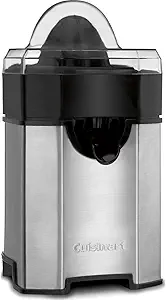 |
| Best Seller A high-volume bestseller chosen again and again | EanOruus 3-in-1 Cold Press Juicer E-18 |  |
Breville Citrus Press BCP600SIL

| Power | 110 Watts |
|---|---|
| Voltage | 110 to 120 Volts |
| Warranty | 1 Year Limited Product Warranty |
The Breville Citrus Press is a compact motorized juicer that makes fresh citrus juice with minimal effort. You press down the hinged arm onto whole or halved fruit and the motor spins the finned cone to extract juice while the fruit dome holds produce in place for consistent contact. The one-size-fits-all cone and finned design help maximize extraction across lemons, limes, oranges, and grapefruit, and the drip-stop spout keeps counters cleaner between pours. Key parts — the cone, collector, filter, and dome — are dishwasher-safe which speeds cleanup after breakfast or occasional use. A dual safety switch prevents the cone from spinning until sufficient pressure is applied, which reduces accidental operation. On the downside the unit is single-purpose for citrus and the 110-watt motor means it is optimized for soft, juicy fruit rather than heavy-duty commercial work. The durable stainless look and straightforward operation make it a good daily kitchen tool for anyone who drinks fresh juice without fuss.
Best for: Buyers who want a simple, reliable countertop tool to make fresh citrus juice easily at home with minimal prep and cleanup.
Less Ideal for: People needing a multi-purpose juicer for vegetables, or those who require industrial‑level throughput for frequent large batches.
- Motorized press with hinged arm for one-handed, low-effort juicing
- One-size-fits-all finned cone maximizes extraction for lemons through grapefruit
- Drip-stop spout reduces counter mess when pouring
- Removable juicing parts are dishwasher-safe for easy cleanup
- Dual safety switch prevents the cone from spinning until pressure is applied
- Designed only for citrus so it cannot process other fruit or vegetables
- 110-watt motor is not intended for heavy commercial or continuous high-volume use
Verdict: Choose this Breville if you want a safe, low-effort motorized citrus press that delivers reliable fresh juice for everyday home use.
Breville Citrus Press Pro 800CPXL

| Maximum Power | 100 watts |
|---|---|
| Wattage | 110 watts |
| Power Source | Corded Electric |
| Material | Stainless Steel |
| Capacity | 800 ml |
The Breville Citrus Press Pro 800CPXL is a dedicated citrus juicer built for steady, high-yield performance. It uses an active-arm, power-assisted lever with a triple-hinged arm to apply consistent downward pressure while the Quadra-Fin die-cast cone extracts juice from lemons, limes, oranges and grapefruits. Safety interlocks keep the cone from spinning until the arm is lowered and enough pressure is applied, and a drip-stop spout helps prevent countertop messes. The major components like the cone, filter and fruit dome are dishwasher safe, which makes cleanup straightforward after frequent use. At about 110 watts it runs quietly compared with large centrifugal juicers but is limited to citrus only; it will not process hard fruits or vegetables. The stainless steel build and acid-resistant die-cast cone give it a durable, professional feel that suits frequent juicing routines, though the unit is heavier and takes up counter space compared with compact handheld squeezers.
Best for: Buyers who prioritize maximum yield and a robust, low-effort pressing action for daily or frequent citrus juicing, and who want a durable, pro-feel appliance for home use.
Less Ideal for: People needing an all-purpose juicer for vegetables, leafy greens, or small kitchens where a compact handheld or multifunction juicer would be a better fit.
- Quadra-Fin die-cast cone designed to maximize juice extraction across citrus sizes
- Power-assisted lever and triple-hinged arm deliver consistent pressure with low effort
- Acid-resistant stainless steel construction for long-term durability
- Drip-stop spout reduces countertop mess when pouring juice
- Juicing parts like the cone and dome are dishwasher safe for easier cleanup
- Only suitable for citrus fruits and cannot juice hard produce
- Relatively heavy and requires counter space compared with handheld models
Verdict: If you want a durable, high-yield citrus press that delivers consistent, low-effort extraction for frequent orange and grapefruit juicing, this Breville is a top choice.
BLACK+DECKER Citrus Juicer CJ625

| Power Source | Corded Electric |
|---|---|
| Voltage | 120 volts |
| Wattage | 150 watts |
| Special Features | Auto-Reversing |
The BLACK+DECKER CJ625 is a straightforward electric citrus juicer built for routine kitchen use. It uses auto-reversing reaming cones and two cone sizes to extract juice from small and large citrus with minimal effort, while the adjustable pulp basket lets you choose how much pulp stays in the final juice. Juice collects in a clear pitcher with measurement markings and an easy-pour spout so you can juice directly into recipes or a glass, and most removable parts are dishwasher safe for quick cleanup. At typical home use it handles several pieces of fruit in a row without fuss thanks to the corded 120V motor and stainless steel blades in the filter. The unit is plastic-bodied and compact, so it fits small counters but does not offer heavy-duty commercial durability. Expect solid daily performance for juices, dressings, and cocktails, but not the long-term robustness of larger professional machines.
Best for: Someone who wants an efficient, no-fuss citrus juicer for regular home use and values easy cleanup and measured yields over commercial-grade durability.
Less Ideal for: People who need a heavy-duty or commercial juicer for large-scale daily juicing should look for a more robust, metal-built machine.
- Auto-reversing cones improve juice extraction from different sized fruit
- Adjustable pulp basket lets you control pulp level
- Clear pitcher with measurement markings and drip-free spout for easy pouring
- Dishwasher-safe removable parts simplify cleanup
- Plastic body may feel less durable than metal-bodied models
- Designed for home use rather than heavy commercial juicing
Verdict: A compact, easy-to-use citrus juicer that delivers good extraction and simple cleanup for everyday home juicing.
Elite Gourmet ETS623 Citrus Juicer

| Maximum Power | 40 watts |
|---|---|
| Power Source | Corded Electric |
| Voltage | 120 |
| Capacity | 24 oz |
The Elite Gourmet ETS623 is a small, straightforward electric citrus juicer designed for quick at-home squeezing of oranges, lemons, limes and grapefruits. Its 40-watt motor and auto-reversing reamer rotate in both directions to boost extraction while the push-down operation keeps use simple; the 24-ounce container and built-in pulp and seed filter let you make a few servings without transferring juice between vessels. Detachable parts and top-rack dishwasher safe components make cleanup easy, and the compact footprint fits tight counters, dorm rooms or RVs. Practical advantages include a quiet motor and an easy-pour spout with an ergonomic handle for serving. Limitations are modest power compared with full-size juicers and a small capacity that means more frequent batches for larger households, and the manufacturer recommends hand washing for longest life even though parts are dishwasher-safe. For buyers on a budget who want a no-frills way to get fresh citrus juice, this model balances extraction performance, convenience and a small footprint.
Best for: Buyers wanting an affordable, space-saving juicer for regular home use who prioritize easy operation and decent extraction over heavy-duty capacity.
Less Ideal for: People who need large-volume juicing for parties or those who want a heavy-duty extractor for continuous commercial-style use should look elsewhere.
- 40-watt motor with auto-reversing reamer for improved juice extraction
- Compact footprint fits small kitchens, dorms, and RVs
- 24 oz container with built-in pulp and seed filter for easy serving
- Detachable parts are top-rack dishwasher safe for faster cleanup
- Quiet motor reduces noise during use
- Small 24 oz capacity requires multiple batches for larger families
- Not as powerful as commercial or high-end juicers
Verdict: A compact, budget-friendly citrus juicer that delivers better-than-basic extraction with simple cleanup, ideal for everyday home use.
OXO Good Grips 2-in-1 Citrus Juicer

| Capacity | 350 ml |
|---|---|
| Power Source | Manual |
| Special Features | Pulp Control |
| Product Care Instructions | Dishwasher Safe |
The OXO Good Grips 2-in-1 Citrus Juicer is a simple, manual juicer that covers lemons, limes, oranges and grapefruits with two snap-on reamers. You use the appropriate reamer for the fruit, press and twist over the measuring pitcher, and pour through the drip-free spout; measurement markings up to 350 ml help you stop at the right volume. The snap-off reamers nest for compact storage and are dishwasher-safe, which makes cleanup straightforward. Its contoured plastic body is BPA-free and provides a comfortable grip during repetitive juicing. Because it is manual there is no motor to fail and it is quiet and portable, but hand pressure limits throughput compared with electric models and it is less efficient for very large batches. Overall, it is a reliable, no-frills tool for everyday citrus tasks that keeps maintenance and breakdown risk to a minimum.
Best for: Buyers who prioritize dependable, low-maintenance kitchen tools and want a straightforward manual juicer that rarely needs repair.
Less Ideal for: Those who need to juice large volumes frequently or prefer a faster, motorized solution for heavy daily use.
- Two reamers included to handle both small and large citrus fruits
- Dishwasher-safe components and snap-off reamers for easy cleaning
- Drip-free pour spout with measurement markings up to 350 ml for accurate pouring
- Contoured BPA-free body for comfortable grip during use
- Manual operation requires hand effort and is slower for large batches
- Plastic construction may feel less durable than metal-bodied juicers
Verdict: A reliable, low-maintenance manual juicer that handles both small and large citrus with minimal risk of mechanical failure.
Cuisinart Pulp Control CCJ-500P1

| Power Source | Corded Electric |
|---|---|
| Number of Speeds | 3 |
| Wattage | 800 watts |
| Capacity | 12 ounces |
The Cuisinart Pulp Control CCJ-500P1 is a compact electric citrus juicer designed to handle everything from limes to grapefruits. It uses an auto-reversing universal juicer cone and a final-spin feature to extract extra juice, and an adjustable reamer offers three pulp control settings so you can choose low, medium or high pulp. The unit pours through an extra-long snap-up spout to reduce drips and its removable parts are dishwasher-safe for straightforward cleanup. With a corded electric motor and three speed settings accessed by buttons, it is simple to operate for daily orange or lemon squeezing and quick batches for breakfast or cocktails. The stainless steel construction looks durable and the included 12-ounce capacity is suitable for small to medium servings, though very large batches require repeated cycles. Overall it is a reliable, easy-to-clean citrus juicer that focuses on efficient extraction rather than multifunctional processing.
Best for: Buyers who prioritize a compact, easy-to-use citrus juicer that squeezes efficiently with adjustable pulp control and simple cleanup backed by a popular, well-reviewed model.
Less Ideal for: People who need to juice large quantities at once or who want a multifunction juicer that handles whole fruits and vegetables beyond citrus.
- Auto-reversing cone and final-spin feature maximize juice extraction
- Three pulp control settings let you customize juice texture
- Dishwasher-safe removable parts simplify cleanup
- Stainless steel construction offers durable, kitchen-friendly finish
- 12-ounce capacity and compact size mean more cycles for large batches
Verdict: A compact, reliable citrus juicer that extracts more juice with selectable pulp control and easy dishwasher cleanup, making it a safe choice for everyday orange and lemon juicing.
EanOruus 3-in-1 Cold Press Juicer E-18
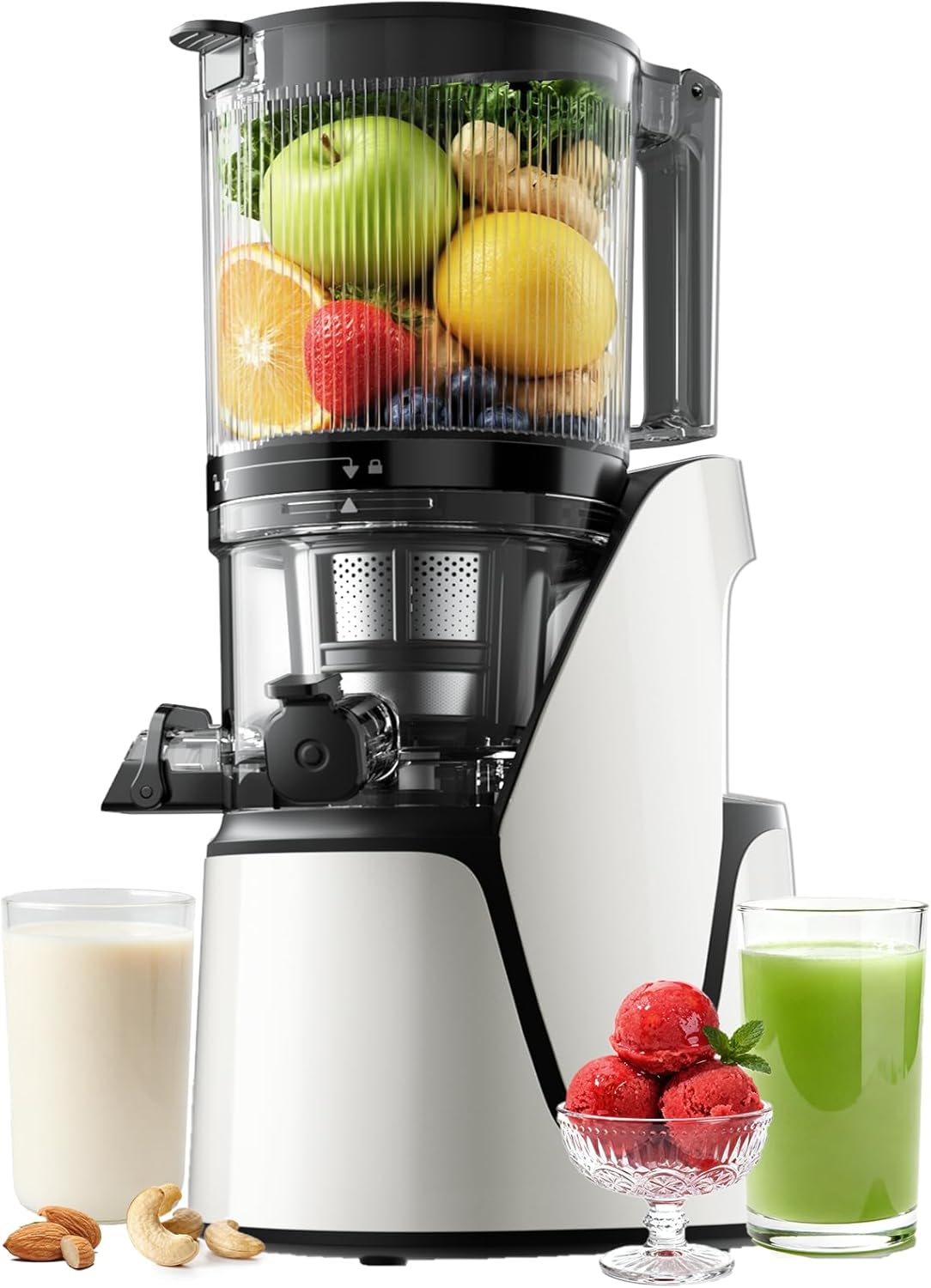
| Maximum Power | 250 watts |
|---|---|
| Power Source | AC |
| Voltage | 110 volts |
| Capacity | 100 fluid ounces |
The EanOruus E-18 is a single-auger cold press juicer designed for home users who want high-yield juice plus the option to make nut milk and sorbet. It accepts large whole fruit through a 6.5-inch chute into a 100 oz hopper so you can batch a few liters of juice without constant refilling. The 250 W AC motor is built for steady, quiet extraction and includes auto-reverse and overheat protection to reduce jams and extend runtime. Removable strainers and a detachable pulp outlet simplify cleaning, though parts require hand-washing. In daily use it excels with softer and medium-firm fruits like oranges, producing smooth juice with minimal foam; the wide chute also reduces prep time for whole citrus. Expect slower processing than centrifugal models for very large batches, and the unit is fairly large and somewhat heavy, which matters if counter space is limited. For buyers who prioritize reliable extraction, quiet operation, and versatility beyond juice, this is a practical, cautious choice.
Best for: Someone who wants a reliable, quiet cold-press juicer that handles whole fruit with minimal prep and provides extra functions like nut milk and sorbet while prioritizing safe, durable operation.
Less Ideal for: If you need the fastest possible juice throughput, a compact travel option, or dishwasher-safe parts, this model is not the best match.
- Large 6.5-inch feed chute and 100 oz hopper reduce prep and let you batch juice with whole fruit
- 250 W AC motor offers steady, quiet masticating extraction with auto-reverse and overheat protection
- 3-in-1 capability: juice, make nut milk, and sorbet with included strainers
- Detachable pulp outlet and removable parts make cleaning easier than fixed-path juicers
- Requires hand washing of removable parts rather than dishwasher-safe components
- Slower throughput compared with high-speed centrifugal juicers for very large volumes
Verdict: Choose the EanOruus E-18 if you want a cautious, reliable cold-press juicer that handles whole oranges, offers quiet steady extraction, and doubles as a nut milk and sorbet maker.
Choosing the Right Orange Juicer: Key Factors to Consider
Extraction Efficiency
Extraction efficiency directly affects how much juice you get from each orange and how often you need to restock. Higher extraction means less wasted fruit and better value if you juice frequently. Efficiency depends on cone design, pressure mechanics for manual presses, or motor torque and reamers for electric models.
In practice, efficient extraction also influences flavor because overworking a fruit can add bitterness from rind oils. Choose an option that consistently removes juice without over‑compressing the peel. For households that juice daily, prioritize models with tested yield figures or clear cone sizing that matches the oranges you buy.
Ease of Cleaning
Cleaning time often determines whether you will actually use the juicer regularly. Units with fewer parts and dishwasher-safe components reduce friction in daily use. Pulp traps and strainers that are easy to empty and rinse help avoid residual odors and sticky buildup.
Consider how parts detach and whether crevices retain pulp. Sealed housings or permanently attached strainers can complicate cleaning. If quick cleanup matters to you, favor designs with tool-free disassembly and smooth surfaces that resist staining.
Build Quality and Durability
A durable juicer withstands repeated use without wobble, motor strain, or cracked plastics. Electric juicers should have motors rated for frequent cycles and robust housings that resist temperature changes and impact. Manual presses rely on solid mechanical joints, corrosion-resistant metal components, and firm grips.
Long-lasting machines maintain consistent extraction and rarely need replacement parts. Look for corrosion-resistant materials around juice channels and strainers, and for warranties or serviceability if long-term reliability is a priority.
Operating Speed and Noise
Speed affects how quickly you can make a glass of juice, which matters for busy mornings. Electric models vary in RPM and torque; higher torque can mean faster extraction but also greater noise. Noise level matters if you share living space or want to avoid waking others.
Manual options are quieter but require more effort. Balance how much time you have in the morning against the acceptable noise level and physical input you are willing to provide.
Pulp Control and Filtering
Different people prefer different amounts of pulp. Effective pulp filtering gives you control over texture without sacrificing yield. Look for adjustable strainers, multiple cone sizes, or fine mesh options to dial in the consistency you like.
Good pulp handling also helps prevent clogs and reduces the frequency of cleaning required. If you plan to use juice in recipes or for infants, finer filtration and easy-to-clean strainers are especially important.
Size and Countertop Footprint
The juicer's size affects storage and daily accessibility. Larger electric units may offer greater juice collection capacity but take up more counter or cabinet space. Compact models are easier to store but may need more frequent emptying of juice cups or pulp containers.
Consider where you will use the machine, whether you need a model that fits under cabinets, and how often you will move it. Weight and handle design also matter if you plan to stow the unit frequently.
Manual Vs Electric: Which Fits Your Routine
Manual orange juicers offer simplicity, quiet operation, and minimal cleanup. They are a good fit if you make juice occasionally or prefer a compact tool that does not require electricity. Manual presses can deliver excellent extraction when the mechanical leverage and cone size match the fruit.
Electric juicers are better for repeated daily use and for households that want speed and consistently high yield with minimal physical effort. They often include multiple cone sizes, built‑in strainers, and more robust housings, which can improve extraction for different orange varieties.
- Manual: lower noise, fewer parts to clean, requires physical effort
- Electric: faster extraction, consistent results, usually more features
Matching Cone Size to Orange Variety
Cone size matters because a poor fit reduces extraction and increases frustration. Smaller cones struggle with large navels, while oversized cones may not fully contact small fruit. Models with multiple cones or flexible reamer profiles provide better results across a wider range of oranges.
If you typically buy one type of orange, pick a juicer with a cone optimized for that size. If you vary sizes, prioritize models that include at least two cone options or a reamer that adapts to different diameters.
- Check included cone sizes and whether additional cones are available
- Look for tapered or flexible reamer designs for mixed-size fruit
Maintenance Tips to Keep Performance High
Rinse components immediately after use to prevent pulp and sugar buildup that leads to staining and odor. For electric models, wipe down the motor housing and ensure vents are clear of pulp to avoid overheating. Periodically deep-clean strainers and cones with a soft brush to remove trapped fibers.
Replace or service worn gaskets and seals promptly to maintain suction and prevent leaks. For manual presses, inspect pivot points and fasteners for looseness and apply food-safe lubricant if the mechanism stiffens.
- Rinse parts right away to avoid dried residue
- Use a soft brush for strainers and mesh filters
- Check seals and moving parts for wear quarterly
Safety and Materials to Watch For
Choose juicers made from BPA-free plastics or stainless steel in parts that contact juice. Corrosion-resistant metals and food-safe coatings reduce the risk of off-flavors and extend component life. Non-slip feet and stable bases prevent tipping during operation.
For electric units, look for thermal protection or automatic shutoff features to protect the motor from overheating during heavy use. For manual presses, ensure that moving parts are fully enclosed or designed to avoid pinch points.
- Prefer BPA-free components and stainless-steel contact surfaces
- Non-slip bases and stable designs reduce accidents
- Thermal cutoffs and motor protection increase safety for electric models
How Juice Texture Affects Usage
Texture influences how you use the juice. Thicker, pulpier juice can feel fresher and more filling but may separate faster and is less suitable for infants or clear beverage applications. Finer filtration yields clearer juice that integrates more easily into recipes and smoothies.
If you use orange juice for cocktails, cooking, or baby food, favor models with fine filtering and adjustable pulp control. If you prefer a rustic, full-bodied glass of juice, a coarser strainer or minimal filtration may be preferable.
- Fine filtration for recipes, infants, and cocktails
- Coarse extraction for fuller mouthfeel and fiber
How We Chose the Best Orange Juicer
We screened a broad field of household citrus presses and electric juicers to find models that deliver reliable extraction and straightforward maintenance. Our editorial filters prioritized measurable performance and long-term usability rather than marketing claims. Key evaluation criteria included extraction efficiency, cleaning and maintenance demands, build quality and durability, operating speed and noise, and versatility for different orange sizes. Extraction efficiency measures how much usable juice a unit yields from typical oranges and how well it handles pulp and seeds. Cleaning and maintenance looks at how many parts come apart, whether components are dishwasher-safe, and how easily pulp and residue are removed. Build quality assesses materials, motor durability for electric models, and mechanical robustness for manual units. Speed and noise evaluate real-world operating volume and time to make a serving. Versatility considers cone sizes or adjustable settings to handle navel, Valencia, and other common orange varieties. We excluded specialty commercial machines and devices intended only for high-volume restaurant use. Models that required proprietary consumables were also deprioritized. The selected orange juicers represent practical, home-friendly options that score well across these concrete dimensions.
Our full evaluation process is outlined in our review methodology.
FAQ
How often should I clean an orange juicer?
Rinse parts immediately after each use and perform a thorough clean daily if you use the juicer every day. Mesh strainers and cones can trap pulp and sugars, so a quick brush and soap rinse prevents buildup and odor.
Can I juice other citrus fruits with an orange juicer?
Often you can. Many orange juicers handle lemons, limes, and grapefruits, but performance varies with size. Check cone options and pulp filters to ensure the model can adapt to the other fruits you plan to juice.
Is a manual press better than an electric model?
It depends on usage. Manual presses are quieter, simpler, and take less countertop space. Electric models save time and effort for frequent juicers and typically yield more juice with less manual work.
How do I reduce bitterness from the peel?
Avoid over-pressing the rind, which releases bitter oils. Use the correct cone size and moderate pressure. For electric models, choose a moderate speed or short extraction cycles to limit rind contact.
What maintenance extends the life of a juicer?
Regular cleaning, prompt replacement of worn seals, and keeping motor vents clear are key. For manual machines, inspect joints and fasteners and tighten or lubricate moving parts as needed to prevent wear.
Final Verdict
Choose an orange juicer by balancing extraction efficiency, ease of cleaning, and how it fits your morning routine. If you juice frequently, prioritize efficient extraction, robust build quality, and straightforward disassembly. For occasional use, a compact manual model or a simple electric reamer that is easy to clean may be a better fit. Weigh the tradeoffs between speed, noise, and pulp control, and select the features that align with how you will actually use the juicer. That approach will help you pick a dependable, convenient unit that delivers the juice and texture you prefer.