
Note: This article contains affiliate links. If you click on these links and make a purchase, we may earn a small commission at no extra cost to you. This helps support our research and content. Read our full affiliate disclosure here.
If you drink fresh orange juice regularly, the juicer you choose affects flavor, yield, and how much time you spend cleaning up. A juicer designed for citrus will extract more liquid with less effort, control pulp levels, and withstand frequent use. This guide lists seven shortlisted juicers that excel at making orange juice and explains the practical tradeoffs you should weigh. We evaluated machines for extraction efficiency, pulp control, ease of cleaning, and durability so you can pick the model that fits your routine. Read on for the criteria we used and the factors that matter when making fresh orange juice at home.
Top Picks at a Glance
| Best Overall The best all-around choice for most situations | Breville Citrus Press BCP600SIL |  |
| Best Quality Built to a higher standard if you want something more solid | Breville Citrus Press Pro 800CPXL |  |
| Best Value The sweet spot between price and what you get | Cuisinart Pulp Control CCJ-500P1 | 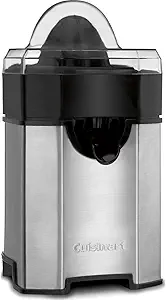 |
| Best Budget The cheapest option that still gets the job done reliably | Elite Gourmet ETS623 Citrus Juicer |  |
| Top Rated A top-rated pick with lots of positive feedback | anybear Cold Press Juicer SJ054C |  |
| Most Popular A crowd favorite that many people choose with confidence | BLACK+DECKER Citrus Juicer CJ625 |  |
| Best Seller A high-volume bestseller chosen again and again | EanOruus 3-in-1 Masticating Juicer E-18 |  |
Breville Citrus Press BCP600SIL

| Power | 110 Watts |
|---|---|
| Voltage | 110 to 120 Volts |
| Warranty | 1 Year Limited Product Warranty |
The Breville Citrus Press is a motorized countertop juicer that simplifies making fresh citrus juice by combining a one-size-fits-all finned cone with a spring-loaded hinged arm that applies consistent downward pressure. It is used by placing halved fruit under the dome and lowering the arm to engage the cone, which spins only when enough pressure is applied thanks to the dual switch safety. The finned cone and fruit dome are designed to maximize extraction across small limes to large grapefruits, and the drip-stop spout helps prevent mess when pouring. Removable parts including the juicing cone, collector, filter, and dome are dishwasher safe, which cuts cleanup time. At 110 watts it offers quiet, reliable operation for daily juice needs, though it is purpose-built for citrus and will not process whole fruits or vegetables beyond citrus types. For orange juice specifically it delivers efficient, hands-off squeezing and easy cleanup, making it a practical choice for those who want fresh citrus juice without manual pressing.
Best for: Home cooks who want a reliable, easy-to-use machine for daily fresh citrus juice with minimal effort and cleanup.
Less Ideal for: People who need an all-purpose juicer for leafy greens, carrots, or whole fruits should look at centrifugal or masticating juicers instead.
- One-size-fits-all finned cone maximizes juice extraction from small to large citrus
- Motorized, hinged-arm design provides consistent downward pressure and easy one-handed operation
- Drip-stop spout reduces countertop mess when pouring
- Multiple removable parts are dishwasher safe for easy cleanup
- Limited to citrus fruits and cannot process non-citrus produce
- Relatively simple feature set with no adjustable extraction settings
Verdict: A simple, motorized citrus press that makes consistent, mess-minimized orange juice with easy cleanup for everyday home use.
Breville Citrus Press Pro 800CPXL

| Capacity | 800 ml |
|---|---|
| Wattage | 110 watts |
| Power Source | Corded Electric |
| Material | Stainless Steel |
| Number of Speeds | 1 |
The Breville Citrus Press Pro 800CPXL is a heavy-duty countertop juicer that uses a quadra-fin die-cast cone and an active-arm, power-assisted lever to press juice from citrus with minimal effort. You lower the triple-hinged arm onto the fruit dome and the cone spins only when proper pressure is applied, which improves safety and yields. The acid-resistant die-cast cone and body stand up to frequent use and the drip-stop spout helps prevent countertop messes. Key parts including the cone, collector, filter and dome are dishwasher-safe for easy cleanup. It runs on about 110 watts with a single speed optimized for citrus, so it is quiet and focused on efficient extraction rather than high-speed shredding. The unit is relatively substantial, so it sits solidly on the counter but is less portable than lightweight handheld presses. If you want strong, consistent extraction for daily orange juice with simple operation and easy cleaning, this model delivers reliable performance.
Best for: Buyers who prioritize high-yield, consistent orange and citrus juice extraction with a rugged, easy-to-use machine for frequent home use.
Less Ideal for: People who need a lightweight, travel-friendly juicer or a multi-fruit high-speed centrifugal juicer for leafy greens and hard produce.
- Power-assisted lever and triple-hinged arm for consistent, low-effort extraction
- Quadra-fin acid-resistant die-cast cone designed to maximize juice yield from a range of citrus sizes
- Drip-stop spout reduces spills and keeps the counter clean
- Dishwasher-safe removable parts speed up cleanup and maintenance
- Single-speed, citrus-specific design limits use to citrus fruits and basic juicing tasks
- Relatively heavy and bulky compared with handheld or compact presses
Verdict: Choose the Breville Citrus Press Pro if you want a robust, lever-assisted citrus juicer that delivers consistently high juice yield with minimal effort.
Cuisinart Pulp Control CCJ-500P1

| Capacity | 12 ounces |
|---|---|
| Number of Speeds | 3 |
| Power Source | Corded Electric |
| Material | Stainless Steel |
| Voltage | 110 |
The Cuisinart Pulp Control CCJ-500P1 is a countertop electric citrus juicer designed for everyday orange, lemon, lime, and grapefruit juicing. It uses an auto-reversing universal reamer plus a final-spin feature to extract more juice from fruit, and three pulp control settings let you choose low, medium, or high pulp output. Juice flows through an extra-long snap-up spout into the included 12-ounce carafe while removable parts are dishwasher safe for quick cleanup. The unit is compact and easy to store, and stainless steel construction gives it a durable feel. It runs on corded power with three speed settings controlled by buttons, which makes it simple to use but not suitable for hands-free continuous commercial use. The compact capacity and carafe size mean you will need to juice in batches if serving several people, but for daily personal use it is efficient, easy to clean, and reliably extracts good yields from a range of citrus sizes.
Best for: Buyers who want a reliable, easy-to-use home citrus juicer that maximizes juice yield and simplifies cleanup for daily or small-group orange juice preparation.
Less Ideal for: People needing large-capacity or continuous commercial juicing should choose a higher-capacity or commercial-grade extractor instead.
- Auto-reversing reamer and final-spin feature improve juice extraction.
- Three adjustable pulp settings for customizable texture.
- Dishwasher-safe removable parts for easy cleanup.
- Compact stainless steel body that fits small kitchens.
- 12-ounce carafe requires multiple batches for larger servings.
- Designed for household use rather than continuous commercial juicing.
Verdict: If you want a compact, efficient home citrus juicer that extracts more juice with adjustable pulp control and easy cleanup, this Cuisinart is a smart pick.
Elite Gourmet ETS623 Citrus Juicer

| Maximum Power | 40 watts |
|---|---|
| Capacity | 24 oz |
| Power Source | Corded Electric |
| Special Features | Quiet Motor |
| Controller Type | Manual |
The Elite Gourmet ETS623 is a small, straightforward electric citrus juicer built for everyday use. Its 40-watt motor and auto-reversing reamer push and spin in dual directions to extract juice from oranges, lemons, limes, and grapefruits more efficiently than many basic 25W models. Juice collects in a 24 oz container with an integrated pulp and seed filter and an easy-pour spout, so you can make 2–3 servings at once and pour without extra mess. Detachable parts are top-rack dishwasher safe for faster cleanup, though the manufacturer recommends hand washing for longevity. The unit is compact and BPA-free, making it a reasonable fit for small kitchens, dorms, or RVs where counter space is limited. Limitations include modest motor power compared with full-size juicers and a simple manual controller with no speed settings, so it is focused solely on citrus rather than whole-fruit or vegetable juicing.
Best for: Buyers on a tight budget who want a simple, space-saving machine for fresh citrus juice a few times a week and value easy cleanup and straightforward operation.
Less Ideal for: Those who need a versatile or high-capacity juicer for vegetables, whole fruits, or frequent heavy use should look at larger masticating or centrifugal models.
- 40-watt motor with auto-reversing reamer for improved extraction
- 24 oz juice container with built-in pulp and seed filter for neat serving
- Compact footprint fits small kitchens, dorms, and RVs
- Detachable parts are top-rack dishwasher safe for easier cleanup
- BPA-free materials and ETL listing for basic safety compliance
- No variable speed control or settings beyond manual push-down operation
- Not designed for non-citrus or heavy-duty juicing tasks
Verdict: A compact, budget-friendly citrus juicer that delivers better extraction than basic models and is ideal for casual home orange juice drinkers.
anybear Cold Press Juicer SJ054C
| Maximum Power | 200 watts |
|---|---|
| Wattage | 200 watts |
| Voltage | 110 volts |
| Special Features | Easy to Clean |
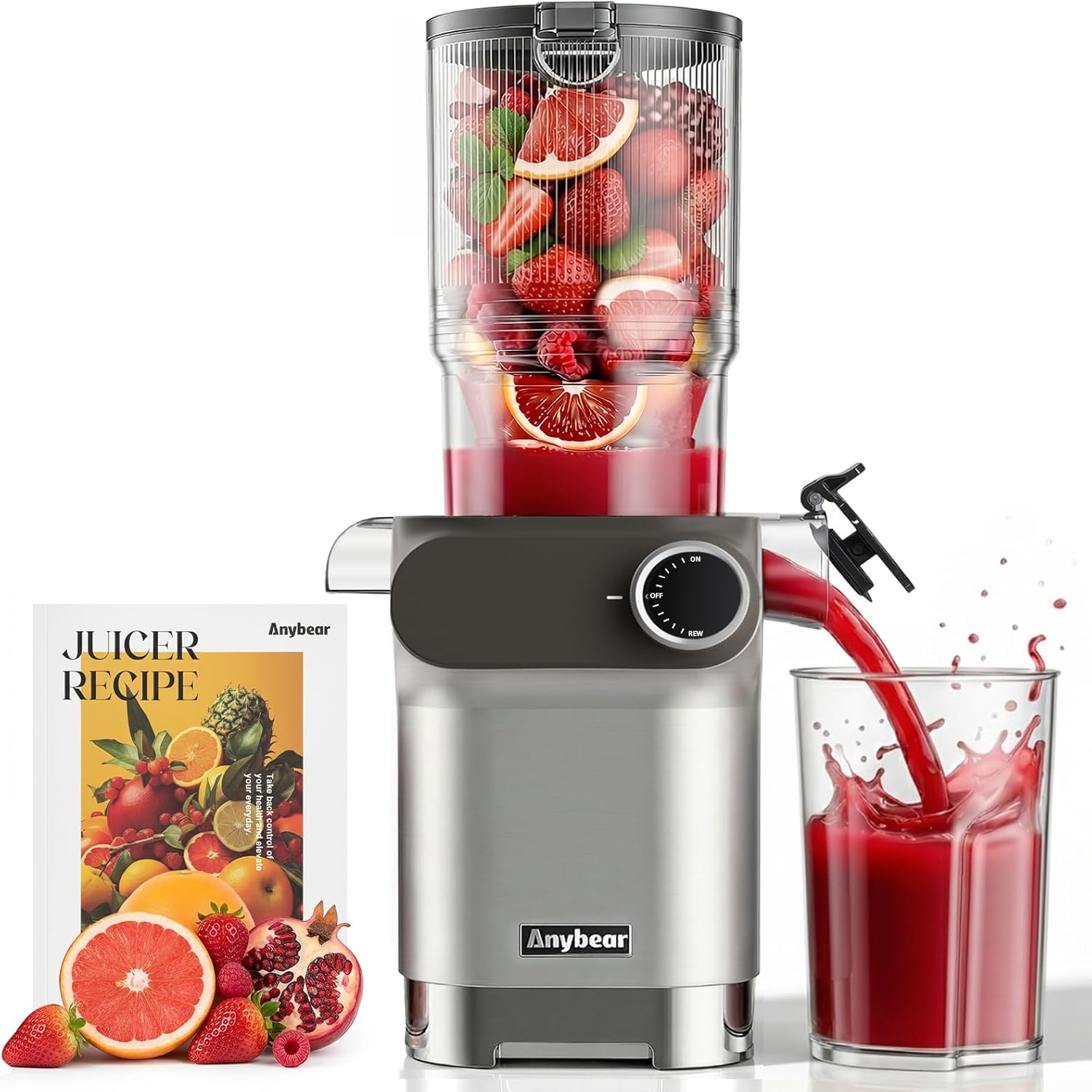
The anybear Cold Press Juicer is a single-auger masticating machine built for low-speed extraction of whole fruits and vegetables. It runs at about 65 RPM with a 200W motor and high torque to squeeze juice with minimal oxidation, which helps preserve flavor and nutrients—useful for making fresh orange juice that tastes bright rather than overly aerated. The 4.3-inch feed chute accepts larger citrus pieces so you can add halves or quartered fruit with less prep, and the Tritan feed components plus a stainless steel filter are designed for food-safe contact. Disassembly is straightforward and the included brush plus a simplified filter shape make rinsing faster than many compact masticators. Expect slower throughput than a centrifugal juicer, and the slower speed means you will need a bit more time for large batches, but you get higher yield and smoother, pulp-controlled juice. If you prioritize consistent, flavorful orange juice and easy cleaning over speed, this model performs well.
Best for: Buyers who value reliable, flavorful cold-pressed orange juice and want a low-oxidation masticating juicer that emphasizes yield and easy routine maintenance.
Less Ideal for: If you need very fast juicing for large crowds or prefer a countertop appliance that is fully dishwasher-safe, this slow juicer may not match those priorities.
- High-torque 200W motor for efficient cold press extraction and higher juice yield
- Large 4.3-inch feed chute reduces prep time for citrus and larger fruit
- Tritan and stainless steel contact parts for food-safe juice collection
- Simple disassembly and one-piece filter design speeds cleaning
- Slower extraction speed compared with centrifugal juicers, so batch processing takes longer
- Hand wash only for parts rather than dishwasher-safe components
Verdict: Choose this masticating juicer when you want consistently higher-yield, low-oxidation orange juice with minimal cleanup effort.
BLACK+DECKER Citrus Juicer CJ625

| Wattage | 150 watts |
|---|---|
| Power Source | Corded Electric |
| Voltage | 120 volts |
| Special Features | Auto-Reversing |
| Material | Plastic |
The BLACK+DECKER CJ625 is a straightforward countertop citrus juicer designed for making fresh orange juice and other citrus quickly. It uses auto-reversing reamer cones and two cone sizes so the machine extracts juice efficiently from small lemons up to large oranges, while the adjustable pulp basket lets you dial in texture. Juice collects in a clear pitcher with measurement marks and a drip-free spout, so it doubles as a serving container and simplifies recipe measuring. The plastic housing and dishwasher-safe parts keep cleanup simple, and the corded electric design runs on standard 120V power. Output is limited by the modest pitcher capacity and the unit is built for single-fruit runs rather than continuous commercial use, so you will reload frequently for larger batches. Practical benefits are fast extraction, easy pouring, and simple maintenance, while buyers should expect a basic consumer-grade build and modest throughput rather than heavy-duty performance.
Best for: Buyers who want a reliable, easy-to-use home citrus juicer backed by many user reviews and practical features for everyday orange juice preparation.
Less Ideal for: Not a good fit for users who need to juice large volumes continuously or require commercial-grade durability.
- Auto-reversing reamer cones increase juice extraction from different sized fruit
- Adjustable pulp basket lets you control juice texture
- Clear pitcher with measurement marks and drip-free spout for easy pouring and recipe use
- Dishwasher-safe removable parts simplify cleanup
- Small pitcher capacity requires frequent refilling for larger batches
- Plastic construction is consumer-grade rather than heavy-duty
Verdict: A simple, user-friendly citrus juicer that delivers easy extraction and cleanup for home orange juice fans backed by strong social proof.
EanOruus 3-in-1 Masticating Juicer E-18

| Maximum Power | 250 watts |
|---|---|
| Power Source | ac |
| Voltage | 110 volts |
| Capacity | 100 fluid ounces |
The EanOruus E-18 is a single-auger masticating juicer designed for home use and small-batch prep. It accepts whole fruit through a very wide 6.5-inch chute and holds a large 100 oz hopper so you can load multiple oranges or other produce without constant refilling. The 250 W AC brushless motor is built for steady, quiet extraction and includes auto-reverse and overheat protection to help prevent jams when processing fibrous citrus or whole fruit. Two strainers let you switch between juice and sorbet or make nut milk, and many parts are detachable for hand washing. Practical benefits include high yield from slow extraction, less chopping thanks to the mega chute, and a large hopper that suits family batches. Important limitations are the hand-wash-only care, plastic blade material, and relatively heavy unit that requires counter space; while powerful, it is not a compact countertop appliance for cramped kitchens.
Best for: Buyers who want a high-yield, low-noise juicer that handles whole fruit and family-sized batches with safety features and minimal hands-on feeding.
Less Ideal for: Anyone needing a compact, lightweight countertop unit or users who prefer dishwasher-safe parts for fast cleanup.
- Extra-wide 6.5-inch chute reduces prep time by fitting whole fruits
- Large 100 oz hopper for batching multiple servings
- 250 W AC brushless motor provides quiet, steady extraction with auto-reverse
- Includes interchangeable strainers for juice, sorbet, and nut milk
- Removable parts require hand washing rather than dishwasher safe
- Uses plastic blade material instead of metal components
- Relatively large and heavy, needs dedicated counter space
Verdict: Choose the EanOruus E-18 if you want a quiet, high-capacity masticating juicer that handles whole oranges and family batches with consistent extraction.
Choosing the Right Juicer for Orange Juice: Key Factors to Consider
Extraction Method
The extraction method determines how efficiently a juicer removes juice from oranges and how the final texture feels. Reamer-style citrus juicers apply targeted pressure and rotation to the fruit, which generally yields clean juice with simple pulp separation. Centrifugal juicers can process whole fruit faster but are not optimized for citrus and may introduce more foam.
Choose an extraction method that matches how you use the machine. For daily glass-size servings, a dedicated citrus reamer or press often gives the best balance of yield and control. If you plan to juice many oranges quickly, look for models designed for continuous citrus use that include large reamers and efficient pulp ejection.
Pulp Control and Straining Options
Different consumers prefer different pulp levels, from silky smooth to pulpy. Check whether the juicer offers adjustable strainers, multiple filter sizes, or a separate strainer basket. These features let you tailor texture without extra steps.
If you want to avoid extra filtering, choose a model with built-in adjustable pulp screens. For recipes that require nearly no pulp, plan for a model whose parts are easy to remove so you can run the juice through a secondary fine strainer quickly.
Ease of Cleaning
Cleaning is a major deciding factor because leftover citrus oils and pulp can build up and cause off flavors or clogging. Look for simple disassembly, dishwasher-safe parts, and smooth crevice-free surfaces. Fewer parts and intuitive snaps make daily cleanup faster and reduce the chance you will skip cleaning after use.
Materials that resist staining and odors, such as stainless steel or BPA-free plastics, also reduce maintenance. Consider the time required to rinse, scrub, and dry parts when choosing a model you will actually use every morning.
Capacity and Throughput
Capacity matters when juicing for a family or entertaining. Machines with larger reamers or wider feed areas let you process larger oranges faster and with fewer interruptions. Throughput also includes how well a juicer handles back-to-back fruits without overheating or requiring cooldown.
If you regularly make multiple glasses at once, prioritize models rated for continuous citrus operation and with generous juice containers. For occasional single servings, compact units are usually sufficient and easier to store.
Build Quality and Materials
Citrus is acidic, so corrosion resistance and sturdy construction are important. Stainless-steel components, durable plastics, and sealed motors extend service life and keep flavor clean. Weak plastics or exposed metal that corrodes will shorten the useful life and affect taste.
Look for models with solid motor housings and replaceable parts. Good warranties and available replacement components are signs of a product built for regular use.
Noise and User Comfort
Noise level and ergonomics affect how pleasant morning juicing will be. Lower-noise designs are better for early use, and comfortable handles or one-hand operation make the process smoother. Stability during operation reduces spills and frustration.
Consider how the machine mounts on the countertop, whether it has non-slip feet, and whether controls are easy to reach and understand. Small conveniences like a drip-free spout improve day-to-day satisfaction.
Citrus-Specific Versus Multi-Use Juicers
Juicers optimized for citrus focus on reamers and strainers that match orange texture, which usually yields better flavor and less foam. Multi-use juicers can handle a wider range of produce but may sacrifice some efficiency when processing oranges.
If your primary goal is frequent orange juice, a citrus-specific machine is often the better choice because it keeps the process simple and cleanup minimal.
- Citrus-specific: better yield, simpler cleanup
- Multi-use: more versatile but may need extra filtering
- Consider how often you will juice oranges versus other produce
Adjusting Pulp and Serving Style
Think about how you drink orange juice. If you prefer very smooth juice, models with finer strainers or secondary filtering will be helpful. For a heartier texture, coarse screens or a direct-ream option will preserve more pulp.
Some machines allow quick switching between pulp levels without full disassembly, which is convenient if different household members have different preferences.
- Look for adjustable strainers or multiple filter sizes
- Check whether switching pulp settings requires tools or just a quick twist
- Consider a separate fine-mesh sieve if your chosen model lacks a very fine filter
Maintenance Tips to Keep Flavor Fresh
Rinse parts immediately after use to prevent dried pulp and oils from staining or harboring odors. Periodic deep cleaning with mild vinegar or baking soda helps remove residual citrus oils that can accumulate on plastics.
Store removable parts dry and assembled loosely to ensure airflow and prevent musty smells. Replace worn strainers or seals as needed to maintain optimal juice clarity and machine performance.
- Rinse right after juicing
- Deep clean once a week for frequent users
- Inspect seals and filters routinely
Sizing Your Counterspace and Storage
Consider the footprint of the unit and where you will store it. Compact citrus reamers can fit in a cabinet and are ideal for small kitchens. Larger electric juicers need more counter space and benefit from a dedicated spot if used daily.
Also assess where you will pour and operate the machine. A model with a removable juice container or a long spout makes transferring juice to glasses easier without moving the unit.
- Measure cabinet and counter dimensions before buying
- Think about where you will dry and store parts
- Look for stackable or compact designs if space is limited
Safety and Food-Grade Materials
Ensure components that contact juice are food-grade and BPA-free. Smooth edges and secure lids reduce the risk of spills and finger injuries. Non-slip bases and stable reamer mounts help prevent accidents while applying pressure to fruit.
If the unit has moving parts, check that safety interlocks prevent operation while parts are removed. These small features improve safe everyday use, especially in busy kitchens.
- Confirm food-grade, BPA-free contact materials
- Look for non-slip feet and secure locking lids
- Consider safety interlocks for motorized units
How We Chose the Best Juicer for Orange Juice
Our selection prioritized machines that deliver consistently high juice yield from citrus, reliable pulp control, and simple cleaning workflows. We tested specification sheets and user guidance to judge motor or reamer design, feed size, and the effectiveness of strainers or pulp collection. Build quality and materials were reviewed to assess corrosion resistance and long-term durability in a citrus environment. Practical usability factors were central: squeezing method (reamer vs. centrifugal), ease of juicing many oranges in a session, and how easy components are to disassemble and rinse. Noise and vibration were considered for frequent morning use. We also looked at how well each machine handled different orange sizes and how precisely users can adjust pulp level. We excluded tools that are not intended primarily for citrus, single-use gadgets with poor durability, and models that posed cleaning difficulties that would discourage daily use. Final choices favored machines that balance extraction efficiency, user comfort, and low maintenance.
Our full evaluation process is outlined in our review methodology.
FAQ
Is a dedicated citrus juicer better than a general-purpose juicer for oranges?
Often yes. Dedicated citrus juicers are designed to extract juice from oranges efficiently with less foam and simpler pulp control. General-purpose machines are more versatile but may not match the extraction efficiency for citrus.
How do I reduce pulp in my orange juice?
Use a finer strainer or a model with adjustable pulp settings. Pouring juice through a separate fine mesh sieve after juicing will remove additional pulp if needed.
Can I juice large and small oranges with the same machine?
Most citrus juicers accommodate a range of fruit sizes, but throughput and comfort vary. Look for reamers with multiple sizes or models designed to handle continuous use if you process many different fruit sizes.
How often should I deep clean a juicer used daily for orange juice?
For daily users, a weekly deep clean is recommended in addition to rinsing after each use. Regular deep cleaning prevents oil buildup and keeps flavors fresh.
Do motorized citrus juicers get noisy?
Noise levels vary by design and motor size. Many dedicated citrus motors are relatively quiet compared with larger centrifugal machines, but check noise ratings if early-morning use is a concern.
Final Verdict
When choosing a juicer for orange juice, prioritize extraction efficiency, pulp control, and ease of cleaning. Those three dimensions most directly affect how much juice you get, how the juice tastes, and how likely you are to use the machine regularly. Balance capacity and build quality against your countertop space and daily routine. A durable, easy-to-clean citrus-specific juicer is usually the best choice for frequent orange juice drinkers, while occasional users may prefer a compact unit that stores easily.