
Note: This article contains affiliate links. If you click on these links and make a purchase, we may earn a small commission at no extra cost to you. This helps support our research and content. Read our full affiliate disclosure here.
Beetroot is dense, fibrous, and packed with nutrients, so the right juicer makes a big difference in yield, texture, and cleanup. If you want consistently smooth beetroot juice without wasting produce or spending extra time on prep and maintenance, selecting a machine optimized for tough roots is essential. This guide shortlists seven top juicers chosen specifically for extracting beetroot efficiently while keeping pulp management and cleaning simple. Below you will find our top picks plus practical buying guidance based on extraction performance, maintenance, and day-to-day usability.
Top Picks at a Glance
| Best Overall The best all-around choice for most situations | Breville Juice Fountain Plus JE98XL |  |
| Best Quality Built to a higher standard if you want something more solid | NAMA J2 Cold Press Juicer |  |
| Best Value The sweet spot between price and what you get | NutriBullet Juicer NBJ50100 |  |
| Best Budget The cheapest option that still gets the job done reliably | HOUSNAT Centrifugal Juicer AMR516 |  |
| Top Rated A top-rated pick with lots of positive feedback | anybear Cold Press Juicer SJ054C |  |
| Most Popular A crowd favorite that many people choose with confidence | Hamilton Beach Big Mouth Juicer |  |
| Best Seller A high-volume bestseller chosen again and again | Juilist Centrifugal Juicer AMR526 |  |
Breville Juice Fountain Plus JE98XL

| Wattage | 850 watts |
|---|---|
| Number of Speeds | 2 |
| Power Source | Corded Electric |
| Blade Material | Stainless Steel |
| Capacity | 1 liters |
The Breville Juice Fountain Plus JE98XL is a centrifugal countertop juicer built for fast, everyday use. Its 850W motor and two-speed control let you choose high speed for dense roots like beets and carrots or low speed for softer fruits and leafy greens. The 3-inch extra-wide chute reduces prep time by fitting many whole fruits and vegetables, and the stainless steel titanium-reinforced disc with micro-mesh filter is designed to extract juice efficiently while the integrated froth separator yields cleaner pours. The unit includes a 35.2 fl oz juice jug, detachable pulp container and a cleaning brush, and many removable parts are dishwasher-safe for easier cleanup. Expect quick yields and straightforward operation, but remember centrifugal machines typically produce slightly more foam and less long-term nutrient retention than slow masticating models, and the pulp tends to be wetter. For buyers wanting fast beetroot and mixed-vegetable juice with minimal prep, this unit delivers consistent performance and simple maintenance.
Best for: Home cooks who want fast, low-prep juicing of beets and other roots without the slower cycle times of masticating machines and who value easy cleanup.
Less Ideal for: Those seeking the maximum nutrient retention, very dry pulp, or the quietest operation should consider a slow masticating juicer instead.
- 850W motor and two speeds handle both hard roots and softer produce
- 3-inch extra-wide feed chute reduces chopping and speeds prep
- Titanium-reinforced disc and stainless steel micro-mesh filter for efficient extraction
- Built-in froth separator produces clearer juice pours
- Many removable parts are dishwasher-safe for easier cleaning
- Centrifugal design can produce more foam and slightly wetter pulp compared with slow juicers
- Bulkier footprint and cord storage still require counter space
Verdict: A fast, easy-to-use centrifugal juicer that handles beetroot and other hard produce quickly with minimal prep and straightforward cleanup.
NAMA J2 Cold Press Juicer

| Maximum Power | 200 watts |
|---|---|
| Wattage | 200 watts |
| Power Source | Powered by electric cable |
| Voltage | 120 |
| Number of Speeds | 1 |
The NAMA J2 is a slow masticating juicer built for steady, high-yield extraction of fruits and vegetables, including tough roots like beets. Its self-feeding wide-mouth hopper lets you load a recipe and walk away while the 200 W motor turns the auger at a low RPM to gently press produce and minimize heat and oxidation. In practice the J2 delivers more juice and drier pulp than centrifugal models when processing leafy greens and root vegetables, and the included coarse strainer and juice containers make collecting servings simple. Noise stays low during operation and the quick-release parts plus a spinning brush make cleanup straightforward, though items are hand-wash only. The single-speed design keeps operation simple but limits tuning for different textures, and the 30 fl oz capacity means larger batches may require repeating loads. For beetroot specifically, the J2 handles shredding and extraction efficiently, producing concentrated juice with less foam and pulp.
Best for: Buyers focused on maximizing juice yield and nutrient retention from root vegetables and greens who prefer a quiet, hands-free juicer that simplifies batch prep.
Less Ideal for: People who need variable speed control or who require dishwasher-safe components should consider other models.
- Hands-free wide-mouth hopper allows loading a full recipe and unattended juicing
- Masticating extraction yields higher juice output and drier pulp from beets and leafy greens
- Quiet operation suitable for morning use
- Quick-release parts and included cleaning brush simplify post-use cleanup
- Single-speed motor offers no adjustable speeds for different produce textures
- Parts require hand washing rather than dishwasher-safe cleaning
Verdict: Choose the NAMA J2 when you want a quiet, hands-free cold press juicer that extracts high-yield, low-pulp juice from beets and other tough produce.
NutriBullet Juicer NBJ50100

| Maximum Power | 800 watts |
|---|---|
| Number of Speeds | 2 |
| Capacity | 1.5 liters |
| Power Source | Corded Electric |
The NutriBullet Juicer is a compact centrifugal juice machine built for quick, everyday juicing. Its 800W motor and two-speed controls let you handle soft fruits and harder roots like beetroot by switching to the higher setting, while the 3-inch feed chute accepts whole produce so you spend less time prepping. Juice and pulp go into a 27oz sealing pitcher and a 1.5L pulp basin that detaches for cleaning, and the included stainless steel sieve and dishwasher-safe parts simplify cleanup. A no-drip spout and sealing lid let you pour and store juice for up to 48 hours without mess. Expect typical centrifugal results: fast throughput and lighter, frothier juice with some fiber left in the pulp compared with slow masticating juicers, and you will likely need to run firm root vegetables like beets on high and in smaller batches for fullest extraction. The unit is a good fit for kitchens that need a fast, low-fuss juicer but not for those who want the maximum dry pulp or the smoothest texture from tough roots.
Best for: Buyers who prioritize fast, low-effort juicing and want to process whole produce with minimal prep, including occasional juicing of firm vegetables like beetroot when run on high speed.
Less Ideal for: Those who want the highest possible juice yield and silky texture from heavy root vegetables or who plan to juice large volumes of beets regularly should consider a slow masticating juicer instead.
- 3-inch wide feed chute reduces prep by fitting whole fruits and many vegetables
- 800W motor with two speeds handles both soft produce and firmer roots
- Sealing 27oz pitcher preserves juice for up to 48 hours and features a no-drip spout
- Detachable pulp basin and dishwasher-safe parts make cleanup straightforward
- Centrifugal design yields frothier juice and less complete extraction on very fibrous roots
- May require smaller batches or extra passes to maximize juice from hard vegetables like beets
Verdict: A fast, no-fuss centrifugal juicer that handles whole produce and occasional beetroot juicing with minimal prep and easy cleanup.
HOUSNAT Centrifugal Juicer AMR516

| Maximum Power | 400 watts |
|---|---|
| Power Source | Corded Electric |
| Voltage | 120 |
| Number of Speeds | 3 |
| Capacity | 450 ml |
The HOUSNAT AMR516 is a budget-friendly centrifugal juicer designed for quick extraction of fruits and vegetables, including harder produce like beetroot and carrots. It uses a 400W motor (advertised max 800W) and a 65 mm wide feed chute so you can process whole or large-cut pieces with minimal prep. Three speed settings plus a pulse mode let you match speed to ingredient hardness, and a stainless steel micro-mesh filter and blades aim to increase yield and reduce wet pulp. Detachable BPA-free parts and a included 360° cleaning brush make cleanup fast, and the top-rack dishwasher-safe components simplify maintenance. Practical limits: it is intended for light to moderate use rather than heavy commercial workloads, and the centrifugal design produces more foam and slightly less nutrient-retaining juice than slow masticating models. For everyday home use this unit balances ease, speed, and value, especially if you want to juice beetroot without extensive chopping or long extraction times.
Best for: Buyers who want an affordable, fast juicer that handles hard roots like beetroot with minimal prepping and straightforward cleanup.
Less Ideal for: People who prioritize maximum nutrient retention, very quiet operation, or commercial/heavy daily juicing should consider slow masticating or higher-duty machines instead.
- 65 mm wide feed chute reduces prep and fits larger fruit and root pieces
- Three speeds plus pulse let you adjust power for soft or hard produce
- Stainless steel micro-mesh filter and blades for higher juice yield
- Detachable BPA-free parts and included cleaning brush simplify cleanup
- Centrifugal design produces more foam and may retain fewer nutrients compared with slow juicers
- Rated for light to moderate home use and not built for heavy daily commercial cycles
Verdict: A cost-conscious countertop juicer that delivers quick, higher-yield extraction of hard produce like beetroot with minimal prep and easy cleanup.
anybear Cold Press Juicer SJ054C
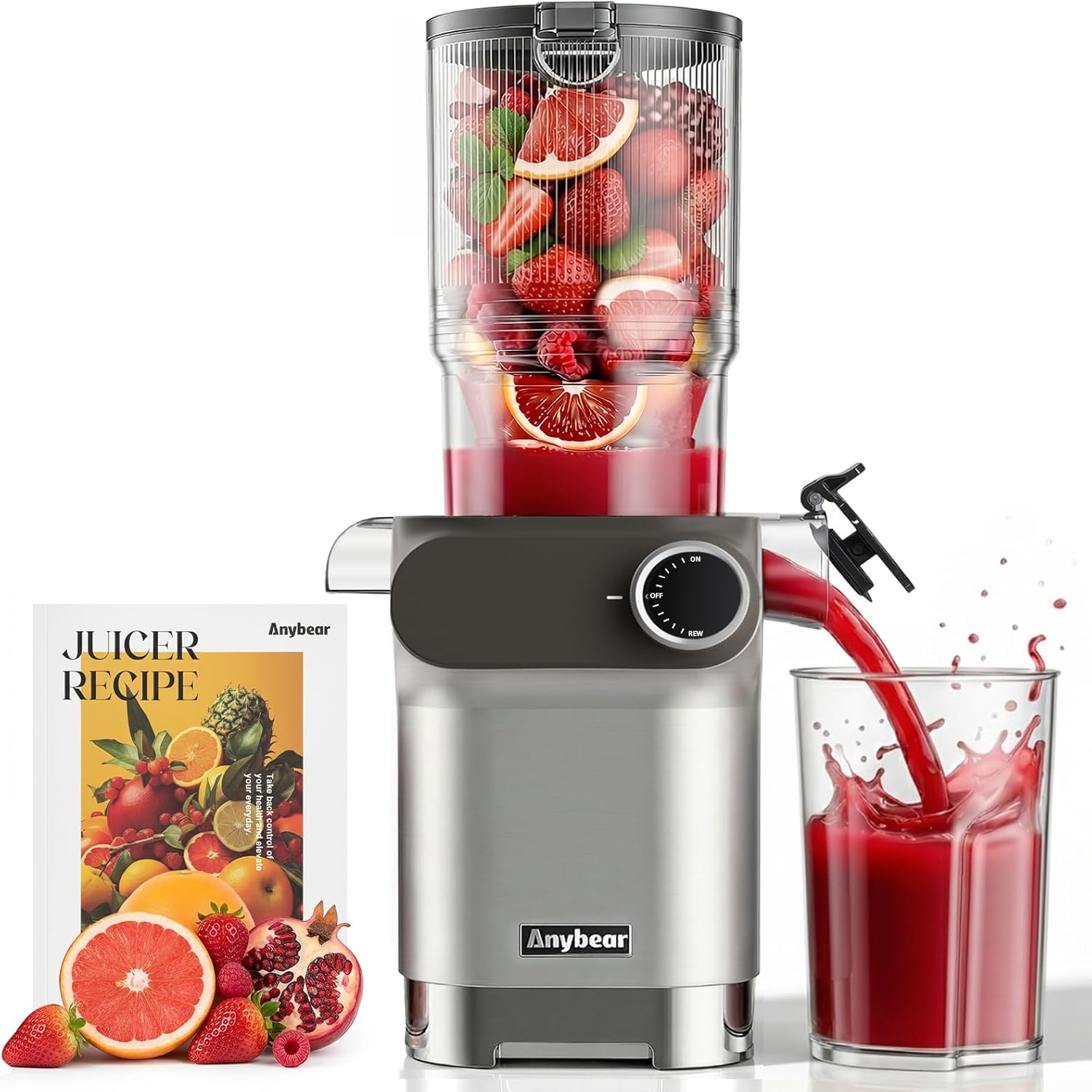
| Maximum Power | 200 watts |
|---|---|
| Wattage | 200 watts |
| Voltage | 110 volts |
| Special Features | Easy to Clean |
The anybear Cold Press Juicer is a single-auger masticating machine built for low-speed extraction of fruits and vegetables. It runs on a 200W, high-torque motor and turns at about 65 RPM to crush and press produce rather than grind, which reduces oxidation and helps retain flavor and nutrients—useful when juicing dense root vegetables like beets. The 4.3-inch feed chute accepts larger pieces, cutting prep time, and the Tritan feed components and stainless steel filter are designed for food safety and durability. Cleaning is simplified by a one-piece stainless filter and a brush for quick rinses after use, though the unit is hand-wash only. Practical limits are that a masticating juicer works more slowly than centrifugal models and requires more time for long juicing sessions, and fibrous vegetables may need occasional scraper clearing. The package includes recipe guidance and Anybear offers extended warranty support.
Best for: Buyers who prioritize consistent, nutrient-preserving extraction for root vegetables and want a durable, easy-to-clean masticating juicer that reduces oxidation and prep time.
Less Ideal for: Those who need very fast, high-volume juicing or a fully dishwasher-safe appliance should consider alternative juicer types.
- High-torque 200W motor for efficient slow extraction
- 4.3-inch wide feed chute reduces chopping and speeds prep
- Tritan and stainless steel contact parts for food-safe construction
- Simple one-piece filter and included brush make cleaning faster
- Designed to minimize oxidation for fresher-tasting juice
- Slower throughput than centrifugal juicers for large batches
- Requires hand washing and occasional clearing with fibrous produce
Verdict: Choose this masticating juicer if you want a reliable, low-speed extractor that preserves flavor and yield when juicing beets and other dense produce.
Hamilton Beach Big Mouth Juicer

| Maximum Power | 800 watts |
|---|---|
| Power Source | Corded Electric |
| Number of Speeds | 1 |
| Material | Plastic, Stainless Steel |
| Included Components | Cleaning Brush, Dishwasher Safe Parts |
The Hamilton Beach Big Mouth Juicer is a centrifugal machine built for quick home juicing of both hard and soft produce. Its 800-watt motor and stainless steel strainer basket spin at high speed to extract juice from apples, carrots, beets, leafy greens and more, while the 3-inch feed chute reduces prep by letting you feed whole fruit or long stalks. A large pulp bin collects solids for longer runs between emptying, and removable parts plus a cleaning brush make post-juicing cleanup straightforward since many pieces are dishwasher safe. Practical user features include motor overload protection and a single-knob control that keeps operation simple. For beetroot specifically, the powerful motor and roomy chute let you push larger beet pieces or whole small beets through without extensive slicing, though centrifugal juicing extracts less juice from leafy greens than slow masticating models and can introduce more foam. This model is a solid, easy-to-use option for households that value speed, simple controls, and easy maintenance when making vegetable- and fruit-forward juices.
Best for: Buyers who want fast, no-fuss juicing of whole fruits and roots like beets and prioritize easy cleanup and proven user feedback when choosing a reliable home juicer.
Less Ideal for: If you prioritize the highest possible juice yield from leafy greens or want a very low-foam cold-pressed result, a slow masticating juicer would be a better fit.
- Large 3" feed chute reduces prep by accepting whole fruits and long vegetables
- 800-watt motor provides strong extraction power for hard produce like beets
- Removable, dishwasher-safe parts and included cleaning brush simplify cleanup
- Large pulp bin allows longer juicing sessions before emptying
- Centrifugal design can produce more foam and slightly lower yields from leafy greens compared with slow juicers
- Single speed control limits tuning for delicate or high-moisture produce
Verdict: A fast, easy-to-clean centrifugal juicer with a roomy feed chute and enough power to handle beetroot without much prep.
Juilist Centrifugal Juicer AMR526

| Maximum Power | 800 watts |
|---|---|
| Wattage | 400 watts |
| Feed Chute | 3" |
| Number of Speeds | 3 |
| Material | Stainless Steel |
The Juilist centrifugal juicer is a countertop machine aimed at fast, convenient juice extraction from common fruits and vegetables. It uses a high-speed motor (rated to 800W max, 400W running) and a 3" wide feed chute so you can process large pieces or halves with minimal prep. Three speed settings let you match speed to ingredient: low for soft fruits, medium for firmer produce, and a high "P" burst for tough items. The stainless steel cutting disc and 304-style micro-mesh filter are built to separate juice from pulp quickly, and included accessories such as a cleaning brush plus dishwasher-safe parts make cleanup straightforward. Safety features include a double lock arm and overheat protection, and a visible window lets you watch extraction. As a centrifugal unit, it is best for quick yields from apples, carrots, and beets but will produce more foam and slightly less nutrient-retaining juice than slow masticating models; high-fiber, low-juice greens and frozen produce are not recommended. Its compact footprint suits small kitchens but expect some noise during high-speed operation.
Best for: Buyers who want a fast, easy-to-use juicer for everyday fruit and root vegetables and prioritize quick cleanup and safe, predictable operation.
Less Ideal for: Those seeking maximum juice yield and nutrient retention from leafy greens or who plan frequent cold-pressed or slow-juicing of delicate produce should consider a masticating juicer instead.
- 3" wide feed chute reduces chopping and speeds prep
- Three speed settings plus a pulse/high mode for tougher produce
- Stainless steel cutting disc and micro-mesh filter for efficient pulp separation
- Dishwasher-safe parts and included cleaning brush simplify cleanup
- Safety lock arm and overheat protection increase everyday reliability
- Centrifugal design yields more foam and less long-term nutrient retention than slow juicers
- Not suited to frozen items or very high-fiber, low-juice vegetables
Verdict: A compact, safety-minded centrifugal juicer that delivers fast, low-fuss extraction for everyday beets and root vegetables.
Choosing the Right Juicer for Beetroot: Key Factors to Consider
Extraction Efficiency
High extraction efficiency matters because beetroot is dense and fibrous. A juicer that extracts more liquid per root reduces waste and saves money over time.
Look for machines with mechanisms suited to hard produce, such as slow masticating augers or high-torque centrifugal designs tuned for roots. Efficiency also affects the final juice concentration and mouthfeel, so prioritize devices proven to squeeze dry pulp rather than leaving wet, juice-laden fiber.
Pulp Dryness and Yield
Pulp dryness indicates how thoroughly a juicer separates liquid from fiber. For beetroot, drier pulp usually means better extraction and fewer trips to the store.
Assess whether the machine leaves visibly wet pulp when processing roots. Drier pulp also simplifies composting and reduces lingering smells. If yield is a priority, favor designs that consistently produce compact, dry pulp when handling hard vegetables.
Feed-Chute Size and Prep Time
Feed-chute diameter directly impacts how much chopping you must do before juicing. Beetroots are often irregularly shaped, so a wider chute reduces prep and speeds up the process.
Smaller chutes force more slicing, which adds time and can be frustrating when juicing whole roots. Consider how much prep you are willing to do and choose a design that matches your routine, whether you need minimal chopping for quick breakfasts or are comfortable prepping produce ahead of time.
Motor Power and Torque
Motor power and especially torque determine how well a juicer handles dense, resistant produce like beetroot without stalling or overheating. High torque helps an auger or centrifugal mechanism bite into fibers and maintain steady extraction.
Look for motors specified to handle root vegetables or that include overload protection and cooling features. Reliable motor performance reduces the risk of clogging and extends the machine's lifespan under frequent beetroot use.
Ease of Cleaning and Stain Resistance
Beetroot juice stains surfaces and components quickly, so easy disassembly and stain-resistant materials save time and effort. Parts that come apart without tools and wide openings for rinsing make daily cleanup manageable.
Dishwasher-safe components help, but also check whether the food-contact plastics and filters are rated to resist staining and odor retention. A juicer that cleans quickly is more likely to be used regularly, improving long-term satisfaction.
Build Quality and Materials
Durable construction and food-grade materials matter for long-term reliability, especially when processing abrasive roots. Metal or reinforced plastic parts in contact with produce will stand up to regular use better than thin, fragile pieces.
Inspect sealing points, filter meshes, and auger materials in product specifications to ensure they are rated for frequent juicing. Better materials typically mean fewer replacements and more consistent performance over time.
Masticating Vs Centrifugal for Beetroot
Two common extraction methods handle roots differently. Slow masticating juicers use an auger to press and shear fibers, which generally yields drier pulp and smoother juice. They usually excel at extracting beetroot because the slow action reduces heat and oxidation, preserving flavor and nutrients.
Centrifugal machines use high-speed spinning to separate juice from pulp. They can process quickly and are convenient for those short on time, but some centrifugal models leave wetter pulp with beetroot and may produce a slightly foamier texture. Choose based on whether speed or maximum yield is your priority.
- Masticating: better yield, smoother texture, slower processing
- Centrifugal: faster throughput, simpler for mixed fruit, may need more prep
Prepping Beetroot for Best Results
Trim tough ends and remove any soil before juicing. For very large roots, quartering or slicing to fit the feed chute reduces strain on the machine. Thin-skinned baby beets often need only a quick rinse.
Peeling is optional depending on your tolerance for earthy flavors and the skin condition. When beet skins are blemished, peel or trim damaged areas to avoid off flavors. Consistent-sized pieces promote even extraction and prevent clogging.
- Rinse thoroughly to remove dirt
- Trim ends and cut large roots to fit the chute
- Peel only if skin is damaged or flavor is too earthy
Combining Beetroot with Other Produce
Beetroot pairs well with apples, carrots, ginger, and citrus to balance sweetness and brightness. When mixing produce, start with softer fruits to help lubricate the auger or feed system, then add root vegetables to maintain steady throughput.
Be mindful of fiber buildup when alternating between soft and hard items. Pausing briefly to run a water flush or a celery stalk through the juicer between batches helps clean the filter and keep extraction consistent.
- Start with soft fruits, follow with roots for smoother flow
- Use a celery flush to clear the pulp basket between types
- Adjust ingredient order to manage sweetness and texture
Maintenance Tips to Prevent Staining and Odors
Rinse parts immediately after juicing to prevent beet pigments from setting. Soak filters and fine meshes promptly in warm water if staining begins, and use a soft brush to remove trapped pulp. Frequent maintenance prevents lingering odors and preserves filter performance.
Rotate usage between different juicing sessions to avoid prolonged exposure of plastic components to strong pigments. Periodically check seals and gaskets for color transfer and clean them thoroughly to prevent buildup.
- Rinse right away to avoid stubborn stains
- Soak and brush filters to remove trapped fibers
- Inspect seals and gaskets for pigment buildup
Safety and Overload Protection
Processing dense beetroots can strain a juicer, so look for machines with thermal cutouts or overload protection. These features prevent motor damage if the machine becomes clogged or if too much produce is fed at once.
If your juicer does stall, follow the manufacturer-recommended reset procedures and clear any blockages carefully. Avoid forcing oversized pieces into the chute, which increases the risk of jams and potential injury.
- Prefer units with built-in overload or thermal protection
- Avoid forcing oversized pieces into the feed chute
- Follow reset and clearing procedures to maintain safety
How We Chose the Best Juicer for Beetroot
We prioritized machines that handle dense, fibrous roots like beetroot with minimal waste and reliable performance. Key evaluation criteria included extraction efficiency on root vegetables, motor durability under load, and feed-chute design that reduces prep time. We also assessed juice texture and separation to favor devices that deliver smooth juice with minimal stringy pulp. Ease of cleaning and disassembly was weighed heavily since beetroot stains and pulp can make maintenance a chore. Finally, we considered build quality and materials where food-contact components resist staining and are easy to rinse. We excluded machines designed only for soft fruits or primarily for citrus because those often struggle with hard roots. We did not consider countertop appliances whose specifications indicate low torque or small augers that are inappropriate for frequent beetroot use. The final shortlist reflects machines that balance extraction yield, reliability under root-vegetable loads, and manageable upkeep.
Our full evaluation process is outlined in our review methodology.
FAQ
Can I juice raw beetroot skin on, or should I peel it?
You can juice beetroot with the skin on if it is clean and blemish-free. Peeling is optional and mainly improves flavor if the skin is damaged or if you dislike the earthier notes that unpeeled beets can contribute.
Which juicer type gives the most juice from beetroot?
Slow masticating juicers typically yield the most liquid and drier pulp from beetroot because they press fibers more thoroughly. Centrifugal models can be faster but sometimes leave visibly wetter pulp.
How do I prevent my juicer from clogging when processing beets?
Cut large beets into consistent pieces, avoid overloading the feed chute, and alternate with softer produce or run a water flush to clear accumulated fibers. Taking these steps reduces the chance of clogging.
Will beetroot juice stain my juicer parts permanently?
Beetroot pigments can stain plastics if left wet for long periods. Rinsing parts promptly after use and soaking stained components in warm soapy water will minimize permanent discoloration and odor retention.
Is it better to juice beetroot alone or mix it with other fruits and vegetables?
That depends on taste and nutrition goals. Juicing beetroot alone provides concentrated flavor and nitrates, while combining with fruits or greens balances sweetness and yields a milder profile. Mixing can also help with flow during juicing.
Final Verdict
When choosing a juicer for beetroot, prioritize machines that deliver high extraction efficiency, strong torque, and easy cleanup. Expect tradeoffs between speed and yield: centrifugal designs favor quick throughput, while masticating units usually provide drier pulp and smoother juice. Consider feed-chute size relative to how much prep you want to do and pick materials and maintenance features that minimize staining. Focus on extraction efficiency, pulp dryness, and durable motor performance to get the most from beetroot. With those priorities in mind, you can choose a model that fits your routine and yields consistently good results.