
Note: This article contains affiliate links. If you click on these links and make a purchase, we may earn a small commission at no extra cost to you. This helps support our research and content. Read our full affiliate disclosure here.
If you drink green juice regularly, the right juicer for spinach makes a big difference in yield, nutrient retention, and daily cleanup. Spinach and other leafy greens are low in fibrous bulk but high in moisture and nutrients, so machines that handle soft, wet leaves without clogging will save time and produce more usable juice. This guide shortlists the top options built to handle spinach specifically and explains the tradeoffs between extraction method, throughput, and ease of maintenance. Read on for the key evaluation criteria and the top picks that met those standards.
Top Picks at a Glance
| Best Overall The best all-around choice for most situations | Ninja NeverClog Cold Press Juicer JC151 |  |
| Best Quality Built to a higher standard if you want something more solid | Hurom H400 Slow Juicer |  |
| Best Value The sweet spot between price and what you get | nutribullet Juicer NBJ50100 |  |
| Best Budget The cheapest option that still gets the job done reliably | GDOR Centrifugal Juicer GS378 |  |
| Top Rated A top-rated pick with lots of positive feedback | ECOSELF Cold Press Juicer |  |
| Most Popular A crowd favorite that many people choose with confidence | Breville Juice Fountain Compact BJE200XL |  |
| Best Seller A high-volume bestseller chosen again and again | EanOruus 3-in-1 Masticating Juicer E-18 |  |
Ninja NeverClog Cold Press Juicer JC151

| Maximum Power | 150 watts |
|---|---|
| Number of Speeds | 2 |
| Capacity | 24 fluid ounces |
| Included Components | 24 oz juice jug, 36 oz pulp container, 2 pulp filters, auger |
The Ninja NeverClog JC151 is a slow masticating juicer designed to handle fibrous greens like spinach, kale, and celery with minimal clogging. Its 150-watt high-torque auger extracts juice at low speed to preserve nutrients and reduce foam, and the NeverClog filter plus a reverse function help keep long fibers moving for steadier operation. Two interchangeable pulp filters let you choose smoother juice or thicker, fiber-rich results, while the larger 24 oz juice jug and 36 oz pulp container let you make bigger batches for smoothies or meal prep. Setup and cleanup are straightforward thanks to an easy-to-assemble layout and dishwasher-safe juice-contact parts, and the compact footprint fits comfortably on most countertops. Practical limitations are typical for slow juicers: extraction takes longer than centrifugal models, and the motor is modestly powered so very dense batches require patience and occasional use of reverse to clear jams. For a balanced home user looking to prioritize nutrient-rich green juices and daily use, the JC151 offers an efficient, low-foam option with useful pulp control.
Best for: Buyers who want a reliable cold-press juicer for daily green juices and larger batch prep, valuing nutrient retention, low foam, and simple pulp control.
Less Ideal for: People who need very fast single-serving juice on a tight schedule or who prioritize maximum throughput over juice quality.
- High-torque 150W auger designed to juice fibrous greens and hard produce without frequent clogging
- Two interchangeable pulp filters for choosing smoother juice or more pulp and fiber
- Large 24 oz juice jug and 36 oz pulp container allow batch juicing for multiple servings
- Dishwasher-safe juice-contact parts and straightforward assembly make cleanup easier
- Slower extraction compared with centrifugal juicers, so juices take longer to produce
- Motor power is moderate, so very dense or large volumes may need more frequent reversing to clear jams
Verdict: A balanced cold-press juicer that excels at extracting nutrient-rich, low-foam green juices while offering practical pulp control and easy cleanup.
Hurom H400 Slow Juicer
| Special Features | Masticating |
|---|---|
| Wattage | 150 watts |
| Power Source | Corded Electric |
| Voltage | 120 volts |
| Controller Type | Button |
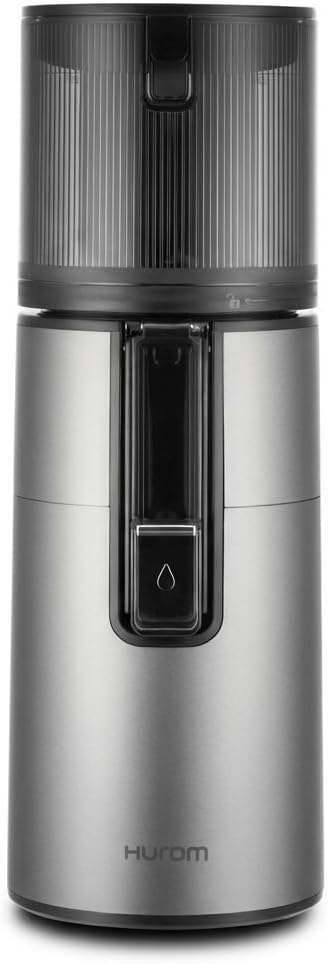
The Hurom H400 is a cold-press masticating juicer that squeezes juice slowly to preserve nutrients and reduce oxidation, making it a good choice for leafy greens like spinach. It uses a low-speed auger and a self-feeding hopper so you can drop in whole or large-cut produce and let the machine draw it through; that design helps extract juice from fibrous greens without excessive foam. The titanium material and included coarse/standard components suggest durable contact parts and decent pulp separation, and the unit runs quietly compared with high-speed juicers. You get a modest 150-watt motor and simple button controls, so operation is straightforward but not focused on variant speed settings. Cleaning and assembly are promoted as easy, though the product care says hand wash only, which means more dishwashing effort than removable dishwasher-safe parts. For spinach-focused juicing the H400 gives high-quality, low-oxidation juice with good yield, but expect a careful hand-wash routine and a slower throughput than centrifugal models.
Best for: Buyers prioritizing nutrient retention and higher-quality juice from spinach and other leafy greens who value quiet, steady extraction over speed.
Less Ideal for: If you need very fast throughput for large daily batches or want fully dishwasher-safe parts, this model may not meet those priorities.
- Masticating slow-extraction preserves nutrients and reduces foam when juicing leafy greens.
- Self-feeding hopper accepts larger pieces or whole produce for easier loading.
- Titanium components for auger and blade increase durability and contact longevity.
- Quiet operation compared with high-speed centrifugal juicers.
- Hand-wash-only parts require more post-use cleaning effort.
- No multiple speed settings; single low-speed operation may slow throughput for large batches.
Verdict: Choose the H400 when you want quiet, nutrient-preserving cold-press extraction that gets the most from spinach and other leafy greens.
nutribullet Juicer NBJ50100

| Maximum Power | 800 watts |
|---|---|
| Number of Speeds | 2 |
| Capacity | 1.5 liters |
| Power Source | Corded Electric |
The NutriBullet Juicer is a centrifugal machine built for quick, everyday juicing of fruits and vegetables. Its 800W motor and two-speed control let you adjust between softer produce and tougher greens, while the 3-inch feed chute accepts whole items so you can skip most prep. Juice collects in a 27-ounce sealing pitcher with a froth separator and no-drip spout for easy pouring and short-term storage, and pulp is captured in a 1.5L basin that detaches for rinsing or dishwasher cleaning. For leafy items like spinach you will get reasonable yield when using the higher speed, but as with most centrifugal juicers expect more foam and slightly lower extraction compared with slow masticating models. The unit is straightforward to assemble, use, and clean, and the included food pusher and brush simplify one-person operation. If you want fast, low-effort juicing from whole produce and easy cleanup, this NutriBullet is a practical choice, though cold-press performance and foam control are typical centrifugal limitations.
Best for: Buyers who prioritize fast, low-prep juicing and easy cleanup and want a solid everyday kitchen juicer that handles whole produce with minimal fuss.
Less Ideal for: People who need the highest possible juice yield from leafy greens or who plan heavy daily juicing sessions should consider a slow masticating or commercial machine instead.
- Large 3-inch feed chute fits whole fruits and vegetables to reduce prep time
- 800W motor with two speeds handles both soft and hard produce
- Removable 1.5L pulp basin and dishwasher-safe parts for easier cleanup
- Sealing 27oz pitcher with froth separator and no-drip spout for convenient pouring and short-term storage
- Centrifugal design creates more foam and generally lower yield on leafy greens like spinach than slow masticating juicers
- Not optimized for long continuous commercial use due to domestic design and capacity
Verdict: A fast, low‑prep centrifugal juicer that makes everyday juicing simple for anyone who values speed and easy cleanup.
GDOR Centrifugal Juicer GS378
| Maximum Power | 800 watts |
|---|---|
| Number of Speeds | 2 |
| Power Source | ac |
| Voltage | 120 volts |
| Special Features | Built in Froth Separator, Overheat Protection |
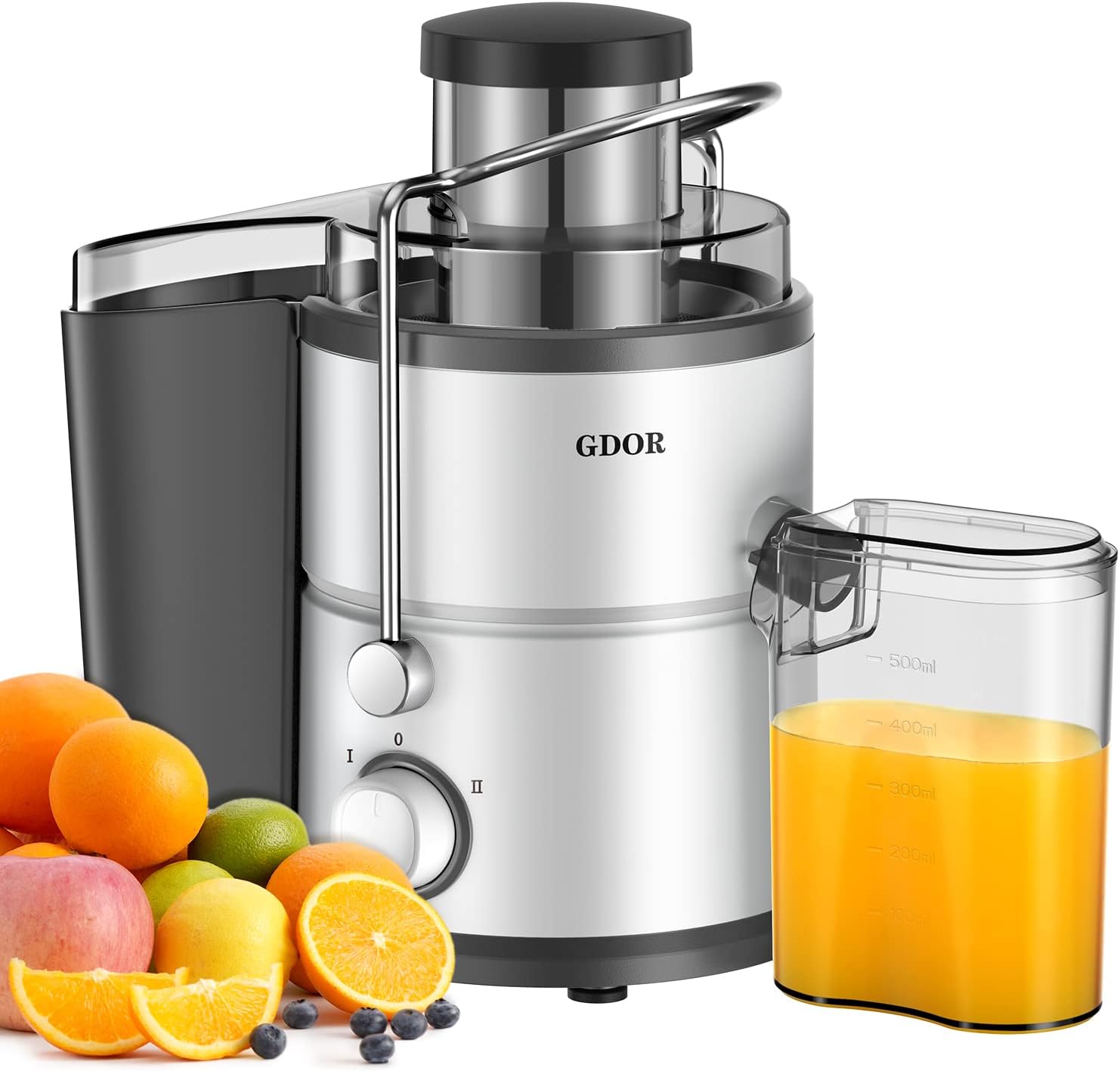
The GDOR GS378 is a centrifugal juicer designed for quick everyday juicing of fruits and vegetables. It uses an 800W motor and a dual-speed knob so you can run soft produce at the lower setting and harder items like apples and carrots at the higher speed, while the 3" wide chute reduces prep by allowing many items to be fed whole. The included 17 oz juice jug has a built-in foam separator to reduce froth and a practical anti-drip spout for cleaner counters, and the unit adds basic safety features such as a locking arm, micro switch protection, non-slip feet, and overheat shutoff. Cleaning is straightforward with removable parts and a brush, though as a centrifugal model it will produce more pulp and less leafy-green extraction efficiency than a masticating unit. For quick juices and mixed fruit-vegetable blends the GS378 is fast and convenient, but it is not optimized for extracting high yields from tough leafy greens like spinach compared with slow juicers.
Best for: Buyers who want a fast, budget-friendly juicer for everyday fruit and mixed vegetable juices and who prioritize speed and easy cleanup over maximum leafy-green yield.
Less Ideal for: Those focused on getting the highest possible juice yield from spinach and other leafy greens or who plan to juice large volumes of greens regularly should consider a slow masticating juicer instead.
- 800W motor with dual-speed control for soft and hard produce
- 3" wide feed chute reduces chopping and speeds prep
- Built-in foam separator and anti-drip spout for cleaner pours
- Safety features including locking arm, micro switch, overheat protection, and non-slip feet
- Removable parts and included brush make cleaning easier
- Centrifugal design delivers lower yield on leafy greens like spinach compared with slow masticating juicers
- Capacity and pulp control are limited for heavy daily juicing sessions
Verdict: A fast, affordable centrifugal juicer that speeds prep with a wide chute and dual speeds, best for quick fruit and mixed-vegetable juices rather than high-yield spinach extraction.
ECOSELF Cold Press Juicer

| Special Features | Easy to Clean; High Juice Yield; Reverse Function; Self Feeding; Wide Feed Chute |
|---|---|
| Material | Acrylonitrile Butadiene Styrene (ABS) |
The ECOSELF Cold Press Juicer is a slow masticating single-auger machine designed for everyday cold-press juicing of fruits, vegetables and leafy greens. Its wide feed chute and self-feeding hopper let you drop in larger pieces or whole produce for hands-free extraction, which speeds prep for busy mornings and family routines. The low-speed extraction and upgraded auger focus on preserving enzymes while minimizing heat and oxidation, producing smoother juice with less foam and more yield; the listing claims up to 99% extraction. A rotary one-touch control and a reverse function help clear clogs and keep the unit running during tougher leafy batches like spinach. Assembly is simple and cleaning is aided by an included brush and integrated filter design, though as with most masticating machines some rinsing of parts is still required after leafy runs. The motor is described as high power yet low noise, so it should handle frequent use without loud operation. If you want a reliable, hands-off cold-press juicer for regular spinach and green juices, this model covers the core needs while balancing yield and ease of use.
Best for: Buyers who prioritize a reliable, low-heat juicer that can handle frequent spinach and leafy-green juicing with minimal prep and consistent performance.
Less Ideal for: If you need the fastest possible extraction for high-volume commercial use or want a centrifugal juicer for very quick single-serve juices, this masticating model is not the best fit.
- Wide feed chute and self-feeding hopper reduce prep time by allowing larger pieces or whole produce
- Slow masticating extraction designed to preserve nutrients and produce smoother juice
- Reverse function and one-touch rotary control help prevent and clear clogs during leafy greens juicing
- Included brush and integrated parts design make assembly and cleaning faster than many comparable masticating models
- Claims like 99% yield are manufacturer-stated and may vary with produce type and technique
- Some disassembly and rinsing are still required after juicing fibrous leafy greens despite included cleaning tools
Verdict: Choose this quiet, hands-free cold press juicer when you want a dependable masticating machine that makes regular spinach and green-juice prep easier and preserves nutrients.
Breville Juice Fountain Compact BJE200XL

| Capacity | 25 fluid ounces |
|---|---|
| Wattage | 700 watts |
| Number of Speeds | 1 |
| Blade Material | Stainless Steel |
| Power Source | Electric |
The Breville Juice Fountain Compact is a small centrifugal juicer built for quick everyday juicing. It uses a titanium-reinforced disc and stainless steel micro-mesh filter basket to extract juice, and the 3-inch extra-wide chute reduces prep by allowing many fruits and vegetables to be juiced without chopping. The included 25 fl oz jug has an integrated froth separator for smoother pours, and pulp is contained under the unit to save counter space. With a single speed and a 700-watt motor, it handles hard produce like apples and carrots efficiently and produces decent yields for everyday use. Its compact footprint, cord storage, and dishwasher-safe parts make it convenient to store and clean, but as a centrifugal design it will not match the leafier-green yields of slow masticating juicers and can create more foam when juicing spinach or wheatgrass. Expect faster operation and easier prep at the expense of slightly lower extraction for soft leafy greens.
Best for: A buyer who values fast, low-effort juicing and compact countertop appliances and wants a proven, well-reviewed unit that performs reliably for everyday fruits and harder vegetables.
Less Ideal for: If your priority is maximum yield and nutrient extraction from leafy greens and wheatgrass, a slow masticating juicer would be a better fit than this compact centrifugal model.
- Extra-wide 3-inch chute reduces prep by letting you juice many fruits and vegetables whole
- Titanium-reinforced disc and stainless steel micro-mesh filter for solid centrifugal extraction
- Integrated froth separator in the juice jug for smoother pours
- Compact footprint with cord storage suits small kitchens and easy counter storage
- Dishwasher-safe removable parts and included cleaning brush simplify cleanup
- Single-speed centrifugal design is less efficient at extracting juice from leafy greens like spinach
- Centrifugal juicers tend to produce more foam and slightly lower nutrient extraction for delicate produce
Verdict: Choose this compact Breville if you want fast, low-prep juicing and a space-saving, reliable centrifugal machine for everyday fruits and harder vegetables.
EanOruus 3-in-1 Masticating Juicer E-18

| Maximum Power | 250 watts |
|---|---|
| Power Source | ac |
| Voltage | 110 volts |
| Capacity | 100 fluid ounces |
The EanOruus E-18 is a single-auger cold press juicer designed for high-volume home use and versatile recipes. It uses a slow masticating auger and a high-torque AC motor to extract juice while also supporting nut milk and frozen-sorbet attachments via interchangeable strainers. The extra-large 6.5-inch chute and 100 oz hopper let you load whole fruits and batch quantities with less preparation, and the auto-reverse and overheat protection help keep long sessions moving. In practice it runs quietly compared with typical centrifugal machines and yields nutrient-rich juice from leafy greens like spinach when fed slowly and with firmer ingredients to clear the auger. Removable parts are hand-wash only and the unit is relatively heavy, so cleaning and storage require some effort and counter space. The plastic blades and polycarbonate components keep cost and weight down but may not feel as premium as metal alternatives. For buyers wanting large batches, quiet operation, and cold-press results, this juicer delivers, while those wanting dishwasher-safe parts or a lighter, travel-friendly model should consider other styles.
Best for: Buyers who prioritize quiet, nutrient-preserving cold-press extraction and want to make large batches or family-sized portions of spinach-based juices, nut milks, or sorbets with minimal prep time.
Less Ideal for: People who need a compact, lightweight juicer or who require dishwasher-safe parts and minimal cleanup time should look at different models.
- Cold-press single-auger design preserves nutrients and yields higher-quality juice from leafy greens.
- Extra-large 6.5-inch chute and 100 oz hopper reduce prep time and enable batch juicing.
- Whisper-quiet AC motor suitable for early-morning use without loud noise.
- Auto-reverse and overheat protection help prevent clogs and motor strain during heavy use.
- Comes with multiple strainers and accessories for juice, nut milk, and sorbet versatility.
- Removable parts are hand-wash only which makes cleanup more hands-on.
- Plastic auger/blade and polycarbonate components feel less premium than metal alternatives.
- Relatively heavy and large, requiring substantial counter or storage space.
Verdict: Choose the EanOruus E-18 if you want a quiet, high-capacity cold-press juicer that handles spinach and large batches with minimal prep.
Choosing the Right Juicer for Spinach: Key Factors to Consider
Extraction Method and Yield
The juicing mechanism directly affects how much juice you get from spinach. Masticating, cold-press, or single-auger designs compress and shear leaves slowly, which tends to release more liquid and preserves heat-sensitive nutrients. Fast-spinning centrifugal models can work for mixed produce but often throw leafy pulp into the waste stream, reducing yield.
If you prioritize maximum juice per bunch and minimal waste, look for machines with slow-speed extraction and a design that traps and compresses leafy material rather than chopping it. This factor matters both for long-term cost efficiency and for getting the most nutrition from the greens you buy.
Feed Design and Clog Resistance
Spinach is lightweight and can flutter or bunch up in a wide feed throat, creating clogs. A feed design that either funnels leaves gently or allows for folding/collection into the auger will reduce the need for stopping and clearing. Wide chutes that accept stems and bundles without overpacking are beneficial if you want faster prep.
Also consider whether the unit includes features like reverse function, adjustable drum/auger tightness, or specialized leaf ports. These reduce interruptions and improve continuous processing when you're making multiple servings.
Ease of Cleaning and Maintenance
Leafy greens leave wet, sticky residue that can accumulate in screens, crevices, and small gears. Removable parts that are dishwasher-safe or designed for quick rinsing greatly reduce the time between juicing sessions. Units with fewer small components, smooth internal surfaces, or included cleaning tools make daily upkeep less tedious.
Maintenance also includes how easy it is to remove trapped pulp and whether seals and gaskets are accessible for sanitizing. If you plan to juice frequently, prioritize models that clearly minimize cleaning time.
Motor Torque and Continuous Use
Processing wet leafy material offers low mechanical resistance but can cause certain motors to stall if the feed creates sudden high-torque pockets. A motor with consistent torque at low speeds or one rated for continuous duty reduces the likelihood of stalls and overheating when processing large volumes of spinach.
Consider also motor cooling and recommended duty cycles. If you make batches for multiple people or preserve juice in bulk, a robust motor and clear runtime guidance will matter for reliability.
Pulp Dryness and Post-Processing
A drier pulp indicates the machine is extracting more liquid. For spinach, pulp is naturally dense in moisture, so the difference between wet and dry pulp is a good proxy for extraction efficiency. Drier pulp also makes composting or disposal cleaner and less messy.
Examine how the unit expels pulp and whether the pulp container is easy to empty without spilling. If you compost, look for pulp that is compact rather than stringy or water-logged.
Why Spinach Is Different From Hard Produce
Spinach and similar leafy greens behave differently under a juicer than firmer fruits and root vegetables. The leaves have high water content but low structural mass, so they tend to form clumps, slip through holes, or pack tightly against filters unless the machine is designed to compress rather than shear.
Understanding these differences helps you match the appliance to your routine. Machines optimized for leafy greens tend to use lower speeds, continuous compression, and finer screening to capture microscopic juice.
- Leaf structure leads to packing and channeling in some screens
- High moisture but low bulk requires compression-based extraction
- Filters and screens need finer tolerances to capture small droplets
Prep Tips for Better Spinach Juicing
Even with a machine made for leafy greens, a few simple prep steps improve throughput and yield. Rinse thoroughly to remove grit, and remove large stems that can tangle or create fibrous clumps. For big batches, loosely roll or bunch leaves before feeding so they enter the auger in a steady stream.
Avoid overpacking the feed chute. If your juicer stalls or slows, use the reverse function if available to clear a jam rather than forcing more material through. Small adjustments in packing and feed speed can prevent frequent interruptions.
- Rinse spinach to remove dirt and grit
- Remove or trim oversized stems to avoid tangling
- Bundle leaves loosely for consistent feeding
Cleaning Workflow to Save Time
Designate a short, repeatable cleaning routine to keep juicing sustainable. Immediately rinse removable parts to prevent sticky residues from drying. Use included brushes or soft utensils to clear filter holes, then allow parts to air dry on a rack.
If you plan to juice daily, consider keeping a small basin of warm soapy water next to the machine to soak plates and screens during batch work. That reduces scrubbing time and keeps the unit ready for the next use.
- Rinse parts immediately after use to prevent residue buildup
- Soak screens and strainers briefly to loosen trapped pulp
- Use designated brushes for filter holes to avoid damage
Batch Size and Throughput Considerations
Think about how much spinach you will process in a typical session. Some machines are excellent for single servings but will overheat or require cooldowns when pushed for large batches, while others are built for continuous use. Match the unit's duty cycle to your intended throughput.
If you make juice for a family or prepare juice in advance, prioritize models with larger pulp hoppers and robust motors. For occasional personal use, compact units with straightforward cleanup may be preferable.
- Check recommended continuous run time for larger batches
- Larger pulp bins reduce interruptions for emptying
- Motor cooling features help with repeated cycles
Juice Texture and Incorporating Spinach Into Blends
Spinach yields a thin, subtly flavored juice that often blends well with fruit or other vegetables. Machines that leave minimal foam and produce clear juice are useful if you want a smooth texture. If you prefer thicker, smoothie-like consistency, you may combine juice with blended whole fruits rather than relying on the juicer alone.
Consider whether you will use the resulting juice immediately or store it. Faster-extraction and gentle handling preserve more volatile nutrients, but storage still reduces freshness, so plan serving sizes accordingly.
- Leafy juice is typically thin and mixes well with fruit juices
- Low-foam extraction methods improve clarity and drinking experience
- Plan batch sizes with storage and nutrient loss in mind
How We Chose the Best Juicer for Spinach
We focused on features and performance factors that most affect how well a juicer handles spinach and similar leafy greens. First, extraction method matters: slow, single-auger or specialized masticating systems often deliver higher leafy-green yields and better nutrient retention than high-speed centrifugal designs. Second, feed and mouth design was evaluated for how easily it accepts soft leaves, whether it requires pre-bundling, and how prone it is to clogging. Third, cleaning and disassembly were weighed heavily because leafy greens can trap wet pulp in small crevices; models with fewer parts and smooth surfaces scored higher. Fourth, build quality and motor torque under low-resistance, continuous leafy loads were considered to ensure consistent operation without stalling. We also considered throughput and continuous-run capability for users who juice larger batches. We excluded models designed only for hard produce or single-use citrus presses, and any units lacking clear guidance for leafy greens or with poor user-maintenance reviews. The result is a shortlist of machines that balance extraction efficiency, clog resistance, and straightforward upkeep.
Our full evaluation process is outlined in our review methodology.
FAQ
Can I juice raw spinach without pre-cooking or chopping?
Yes, most juicers designed for leafy greens handle raw spinach intact. Removing oversized stems and loosely bunching leaves can improve feeding, but cooking is unnecessary and will reduce nutrient availability.
How can I reduce foam when juicing spinach?
Choose a slow-speed extraction method when possible and pour juice through a fine mesh or let it settle briefly in the refrigerator to reduce foam. Alternating leafy inputs with small amounts of higher-water produce can also lower foam build-up.
Is it better to juice spinach alone or mix with other produce?
Both approaches work. Juicing spinach alone maximizes green nutrient concentration but may produce a milder flavor. Mixing with juicier fruits or vegetables can boost yield and improve taste while still delivering substantial leafy nutrition.
How often should I clean the juicer when juicing spinach regularly?
Rinse removable parts immediately after each session and perform a more thorough clean daily if you juice multiple times. Regular maintenance prevents buildup that can clog filters and affect performance over time.
Will juicing destroy vitamins in spinach?
Some sensitive vitamins can degrade with exposure to air and heat, but gentle, low-speed extraction helps preserve more nutrients than high-speed methods. Use airtight storage and consume juice promptly to retain the most benefit.
Final Verdict
Prioritize extraction method, feed design, and ease of cleaning when choosing a juicer for spinach. Masticating or cold-press styles typically yield more juice from leafy greens and reduce pulp moisture, while robust motors and thoughtful feedpaths prevent clogs during continuous runs. Balance throughput needs against cleanup time to find the right fit for your routine. Choosing a model that aligns with these tradeoffs will give you higher yields, less hassle, and more consistent green juice every time.